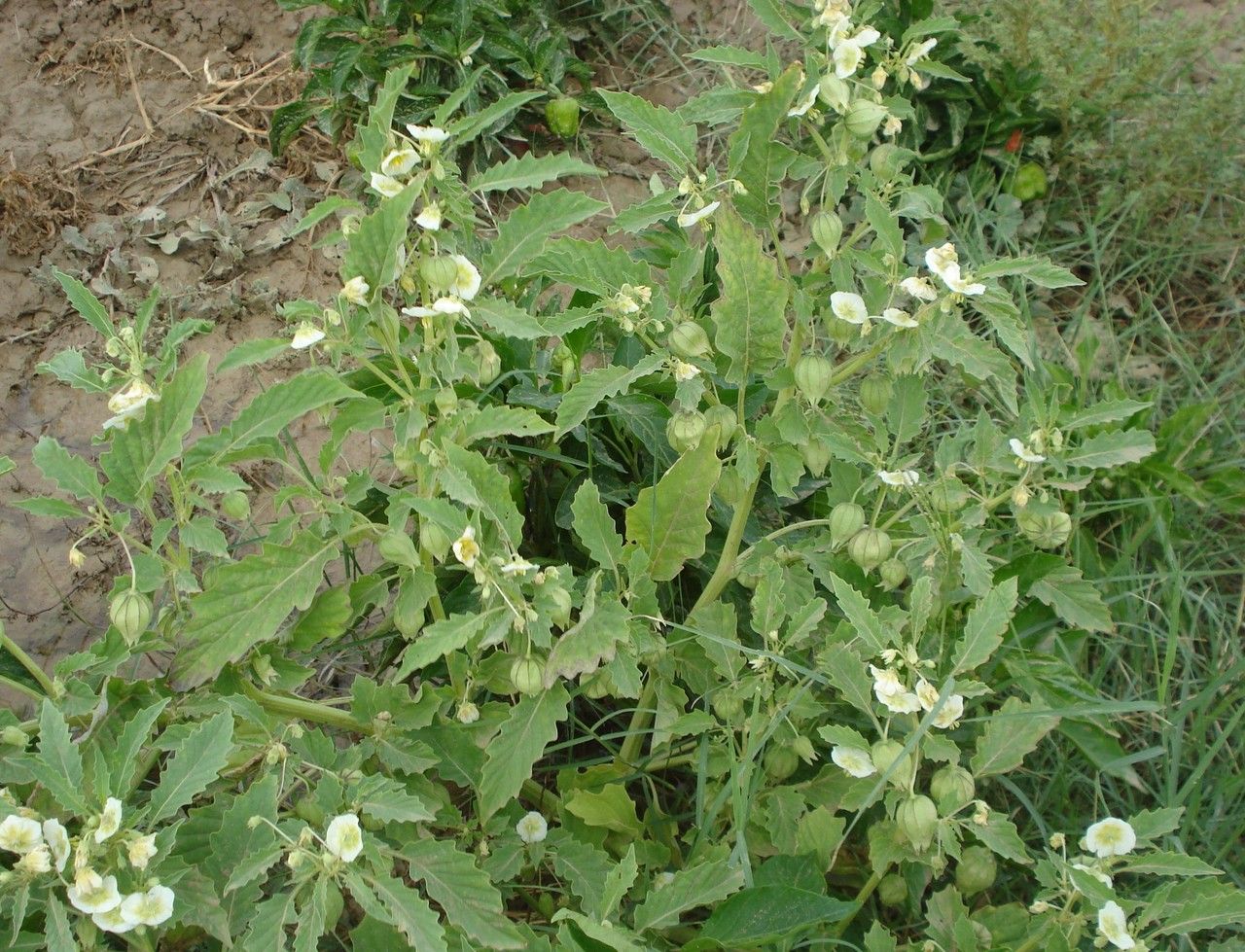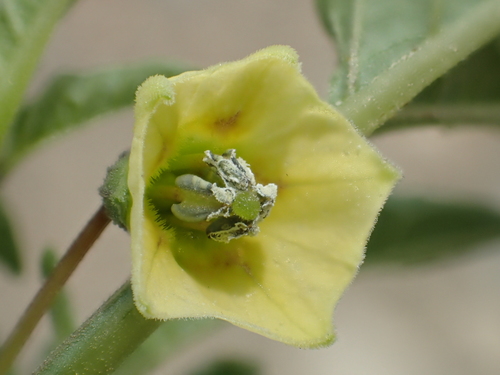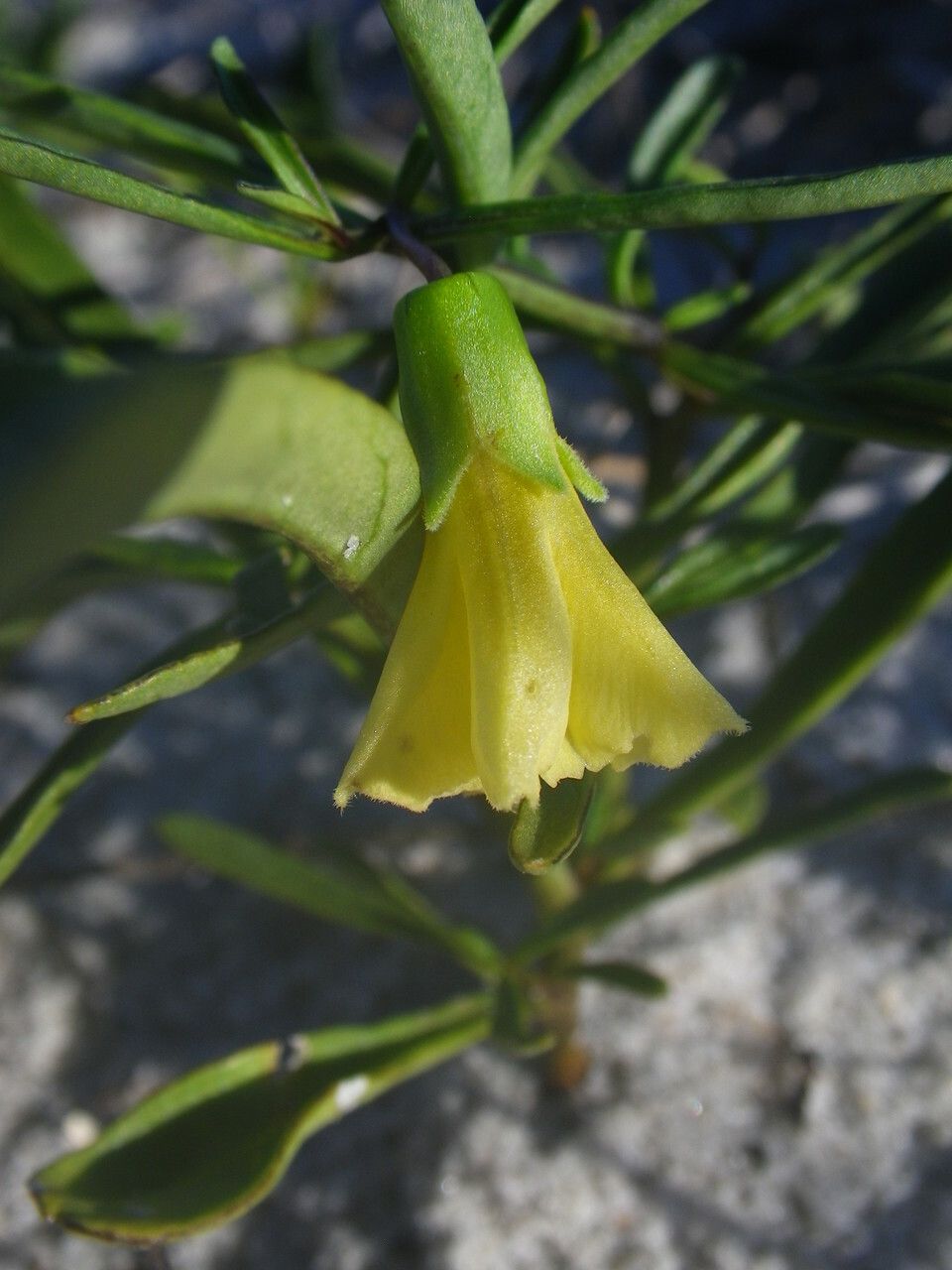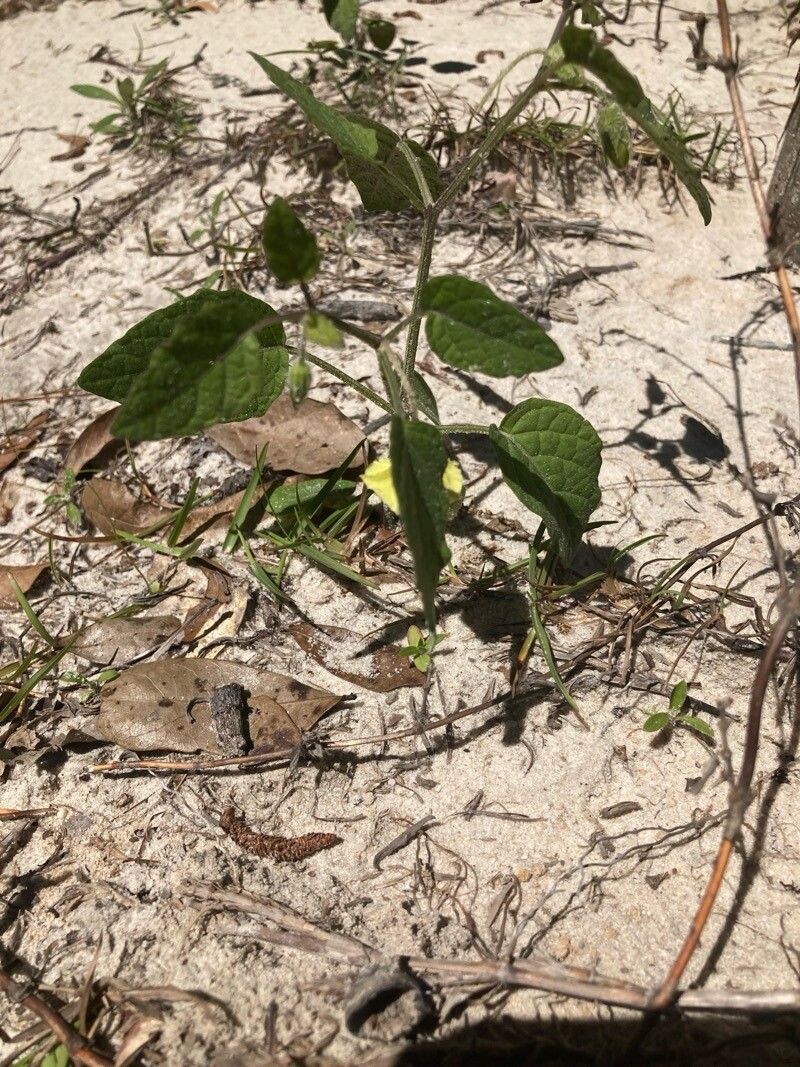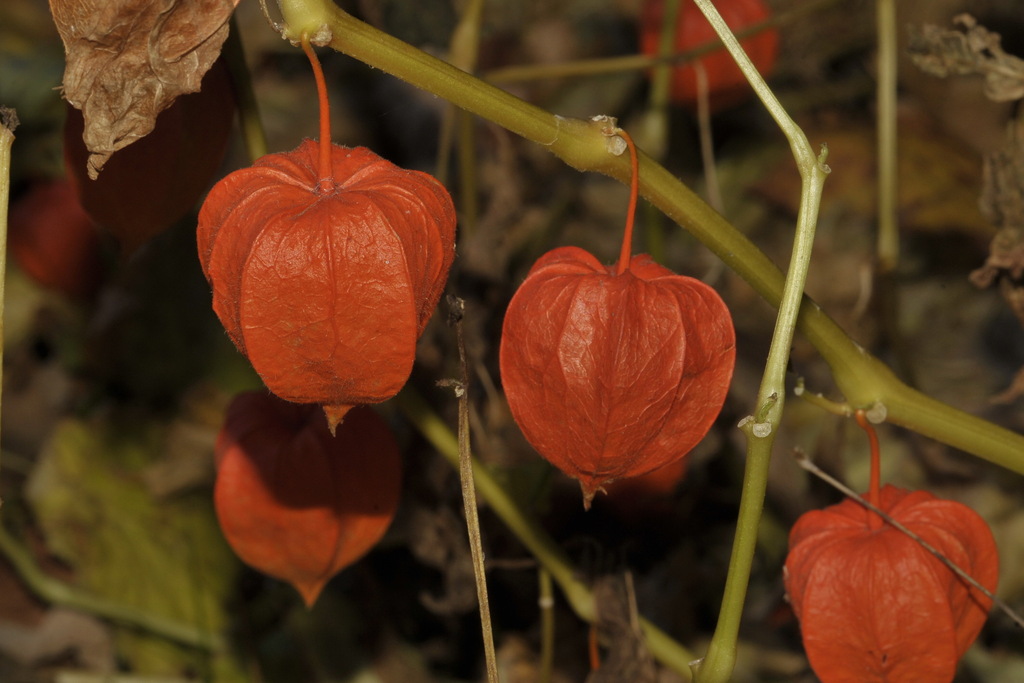
Physalis alkekengi, commonly known as Chinese lantern or bladder cherry, is a perennial plant belonging to the Solanaceae family. Native to Asia and Europe, it has been widely cultivated for its ornamental appeal. The plant can grow up to 60 cm in height and displays a spreading habit with numerous branches. Its leaves are ovate or heart-shaped with toothed margins. The small flowers, which are either white or pale yellow, bloom from mid-summer to early autumn.
The most distinctive feature of Physalis alkekengi is its fruit, which resembles a papery lantern enclosing an orange-red berry. These lantern-like structures are often used for decorative purposes in floral arrangements and craft-making.
The plant thrives in well-drained soil and full sun exposure but can also tolerate partial shade. It can be propagated by seeds or through the division of rhizomes in spring.
In traditional medicine, Physalis alkekengi has been used to treat various ailments such as fever, sore throat, cough, and asthma due to its anti-inflammatory properties.
Overall, Physalis alkekengi is an attractive ornamental plant that adds color and interest to any garden setting. Its medicinal properties further enhance its value, making it a worthwhile addition both aesthetically and medically.
Physalis lagascae has good disease resistance and is generally not prone to illnesses. However, it can be susceptible to pests and diseases present in its surroundings. These infections are usually not severe. In terms of care, the plant requires a moderate level of maintenance. It should be pruned regularly to maintain a good appearance and healthy growth. Fertilization can also help promote flowering. Physalis lagascae is suitable for anyone with outdoor space, such as a garden or patio, and does not demand extensive care experience. It may need more attention when grown indoors.
How to keep Physalis Alkekengi.
Light
Physalis lagascae requires maximum exposure to sunlight throughout the day to grow vigorously. Native to areas with abundant sun, it does best in those conditions. However, both insufficient and excessive sunlight can harm its health, potentially stunting growth or damaging leaves.
Water
Chinese lantern plants need consistently moist soil and have little tolerance for droughts. Water once a week to help its roots grow deeper. Their flowers and pods grow best when planted in evenly moist, not soggy, soil.
Humidity
This plant will thrive in moderate humidity, which is probably the level in your home. However, misting it a few times a week can be very beneficial. Make sure the room has good ventilation.
Temperature
Physalis lagascae thrives at temperatures between 68 and 100 ℉ (20 and 38 ℃). Native to warm areas, the plant tolerates hot summers well. In colder months, it is advisable to keep temperatures above 50 ℉ (10 ℃) to lessen the chance of damage.
Fertilizer
Physalis lagascae benefits from regular, dilute fertilizer applications to encourage healthy leaf growth. Fertilize Physalis lagascae about once a month during the summer. Nitrogen is essential for foliage, and providing nitrogen-rich sources helps Physalis lagascae thrive.
Pruning
Depending on the growing conditions, your Chinese lantern may spread aggressively. Cut back the leggy portions to encourage fresh growth. You can prune them up to the ground at the end of the season.
Toxicity
Chinese lantern plants contain calcium oxalate crystals in their sap, which is known to be toxic to humans and animals when ingested. The seed pods, berries, and leaves are possibly fatal, causing headache, vomiting, diarrhea, low temperature, difficulty breathing, and numbness.
Further reading →
The toxicity and danger assessments provided are for reference only. We do not assure their accuracy, so it's crucial not to depend on them. Seek professional advice when necessary for accurate guidance.
Botanical profile.
- Plant Type
- Herb
- Life Cycle
- Annual
- Genus
- Physalis
- Family
- Solanaceae
- Hardiness Zone
- 9-11
- Mature Height
- 49 cm to 76 cm
- Mature Spread
- 30 cm to 46 cm
- Leaf Color
- Green
- Leaf Type
- Deciduous
- Flower Color
- Yellow
- Flower Size
- 2.03 cm
- Bloom Time
- Late spring, Early summer, Mid summer
- Planting Time
- Spring
- Harvest Time
- Mid summer
- Native Area
- Colombia, Belize, Cuba, Honduras, Mexico, Guatemala, Venezuela, Peru, El Salvador, Nicaragua, Ecuador, Costa Rica, Panama