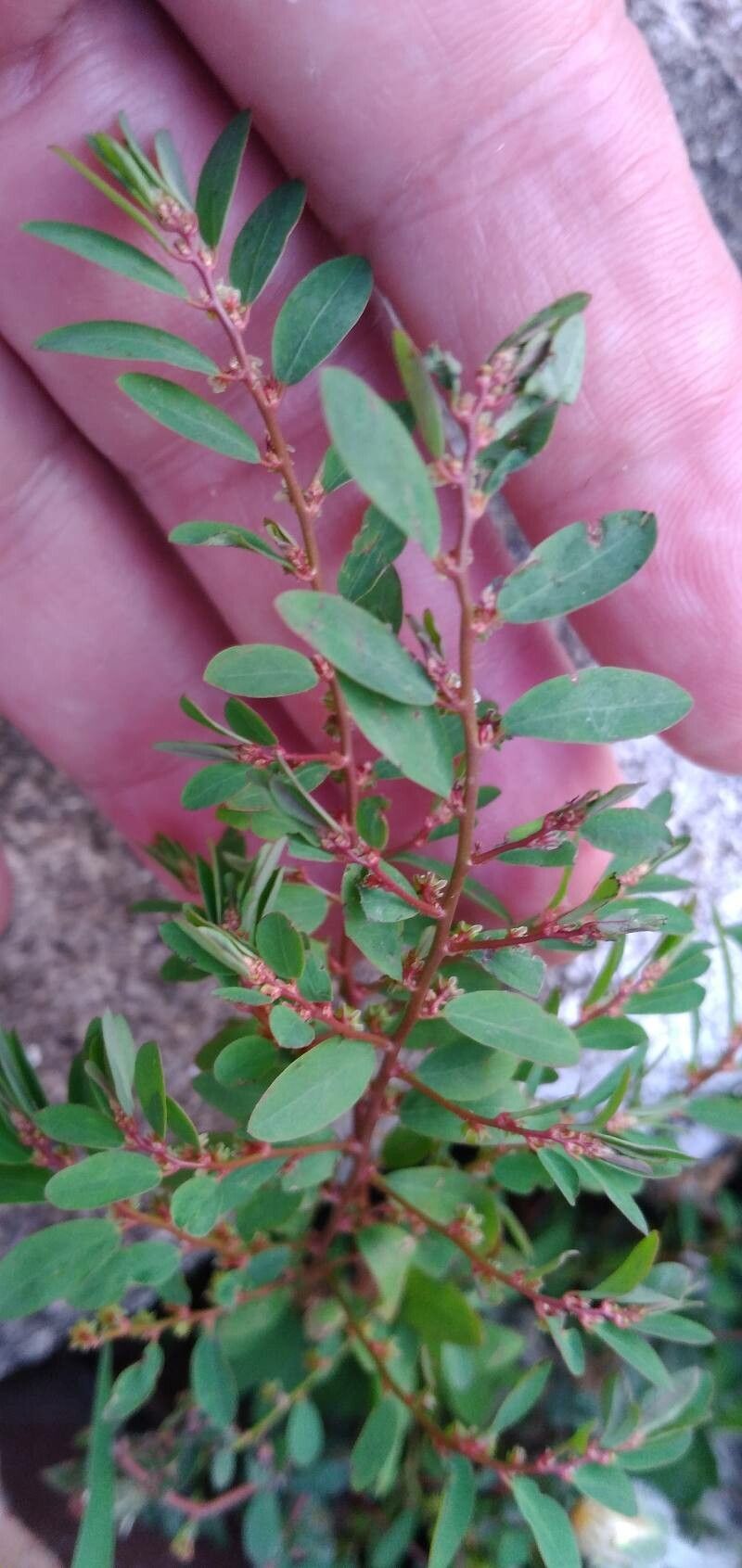
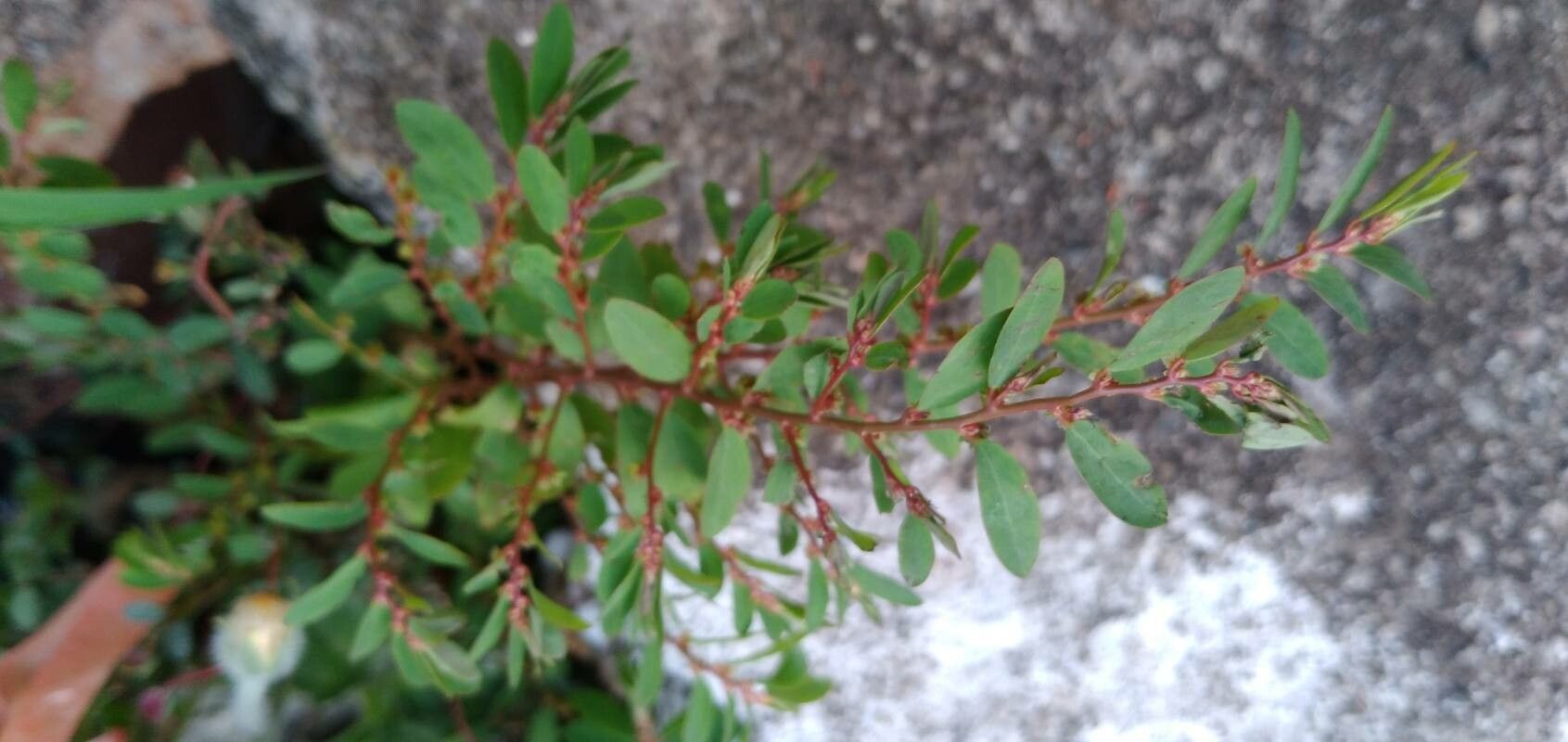
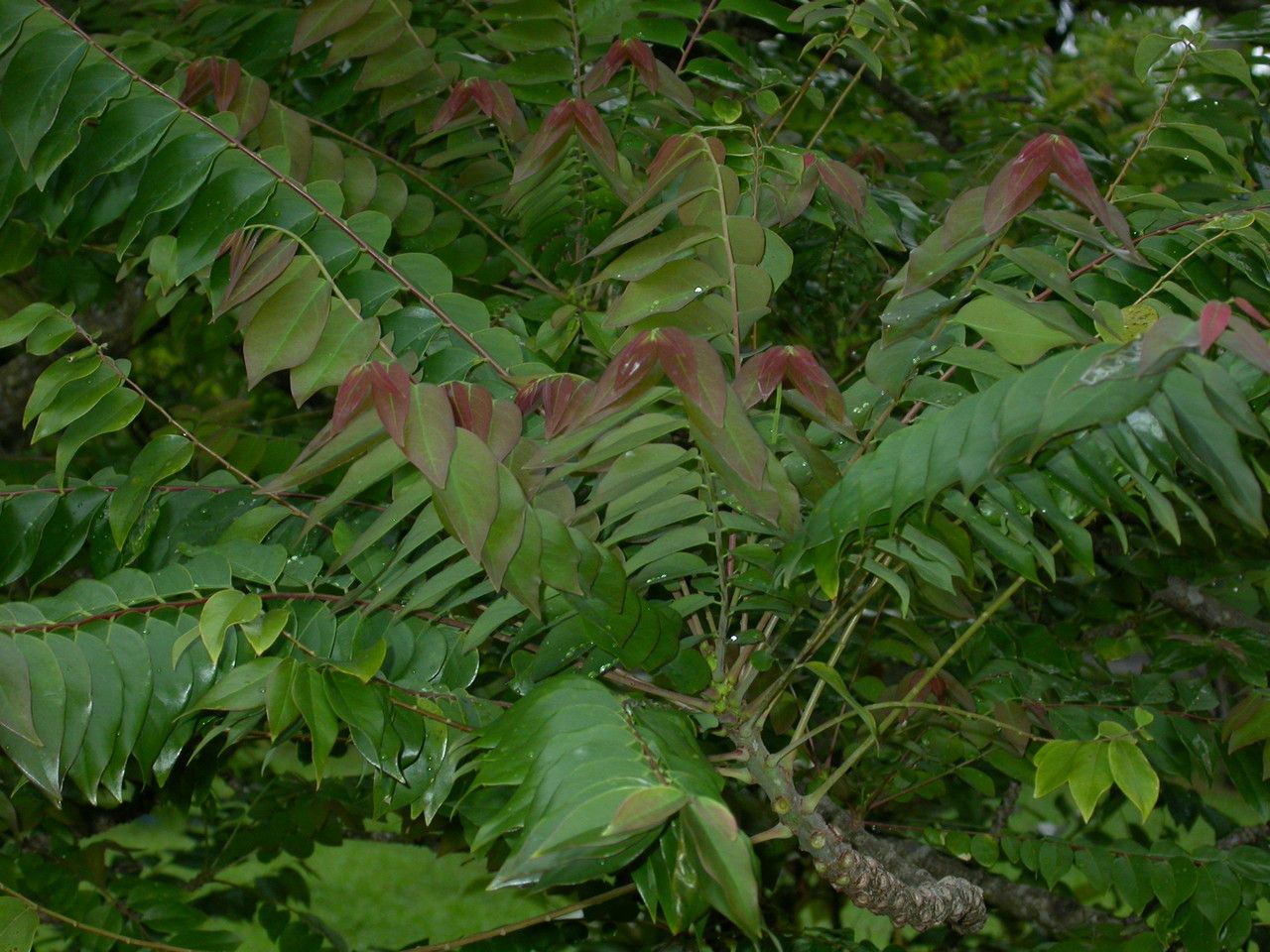
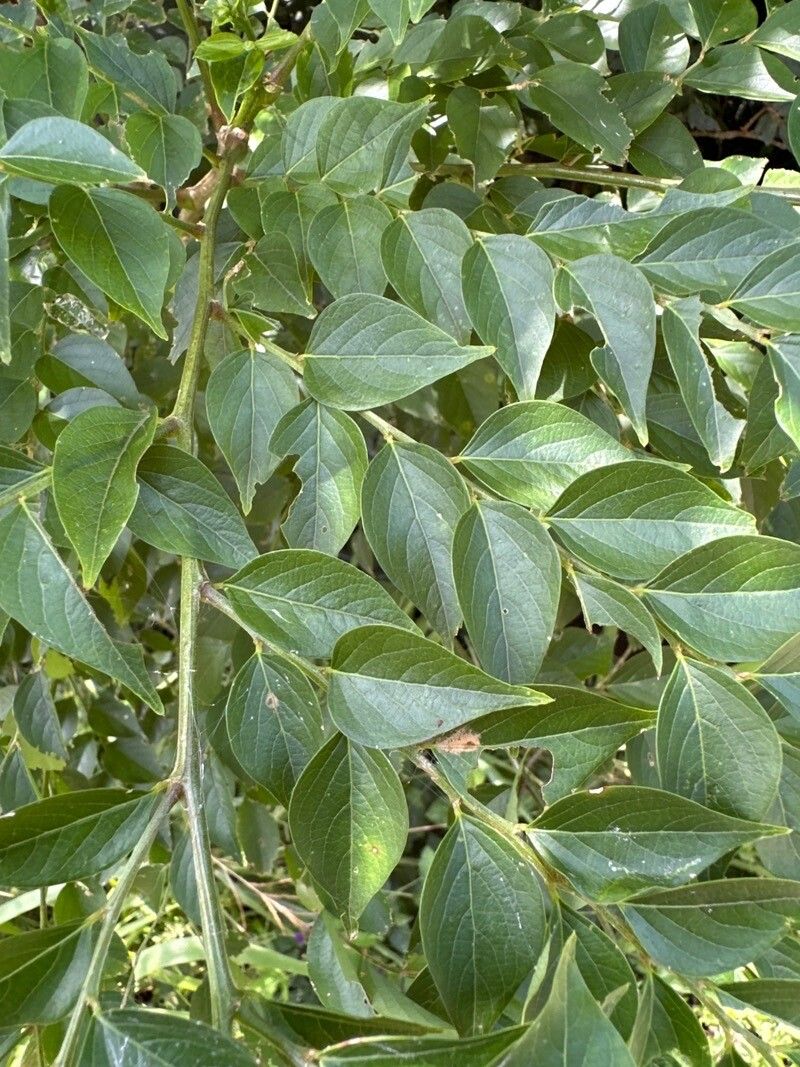
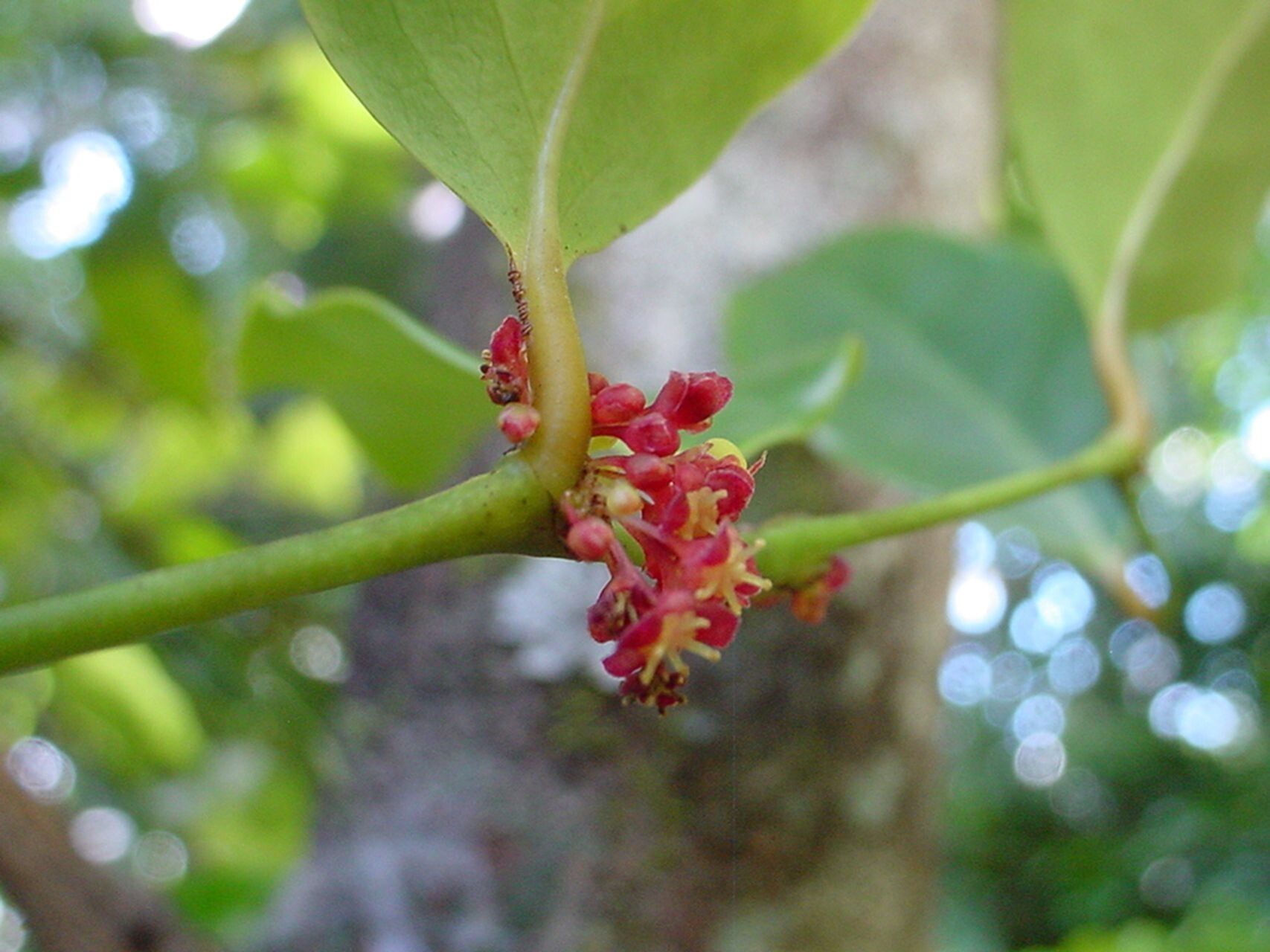
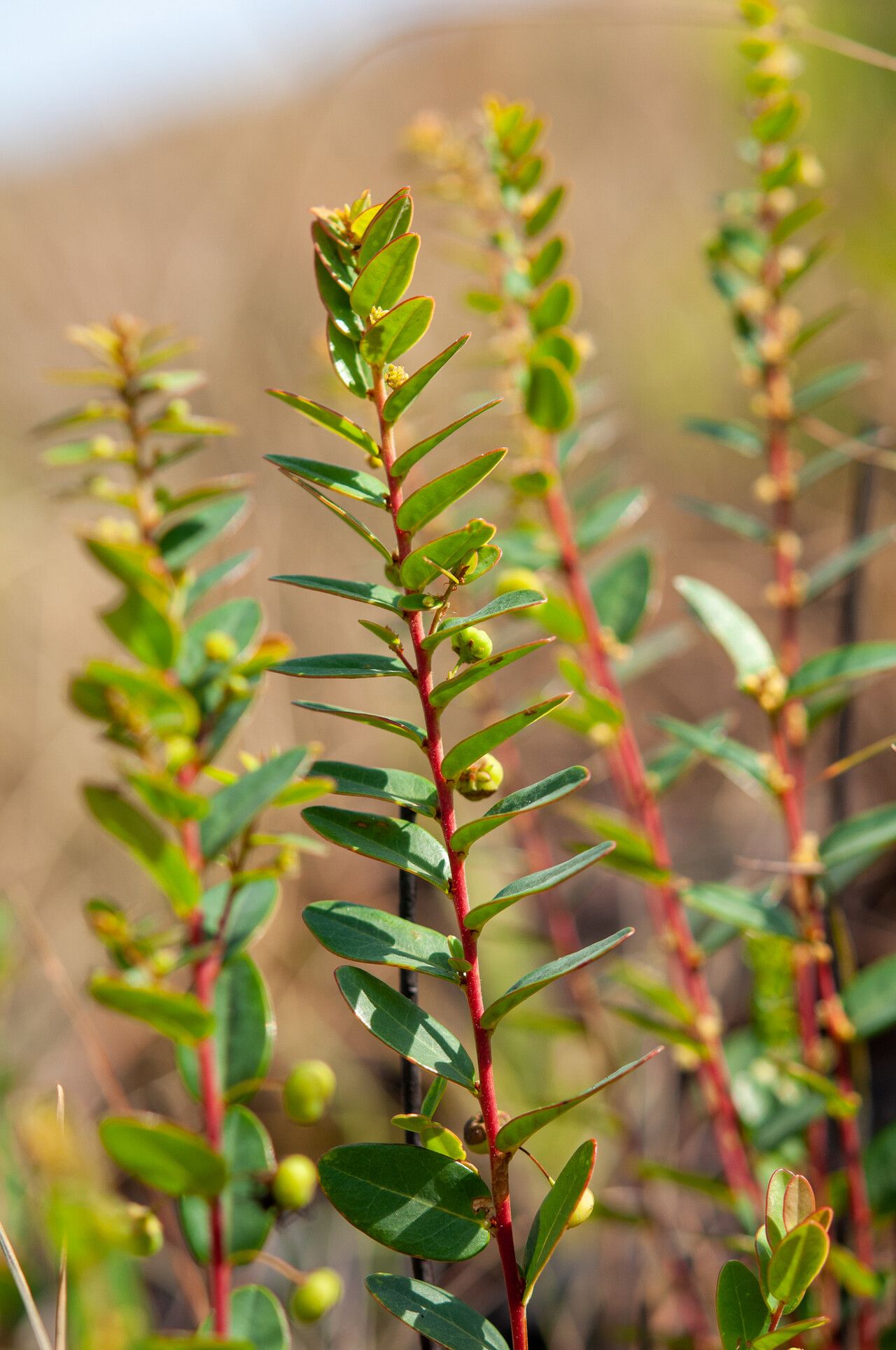
Phyllanthus caroliniensis, the Carolina leafflower, is a flowering plant native to the Americas, from the southeastern United States all the way to Argentina. The flowers are small and located where the leaf meets the stem.This plant is extremely widely distributed in the New World. In the United States it grows in open, moist areas, sometimes in association with disturbance, such as the edges of lakes, ponds, and streams, forest openings, and depressions in grasslands. It has been reported from Alabama, Arkansas, Delaware, Washington, D.C., Florida, Georgia, Illinois, Indiana, Kansas, Kentucky, Louisiana, Maryland, Mississippi, Missouri, New Jersey, North Carolina, Ohio, Oklahoma, Pennsylvania, South Carolina, Tennessee, Texas, Virginia, and West Virginia; in most of these areas it is the only native species of Phyllanthus. It was also recently collected in San Diego, California, where it has been introduced and may become established.
Carolina leaf-flower has good disease resistance and is generally not prone to illnesses. It can, however, be susceptible to pests and diseases present in its environment. These infections are typically not severe. For care, this plant is medium maintenance. It should be pruned regularly to maintain an attractive appearance and healthy growth. Fertilizing can also help encourage flowering. Carolina leaf-flower is suitable for anyone with outdoor space, such as a garden or patio, and does not demand extensive care experience. It may require more attention when grown indoors.
How to keep Phyllanthus Caroliniensis.
Light
The Carolina leaf-flower comes from habitats with dappled sunlight, such as forest understories or rocky areas that provide natural shade. It thrives in partial sun but can also adapt to full sun conditions.
Temperature
The Carolina leaf-flower comes from tropical areas where the climate is generally warm and humid. Therefore it is well suited to high temperatures and humidity. It does not tolerate abrupt temperature shifts and favors a steady thermal environment, so indoor temperature swings should be avoided. It typically cannot withstand cold conditions and needs warmer temperatures to grow. If the ambient temperature falls too low, the plant may stop growing or even perish.
Fertilizer
Carolina leaf-flower benefits from regular, weak applications of fertilizer to encourage healthy leaf development. You should feed Carolina leaf-flower about once a month during the summer months. Nitrogen is essential for foliage, and adding nitrogen-rich sources supports Carolina leaf-flower in thriving.
Botanical profile.
- Plant Type
- Herb
- Life Cycle
- Annual
- Genus
- Phyllanthus
- Family
- Phyllanthaceae
- Hardiness Zone
- 8-11
- Mature Height
- 0 cm to 30 cm
- Mature Spread
- 20 cm to 40 cm
- Leaf Color
- Green, Light Green
- Leaf Type
- Evergreen
- Flower Size
- 0.20 cm to 0.25 cm
- Bloom Time
- Late spring, Summer, Early fall, Mid fall
- Planting Time
- Spring, Autumn
- Harvest Time
- Mid summer, Late summer, Fall, Early winter
Other names.