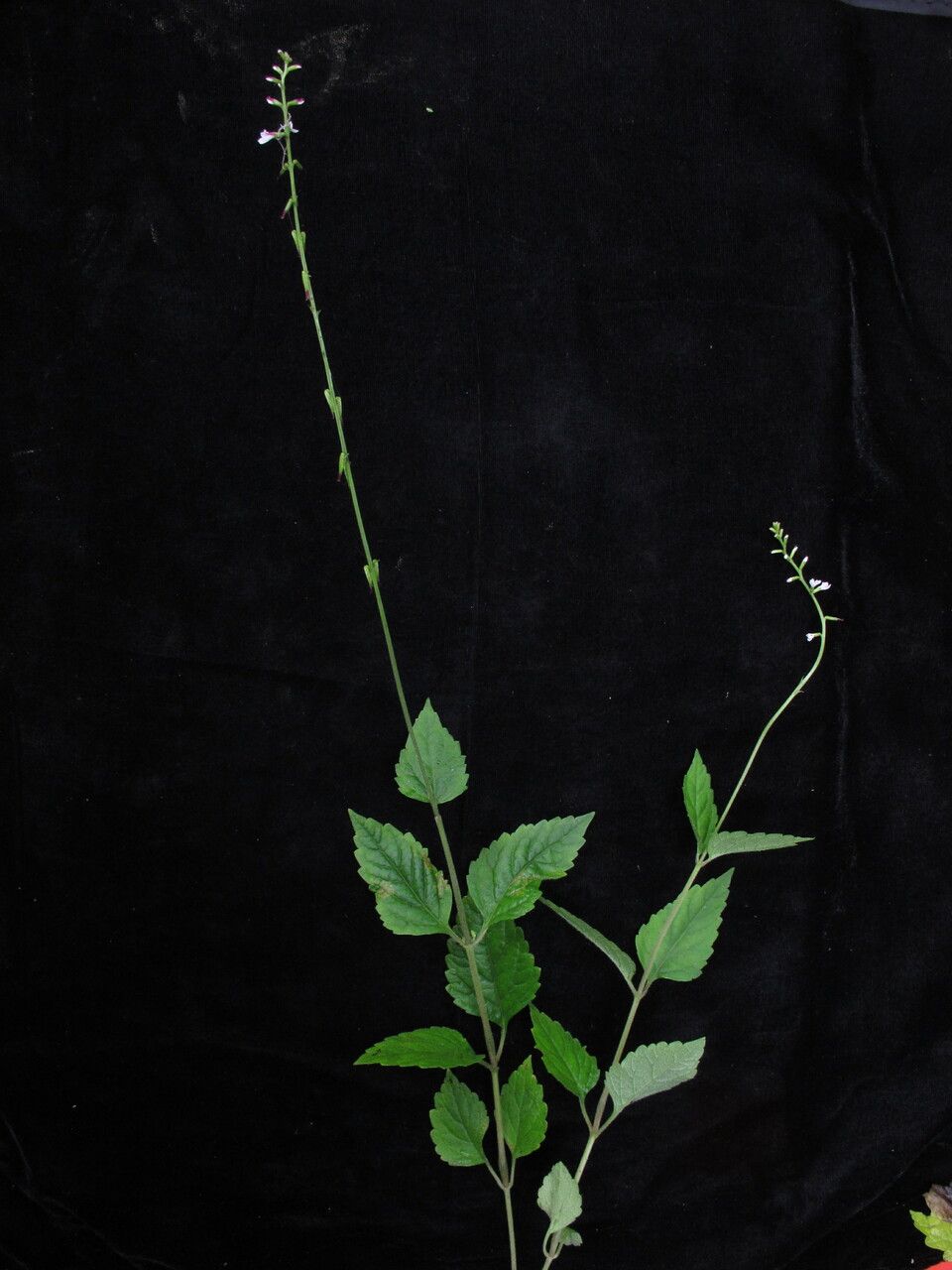
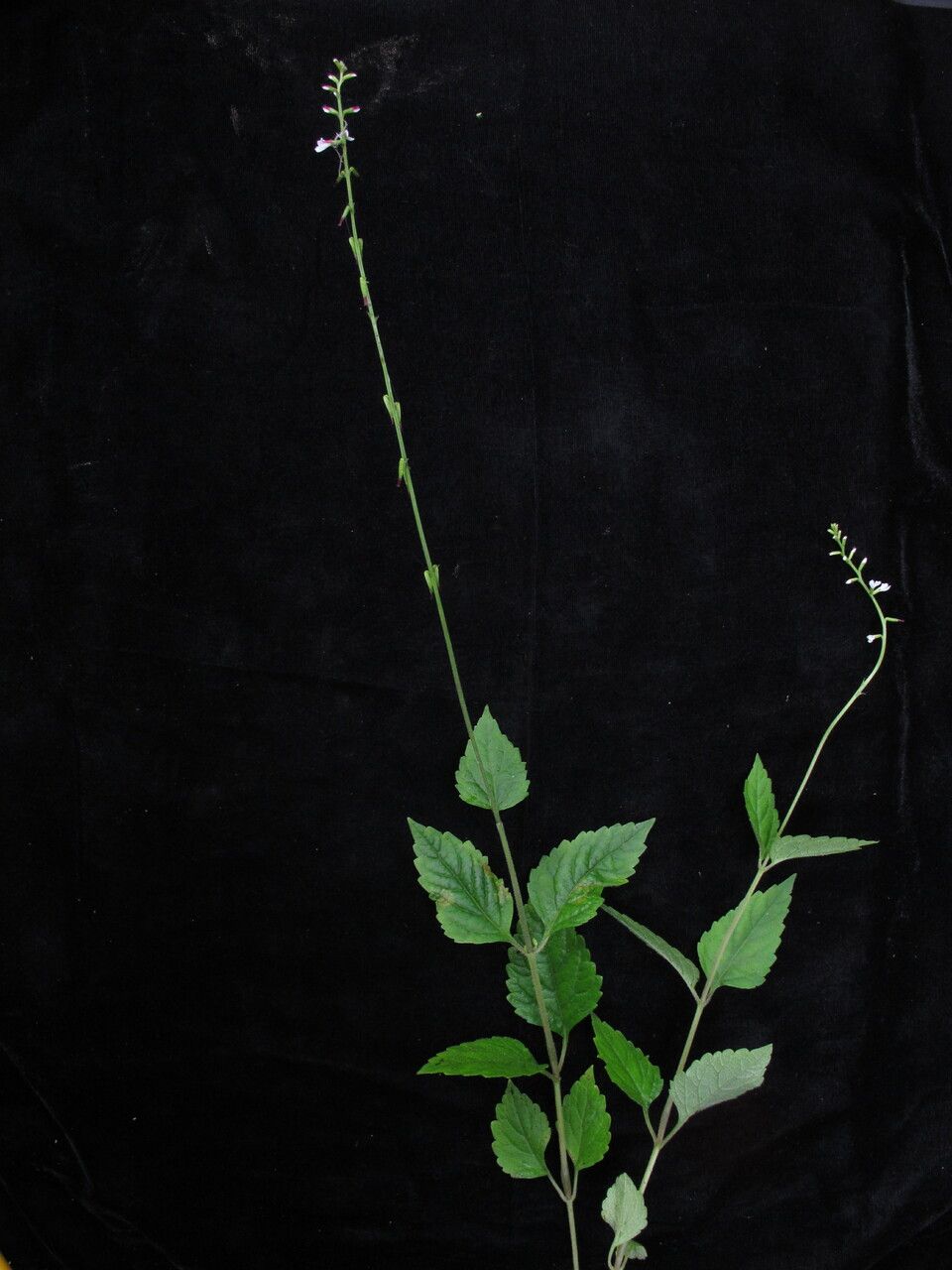
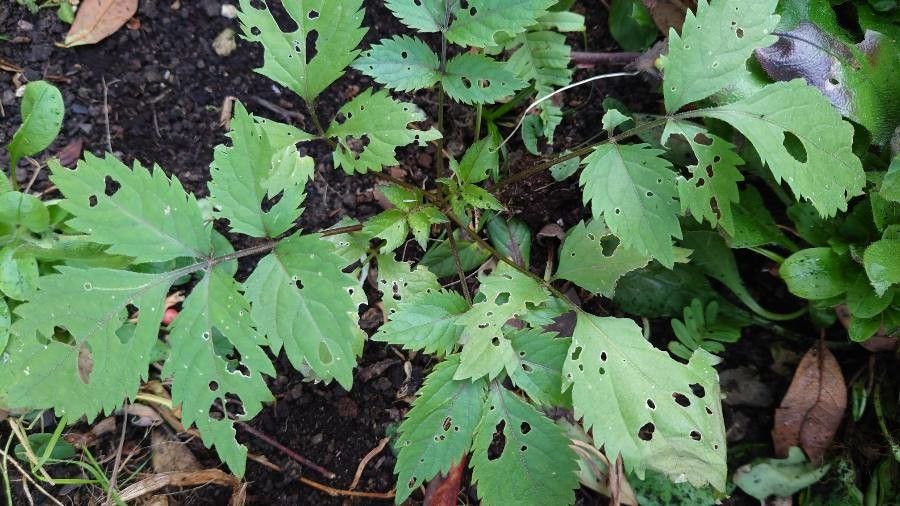
Phryma oblongifolia is a species of flowering plant in the family Phrymaceae, native from temperate Asia southwards to the Himalayas and north Vietnam. It was first described by Gen-ichi Koidzumi in 1929. Its status as a separate species was not usually accepted, and it was treated as a variety of Phryma leptostachya. In 2014, the distinctiveness of North American P. leptostachya and Asian P. oblongifolia was supported, based on morphological evidence and a previous molecular phylogenetic study. As of April 2022, the species is recognized by Plants of the World Online.
American lopseed is fairly resistant to disease and usually does not suffer from illnesses. However, it can be vulnerable to pests and diseases present in its surroundings, and these problems are typically mild. For care, the plant requires a moderate amount of maintenance. It should be pruned regularly to preserve a tidy appearance and support healthy growth. Fertilizing can also encourage flowering. American lopseed is well suited to anyone with outdoor space, such as a garden or patio, and does not demand extensive experience in care. It may need more attention if grown indoors.
How to keep Phryma Oblongifolia.
Light
The american lopseed does well in places that receive a moderate amount of sunlight, matching its original growing environment. Unlike some other plants, it does not need a lot of sun and can grow healthily with limited exposure. However, too much light or too little light can threaten its growth and overall health.
Temperature
American lopseed naturally occurs in habitats where temperatures range from 32 to 95 °F (0 to 35 ℃). It prefers moderate warmth during growth. In cool seasons, keep the environment above freezing to maintain its vitality.
Fertilizer
Usually a single fertilizer application in spring is enough for American lopseed, though additional feedings can enhance growth. Feed every month to a month and a half. Fertilizing improves the leaves' appearance and function, helping maintain even color and a healthy texture. It also promotes root development and nutrient uptake, supporting long-term plant health.
Botanical profile.
- Plant Type
- Herb
- Life Cycle
- Perennial
- Genus
- Phryma
- Family
- Phrymaceae
- Hardiness Zone
- 3-9
- Mature Height
- 61 cm to 91 cm
- Mature Spread
- 20 cm to 49 cm
- Leaf Color
- Green
- Leaf Type
- Deciduous
- Flower Color
- Pink
- Flower Size
- 2.54 cm
- Bloom Time
- Early summer, Mid summer
- Planting Time
- Spring, Summer
- Harvest Time
- Late summer, Early fall
- Native Area
- Russia, Nepal, India, Mexico, Vietnam, Japan, Koppen, Bhutan, Pakistan, South Korea, China