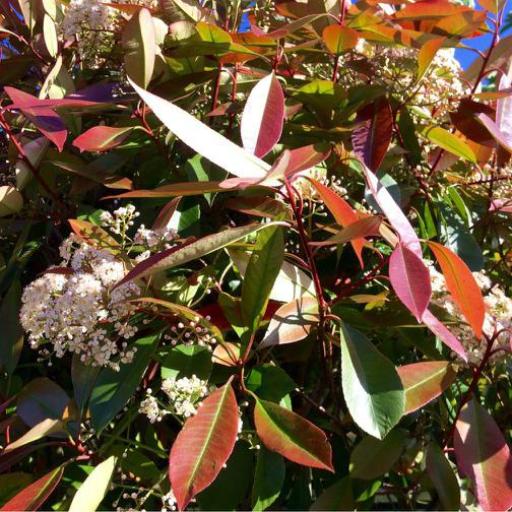
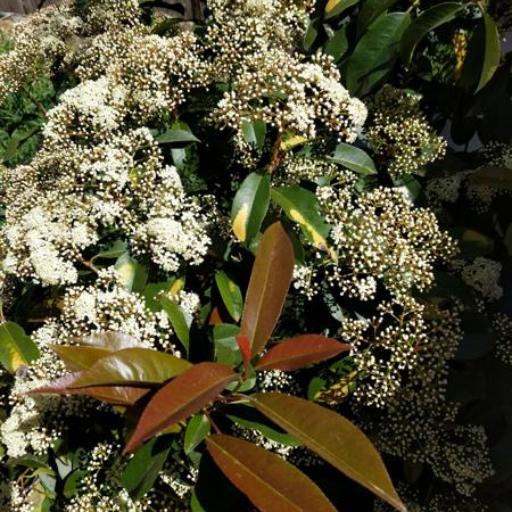
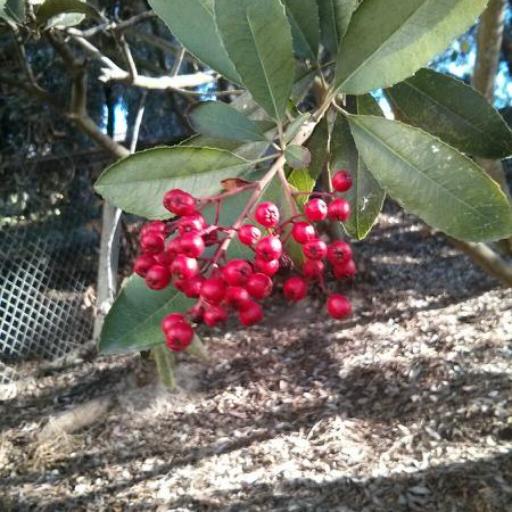
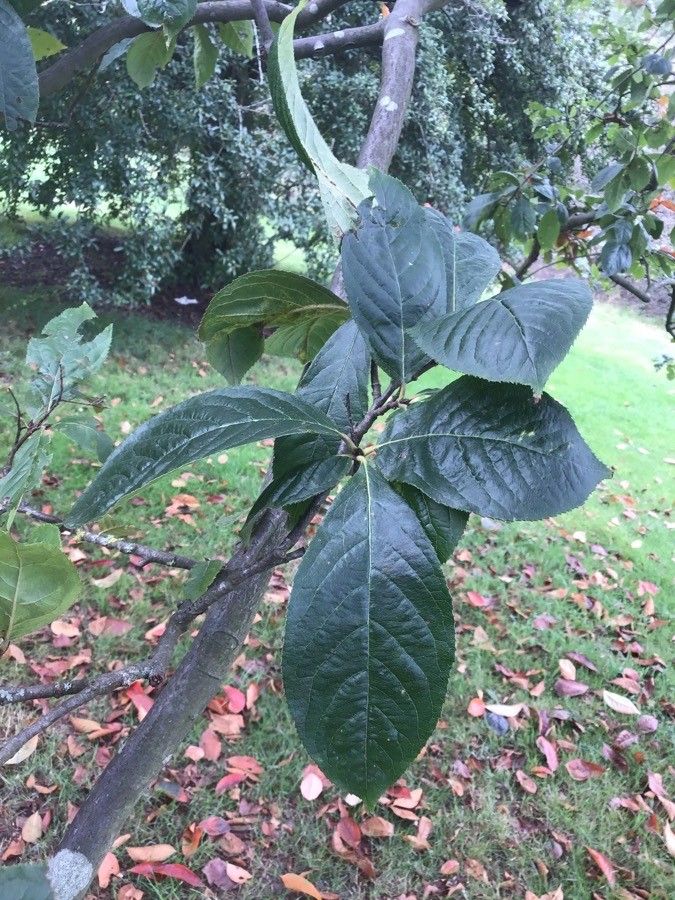
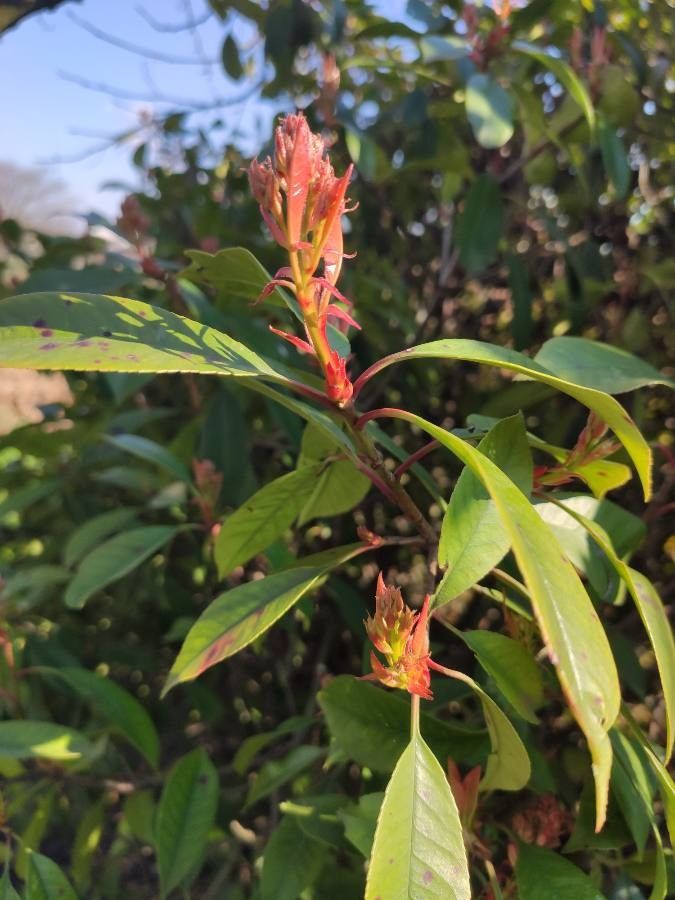
Photinia x fraseri is a popular evergreen shrub frequently used for hedging and landscaping. This hybrid plant is a cross between Photinia glabra and Photinia serratifolia. It features glossy, dark green, oval-shaped leaves with serrated edges and produces small white flowers in the spring. In the fall, the leaves turn bright red, enhancing its ornamental appeal.
If left unpruned, Photinia x fraseri can grow up to 10 feet tall and 8 feet wide. However, regular pruning can easily maintain it at a smaller size. The shrub thrives in well-drained soil and prefers full sun to partial shade.
Photinia x fraseri is relatively easy to care for, requiring adequate water during dry periods and regular fertilization during its growing season. Occasional pruning is beneficial to preserve its shape and remove any dead or damaged branches.
Overall, Photinia x fraseri is an attractive shrub that adds color and texture to any landscape design. It also provides privacy when used as a hedge or screen planting option.
Red tip photinia has strong disease resistance and is generally not susceptible to disease. Regarding care, this plant is fairly low-maintenance. When planted outdoors it needs only minimal watering, and larger specimens typically do not require pruning; smaller plants, however, should be pruned after they finish blooming. This plant is appropriate for anyone with an outdoor area, such as a garden or a deck, and does not demand extensive care experience.
How to keep Photinia Ux Fraseri.
Light
Red tip photinia comes from open habitats, such as sunlit meadows and forest margins, which offer abundant light. It does best in Full Sun but can also endure Partial Sun, showing good adaptability to different light conditions.
Water
Red tip photinia thrives in moderate humidity and prefers soil with well-balanced moisture. To stay healthy, it requires watering once a week. Although it becomes moderately drought-tolerant once established, it still needs additional watering during extended dry periods to maintain its glossy foliage. It typically grows outdoors to take advantage of natural rainfall.
Temperature
Red tip photinia adapts well to a variety of climates, whether facing sweltering summers or freezing winters. It still has an optimal temperature range for growth. If temperatures rise too high, the plant is vulnerable to heat and humidity stress, which can cause its death. In areas where temperatures near the lower limit of its cold tolerance, it's important to provide insulation to protect the plant.
Fertilizer
The timing of fertilizing Red tip photinia is important. Apply fertilizer in early spring and then monthly through early summer. Fertilizer encourages attractive blooms and supplies energy both during dormant periods and active growth.
Pruning
To keep your red tip photinia thriving, it's best to prune it annually, either in early or late winter. During pruning, concentrate on removing dead wood and thinning out crowded sections. This improves air circulation and light penetration. Regular pruning not only promotes a dense structure and manages the size of the plant, but also helps prevent pest problems, enhancing its presence in your garden.
Botanical profile.
- Plant Type
- Shrub
- Life Cycle
- Perennial
- Genus
- Photinia
- Family
- Rosaceae
- Hardiness Zone
- 7-10
- Mature Height
- 2.13 m to 3.96 m
- Mature Spread
- 2.13 m to 3.05 m
- Leaf Color
- Dark Green, Red
- Leaf Type
- Evergreen
- Flower Color
- White
- Flower Size
- 7.62 cm to 15.24 cm
- Bloom Time
- Mid spring, Late spring, Early summer
- Planting Time
- Spring, Autumn
- Harvest Time
- Mid summer, Late summer
Other names.