Photinia serrulata, commonly known as Chinese photinia or Chinese hawthorn, is a species of evergreen shrub or small tree belonging to the Rosaceae family. Native to China and Taiwan, it has been widely cultivated around the world for its ornamental value.
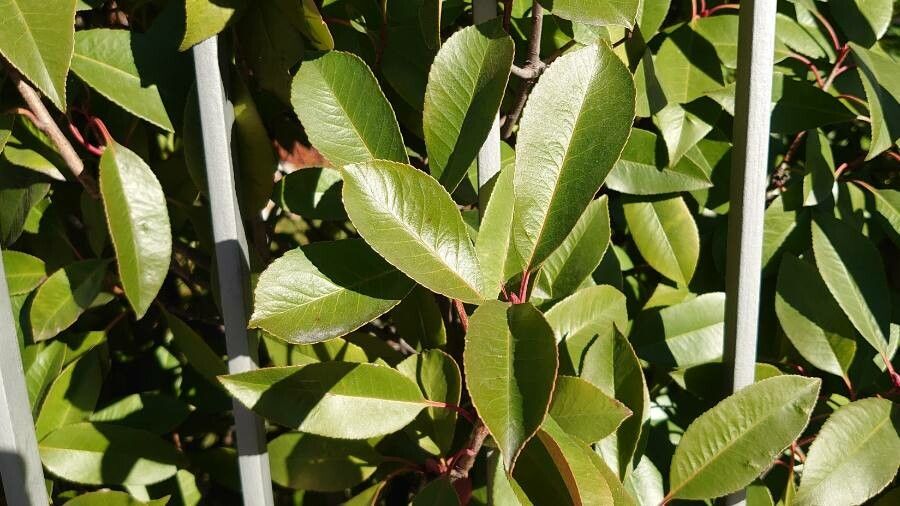
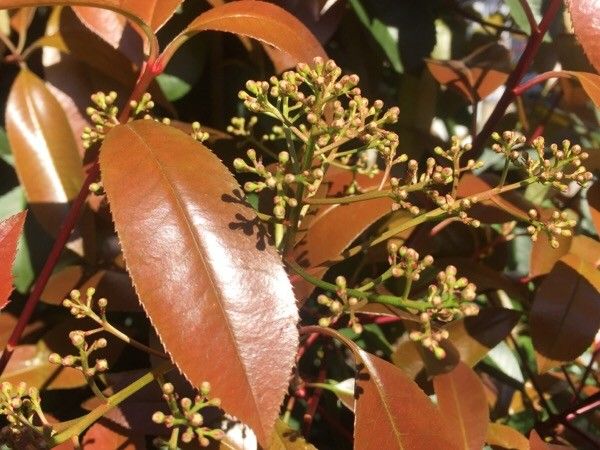
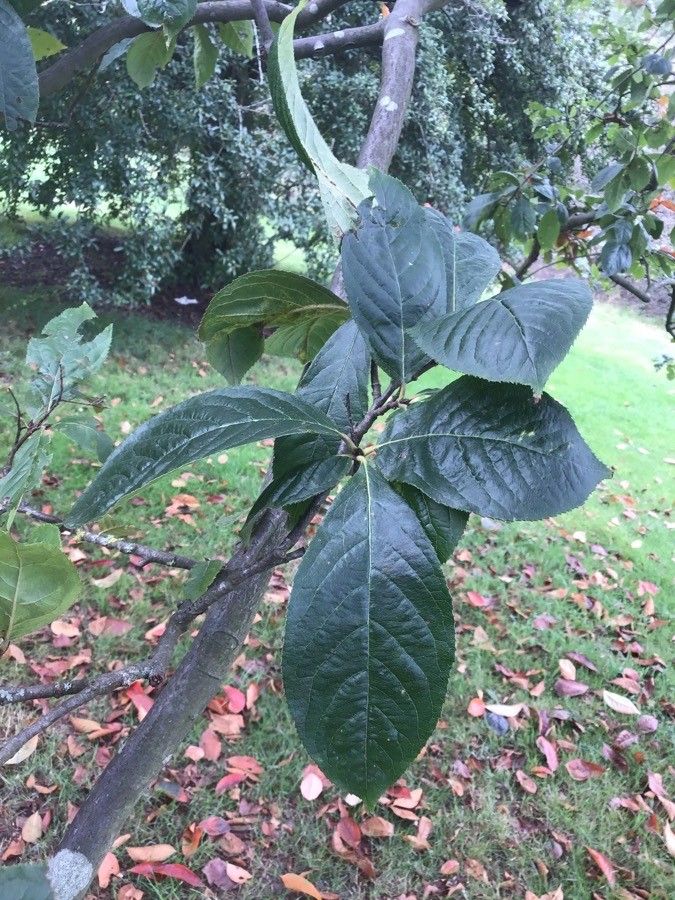
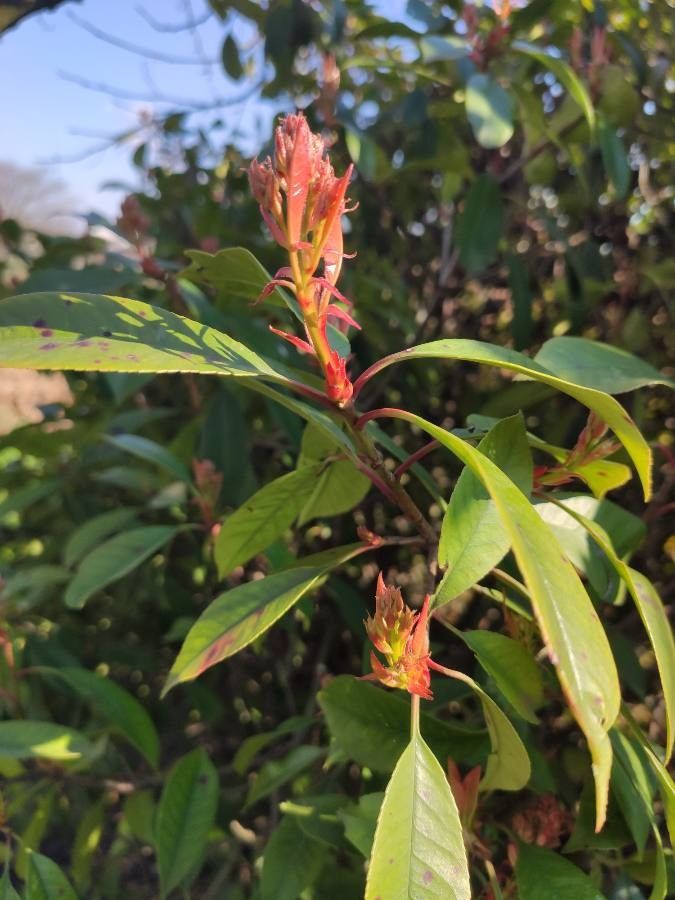
This plant can grow up to 10 meters tall and features a dense, bushy structure with glossy, dark green leaves that are serrated along the edges. The new leaves often emerge in red or bronze hues, creating an attractive contrast with the mature foliage.
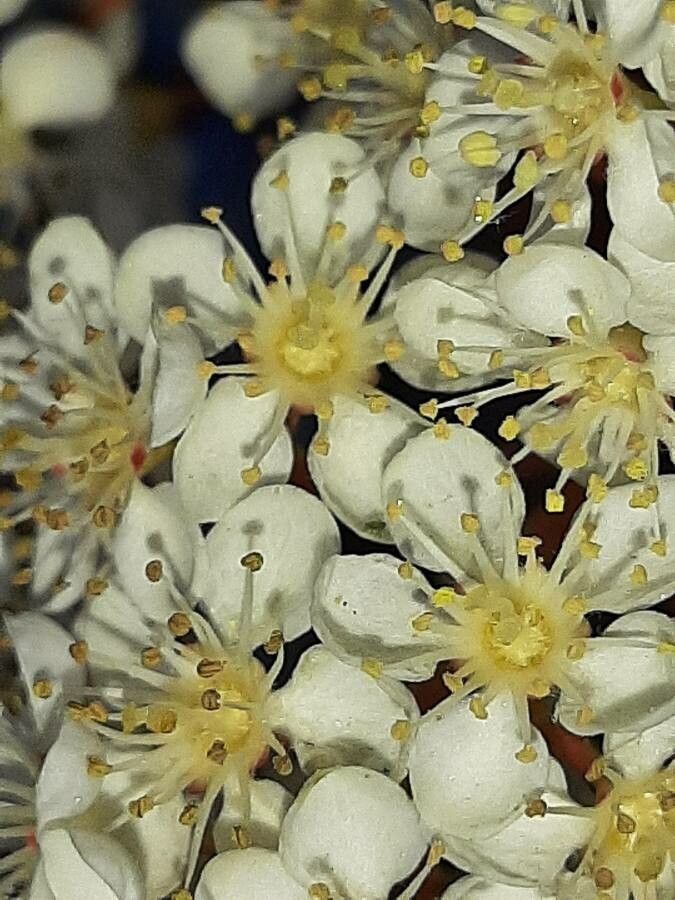
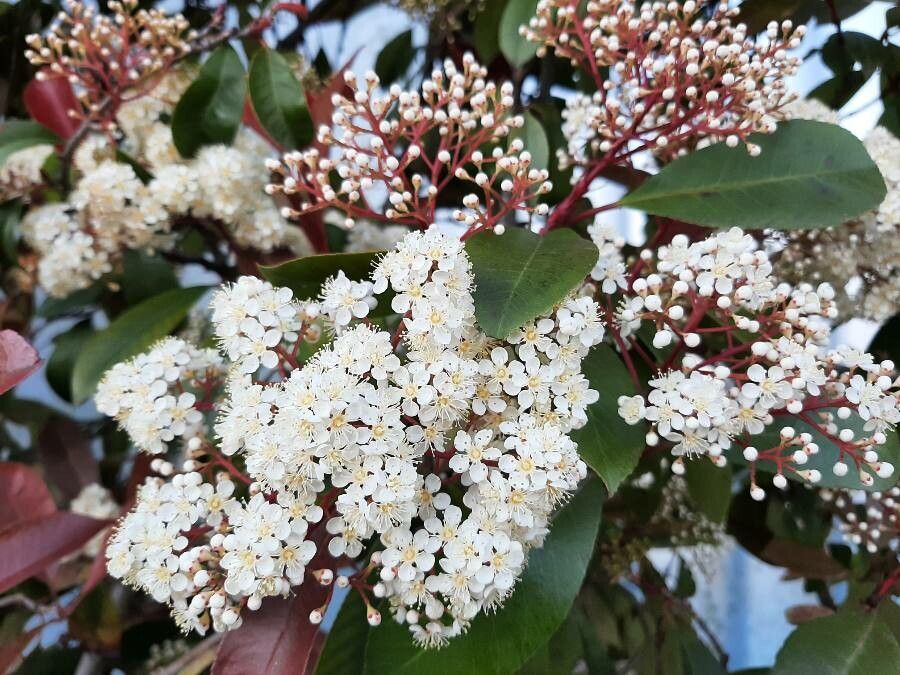
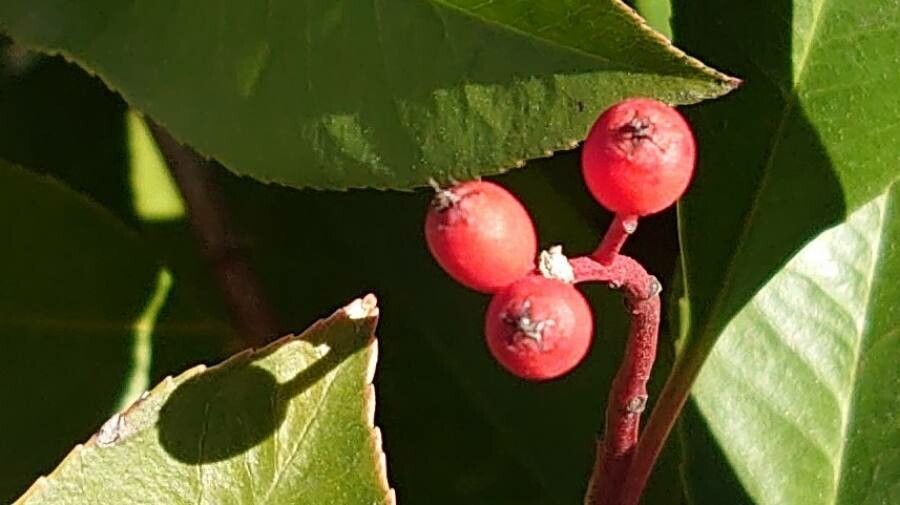
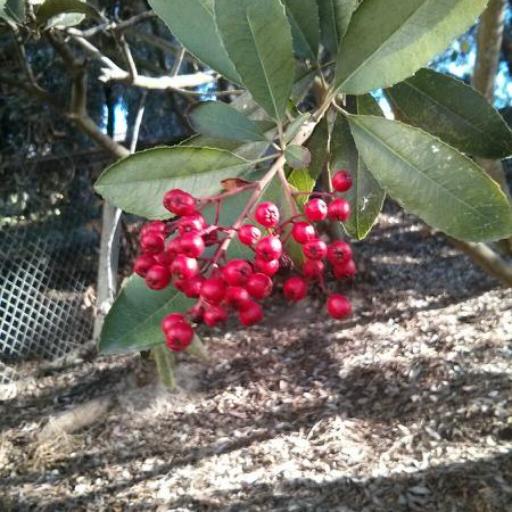
In the spring, Photinia serrulata blooms with clusters of small white flowers. These are followed by bright red berries in the autumn. While the berries are edible, they are not commonly consumed due to their sour taste.
Photinia serrulata thrives in well-drained soil and full sun but can also tolerate partial shade. It is relatively easy to grow and maintain, requiring minimal pruning aside from occasional shaping.
Beyond its ornamental appeal as a garden plant or hedge shrub, Photinia serrulata has medicinal properties. Its bark extract contains tannins, which are used in traditional medicine to treat diarrhea and dysentery.
In summary, Photinia serrulata is an attractive evergreen plant that provides year-round visual interest and is suitable for various landscaping purposes. Additionally, it offers medicinal benefits, primarily derived from its bark extract used in traditional medical practices.
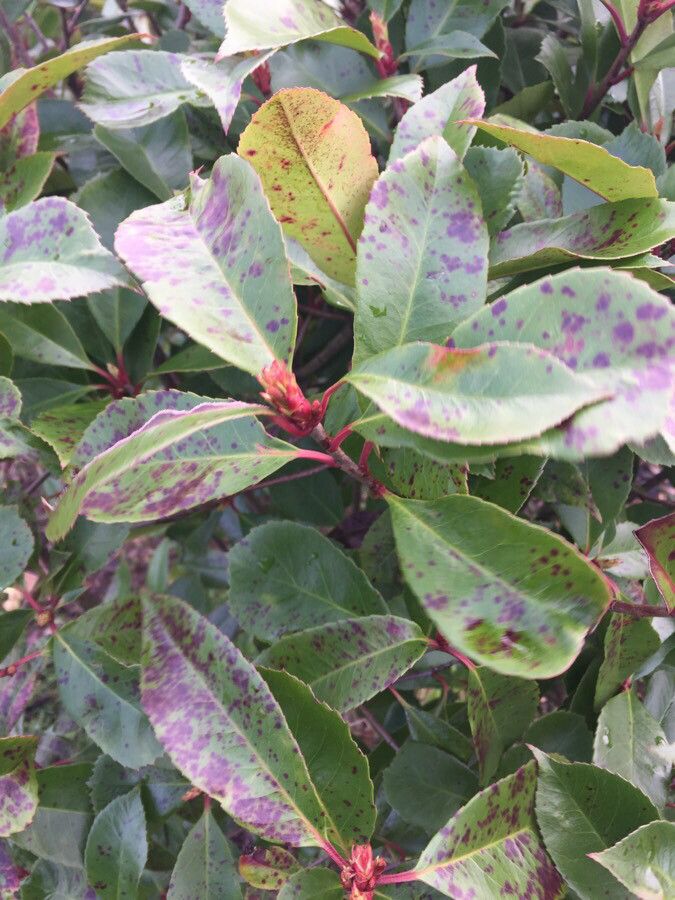
Chinese photinia is disease-resistant and generally not prone to illness. Regarding care, this plant is fairly low-maintenance. When grown outdoors it needs only light watering, and larger specimens usually do not require pruning. Smaller plants, however, should be pruned after they finish blooming. Chinese photinia is well suited for anyone with an outdoor area, such as a garden or deck, and does not demand extensive care experience.
How to keep Photinia Serrulata.
Light
The Chinese photinia requires plenty of sunlight to grow optimally. Although it can tolerate regions with limited sunlight, it performs best in locations that are generously lit. An overabundance or lack of light could potentially impact the growth of the plant negatively. Its roots in sunlight-rich habitats indicate the necessity for regular exposure to sunlight.
Water
One of the reasons that this plant is low maintenance is because once it has matured, it is drought-resistant so rarely needs watering to survive. One exception to this is if your Photinia serrulata is under two years old or if it is planted in a container, where it may need a little more attention. If this is the case, then water your plant once a week after checking that the first 5 cm (1,96 ") of soil are dry.
Temperature
Chinese photinia naturally thrives in a temperate climate, making it suitable for temperatures from 50 to 95 ℉ (10 to 35 ℃). It can survive in winter temperatures dropping as low as 23 ℉ (-5 ℃), however, frost protection is essential. Amidst hotter summer periods, this plant is advantaged by partial shade and consistent hydration to cope with temperatures exceeding 86 ℉ (30 ℃).
Fertilizer
For encouraging a healthy development, apply fertilizer to your Chinese photinia at the onset of spring. Routine fertilization boosts its overall wellbeing, leads to strong growth, increases endurance to harsh conditions, and strengthens its ability to resist diseases and pests. Keeping to a precise fertilization timetable for your Chinese photinia is essential for bright, deeply colored foliage and a lush outlook.
Pot & Repot
When transplanting Chinese photinia, opt for a container 1-2 inches (2.5-5 cm) wider that offers plentiful drainage. Employ a potting mix that drains well. Carry out the repotting process in either spring or autumn, ensuring that the root ball is marginally beneath the rim of the plant pot. After the repotting process, water abundantly and locate it in a warm location with non-direct sunlight.
Toxicity
Leaves are considered to be toxic to some animals due to presence of cyanogenic glycosides.
Further reading →
The toxicity and danger assessments provided are for reference only. We do not assure their accuracy, so it's crucial not to depend on them. Seek professional advice when necessary for accurate guidance.
Botanical profile.
- Plant Type
- Tree, Shrub
- Life Cycle
- Perennial
- Genus
- Photinia
- Family
- Rosaceae
- Hardiness Zone
- 6-10
- Mature Height
- 3.96 m to 11.89 m
- Mature Spread
- 2.74 m to 6.1 m
- Leaf Color
- Green, Red
- Leaf Type
- Evergreen
- Flower Color
- White
- Flower Size
- 0.51 cm to 0.76 cm
- Bloom Time
- Late spring, Early summer, Mid summer
- Planting Time
- Spring, Autumn
- Harvest Time
- Mid summer, Late summer
- Native Area
- India, Myanmar, Japan, Philippines, Thailand, China
Other names.