Photinia serratifolia, commonly known as Chinese photinia or Chinese hawthorn, is an evergreen shrub or small tree in the Rosaceae family. Native to China and Taiwan, it has gained popularity worldwide for its ornamental appeal.
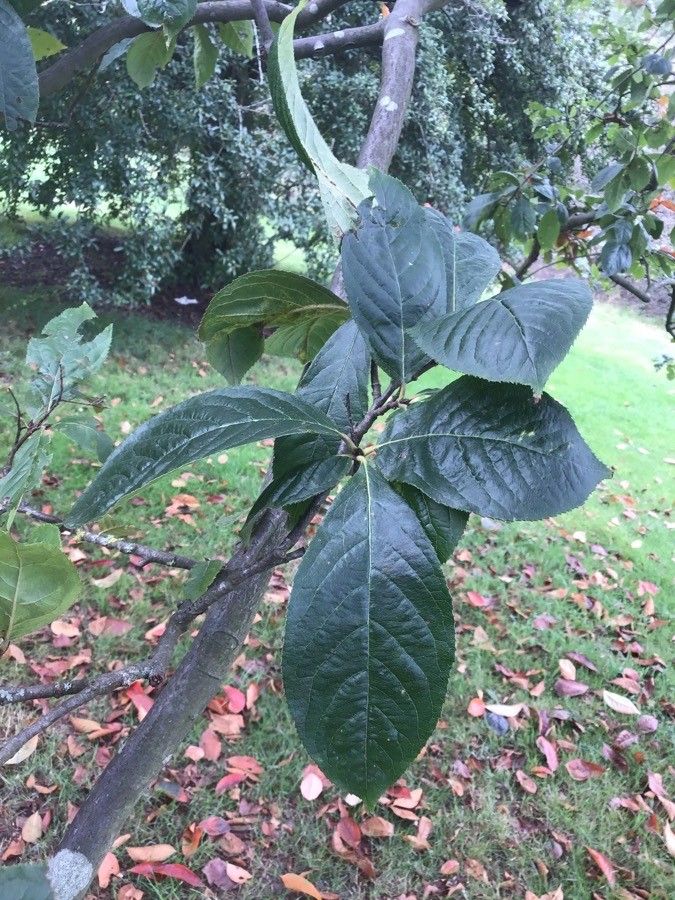
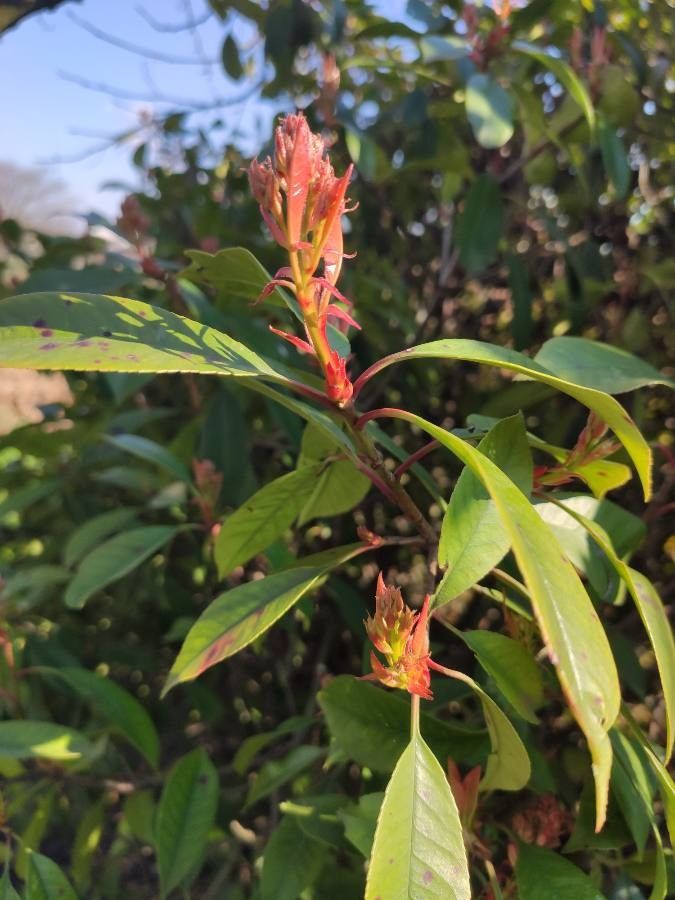
This plant can reach heights of up to 10 meters and features a dense, bushy growth habit with glossy, dark green leaves that have serrated edges. The new growth often appears red or bronze, creating an attractive contrast with the mature green foliage.
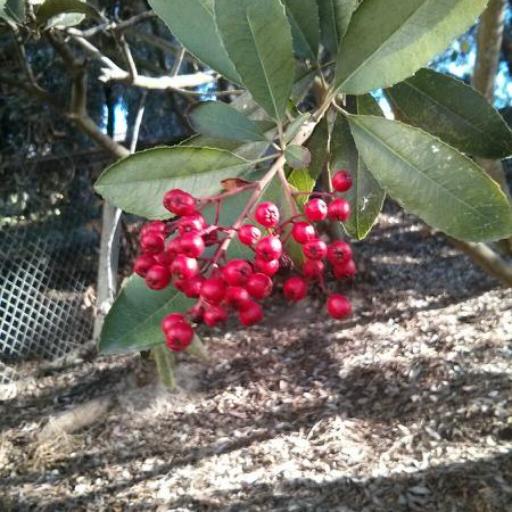
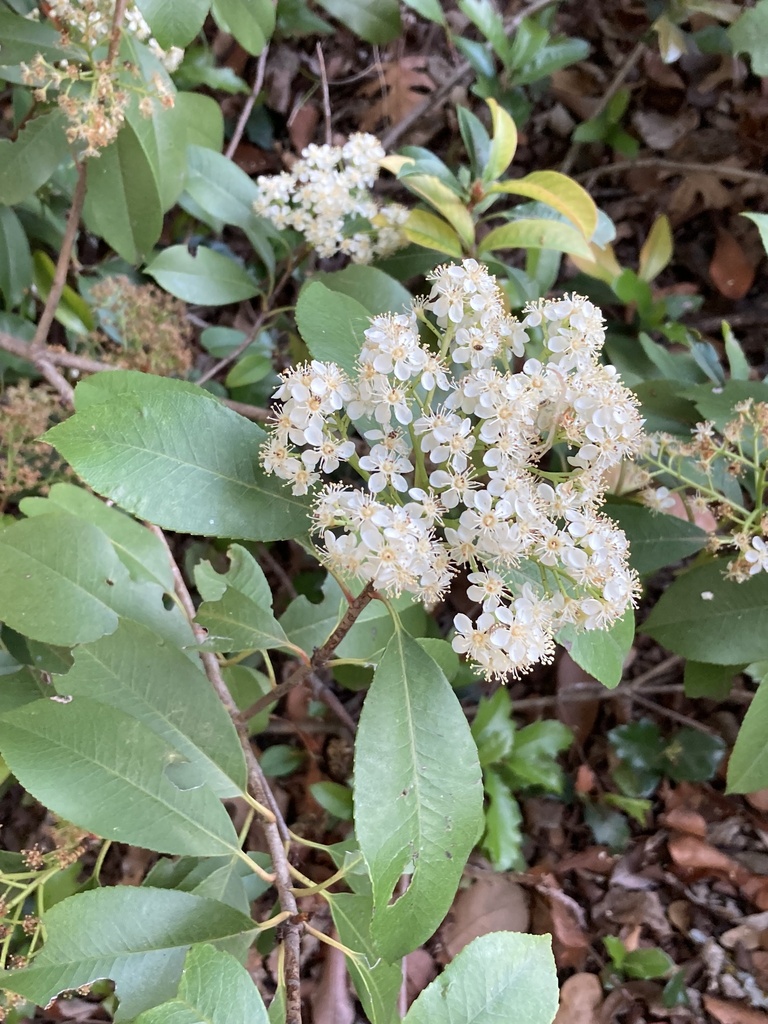
In spring and early summer, Photinia serratifolia blooms with clusters of small white flowers, which later give way to bright red berries in autumn. Although the berries are edible, they are not commonly consumed by humans.
Photinia serratifolia is not an ideal choice for gardens because it has a strong, unpleasant odor. Additionally, its aggressive and invasive nature makes it even more undesirable. In fact, it has been officially declared an invasive species in several states, including California, Texas, Louisiana, Mississippi, and Georgia. FUN FACT · FROM THE LIBRARY
Photinia serratifolia thrives in well-drained soil and prefers full sun to partial shade. It can adapt to a wide range of soil types but does not fare well in waterlogged conditions.
Due to its dense foliage and appealing year-round appearance, this plant is often used as an ornamental hedge. Additionally, it provides habitat for birds that feed on its berries.
Overall, Photinia serratifolia is a versatile plant with aesthetic and ecological benefits. It can be used for various landscaping purposes, such as hedging or screening, while also supporting wildlife.
Chinese Photinia, Japanese Photinia, and Taiwanese Photinia are widely cultivated for their tall appearance and the clusters of white flowers that bloom in spring. However, the flowers are known for emitting a strong scent that some people find unpleasantly similar to that of human semen. This can be troublesome for those in proximity to the plant. Despite its various common names, this photinia is native to China, Taiwan, Japan, and other regions.
Chinese photinia is disease-resistant and generally not prone to illness. Regarding care, this plant is fairly low-maintenance. When grown outdoors it needs only light watering, and larger specimens usually do not require pruning. Smaller plants, however, should be pruned after they finish blooming. Chinese photinia is well suited for anyone with an outdoor area, such as a garden or deck, and does not demand extensive care experience.
How to keep Photinia Serratifolia.
Light
The Chinese photinia requires plenty of sunlight to grow optimally. Although it can tolerate regions with limited sunlight, it performs best in locations that are generously lit. An overabundance or lack of light could potentially impact the growth of the plant negatively. Its roots in sunlight-rich habitats indicate the necessity for regular exposure to sunlight.
Water
Taiwanese photinia grows best in moist, subtropical climates where the humidity is consistent without the soil becoming waterlogged. It's recommended to water the plant once every 1-2 weeks, allowing the soil to dry out slightly between waterings. Being an evergreen, Taiwanese photinia retains water in its leaves, which is vital for maintaining vibrant foliage throughout the year, even when humidity levels change.
Temperature
Chinese photinia naturally thrives in a temperate climate, making it suitable for temperatures from 50 to 95 ℉ (10 to 35 ℃). It can survive in winter temperatures dropping as low as 23 ℉ (-5 ℃), however, frost protection is essential. Amidst hotter summer periods, this plant is advantaged by partial shade and consistent hydration to cope with temperatures exceeding 86 ℉ (30 ℃).
Fertilizer
For encouraging a healthy development, apply fertilizer to your Chinese photinia at the onset of spring. Routine fertilization boosts its overall wellbeing, leads to strong growth, increases endurance to harsh conditions, and strengthens its ability to resist diseases and pests. Keeping to a precise fertilization timetable for your Chinese photinia is essential for bright, deeply colored foliage and a lush outlook.
Pruning
Taiwanese photinia is known for its glossy leaves and striking red new growth. To maintain its health and shape, it's important to prune it annually between early and late winter. Begin by cutting away any dead branches, then proceed with shaping cuts to achieve your desired form. Using clean, sharp tools is crucial to prevent damage and disease, which in turn encourages denser foliage.
Pot & Repot
When transplanting Chinese photinia, opt for a container 1-2 inches (2.5-5 cm) wider that offers plentiful drainage. Employ a potting mix that drains well. Carry out the repotting process in either spring or autumn, ensuring that the root ball is marginally beneath the rim of the plant pot. After the repotting process, water abundantly and locate it in a warm location with non-direct sunlight.
Botanical profile.
- Plant Type
- Tree, Shrub
- Life Cycle
- Perennial
- Genus
- Photinia
- Family
- Rosaceae
- Hardiness Zone
- 6-10
- Mature Height
- 3.96 m to 11.89 m
- Mature Spread
- 2.74 m to 6.1 m
- Leaf Color
- Green, Red
- Leaf Type
- Evergreen
- Flower Color
- White
- Flower Size
- 0.51 cm to 0.76 cm
- Bloom Time
- Late spring, Early summer, Mid summer
- Planting Time
- Spring, Autumn
- Harvest Time
- Mid summer, Late summer
- Native Area
- India, Myanmar, Japan, Philippines, Thailand, China
Other names.
Reader questions.
How should I water my Taiwanese photinia plant?
Watering your Taiwanese photinia is a simple task since it is not very particular about the watering method. You can use various common tools like watering cans, hoses, or even cups to moisten the soil of this plant. Regardless of the tool you choose, it is important to water the soil directly, ensuring that all areas receive equal moisture to provide the necessary water to all parts of the root system. It is recommended to use filtered water to avoid harmful particles found in tap water. Additionally, using water at or slightly above room temperature is beneficial to prevent shocking the plant, as extremely cold or hot water may have an adverse effect. Nevertheless, the Taiwanese photinia generally thrives with any type of water provided.
Why should I put fertilizer on my Taiwanese photinia?
No matter what type of Taiwanese photinia you have, regular fertilization will improve the overall health of your plant. Providing the right nutrients will promote stronger growth and increased resilience to harsh conditions, as well as boost its ability to fend off diseases and pests. Since the foliage of your Taiwanese photinia is a key feature, it is crucial to maintain it. This involves sticking to a consistent fertilization schedule tailored to your Taiwanese photinia, which will encourage the development of vibrant, lush leaves.
What are the sunlight requirements for Taiwanese photinia?
Taiwanese photinia thrives in environments with abundant sunlight, requiring more than 6 hours of sunlight daily to be considered in full sun, and about 3-6 hours to be considered in partial sun. This plant, originating from sun-drenched habitats, demonstrates optimal growth when provided with the significant light exposure it is accustomed to. It's vital to observe the movement of sunlight through your garden, finding locations that offer a healthy balance of light and shade to ensure the well-being of your plants.
What is the native growth environment for Taiwanese photinia?
Taiwanese photinia thrives in a temperate environment, preferring temperatures ranging from 50 to 95°F (10 to 35°C). It can withstand low winter temperatures down to 23°F (-5°C) but must be protected from frost. During hotter summers, it appreciates some shade and frequent watering to cope with temperatures above 86°F (30°C). This plant has significant cold resistance, so special frost protection measures aren't usually necessary, but protection is advised when temperatures are expected to fall below -25°C by wrapping the trunk and branches. Additionally, it's beneficial to water the plant abundantly before the first freeze in autumn to keep the soil moist and prevent drought and water scarcity during the colder months.
What should I do if I give my Taiwanese photinia too much water or too little water?
Watering is essential for outdoor plants, especially those recently planted or seedlings. It is crucial to maintain regular watering for a few months while the tree is still small or newly planted. Once the roots are established, Taiwanese photinia can rely on rainfall most of the time. When growing Taiwanese photinia in pots, overwatering is more likely to happen. If you accidentally overwater your plant, take immediate action to minimize the impact. Firstly, stop watering right away. Then, remove the plant from its pot to check the roots. If there is no sign of root rot, you can place the plant back in its container. However, if you notice any roots affected by rot, trim them and apply fungicide if necessary. Finally, repot the Taiwanese photinia in well-draining soil. On the other hand, underwatering is easier to fix. If you notice drooping, drying out, and falling leaves, water the plant more frequently. The leaves will recover quickly after sufficient watering. Adjust your watering schedule promptly when underwatering occurs.
When should I fertilize my Taiwanese photinia?
To ensure healthy growth, it is recommended to fertilize your Taiwanese photinia in late winter or early spring. This provides the necessary nutrients for the plant to flourish with the arrival of warm weather. Additionally, if you live in a warm climate region, it can be beneficial to give your Taiwanese photinia another dose of fertilizer in early fall. This not only supplies nutrients for the upcoming growing season, but also helps the plant endure winter cold without foliage damage. Fertilizing earlier will give the new branches sufficient time to grow and withstand the cold winter.
What are the essentials for growing Taiwanese photinia?
The Taiwanese photinia craves plenty of sunshine for optimal growth, performing best in well-illuminated environments. While it can survive in less sunny areas, its growth might be negatively impacted by either too much or too little light. For indoor plants facing insufficient natural sunlight, especially during winter or in darker spaces, artificial lighting becomes crucial. LED lights are a popular choice, providing specific light wavelengths needed by plants. Depending on the plant's sunlight category, artificial light requirements vary in intensity and duration, usually mimicking natural daylight hours to promote healthy growth.
How does low temperature affect Taiwanese photinia, and what are the solutions?
Taiwanese photinia is cold-tolerant, performing best when the temperature stays above 10°C and should be maintained above -15°C during winter. If temperatures fall below -25°C, while there might not be noticeable changes in winter, branches may become brittle and dry come spring, and new shoots may not emerge. The solution for this is to prune away any dead branches that haven't produced new leaves come spring, to encourage healthy growth.
How often should I water my Taiwanese photinia plant?
Plants naturally growing outdoors usually get enough water from rainfall. However, if your area doesn't receive much rain, you should water your plants properly every 2 weeks in spring and fall, and more frequently in summer. In winter, since growth is slower and plants need less water, you should water them sparingly or not at all. If your Taiwanese photinia is young or newly planted, you should water it more frequently to help it establish and grow into a more adaptable and drought-tolerant plant. For potted plants, there are two main ways to determine how often to water your Taiwanese photinia. The first option is to follow a set schedule, watering once a week or every other week. However, this approach may not consider the specific conditions of your plant's environment. Watering frequency can also change depending on the season. For example, during summer when the plant needs more water, a set schedule may not be sufficient. An alternative approach is to monitor the soil moisture. It's generally best to wait until the top two to four inches of soil, about one-third to half the depth of the pots, have completely dried out before watering again.
When is it not a good idea to fertilize my Taiwanese photinia?
There are specific times of the year when you should avoid fertilizing your Taiwanese photinia. The first is during the early and mid-winter months when the plant is dormant and does not require feeding. Additionally, it is not recommended to fertilize the plant during the late spring and throughout the summer as the weather tends to be hotter and drier. Fertilizing during these times can have a negative impact on the plant. To prevent any issues, it is best to stick to a fertilization schedule that involves feeding only in early spring and early fall.
What symptoms indicate light deficiency in Taiwanese photinia?
Taiwanese photinia shows several symptoms when lacking adequate light. New leaves may grow smaller than older ones, indicating a size reduction upon maturity. The plant might exhibit leggy or sparse growth, with longer spaces between leaves or stems, leading to a weak and stretched-out appearance. There might be faster leaf drop as the plant sheds older leaves to conserve resources. Growth can become delayed or halt entirely if the plant enters survival mode, alongside the development of lighter-colored or pale new leaves due to insufficient sunlight. Additionally, symptoms like chlorosis, sunscald, leaf curling, wilting, and leaf scorching could occur under extreme sunlight conditions or when exposed to inadequate light.
How does high temperature affect Taiwanese photinia, and what can be done?
During the summer, it's best to keep Taiwanese photinia's temperature below 35°C. Temperatures exceeding 41°C can cause the leaves to lighten in color and the tips to become dry and withered. The plant becomes more susceptible to sunburn under such conditions. To mitigate this, trim away sunburned and dried-up parts of the plant. Move the plant to a shaded location or use a shade cloth to protect it from midday and afternoon sun. Additionally, water the plant in the morning and evening to maintain soil moisture and support the plant through high temperatures.