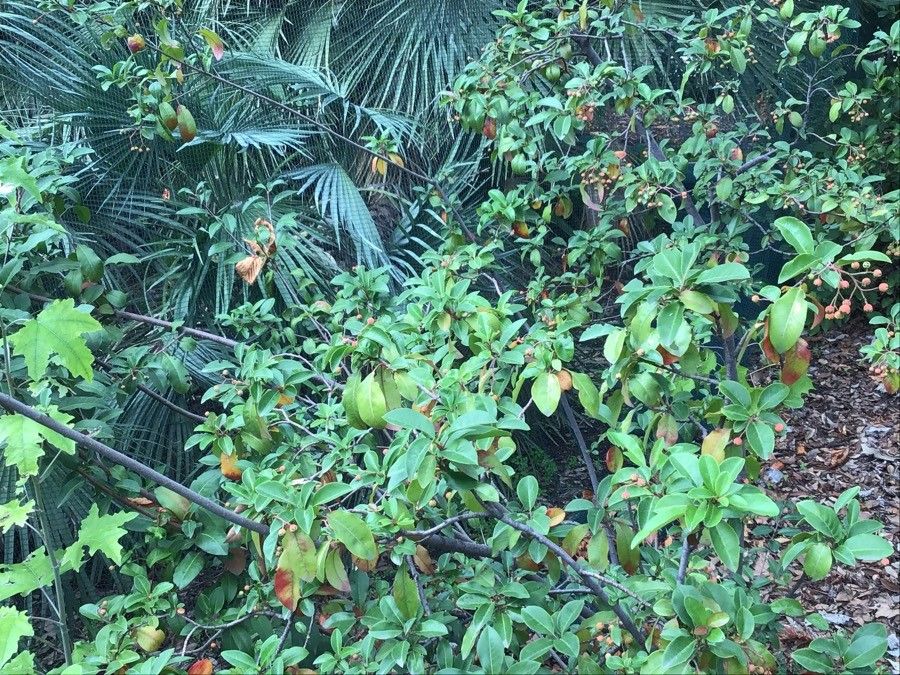
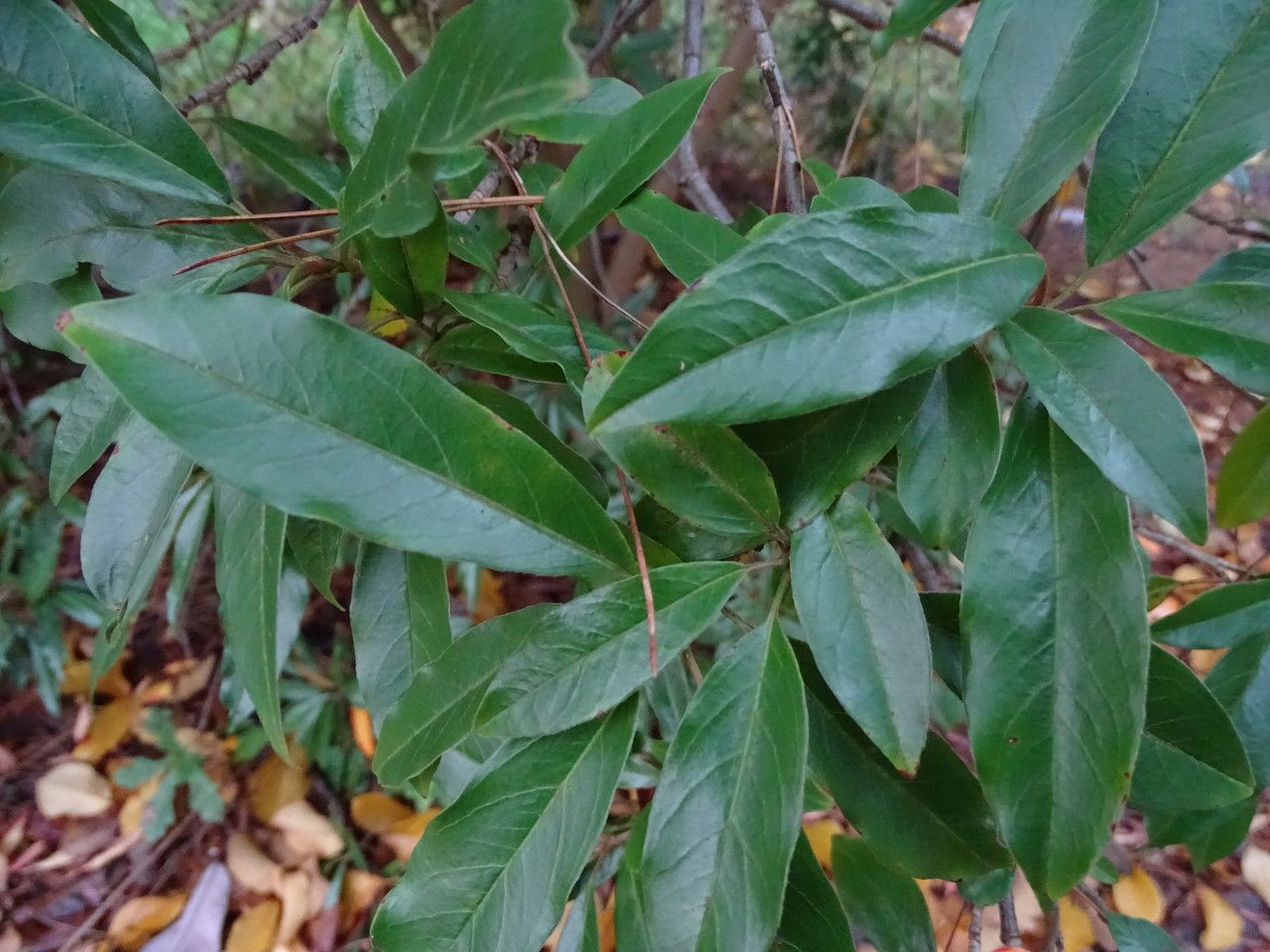
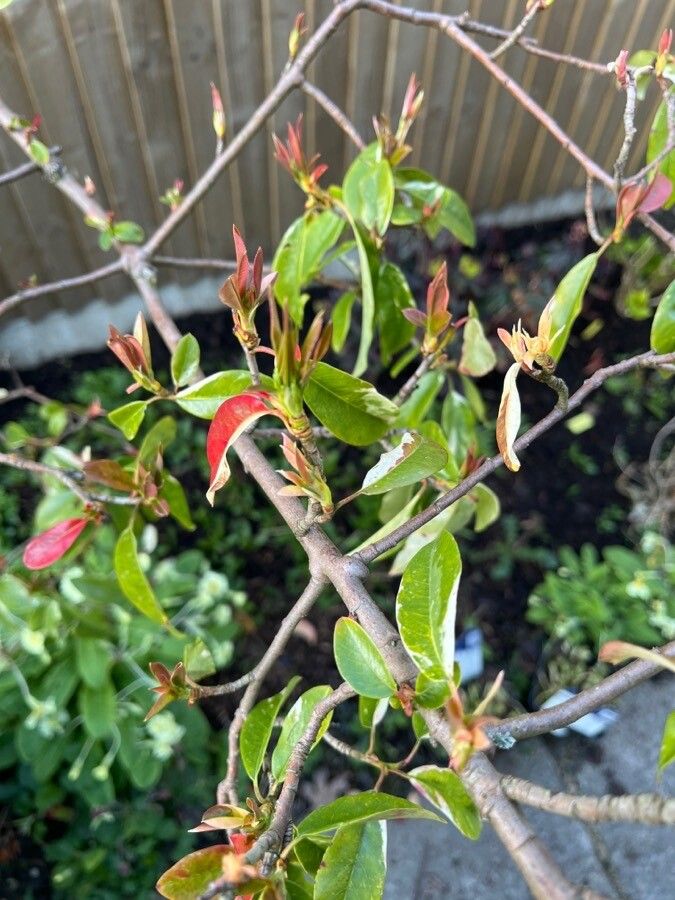
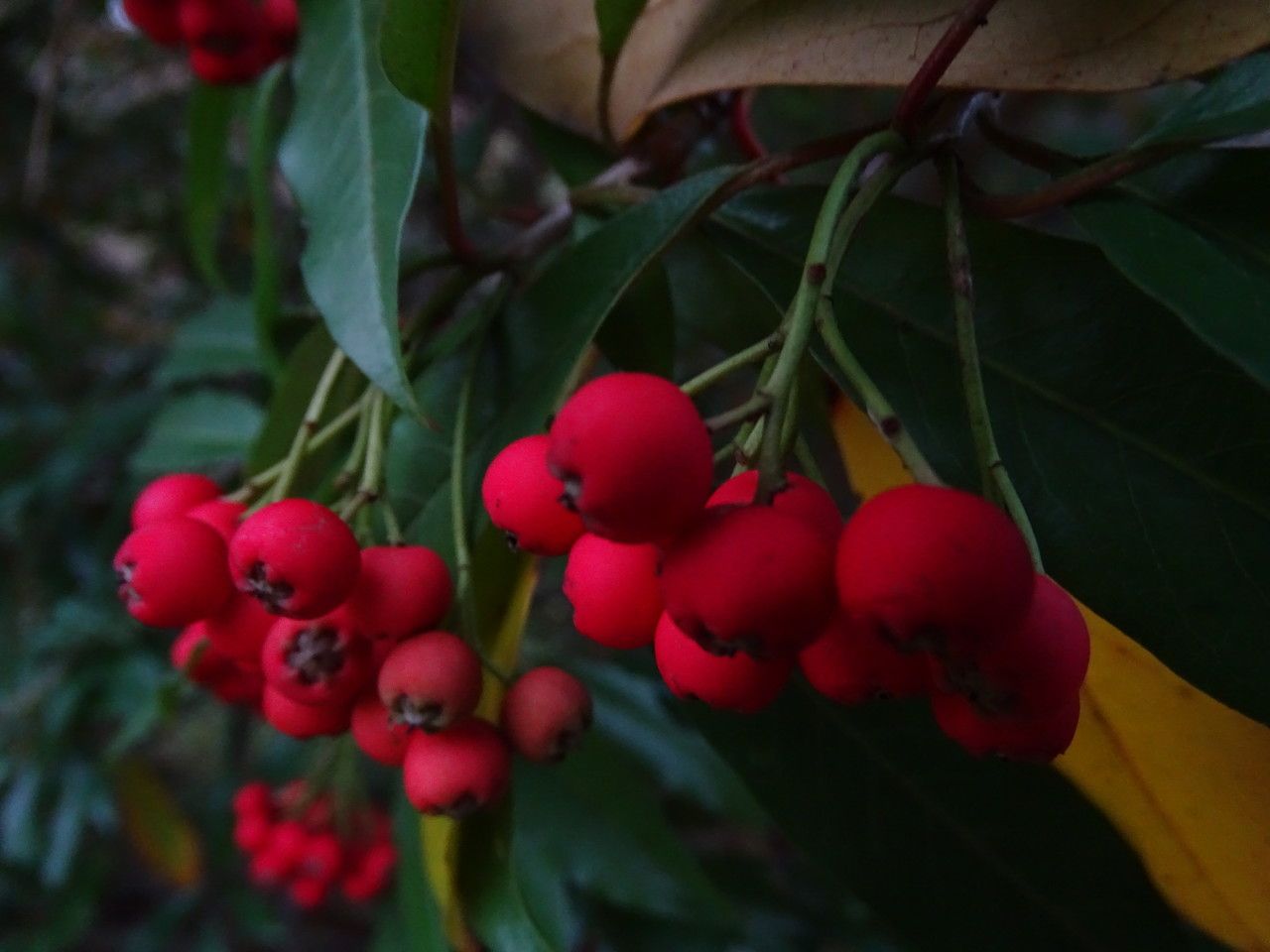
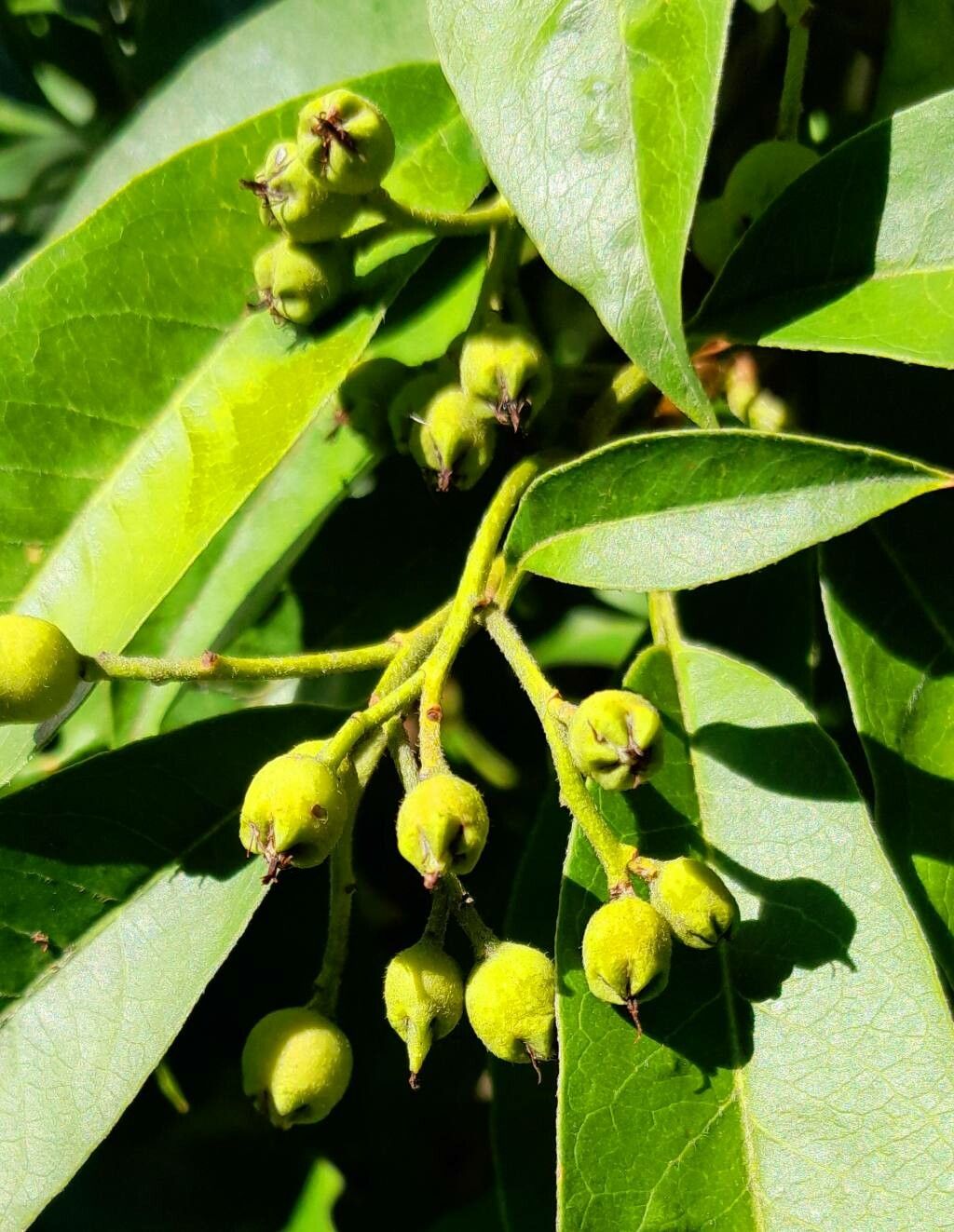
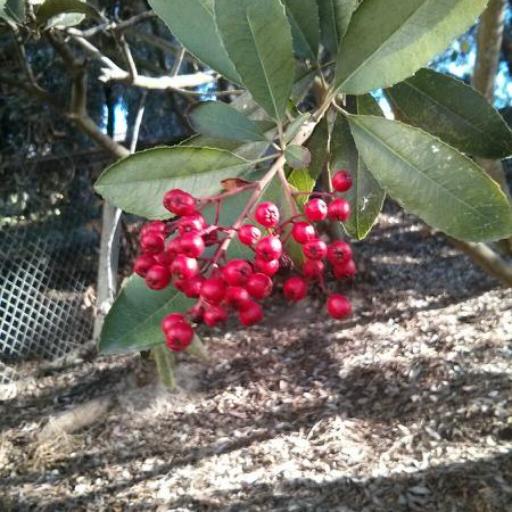
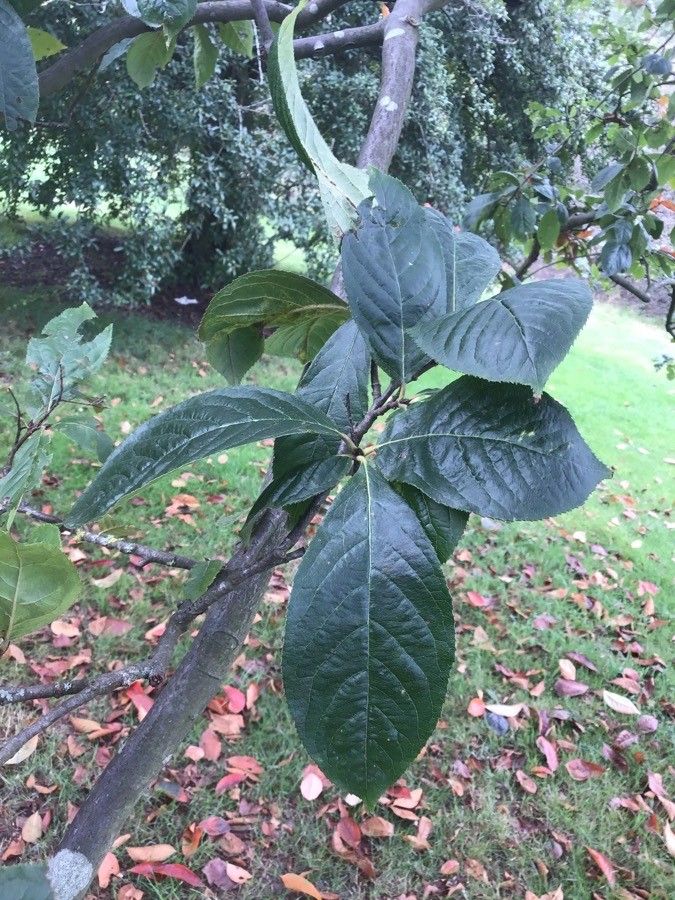
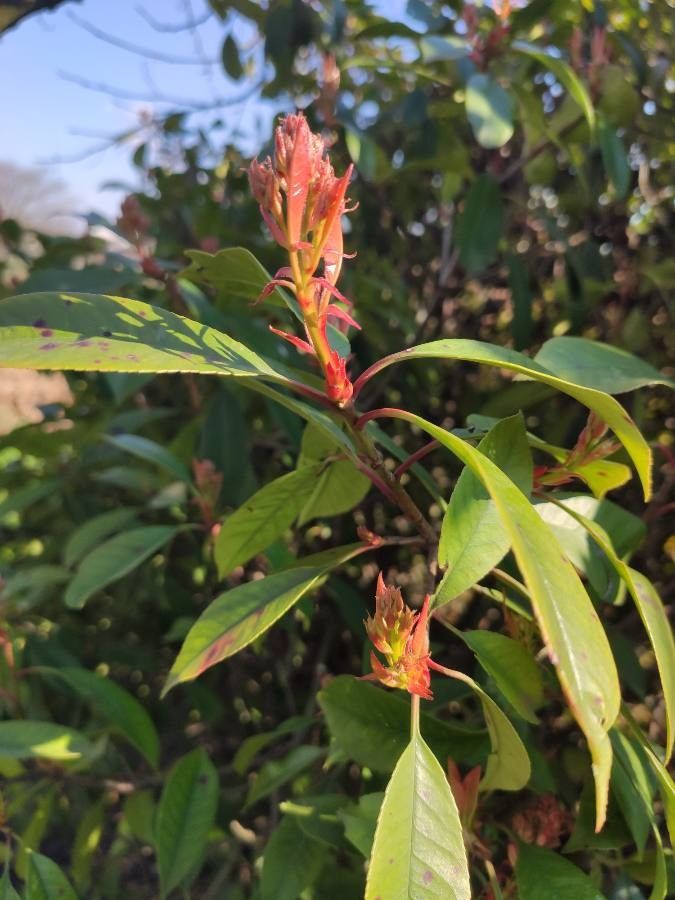
Photinia davidiana, a deciduous shrub belonging to the Rosaceae family, is native to China and can grow up to 6 meters tall. This plant is known for its dense, bushy habit and glossy dark green leaves that turn vibrant red in autumn. The leaves are oval-shaped with serrated edges, adding to its visual appeal.
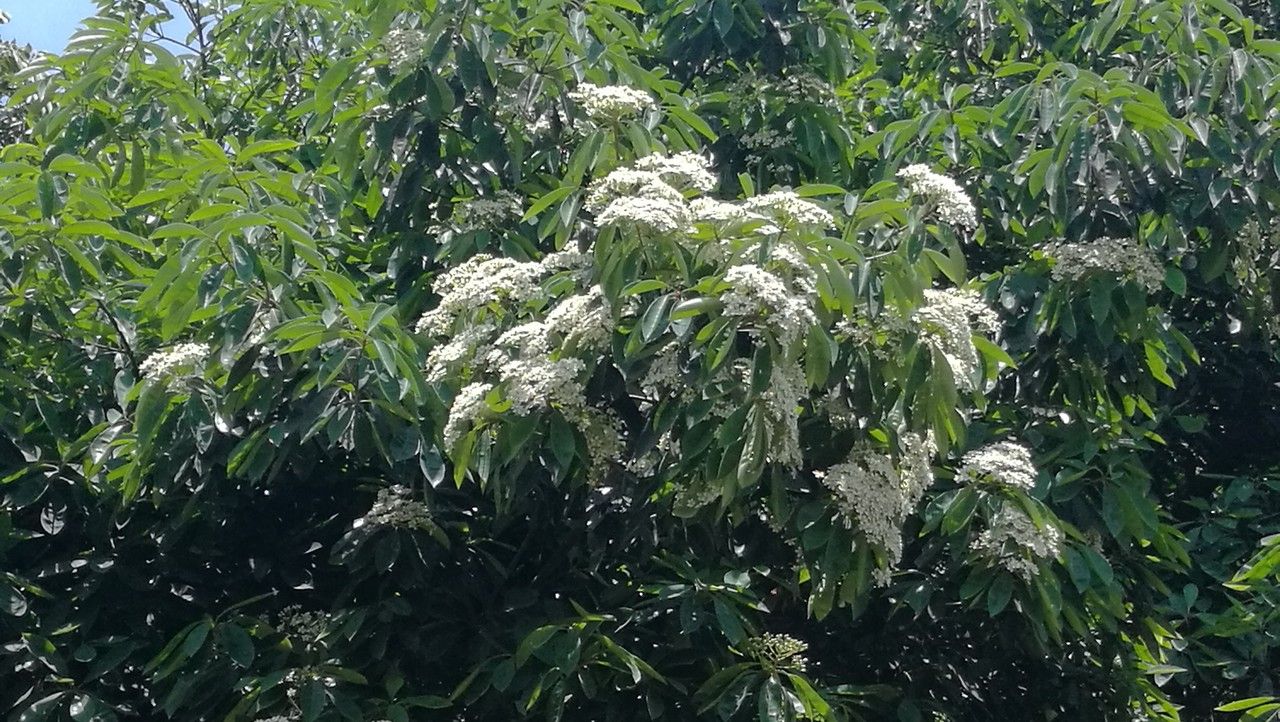
In the spring, Photinia davidiana blooms with clusters of small white flowers, which are followed by red berries in the autumn. This plant thrives in full sun or partial shade and prefers well-drained soil.
Photinia davidiana is often used as a hedge or screen due to its dense growth and attractive foliage. It also makes a beautiful ornamental shrub for gardens and parks.
In traditional Chinese medicine, the plant has been used for its anti-inflammatory properties. However, it's important to note that the berries are toxic if ingested by humans or animals.
Overall, Photinia davidiana is a visually appealing shrub with ornamental value and potential medicinal benefits when used appropriately under professional supervision.
Chinese photinia is disease-resistant and generally not prone to illness. Regarding care, this plant is fairly low-maintenance. When grown outdoors it needs only light watering, and larger specimens usually do not require pruning. Smaller plants, however, should be pruned after they finish blooming. Chinese photinia is well suited for anyone with an outdoor area, such as a garden or deck, and does not demand extensive care experience.
How to keep Photinia Davidiana.
Light
The Chinese photinia performs best in locations that receive steady sunlight throughout the day. It can, however, also tolerate settings with reduced sunlight. Too little light may restrict its growth, while excessive exposure can scorch its leaves. Its origins as an understory plant in dense forests make it adaptable to varying light conditions.
Temperature
Chinese photinia does best in its native temperate regions, needing temperatures of 59 to 95 °F (15 to 35 °C). Seasonal adjustments may be necessary to keep temperatures within that range.
Fertilizer
Timing is important when fertilizing Chinese photinia. Apply fertilizer in early spring and continue monthly until early summer. Fertilizer promotes attractive blooms and supplies energy both during dormancy and periods of active growth.
Botanical profile.
- Plant Type
- Tree, Shrub
- Life Cycle
- Perennial
- Genus
- Photinia
- Family
- Rosaceae
- Hardiness Zone
- 7-9
- Mature Height
- 0.91 m to 10.06 m
- Mature Spread
- 2.44 m to 3.96 m
- Leaf Color
- Green, Red, Variegated
- Leaf Type
- Evergreen
- Flower Color
- White
- Flower Size
- 0.51 cm to 1.02 cm
- Bloom Time
- Late spring, Early summer
- Planting Time
- Spring, Summer
- Harvest Time
- Fall
- Native Area
- Indonesia, Vietnam, Malaysia, China
Other names.