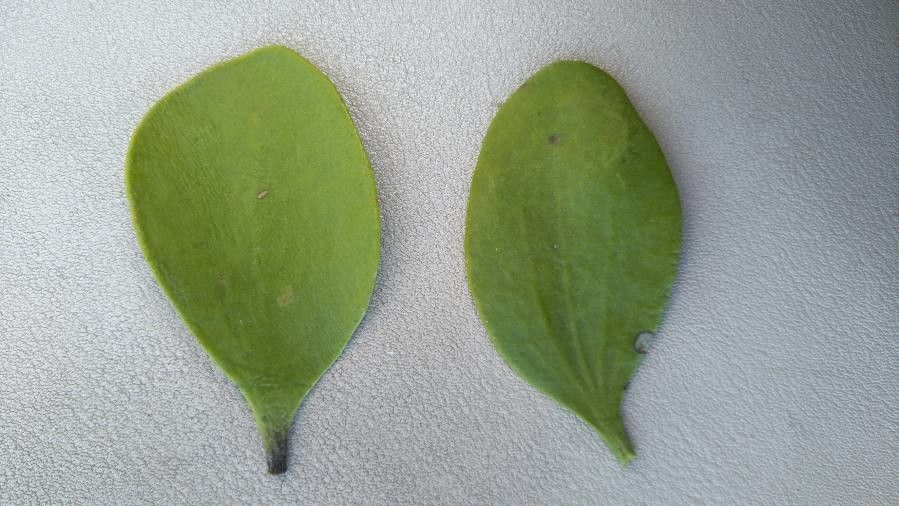
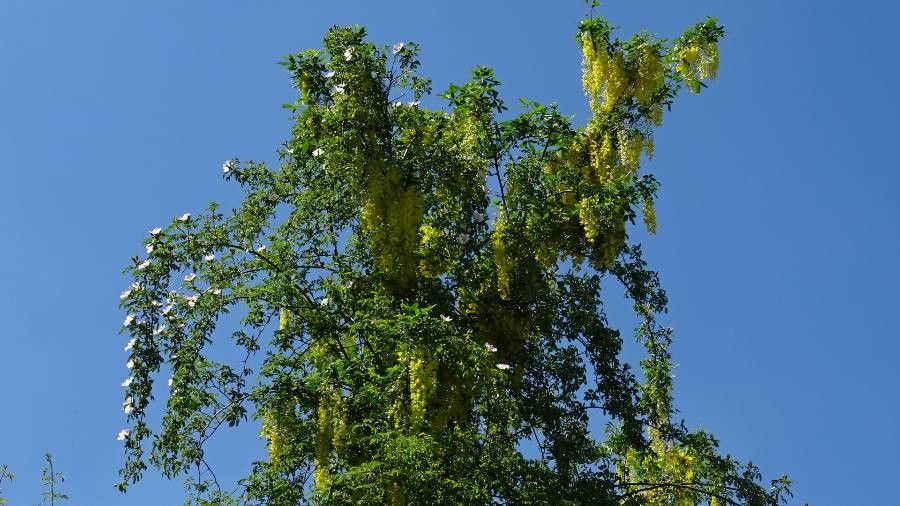
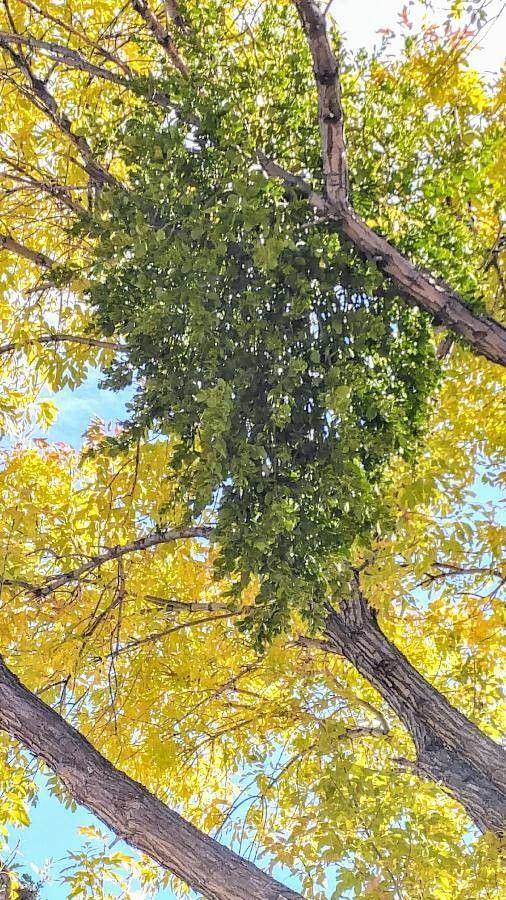
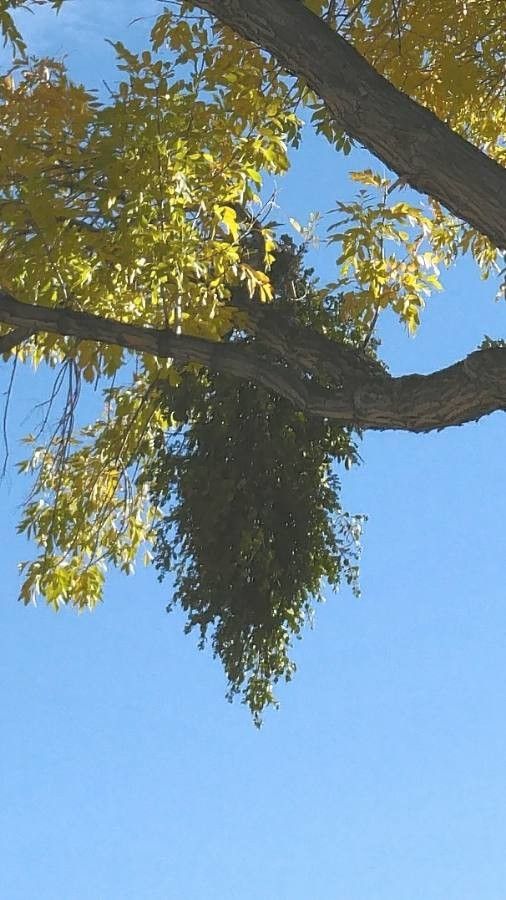
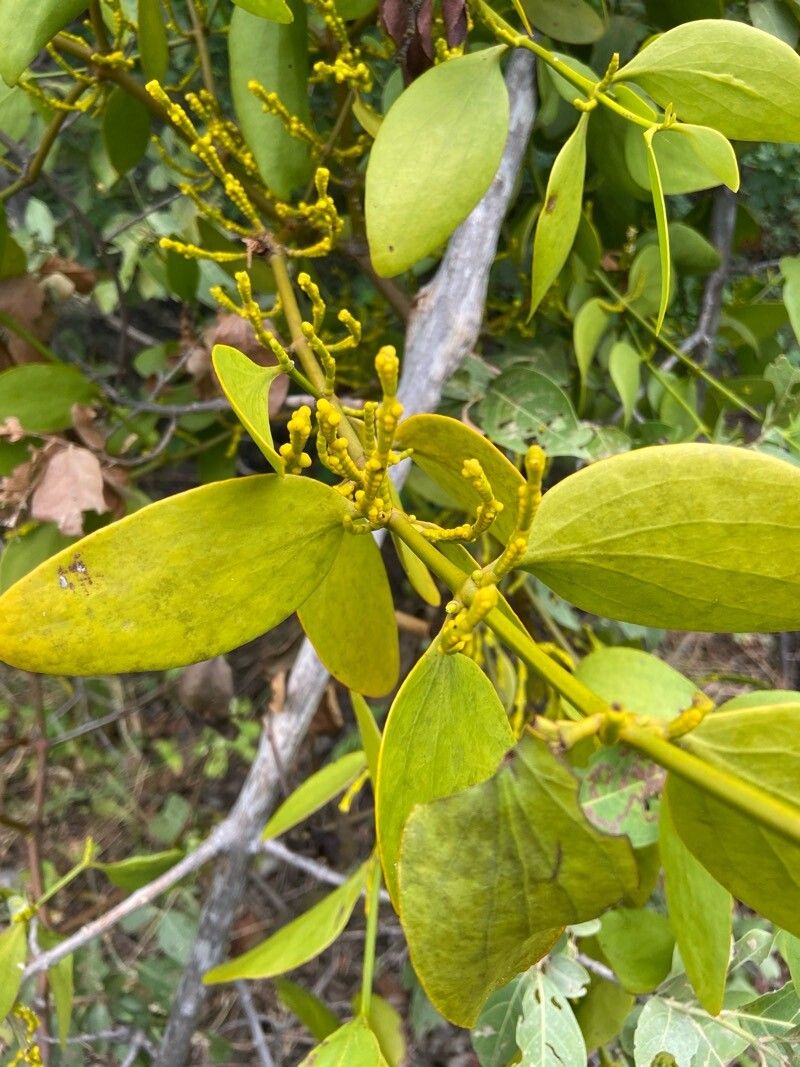
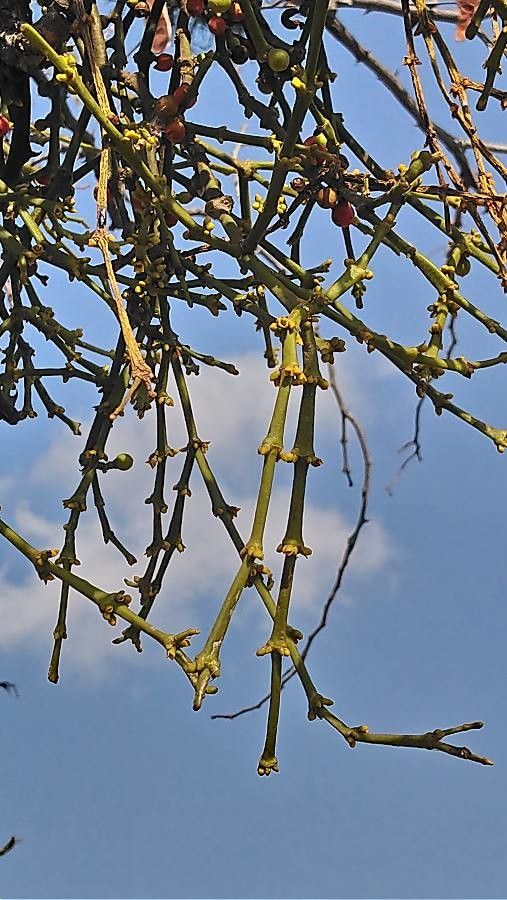
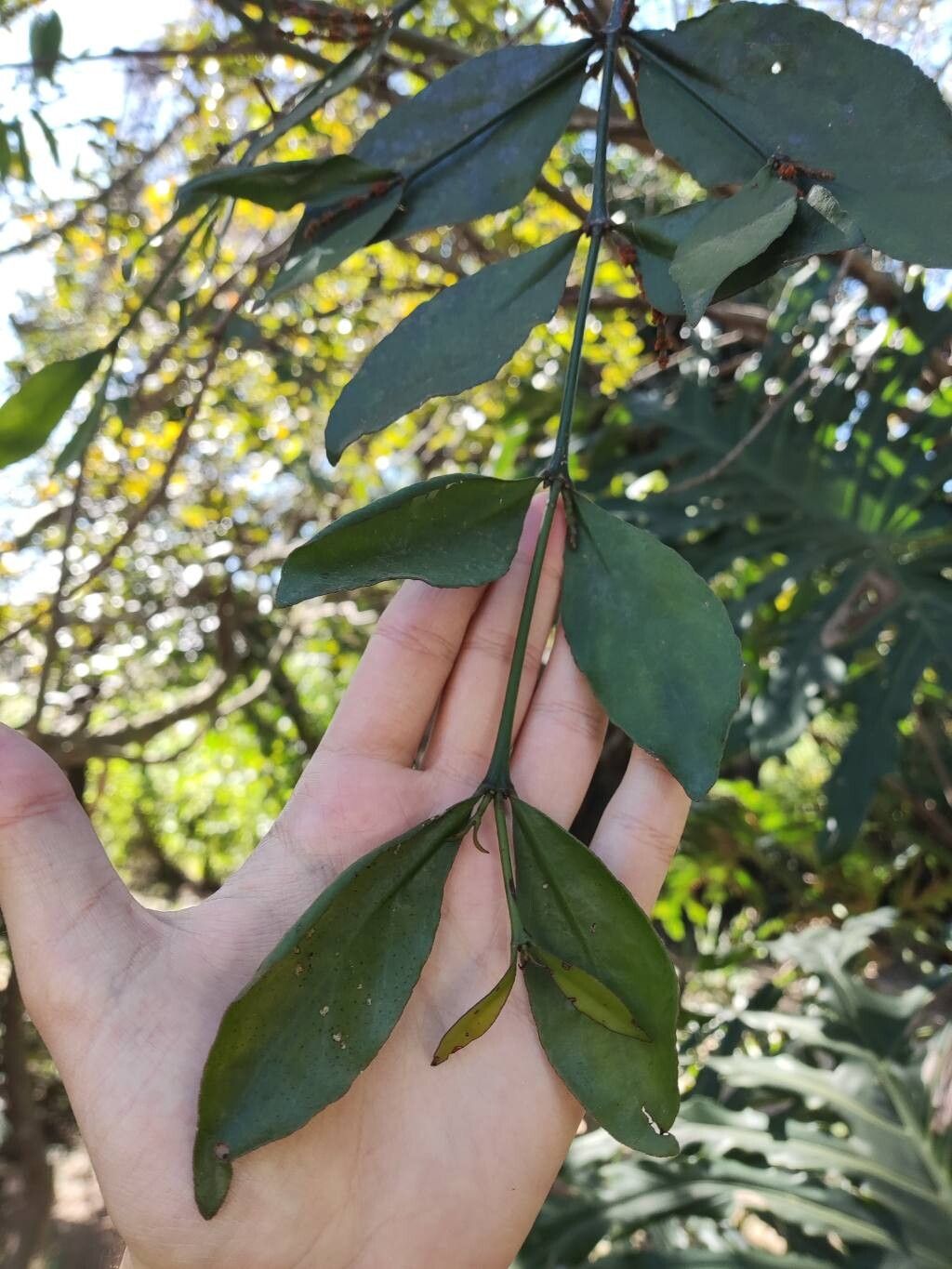
Phoradendron macrophyllum is a species of flowering plant in the sandalwood family known by the common names Colorado Desert mistletoe, bigleaf mistletoe, and Christmas mistletoe. It is native to western United States and northern Mexico from Oregon to Colorado to Texas to Baja California, where it grows in many types of wooded habitat at elevations up to 1700 m (5500 feet).This mistletoe is a parasitic plant on a variety of trees and woody shrubs, including species of alder, ash, walnut, sycamore, poplar, mesquite, and willow. It is known from over 60 species of hardwood trees, but it has not been reported on oaks. It is a shrub producing many erect green branches which can exceed a meter long. Its stems are lined with pairs of oppositely arranged leaves, each rounded or oval in shape and 3 to 4 centimeters long. As a hemiparasite the mistletoe taps its host tree for water and nutrients but contains some chlorophyll and can photosynthesize some energy for itself as well. The plant is dioecious, with male and female individuals producing different forms of inflorescence with rough elongated clusters of flowers. Female flowers yield white to light pink spherical berries each 4 or 5 millimeters wide.
Big-leaf mistletoe is fairly disease-resistant and typically does not suffer from many diseases. Regarding care, this plant is relatively low-maintenance. When grown outdoors it needs only minimal watering, and larger specimens usually do not require pruning. Smaller plants, however, should be trimmed after they have finished blooming. Big-leaf mistletoe is suitable for anyone with an outdoor area, such as a garden or deck, and does not demand a lot of care experience.
How to keep Phoradendron Macrophyllum.
Light
Big-leaf mistletoe is native to open habitats, such as sunny meadows and forest margins, where light is abundant. It does best in Full Sun but can tolerate Partial Sun, showing adaptability to different sunlight conditions.
Temperature
Big-leaf mistletoe comes from tropical areas, where the weather is generally warm and humid. Therefore, it is adapted to high heat and moisture. It is sensitive to abrupt temperature shifts and favors a steady temperature, so indoor temperature swings should be avoided. It typically cannot withstand cold and needs warmer conditions to grow. If the ambient temperature falls too low, growth may stop or the plant may die.
Fertilizer
Fertilization is essential for Big-leaf mistletoe care. Consistent feeding during the growing season helps maintain energy for its showy foliage and supports overall growth. Failing to fertilize can lead to unhealthy leaves, reduced ornamental value, and stunted or weak growth that is more likely to break.
Botanical profile.
- Plant Type
- Shrub
- Life Cycle
- Perennial
- Genus
- Phoradendron
- Family
- Santalaceae
- Hardiness Zone
- 9-11
- Mature Height
- 30 cm to 61 cm
- Mature Spread
- 20 cm to 40 cm
- Leaf Color
- Dark Green
- Leaf Type
- Evergreen
- Flower Color
- Yellow, Green
- Flower Size
- 0.20 cm to 0.25 cm
- Bloom Time
- Mid winter, Late winter, Early spring
- Planting Time
- Spring, Autumn, Winter
- Harvest Time
- Mid spring, Late spring, Early summer
- Native Area
- Colombia, Honduras, Mexico, Guatemala, Bolivia, Venezuela, Peru, Nicaragua, Ecuador, Costa Rica, Panama
Other names.