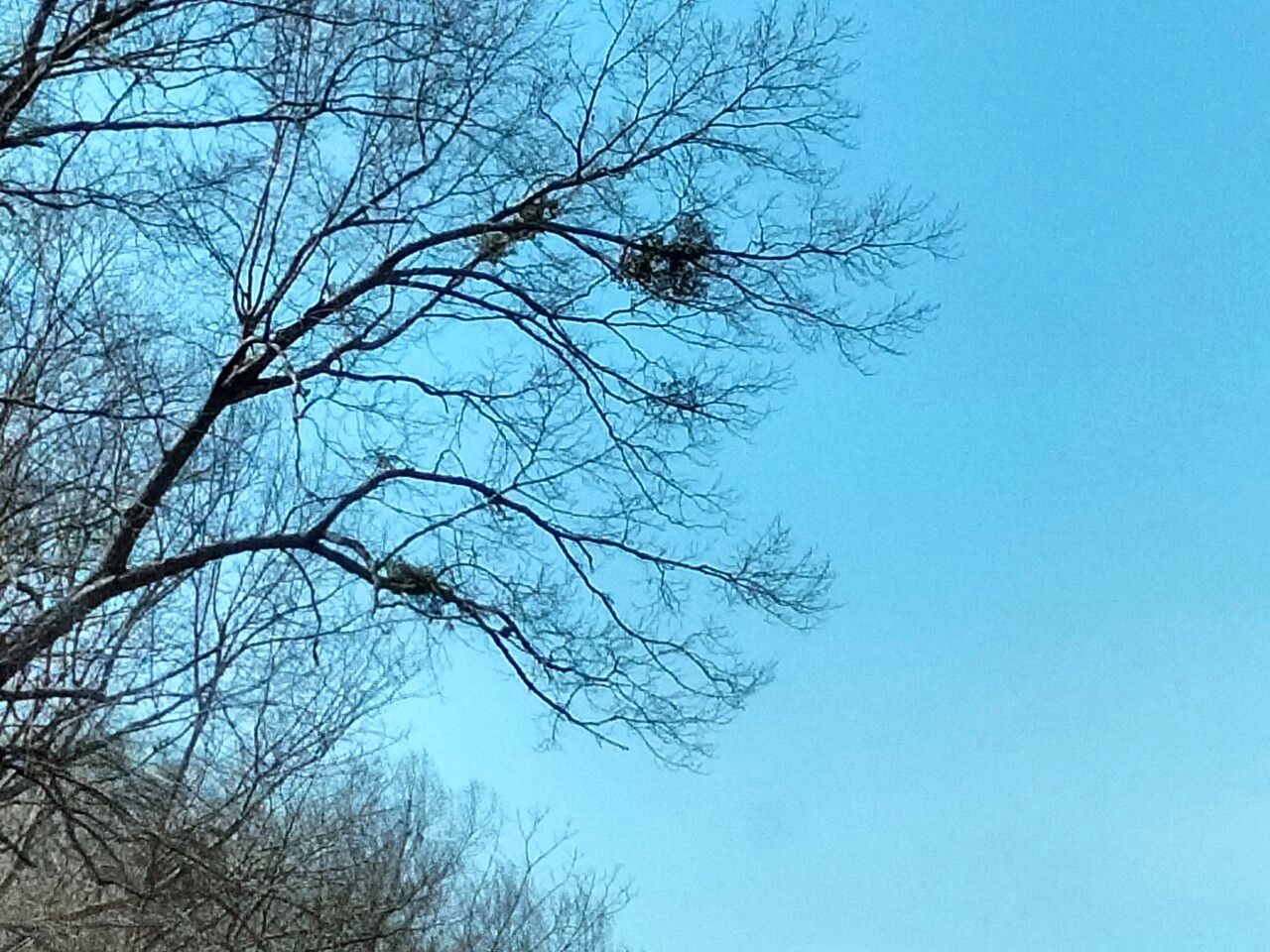
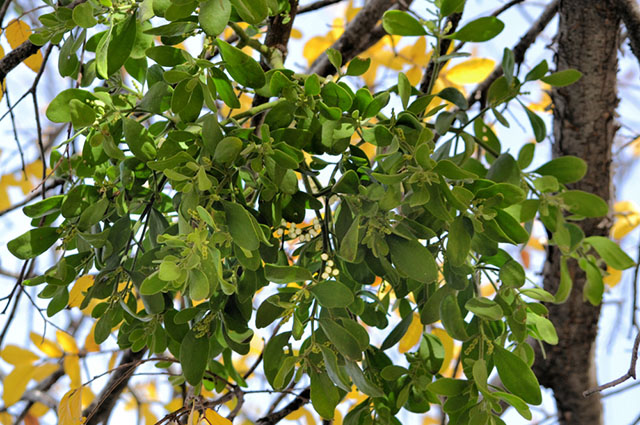
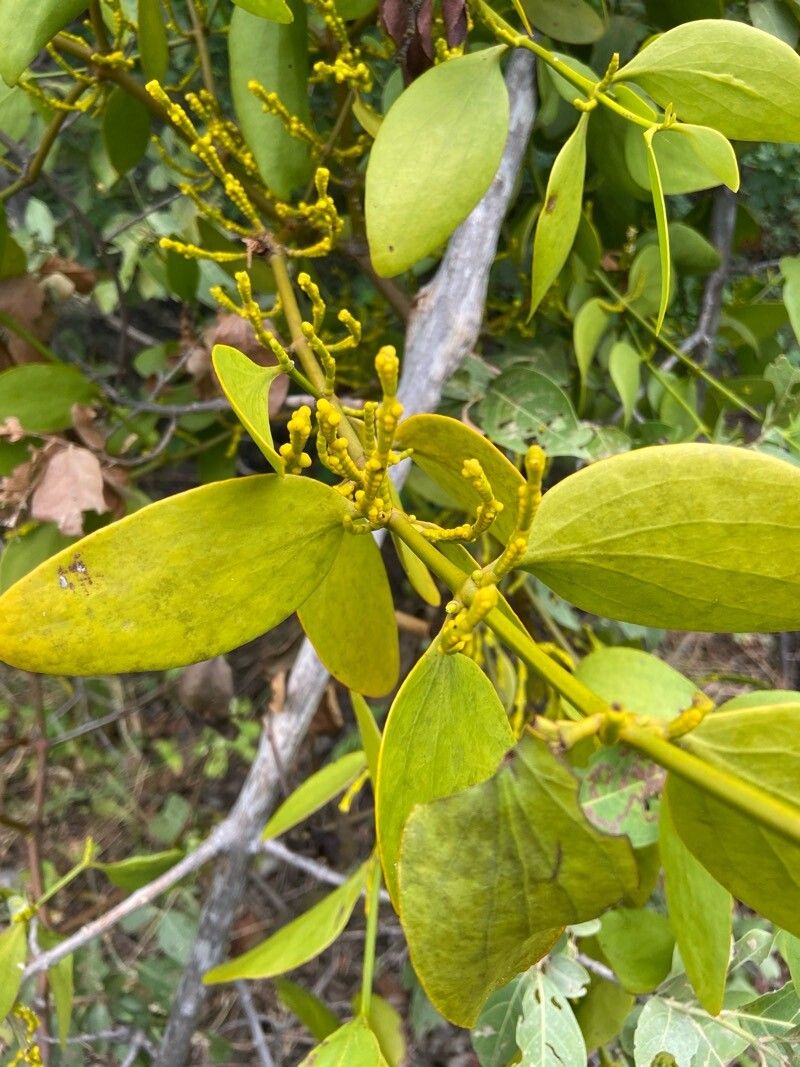
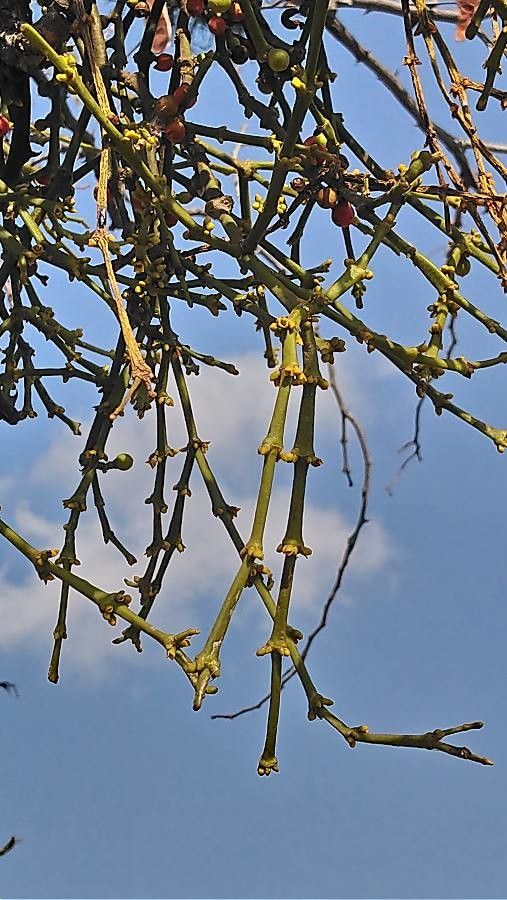
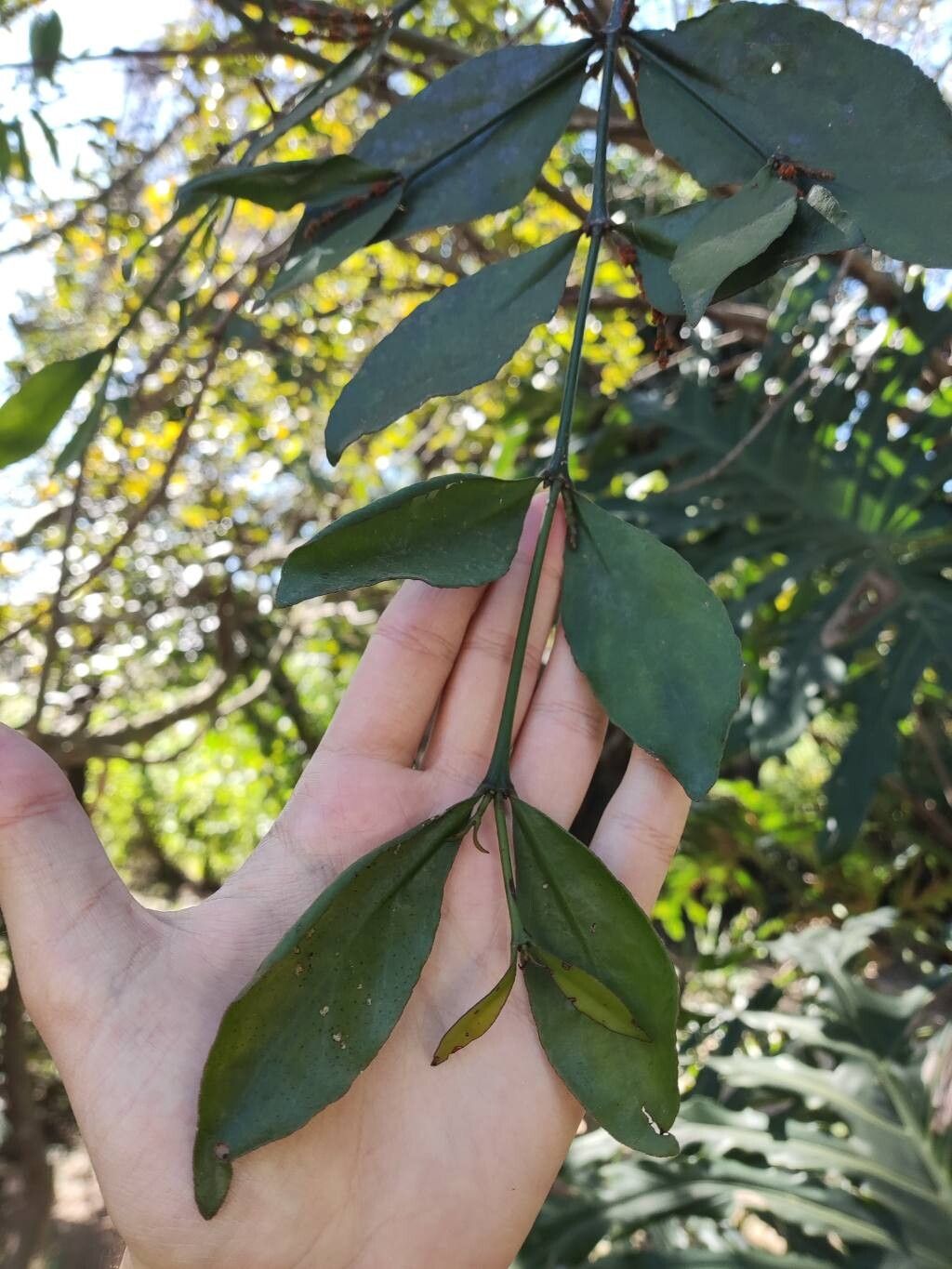
Phoradendron leucarpum is a species of mistletoe in the Viscaceae family which is native to the United States and Mexico. Its common names include American mistletoe, eastern mistletoe, hairy mistletoe and oak mistletoe. It is native to Mexico and the continental United States. It is hemiparasitic, living in the branches of trees. The berries are white and 3–6 millimeters (0.12–0.24 in). It has opposite leaves that are leathery and thick. Ingesting the berries can cause "stomach and intestinal irritation with diarrhea, lowered blood pressure, and slow pulse". This shrub can grow to 1 meter (3.3 ft) by 1 meter (3.3 ft).
American mistletoe is fairly resistant to disease and typically does not suffer from many illnesses. Regarding care, this species is fairly low maintenance. When grown outdoors it needs only light watering, and larger specimens usually do not require pruning. Smaller specimens, however, should be trimmed once they have finished blooming. American mistletoe is appropriate for anyone with an outdoor area, like a garden or deck, and does not demand extensive plant care experience.
How to keep Phoradendron Leucarpum.
Light
American mistletoe grows best in places with plenty of light, although it can tolerate some shade. Its natural habitat is well lit, which promotes healthy growth. However, too little light can impede growth, while excessive light can damage the plant.
Water
American mistletoe is highly drought-tolerant and thrives in environments with irregular watering. For best results, water the plant every 2-3 weeks, allowing the soil to dry out between watering sessions. Often grown indoors for its decorative appeal, American mistletoe should be planted in well-draining soil to help prevent root rot.
Humidity
This plant will thrive in moderate humidity, which is probably the level in your home. However, misting it a few times a week can be very beneficial. Make sure the room has good ventilation.
Temperature
The native growth temperature range for american mistletoe is about 5 to 35 ℃ (41 to 95 ℉). This temperate woody plant favors relatively mild conditions within that range, with cooler temperatures generally preferable to warmer ones. Seasonal temperature adjustments are not necessary for this species.
Fertilizer
Fertilize your American mistletoe in early spring to encourage healthy growth. Regular feeding boosts its overall health, producing vigorous growth, greater tolerance of challenging conditions, and improved resistance to diseases and pests. Follow a specific fertilization schedule for your American mistletoe to keep the foliage vibrant, richly colored, and lush in appearance.
Pruning
American mistletoe is a parasitic plant that attaches itself to hardwood trees. To prevent its spread, it's best to prune American mistletoe in the winter, from early to late in the season, using sharp, sterilized pruners. Regular pruning helps control the mistletoe's growth and reduces the strain on the host tree. Additionally, keep an eye out for regrowth and promptly remove any new sprouts to maintain the health of the tree.
Botanical profile.
- Plant Type
- Shrub
- Life Cycle
- Perennial
- Genus
- Phoradendron
- Family
- Santalaceae
- Hardiness Zone
- 5-9
- Mature Height
- 91 cm
- Mature Spread
- 91 cm
- Leaf Color
- Green
- Leaf Type
- Evergreen
- Flower Color
- Green, Yellow
- Flower Size
- 0.51 cm to 5.08 cm
- Bloom Time
- Late summer, Fall
- Planting Time
- Spring
- Harvest Time
- Early spring, Fall, Winter
- Native Area
- Mexico
Other names.
Reader questions.
How should I water my American mistletoe?
Watering your American mistletoe is an easy task as it is not very specific about how you water it. You can use common watering tools like watering cans, hoses, or even cups. Regardless of the tool you choose, it is important to apply the water directly to the soil. Make sure to evenly moisten all areas of the soil to ensure the entire root system receives the necessary water. For best results, consider using filtered water to avoid any harmful particles found in tap water. Additionally, using water at or slightly above room temperature is beneficial, as extremely cold or hot water can be a little too shocking for the plant. Nevertheless, the American mistletoe generally responds well to any type of water you provide.
Why should I put fertilizer on my American mistletoe?
If you own American mistletoe, regular fertilization is important for its overall health. Providing the right nutrients will promote vigorous growth and make the plant more resilient to tough conditions, as well as better able to fight off diseases and pests. Keeping the foliage intact is crucial as it is one of the most attractive features of the plant. To achieve this, establish and stick to a regular fertilization schedule that suits your specific American mistletoe. This will result in leaves with a deep color and lush appearance.
How many hours of sunlight per day does American mistletoe need to grow well?
To ensure healthy growth, American mistletoe needs a minimum of 3-6 hours of sunlight each day. However, most plants that can tolerate partial sunlight can also do well in full sun. This is because they need less light for photosynthesis, making them more adaptable compared to plants that specifically need full sun or partial shade.
What temperature is best for American mistletoe to grow?
The optimal temperature range for American mistletoe is between 65-80℉ (18-27℃). During the main growing phase, the highest tolerable temperature is 95℉ (35℃), while the lowest tolerable temperature is 15℉ (-10℃). This species is capable of withstanding freezing winters and can tolerate low temperatures. The ideal temperature range is: Perfect: 65-80℉ (18-27℃), Highest: 85-95℉ (30-35℃), Lowest: -5-15℉ (-20 to -10℃) or below.
What should I do if I give too much or too little water to my American mistletoe?
Newly planted or young outdoor plants, including American mistletoe, are vulnerable to not receiving enough water. It is important to continue watering adequately for a few months until the tree is established. Once the roots have developed, the plant can rely on rainfall in most cases. However, when American mistletoe is in pots, overwatering becomes a common issue. If you accidentally overwater your American mistletoe, you should take immediate action to rectify the situation. First, stop watering the plant to minimize the impact of overwatering. Then, remove the plant from its pot and inspect the roots for any signs of root rot. If no root rot is found, you can return the plant to its container. But if root rot is present, trim the affected roots and consider applying a fungicide to prevent further damage. Lastly, repot the American mistletoe in well-draining soil. Conversely, if you underwater your American mistletoe, it is a simple fix. When underwatered, the leaves will droop, dry out, and fall off. However, the leaves will regain their fullness quickly after sufficient watering. Therefore, adjust your watering frequency promptly when you notice underwatering.
When should I fertilize my American mistletoe plant?
To keep your American mistletoe healthy and thriving, it's best to fertilize it twice a year. The first time is in late winter or early spring, providing essential nutrients for the upcoming growing season. If you live in a warm climate region, an additional fertilizer feeding in early fall is beneficial. This not only adds nutrients for the following growing season but also helps the mistletoe withstand winter without foliage damage. Early fertilization ensures the branches have enough time to grow strong before the cold winter sets in.
What kind of sunlight does American mistletoe require?
American mistletoe thrives when exposed to full or partial sun. It truly thrives when it receives direct morning light, but during summer, it requires some shade to protect it from the intense afternoon sun. In temperate climates, excessive afternoon sun can scorch the leaves, which negatively impacts the plant's health and visual appeal.
Do I need to change the temperature for American mistletoe at different stages of growth?
According to research, American mistletoe tends to experience stunted growth when the temperature rises for extended periods, particularly during the growth of axillary buds and main shoots. It is recommended to maintain cooler and consistent temperatures, approximately 65℉(18℃), to promote vigorous growth after germination or transplanting.
How frequently do I need to water my American mistletoe?
Most outdoor plants can grow naturally with rainfall, but if your area doesn't get much rain, you'll need to water them every 2 weeks in the spring and fall, and more often in the summer. In the winter, when plants grow slower and need less water, water them sparingly or not at all. Young or newly planted American mistletoe will need more frequent watering to help it establish. This will help it become more adaptable to drought. For potted plants, there are two main ways to determine how often to water American mistletoe. One option is to follow a set watering schedule, such as once a week or every other week. However, this may not always take into account the specific conditions of your plant's environment. Another approach is to base watering frequency on soil moisture. It's generally best to wait until the top two to four inches of soil, about ⅓ to ½ of the pot's depth, have completely dried out before watering again. Keep in mind that during summer, when the plant needs more water, a set watering schedule may not be enough.
When is the best time to not give fertilizer to my American mistletoe?
There are certain times of the year when you should avoid fertilizing your American mistletoe. The first instance is during the early and mid-winter months when the plant is dormant and does not require nourishment. Similarly, it is not recommended to fertilize the mistletoe during the late spring and summer. This is because the weather during this time can be hotter and drier, which can have detrimental effects on the plant if fertilizer is applied. To prevent any issues, it is best to stick to a fertilization schedule that involves feeding only in the early spring and early fall.
Can the sun harm American mistletoe? How can American mistletoe be safeguarded from sun and heat damage?
To protect American mistletoe planted indoors from direct sunlight damage when moving it outdoors, it is recommended to gradually shift pots from a shaded area to a brighter spot. However, even if the plants have adapted to summer sun exposure, they can still be harmed by extreme heat. During a heatwave, it is crucial to consistently keep the soil moist in order to help the plants tolerate excessive heat levels. Additionally, placing containerized plants in areas with afternoon shade or using a shade cloth can provide protection for sensitive American mistletoe during extreme weather conditions.
How can I make sure American mistletoe stays warm during the cold seasons?
American mistletoe can survive freezing temperatures when planted in the ground, as long as the temperature doesn't drop below 15℉ (-10℃). However, if it's planted in pots or containers, the roots need protection from the winter cold. To do this, wrap the container in a blanket or bring it indoors for complete protection from the elements.