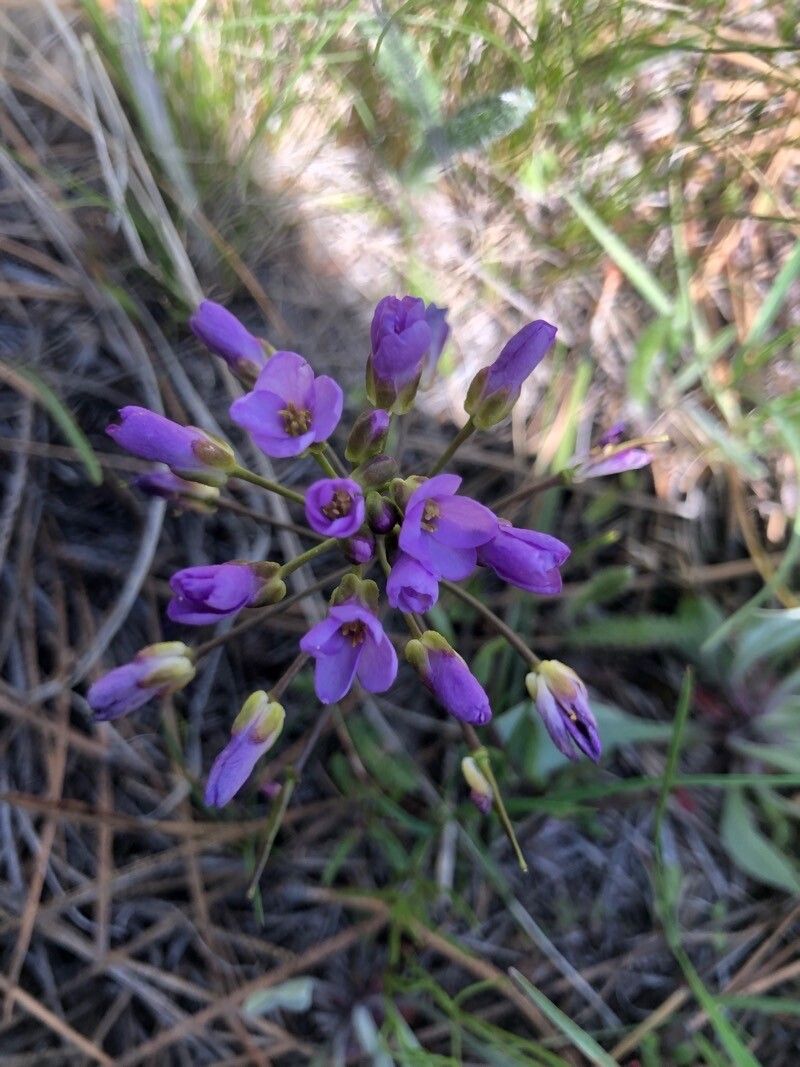
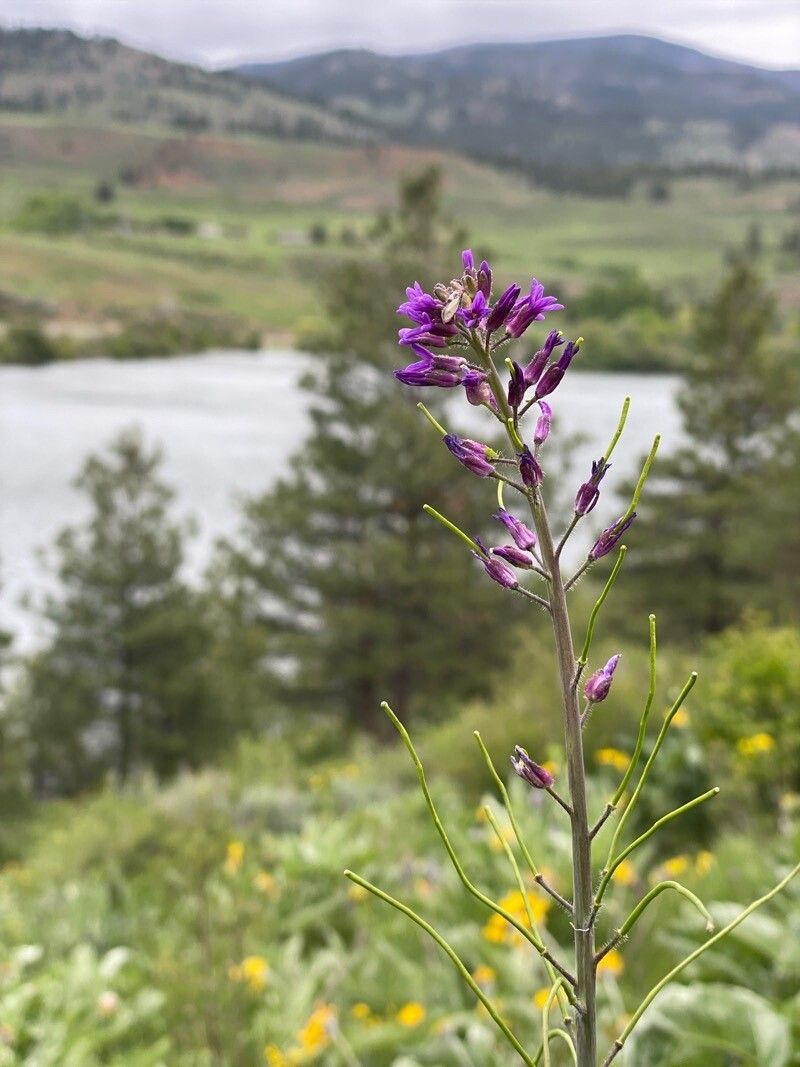
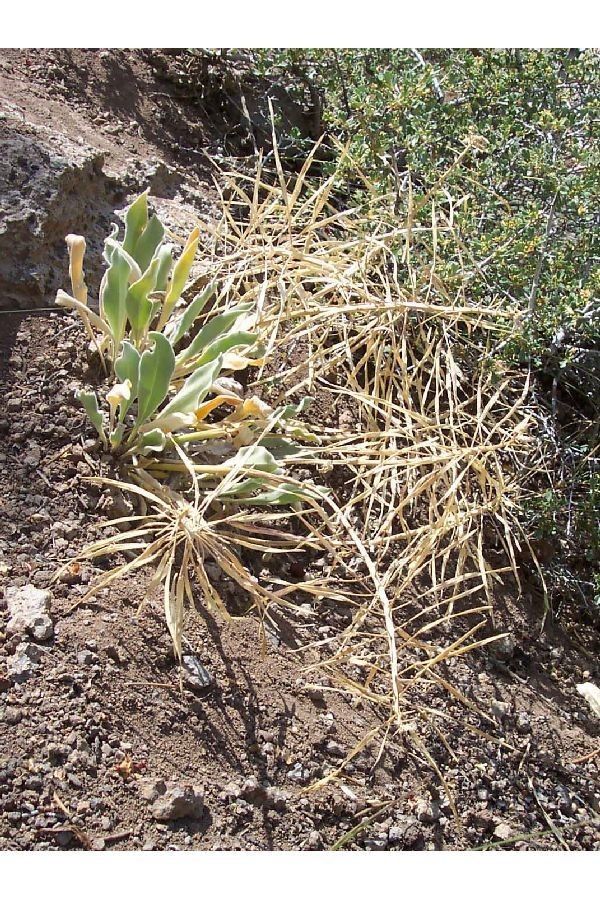
Phoenicaulis is a monotypic genus of flowering plants in the family Brassicaceae found in western North America. It contains the single species Phoenicaulis cheiranthoides, which is known by the common names daggerpod and wallflower phoenicaulis. The genus name means 'reddish-purple stems', probably in reference to the tendency for the stems to take on such a color, and the species name means 'hand of flowers'.The species is a perennial herb producing one or more stems up to 25 to 30 centimetres (9+7⁄8 to 11+3⁄4 in) tall from a caudex. The basal leaves are narrowly lance-shaped to teardrop-shaped, up to 10 cm long, and woolly in texture. Leaves higher on the stem are shorter and usually less hairy. The inflorescence is a raceme of flowers with purple or pink petals up to about 1.5 cm long. The fruits are narrow, hairless siliques up to 9 cm long, and stick out from the stem on pedicels.The plant grows in many types of habitat, especially rocky areas. It occurs in sagebrush scrub, scree, exposed volcanic and clay slopes, rock outcrops, hills, banks, and meadows, into the alpine climate of mountains. It grows at up to 3200 meters in elevation and flowers early in spring.
Daggerpod has good disease resistance and is generally not prone to diseases. However, it can be susceptible to pests and diseases present in its surroundings. These infections are usually not severe. In terms of care, this plant requires medium maintenance. It should be pruned regularly to maintain a good appearance and healthy growth. Fertilization can also help promote flowering. Daggerpod is suitable for anyone with an outdoor space, such as a garden or patio, and does not require extensive care experience. It may need more attention when grown indoors.
How to keep Phoenicaulis Cheiranthoides.
Light
Daggerpod thrives with full exposure to light that completely bathes it. However, it also shows resilience in situations where it receives only a portion of the day's light. Too little or too much light can impede its growth and health.
Water
Daggerpod, a resilient plant native to rocky terrains, thrives with minimal watering and balanced moisture. For optimal care, water it weekly, taking care to avoid both over-saturation and drought. This adaptable plant is best suited for outdoor environments, where it can take advantage of natural rainfall and seasonal growth cycles.
Temperature
Daggerpod comes from habitats where typical temperatures fall between 41 and 77 °F (5 to 25 °C). The plant performs best when kept within that temperature range. Change its location or the surrounding temperature as seasons require.
Fertilizer
The ideal time to fertilize a Daggerpod is in early spring, as it comes out of dormancy and begins active growth. Fertilizing supplies essential nutrients needed for healthy growth. Even though Daggerpod has relatively low fertilizer needs, applying fertilizer annually can improve its survival and encourage better, longer-lasting flowers.
Pruning
To promote healthy growth and maintain the shape of daggerpod, which is known for its unique dagger-shaped seed pods, it's beneficial to prune the plant from early to late spring. Pruning involves removing dead or damaged stems, which not only improves airflow and reduces the risk of disease but also aligns with the plant's growth cycle. This practice enhances flowering and increases the plant's overall vigor.
Botanical profile.
- Plant Type
- Herb
- Life Cycle
- Perennial
- Genus
- Phoenicaulis
- Family
- Brassicaceae
- Hardiness Zone
- 5-6
- Mature Height
- 25 cm to 30 cm
- Mature Spread
- 5 cm to 15 cm
- Leaf Color
- Bronze
- Leaf Type
- Deciduous
- Flower Color
- Pink
- Flower Size
- 2.54 cm
- Bloom Time
- Early spring, Mid spring
- Planting Time
- Spring
- Harvest Time
- Late spring, Early summer
Other names.
Reader questions.
What are the sunlight requirements for Daggerpod (Phoenicaulis cheiranthoides)?
Daggerpod thrives in conditions ranging from full sun, which is above 6 hours of sunlight daily, to partial sun, about 3-6 hours of sunlight. It's essential to watch how sunlight moves through your garden to find spots that provide a balance of light and shade, ensuring the plants' growth and happiness. Full sunlight bathes the Daggerpod fully, enhancing its growth, whereas partial sunlight exposure still supports its resilience. Monitoring the light's intensity is crucial as both insufficient and excessive light can negatively impact its health.
What is the ideal temperature range for Daggerpod?
The ideal temperature range for Daggerpod, also known by its botanical name Phoenicaulis cheiranthoides, is between 41 to 77 °F (5 to 25 °C). To ensure the plant thrives, it's important to keep it within these temperature confines throughout the year, adjusting its placement or the surrounding temperature as necessary when different seasons bring changes.
How does artificial lighting benefit indoor Daggerpod plants?
When natural sunlight is insufficient, especially during winter or in less sunny spaces, artificial lighting becomes essential for Daggerpod's growth. Indoor plants benefit from artificial lights, including LEDs, which are customizable to the specific light wavelengths plants need. For optimal growth, full sun plants require 30-50W/sq ft, partial sun plants 20-30W/sq ft, and full shade plants 10-20W/sq ft of artificial light. The light source should be positioned 12-36 inches above the plants, mimicking natural sunlight for 8-12 hours per day.
Does Daggerpod require any special care for cold weather?
Daggerpod is highly cold-tolerant and doesn't require additional frost protection measures during winter. Nonetheless, it's recommended to water the plant generously before the first freeze of autumn. This helps to ensure the soil remains moist and enters a frozen state, preventing drought and water scarcity for the plant during the colder months and early spring.
What are the symptoms of inadequate lighting for Daggerpod plants?
When Daggerpod plants receive inadequate lighting, several symptoms may appear. These include smaller new leaves, leggy or sparse growth, faster leaf drop, slowed or halted growth, paler or irregularly colored new leaves, and chlorosis, where leaves lose their green color. Excessive sunlight exposure can also cause leaf scorching, sunscald, leaf curling from defense mechanisms against sunlight, wilting due to increased water loss, and overall reduced plant health.
What should I do if the temperature falls below Daggerpod's cold tolerance level?
Although Daggerpod is extremely cold-tolerant and can withstand temperatures down to -25°C, if the temperature drops below this threshold, it may affect the plant's ability to sprout in spring. There might be a decrease in sprouting or even no sprouting at all. To manage this, in spring, remove any parts of the plant that have failed to sprout as a recovery measure.
What solutions are recommended for addressing Daggerpod's light needs?
Optimizing Daggerpod's light exposure involves several strategies. Indoors, gradually move plants to sunnier locations or use artificial lighting, like plant grow lights, to ensure at least 6 hours of sunlight daily. Outdoors, gradually acclimate plants to brighter spots to prevent sunburn. Reducing obstructions, through pruning or relocating smaller plants to sunnier areas, can also help. It's important to note that damaged parts from insufficient light may not recover, but new growth should be healthy with improved light conditions.
How does Daggerpod react to high temperatures?
Daggerpod does not tolerate high temperatures well. When the temperature exceeds 25°C, its growth will halt, and the plant becomes more susceptible to diseases such as rot. To protect your Daggerpod in such conditions, trim away any sunburned or dried-up parts, move the plant to a location with shade--especially from the midday and afternoon sun, or use a shade cloth. Additionally, watering the plant in the morning and evening can help keep the soil moist, further mitigating heat stress.