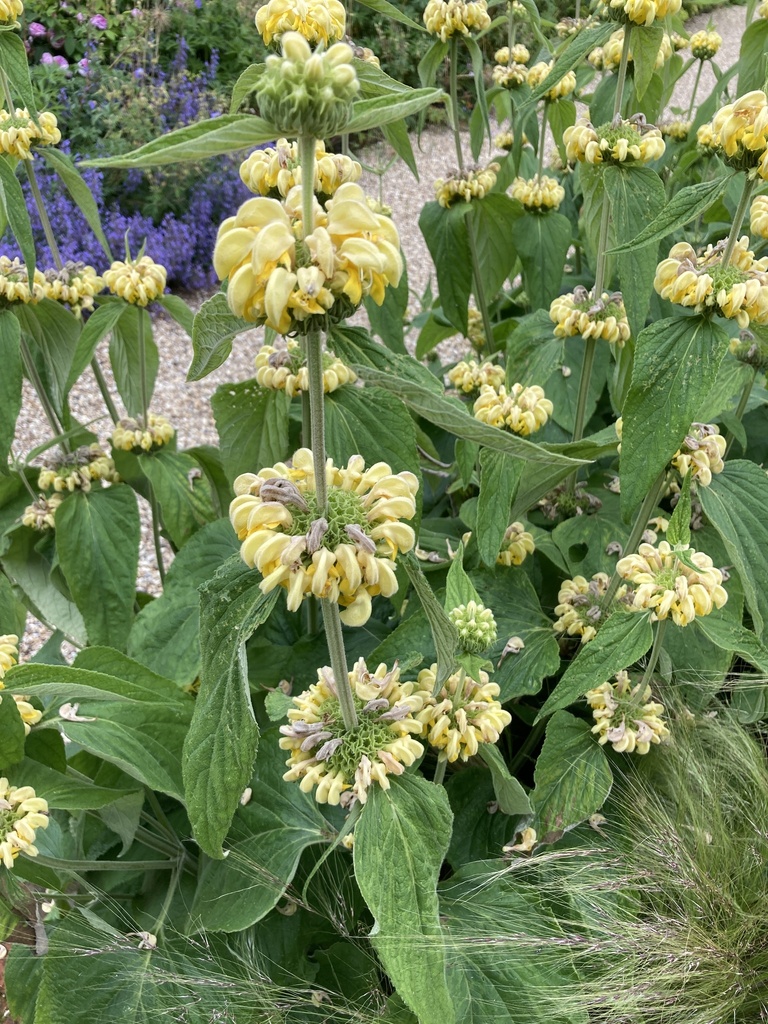
Phlomis russeliana, commonly known as Jerusalem sage, is a perennial herbaceous plant from the mint family, Lamiaceae. Native to the Mediterranean region, it thrives in rocky and dry habitats. The plant exhibits a bushy growth habit with woody stems that can reach up to 1 meter in height.
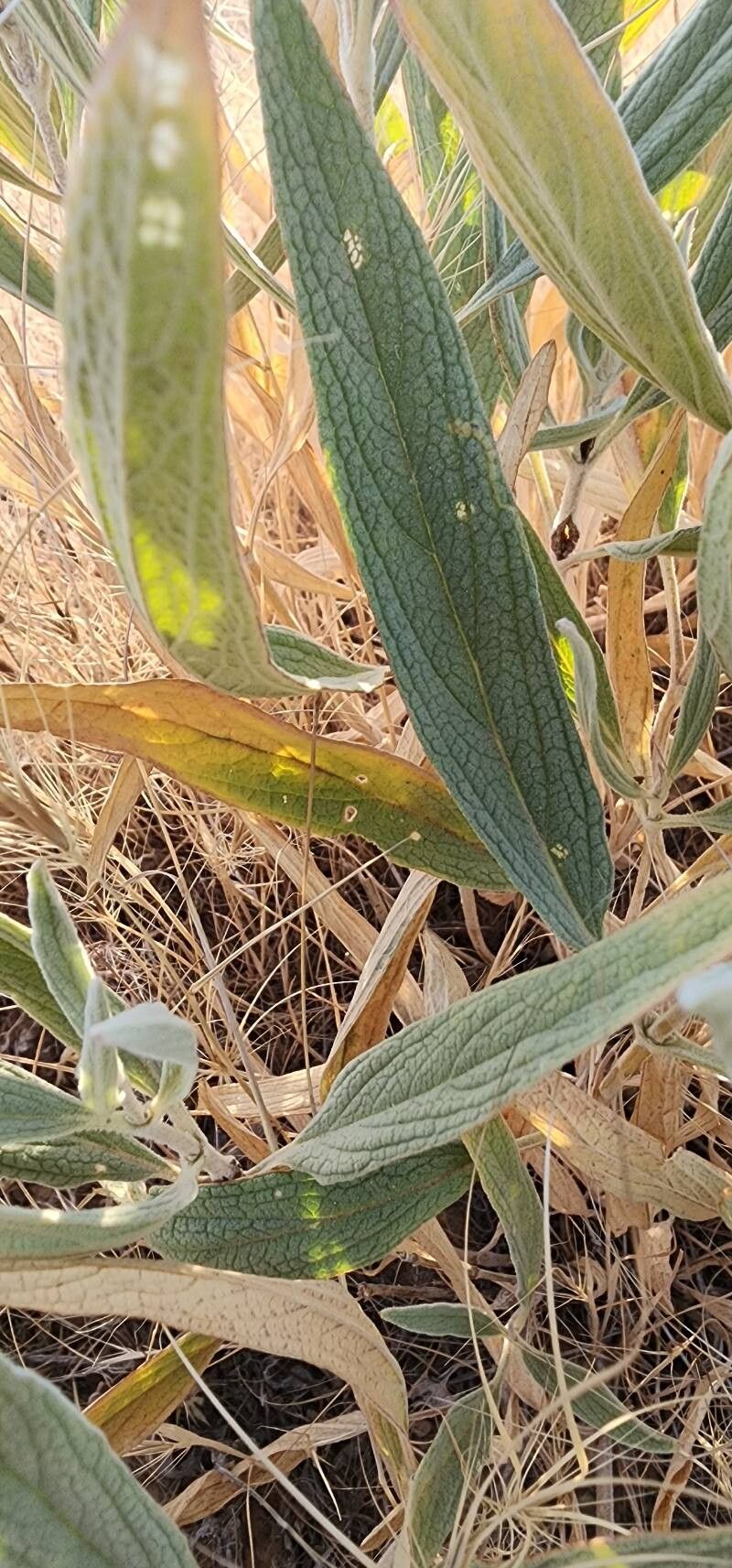
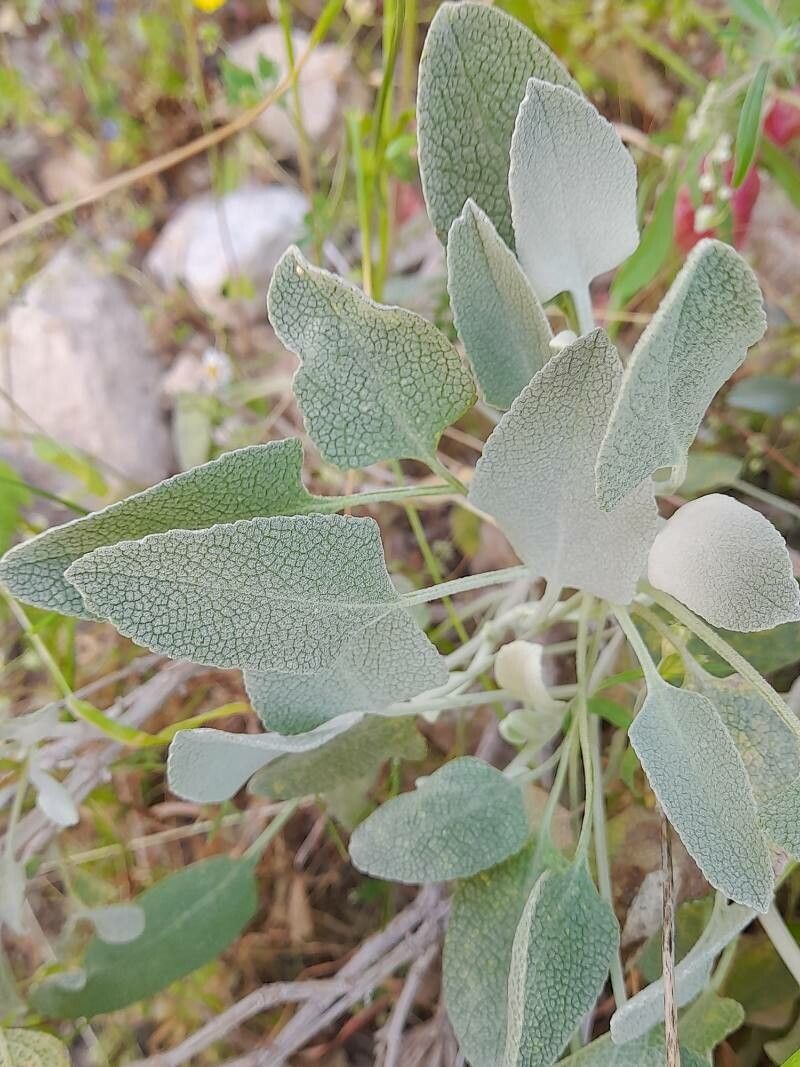
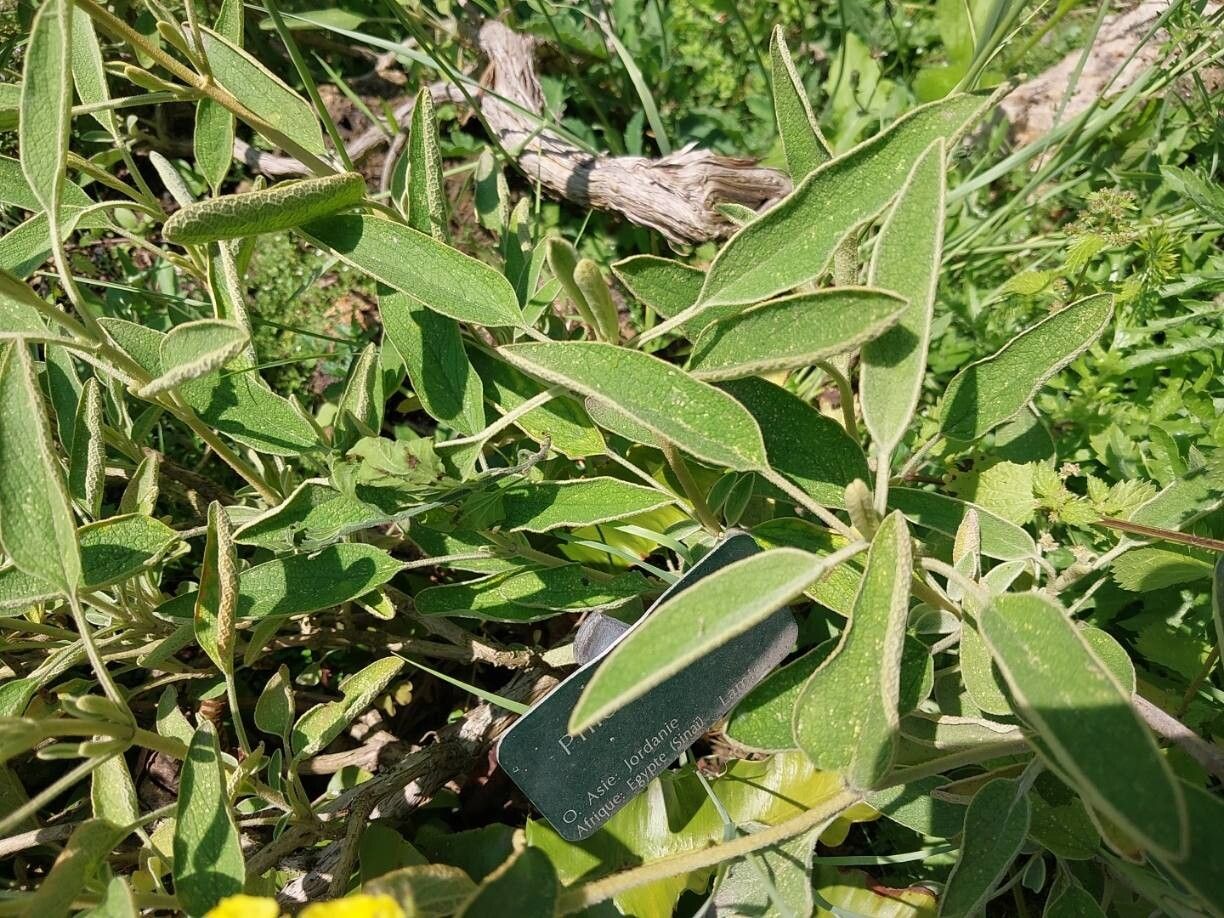
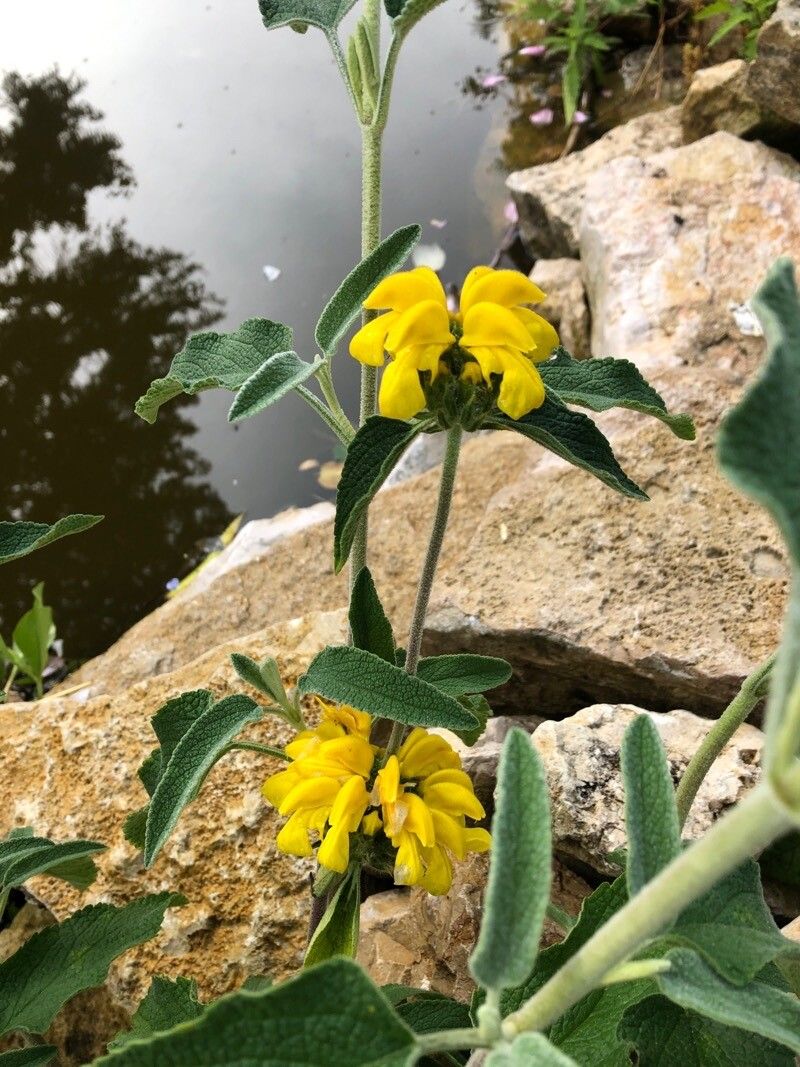
The leaves of Phlomis russeliana are large, gray-green, and have a velvety texture. Its flowers, arranged in whorls around the stem, are tubular with yellow or pinkish petals and bloom from late spring through summer.
Phlomis russeliana is easy to grow and requires minimal care once established. It prefers full sun exposure but can tolerate partial shade and drought conditions. Additionally, it attracts pollinators such as bees and butterflies.
Historically, the plant has been used for medicinal purposes due to its anti-inflammatory properties. However, it should be noted that handling the plant improperly may cause skin irritation.
Overall, Phlomis russeliana is an attractive ornamental plant with unique foliage and flowers, making it a valuable addition to any garden or landscape design. It also provides ecological benefits by attracting pollinators.
Turkish sage is fairly disease-resistant and generally not prone to illnesses. Nevertheless, it can be affected by pests and diseases present in its environment. Such infections are typically mild. Regarding care, this plant requires moderate maintenance. It needs regular pruning to maintain a neat appearance and promote healthy growth. Applying fertilizer can also encourage flowering. Turkish sage is appropriate for anyone with an outdoor area, such as a garden or patio, and does not demand extensive care experience. It may need more attention when cultivated indoors.
How to keep Phlomis Russeliana.
Light
Turkish sage is a sun-loving perennial herbaceous plant that comes from open habitats and is commonly found in meadows and grasslands. It prefers full sun but can also tolerate partial sun conditions.
Water
Turkish sage is a hardy plant that thrives in rocky and scrubby environments, displaying remarkable resilience to drought. It requires weekly watering to maintain the right balance of moisture. This versatile plant adapts well to different climate zones and flourishes especially in areas where seasonal rains support its natural growth cycles.
Humidity
This plant will thrive in moderate humidity, which is probably the level in your home. However, misting it a few times a week can be very beneficial. Make sure the room has good ventilation.
Temperature
Turkish sage can adjust to a broad span of temperature conditions, but its range may still be restricted by different combinations of moisture and heat. It performs best in warm summer climates with sufficient rainfall or watering. Extended stretches of cloudy, rainy weather, as well as prolonged high temperatures, can raise the chance of Turkish sage dying. In winter, proper protection from cold can increase the plant's survival rate.
Fertilizer
The best time to fertilize Turkish sage is in early spring, when it is coming out of dormancy and starting active growth. Fertilizing supplies essential nutrients needed for healthy development. Although Turkish sage has fairly low fertilizer requirements, an annual application can boost its survival and encourage better, longer-lasting blooms.
Pruning
Turkish sage is a perennial plant known for its whorled flower spikes and velvety leaves. To encourage new growth, prune it in early spring. In late spring, trim away the spent flowers to encourage a second bloom. Always use sanitized tools for pruning, and make cuts just above the leaf nodes to promote healthy regrowth, while avoiding excessive pruning.
Botanical profile.
- Plant Type
- Herb
- Life Cycle
- Perennial
- Genus
- Phlomis
- Family
- Lamiaceae
- Hardiness Zone
- 5-9
- Mature Height
- 61 cm to 91 cm
- Mature Spread
- 49 cm
- Leaf Color
- Olive Drab, Dark Olive Green
- Leaf Type
- Deciduous
- Flower Color
- Yellow
- Flower Size
- 2.03 cm to 3.05 cm
- Bloom Time
- Early summer, Mid summer
- Planting Time
- Spring, Summer
- Harvest Time
- Late summer, Early fall, Mid fall
- Native Area
- Turkey