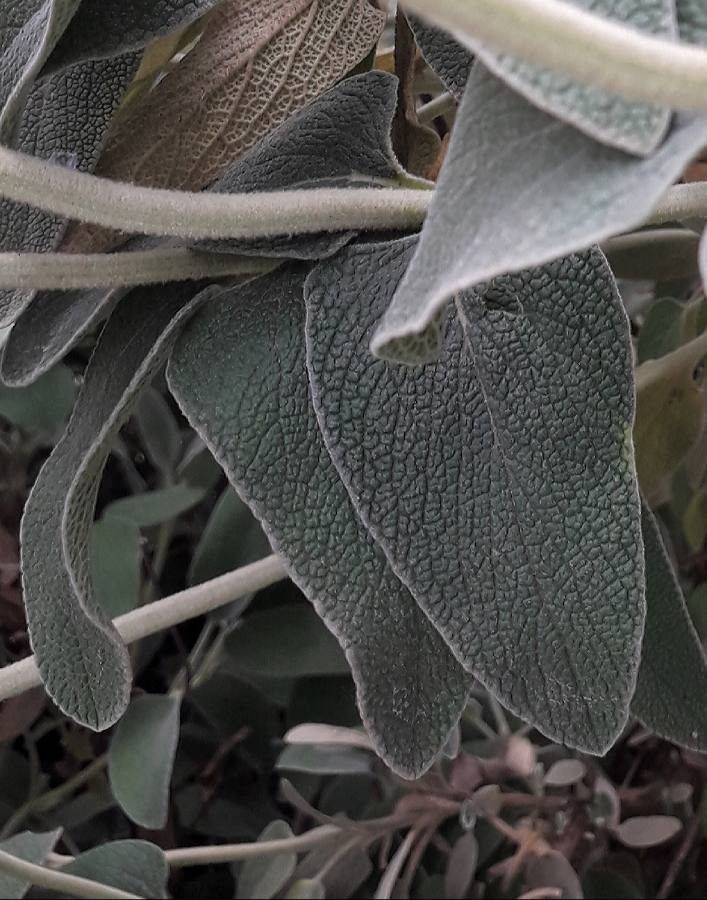
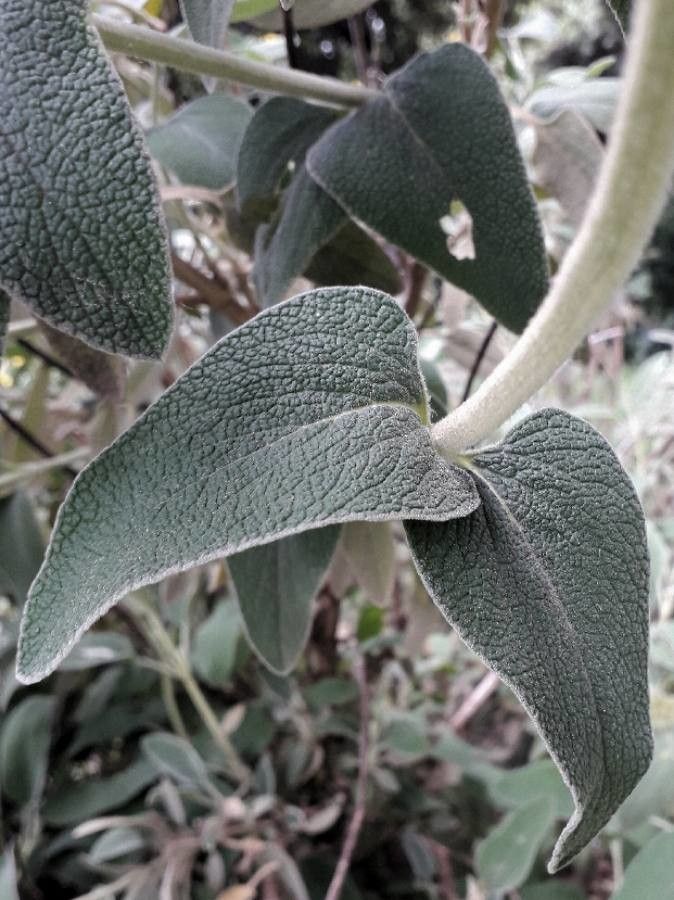
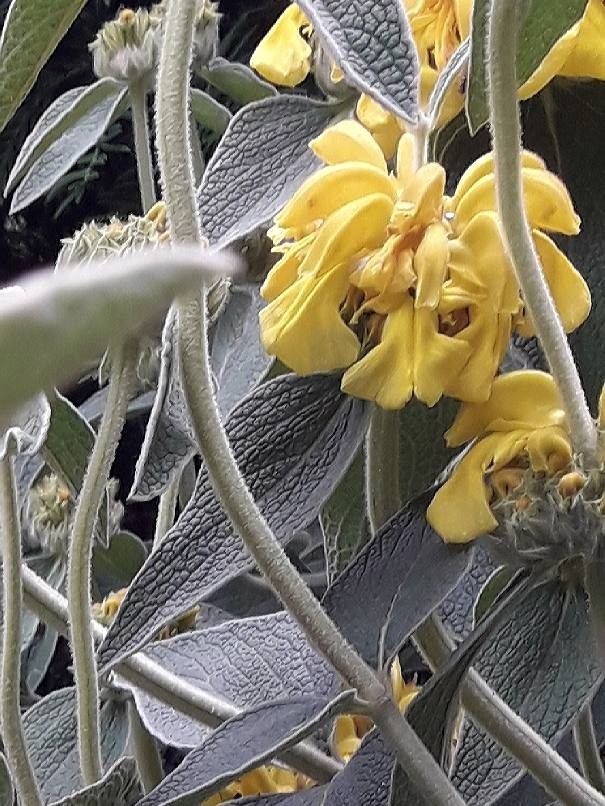
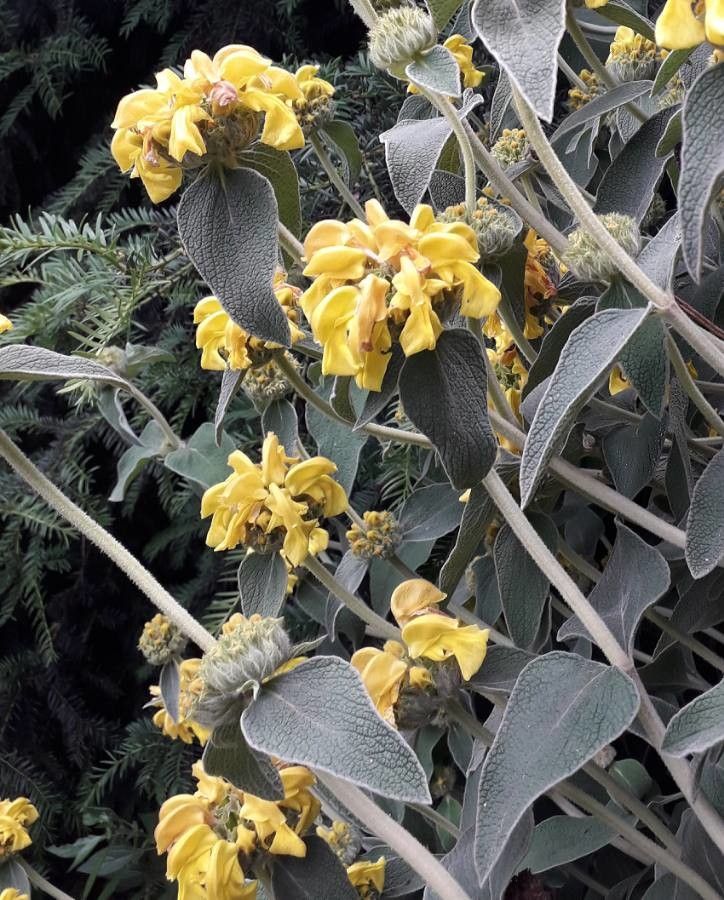
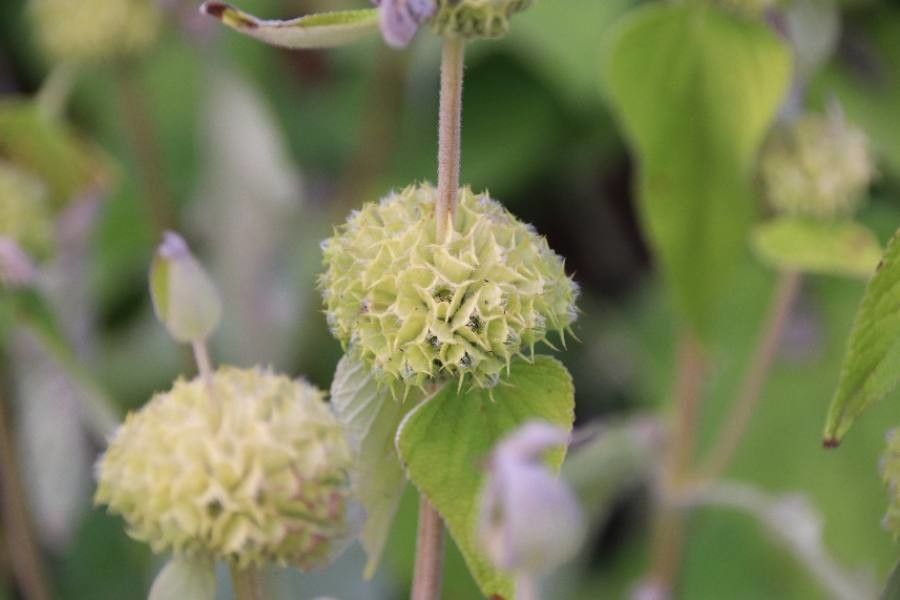
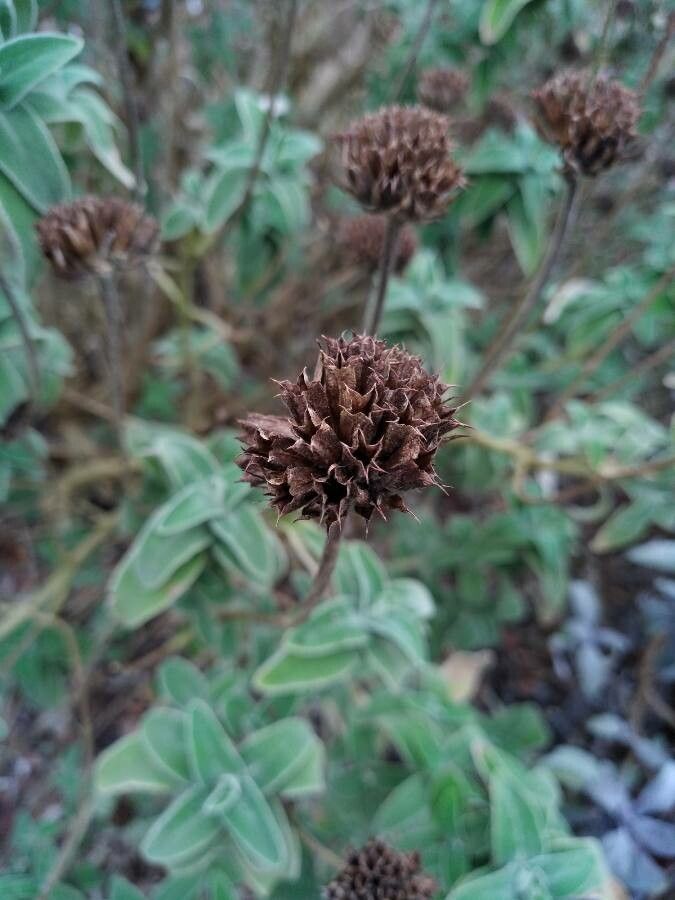
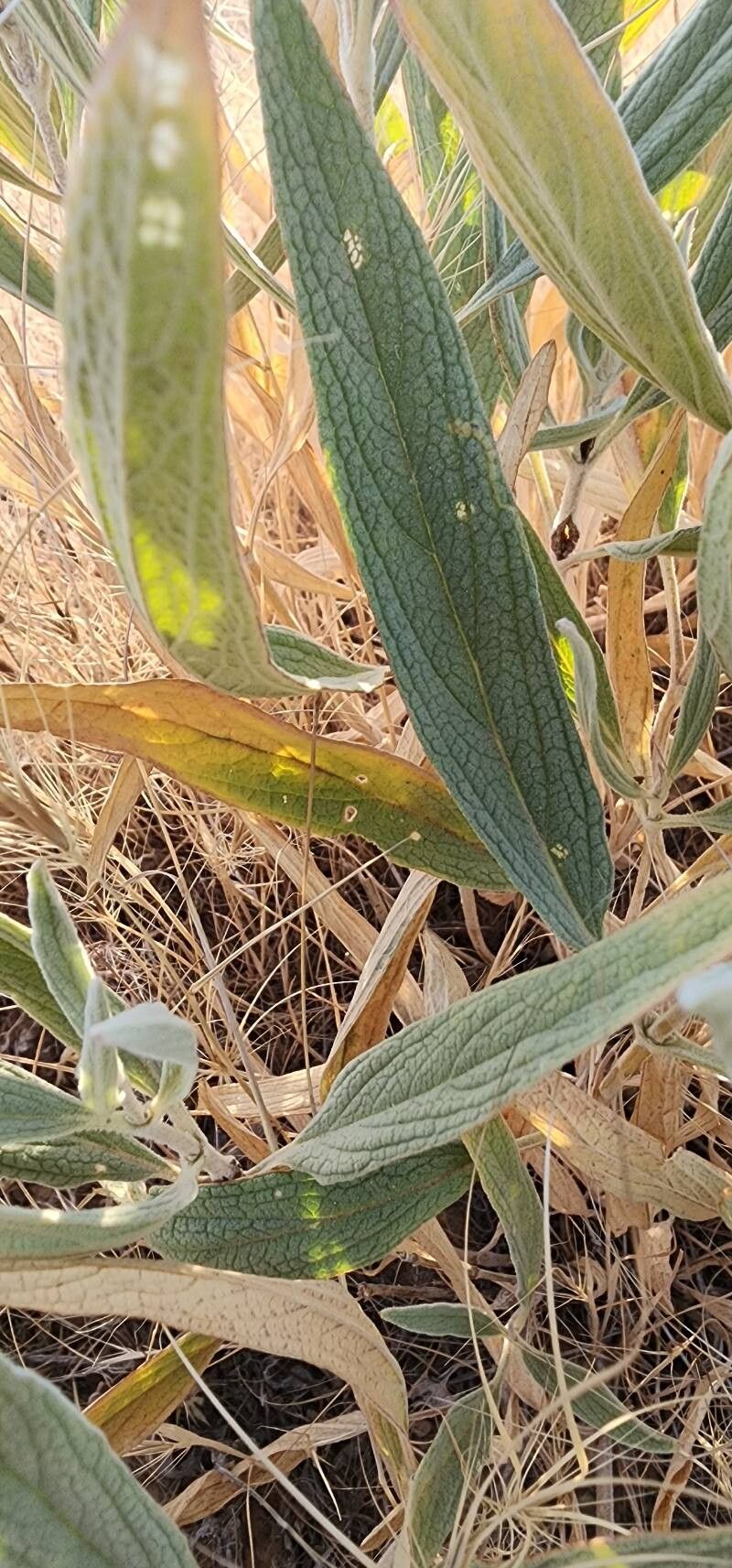
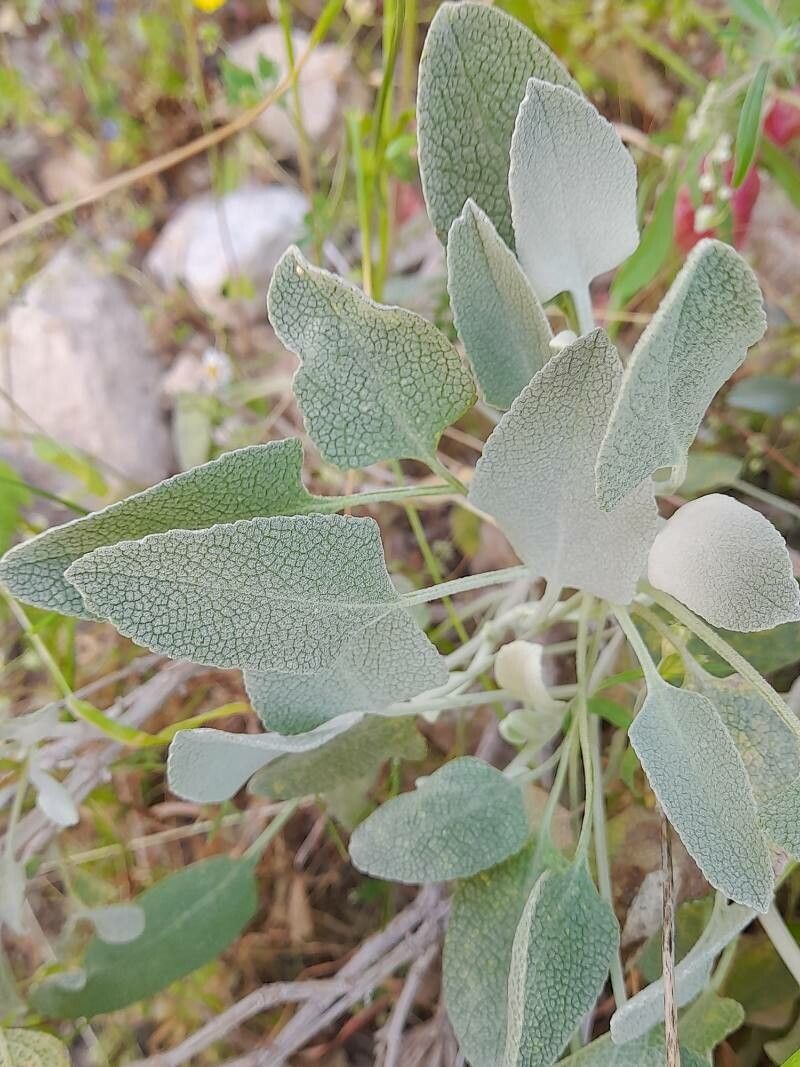
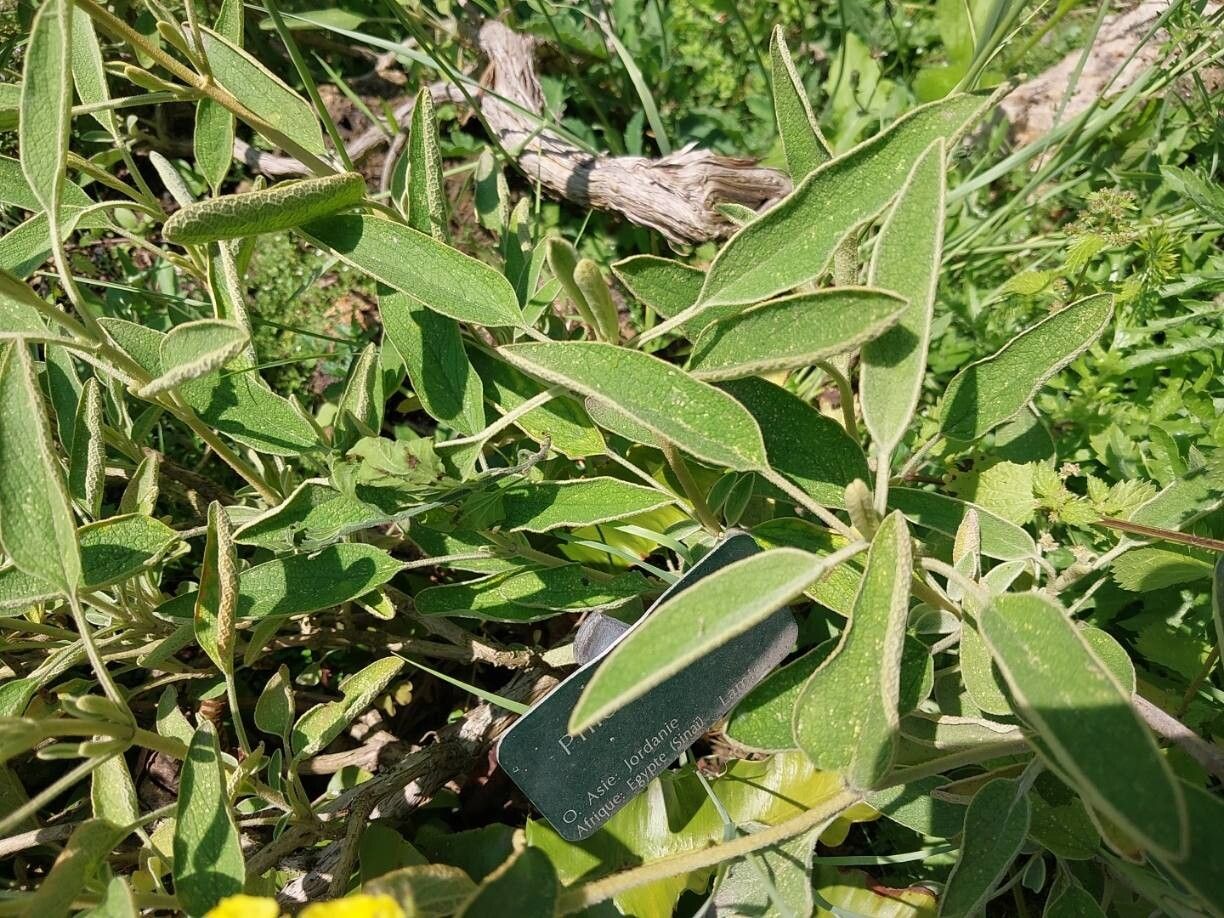
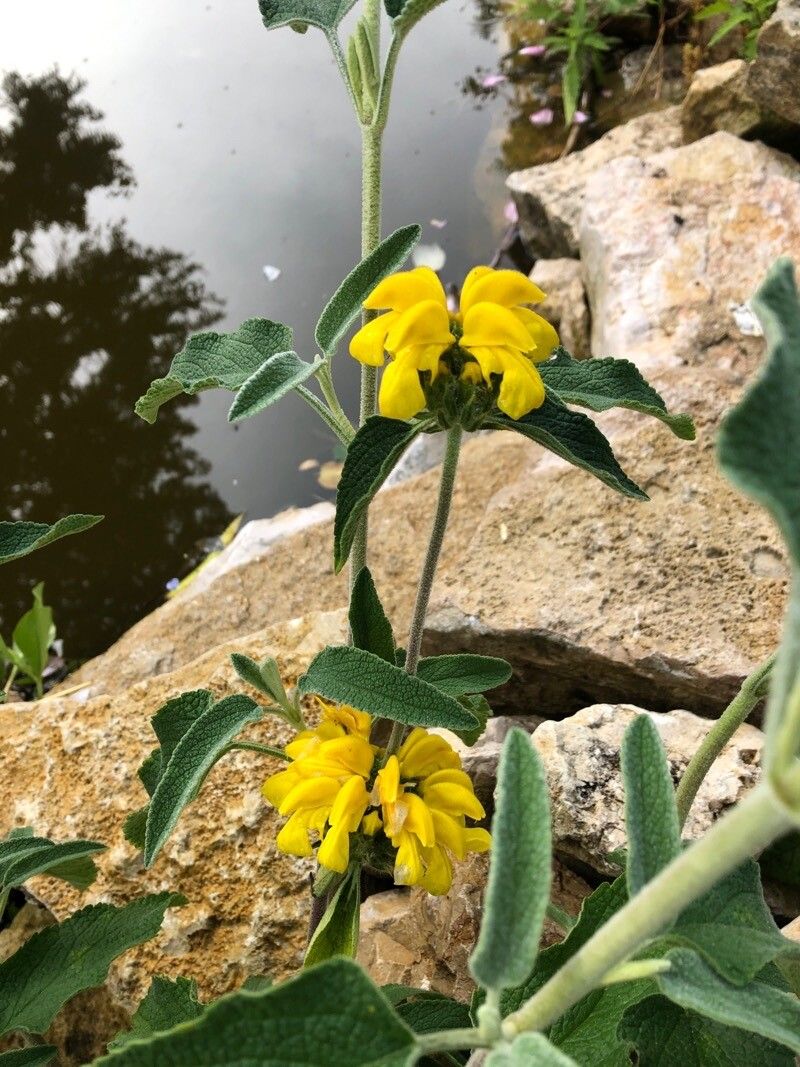
Phlomis fruticosa, the Jerusalem sage, is a species of flowering plant in the family Lamiaceae, native to Albania, Cyprus, Greece, Italy, Turkey, and countries of the former Yugoslavia. It is a small evergreen shrub, up to 1 m (3 ft) tall by 1.5 m (5 ft) wide. The sage-like, aromatic leaves are oval, 5–10 cm (2-4ins) long, wrinkled, grey-green with white undersides, and covered with fine hairs. Deep yellow, tubular flowers, 3 cm in length, grow in whorls of 20 in short spikes in summer.The specific epithet fruticosa means "shrubby".It is popular as an ornamental plant, and has gained the Royal Horticultural Society's Award of Garden Merit.As a garden escape, it has naturalised in parts of South West England.It is listed as deer resistant, hardy in zones 7 to 11, and tolerant of a range of soil types.
Jerusalem sage is a shrub that naturally grows in regions from Turkey to Syria. Despite its name, it is more closely related to the mint family. This misnomer arises because its leaves resemble those of a sage plant, which is why it is called Jerusalem sage.
Jerusalem sage is fairly resistant to disease and is usually not susceptible to illnesses. As for care, this plant is fairly low-maintenance. When grown outdoors it needs only minimal watering, and larger specimens typically do not require pruning. Smaller plants, however, should be trimmed after they have finished blooming. Jerusalem sage is appropriate for anyone with an outdoor area, such as a garden or a deck, and does not demand extensive gardening experience.
How to keep Phlomis Fruticosa.
Light
Jerusalem sage prefers places with abundant sunlight and can also tolerate sites where sun rays filter through foliage. In its natural environment, Jerusalem sage does well with generous sunlight, which benefits its growth and vitality. However, a prolonged shortage of sufficient light can stunt its growth, while excessive exposure may cause leaf scorching.
Water
Originating from the Mediterranean, shrubby Jerusalem sage thrives in dry environments with minimal water. It needs watering only once every one to two weeks. This plant prefers well-draining soil and full sunlight, making it ideal for outdoor cultivation. Additionally, mulching can help retain moisture during hot spells.
Temperature
The temperature preference for jerusalem sage is temperate, though it does well across a broad range of temperatures. It favors 59 to 95 ℉ (15 to 35 ℃) but can withstand temperatures above or below that range in warmer or cooler seasons. In hot seasons, keep the plant cool by providing plenty of shade and sufficient water. In cool seasons, extra warmth can be helpful, particularly during frost.
Fertilizer
Fertilize your Jerusalem sage in early spring to encourage healthy growth. Consistent feeding boosts the plant’s overall health, producing robust growth, increased tolerance to difficult conditions, and improved resistance to diseases and pests. Stick to a regular fertilization routine for your Jerusalem sage to maintain foliage that is vibrant, richly colored, and lush in appearance.
Pruning
Shrubby Jerusalem sage is a dense, woody perennial featuring aromatic, gray-green leaves and bright yellow flowers. To enhance its bushiness and promote flowering, prune it in late spring by removing dead stems and trimming back one-third of the plant. Regular maintenance will ensure its vitality, making shrubby Jerusalem sage an attractive addition to any garden.
Pot & Repot
When repotting Jerusalem sage, pick a pot 1-2 inches (2.5–5.1 cm) larger with good drainage. Use a well-draining potting mix. Repot in spring or fall, making sure the root ball sits slightly below the rim of the flower pot. Water thoroughly after repotting and keep it in a warm spot with indirect sunlight.
Toxicity
Phlomis fruticosa has no toxic effects reported.
Further reading →
The toxicity and danger assessments provided are for reference only. We do not assure their accuracy, so it's crucial not to depend on them. Seek professional advice when necessary for accurate guidance.
Botanical profile.
- Plant Type
- Shrub
- Life Cycle
- Perennial
- Genus
- Phlomis
- Family
- Lamiaceae
- Hardiness Zone
- 8-10
- Mature Height
- 91 cm
- Mature Spread
- 1.52 m
- Leaf Color
- Green, Gray, Silver
- Leaf Type
- Evergreen
- Flower Color
- Yellow
- Flower Size
- 5.08 cm to 7.62 cm
- Bloom Time
- Late spring, Early summer, Mid summer
- Planting Time
- Spring, Autumn
- Harvest Time
- Mid summer
- Native Area
- Turkey, Italy, Cyprus, Montenegro, Albania, Greece, Croatia, Serbia
Other names.
Reader questions.
How should I water my Shrubby Jerusalem Sage?
Your Shrubby Jerusalem Sage is not particular about how you water it, so you can use any common watering tool you have available. Whether it's a watering can, hose, or even a cup, all will work just fine for watering your plant. Regardless of the tool you use, it's best to apply the water directly to the soil and make sure to evenly moisten all areas to provide water to the entire root system. Filtered water is preferred over tap water as tap water may contain harmful particles for your plant. It's also recommended to use water that is at or slightly above room temperature, as extremely cold or hot water may shock the plant. However, the Shrubby Jerusalem Sage is generally resilient and will respond well to any type of water given to it.
Why is it important to fertilize my Shrubby Jerusalem Sage?
No matter the type of Shrubby jerusalem sage you have, regular fertilization is important for overall plant health. Providing the right nutrients helps promote stronger growth and resilience against challenging conditions, while also improving the plant's ability to ward off diseases and pests. The foliage of your Shrubby jerusalem sage is one of its most appealing features, so it's essential to maintain its health. By following a proper fertilization schedule tailored to your specific Shrubby jerusalem sage, you can encourage the development of vibrant, lush leaves with deep color.
What are the sunlight requirements for Shrubby Jerusalem sage?
Shrubby Jerusalem sage requires full sun, meaning it prefers above 6 hours of sunlight daily, but it can also tolerate partial sun, which is about 3-6 hours of sunlight. It is essential to observe the sunlight's movement through your garden to find spots that offer the right balance of light and shade to ensure the plants' health and happiness.
What is the preferred temperature range for shrubby jerusalem sage?
Shrubby Jerusalem sage prefers a temperate climate but is adaptable to a wide range of temperatures. It thrives best within the temperature range of 59 to 95°F (15 to 35°C), which allows it to grow optimally. Despite this preference, it can withstand temperature variations beyond this range during warmer or cooler seasons, indicating its versatility in different environmental conditions.
What should I do if I give too much or too little water to my Shrubby jerusalem sage?
For outdoor plants, especially newly planted or seedling plants, the lack of watering can be a problem. It is important to consistently water these plants for a few months when they are small or recently planted. Once the roots are established, Shrubby Jerusalem Sage can rely on rainfall. When planting Shrubby Jerusalem Sage in pots, overwatering is more likely. If you accidentally overwater your Shrubby Jerusalem Sage, take immediate action to fix the situation. First, stop watering the plant to minimize the impact of the overwatering. Remove the plant from its pot to examine the roots. If no root rot is found, you can return the plant to its container. However, if root rot is present, trim the affected roots and apply a fungicide to prevent further damage. Repot the plant in well-draining soil. If the Shrubby Jerusalem Sage is underwatered, simply increase the frequency of watering. Underwatering can be easily fixed as the leaves will droop, dry out, and fall off. After sufficient watering, the leaves will return to their fullness. Adjust your watering schedule as soon as underwatering is noticed.
When should I fertilize my Shrubby Jerusalem Sage?
To keep your Shrubby jerusalem sage healthy, fertilize it in late winter or early spring. This will provide the necessary nutrients for healthy growth when the weather warms up. If you live in a warm climate, consider giving your plant another round of fertilizer in early fall. This will give it added nutrients for the following growing season and help it withstand the winter cold without damage to its foliage. Fertilizing earlier in the season will also give the new branches enough time to grow and better withstand the cold winter.
What are the essential care tips for thriving Shrubby Jerusalem sage?
Shrubby Jerusalem sage thrives in areas with plenty of sun exposure and can tolerate some shade. In its natural habitat, it benefits significantly from abundant sunlight, which positively influences its growth and vitality. Insufficient sunlight can hinder its growth, while too much direct sun may cause leaf scorching. When natural light is limited, especially in winter or less sunny spaces, utilizing artificial lighting can be beneficial. LED lights are advised as they can mimic the specific wavelengths needed by plants. Full sun plants require 30-50W/sq ft of light, partial sun plants 20-30W/sq ft, and full shade plants 10-20W/sq ft. The artificial light source should be placed 12-36 inches above the plant and kept on for 8-12 hours per day to imitate natural daylight hours.
How does shrubby jerusalem sage cope with high temperatures?
In high-temperature conditions, particularly during the summer months when temperatures may exceed its preferred range, shrubby Jerusalem sage requires extra care to remain healthy. It is important to provide the plant with ample shade to prevent overheating and ensure it has an adequate water supply to maintain moisture. These measures help protect the plant from the stress and potential damage caused by excessive heat.
How frequently should I water my Shrubby jerusalem sage?
When plants grow outdoors with regular rainfall, they can typically be left to grow naturally. However, if the area lacks rainfall, you will need to provide adequate watering every 2 weeks in spring and fall, and more frequently in the summer. In winter, when growth slows down and plants require less water, it is important to water sparingly, and you may not need to water at all. If you have a young or newly planted Shrubby Jerusalem sage, it is recommended to water more frequently to help it establish and grow into a more adaptable and drought-tolerant plant. For potted plants, there are two main approaches to determining watering frequency for Shrubby Jerusalem sage. The first is to follow a predetermined watering schedule, such as once a week or once every other week. However, this method may not always be effective as it doesn't take into account the specific growing conditions for your plant. Watering frequency can also vary with the seasons. During summer, when the plant's water needs are highest, a predetermined schedule may not be sufficient. An alternative approach is to gauge the soil moisture before watering. It is generally recommended to wait until the top two to four inches of soil, about ⅓ to ½ depth of the pots, have completely dried out before giving more water.
When is it not a good time to fertilize my Shrubby jerusalem sage plant?
There are certain times of the year when you should avoid fertilizing your Shrubby Jerusalem Sage. The first is during the early and mid-winter months when the plant is dormant and doesn't require any feeding. It's also not advisable to fertilize the plant in late spring and throughout the summer, as the weather tends to be hotter and drier during this time, which can negatively affect the plant's response to fertilization. To avoid any problems, it's best to stick to a fertilization schedule that involves feeding only in early spring and early fall.
What common symptoms indicate inadequate sunlight for Shrubby Jerusalem sage?
When Shrubby Jerusalem sage does not receive enough sunlight, it may exhibit symptoms like smaller new leaves, leggy or sparse growth, faster leaf drop, slower or no new growth, and lighter-colored new leaves. Exposure to excessive sunlight can cause chlorosis, sunscald, leaf curling, wilting, and leaf scorching. These symptoms show the plant's distress due to inappropriate lighting conditions, signaling the need for adjustments in light exposure.
What are the measures to protect shrubby jerusalem sage in cold temperatures?
Shrubby Jerusalem sage has a moderate level of cold tolerance, generally withstanding temperatures just below freezing without needing special protection. However, if temperatures are expected to plummet below -5°C, it's crucial to implement temporary measures to shield the plant from cold damage. This can include wrapping the plant with plastic film, fabric, or other insulating materials. Such precautions should be removed once temperatures rise to ensure the plant's continued health.