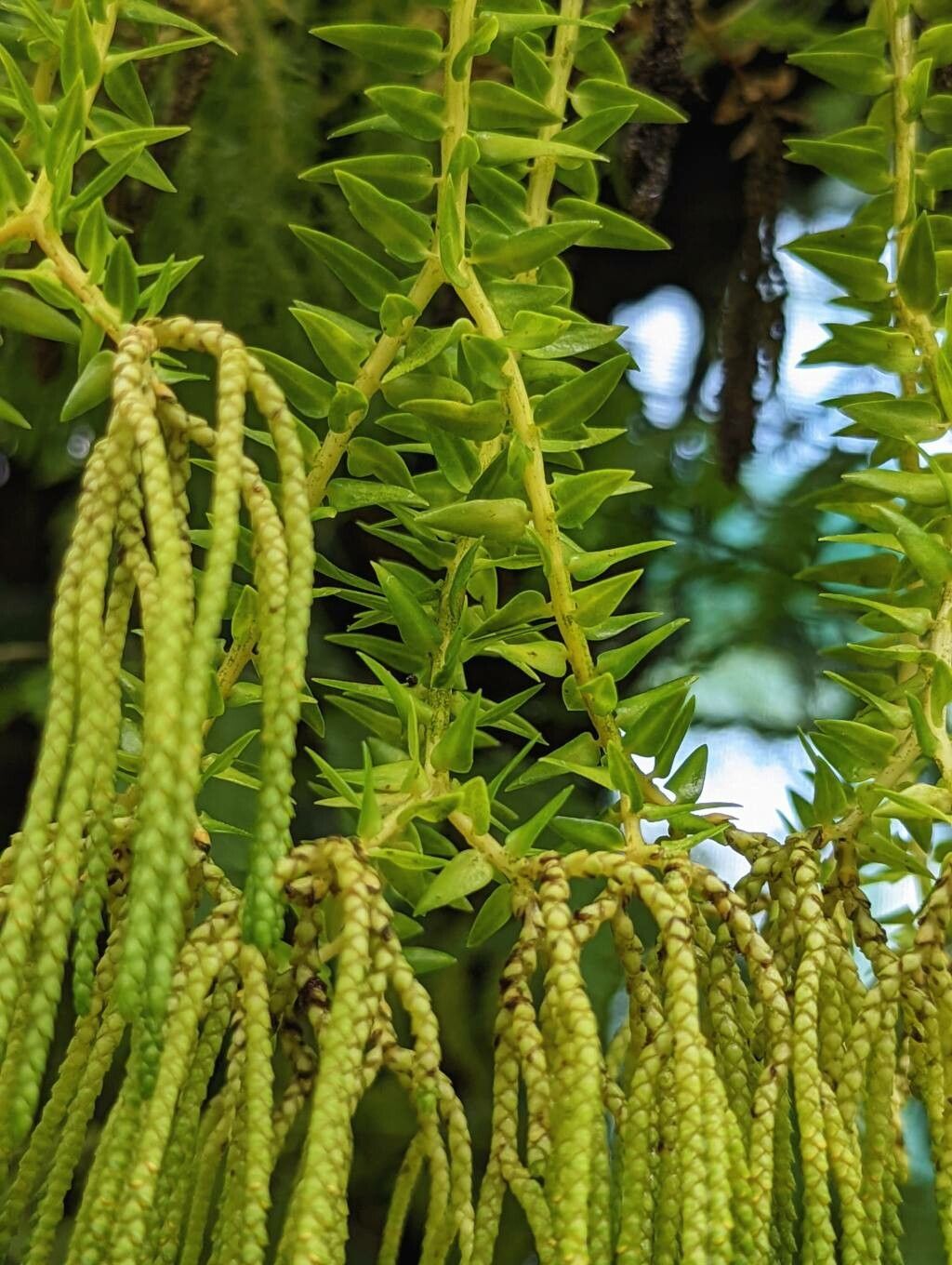
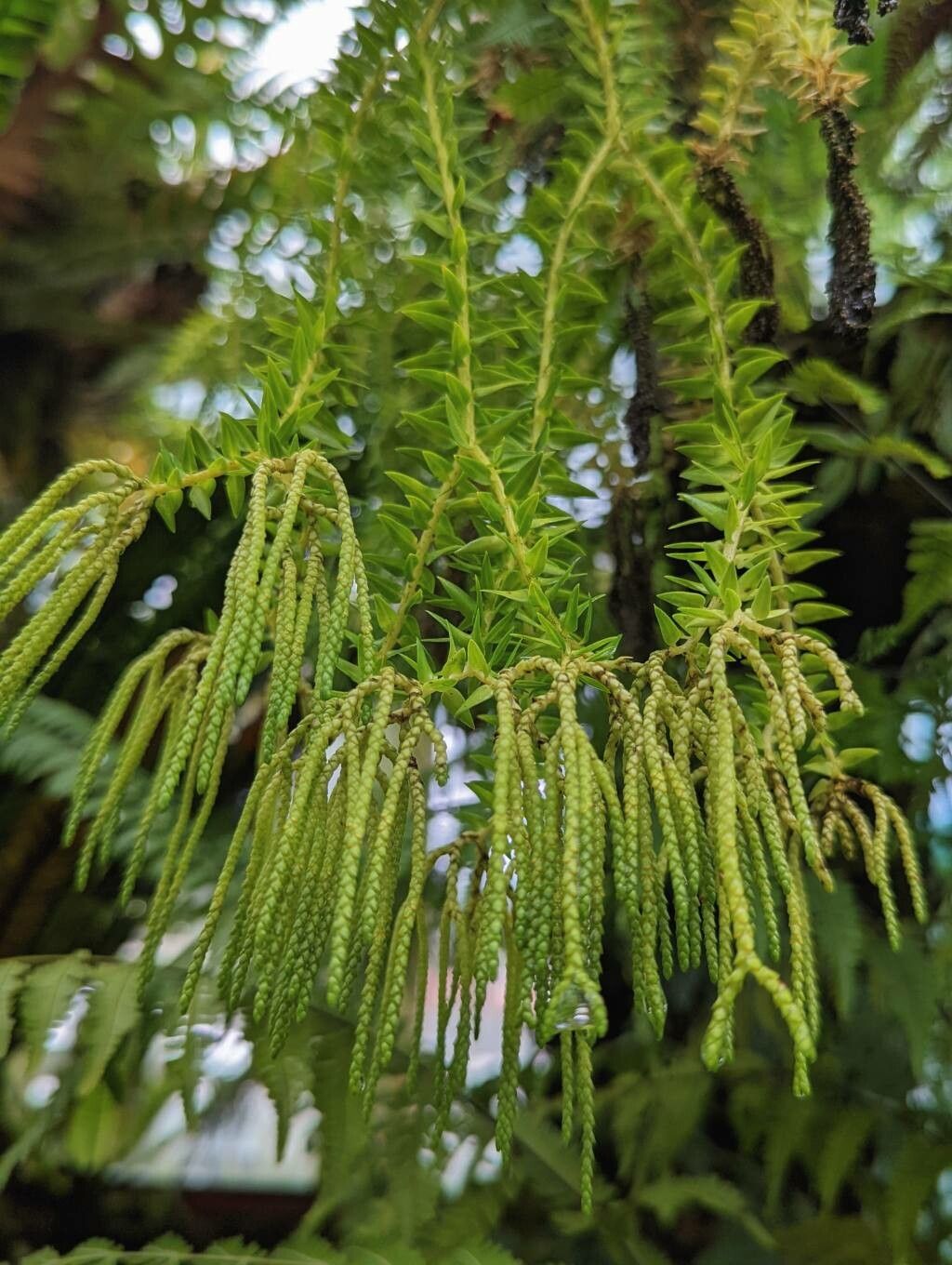
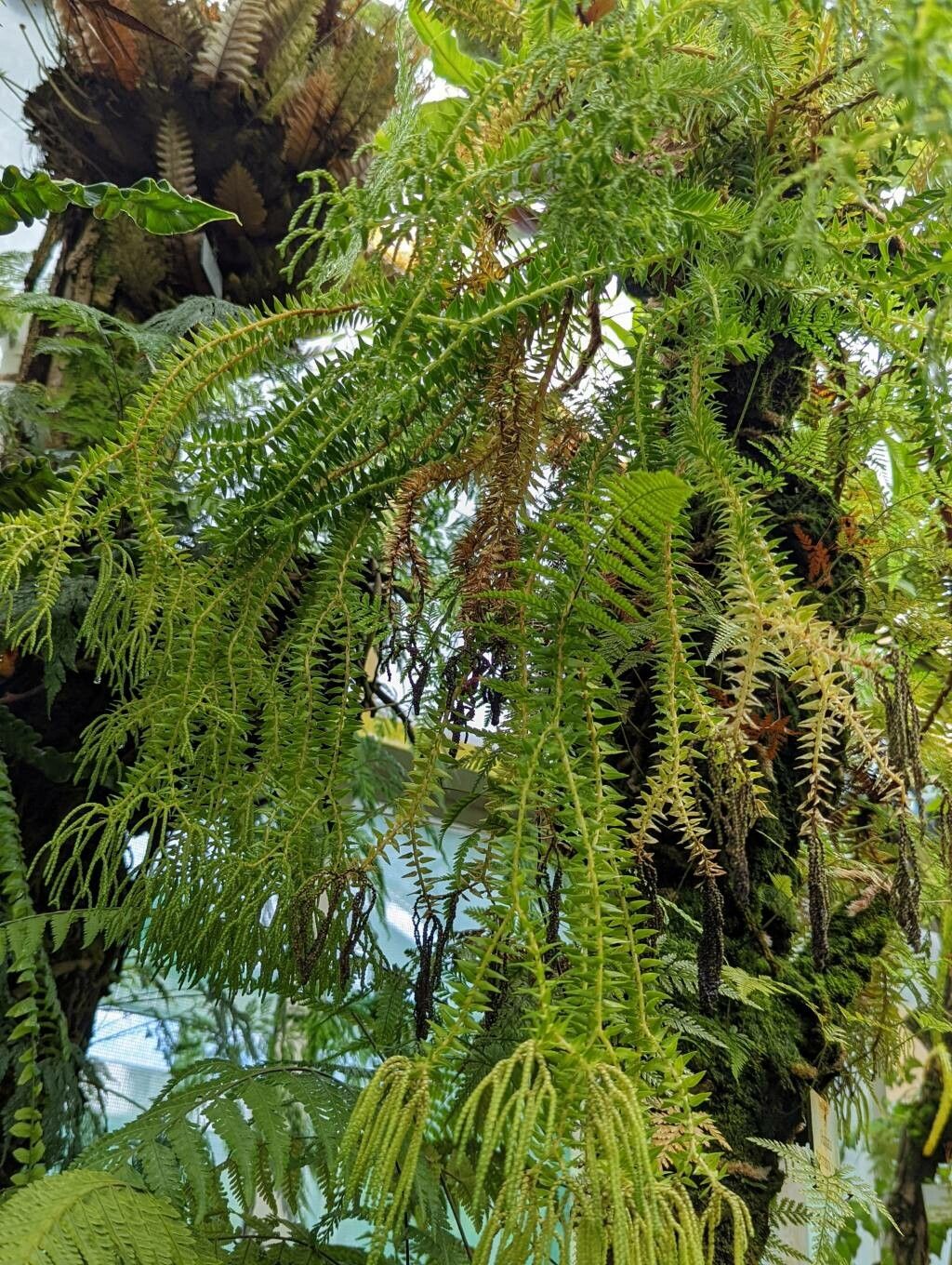
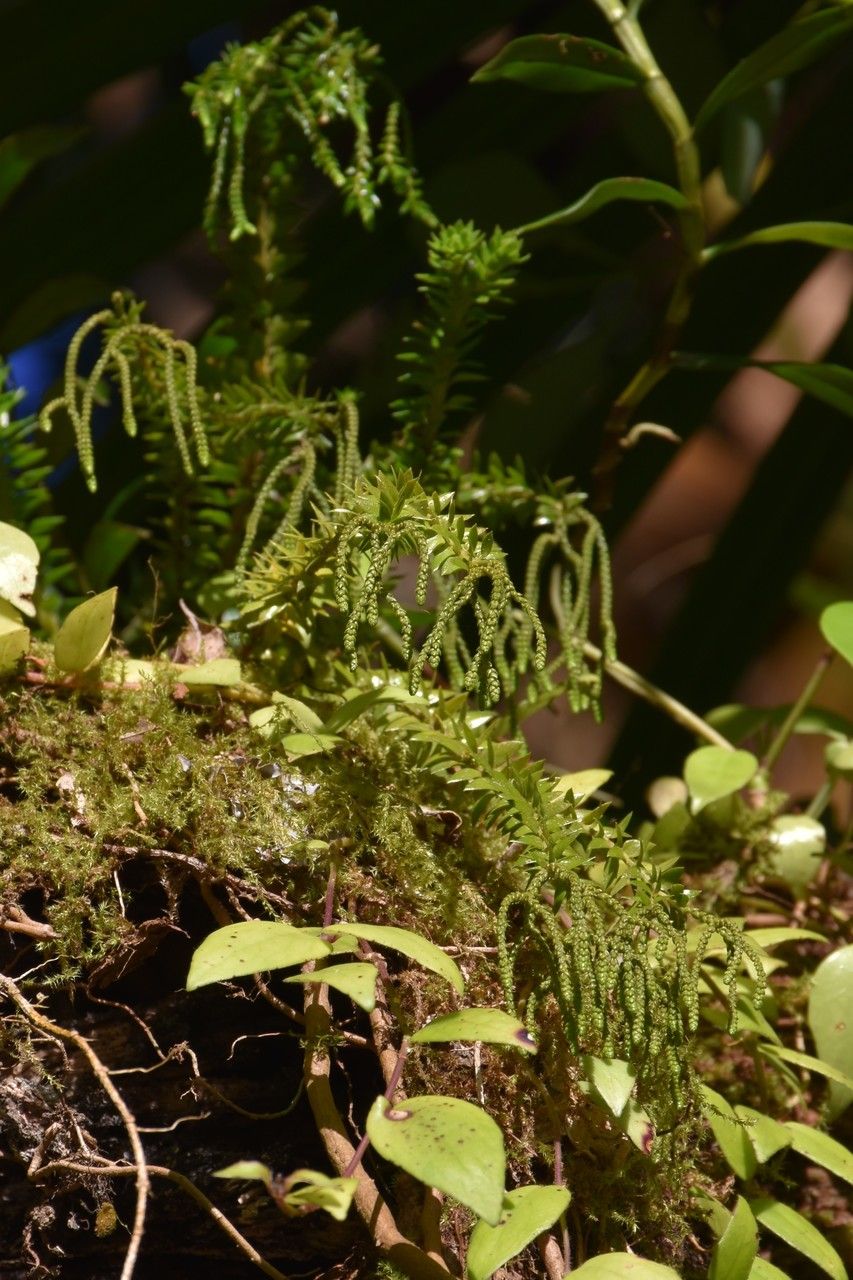
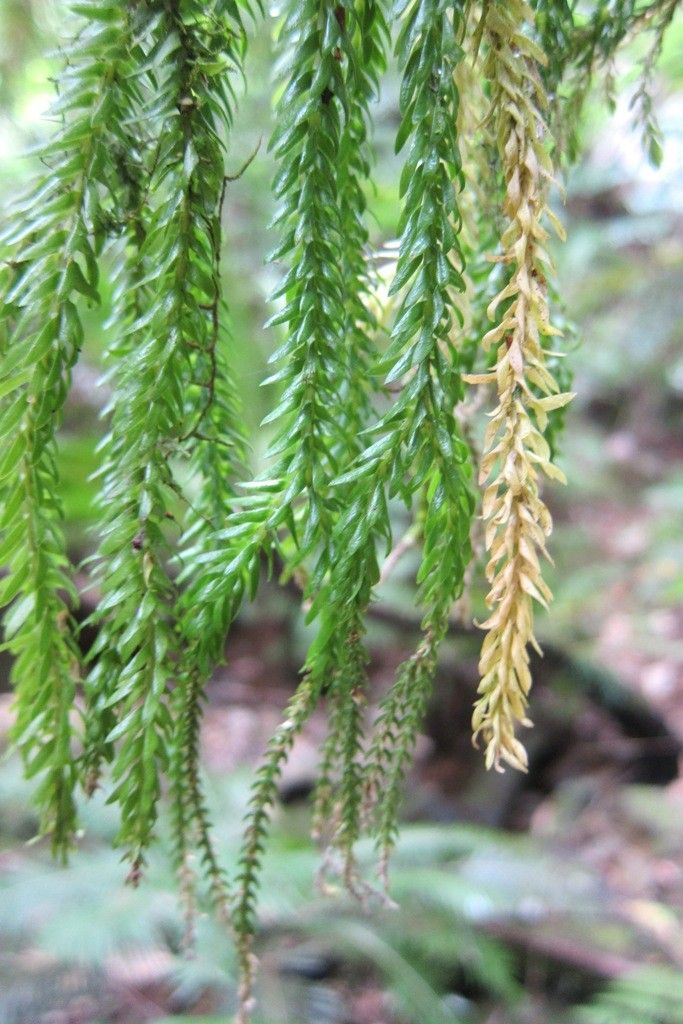
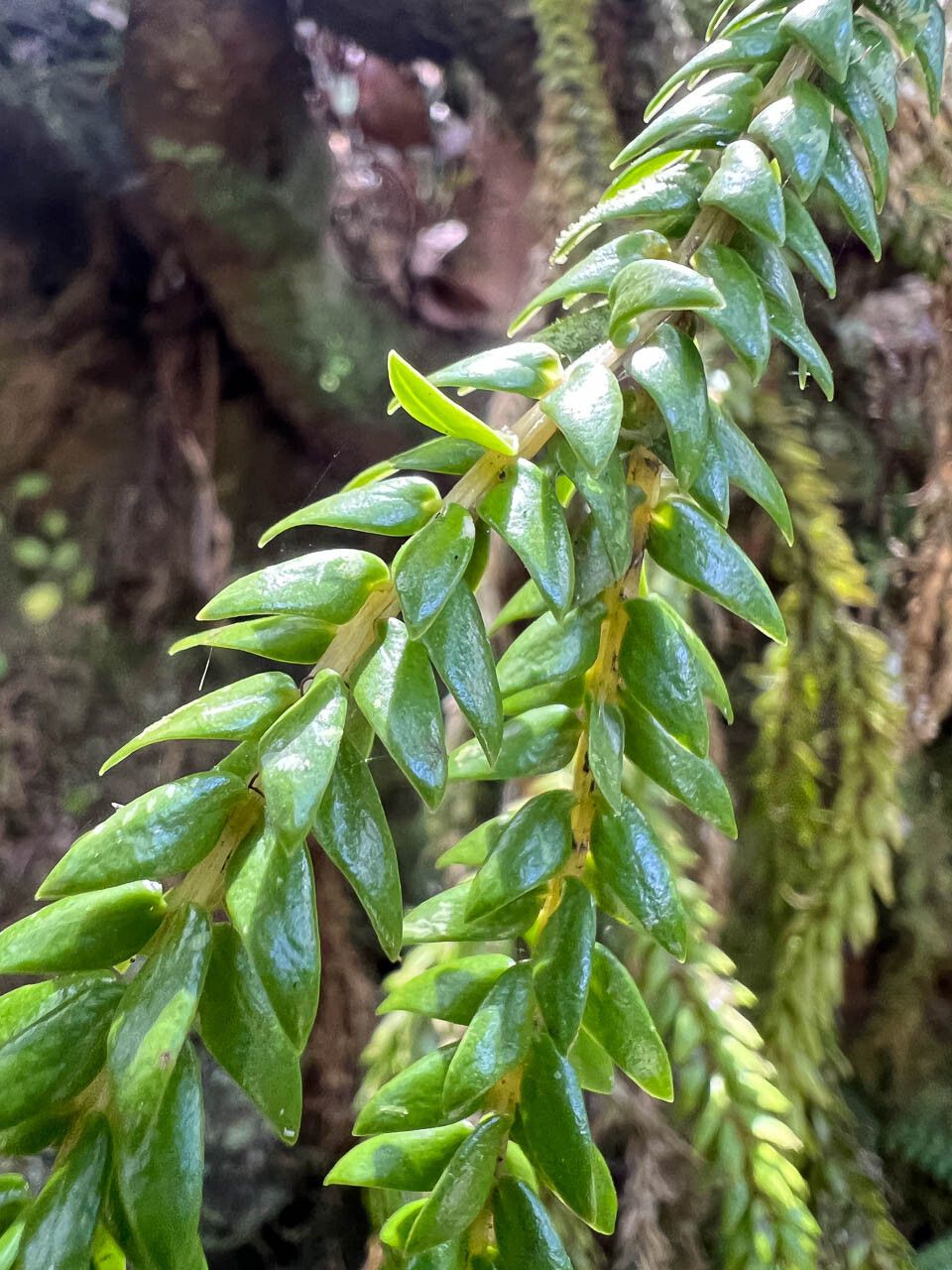
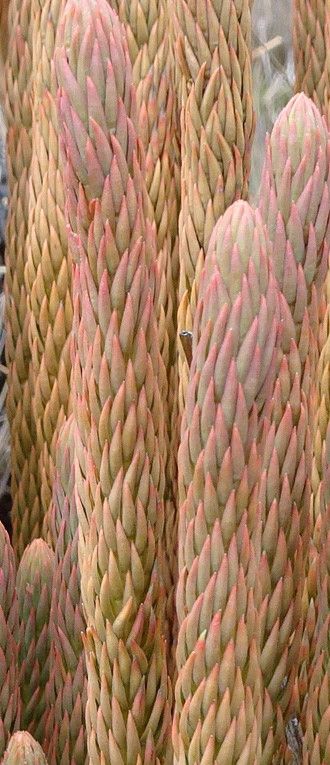
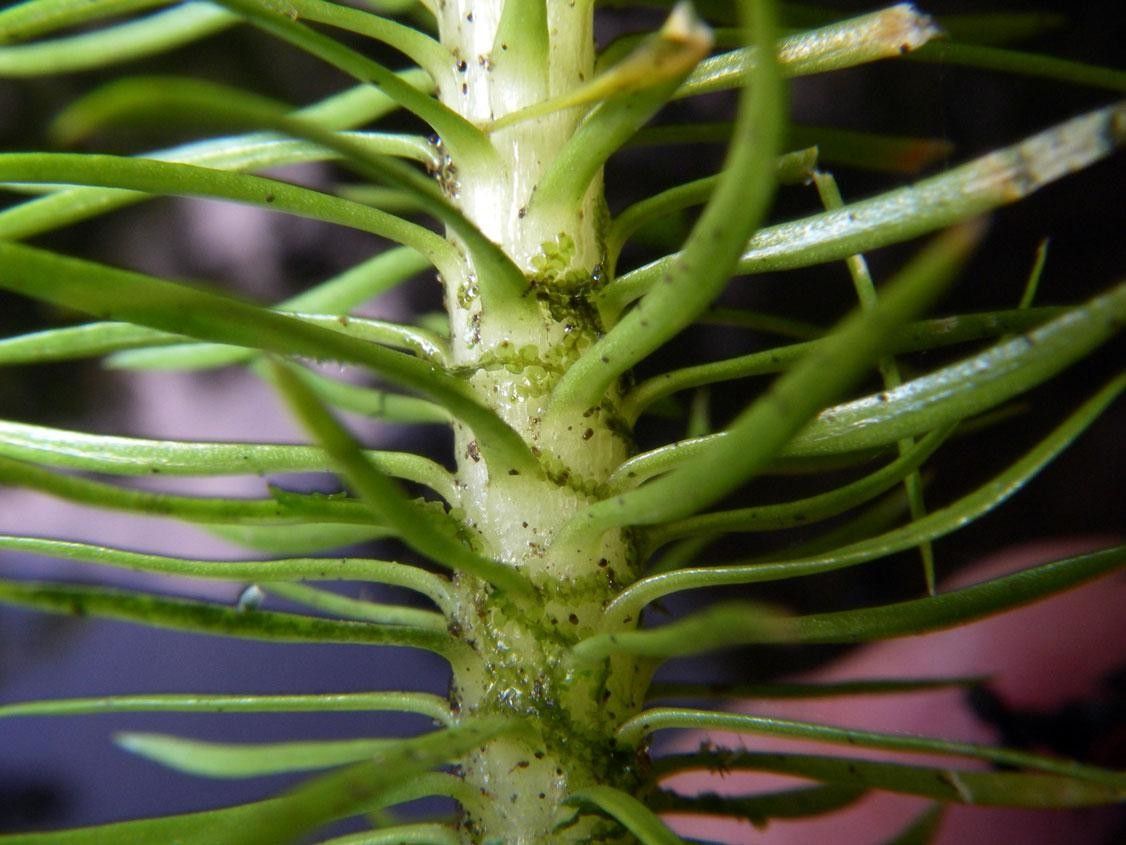
Phlegmariurus phlegmaria, synonym Huperzia phlegmaria, commonly known as either coarse tassel fern or common tassel fern, is an epiphytic species native to rainforests in Madagascar, some islands in the Indian Ocean, Asia, Australasia and many Pacific Islands. Phlegmariurus phlegmaria is commonly found in moist forests and rainforests at high altitudes, in and amongst mosses and other epiphytes. Members of the order Lycopodiales are commonly referred to as clubmosses.
The Queensland tassel-fern is fairly disease-resistant and typically does not suffer from many illnesses. Still, it can be affected by pests and diseases present in its environment. Such infections are usually mild. In terms of care, this plant needs moderate maintenance. Regular pruning is required to keep a neat appearance and promote healthy growth. Fertilizing can also help encourage flowering. The Queensland tassel-fern is appropriate for anyone with an outdoor area, such as a garden or patio, and does not demand extensive care experience. It may need more attention when grown indoors.
How to keep Phlegmariurus Phlegmaria.
Light
The Queensland tassel-fern does best with moderate light yet can tolerate low-light conditions. In its native habitat it lived in places that received enough sunlight without being overexposed. Too much sun can cause leaf burn, while too little light may limit its growth.
Water
The Queensland tassel-fern, native to tropical rainforests, flourishes in high-humidity environments and needs weekly watering to keep its foliage lush. As an epiphyte, it thrives in well-draining containers, which help prevent root rot while maintaining consistent moisture—conditions that reflect its natural habitat.
Temperature
The Queensland tassel-fern comes from tropical areas, where the climate is generally warm and humid. Therefore it is well suited to high temperatures and moisture. It does not tolerate sudden temperature shifts and prefers a steady temperature, so avoiding fluctuations indoors is important. It typically cannot withstand cold and needs warmer conditions to grow. If the surrounding temperature falls too low, the plant may stop growing or even die.
Fertilizer
The Queensland tassel-fern needs the most fertilizer during its active growing period, which takes place mainly in spring, summer, and early fall. Fertilization supplies essential nutrients that the soil may be lacking, supporting healthy root and stem development and encouraging attractive foliage, which is a notable characteristic of this plant.
Pruning
The Queensland tassel-fern is known for its cascading, tassel-like fronds. To keep it healthy and well-shaped, it is best to prune it from early to late spring. Trim sparingly using sharp, sterilized tools to prevent infections. Regular pruning enhances its appearance and helps prevent diseases, ensuring the Queensland tassel-fern remains vibrant all year round.
Botanical profile.
- Plant Type
- Herb
- Life Cycle
- Perennial
- Genus
- Phlegmariurus
- Family
- Lycopodiaceae
- Hardiness Zone
- 10-12
- Mature Height
- 61 cm to 76 cm
- Mature Spread
- 20 cm to 49 cm
- Leaf Color
- Green
- Leaf Type
- Evergreen
- Planting Time
- Spring, Summer, Autumn
- Native Area
- Nepal, Sri Lanka, Malawi, India, Malaysia, Philippines, Bangladesh, Laos, Guinea, Fiji, Uganda, Tanzania, China, Sierra Leone, Indonesia, Cambodia, Equatorial Guinea, Liberia, Cameroon, Vietnam, Myanmar, Japan, Bhutan, Ghana, Singapore, Thailand, Gabon
Other names.
Reader questions.
What are the sunlight requirements for Queensland tassel-fern?
Queensland tassel-fern thrives best in moderate sunlight exposure but can also endure low light conditions. Ideally, it should receive partial sun, about 3-6 hours of sunlight per day, but can survive in full shade with less than 3 hours of sunlight. Excessive sunlight can cause leaf burn, whereas insufficient light might stunt its growth. It's essential to watch how sunlight moves through your garden, choosing spots that offer a perfect balance of light and shade for the plant's wellbeing.
Can Queensland tassel-fern be grown under artificial lighting?
Yes, Queensland tassel-fern can be grown under artificial lighting, especially when natural sunlight is insufficient. LED lights are a good choice as they can be customized to provide specific wavelengths needed for optimal plant growth. For full sun plants, 30-50W/sq ft of artificial light is needed; for partial sun plants, 20-30W/sq ft; and for full shade plants, 10-20W/sq ft. The light source should be placed 12-36 inches above the plant to mimic natural sunlight conditions and turned on for 8-12 hours per day to mimic natural daylight hours.
What are the symptoms of insufficient light for Queensland tassel-fern?
Queensland tassel-fern may show several symptoms when grown in insufficient light, including smaller new leaves, leggy or sparse growth, faster leaf drop, and slower or no new growth, indicating a light deficiency. Leaves may develop pale colors, indicating a lack of chlorophyll and essential nutrients. Excessive sunlight exposure can cause chlorosis, sunscald, leaf curling, wilting, and leaf scorching, affecting the plant's overall health and photosynthetic capacity.
How to care for Queensland tassel-fern in terms of light exposure?
To optimize Queensland tassel-fern's growth under various light conditions, gradually shift it to sunnier spots each week until it receives about 3-6 hours of direct sunlight daily. If moving the plant is not feasible, or if it's large, using artificial light such as desk lamps or professional grow lights for at least 8 hours daily can provide sufficient light. When dealing with outdoor plants, avoid sudden changes in light intensity to prevent sunburn. If sunlight is obstructed, consider pruning or transplanting to reduce shadings, such as pruning trees or moving smaller plants to sunnier locations. Note that parts of the plant affected by insufficient sunlight may not fully recover, but new growth should be healthy with improved light exposure.