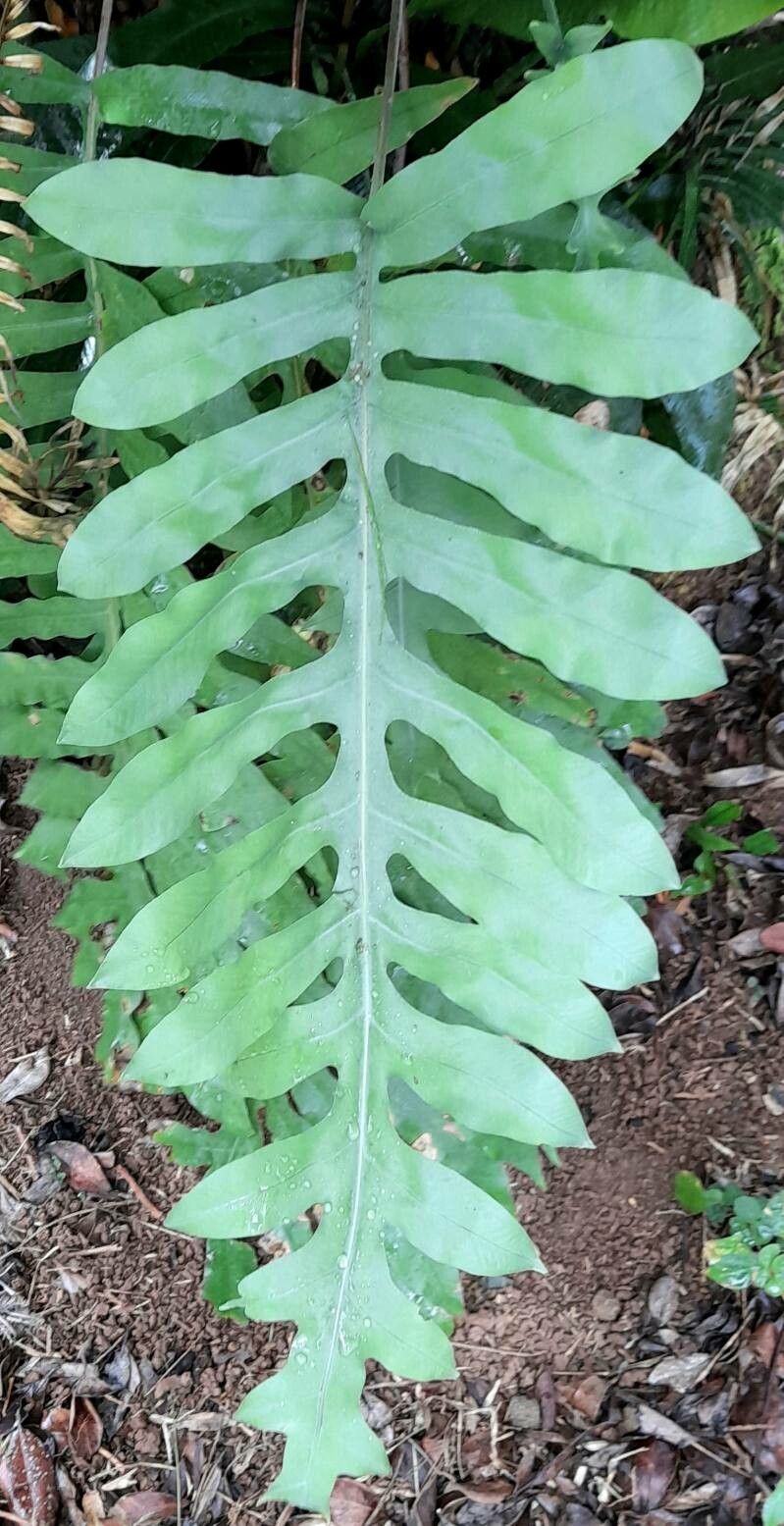
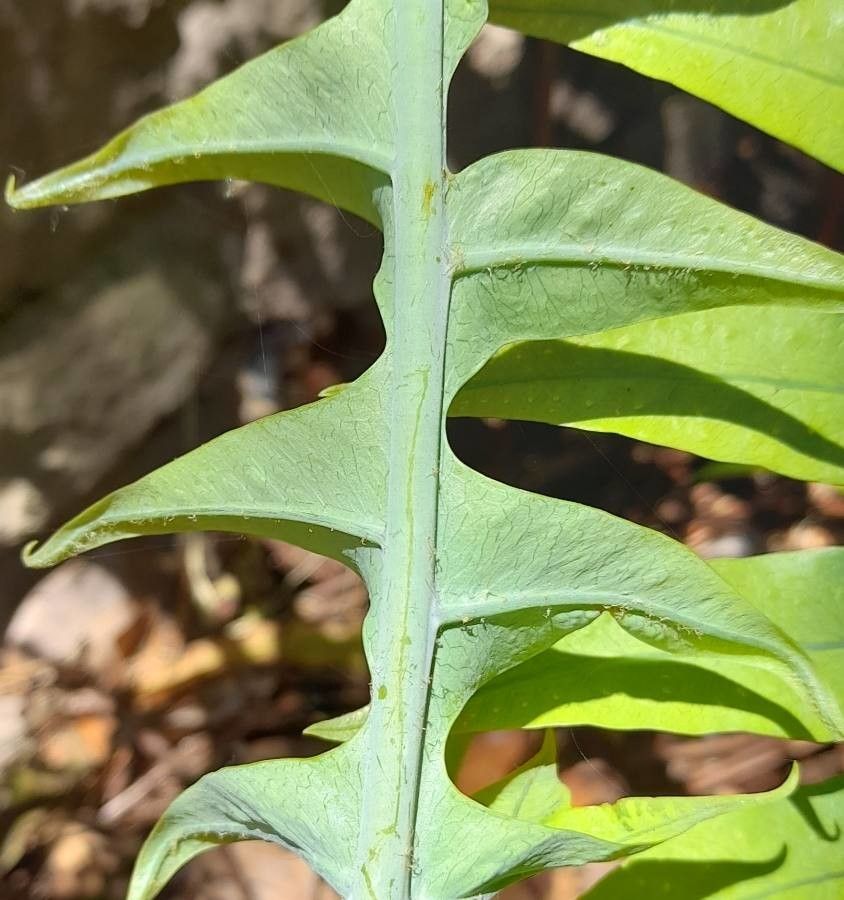
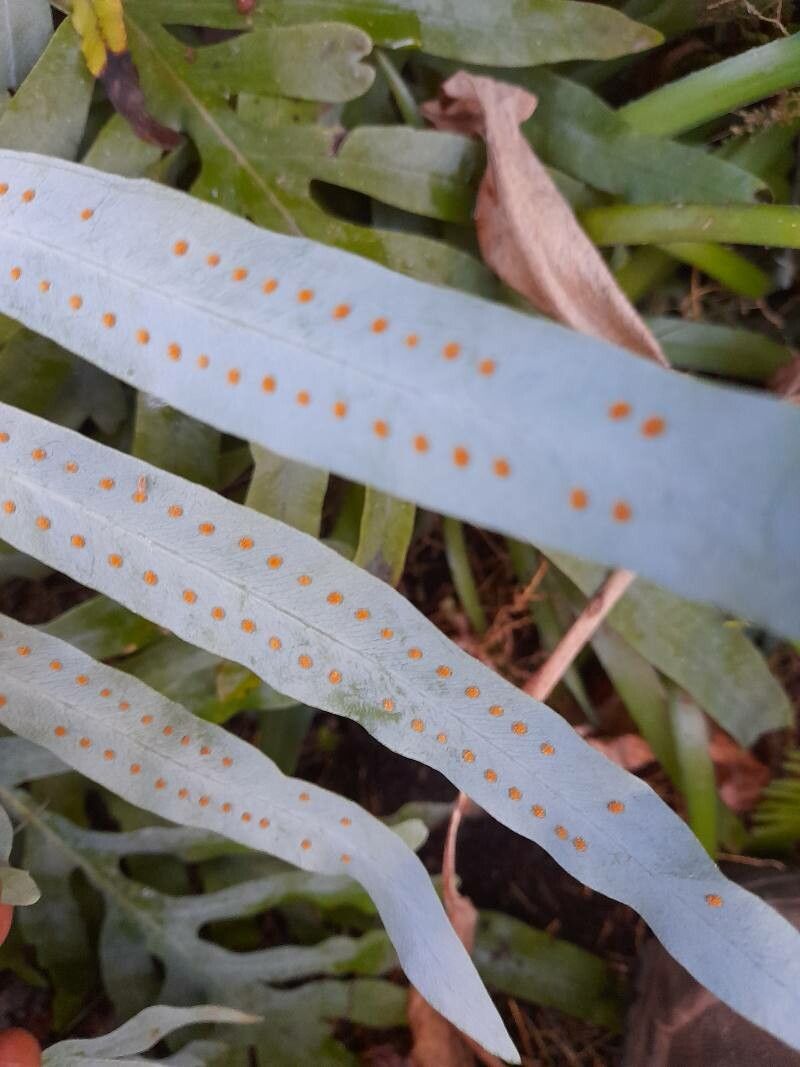
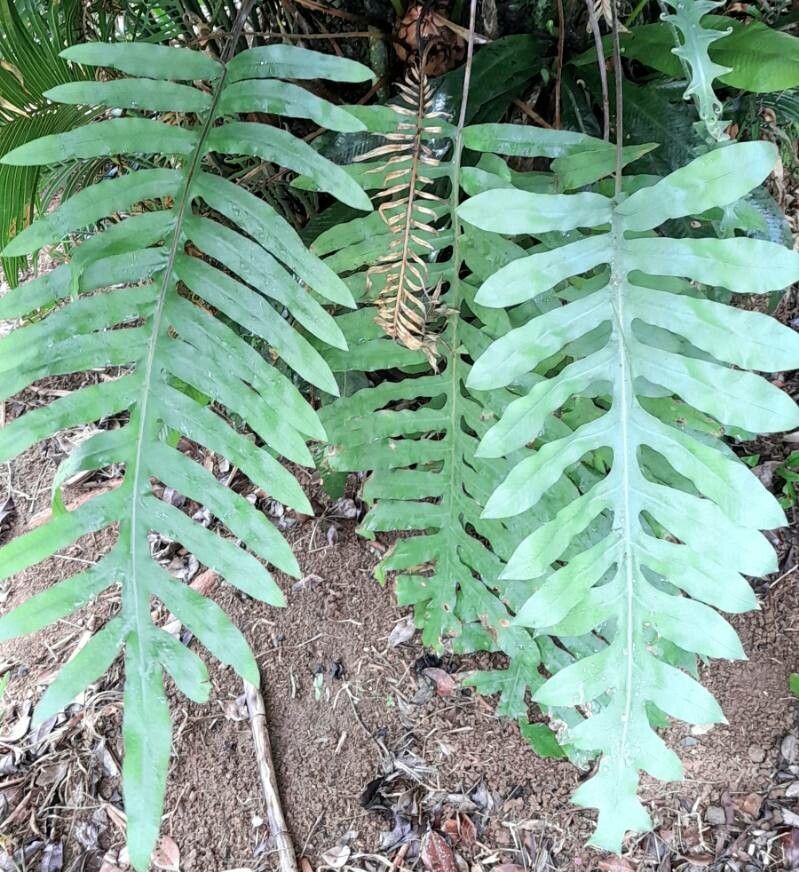
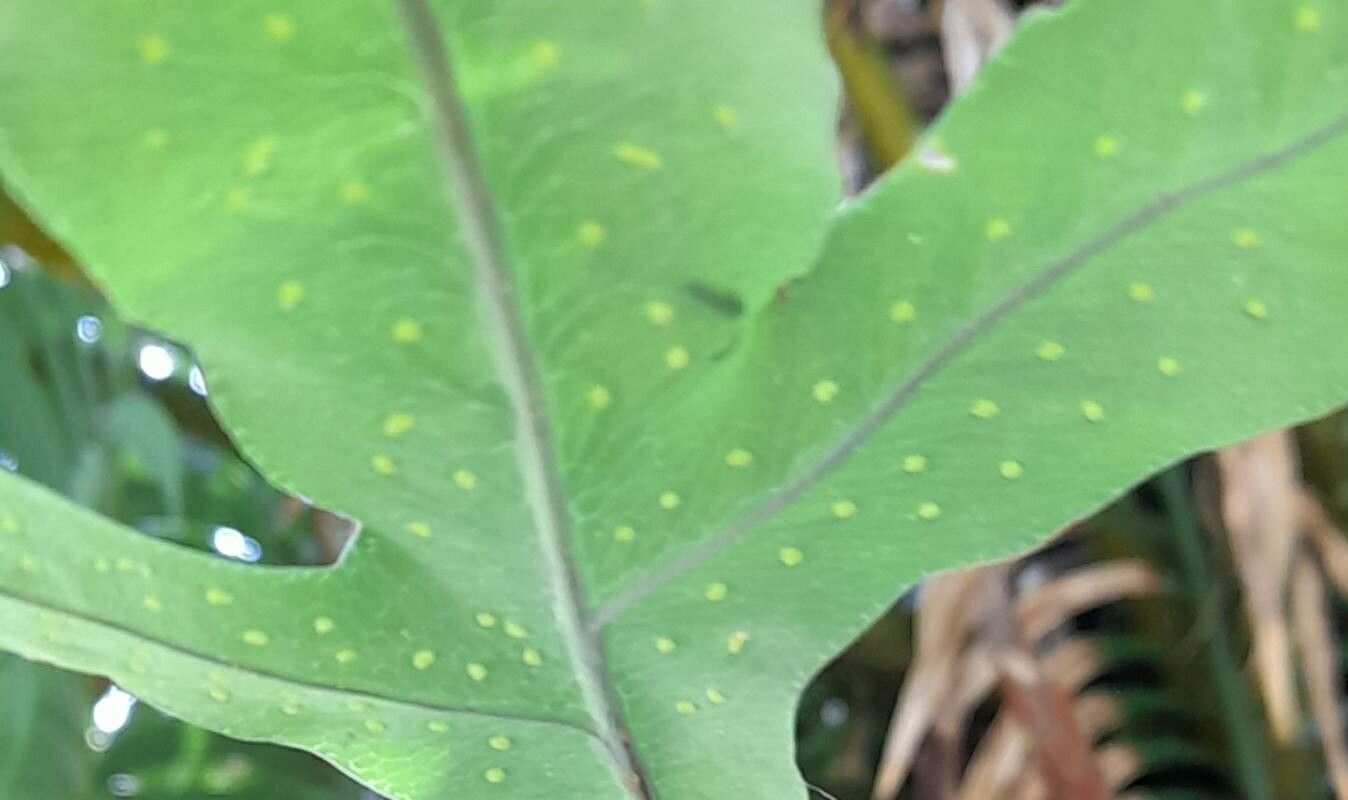
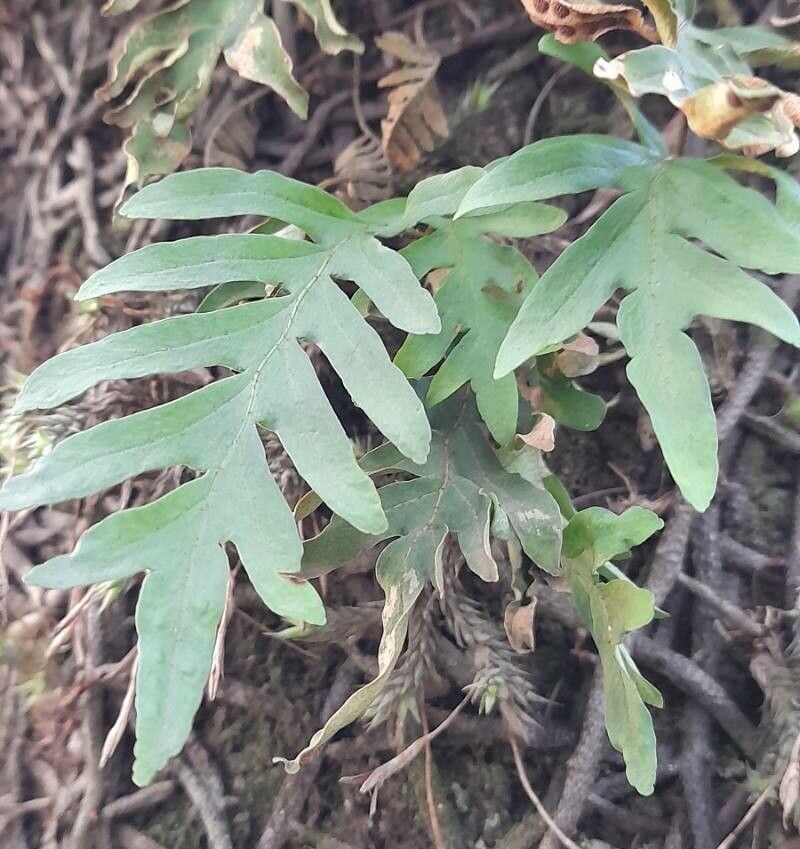
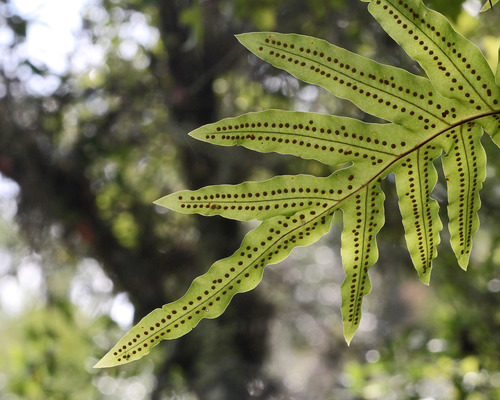
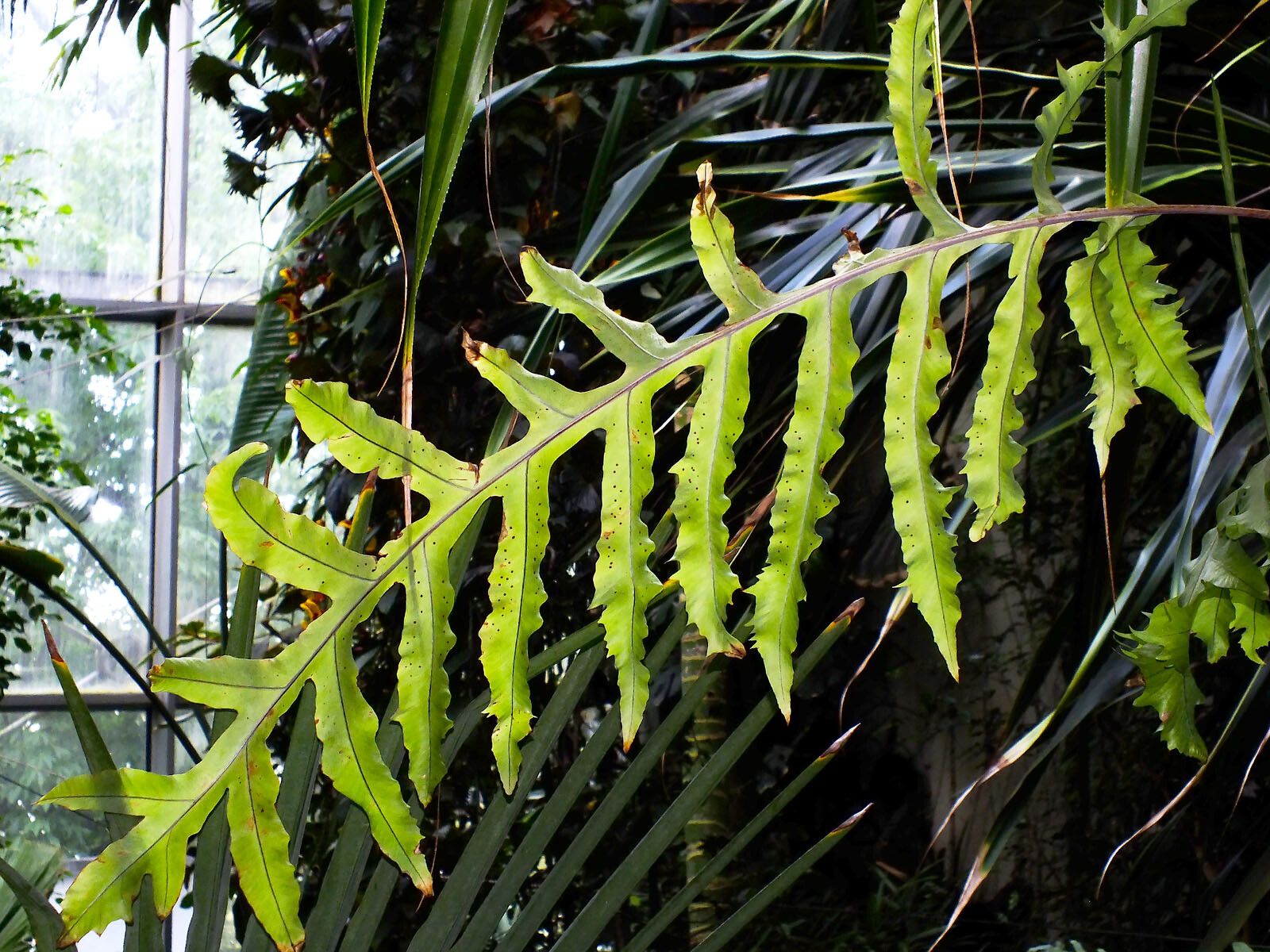
Phlebodium pseudoaureum, commonly known as the Blue Star Fern or Golden Polypody, is a fern species native to the tropical regions of the Americas. It is a popular houseplant because of its attractive blue-green fronds and ease of care. The fronds are long and arching with a slightly fuzzy texture, giving them a unique appearance. The plant thrives in bright but indirect light and prefers moist soil with good drainage. It can be propagated through spores or by dividing the rhizomes. Phlebodium pseudoaureum is also known for its air-purifying properties, making it an excellent addition to any indoor space.
False golden polypody is highly resistant to disease and is generally not prone to illness. However, it can be susceptible to leaf spots if light and ventilation are poor and if it is overwatered. Its care level is considered easy, since it mainly needs regular watering and little else. False golden polypody is suitable for people who do not have the time and energy to devote to regular care.
How to keep Phlebodium Pseudoaureum.
Light
The false golden polypody is indigenous to habitats like forest understories or rocky regions, where it naturally encounters shade. It typically prefers areas with partial sunlight exposure, yet it exhibits a hardy and adaptable character, capable of thriving in full sunlight or complete shade.
Temperature
The false golden polypody is native to tropical areas, characterised by their hot, damp climates. Thus, it is naturally suited to endure high levels of heat and moisture. Unexpected temperature changes are not favored by this plant, and it thrives in a consistently warm setting, so fluctuations in indoor temperature should be kept to a minimum. It generally doesn't withstand low temperatures and requires a warmer ambiance for its development. In case the surrounding temperature falls considerably, the plant's growth could halt or it could even perish.
Fertilizer
The False golden polypody plant typically needs the maximum amount of fertilizer during its main growth phase, which is predominantly in the spring, summer, and the early part of the fall season. Providing fertilization is important as the soil may lack certain necessary nutrients. This helps stimulate robust root and stem growth, as well as promote appealing foliage— a characteristic aspect of this particular plant species.
Pot & Repot
When you're replanting the False golden polypody, select a pot that's 1-2 inches (2.5-5 cm) larger and has sufficient drainage. Opt for a potting mix that drains well. Replant in the spring or autumn, making sure that the root ball is marginally below the edge of the flower pot. Generously water post-replanting and position it in a warm location with indirect light.
Botanical profile.
- Plant Type
- Herb
- Life Cycle
- Perennial
- Genus
- Phlebodium
- Family
- Polypodiaceae
- Hardiness Zone
- 9-11
- Mature Height
- 30 cm to 61 cm
- Mature Spread
- 40 cm to 76 cm
- Leaf Color
- Medium Sea Green, Forest Green
- Leaf Type
- Semi-evergreen
- Planting Time
- Spring, Summer, Autumn
- Native Area
- Colombia, Cuba, Honduras, Mexico, Guatemala, United States, Bolivia, Venezuela, Peru, Guyana, Brazil, Nicaragua, Ecuador, Costa Rica, Panama, Jamaica
Other names.