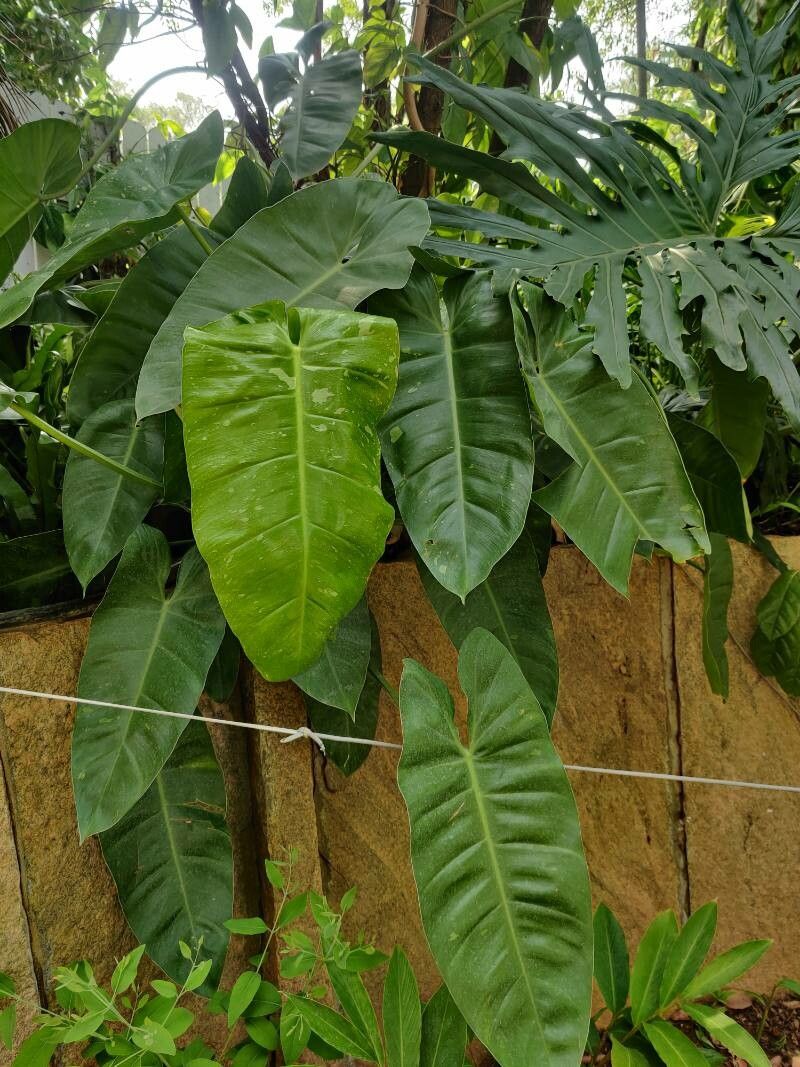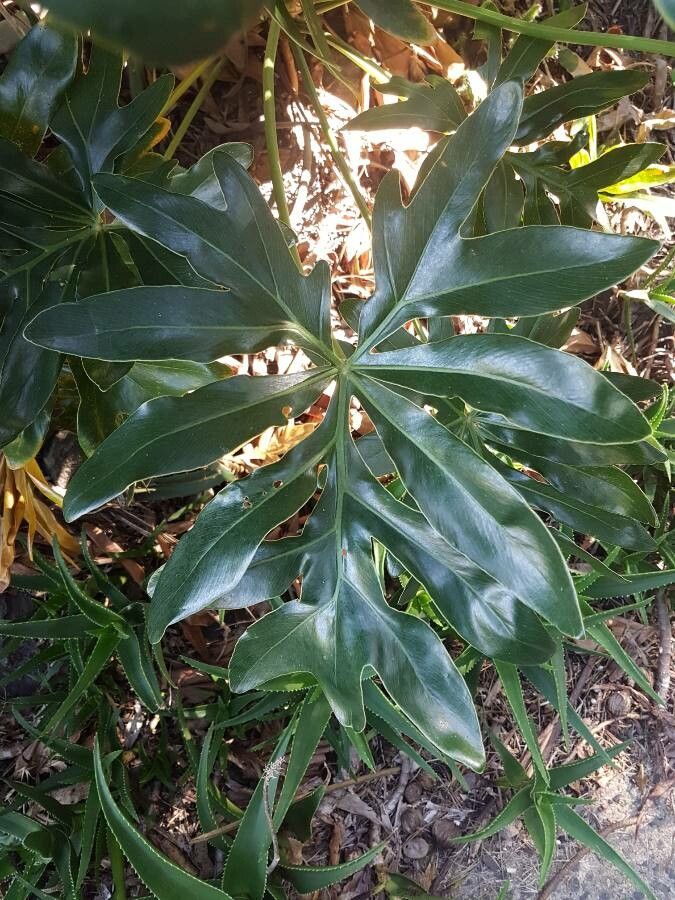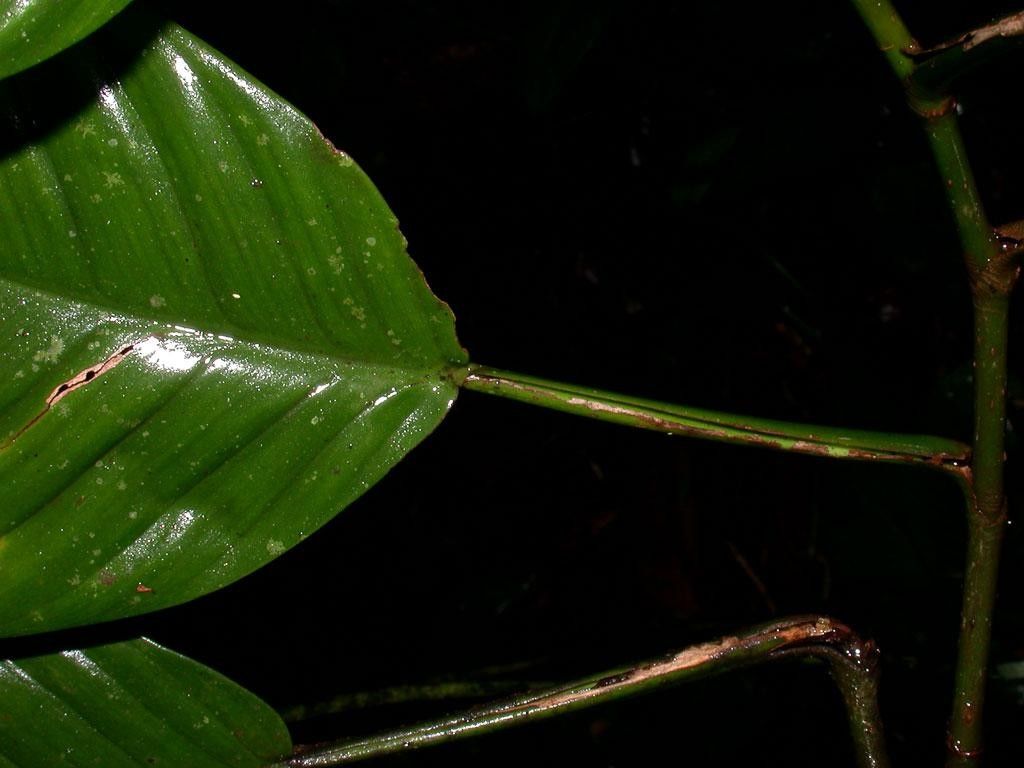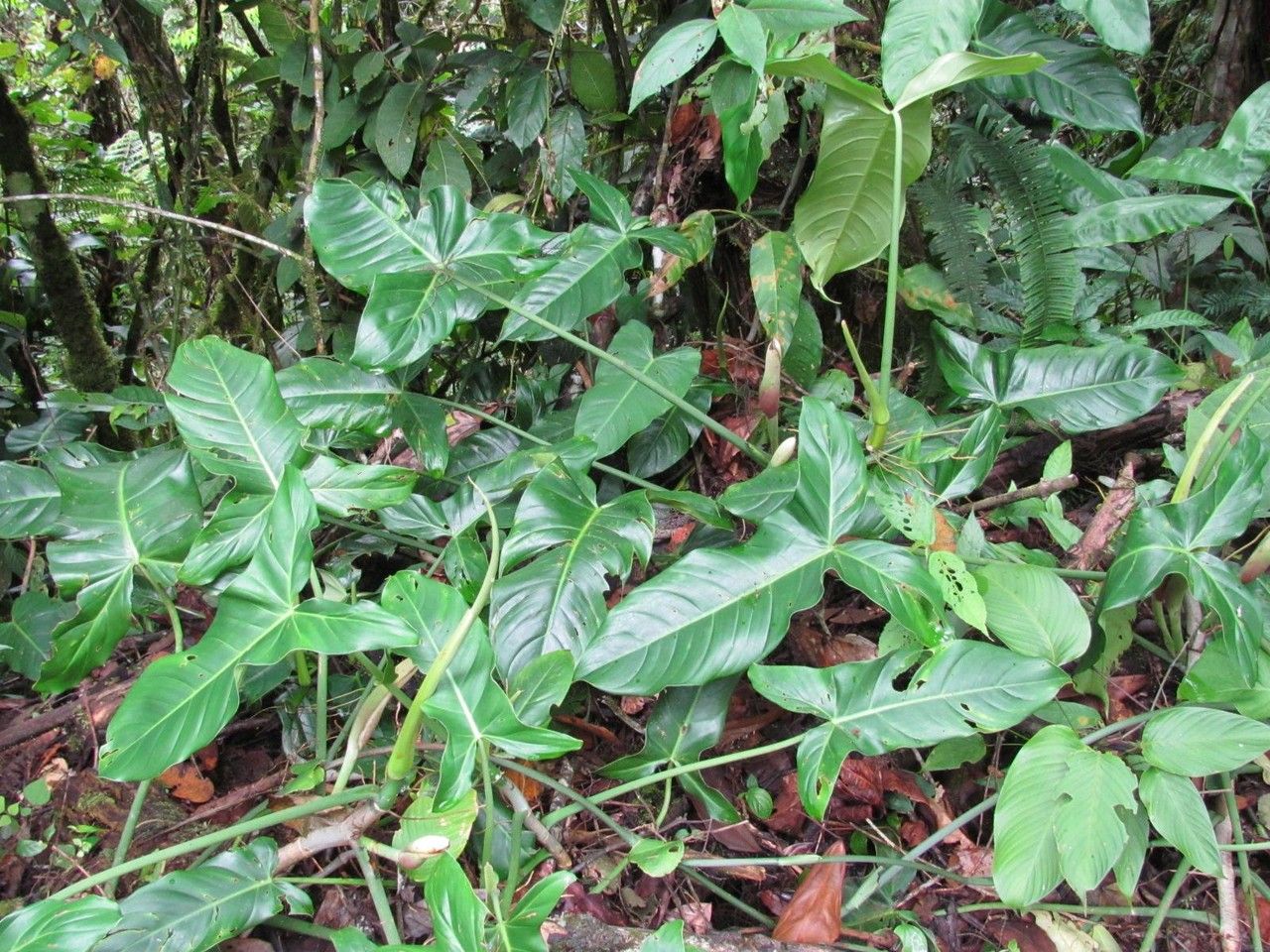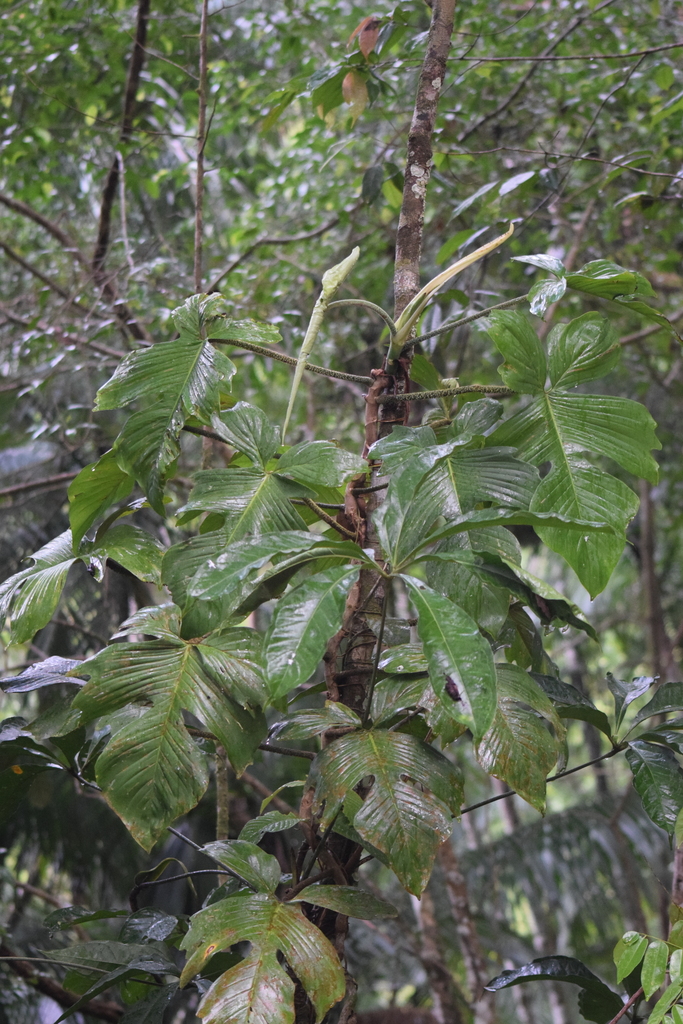
Philodendron squamiferum, known as Squamiferum for short is a species of plant in the family Araceae, native to French Guiana, Suriname, and northern Brazil. This climbing plant has leaves with five lobes and has a climbing growth habit. It is well-known among Philodendrons for its distinctive reddish stalks, which are covered in small bristles that give it a hairy appearance. The Philodendron squamiferum is popularly known as the hairy Philodendron or the Red Bristle Philodendron. The Philodendron squamiferum is rare but popular among gardeners. Philodendron squamiferum is highly toxic because of the presence of calcium oxalate crystals. Ingesting it can cause a burning sensation in the mouth, skin allergies, rashes, stomach aches, and in some cases, loss of breath.
red bristle philodendron has strong resistance to disease and is generally not prone to illnesses. However, it can develop leaf spots if light and ventilation are poor or if it is overwatered. The care level for this plant is considered easy, since it only needs regular watering and little other attention. red bristle philodendron is suitable for people who lack the time and energy to provide frequent care.
How to keep Philodendron Squamiferum.
Light
The red bristle philodendron performs best with plenty of daylight, though it can tolerate bright, sunny spots. Seasonal changes in light may require moving container-grown plants. Too little light can cause slowed growth and duller foliage.
Water
The red bristle philodendron comes from tropical rainforests and flourishes in high humidity with consistently moist, well-draining soil. Watering it weekly encourages lush growth, and maintaining indoor humidity helps it retain its evergreen nature, ensuring vitality and leaf retention throughout the year.
Humidity
This plant needs special care because it loves high humidity levels of 60-80% or more. The best way to achieve this is by placing a humidifier near the plant. Daily misting is also essential! Make sure the room has good ventilation.
Temperature
The red bristle philodendron comes from tropical areas, where the weather is commonly warm and humid. Therefore, it is adapted to high heat and moisture. It is sensitive to abrupt temperature shifts and prefers a constant thermal environment, so avoiding temperature fluctuations indoors is important. It typically does not tolerate cold and needs warmer conditions to grow. If the surrounding temperature falls too low, the plant may stop growing or even die.
Fertilizer
Red bristle philodendron needs the most fertilizer during its active growth phase, which takes place mainly in spring, summer, and early fall. Fertilization supplies essential nutrients that the soil may lack, encouraging healthy root and stem development and attractive foliage, which is a key feature of this particular plant.
Pruning
The Red Bristle Philodendron benefits from pruning between early and late spring to remove dead leaves and leggy stems, which encourages a bushier growth. Be sure to use clean tools for cutting and avoid over-pruning to minimize stress on the plant. This practice improves airflow and light penetration, reducing the risk of pests and diseases while maintaining the plant's natural shape.
Pot & Repot
Repot the Red bristle philodendron in spring or summer once it's warm enough, choosing a slightly larger pot with good drainage. Water it thoroughly after repotting, and place it where it will receive bright, indirect light. Consider adding a moss pole for support as the plant grows.
Toxicity
Unfortunately, the Hairy Philodendron is considered highly toxic because it contains calcium oxalate crystals. Ingesting any part of the plant may cause abdominal pain, swelling, irritation, difficulty breathing, and other symptoms. It’s best to keep these plants away from curious children and pets.
Further reading →
The toxicity and danger assessments provided are for reference only. We do not assure their accuracy, so it's crucial not to depend on them. Seek professional advice when necessary for accurate guidance.
Botanical profile.
- Plant Type
- Herb, Vine
- Life Cycle
- Perennial
- Genus
- Philodendron
- Family
- Araceae
- Hardiness Zone
- 10-12
- Mature Height
- 3.05 m
- Mature Spread
- 49 cm
- Leaf Color
- Green
- Leaf Type
- Evergreen
- Flower Color
- White, Green, Red
- Flower Size
- 10.16 cm to 15.24 cm
- Bloom Time
- Early summer, Mid summer
- Planting Time
- Spring, Summer, Autumn
- Harvest Time
- Mid summer, Late summer, Early fall
- Native Area
- Brazil