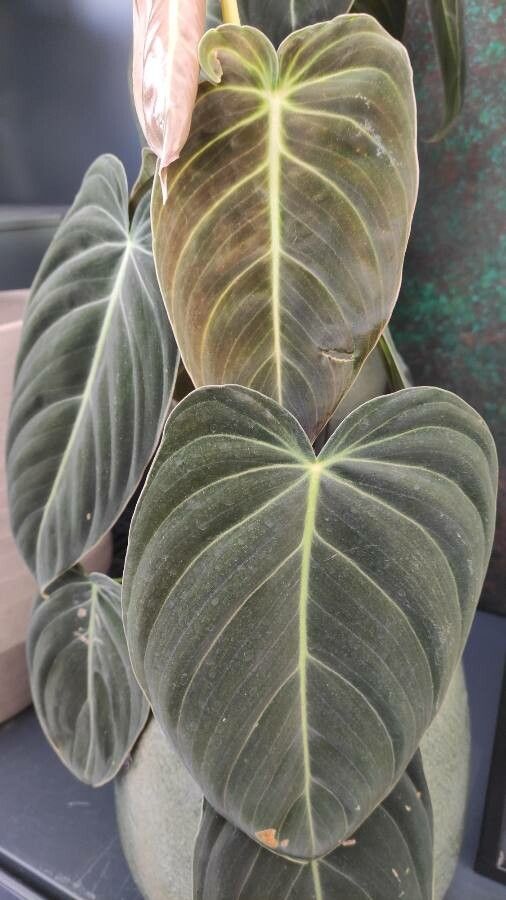
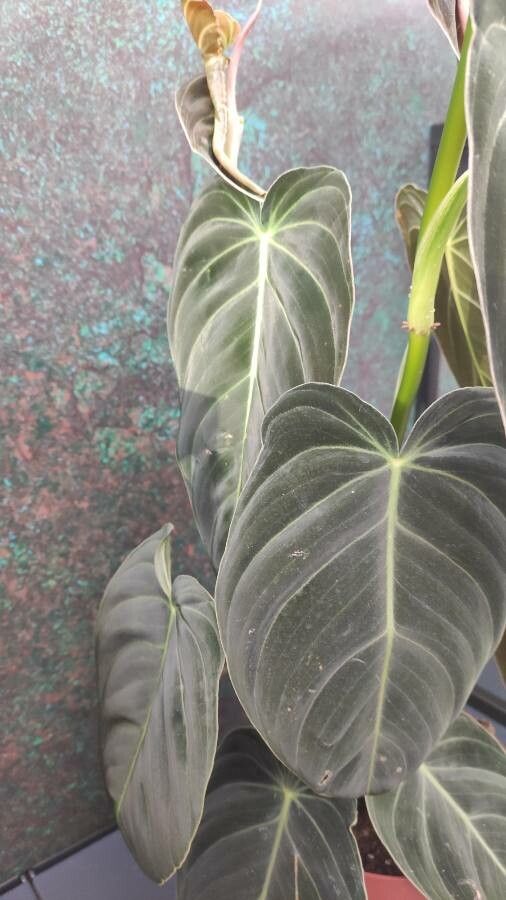
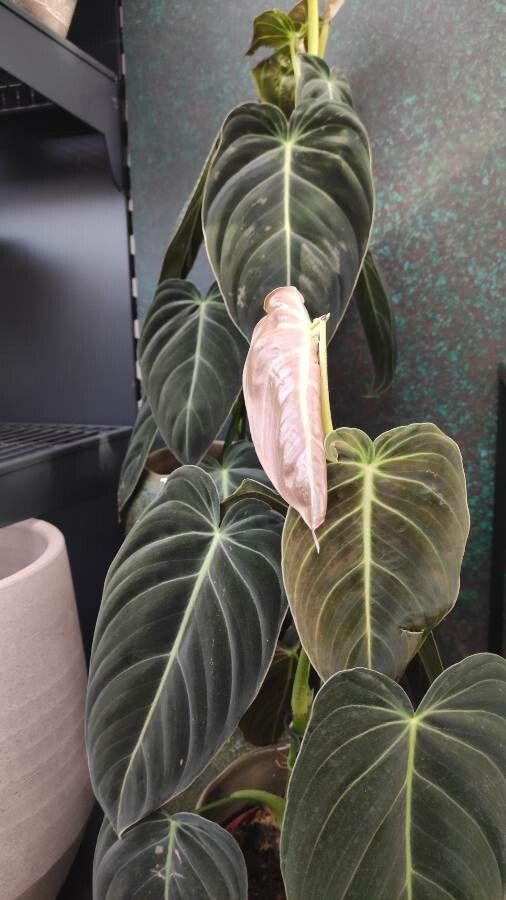
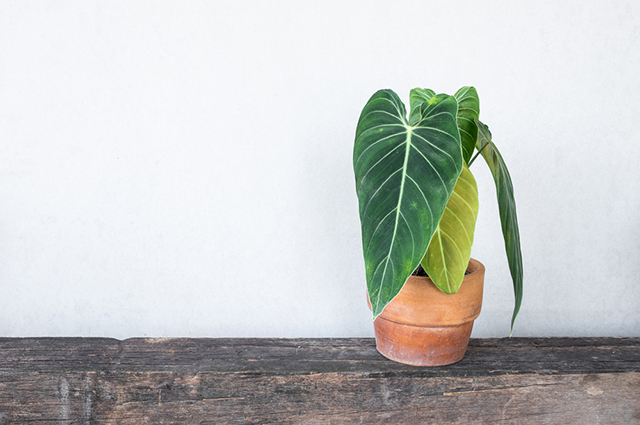
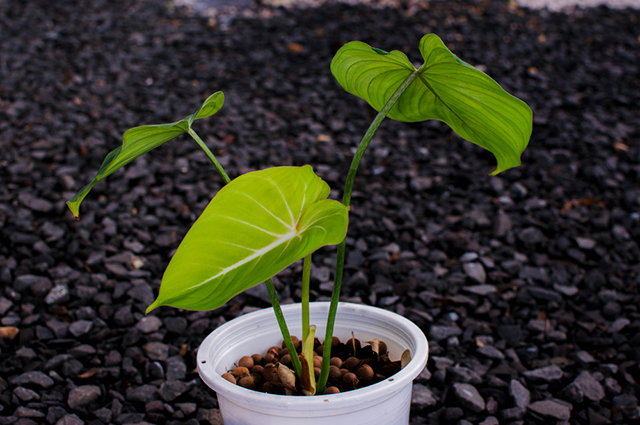
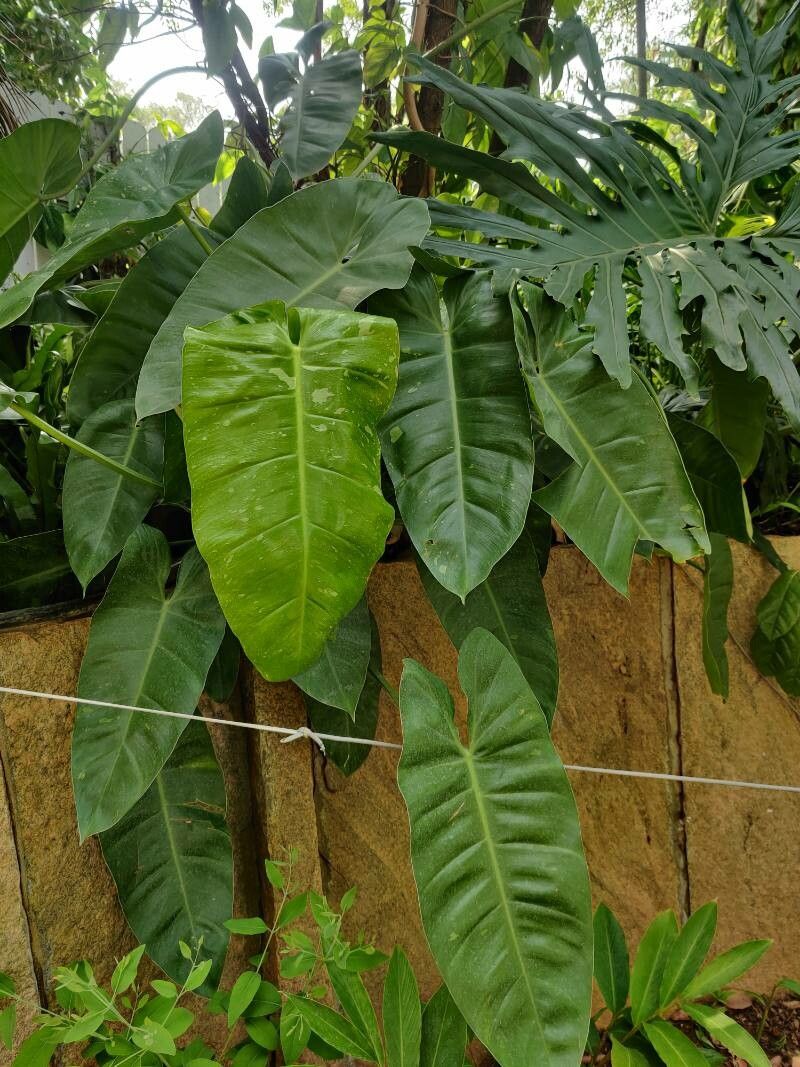
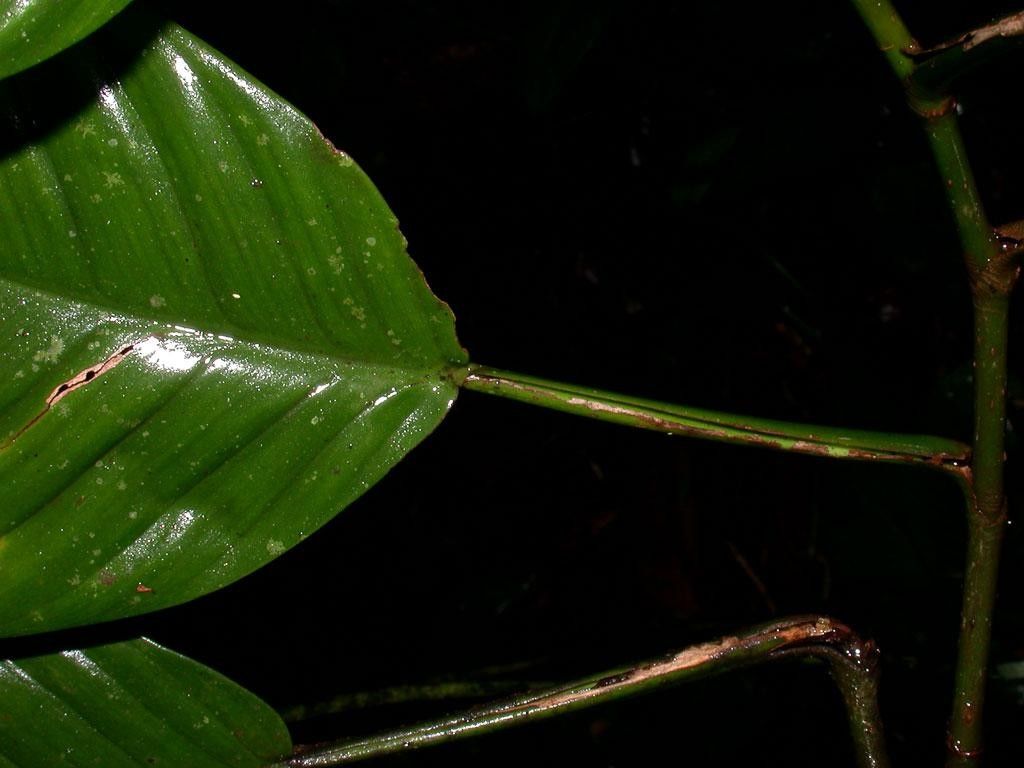
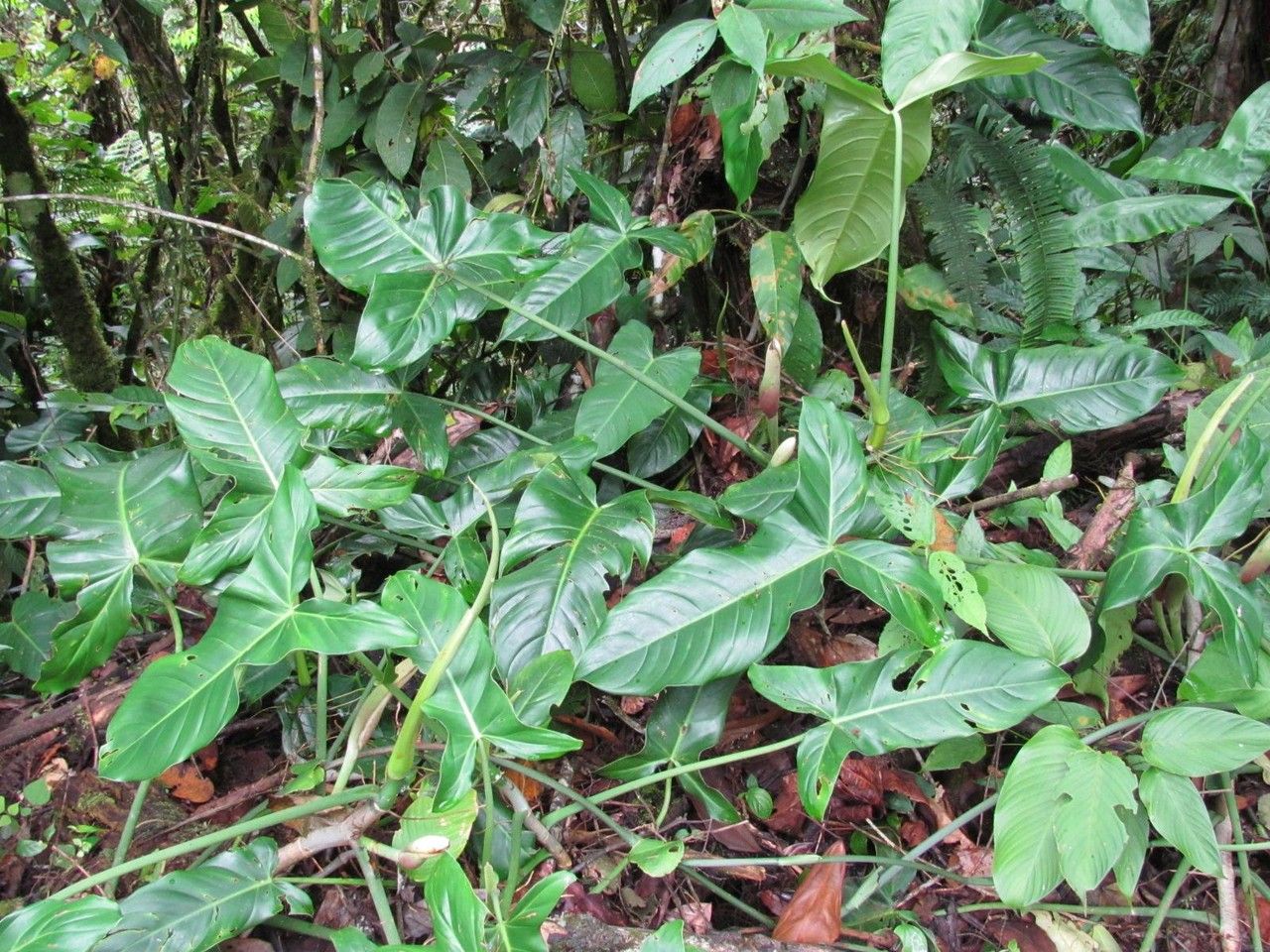
Philodendron melanochrysum is a tropical plant native to South America, specifically Colombia and Ecuador. As a member of the Araceae family, it is renowned for its large, heart-shaped leaves that can grow up to 3 feet long. These leaves boast a dark green color with prominent veins and a velvety texture on the top surface, while the undersides possess a coppery hue.
The plant thrives in bright, indirect light but can also tolerate lower light conditions. It requires well-draining soil that remains moist yet not waterlogged. With proper care, Philodendron melanochrysum can grow up to 6 feet tall.
Propagation can be achieved through stem cuttings or air layering. It is crucial to note that all parts of this plant are toxic if ingested by humans or pets.
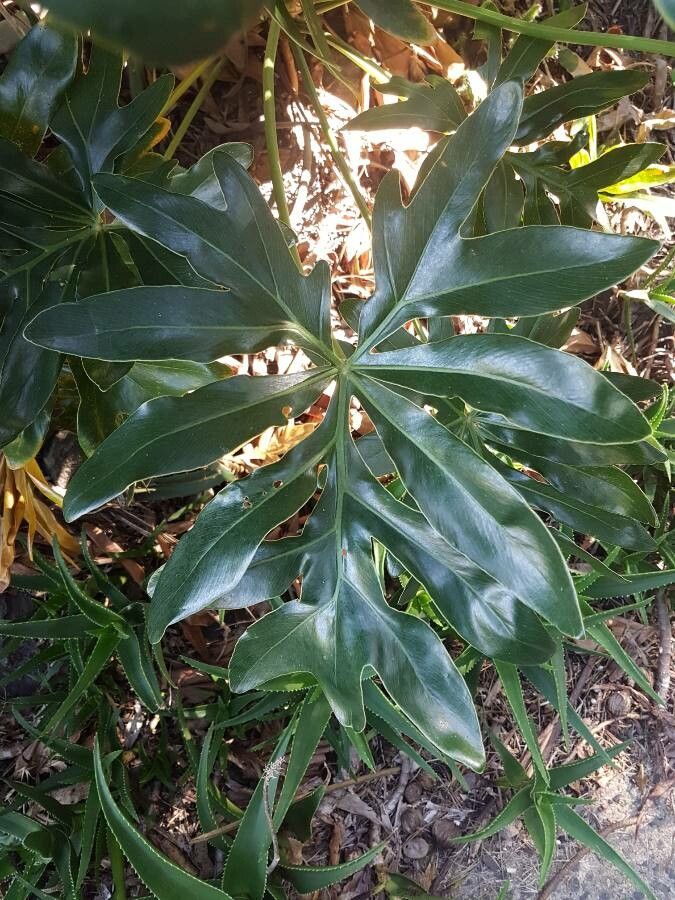
Tree philodendrons are tropical foliage plants known for their large, thick, and lustrous green leaves. Their sturdy petioles add to their robust appearance. These plants have a high ornamental value and exude vitality. FUN FACT · FROM THE LIBRARY
Philodendron melanochrysum has gained popularity among houseplant enthusiasts due to its unique foliage and easy care requirements. Its striking appearance makes it an excellent choice for adding visual interest to any indoor space while also improving air quality by removing toxins through photosynthesis.
Black gold philodendron has strong resistance to disease and is generally not susceptible to illnesses. However, if grown in a poor environment it can become more vulnerable to disease. It also has relatively few insect pests. Care-wise, this plant has moderate needs. It should receive ample light, since inadequate lighting can make it more prone to disease and cause spindly growth. Because it is often grown indoors, it may need to be relocated regularly to a bright spot. It does not need frequent watering. Overall, Black gold philodendron is appropriate for most people, though it is best for those who can provide good light conditions.
How to keep Philodendron Melanochrysum.
Light
The Black gold philodendron does best with moderate light, similar to the conditions at a forest edge. It flourishes with plenty of gentle sunlight and can tolerate occasional shade. Too little light can slow its growth, while too much light may harm the leaves.
Water
The Black Gold Philodendron thrives in high humidity and requires weekly watering to maintain its vibrant foliage. While it can tolerate brief dry spells, consistent moisture is essential for its health. As an evergreen plant, the Black Gold Philodendron adapts well to indoor environments, flourishing in typical home humidity to ensure year-round growth.
Humidity
This plant will thrive in moderate humidity, which is probably the level in your home. However, misting it a few times a week can be very beneficial. Make sure the room has good ventilation.
Temperature
Black gold philodendron grows best in warm conditions, with an ideal range of 68 to 100 °F (20 to 38 °C). Native to tropical environments, it favors consistent warmth. Seasonal temperature adjustments are generally unnecessary for this plant to thrive.
Fertilizer
The best time to fertilize a Black Gold philodendron is in early spring, when it comes out of dormancy. This encourages overall growth and flower development. Fertilizing improves the foliage, stems, and branches, and supports flowers that are large, vibrant, and long-lasting. It also helps transport nutrients from the roots to the flowers and enhances the plant's health and resistance to disease.
Pruning
Prune your black gold philodendron in early spring to encourage bushier growth and to remove any damaged stems. Always use clean tools to make cuts just above the nodes. Regular annual pruning helps maintain the plant's size and health. Be sure to wear gloves while handling the plant, as the black gold philodendron is toxic if ingested.
Pot & Repot
Repot Black gold philodendron in spring or summer when it's warm enough, choosing a slightly larger pot with good drainage. Water it thoroughly after repotting and set it in bright, indirect light. You might add a moss pole for support as the plant grows.
Botanical profile.
- Plant Type
- Vine
- Life Cycle
- Perennial
- Genus
- Philodendron
- Family
- Araceae
- Hardiness Zone
- 10-11
- Mature Height
- 3.05 m to 7.92 m
- Mature Spread
- 61 cm
- Leaf Color
- Green
- Leaf Type
- Evergreen
- Flower Color
- Yellow, Green
- Flower Size
- 10.16 cm to 15.24 cm
- Bloom Time
- All year round
- Planting Time
- Spring, Summer, Autumn
- Harvest Time
- All year round
- Native Area
- Colombia
Other names.
Reader questions.
How should I water my Black gold philodendron?
There are several ways to water your Black gold philodendron effectively. If your plant is in a small indoor pot, you can bring it to the kitchen sink and use the faucet to add water. Hold the pot and stop watering when you see water running through the drainage holes. Avoid doing this during winter or in cold climates as cold temperatures can harm the roots. In most cases, using the faucet works well, but if your tap water has high levels of fluorine, chlorine, or salts, it's better to consider using rainwater or lake water. Additionally, the Black gold philodendron responds well to overhead watering or watering directly into the soil, so you can use a watering can, hose, or any suitable tool to water it.
Why should I use fertilizer on my Black gold philodendron?
Black gold philodendrons need regular fertilization because their showy leaves require a lot of energy to grow and stay healthy. However, they also need energy to support the growth of their stems, branches, roots, and other structures. Neglecting fertilizer can lead to two outcomes. First, the leaves may lose their natural color and texture, making the plant look unhealthy and less attractive. Second, the overall growth of the philodendron may slow down or produce weak growth that is more prone to breakage.
What are the sunlight requirements for a Black Gold Philodendron?
The Black Gold Philodendron thrives in environments that mimic its natural, forest-edge habitat, which includes receiving moderate light exposure with moments of shade. Ideally, it requires partial sun, about 3-6 hours of sunlight per day, and benefits from indirect sunlight throughout the day. It's essential to watch how sunlight moves through your garden or indoor space to find spots that offer a balance of light and shade, ensuring the plant's well-being.
What is the ideal temperature range for Black gold philodendron to thrive?
The Black gold philodendron, or Philodendron melanochrysum, is a plant well-suited for warmer climates, thriving ideally in temperatures between 68 to 100 °F (20 to 38 °C). It prefers steady warmth and doesn't usually require adjustments in seasonal temperatures to flourish. Being native to tropical environments, it loves heat and can be harmed by cold temperatures. It's recommended to bring outdoor-grown Black gold philodendron indoors during fall to a space near a bright window, keeping it away from heaters. During winter, maintaining temperatures above 20°C benefits its growth, and exposure to temperatures around 5°C or lower is harmful.
What do I do if I give my Black gold philodendron too much water or not enough?
If you realize that you haven't been giving enough water to your Black gold philodendron, start by watering it thoroughly until excess water drains out of the container's hole. If your philodendron is outside, water until the soil is completely moist. On the other hand, if you find that your philodendron is getting too much water, reduce your watering schedule. Additionally, evaluate the soil and container. If they are preventing efficient drainage, your plant is likely to become overwatered again. To solve this issue, transfer your plant to looser soils or a container with larger drainage holes or a more porous material. Also, consider the plant's location. If it's in a corner, it's a good idea to move it near a window or a door to improve ventilation. Ensuring that your plants are in a well-ventilated area can help reduce the chance of overwatering to some extent.
When should I fertilize my Black gold philodendron for best results?
To ensure the growth of your Black gold philodendron, occasional feedings are recommended, eliminating the need for a regular feeding schedule upon planting. One simple method to fertilize this plant is by applying fertilizer when watering, as needed. Additionally, it is important to provide ample water for your Black gold philodendron during the growing season. A feeding frequency of once every two to three weeks is suitable, and this should be maintained throughout the period when your plant is producing new growth.
How can artificial lighting be used for Black Gold Philodendron?
When natural sunlight is insufficient for your Black Gold Philodendron, particularly during winter or in less sunny spaces, artificial lighting can be a vital solution. LED lights are a popular choice because they can be customized to provide specific wavelengths needed by plants. The right setup involves choosing lights with the appropriate wattage based on the plant's light requirements (30-50W/sq ft for full sun, 20-30W/sq ft for partial sun, 10-20W/sq ft for full shade), positioning the light source 12-36 inches above the plant, and ensuring it receives 8-12 hours of light per day to mimic natural daylight hours.
How does low temperature affect Black gold philodendron and what are the solutions?
Low temperatures adversely affect the Black gold philodendron, a plant that thrives in warmth. When temperatures drop below 20°C, especially in winter, it's crucial to keep it above 5°C to avoid damage. Exposure to temperatures below 1°C can cause leaves to lighten in color, which after frost damage, turns brown or black, leading to symptoms like wilting and drooping. To mitigate frost damage, trim the affected parts and immediately move the plant indoors to a warmer environment. Placing it near a south-facing window ensures it gets enough sunlight, but keep it away from heaters or air conditioning vents to prevent the air around it from becoming too dry.
How often should I water my Black gold philodendron plant?
The Black gold philodendron does not need constant moisture in its soil. It is actually better to let the soil dry out between waterings. If you have this plant in a container, you can tell when to water it by checking how dry the soil is. If the top half of the soil in your container is dry, then it's time to water. You can check by sticking your fingers or a stick into the soil, or by using a soil moisture meter. If you have the Black gold philodendron outdoors, you can plan to water it about once every other week, unless it has recently rained.
When is the best time to not fertilize my Black gold philodendron?
For most of the year, you can fertilize your Black gold philodendron on a regular schedule. This is true during the active growing season of spring, summer, and early fall. However, it is important to note that during the winter, this plant should not receive any fertilizer. During this time, the Black gold philodendron enters a dormant growth phase where it either doesn't produce new growth or produces very little. This lack of active growth means that the plant requires less energy overall and does not need fertilization during the winter.
What symptoms indicate insufficient light exposure in Black Gold Philodendron?
Symptoms of light deficiency in Black Gold Philodendron include new leaves growing smaller than previous ones, leggy or sparse growth, faster leaf drop, slower or halted new growth, paler new leaves, chlorosis (leaves turning yellow), sunscald, leaf curling, wilting, and leaf scorching. These symptoms arise when the plant is placed in corners with inadequate light or exposed to excessive sunlight.
How should I care for my Black gold philodendron during high temperatures?
During the summer, it is important to ensure the Black gold philodendron is kept below 38°C to prevent adverse effects. High temperatures above 43°C can lead to leaves lightening in color and increase the risk of sunburn. If the plant gets sunburned or the leaves dry up, trim these parts away. Move the plant to a spot where it's protected from the midday and afternoon sun. Watering the plant in the morning and evening can help keep the soil consistently moist, which is vital for its health during high temperature periods.