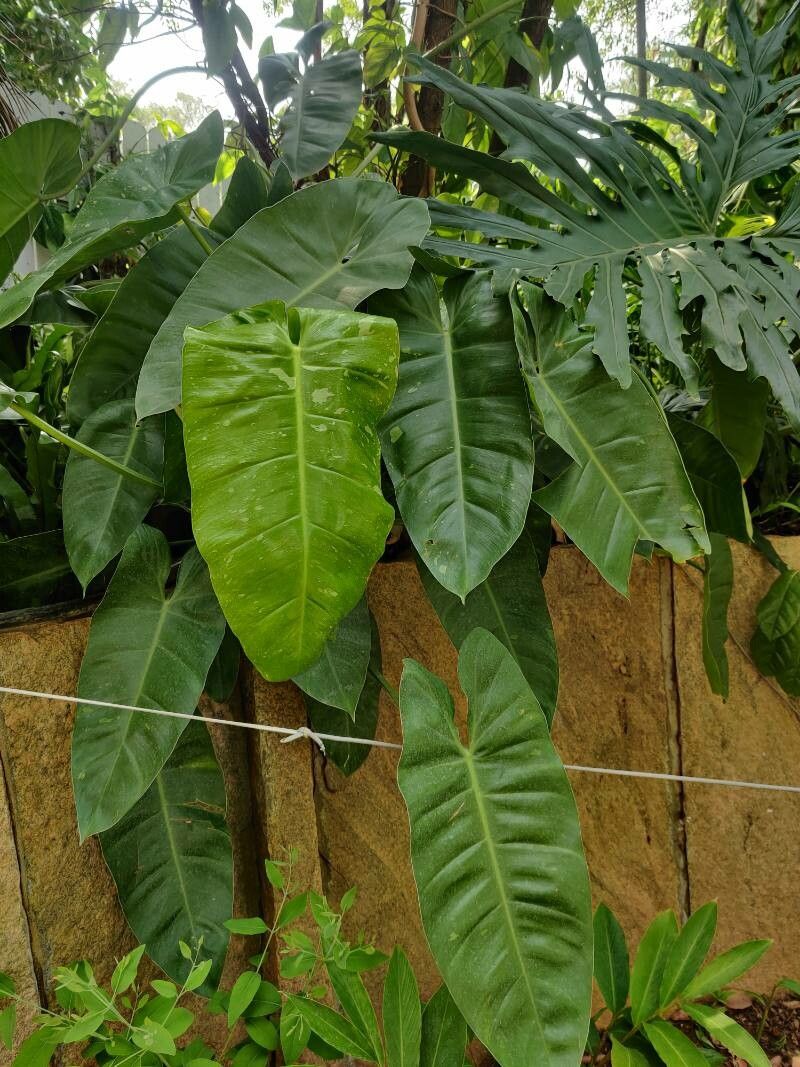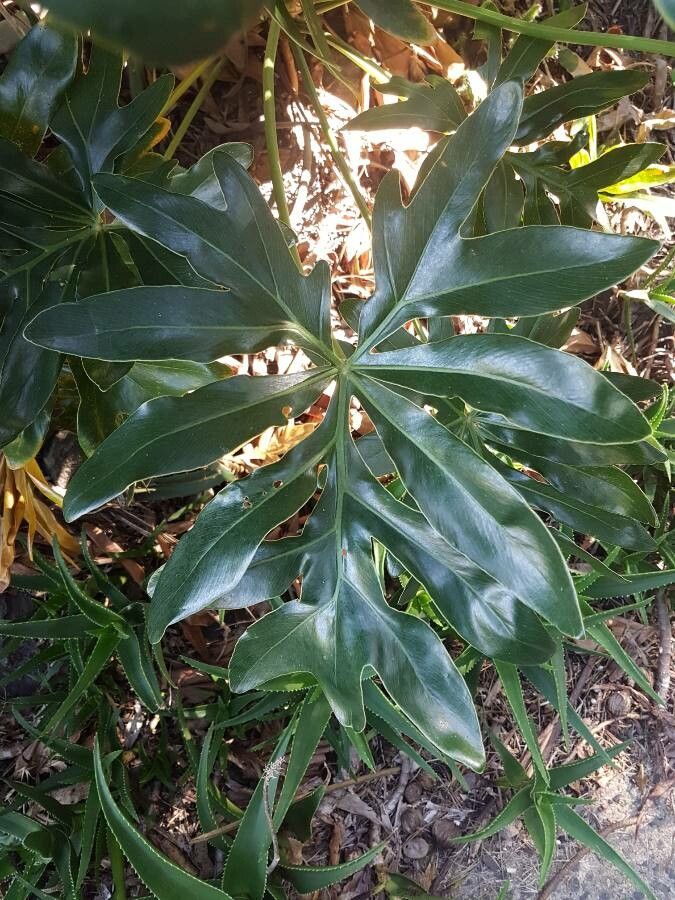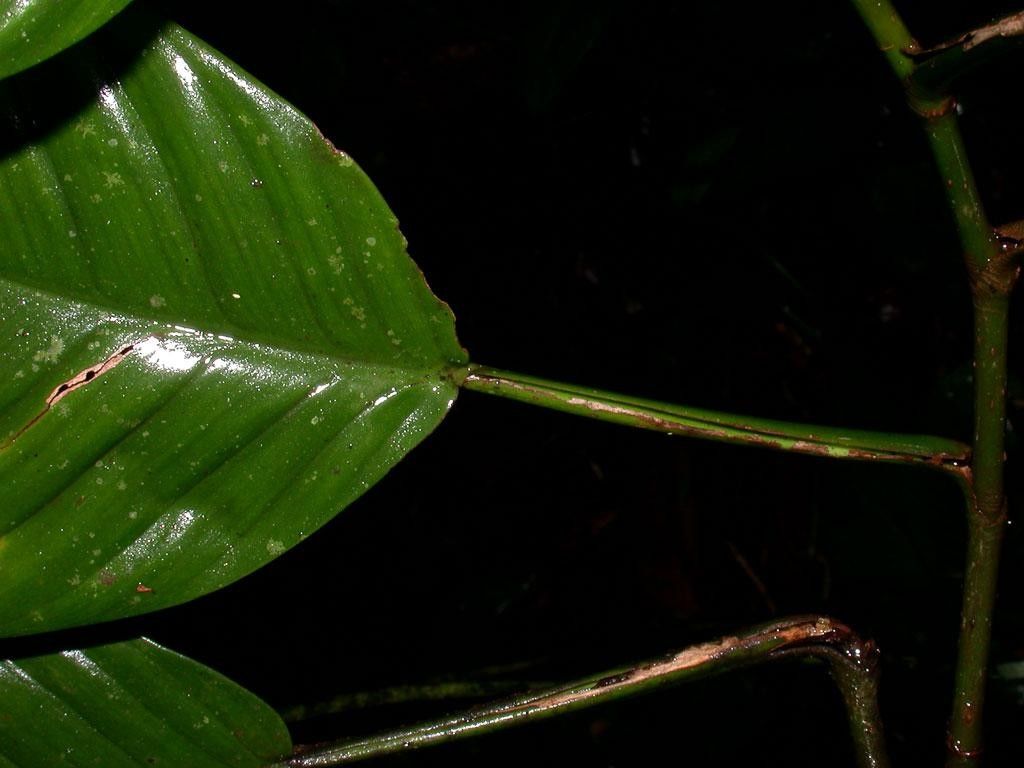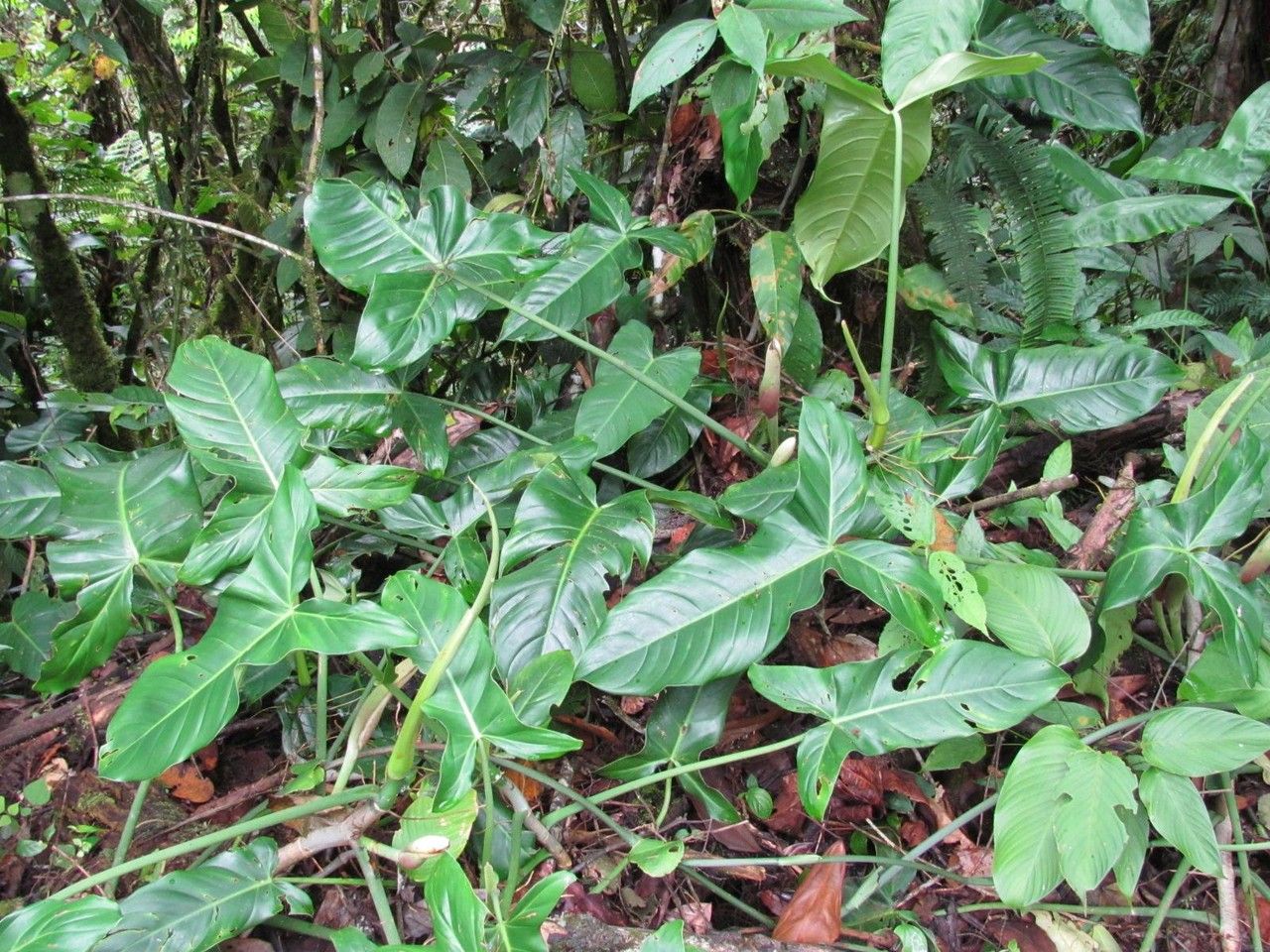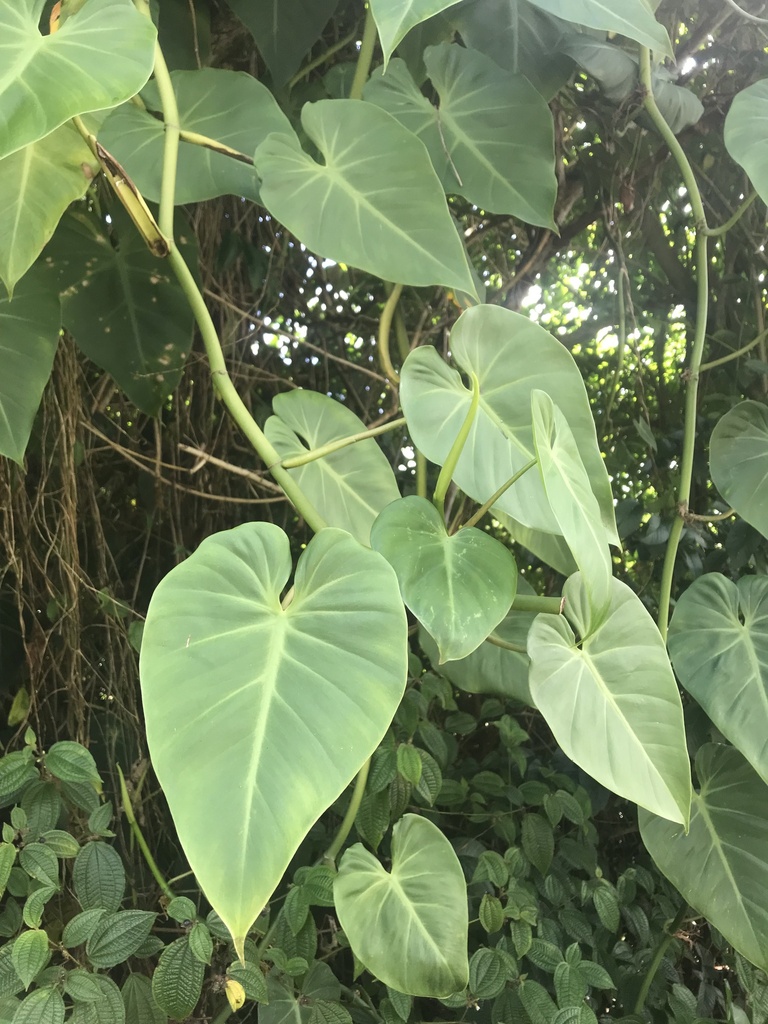
Philodendron hederaceum, commonly known as the Heartleaf Philodendron, is a popular houseplant native to Central and South America. This member of the Araceae family is a climbing plant that can reach heights of up to 10 feet. Its heart-shaped leaves are dark green with a glossy texture, making it an attractive addition to any home.
The Heartleaf Philodendron is easy to care for and thrives in bright, indirect light, although it can also tolerate low light conditions. It prefers well-draining soil and needs watering only when the top inch of soil feels dry.
Beyond its aesthetic appeal, this plant has air-purifying qualities, removing harmful toxins such as formaldehyde, benzene, xylene, and trichloroethylene from the air. This makes it an excellent choice for anyone looking to improve indoor air quality while adding some greenery to their living space.
Propagation of Philodendron hederaceum is straightforward, whether through stem cuttings or by dividing mature plants. With proper care and maintenance, this beautiful houseplant can thrive for many years, both indoors and outdoors in warm climates.
Overall, Philodendron hederaceum is an excellent choice for those seeking a low-maintenance yet beautiful indoor plant with added health benefits.
The heartleaf philodendron is fairly disease-resistant and generally not prone to illness. However, it can be vulnerable to leaf spots if light and ventilation are poor or if it is overwatered. Its care level is considered easy, since it mainly requires regular watering and little else. This plant is suitable for people who don't have much time or energy to devote to regular care.
How to keep Philodendron Hederaceum.
Light
The heartleaf philodendron does best in locations protected from strong sunlight, though it tolerates moderate light. Having originally grown in shaded forest undergrowth, it is adapted to low light levels. Too much sun can bleach the foliage, whereas too little light can inhibit growth.
Water
The heartleaf philodendron flourishes in the humid environment of tropical rainforests, where consistent moisture and high humidity are ideal. While it can tolerate periods of drought, it performs best with weekly watering and regular misting. As an evergreen plant commonly grown indoors, it thrives in stable temperatures and indirect light, ensuring optimal health.
Humidity
This plant will thrive in moderate humidity, which is probably the level in your home. However, misting it a few times a week can be very beneficial. Make sure the room has good ventilation.
Temperature
Native to the tropical areas of South America, the heartleaf philodendron prefers temperatures between 68 to 105 ℉ (20 to 41 ℃). For best growth, keep temperatures at 70 to 75℉ (21 to 24℃) in summer and 60 to 70℉ (16 to 21℃) in winter. Change the temperature settings as the seasons shift.
Fertilizer
The heartleaf philodendron needs the most fertilizer during its active growth period, which takes place mainly in spring, summer, and early fall. Fertilizing supplies essential nutrients that the soil may lack, supporting healthy root and stem development and the attractive foliage that is a key characteristic of this plant.
Pruning
To encourage bushier growth and remove damaged leaves, regularly prune your heartleaf philodendron. The best time for this is from early to late spring. Pruning helps maintain the plant's health and size, ensuring a fuller appearance that is perfect for indoor settings.
Pot & Repot
Repot a Heartleaf philodendron in spring or summer once it’s warm enough, choosing a slightly larger pot with good drainage. Water thoroughly after repotting, and place it in a bright spot with indirect light. Consider installing a moss pole to support the plant as it grows.
Botanical profile.
- Plant Type
- Vine, Herb
- Life Cycle
- Perennial
- Genus
- Philodendron
- Family
- Araceae
- Hardiness Zone
- 10-13
- Mature Height
- 3 m to 6 m
- Mature Spread
- 0.91 m to 1.83 m
- Leaf Color
- Green
- Leaf Type
- Evergreen
- Flower Color
- White, Green
- Flower Size
- 10.16 cm to 15.24 cm
- Bloom Time
- Mid summer
- Planting Time
- Spring, Summer, Autumn, Winter
- Harvest Time
- All year round
- Native Area
- Belize, Honduras, Mexico, Guatemala, Peru, Panama, Jamaica, Colombia, Cuba, Bolivia, Venezuela, Brazil, El Salvador, Nicaragua, Ecuador, Costa Rica
Other names.
Reader questions.
When Should I Water My Heartleaf Philodendron?
The optimal time to water your heartleaf philodendron is when the soil's moisture level decreases. Insert your finger about 1 to 2 inches into the soil; if it feels dry, it is time to water the plant. Observing the leaves for any wilt, lackluster appearance, or changes in color such as yellowing or fading can also provide clues. The weight of the pot can be a guide too; a lighter pot indicates the need for watering. High temperature and humidity levels, as well as the pre-flowering stage, demand more frequent watering. However, it's crucial to avoid over-watering to prevent risks like root rot and under-watering which can lead to wilting or even plant death. Properly managing these signals is key to maintaining a healthy heartleaf philodendron.
Why should I put fertilizer on my Heartleaf philodendron plant?
Plants, including the Heartleaf philodendron, need soil nutrients to grow. However, there's no guarantee that the soil where your plants grow will have all the necessary nutrients. To address this, fertilization and soil amendments are used to ensure that plants not only have the basic nutrients they need, but also the specific nutrients they require. For the Heartleaf philodendron, fertilizer is particularly important for healthy root and stem development. It also helps the plant produce attractive leaves, which are a key factor in its ornamental appeal.
What are the sunlight requirements for a Heartleaf Philodendron?
Heartleaf Philodendron, or Philodendron hederaceum, thrives in conditions that mirror its native environment under the shaded undergrowth, necessitating less intense sunlight. It prefers full shade, meaning less than 3 hours of sunlight a day, but can also sustain partial sun, which is about 3-6 hours of sunlight. It's essential to watch the movement of sunlight through your garden to find spots that offer an ideal balance of light and shade, ensuring the plant's well-being. Excessive sunlight can bleach the leaves, indicating too much light, while inadequate lighting might stunt the plant's growth.
What is the native region and temperature preference of the Heartleaf Philodendron?
The Heartleaf Philodendron, scientifically known as Philodendron hederaceum, originates from the tropical regions of South America. It has a preference for temperatures ranging between 68 to 105°F (20 to 41°C). For optimal growth, it is recommended to maintain a temperature range of 70 to 75°F (21 to 24°C) during the summer and 60 to 70°F (16 to 21°C) in winter. Seasonal temperature adjustments are crucial for its well-being. This plant is particularly fond of heat and does not tolerate cold well. In autumn, it's advisable to move outdoor plants indoors, placing them near a bright window but away from direct heat sources to prevent damage.
How Should I Water My Heartleaf Philodendron?
The heartleaf philodendron requires a balance in watering practices to thrive. Employing a bottom-watering method encourages healthy root growth by allowing water absorption from the bottom up, minimizing the risk of foliage diseases. Misting can also benefit the plant, especially in drier environments to maintain humidity. Use a narrow-spouted watering can to target water delivery to the soil and minimize leaf wetness. Monitoring the soil's moisture with a meter can help in determining when to water next. Always focus on wetting the root ball rather than the foliage and drain excess water to avoid root rot. The frequency of watering will vary with environmental factors such as temperature, humidity, and soil type; typically, watering when the top inch of soil feels dry is advisable.
When should I fertilize my Heartleaf philodendron for the best results?
During the active growing season of spring, summer, and early fall, the Heartleaf philodendron requires the most fertilizer. As winter ends, you should feed it every two to four weeks until fall. Then, gradually reduce the fertilization rate until you stop completely in preparation for winter, when the plant's growth slows down.
Can artificial lighting be used for Heartleaf Philodendron, and if so, how?
Yes, artificial lighting can be an effective solution for Heartleaf Philodendron, especially in spaces with inadequate natural sunlight or during less sunny seasons. Optimal growth requires adequate lighting; artificial light sources like LED lights can be customized to provide the necessary wavelengths. For full sun exposure, 30-50W/sq ft is needed; partial sun plants require 20-30W/sq ft, and full shade plants, such as the Heartleaf Philodendron, need 10-20W/sq ft of artificial light. The light source should be placed 12-36 inches above the plant, mimicking natural sunlight conditions, and plants typically need 8-12 hours of light per day.
How does low temperature affect the Heartleaf Philodendron and what are the solutions?
Low temperatures can adversely affect the Heartleaf Philodendron, a plant that thrives in warmth. Exposure to temperatures below its tolerance threshold can cause the leaves to lighten in color. After experiencing frost, the foliage may gradually turn brown or black, accompanied by wilting and drooping as symptoms of cold damage. To counteract these effects, trim off the frost-damaged parts and relocate the plant to a warmer indoor environment. Positioning it near a south-facing window ensures it receives enough sunlight, but keep it away from heaters or air conditioning vents to prevent air dryness.
How Much Water Does Heartleaf Philodendron Really Need?
The water needs of the heartleaf philodendron vary depending on several conditions, including the size of the pot and plant and the environment it's growing in. A general guideline is to water until excess moisture drains from the bottom, usually about two cups for smaller pots and up to a liter for larger ones. The goal is to maintain soil that is moist but not soggy. Signs of proper hydration include vibrant, deep green leaves, whereas signs of under or overwatering can manifest as wilting, yellowing, or browning of leaves. Adjust watering to ensure the soil feels just moist to the touch at the top 1-2 inches before the next watering to prevent issues like root rot or dehydration.
When is it not a good idea to give my Heartleaf philodendron fertilizer?
For most of the year, which includes spring, summer, and the majority of fall, it's important to regularly feed your Heartleaf philodendron. The only exception would be if you notice that it has already been fertilized too much or if the fertilizer was applied incorrectly, resulting in fertilizer burn or other issues. In these cases, you should address the problem before resuming the regular feeding schedule. However, during the winter, it is not advisable to fertilize a Heartleaf philodendron. If you have this plant indoors in a region with cold winters, it will go through a dormant phase at that time. Feeding the plant during this dormant phase is not necessary or beneficial for its growth, and may even cause fertilizer burn.
What are signs of inadequate light in Heartleaf Philodendrons, and how can they be addressed?
Signs of inadequate light in Heartleaf Philodendrons include slower or no new growth, smaller new leaves, chlorosis, sunscald, leaf curling, wilting, and leaf scorching. To address these, for indoor settings, move plants to positions where they can receive ample filtered light, including some direct morning sunlight if possible, or use artificial lights for at least 8 hours a day. In outdoor settings, gradually aclimatize plants to brighter areas to prevent sunburn. Pruning or transplanting may be necessary to reduce obstructions to sunlight for ground-planted specimens. It's crucial to avoid drastic changes in light exposure to ensure the health of new growth.
What should be done if the Heartleaf Philodendron experiences high temperature?
During the hotter months, it's essential to ensure that the Heartleaf Philodendron's environment remains below its maximum tolerable temperature to prevent stress and damage. High temperature can lead to a lighter leaf color and increased susceptibility to sunburn. If these symptoms occur, remove the sunburned or dried parts of the plant. To mitigate high temperature stress, relocate the plant to a shaded area, particularly shielding it from the harsh midday and afternoon sunlight. Watering the plant in the early morning and late evening can also help maintain moisture levels and keep the soil cool.