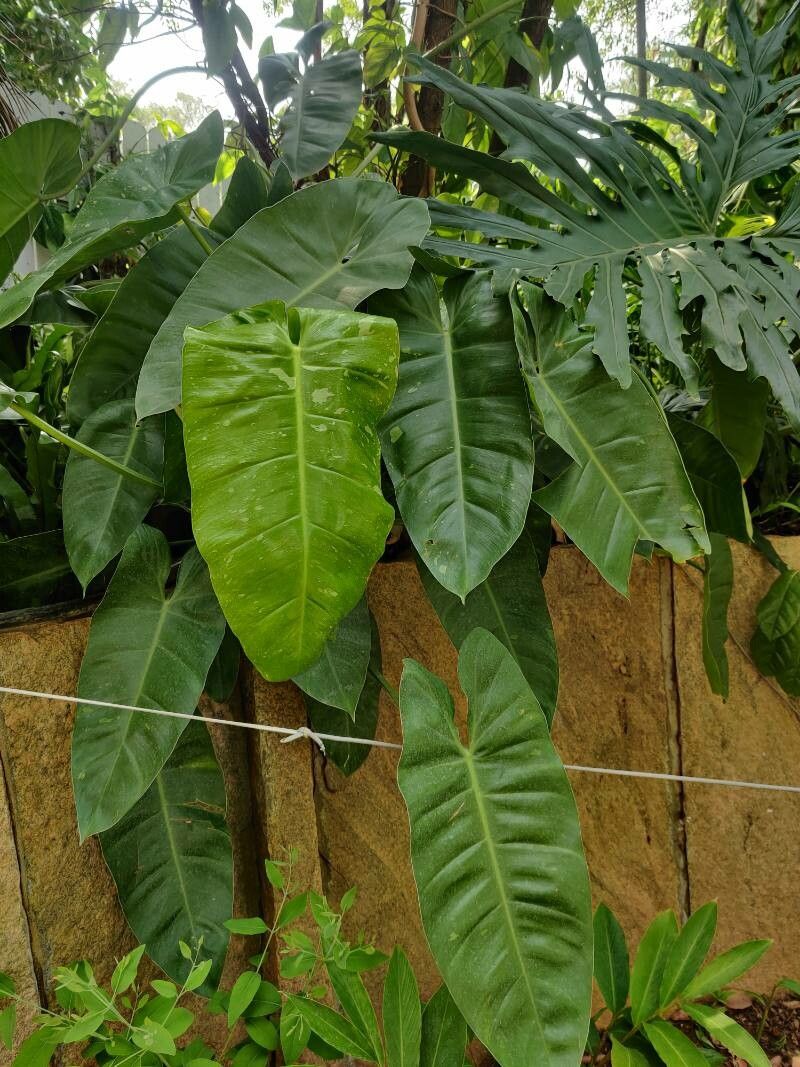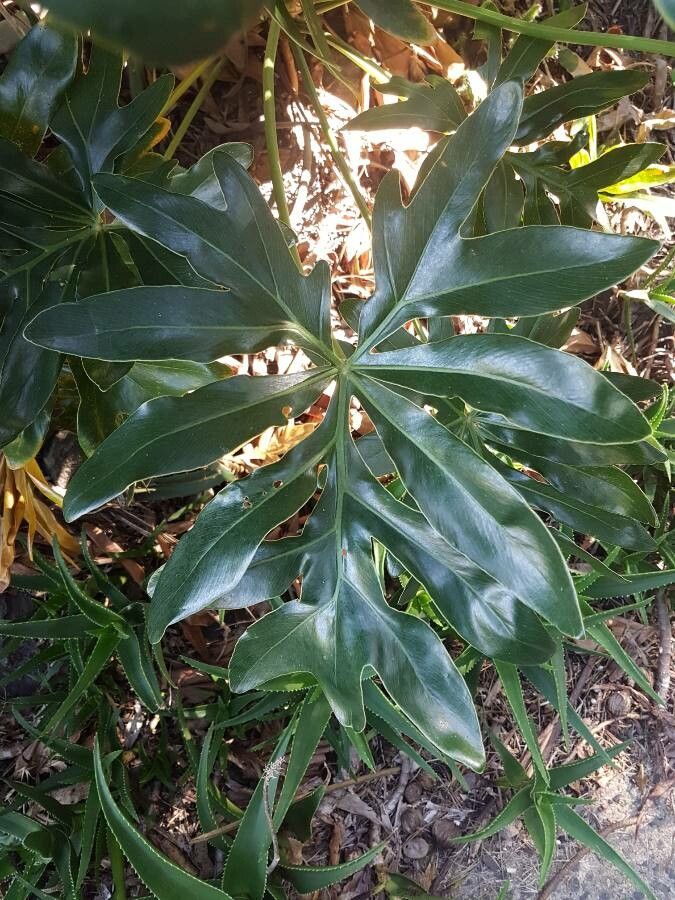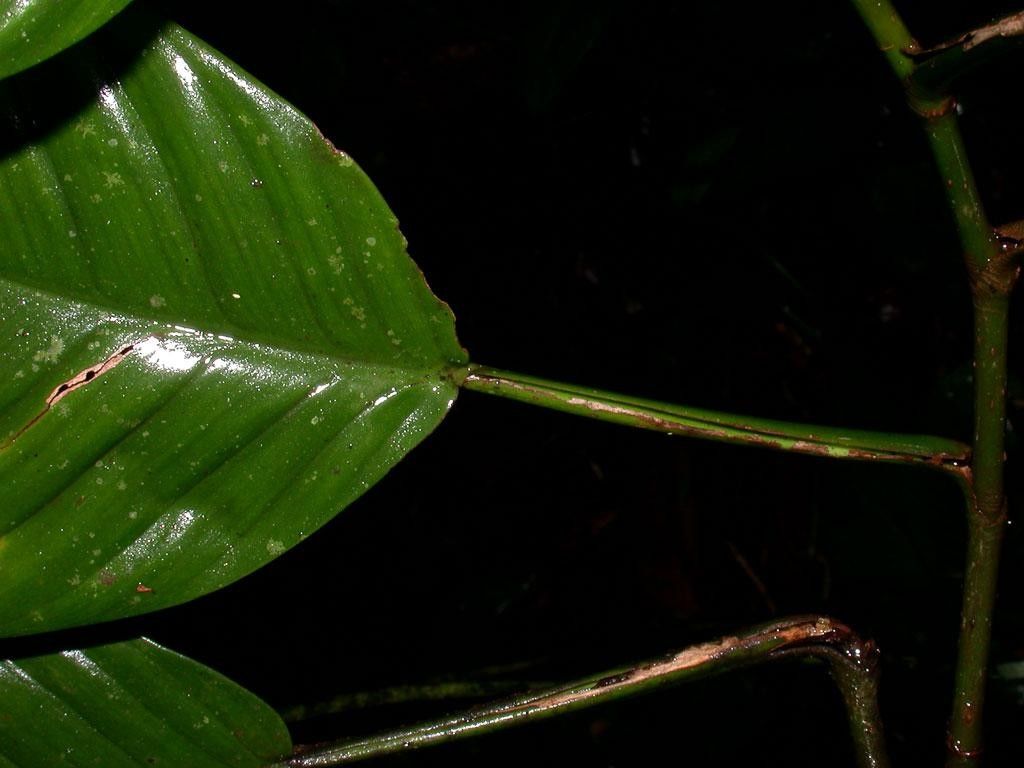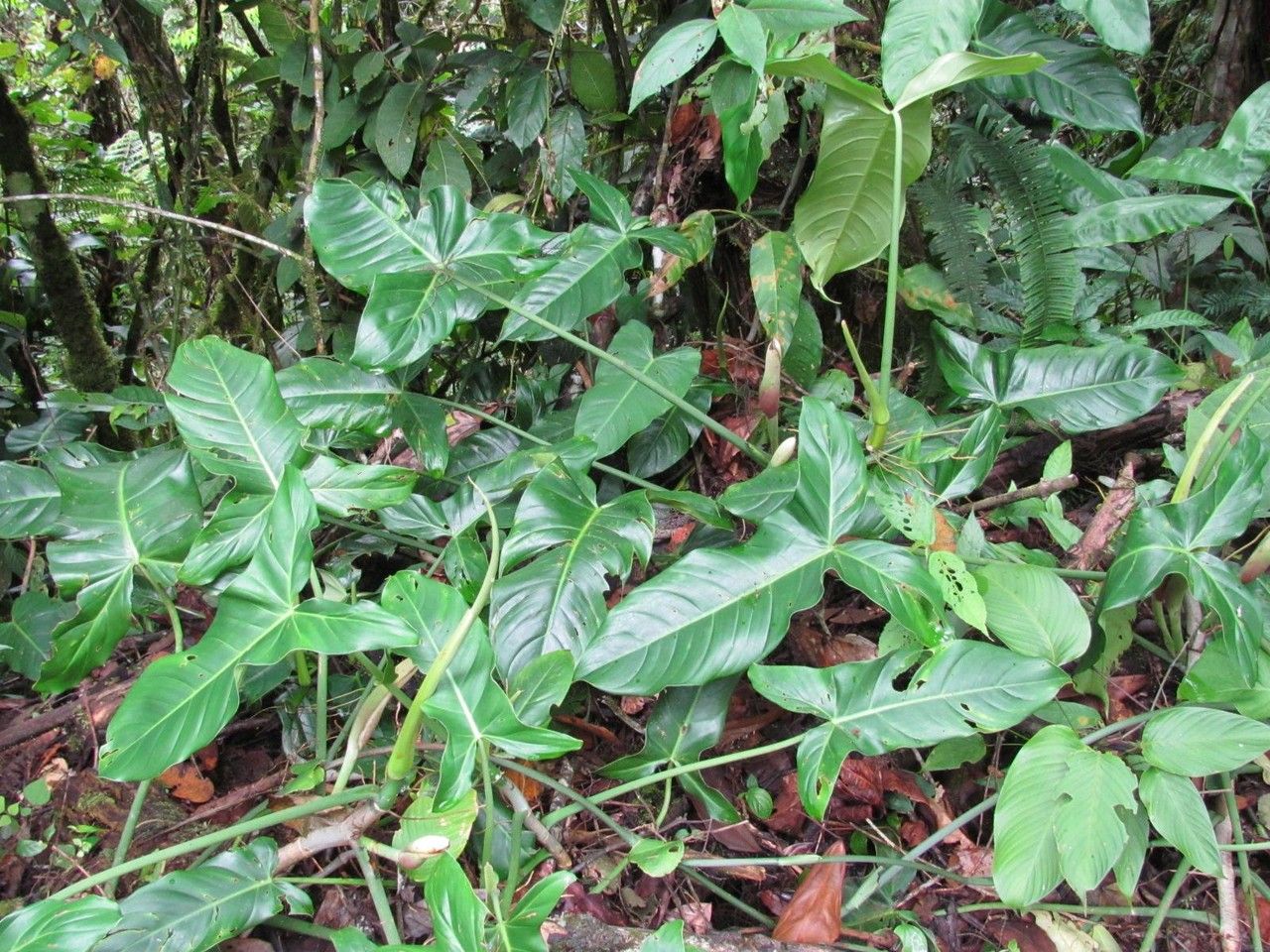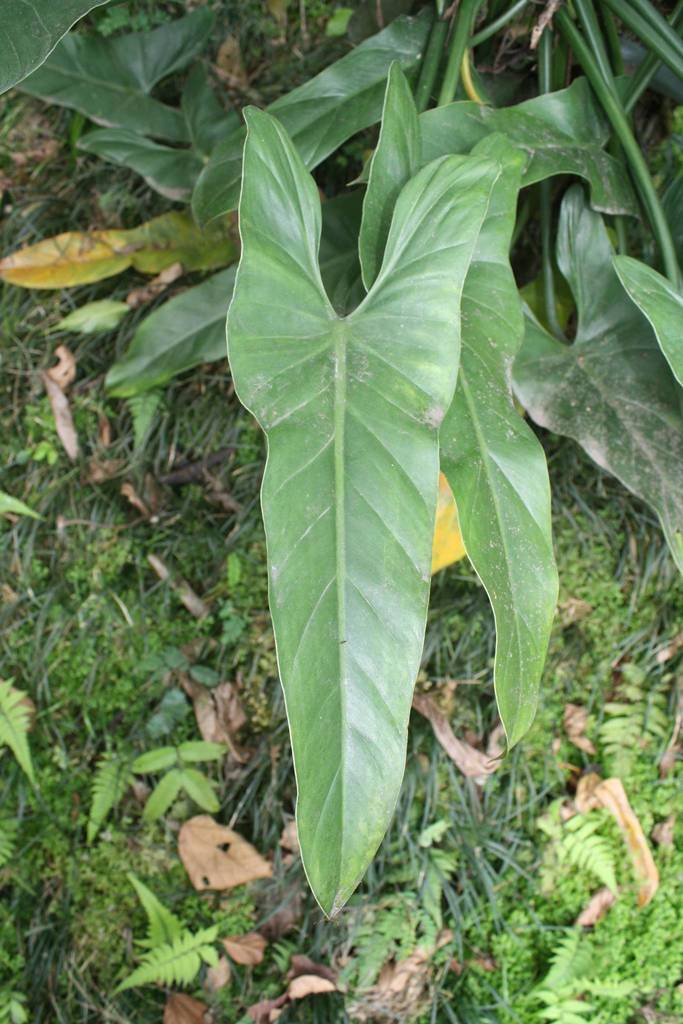
Philodendron hastatum is a species of plant in the genus Philodendron. The species has previously been known by synonyms such as Philodendron domesticum or other names, a confusion made worse by the large degree of morphological variation in this and similar Philodendron. Commonly known as the silver sword philodendron, the plant is known for its silvery coloration especially in juvenile leaves.
The silver sword philodendron is fairly disease-resistant and is generally not prone to illness. Still, it can develop leaf spots if light and ventilation are poor or if it is overwatered. Its care level is considered easy because it mainly needs regular watering and little else. It is well suited to people who do not have the time or energy to commit to frequent care.
How to keep Philodendron Hastatum.
Light
The Silver sword philodendron originates from habitats like forest undergrowth and rugged terrains where it is naturally shaded. Although it prefers semi-sunny conditions, it can adjust to either complete sun exposure or total shade, underscoring its adaptable and resilient characteristics.
Water
The silver sword philodendron, native to tropical rainforests, thrives in humid conditions and needs balanced moisture to grow well. In indoor settings that mimic its natural habitat, it benefits from weekly watering. However, it's important to avoid waterlogging, as this can lead to root rot.
Humidity
This plant will thrive in moderate humidity, which is probably the level in your home. However, misting it a few times a week can be very beneficial. Make sure the room has good ventilation.
Temperature
The Silver sword philodendron originates from habitats with temperatures between 68 and 100 °F (20 to 38 ℃). It thrives in medium to high heat conditions. In chillier seasons, it should be maintained in a heated space to prevent strain.
Fertilizer
The silver sword philodendron needs the greatest amount of fertilizer during its active growth period, which mostly happens in spring, summer and the early part of fall. It's essential to fertilize to supply crucial nutrients that might not be present in the soil, thus aiding in the healthy growth of roots and stems, along with providing appealing foliage, which is a distinctive characteristic of this specific plant.
Pruning
The Silver Sword Philodendron is known for its unique silver leaves and benefits greatly from regular pruning, especially between early and late spring. Pruning helps to shape the plant, encourages bushier growth, and removes any damaged leaves. Be sure to use sterilized tools when pruning to prevent disease and maintain the plant's health and appearance.
Pot & Repot
In the warm seasons of spring or summer, repot the Silver sword philodendron into a slightly larger pot with excellent drainage. After repotting, make sure to water the plant sufficiently and position it in a location with bright, indirect light. As the plant enlarges, you might want to bring in a moss pole for additional support.
Toxicity
Philodendron leaves and stems are high in calcium oxalate. This can be toxic to both people and animals when eaten.
Further reading →
The toxicity and danger assessments provided are for reference only. We do not assure their accuracy, so it's crucial not to depend on them. Seek professional advice when necessary for accurate guidance.
Botanical profile.
- Plant Type
- Vine, Herb
- Life Cycle
- Perennial
- Genus
- Philodendron
- Family
- Araceae
- Hardiness Zone
- 10-12
- Mature Height
- 3.05 m
- Mature Spread
- 49 cm
- Leaf Color
- Silver, Green
- Leaf Type
- Evergreen
- Flower Color
- White, Green
- Flower Size
- 10.16 cm to 15.24 cm
- Bloom Time
- Summer, Early fall
- Planting Time
- Summer, Autumn
- Harvest Time
- Late summer, Fall
- Native Area
- Brazil