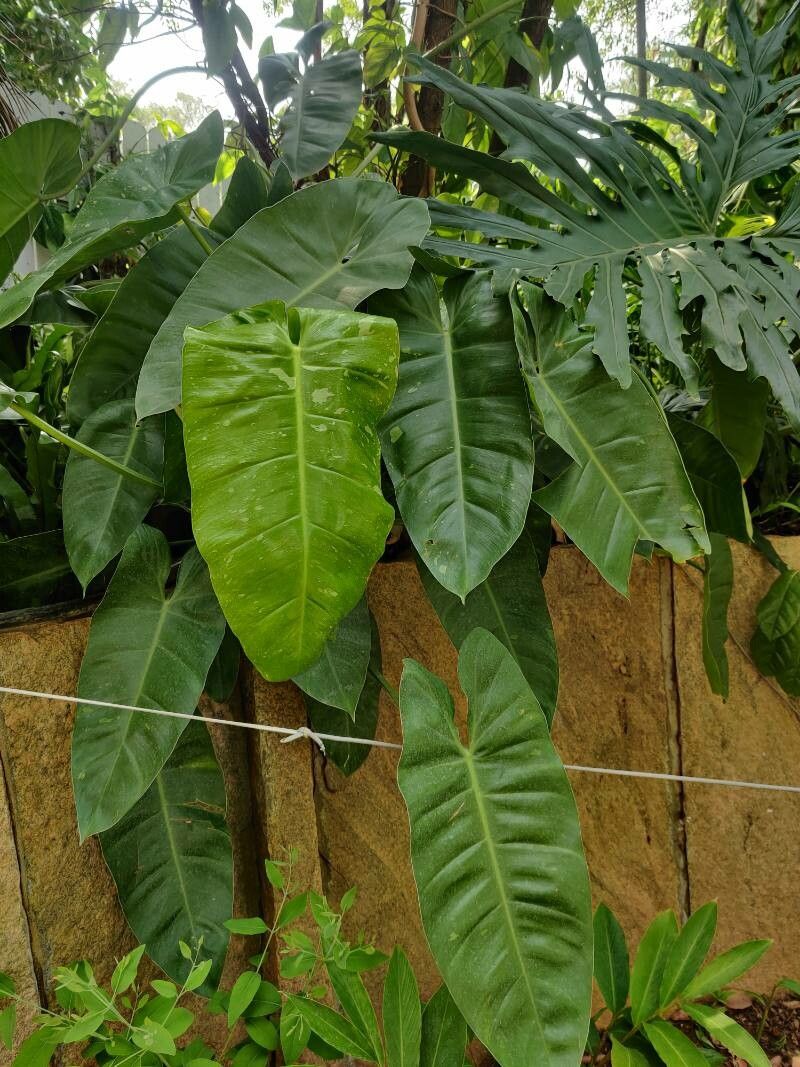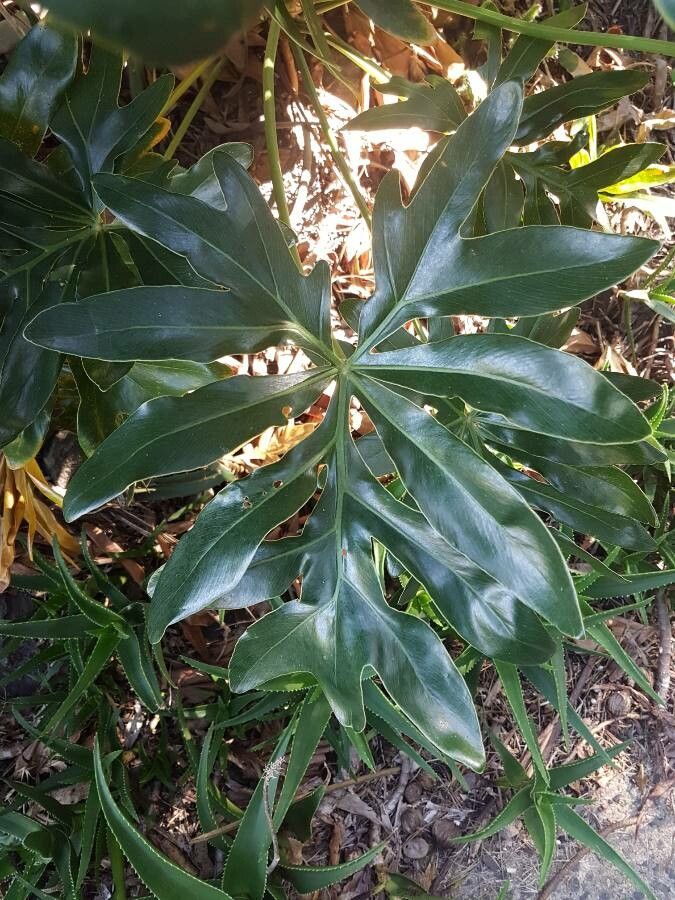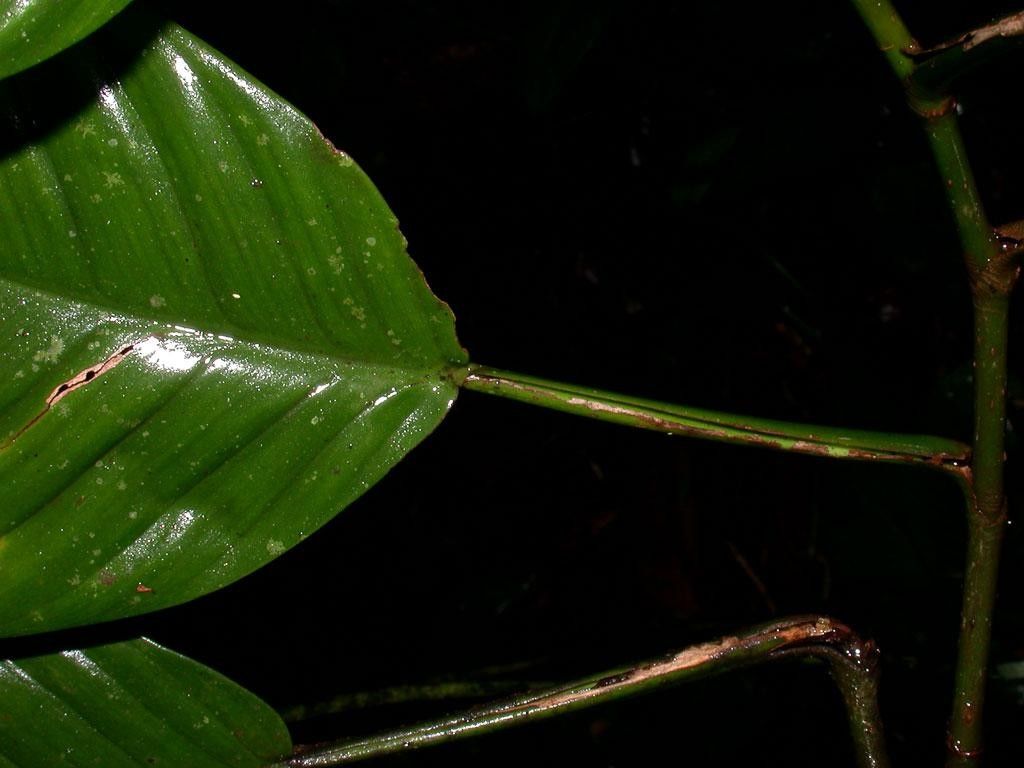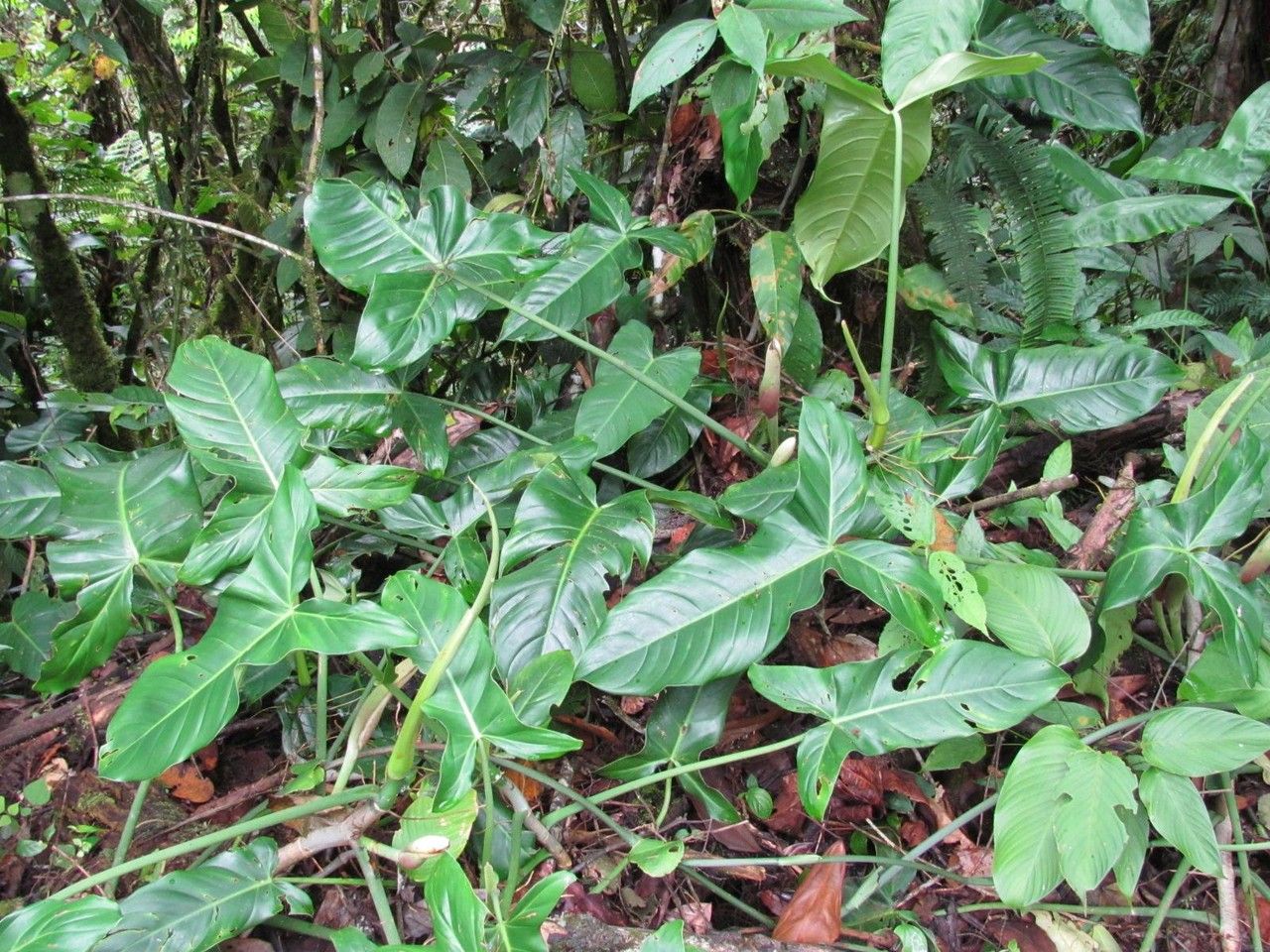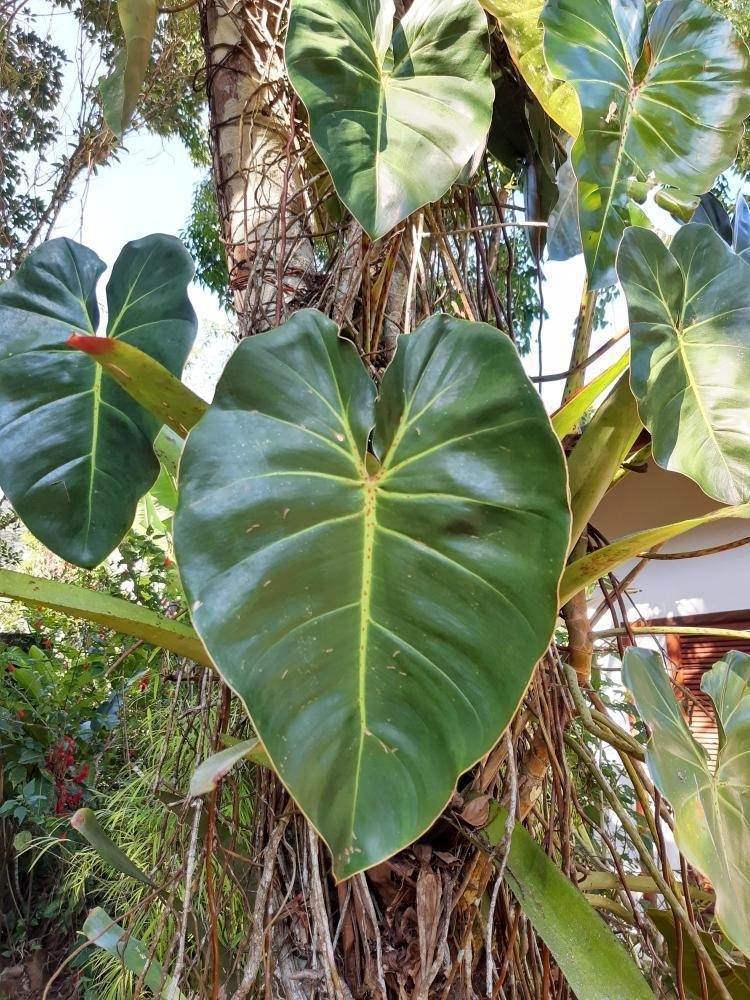
Philodendron cordatum, a popular houseplant from the Araceae family, is native to the tropical regions of Central and South America. In its natural habitat, it grows either as an epiphyte on trees or as ground cover. The plant features heart-shaped, glossy green leaves that can reach up to 10 inches in length and 6 inches in width. Although the leaves are generally smooth, they may have slight ripples along the edges.
This easy-to-care-for plant thrives in bright, indirect light but is also tolerant of low light conditions. It prefers well-draining soil and should be watered when the top inch of soil feels dry to the touch.
Philodendron cordatum is known for its air-purifying qualities, effectively removing toxins such as formaldehyde, benzene, xylene, and ammonia from indoor air.
Tree philodendrons are tropical foliage plants known for their large, thick, and lustrous green leaves. Their sturdy petioles add to their robust appearance. These plants have a high ornamental value and exude vitality. FUN FACT · FROM THE LIBRARY
Due to its attractive foliage, Philodendron cordatum is often used in interior design, adding a tropical touch to any space. Its vining nature also makes it an excellent choice for hanging or trailing displays.
Overall, Philodendron cordatum is an excellent addition for any indoor garden enthusiast. It is low maintenance, visually appealing, and offers health benefits by improving indoor air quality.
Heart-leaf philodendron is fairly resistant to disease and is generally not prone to illnesses. However, it can develop leaf spots when light and ventilation are poor and when it is overwatered. Its care requirements are considered easy, as it mainly needs regular watering and little else. The heart-leaf philodendron is well suited to people who lack the time and energy for frequent upkeep.
How to keep Philodendron Cordatum.
Light
The heart-leaf philodendron originates from environments like forest underlayers or stony regions, where it naturally experiences shade. It favors conditions of partial sunshine, but it's also capable of adjusting to either complete sunlight or total shade, exhibiting its resilient and adaptable characteristics.
Water
Heart-leaf philodendrons flourish in moist environments. To maintain the right conditions, keep the soil consistently moist by watering thoroughly three times a week, preferably in the early morning. Enhance humidity by misting the plant regularly. Avoid using tap water because its minerals can be harmful; instead, use rainwater or distilled water. Additionally, wipe the leaves to prevent sunburn and keep them free from germs.
Humidity
This plant needs special care because it loves high humidity levels of 60-80% or more. The best way to achieve this is by placing a humidifier near the plant. Daily misting is also essential! Make sure the room has good ventilation.
Temperature
The heart-leaf philodendron comes from tropical areas where it's usually hot and humid. Therefore, it is naturally suited to warm and moist climates. It doesn't favor rapid changes in temperature, and prefers consistency in its temperature surroundings. Thus, it's crucial to prevent indoor temperature swings. This plant generally can't endure chilly temperatures and needs elevated temperatures to flourish. Should the environmental temperature fall excessively, the plant might stop growing or even perish.
Fertilizer
The heart-leaf philodendron needs the most fertilizer during its active growth period, which is mainly in spring, summer, and early fall. Fertilization provides essential nutrients that the soil may lack, supporting healthy root and stem development and encouraging attractive foliage, a key characteristic of this plant.
Pruning
The heart-leaf philodendron needs very little pruning. It is mainly necessary to trim away withered or diseased leaves and dead roots, especially during repotting. This helps prevent nutrient loss and encourages the growth of new flowers and leaves.
Pot & Repot
Rehome your Heart-leaf philodendron during the spring or summer months when the temperatures are favourable, opting for a slightly bigger pot that offers adequate drainage. After repotting, provide abundant water and situate the plant in a location with bright, indirect light. As the plant increases in size, a moss pole might be beneficial for support.
Toxicity
Calcium oxalate crystals that resemble needles are present in all sections of the plant and, if chewed or consumed, can result in acute pain or a burning sensation, as well as swelling of the lips, mouth, tongue, and neck. Swelling may result in excessive salivation, breathing, swallowing, or speech difficulties.
Further reading →
The toxicity and danger assessments provided are for reference only. We do not assure their accuracy, so it's crucial not to depend on them. Seek professional advice when necessary for accurate guidance.
Botanical profile.
- Plant Type
- Herb, Vine
- Life Cycle
- Perennial
- Genus
- Philodendron
- Family
- Araceae
- Hardiness Zone
- 10-12
- Mature Height
- 3.05 m
- Mature Spread
- 49 cm
- Leaf Color
- Green, Purple
- Leaf Type
- Evergreen
- Flower Size
- 5.08 cm to 7.62 cm
- Bloom Time
- Summer, Early fall, Mid fall
- Planting Time
- Spring, Summer, Autumn
- Harvest Time
- Late summer, Fall, Early winter
- Native Area
- Brazil