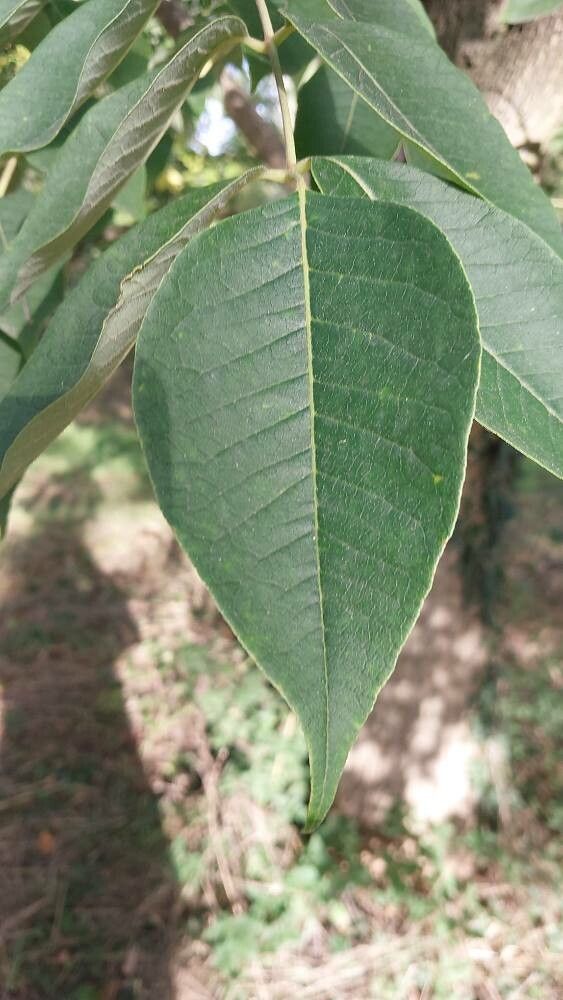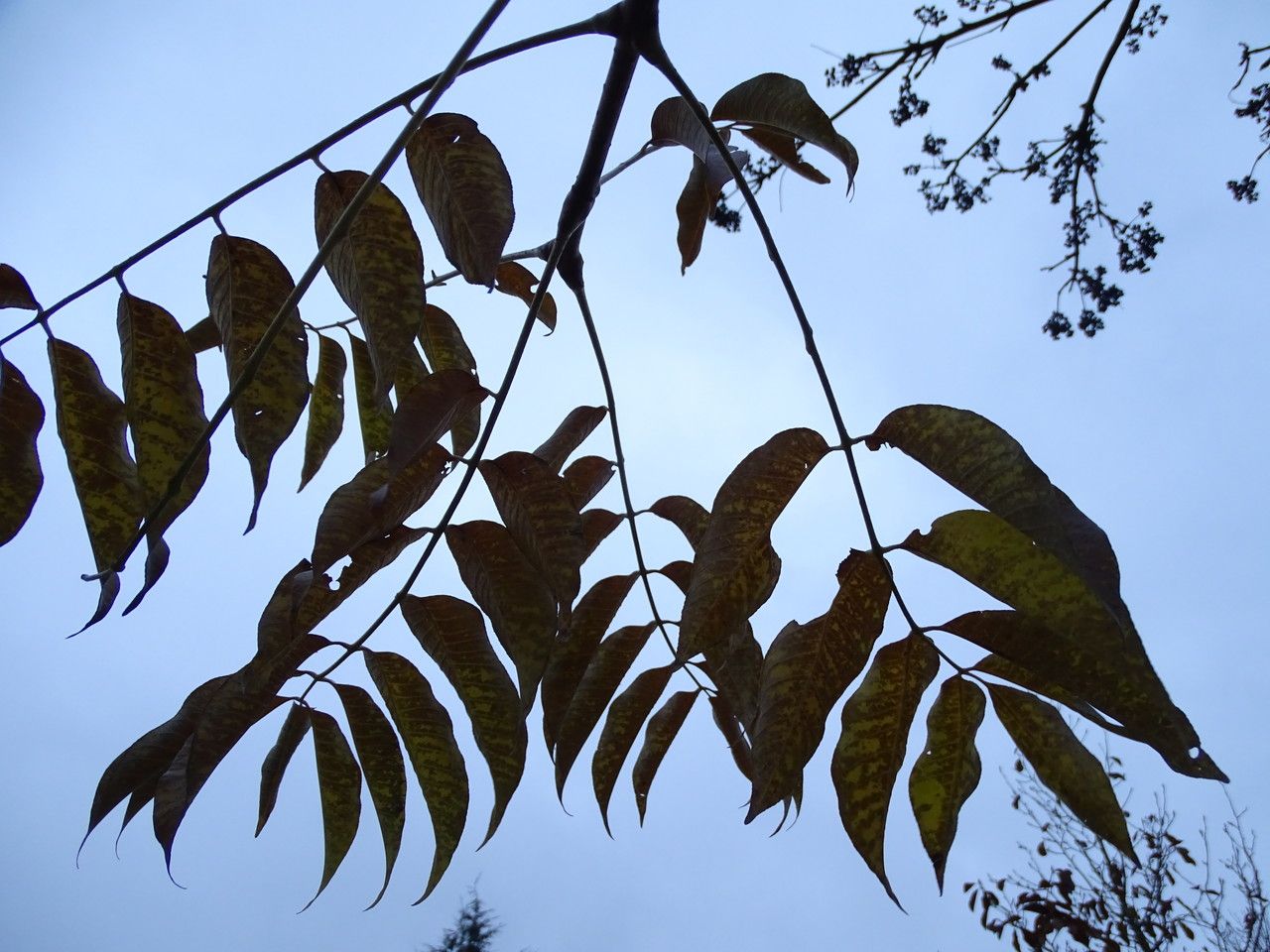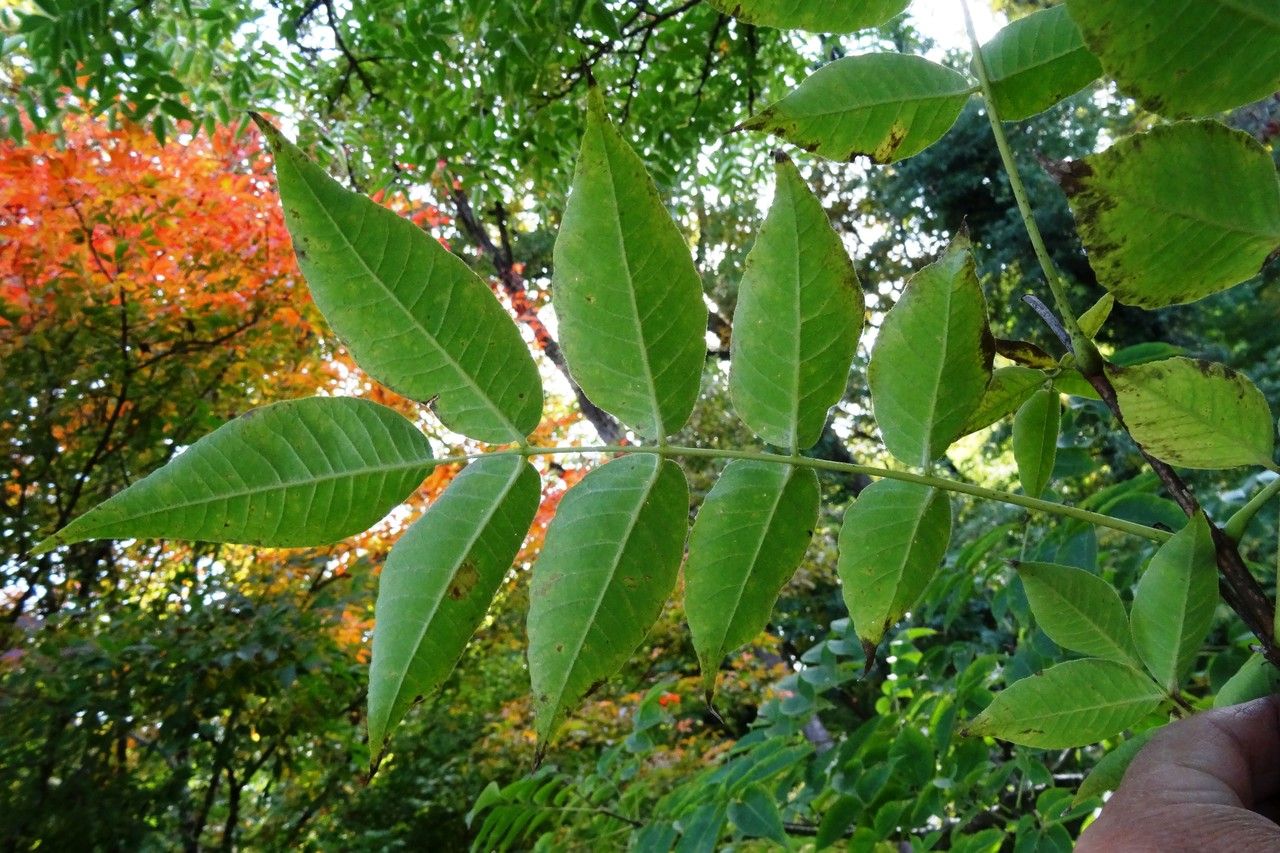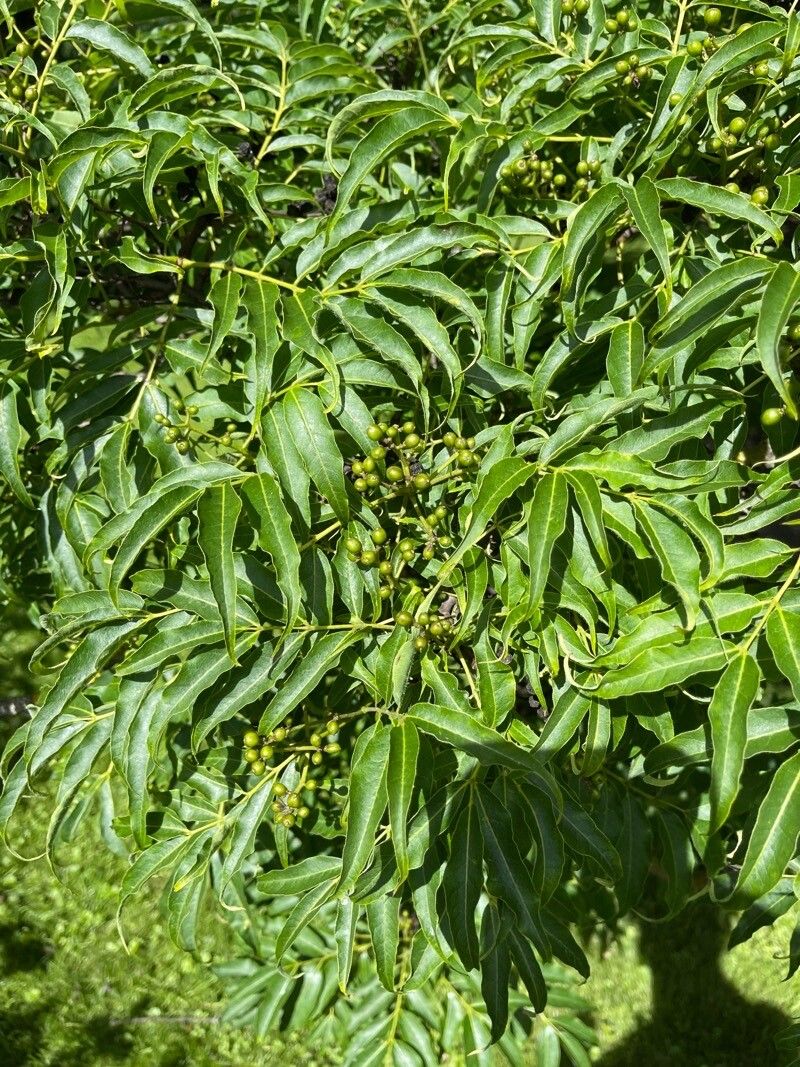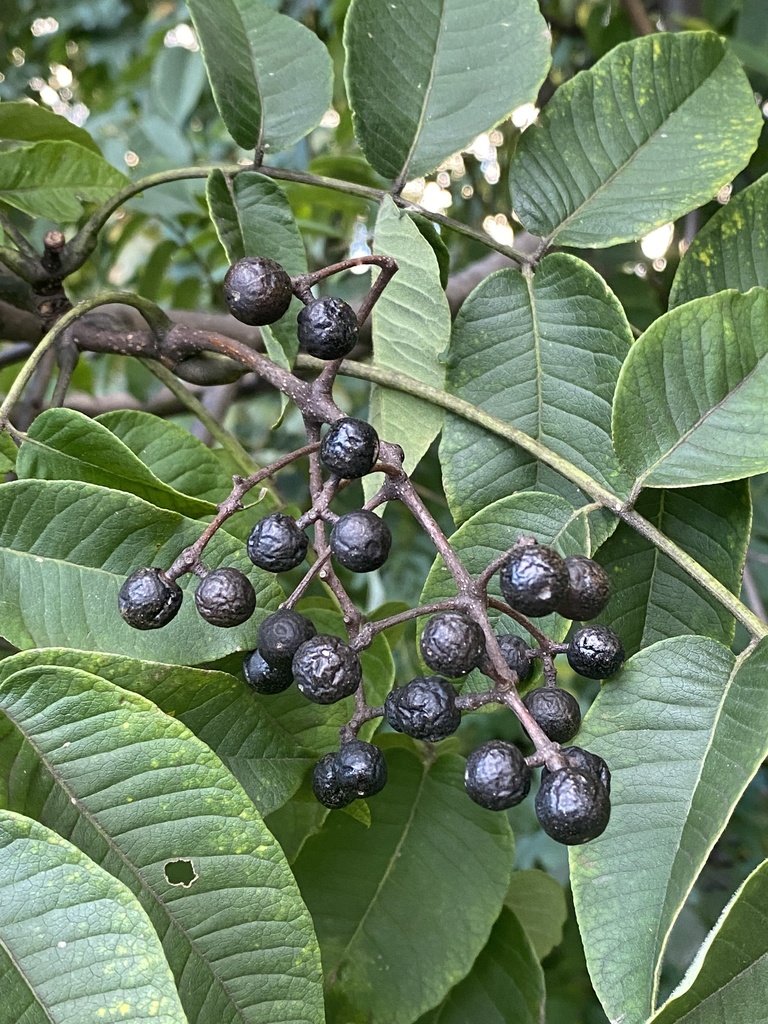
Phellodendron amurense, commonly known as the Amur cork tree, is a deciduous tree native to eastern Asia. It can reach a height of 20-25 meters and features a broad crown with a spreading canopy. The tree's bark is corky and deeply furrowed, while its pinnate leaves, consisting of 7-17 leaflets, turn a striking yellow in autumn. The Amur cork tree is highly valued for its medicinal properties. Its bark contains several bioactive compounds, including berberine and phellodendrine, which have been used in traditional Chinese medicine for centuries to treat various ailments such as fever, diarrhea, inflammation, and infections. In addition to its medicinal uses, Phellodendron amurense is prized for its ornamental value due to its attractive foliage and unique bark texture. It can be planted in gardens or parks as an ornamental shade or specimen tree. However, it is important to note that Phellodendron amurense can become invasive if not properly managed due to its ability to produce numerous seeds that are easily dispersed by wind or water. Therefore, it should be planted only where it will not cause harm or disruption to native ecosystems. Overall, Phellodendron amurense is an intriguing plant with both medicinal value and ornamental appeal, but it requires careful management when planted outside its native range.
The Amur cork tree has strong resistance to disease and is usually not susceptible to illnesses. In terms of care, this species is fairly low-maintenance. When grown outdoors it needs only minimal watering, and larger specimens typically do not require pruning. Smaller plants, however, should be pruned after they finish blooming. The Amur cork tree is suitable for anyone with outdoor space, such as a garden or deck, and does not demand extensive experience in plant care.
How to keep Phellodendron Amurense.
Light
The Amur cork tree performs best when it receives plentiful sunlight. Its native habitat has adapted it to high levels of light, which encourage optimal growth. On the other hand, reduced light can negatively affect its development and may cause poor vigor. Although it is fairly tough, it cannot tolerate environments entirely lacking light.
Water
The Amur Cork Tree, native to East Asia, is well-suited to environments with low moisture. Generally, it needs to be watered every two weeks. However, during its winter dormancy, its watering requirements decrease, while in the spring, they increase. Though it thrives outdoors with consistent moisture, the Amur Cork Tree can tolerate moderate drought conditions.
Temperature
The Amur Cork Tree is native to temperate regions where temperatures generally range from 32 to 90°F (0 to 32°C). It does best within that span, and exposure to extreme heat or cold can negatively impact its growth. To promote optimal growth during seasonal changes, adjust the surrounding temperature accordingly.
Fertilizer
Fertilize your Amur Cork Tree in early spring to encourage healthy growth. Consistent fertilization boosts the tree’s overall health, promoting robust growth, better tolerance of harsh conditions, and increased resistance to pests and diseases. Adhere to a regular fertilization routine for your Amur Cork Tree to keep the foliage bright with rich color and a full, lush look.
Pruning
The Amur Cork Tree is a deciduous tree known for its cork-like bark and vibrant yellow leaves in the fall. For best results, prune it in early spring, removing any dead or crossing branches to improve air circulation. Heavy pruning in the summer should be avoided, as this can stress the tree and negatively impact its health and appearance.
Botanical profile.
- Plant Type
- Tree
- Life Cycle
- Perennial
- Genus
- Phellodendron
- Family
- Rutaceae
- Hardiness Zone
- 3-8
- Mature Height
- 9.14 m to 18.29 m
- Mature Spread
- 9.14 m to 11.89 m
- Leaf Color
- Yellow, Green, Gold
- Leaf Type
- Deciduous
- Flower Color
- Yellow
- Flower Size
- 2.54 cm
- Bloom Time
- Late spring, Early summer
- Planting Time
- Spring
- Harvest Time
- Mid summer
- Native Area
- Russia, Japan, Koppen, South Korea, China
Other names.
Reader questions.
How should I water my Amur Cork Tree?
To ensure excellent root development, it is recommended to place a garden hose at the base of your plant. When watering, be careful not to directly spray the leaves. If your plants are outdoors and exposed to direct sunlight, the leaves will need more water. One option is to use bubblers that can be placed on each plant to keep the roots moist. Soaker hoses are also useful for watering the entire garden or bed, especially when adding or removing plants for deep root penetration. After watering, make sure to drain any excess water and wait for the soil to dry before watering again. To prevent diseases, water at ground level rather than spraying overhead. On a sunny day, spraying the entire bush with water is a good idea. Whether your Amur Cork Tree is potted or in-ground, it is important to remember that it prefers deep watering rather than light sprinkling.
Why is it necessary to add fertilizer to my Amur Cork Tree?
No matter what type of Amur Cork Tree you have, regular fertilization is essential for its overall health. Providing the right nutrients will result in stronger growth and increased resistance to tough conditions, diseases, and pests. Keeping the foliage intact is crucial, as it is one of the tree's most attractive features. To achieve this, create and follow a regular fertilization schedule that is specific to your Amur Cork Tree. This will promote the development of deeply colored and lush leaves.
What are the sunlight requirements for the Amur Cork Tree?
The Amur Cork Tree thrives in conditions where it is exposed to a great amount of sunlight, ideally above 6 hours of sunlight daily. Its growth and vitality are significantly affected if it receives less light, possibly leading to poor health. However, it's noted that while this tree is resilient, it cannot survive in completely light-devoid situations. It's crucial to watch how sunlight moves through your garden, choosing spots that ensure a balance of light and shade for optimal plant happiness.
What is the native temperature range for Amur Cork Tree?
The Amur Cork Tree, botanically known as Phellodendron amurense, is native to temperate environments. It thrives in temperatures that typically range from 32 to 90°F (0 to 32°C). This range is crucial for its growth, as exposure to temperatures outside of this spectrum can negatively impact the tree's development. The Amur Cork Tree demonstrates strong cold resistance, meaning it generally does not require special frost protection measures during the winter months. However, in instances where winter temperatures are anticipated to drop below -35°C, it's essential to provide cold protection by wrapping the trunk and branches with materials like non-woven fabric or cloth. Additionally, watering the plant abundantly before the first freeze in autumn is recommended to ensure the soil remains moist as it enters a frozen state, which helps in preventing drought and water scarcity for the tree during the winter and early spring months.
What should I do if I give the Amur Cork Tree too much or too little water?
An overwatered Amur Cork Tree will show signs such as yellowing, dropping off, and wilting of its leaves. The plant will also have a dull and unhealthy appearance, with mushy stems being noticeable. When these signs start to appear, it's best to adjust your watering schedule. On the other hand, wilting can also be a sign of under watering. Under these circumstances, the leaves will turn crispy and dry, while overwatered leaves will be soft and wilted. To address dry soil, give the tree a thorough watering. However, even with enough water, the tree may still have dry and yellow leaves due to a damaged root system. Once the tree recovers, the yellowing of leaves will stop. If you have an Amur Cork Tree indoors, always check the moisture levels in the pot and avoid overwatering. Look out for black spots as well. If present, let the soil dry out by withholding water for a few days. Overwatering can lead to root rot, so if you see discolored and slimy roots, consider transferring the tree to a different pot. It's important to prevent root rot by not allowing the soil to become overly saturated. When planting an Amur Cork Tree outdoors, make sure to dig a little deeper. If you find the soil is too dry when checking with your fingers, it could indicate underwatering. Adequate watering is necessary for the tree to recover.
When should I fertilize my Amur Cork Tree to get the best results?
To ensure healthy growth of your Amur Cork Tree, it is recommended to fertilize it during late winter or early spring, giving it the necessary nutrients to thrive once the weather becomes warmer. If you live in a warm climate region, an additional fertilizer feeding during early fall can benefit your tree by providing extra nutrients for the upcoming growing season and increasing its ability to withstand winter without foliage damage. Fertilizing earlier in the fall will also promote the growth of strong branches that can better withstand cold temperatures.
How can artificial lighting support the Amur Cork Tree indoors?
Indoor Amur Cork Trees require adequate lighting for optimal growth. When natural sunlight is insufficient, especially during winter or in less sunny spaces, artificial lighting becomes essential in promoting faster and healthier growth. LED lights are recommended for their ability to provide specific wavelengths that plants need. For full sun plants, 30-50W/sq ft of artificial light is needed, partial sun plants require 20-30W/sq ft, and full shade plants need 10-20W/sq ft. The artificial light source should be placed 12-36 inches above the plant, mimicking natural sunlight for 8-12 hours per day.
How does the Amur Cork Tree respond to low and high temperatures, and what are the recommended solutions?
The Amur Cork Tree is notably cold-tolerant, optimum for survival above 0°C, and should ideally be kept from dropping below -30°C during winter months. When temperatures fall below -35°C, the tree may not show immediate signs of distress during winter; however, come spring, its branches could become brittle and dry, with no new shoots emerging. In such cases, spring pruning of any dead branches that fail to produce new leaves is advised. Conversely, during summer, it's recommended to keep the tree below 32°C to prevent stress from high temperatures. Exceeding 35°C can result in lighter leaf coloration, dry and withered leaf tips, and increased susceptibility to sunburn. Solutions include trimming away sunburned and dried-up parts of the plant, relocating it to a shaded area or employing a shade cloth to protect it from the midday and afternoon sun. Additionally, watering in the morning and evening can help maintain soil moisture, further alleviating stress from high temperatures.
How often do I need to water my Amur Cork Tree?
The Amur Cork Tree prefers deep and infrequent watering, especially when planted in pots. When watering, soak them in a gallon of water each time. In pots, the water storage is limited, so the soil dries out faster. In cold regions, watering is needed every 3 to 5 days. It's best to water in the morning when the soil is dry, and you can check if watering is needed by examining the soil. When the top 2-3 inches of soil are dry, it's time to give the plant a full watering. On hot days, check the moisture daily to prevent the soil from drying out. For gardens, irrigation is necessary. In hot climates, water once a week when about 2 to 3 inches of soil are too dry. Be mindful of rainfall, as additional watering may not be necessary. Amur Cork Tree typically grows in spring and fall. Outdoors, adding 3 to 4 inches of mulch helps conserve water. Sandy soil requires more frequent watering, while clay soil requires less to avoid root rot. To keep track, mark the date on the calendar and pay attention to drooping leaves, which may indicate a day late for watering.
When is it best not to fertilize my Amur Cork Tree?
You should avoid fertilizing your Amur Cork Tree at specific times throughout the year. Firstly, do not fertilize during the early and mid-winter months when the tree is dormant. At this time, it does not require any nutrients. Additionally, it is not recommended to fertilize the tree during late spring and throughout the summer. During these seasons, the weather is usually hotter and drier, which can have a negative impact on the tree if fertilized. To prevent any problems, stick to a fertilization schedule that involves feeding only in early spring and early fall.
What are the symptoms of inadequate light exposure in the Amur Cork Tree?
The Amur Cork Tree may show various symptoms when exposed to suboptimal lighting conditions, including new leaves growing smaller than the mature ones, a leggy or sparse growth appearance due to elongated spaces between leaves or stems, and an expedited leaf drop to conserve resources. Growth can become delayed, halt altogether, or result in lighter-colored new leaves, indicating a lack of chlorophyll and essential nutrients. Excessive sunlight can lead to chlorosis, sunscald, leaf curling, wilting, and leaf scorching, all of which negatively affect the plant's health.
How much water does my Amur Cork Tree need?
The Amur Cork Tree generally needs a gallon of water on its watering schedule. For potted plants, water them deeply until the water is dripping from the bottom of the pot. Then, wait for the soil to dry before watering again. You can use a water calculator or a moisture meter to measure the amount of water you give the plant each week. During the flowering period, provide plenty of water but allow the moisture to evaporate to avoid root rot. If the Amur Cork Tree is planted outdoors and receives enough rainfall, it may not need additional watering. However, when the tree is young or newly planted, ensure it gets 1-2 inches of rain per week. As the tree grows, it can rely solely on rainfall. Only water it during hot weather or when there has been no rainfall for 2-3 weeks. Water the tree during cooler parts of the day to prevent heat damage. Additional watering is necessary during extended dry periods.