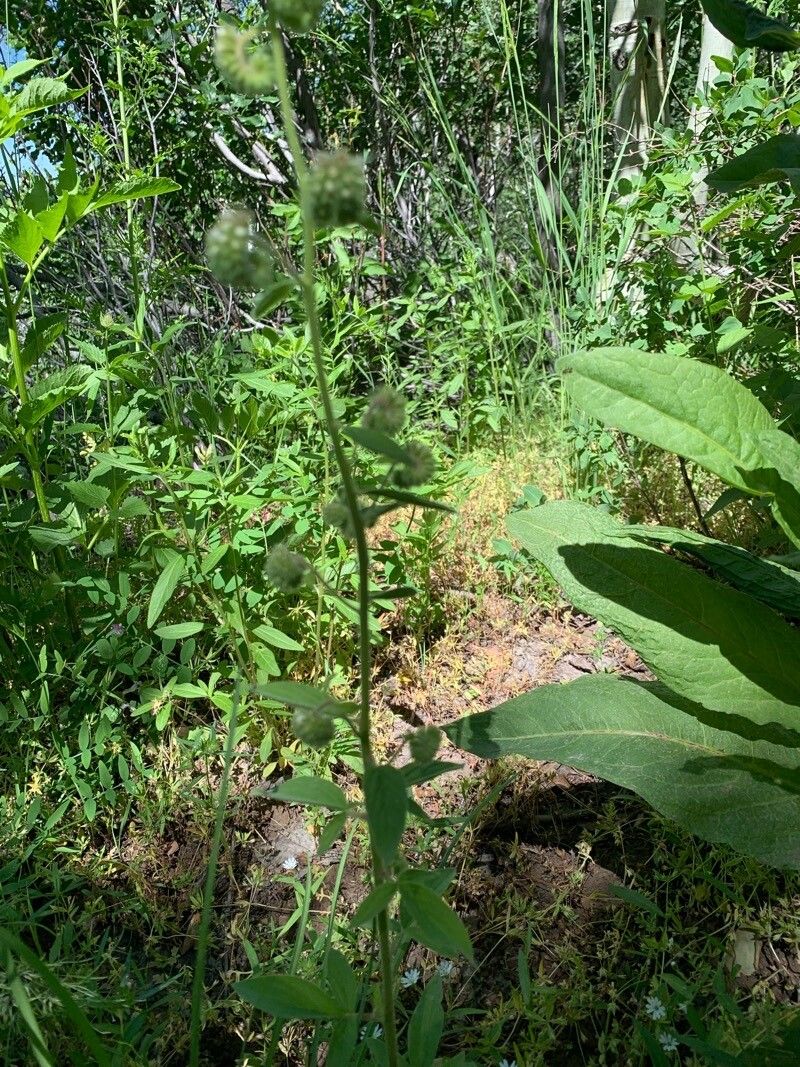
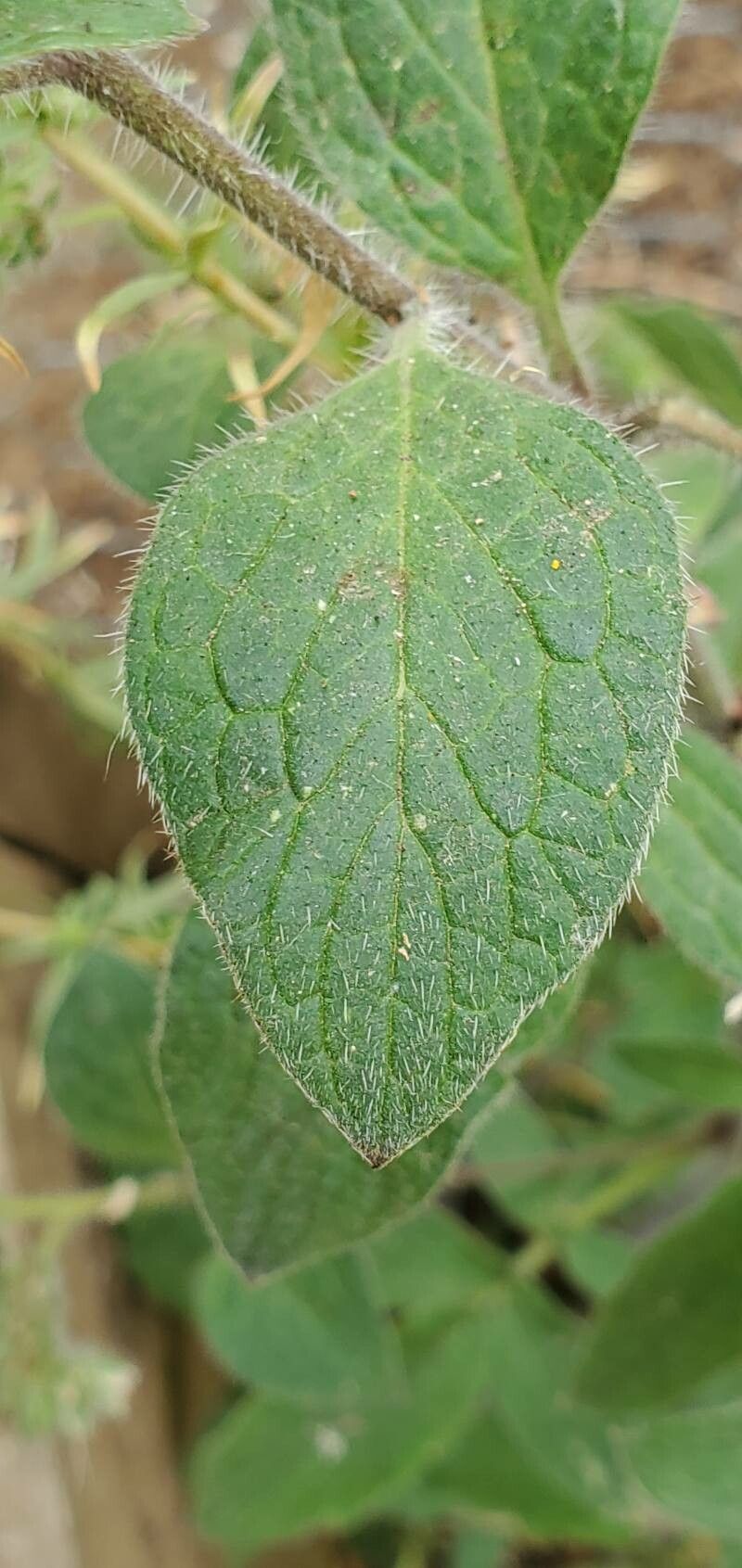
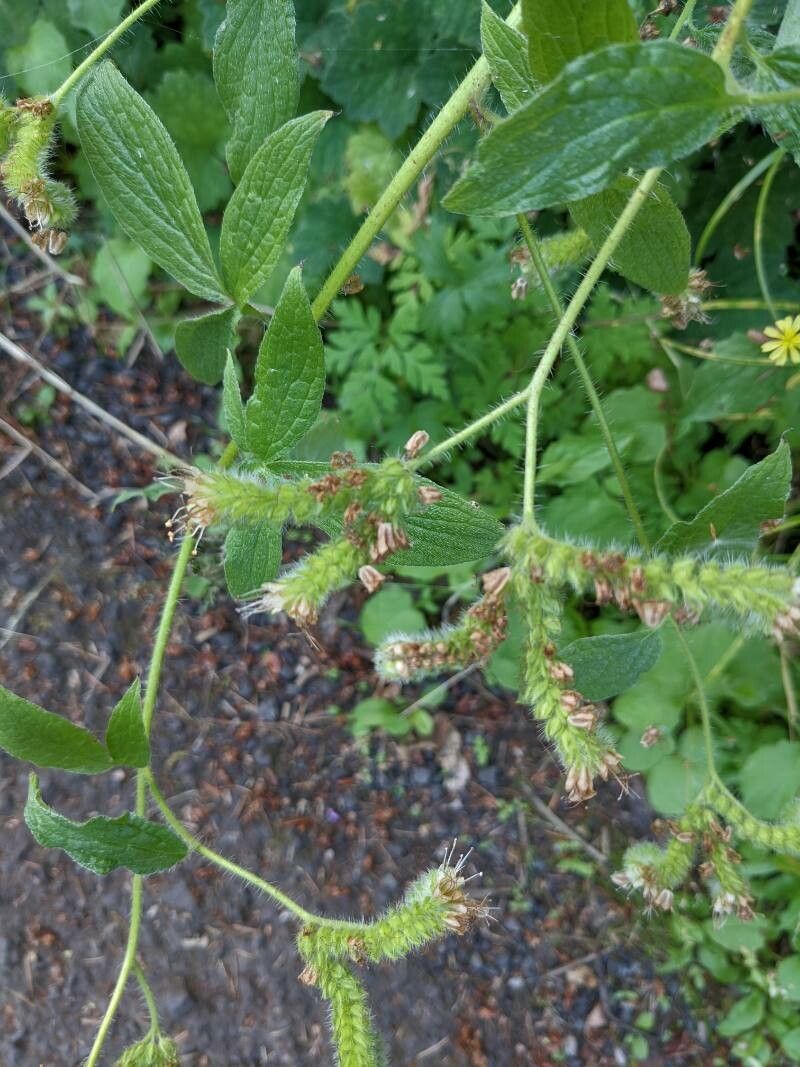
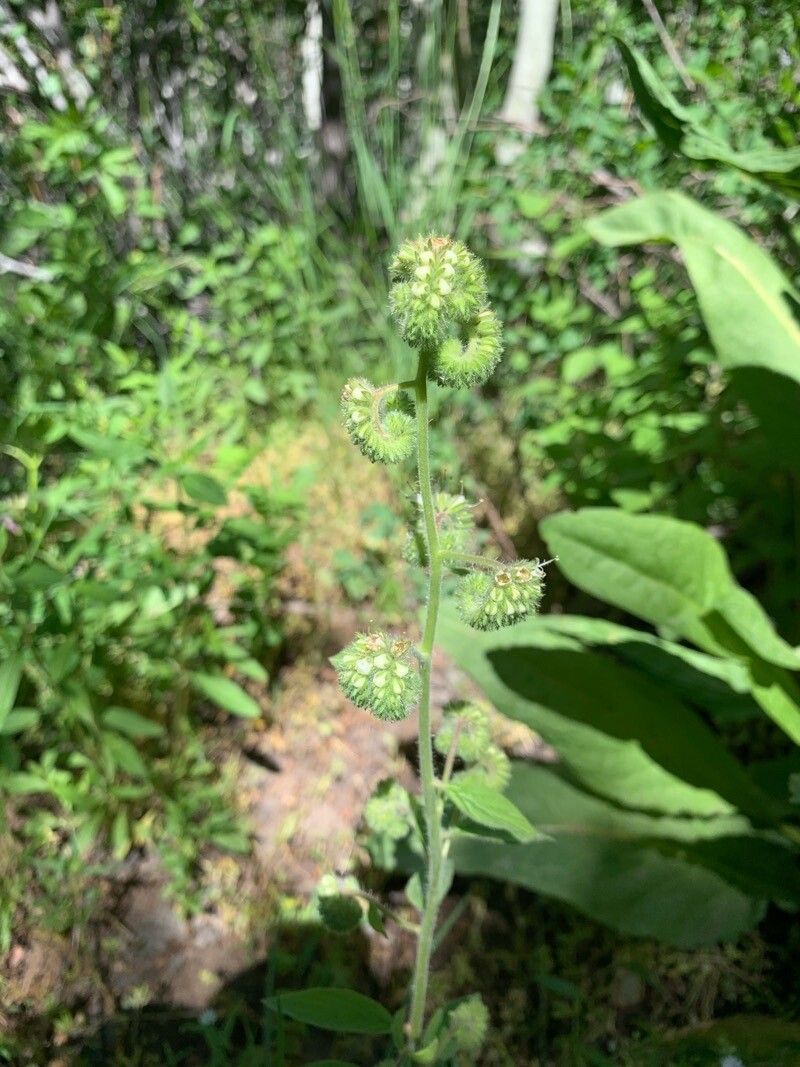
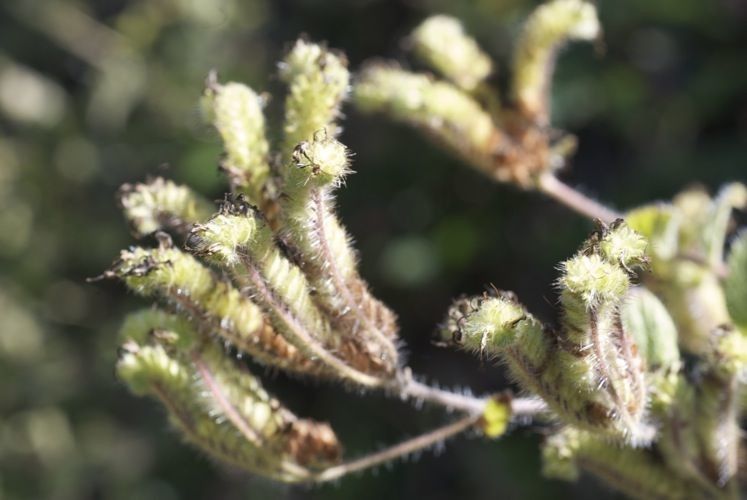
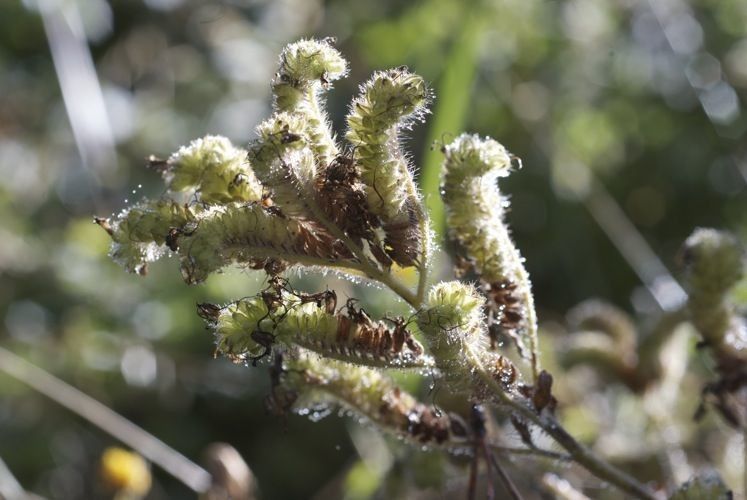
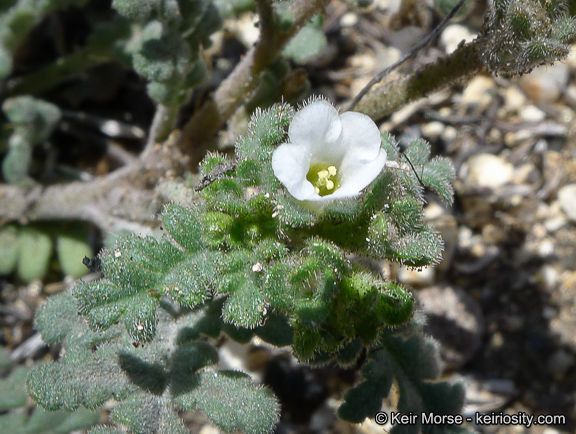
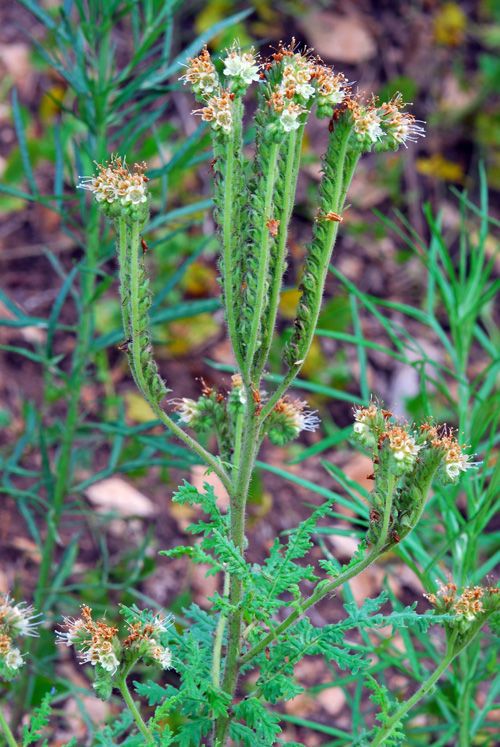
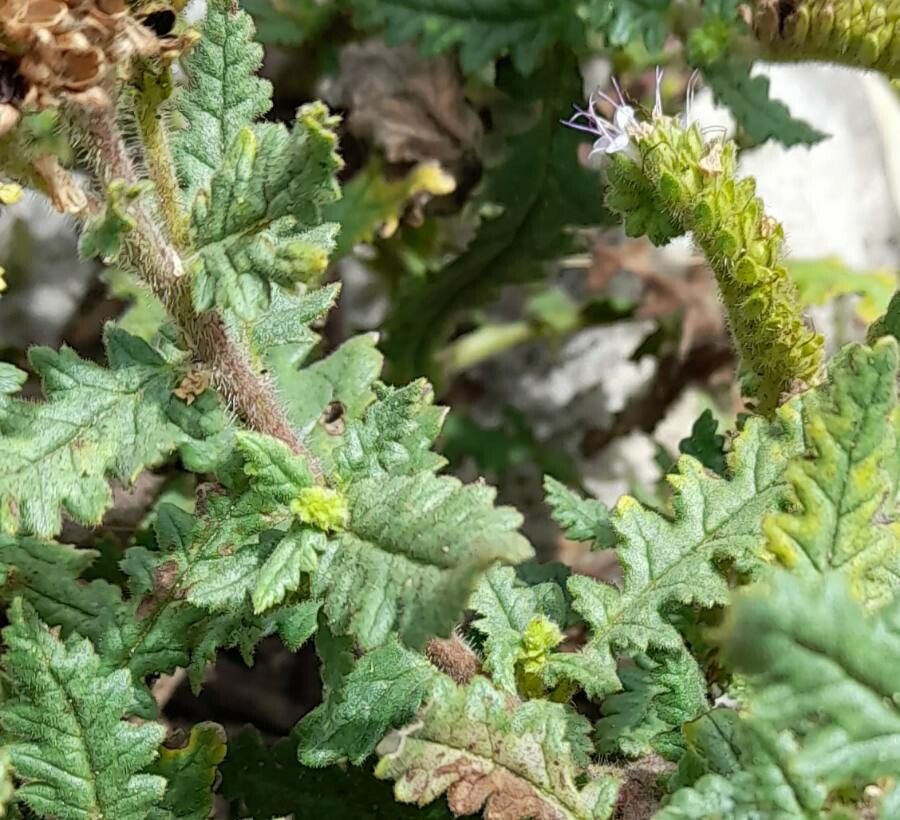
Phacelia nemoralis is a species of flowering plant in the borage family known by the common name shade phacelia. It is native to the west coast of the United States from Washington to central California, where it grows in moist, usually forested areas along the coastline and in the coastal mountain ranges. It is a perennial herb producing a densely hairy, erect stem which may reach two meters in height. The leaves are variable in shape, the largest lower ones 15 to 25 centimeters long and divided into several leaflets. Upper leaves are smaller and undivided. The inflorescence is a one-sided coiling cyme of bell-shaped flowers. Each flower is up to 6 millimeters long and greenish or yellowish white in color with whiskery protruding stamens. There are two subspecies: Phacelia nemoralis ssp. oregonensis (Oregon phacelia) – distribution extends into Washington State Phacelia nemoralis ssp. nemoralis – occurs south of Washington
Oregon phacelia is fairly disease-resistant and generally not prone to illness. Still, it can be affected by pests and diseases present in its environment. Such infections tend to be mild. In terms of care, the plant requires moderate maintenance. Regular pruning is needed to preserve an attractive appearance and promote healthy growth. Fertilizing can also boost flowering. Oregon phacelia is well suited to anyone with outdoor space, like a garden or patio, and does not demand extensive care experience. It may need more attention when grown indoors.
How to keep Phacelia Nemoralis.
Light
Oregon phacelia is native to habitats with filtered light, such as forest understories or rocky sites that provide natural shade. It grows best in partial sun but can also tolerate full sun conditions.
Temperature
Oregon phacelia can tolerate a wide range of temperatures, but its distribution may still be restricted by different combinations of moisture and heat. It performs best in warm summer climates with sufficient rainfall or irrigation. Extended stretches of cloudy, rainy weather, as well as prolonged high temperatures, can raise the likelihood of Oregon phacelia dying. In winter, adequate protection from cold can increase the plant's chances of survival.
Fertilizer
When most of the Oregon phacelia blooms have opened to full size, resume fertilizing. Around peak bloom, feed it once every three to four weeks, as the weather allows. Then, when the plant begins to produce fewer new blooms, stop fertilizing—there’s no need to feed it if it can’t form any more flowers.
Pruning
The Oregon phacelia is characterized by its delicate, bell-shaped flowers and lush foliage. To maintain its health and appearance, prune the plant from early to late spring. This involves removing any dead or damaged branches and thinning out congested areas to enhance air circulation. Regular pruning not only improves the plant's aesthetic appeal but also promotes its overall health, ensuring it blooms optimally in line with its growth cycle.
Botanical profile.
- Plant Type
- Herb
- Life Cycle
- Annual
- Genus
- Phacelia
- Family
- Boraginaceae
- Hardiness Zone
- 7-10
- Mature Height
- 30 cm to 91 cm
- Mature Spread
- 20 cm to 40 cm
- Leaf Color
- Green, Dark Green
- Leaf Type
- Deciduous
- Flower Color
- Lavender
- Flower Size
- 0.51 cm to 0.76 cm
- Bloom Time
- Mid spring, Late spring, Early summer
- Planting Time
- Spring, Summer, Autumn
- Harvest Time
- Summer
Other names.