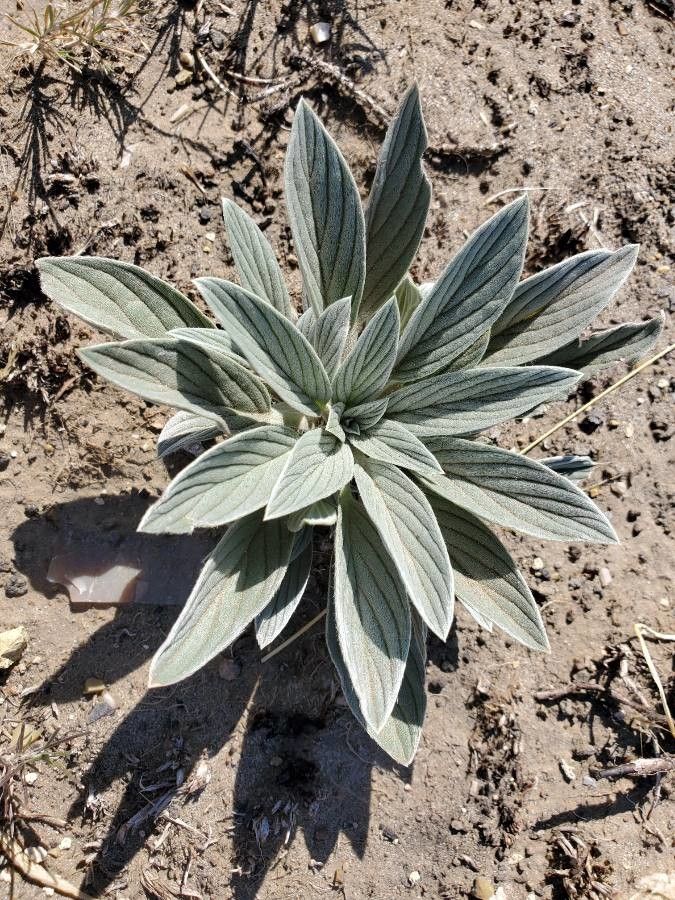
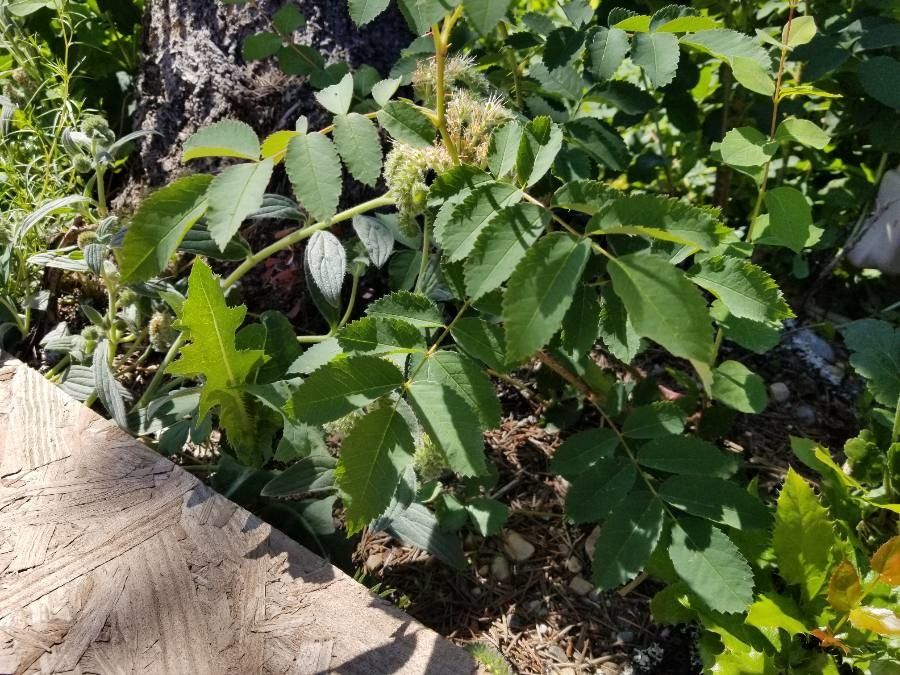
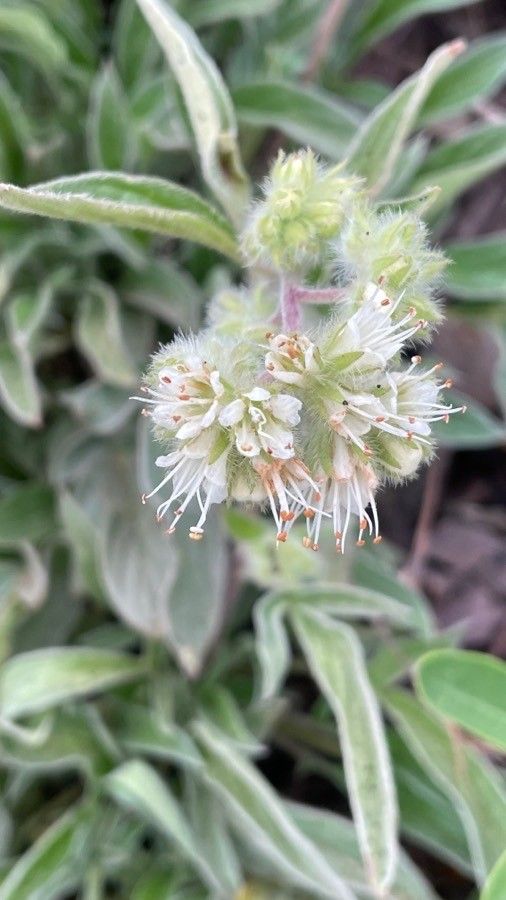
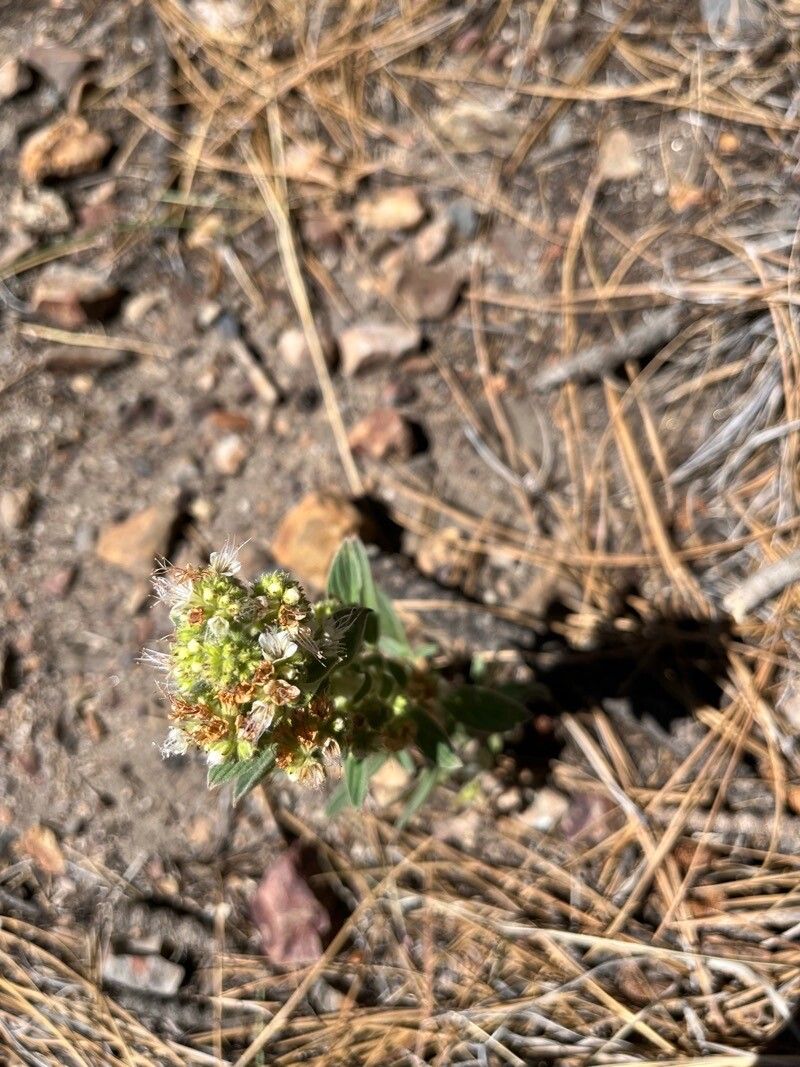
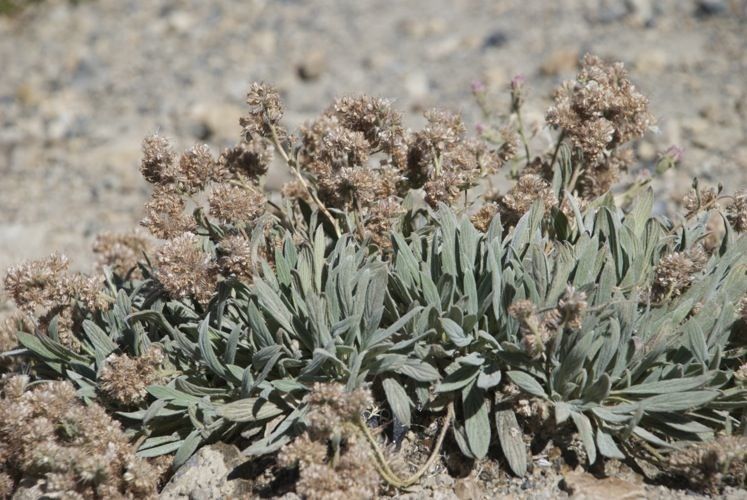
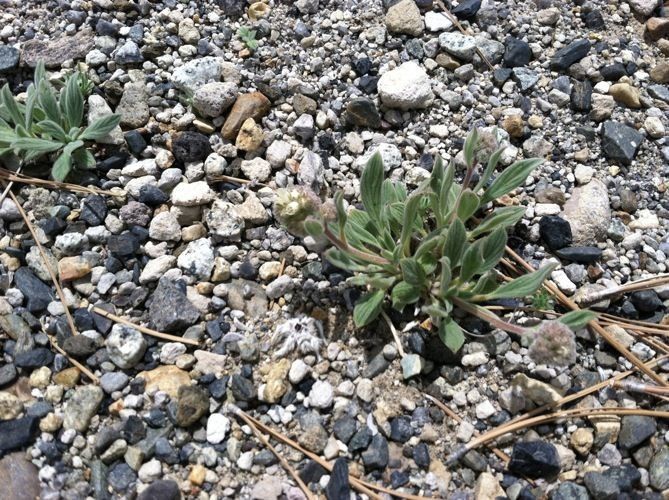
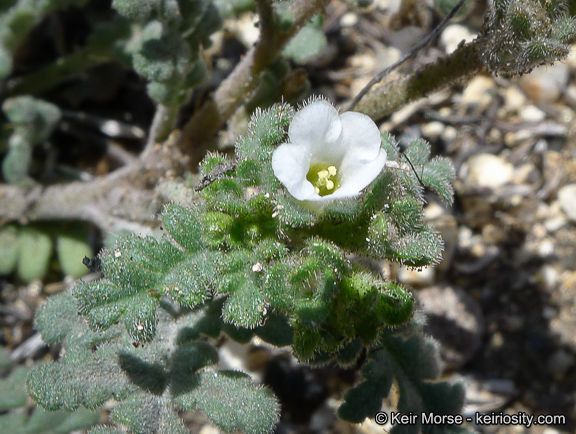
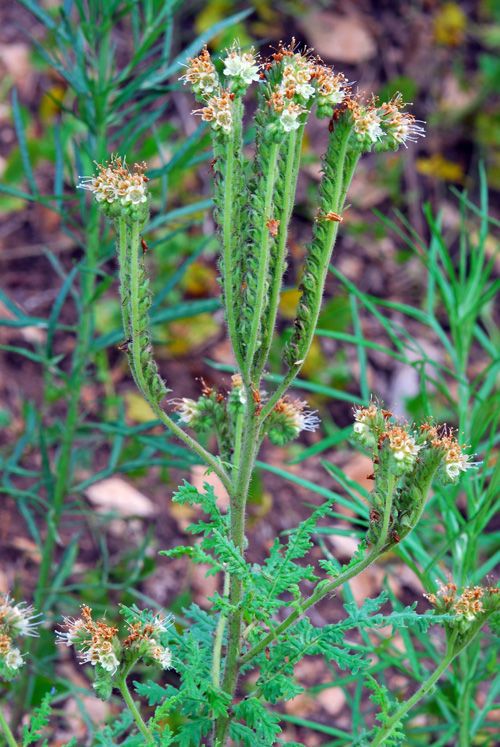
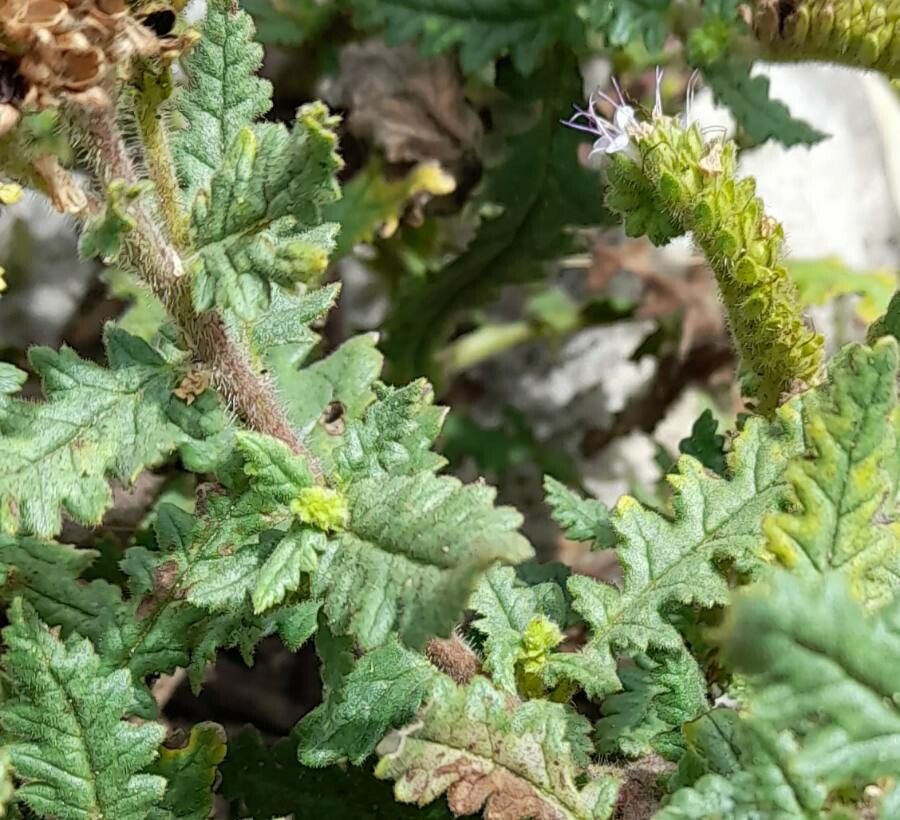
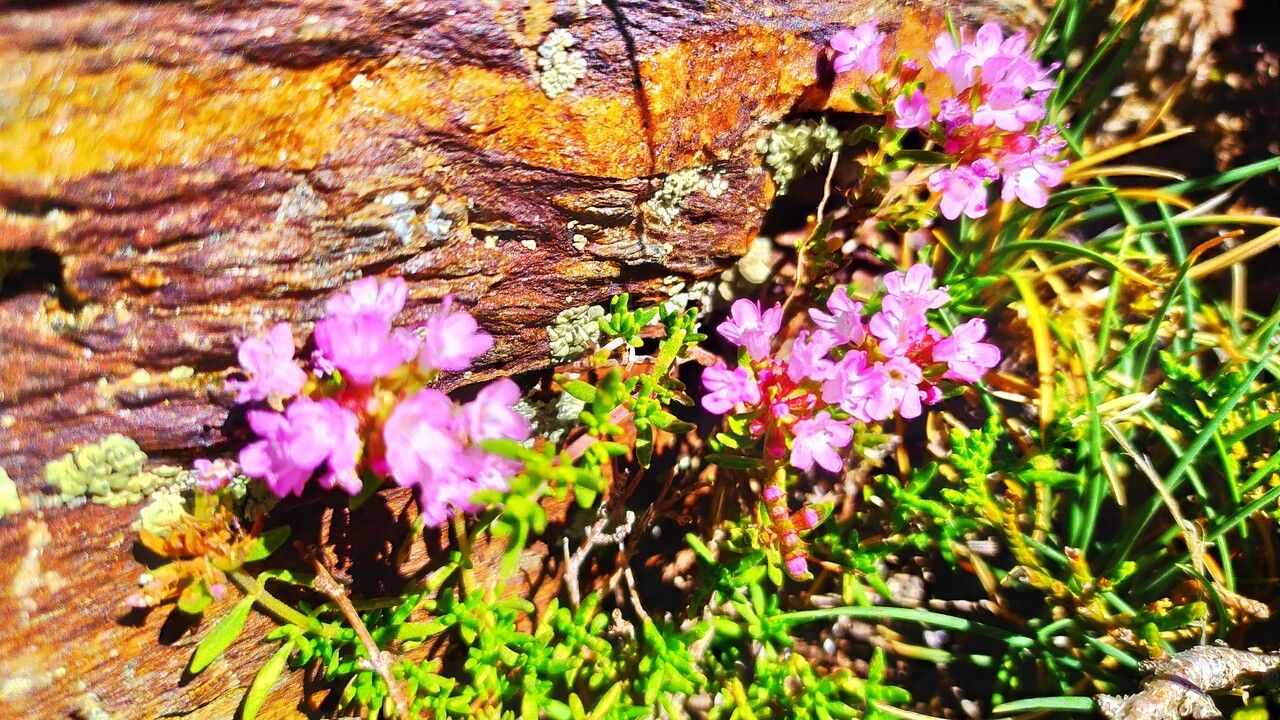
Phacelia hastata, commonly known as the silverleaf phacelia, is a flowering plant species in the borage family. Native to western North America, it thrives in various habitats, including grasslands, sagebrush steppe, and open woodlands. The plant typically reaches a height of 1 to 3 feet and features hairy stems and silver-green leaves. Its small, bell-shaped flowers come in shades of blue or purple.
Phacelia hastata is notable for attracting pollinators such as bees and butterflies, thanks to its nectar-rich flowers. Additionally, its deep root system makes it effective in erosion control by stabilizing soil on steep slopes or disturbed areas. Overall, Phacelia hastata is not only a beautiful plant that enhances the aesthetics of natural landscapes, but it also provides significant ecological benefits.
Silverleaf Scorpionweed is fairly disease-resistant and generally not likely to develop illnesses. Still, it can be affected by pests and diseases found nearby. Such infections are typically mild. Regarding care, the plant needs a moderate level of attention. It should be pruned regularly to preserve a neat look and encourage healthy growth. Applying fertilizer can also encourage blooming. Silverleaf Scorpionweed is appropriate for anyone with outdoor areas like a garden or patio and does not demand extensive gardening experience. It may need extra care when kept indoors.
How to keep Phacelia Hastata.
Light
Silverleaf Scorpionweed prefers moderate sunlight. Too much sun can scorch the leaves, while too little light can slow its growth. It favors environments similar to its native habitat, bathed in soft, filtered daylight. It continues to prefer those light conditions at every stage of growth.
Water
Silverleaf Scorpionweed originates from arid regions and is highly drought-tolerant, thriving with minimal moisture. It needs watering only once a week and grows best in well-draining soil. Ideally suited for outdoor planting in full sun, silverleaf Scorpionweed is perfect for xeriscaping due to its resilience and low water requirements.
Temperature
Silverleaf Scorpionweed originates from temperate areas and requires temperatures of about 32 to 77 °F (0 to 25 ℃). It prefers cooler conditions but may require careful attention during warmer seasons to avoid overheating.
Fertilizer
For Silverleaf Scorpionweed, the primary time to apply fertilizer is in early spring when the flowers are beginning to form. The appropriate fertilizer promotes better blooms and helps the plant produce attractive flowers. Fertilizing in early spring ensures strong flowering during the season and supplies energy for periods of dormant growth.
Pruning
Silverleaf Scorpionweed is a drought-tolerant plant known for its silvery leaves and vibrant purple flowers. To encourage growth and maintain its shape, prune the plant from early to late spring. Make sure to remove any dead stems during this process. By making clean cuts just above the leaf nodes, you can enhance blooming and reduce the risk of disease, which in turn promotes the overall health and vigor of the plant.
Botanical profile.
- Plant Type
- Herb
- Life Cycle
- Perennial
- Genus
- Phacelia
- Family
- Boraginaceae
- Hardiness Zone
- 3
- Mature Height
- 15 cm to 91 cm
- Mature Spread
- 30 cm
- Leaf Color
- Green, Blue, Bronze
- Leaf Type
- Semi-evergreen
- Flower Color
- Lavender
- Flower Size
- 0.51 cm
- Bloom Time
- Late spring, Early summer, Mid summer
- Planting Time
- Spring, Summer
- Harvest Time
- Mid summer, Late summer, Early fall
Other names.
Reader questions.
How should I water my Silverleaf Scorpionweed?
To properly water the Silverleaf Scorpionweed, it is recommended to use filtered water at room temperature. Tap water may contain harmful particles for this plant. It is important to use room temperature or slightly warm water as the plant is accustomed to warmer environments, and cold water can be a shock. Avoid watering from above as it can cause issues with the foliage. Instead, water the soil directly until it is completely soaked. This helps the roots absorb moisture and nutrients for proper growth.
What are the sunlight requirements for Silverleaf Scorpionweed?
Silverleaf Scorpionweed requires about 3-6 hours of sunlight daily, thriving best in environments that mimic its native habitat with moderate sun exposure. It's important to place it in spots that offer a balance of light and shade to avoid issues like leaf scorch from excessive sunlight or slowed growth from insufficient light. Observing how sunlight moves through your garden will help in choosing the optimal location for your plant, ensuring it receives the ideal amount of light for healthy growth.
What is the native climate for Silverleaf Scorpionweed?
Silverleaf Scorpionweed is native to temperate regions and prefers a temperature range of 32 to 77 °F (0 to 25 °C). It thrives in cooler environments, which aligns with its high tolerance for cold temperatures. Although it can endure cooler climates without additional frost protection, care should be taken during warmer seasons to prevent overheating by maintaining proper maintenance techniques.
What should I do if I give too much or too little water to my Silverleaf Scorpionweed?
Overwatering and underwatering can both harm your Silverleaf Scorpionweed, but overwatering is more common. When this plant receives too much water, its stems and leaves may wilt and turn yellow. Overwatering for a long time can also cause diseases like root rot, mold, and mildew, which can be fatal for the plant. Underwatering is less likely for the Silverleaf Scorpionweed because it can tolerate drought fairly well. However, it is still a possibility, and when it happens, the leaves may become brittle and brown. To take care of your Silverleaf Scorpionweed, it is important to notice the signs of overwatering early on. Certain diseases, like root rot, may not be reversible if you wait too long. If you see early signs of overwatering, reduce your watering immediately. Also, check the quality of the soil where the plant is growing. If the soil doesn't drain well, replace it with a loose and well-draining potting mix. On the other hand, if you notice signs of underwatering, simply water more regularly until the signs disappear.
How can artificial lighting be used for Silverleaf Scorpionweed indoors?
When natural sunlight is insufficient for Silverleaf Scorpionweed, especially in winter or less sunny spaces, artificial lights serve as a crucial alternative. Optimal growth is supported by ensuring your plant receives adequate lighting. LED lights, capable of providing specific light wavelengths, are a good choice. The amount of light required varies by plant needs; full sun plants require 30-50W/sq ft, partial sun plants 20-30W/sq ft, and shade plants 10-20W/sq ft. The artificial light source should be placed 12-36 inches above the plant for 8-12 hours a day to emulate natural sunlight conditions.
How should Silverleaf Scorpionweed be cared for during winter?
During the winter, Silverleaf Scorpionweed does not require additional frost protection thanks to its high cold tolerance. However, to better prepare it for the colder months, it's recommended to water the plant generously before the first freeze of autumn. This ensures the soil remains moist and enters the frozen state in a way that helps prevent drought and water scarcity for the plant during winter and early spring.
How much water should I give my Silverleaf Scorpionweed and how frequently?
If your Silverleaf Scorpionweed is in a pot, the best way to determine if it needs water is to check the soil. Stick your finger into the soil and if you find that the top two to three inches are dry, then it is time to water it. Similarly, if you have planted Silverleaf Scorpionweed outdoors in the ground, you can use the same method to test the soil. Once the top few inches of soil have dried out, it is a sign that you need to water the plant. Typically, during the spring and early fall, you will need to water this plant about once a week using this method. However, in extremely hot weather, you may need to water it two or more times a week. However, it is worth mentioning that mature, well-established Silverleaf Scorpionweed actually has a great ability to withstand drought.
What are the signs of insufficient light in Silverleaf Scorpionweed?
When Silverleaf Scorpionweed is not receiving enough light, it may exhibit several symptoms, including smaller new leaves, leggy or sparse growth, early leaf drop, slower or halted growth, and paler new leaves. These signs indicate that the plant is struggling to adapt to low light conditions, conserving energy by reducing leaf size, extending the space between leaves or stems, and possibly ceasing growth entirely. Adjusting light exposure is crucial for reversing these effects and promoting healthy plant development.
What should be done if Silverleaf Scorpionweed experiences temperatures below its tolerance?
If Silverleaf Scorpionweed experiences temperatures below its cold tolerance threshold of -35°C, it is extremely resilient and may not show noticeable changes during winter. However, there might be a decrease in sprouting or no sprouting at all during spring. To address this, any parts that have failed to sprout by spring should be removed to encourage new growth and maintain plant health.
How much water does my Silverleaf Scorpionweed require?
When watering your Silverleaf Scorpionweed, don't be afraid to give it a generous amount of water. Wait until the top two to three inches of soil are dry, and then water the plant thoroughly. Make sure the water soaks the entire soil. You should add enough water that it flows out of the drainage holes at the bottom of the pot. If you don't see water draining, it means you may have underwatered the plant. However, be careful not to let water accumulate inside the soil, as this can harm the plant. On the other hand, if water doesn't drain well from the pot, it could indicate that the soil is not draining properly, which is unhealthy for the plant. If the plant is outside, it will only need about 1 inch of rain per week.
What are the symptoms of too much sunlight on Silverleaf Scorpionweed?
Excessive sunlight can cause a range of issues for Silverleaf Scorpionweed, including chlorosis, or yellowing leaves, sunscald leading to damaged plant tissue, leaf curling as a defense mechanism against water loss, wilting from excessive water loss, and leaf scorching indicated by brown, dry patches on the leaves. These symptoms suggest that the plant is experiencing stress from overexposure to sunlight, which can negatively impact its health and growth.
How to manage high temperatures for Silverleaf Scorpionweed?
Silverleaf Scorpionweed struggles with high temperatures, particularly when they exceed 25°C, leading to halted growth and increased susceptibility to rot. To manage high temperatures, trim away any sunburned or dried-up parts of the plant. It's also beneficial to move the plant to a location that is shaded during the midday and afternoon sun, or to use a shade cloth. Ensuring the soil is kept moist by watering the plant in the morning and evening will also help mitigate the effects of high temperatures.