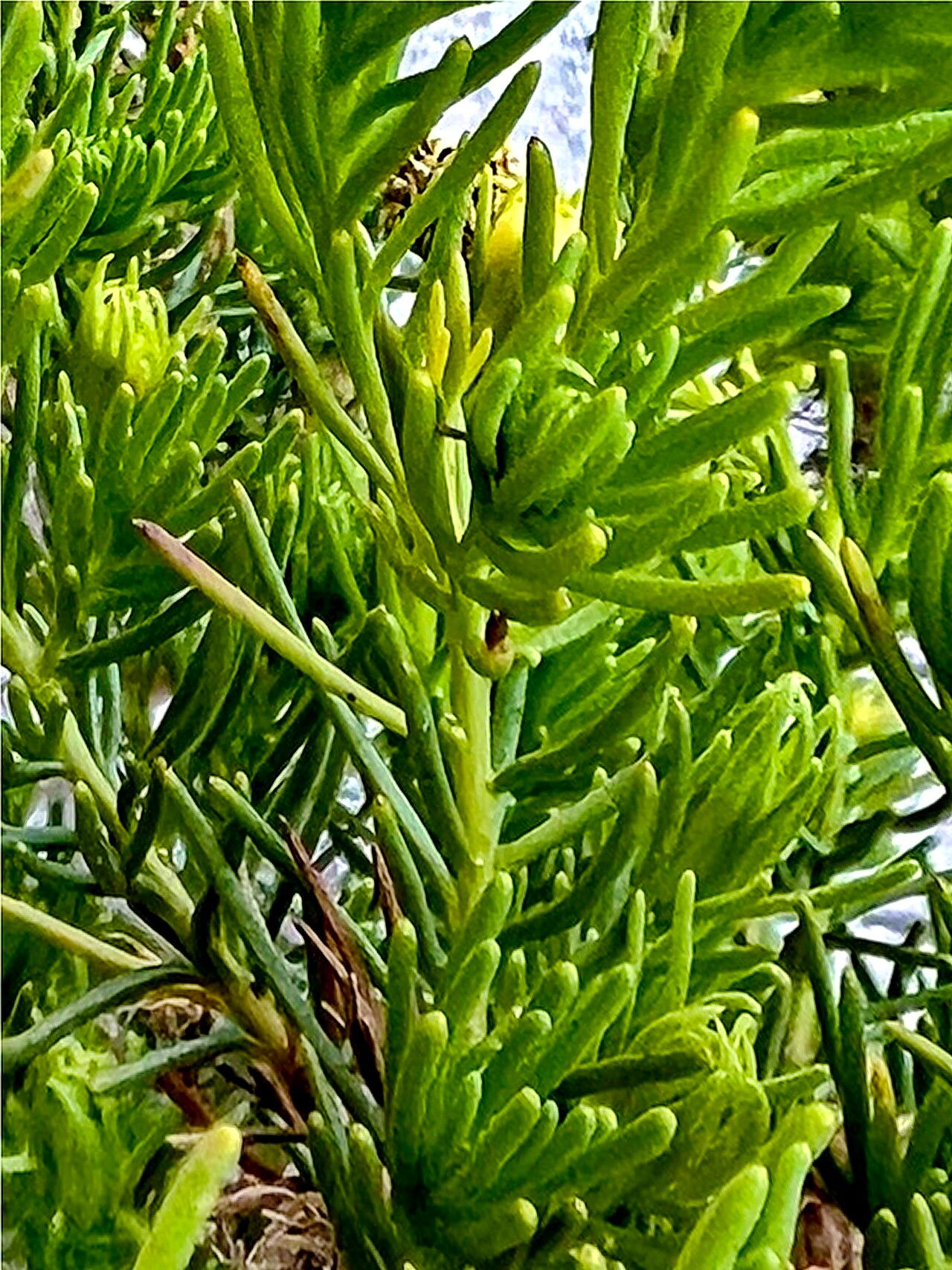
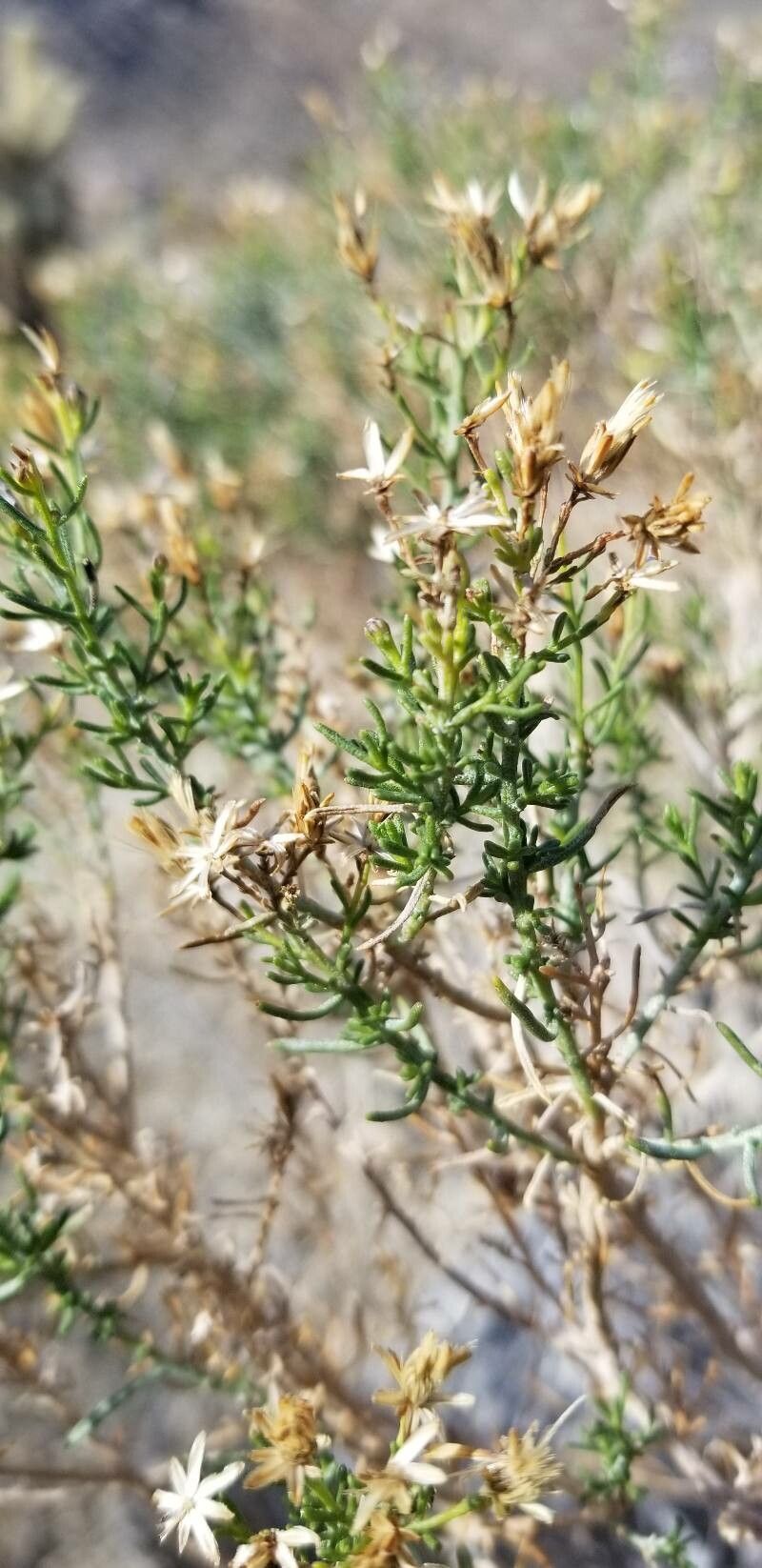
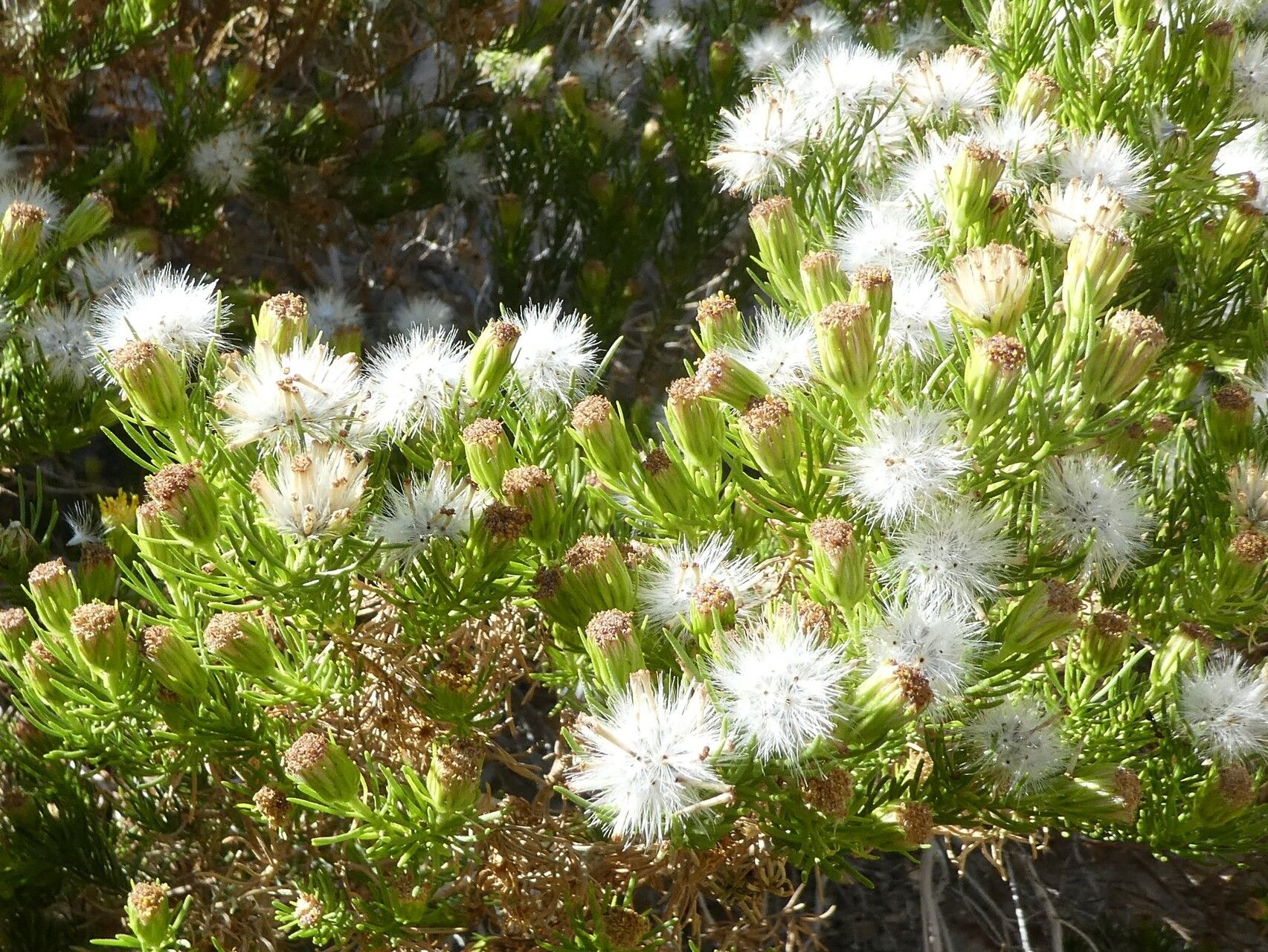
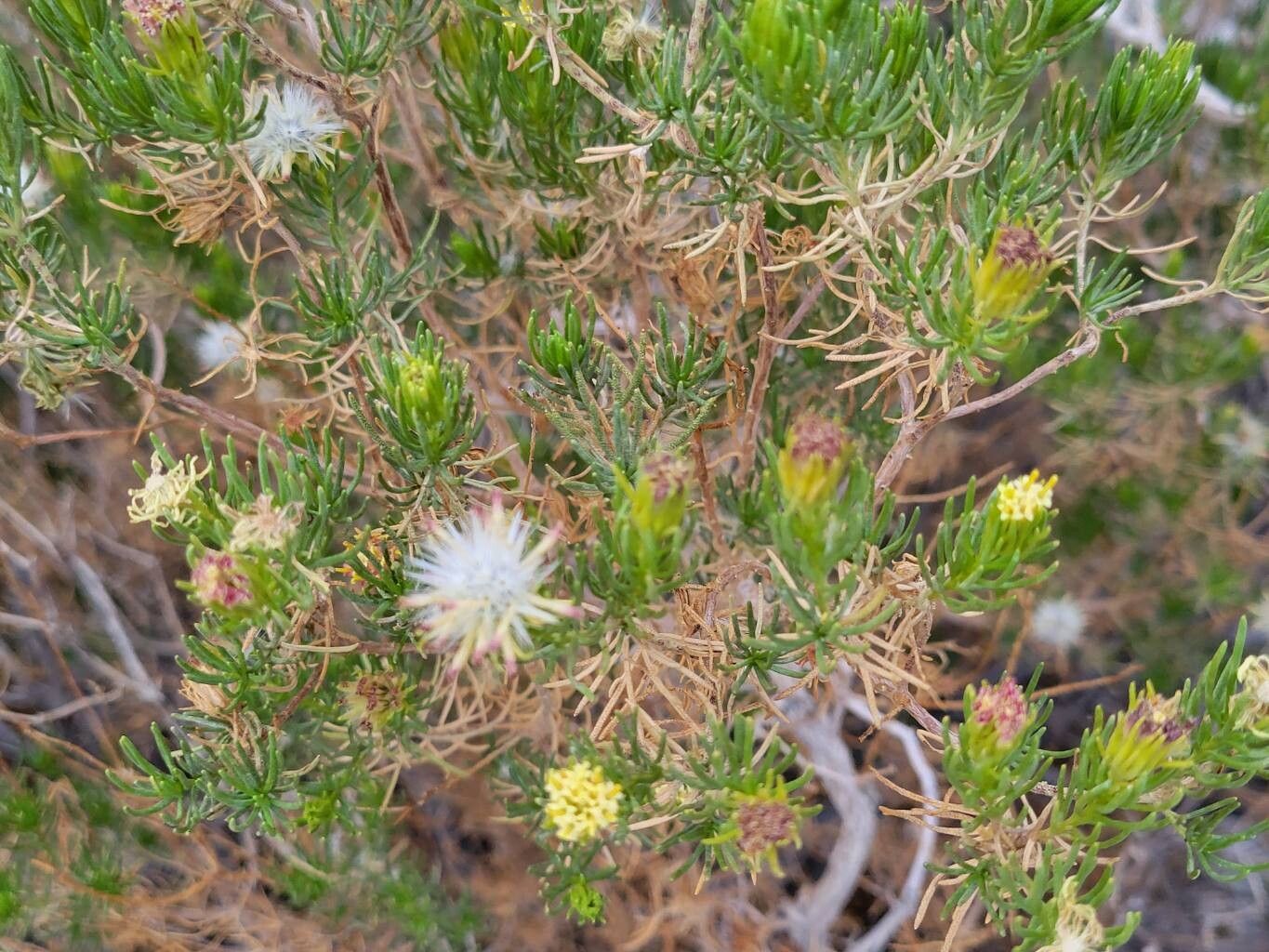
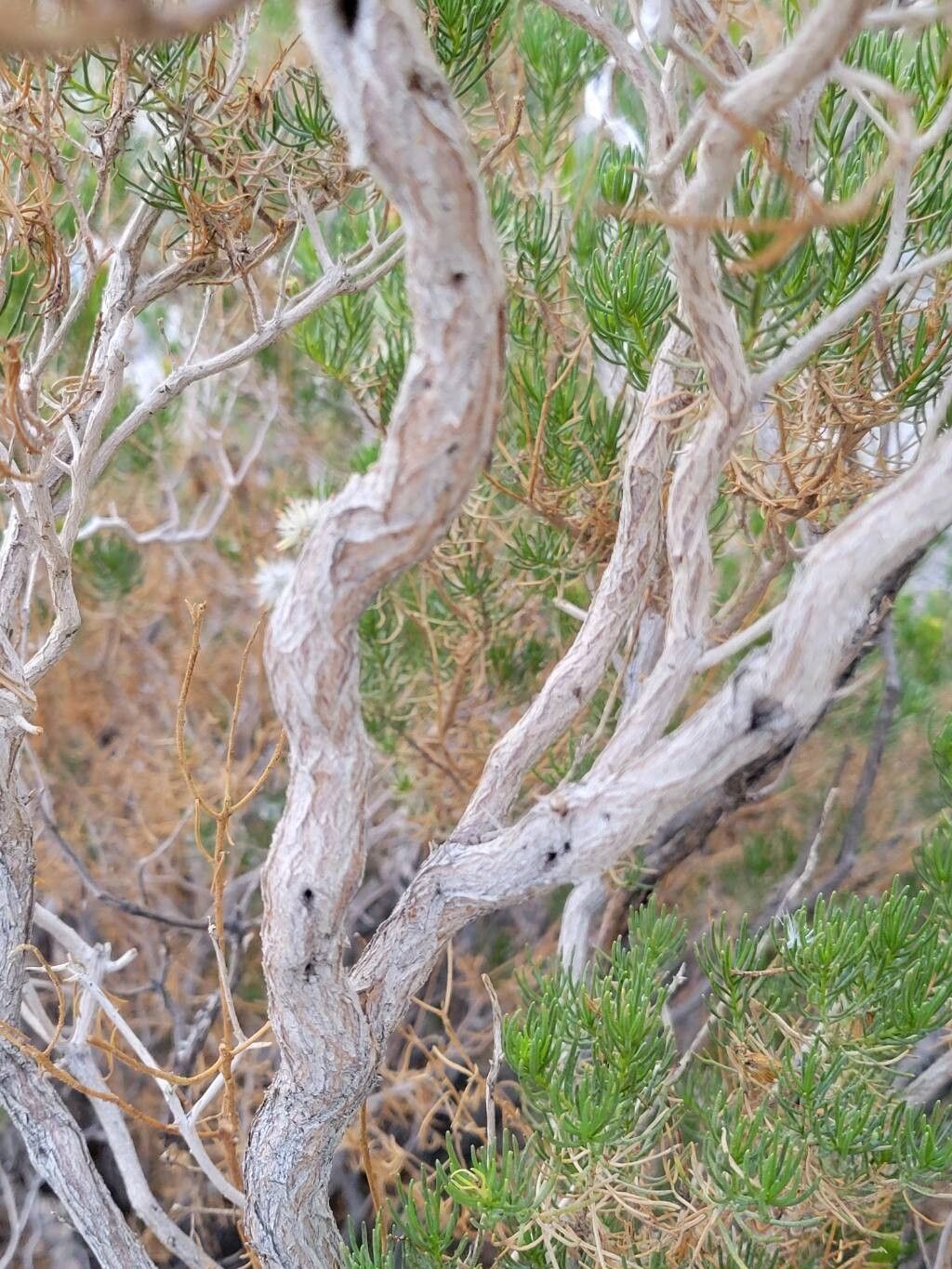
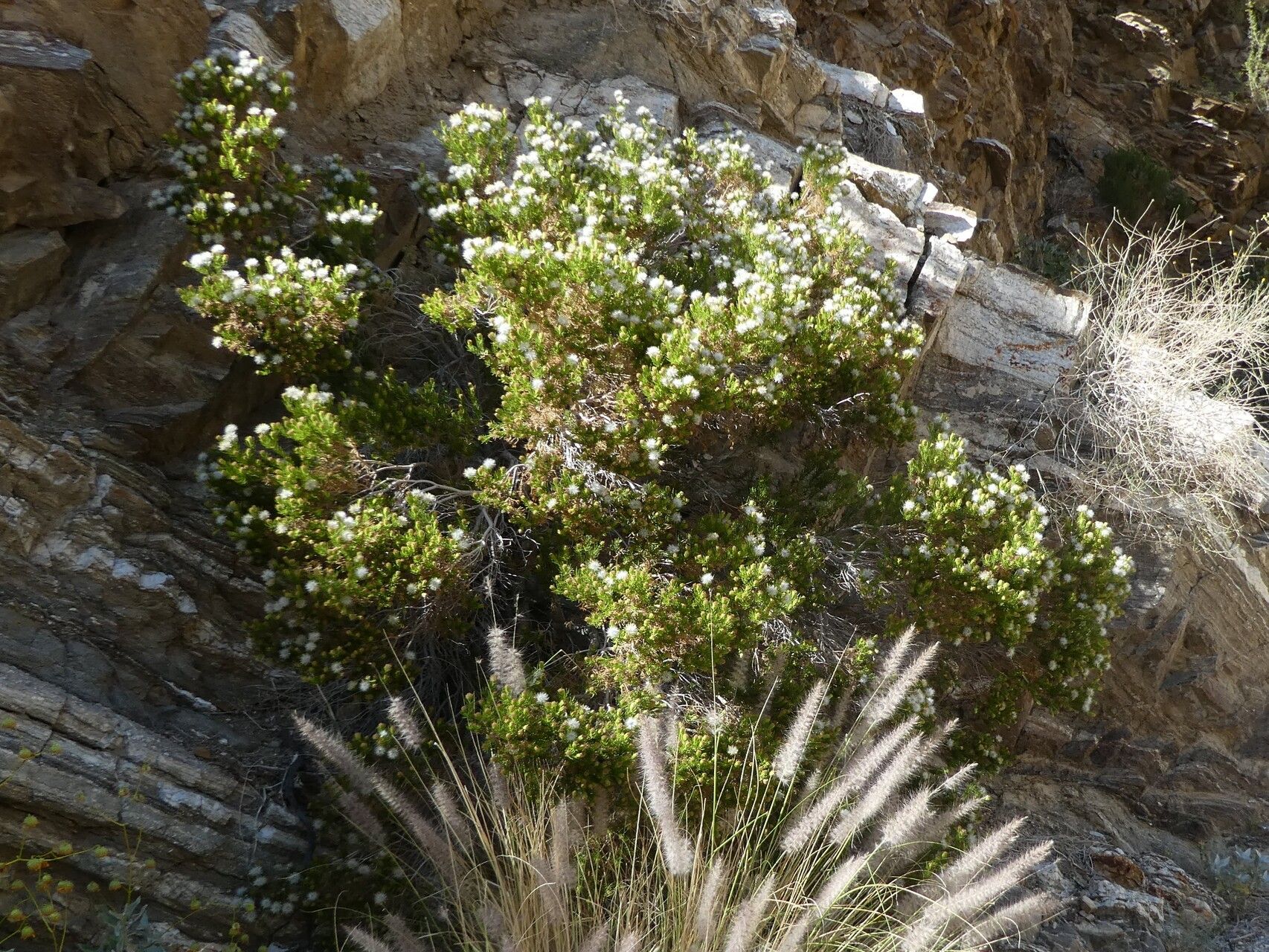
Peucephyllum is a monotypic genus of flowering plants containing the single species Peucephyllum schottii. Its common names include pygmy cedar, Schott's pygmy cedar, desert fir, and desert pine. It is not a cedar, fir, or pine, but a member of the aster family, Asteraceae. It is a leafy evergreen shrub with glandular, resinous foliage. It flowers in yellow flower heads which have only disc florets. The fruits are woody, bristly seeds with a pappus. This plant is native to the deserts of Arizona, California, Nevada, and Utah in the United States and Baja California and Sonora in northern Mexico.The species form is similar to that of the common creosote bush (Larrea tridentata): small, greenish, and hemispherical with similar yellow flowers in the spring.
Schott's pygmycedar zeigt eine gute Widerstandskraft gegen Krankheiten und ist im Allgemeinen kaum anfällig dafür. Was die Pflege angeht, ist diese Pflanze relativ anspruchslos. Im Freien braucht sie nur wenig Bewässerung, und größere Exemplare müssen normalerweise nicht geschnitten werden. Kleinere Pflanzen sollten jedoch nach der Blüte zurückgeschnitten werden. Schott's pygmycedar eignet sich für Personen mit einem Außenbereich, etwa einem Garten oder einer Terrasse, und erfordert keine umfangreiche Pflegeerfahrung.
How to keep Peucephyllum Schottii.
Light
Schott's pygmycedar stammt aus offenen Lebensräumen wie sonnigen Wiesen und Waldrändern, die reichlich Licht liefern. Es gedeiht in voller Sonne, verträgt aber auch teilweise Sonne und passt sich verschiedenen Lichtverhältnissen gut an.
Water
Adapted to arid conditions, Schott's pygmycedar is exceptionally drought-tolerant and only needs watering every 2-3 weeks. This low-maintenance plant thrives outdoors in desert climates by efficiently using sporadic rain and conserving water internally.
Temperature
Schott's pygmycedar comes from tropical areas where the climate is usually warm and humid. Therefore it is adapted to high temperatures and moisture. It is sensitive to abrupt temperature changes and prefers a constant temperature, so avoiding temperature swings indoors is important. It typically does not tolerate cold and needs warmer conditions to grow. If the ambient temperature drops too far, the plant may stop growing or even die.
Fertilizer
Fertilizing is essential for caring for Schott's pygmycedar. Regular feeding during the growing season maintains the energy required for its showy leaves and supports overall growth. Failing to fertilize can lead to unhealthy foliage, reduced ornamental appeal, and stunted or weak growth that is more susceptible to breaking.
Pruning
Schott's pygmycedar is a desert shrub that thrives with the help of light pruning, best done during its dormant period from early to late winter. Trim away any dead branches to improve the plant's health and shape, but be careful not to prune too heavily, as this can cause stress. This approach encourages strong growth and better air circulation.
Botanical profile.
- Plant Type
- Shrub
- Life Cycle
- Perennial
- Genus
- Peucephyllum
- Family
- Asteraceae
- Hardiness Zone
- 8-11
- Mature Height
- 2.74 m
- Mature Spread
- 0.49 m to 2.13 m
- Leaf Color
- Green
- Leaf Type
- Evergreen
- Flower Color
- Yellow
- Flower Size
- 0.76 cm to 1.02 cm
- Bloom Time
- Spring
- Planting Time
- Spring, Summer
- Harvest Time
- Late spring, Early summer, Mid summer
- Native Area
- Mexico
Other names.
Reader questions.
What are the sunlight requirements for Schott's pygmycedar?
Schott's pygmycedar thrives in environments with abundant light, much like its native sunny meadows and forest edges. It requires full sun, defined as more than 6 hours of sunlight daily, but can also grow well in partial sun, which means about 3-6 hours of sunlight. It's important to observe how sunlight moves through your garden to ensure spots chosen for your plants provide a balance of light and shade for their optimum growth.
How can artificial lighting be used for Schott's pygmycedar indoors?
When natural sunlight is insufficient, artificial lighting becomes essential for the growth of indoor Schott's pygmycedar. Adequate artificial lighting, especially during winter or in less sunny spaces, promotes healthier growth. LED lights are recommended for their efficiency and ability to offer specific wavelengths required by plants. The intensity needed varies: full sun plants require 30-50W/sq ft, partial sun plants need 20-30W/sq ft, and full shade plants need 10-20W/sq ft. The light source should be positioned 12-36 inches above the plant, and mimic the natural daylight hours, typically 8-12 hours per day.
What are the common symptoms of improper lighting for Schott's pygmycedar?
Schott's pygmycedar can show several symptoms if the lighting conditions are not adequate. Some of these include smaller new leaves, leggy or sparse growth, faster leaf drop, slower or halted growth, lighter-colored or irregularly patterned new leaves due to chlorophyll deficiency, chlorosis (yellowing leaves), sunscald (damage from intense sunlight), leaf curling as a defense against extreme sunlight, wilting from excessive water loss, and leaf scorching indicated by brown, dry edges on leaves. These symptoms suggest either too little or too much sunlight.
What are the management solutions for light-related issues in Schott's pygmycedar?
To address light-related issues in Schott's pygmycedar, consider the following solutions: For indoor plants needing more sunlight, gradually move them to a location with at least 6 hours of direct sunlight, such as near a south-facing window, and use curtains to manage light intensity. Artificial lighting, such as desk lamps or professional grow lights, can supplement natural light for at least 8 hours daily. Outdoors, adapt plants to sunnier spots gradually to prevent sunburn. Minimizing obstructions, like pruning trees that block sunlight, or transplanting smaller plants during their dormant period to sunnier locations with good drainage, can improve sunlight access. It's important to note that while affected parts may not recover, new growth should be healthy with improved lighting conditions.