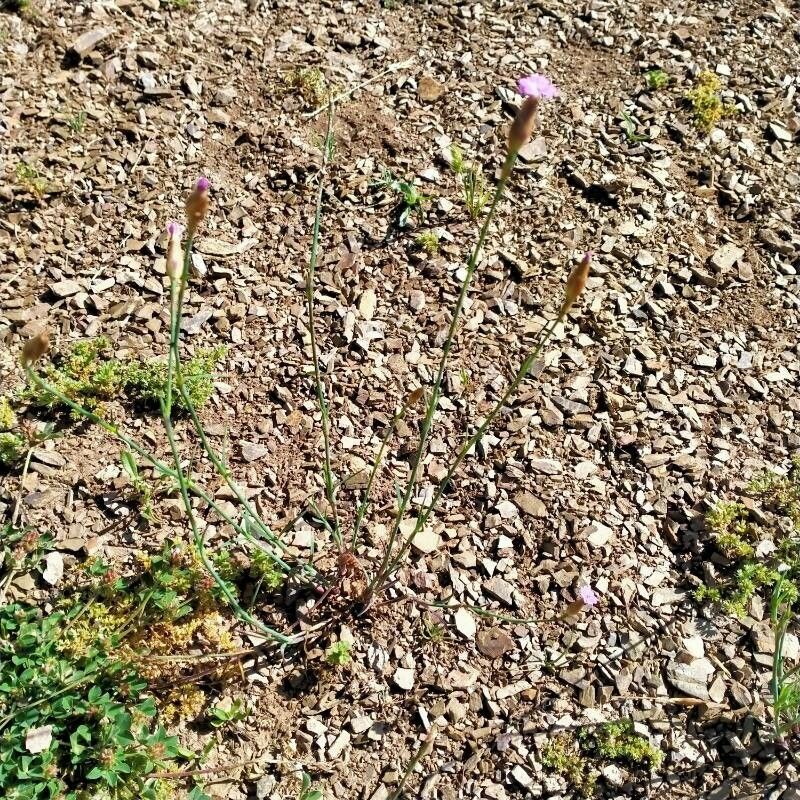
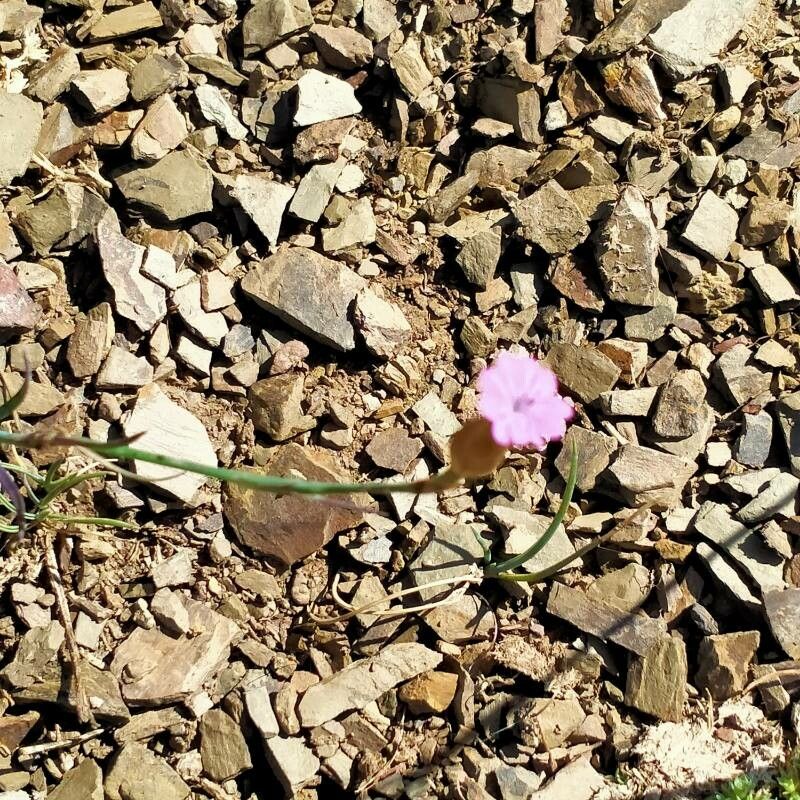
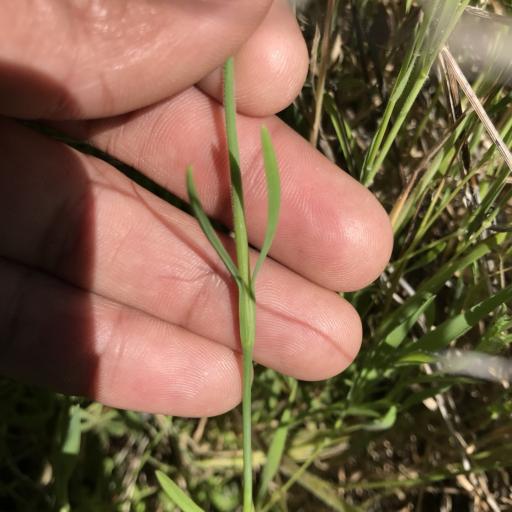
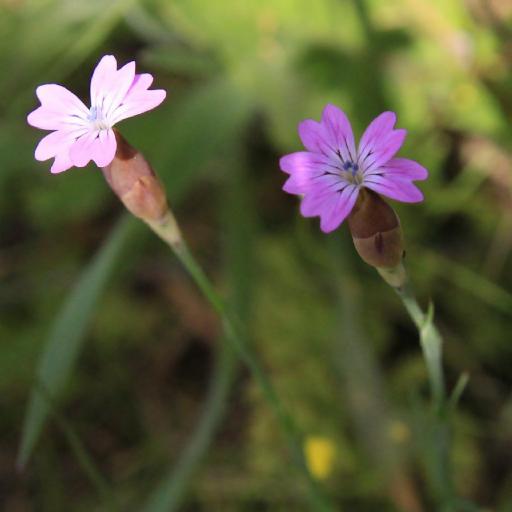
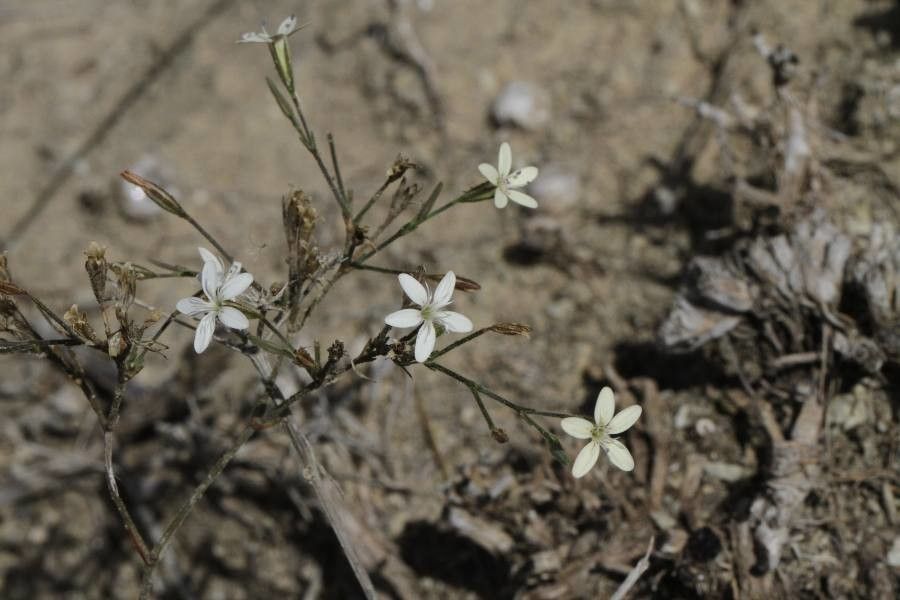
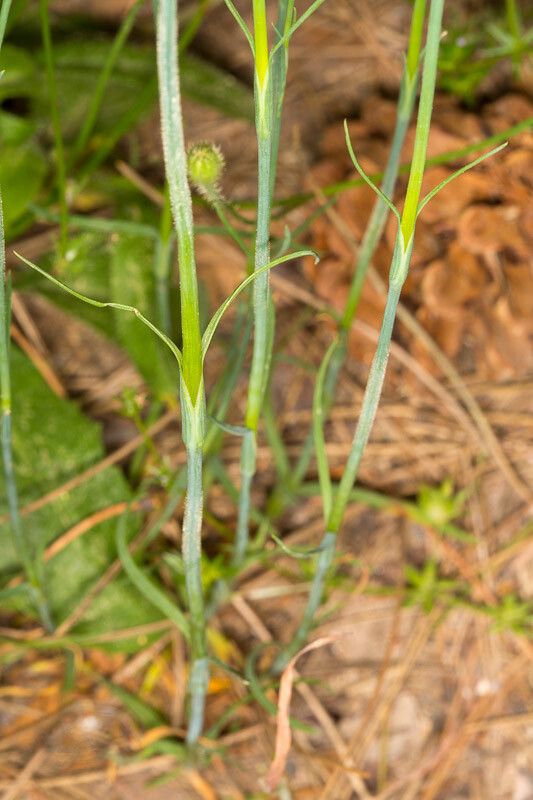
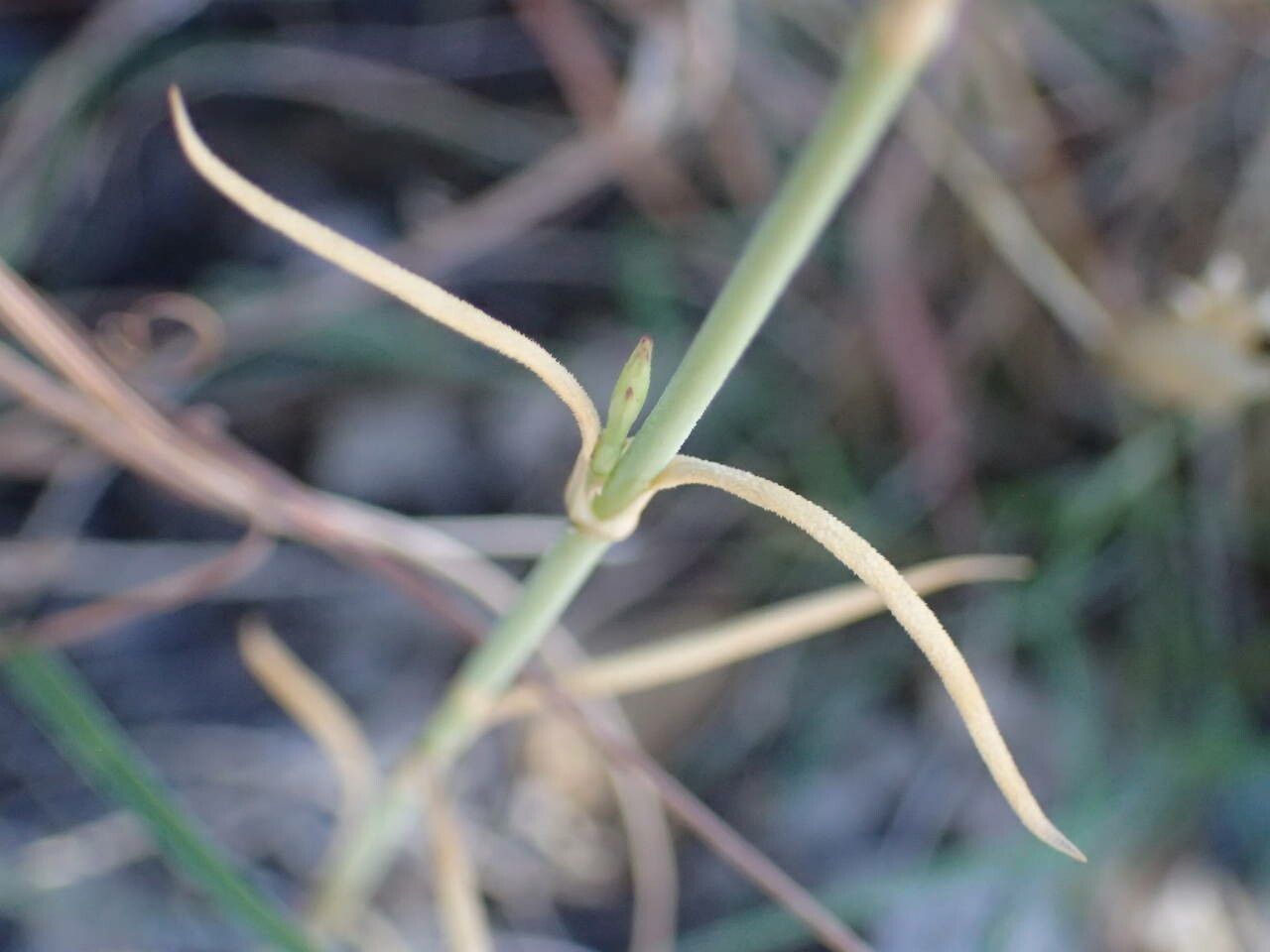
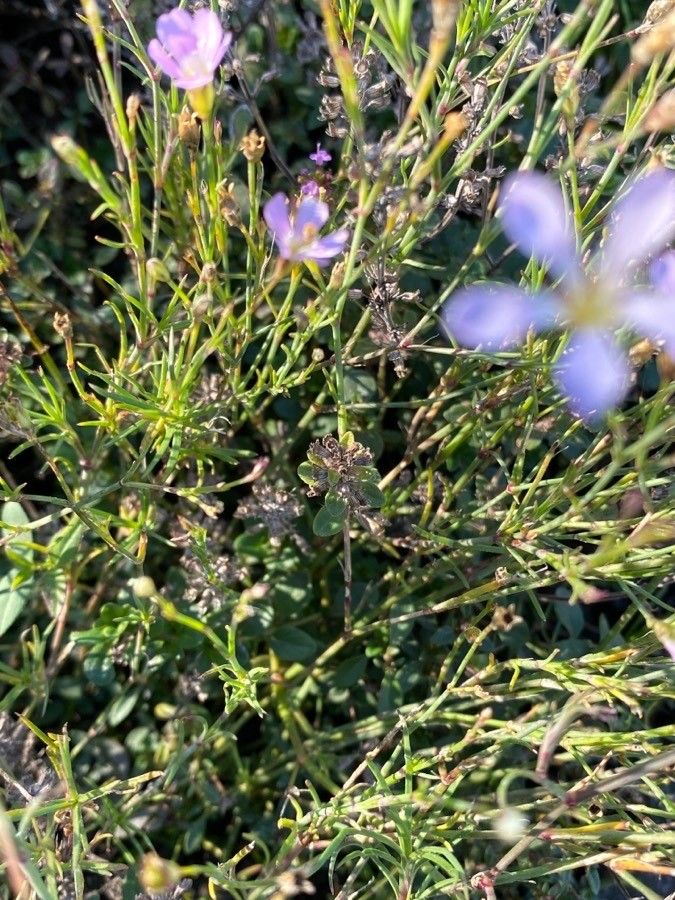
Petrorhagia dubia is a species of flowering plant in the family Caryophyllaceae known by the common name hairy pink. It is native to southern Europe and the Mediterranean Basin, but it is known on other continents, including Australia and North and South America, as an introduced species and sometimes a weed. It is an annual herb growing 25 to 60 centimeters tall, but known to reach 90 centimeters in height. The leaves are up to 6 centimeters long, sheathing the stem at the bases. The inflorescence bears a head-like cluster of flowers, their bases enclosed in a large, expanded mass of wide, claw-tipped bracts. The flower corollas are each further encased in a tubular calyx of sepals. The petals are bright pink to magenta or lavender in color with darker veins. Each is heart-shaped or divided into two lobes at the tip. The fruit is a capsule containing many tiny seeds.
Hairy pink is fairly disease-resistant and typically does not tend to get sick. However, it can be affected by pests and diseases present in its environment. These problems are generally not serious. For care, the plant needs moderate maintenance. Regular pruning is necessary to keep it looking tidy and to support healthy growth. Fertilizing can also help encourage flowering. Hairy pink is well suited for anyone with outdoor space, such as a garden or patio, and does not require extensive care experience. It may need more attention when cultivated indoors.
How to keep Petrorhagia Dubia.
Light
Hairy pink does best with steady, plentiful light, making it a great option for sunny spots. It can tolerate some shade, but full light encourages healthy growth. Too much shade can restrict development, while overexposure may result in leaf scorching.
Water
The hairy pink plant thrives in a well-balanced water environment and typically requires weekly watering in its native habitat. Being a deciduous plant, it adapts well to container gardening, where you can carefully manage watering according to seasonal changes.
Temperature
Hairy pink originates from temperate regions and thrives at temperatures of 68 to 95 °F (20 to 35 ℃). For optimal growth, keep temperatures steady throughout the year; increases or decreases may require seasonal adjustments.
Fertilizer
When most of Hairy pink's blooms have fully opened, resume fertilizing. At the bloom peak, apply fertilizer every three to four weeks, as weather allows. Once Hairy pink begins producing fewer new blooms, stop fertilizing; there's no point in feeding the plant when it can no longer produce more blooms.
Pruning
To ensure your hairy pink plant thrives, use proper pruning techniques like deadheading and trimming back leggy stems. These practices encourage healthy growth and more abundant blooms. The best time to prune is from early to late spring, as this helps improve air circulation and minimize the risk of fungal infections. Remember to always use clean tools and make cuts just above the leaf nodes for best results.
Botanical profile.
- Plant Type
- Herb
- Life Cycle
- Annual
- Genus
- Petrorhagia
- Family
- Caryophyllaceae
- Hardiness Zone
- 8-10
- Mature Height
- 25 cm to 61 cm
- Mature Spread
- 15 cm to 30 cm
- Leaf Color
- Green
- Leaf Type
- Semi-evergreen
- Flower Color
- Pink
- Flower Size
- 0.51 cm to 1.02 cm
- Bloom Time
- Late spring, Early summer, Mid summer
- Planting Time
- Spring, Summer, Autumn
- Harvest Time
- Mid summer, Late summer, Early fall
- Native Area
- Libya, Turkey, Tunisia, Syria, Portugal, Italy, Spain, France, Bulgaria, Albania, Azerbaijan, Lebanon, Greece, Croatia, Morocco, Algeria, Serbia
Other names.