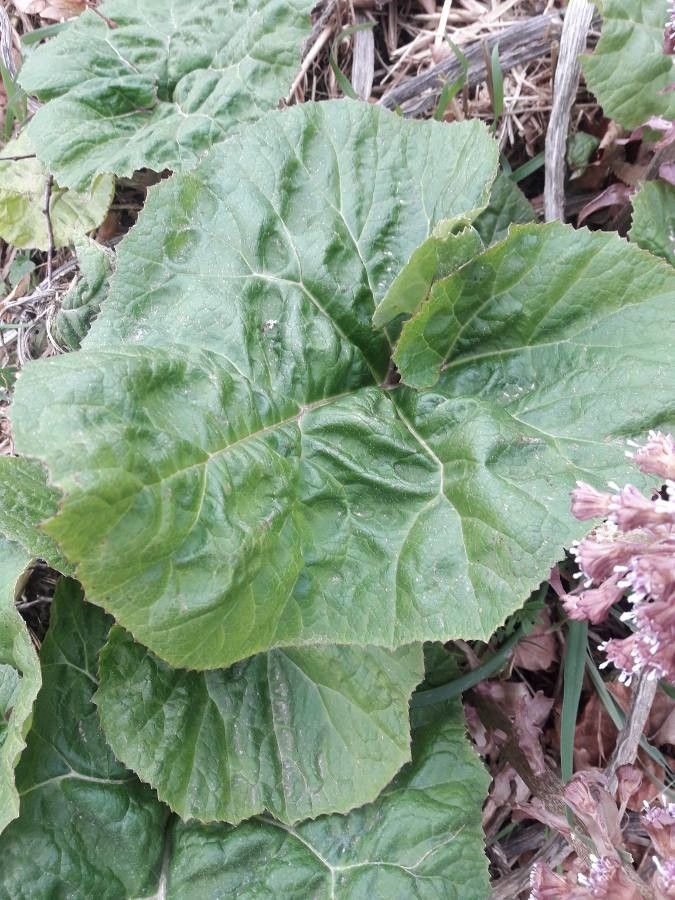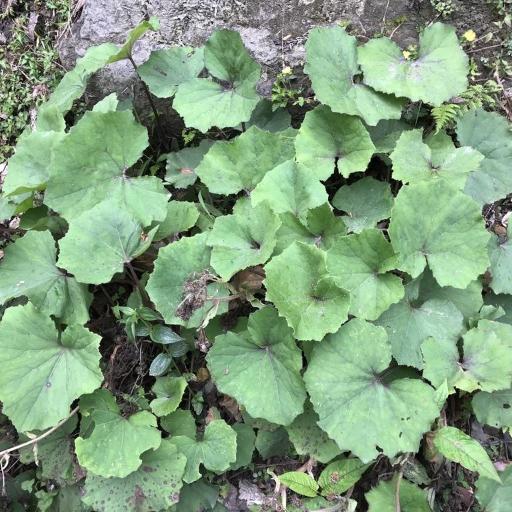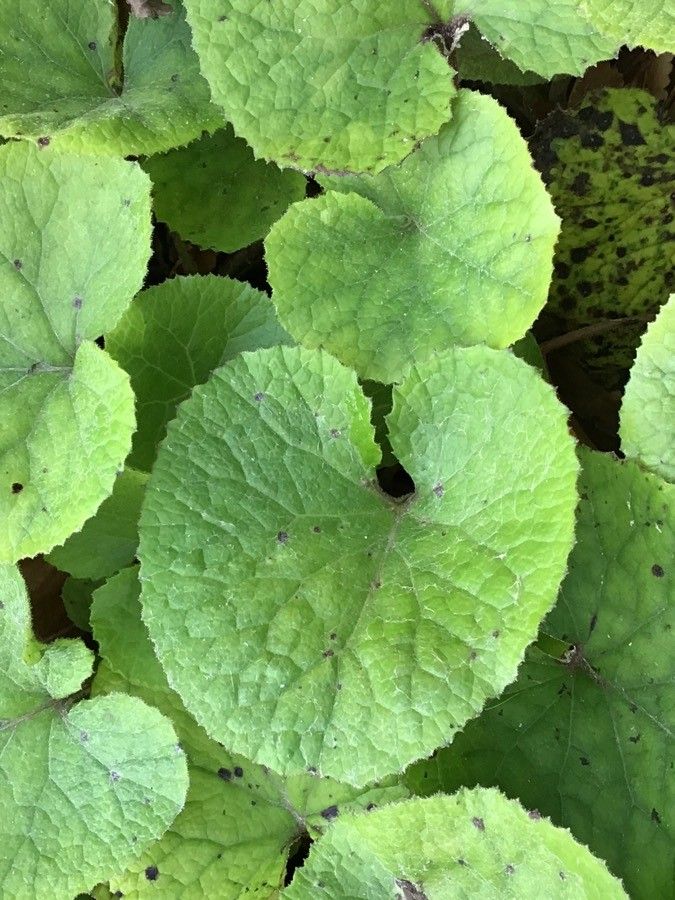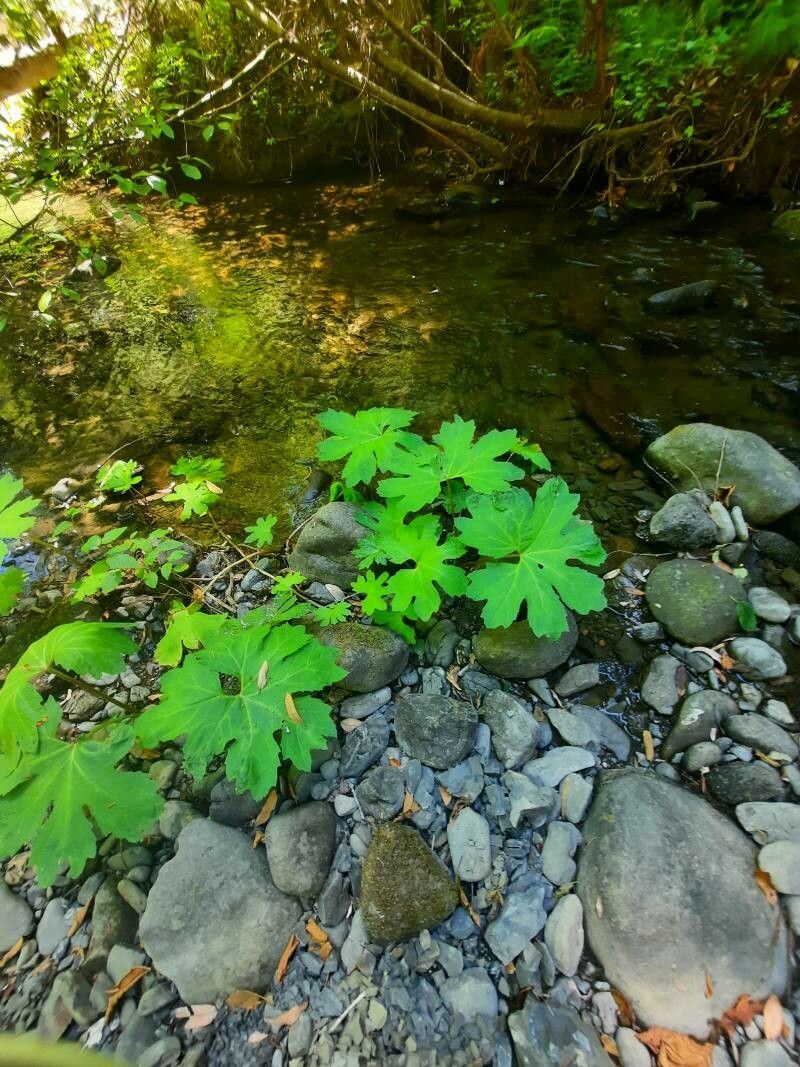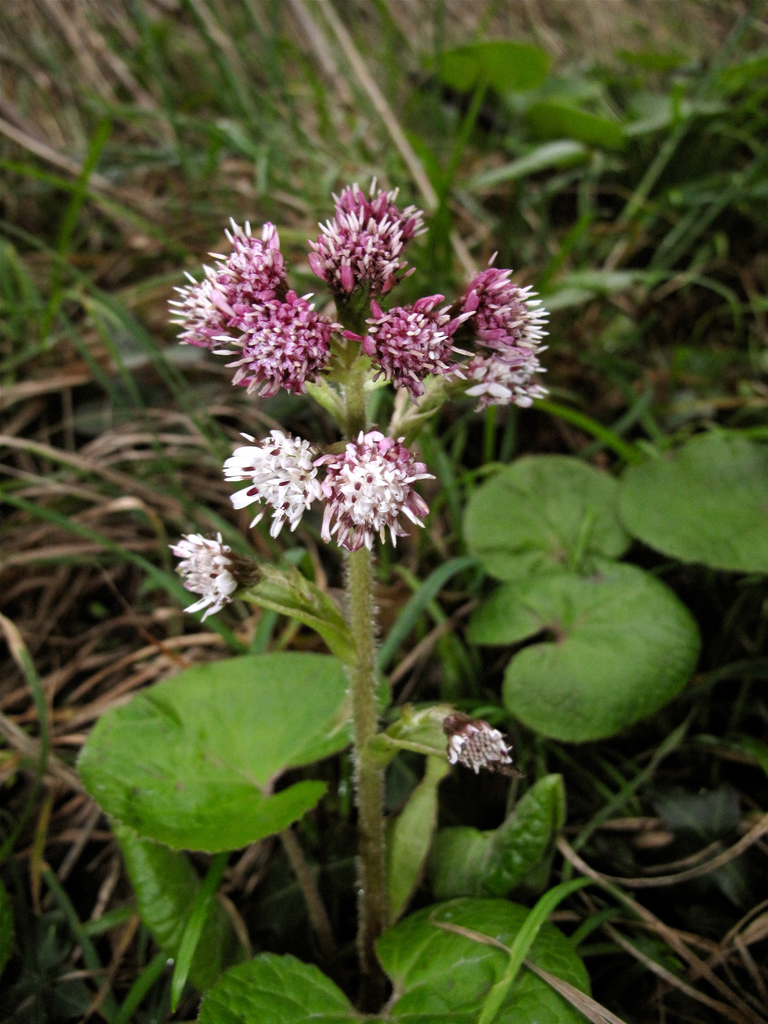
Petasites pyrenaicus, commonly known as the Pyrenean butterbur, is a perennial herbaceous plant in the Asteraceae family. Native to Europe, it thrives in damp environments like riverbanks, wet meadows, and marshes.
The plant boasts large, heart-shaped leaves that can grow up to 50 cm in diameter and have slightly serrated edges. Its small, pinkish-white flowers are arranged in clusters on tall stems that can reach heights of up to 1 meter.
For centuries, Petasites pyrenaicus has been valued for its medicinal properties, particularly its anti-inflammatory effects. Traditionally, it has been used to treat respiratory conditions such as asthma and bronchitis, as well as headaches.
However, it's important to note that Petasites pyrenaicus contains toxic compounds known as pyrrolizidine alkaloids, which can cause liver damage if consumed in large quantities or over prolonged periods.
Overall, Petasites pyrenaicus is an intriguing herbaceous perennial with striking foliage, making it a captivating addition to gardens and landscape designs. Its medicinal properties can be beneficial when used correctly under professional guidance.
Botanical profile.
- Plant Type
- Herb
- Life Cycle
- Perennial
- Genus
- Petasites
- Family
- Asteraceae
- Hardiness Zone
- 5-10
- Mature Height
- 10 cm
- Mature Spread
- 25 cm
- Leaf Color
- Green
- Leaf Type
- Deciduous
- Flower Color
- White
- Flower Size
- 2.54 cm
- Bloom Time
- Spring
- Planting Time
- Spring, Autumn
- Harvest Time
- Late spring, Early summer, Mid summer
- Native Area
- Libya, Tunisia, Italy, Algeria, France