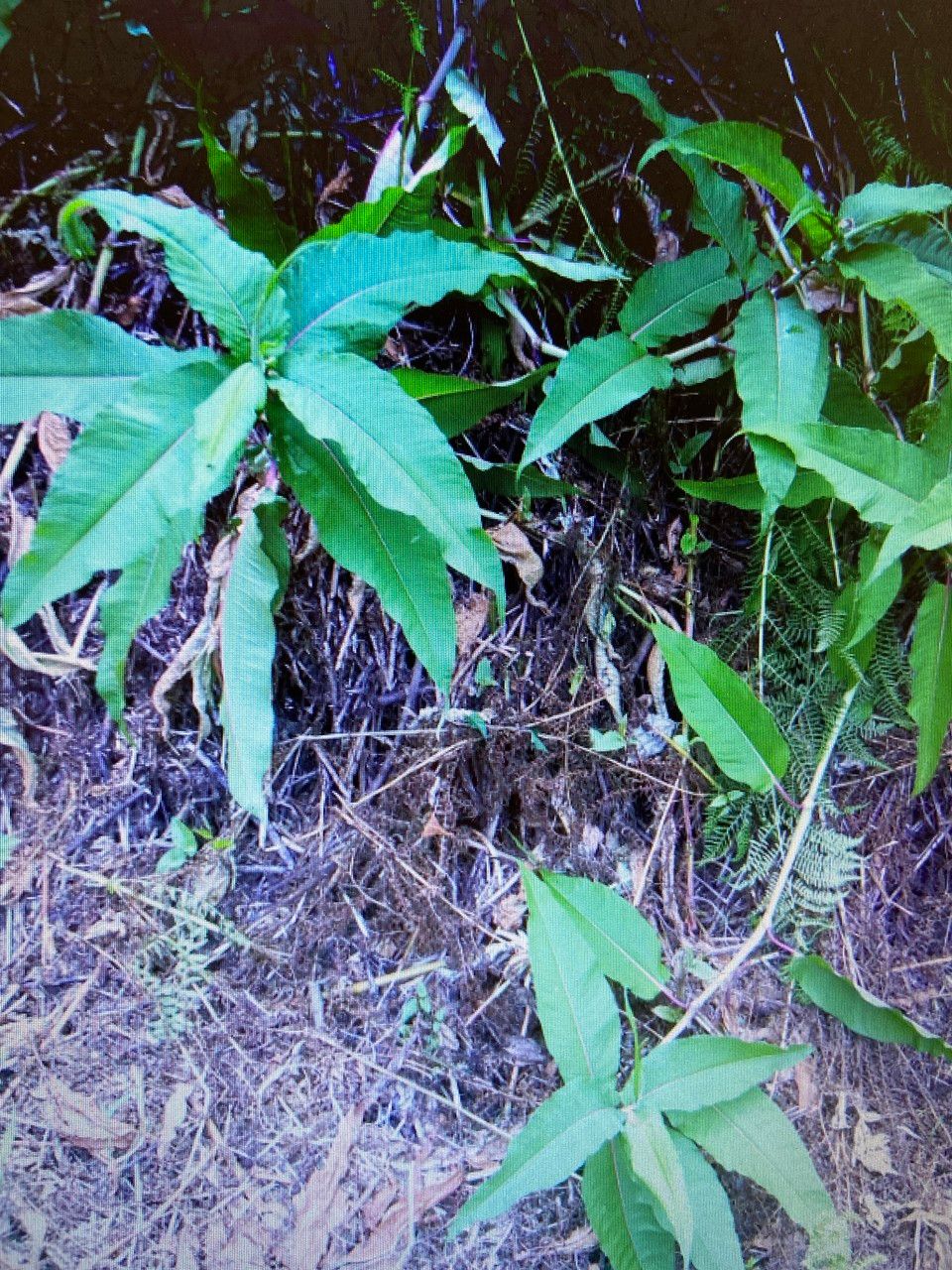
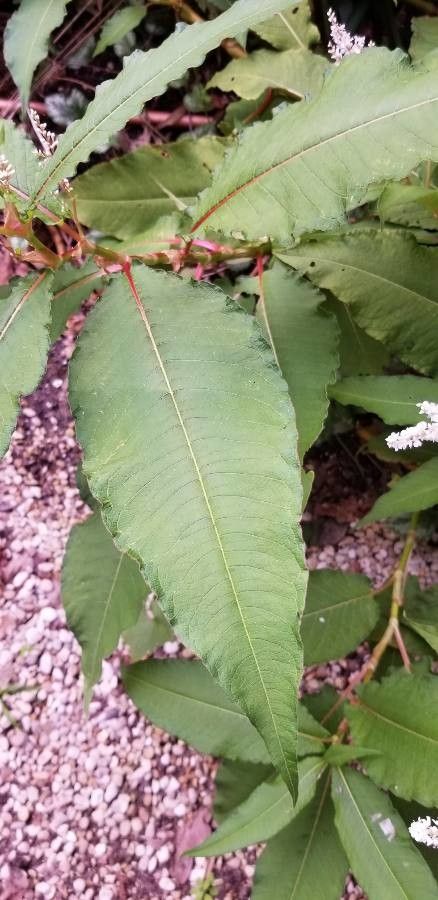
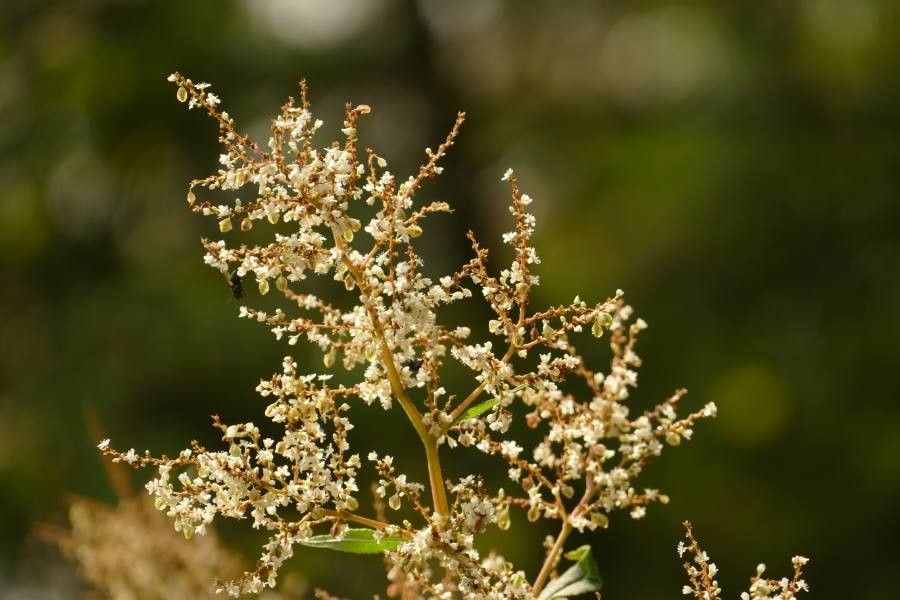
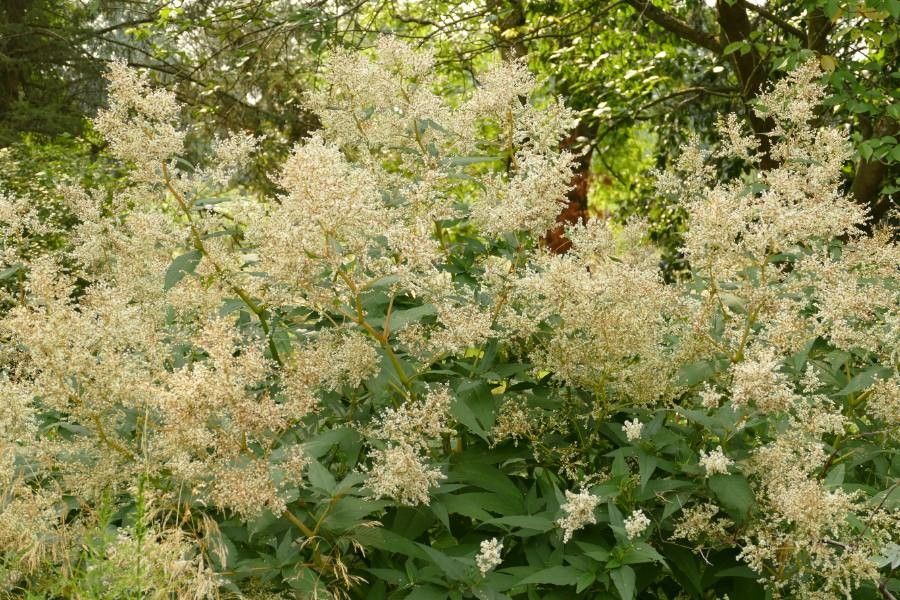
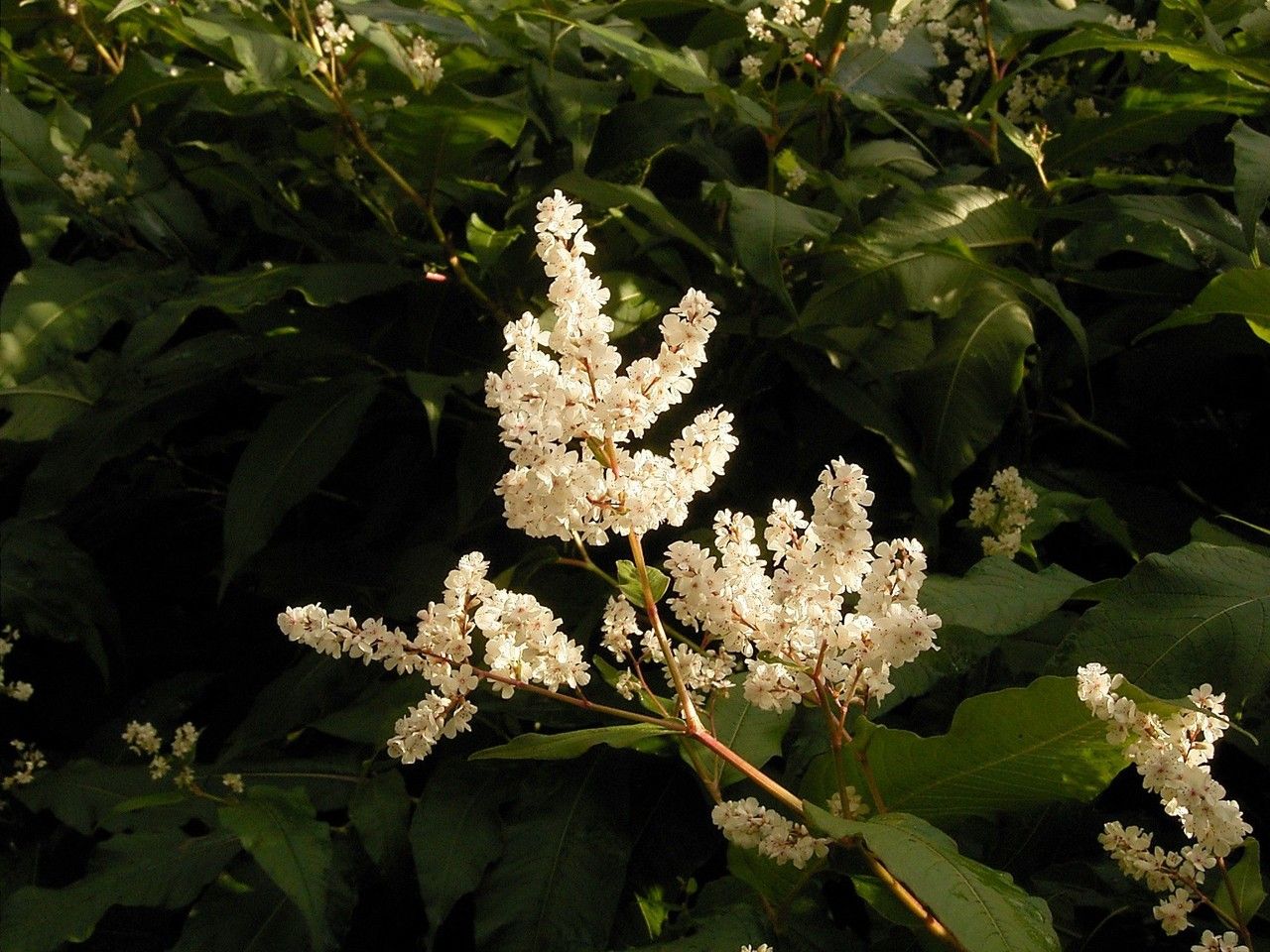
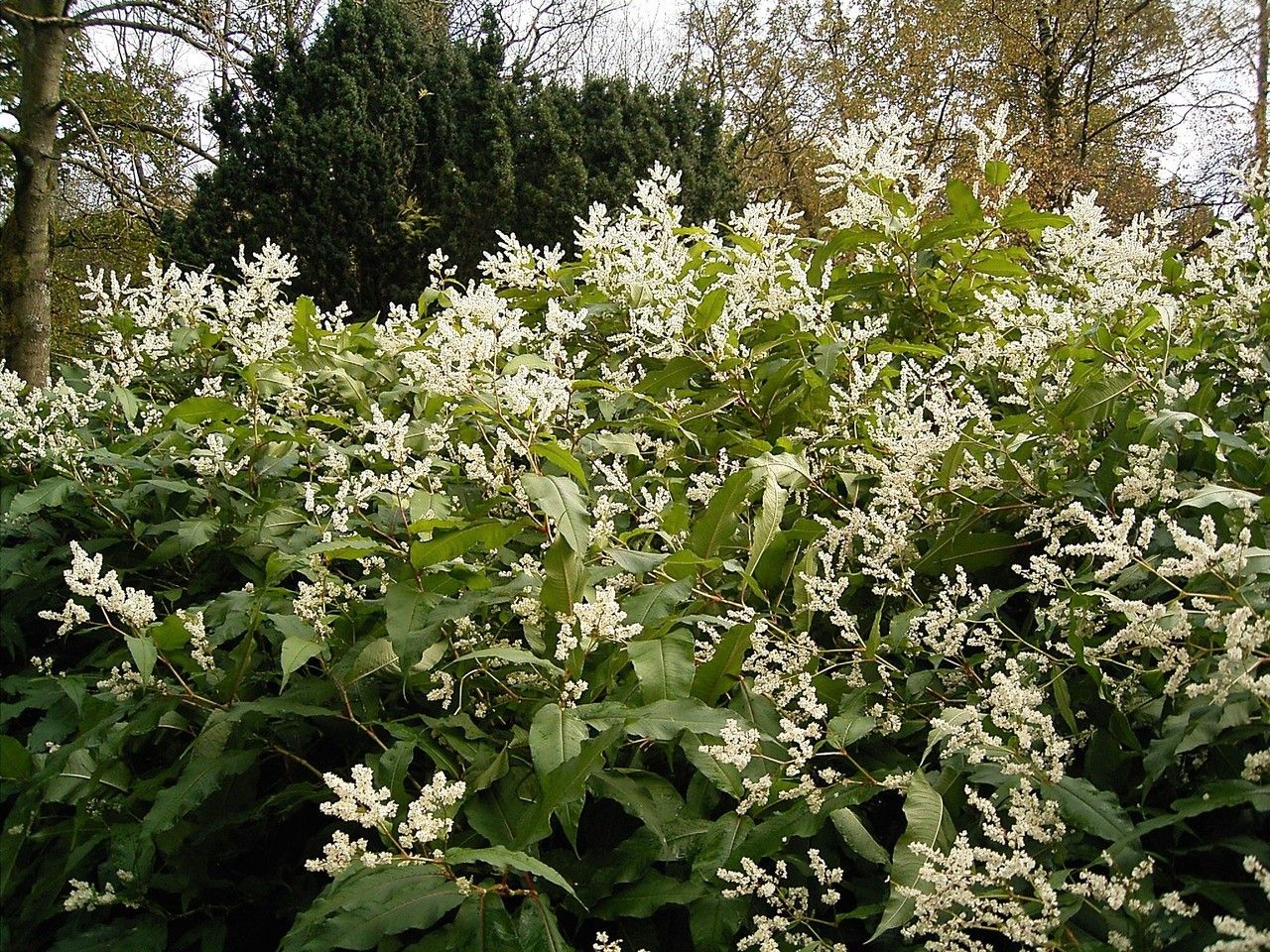
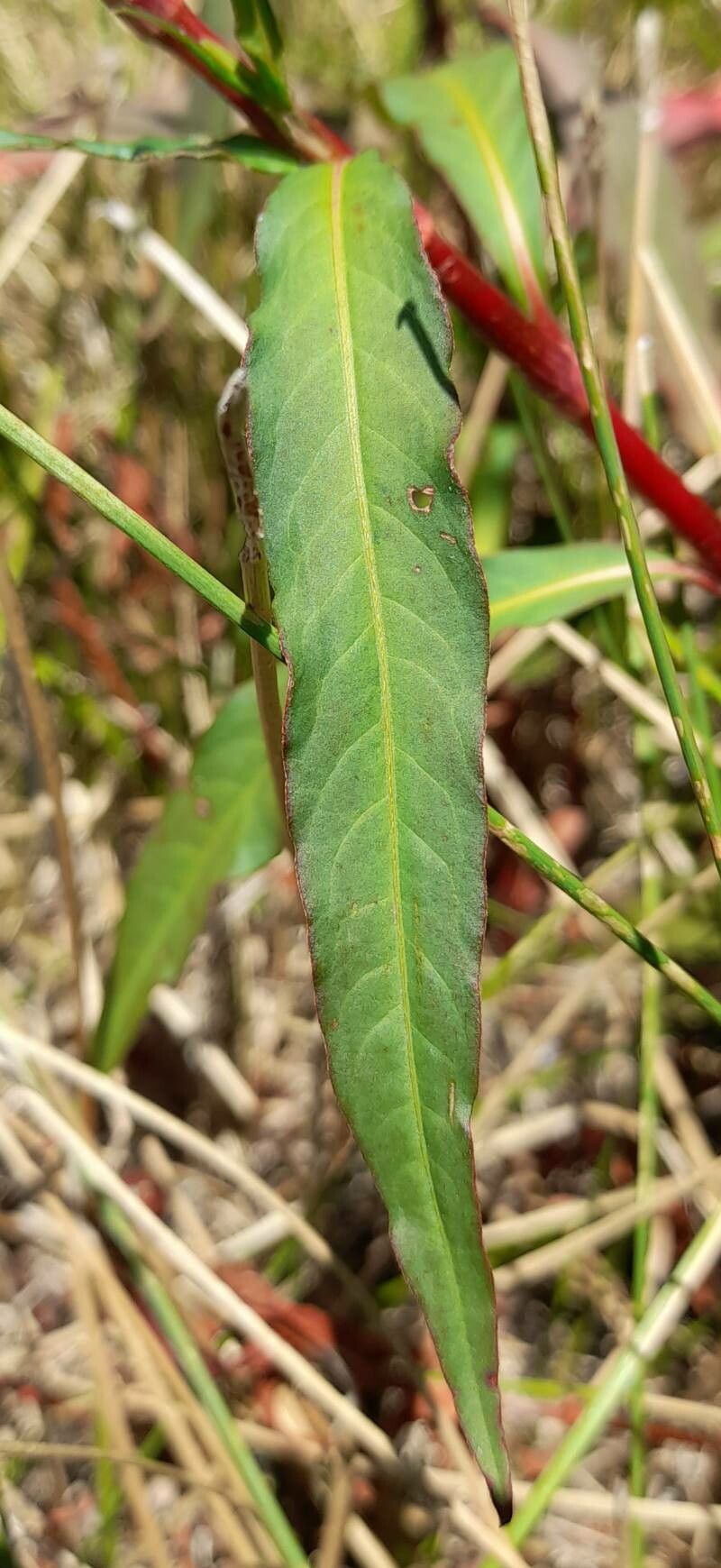
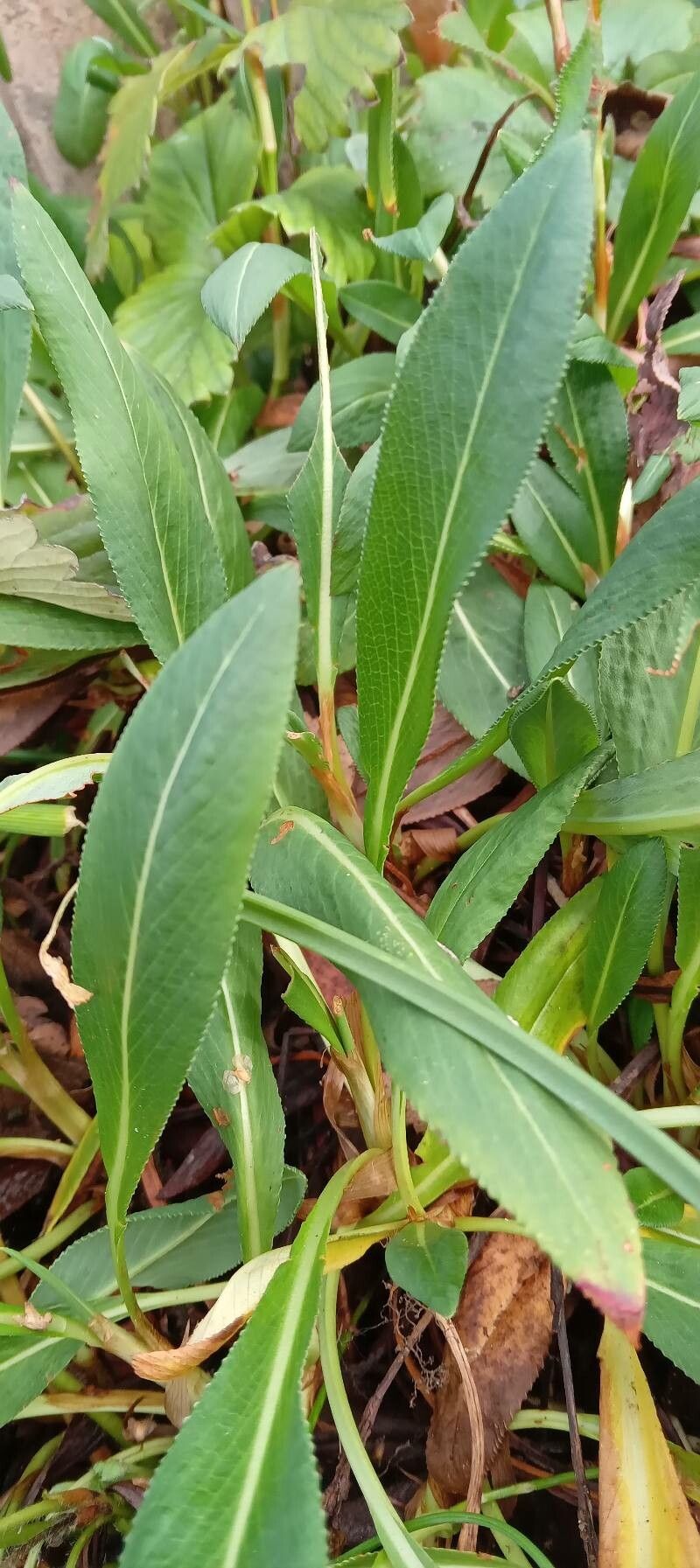
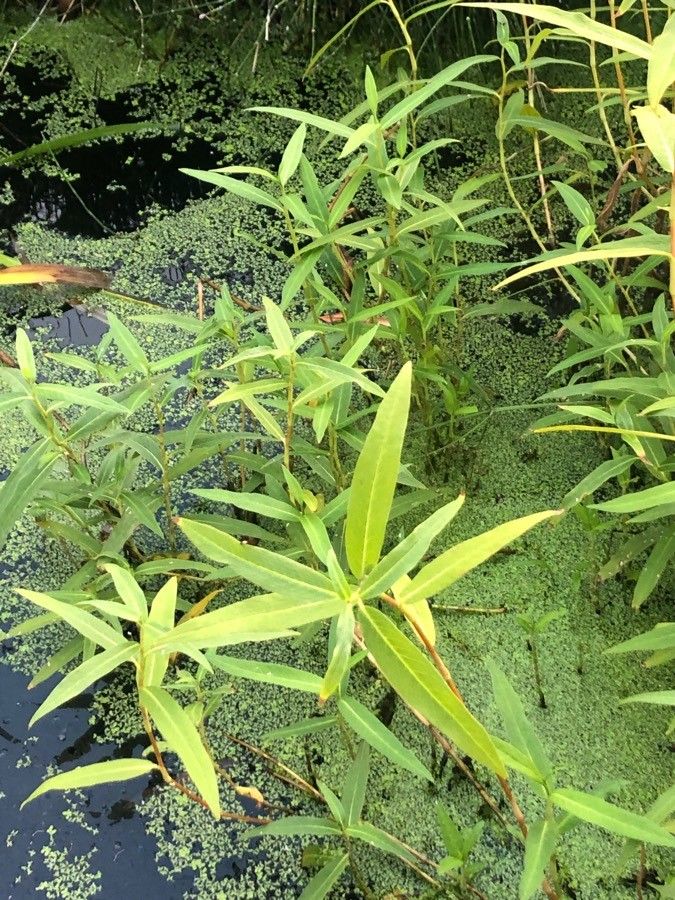
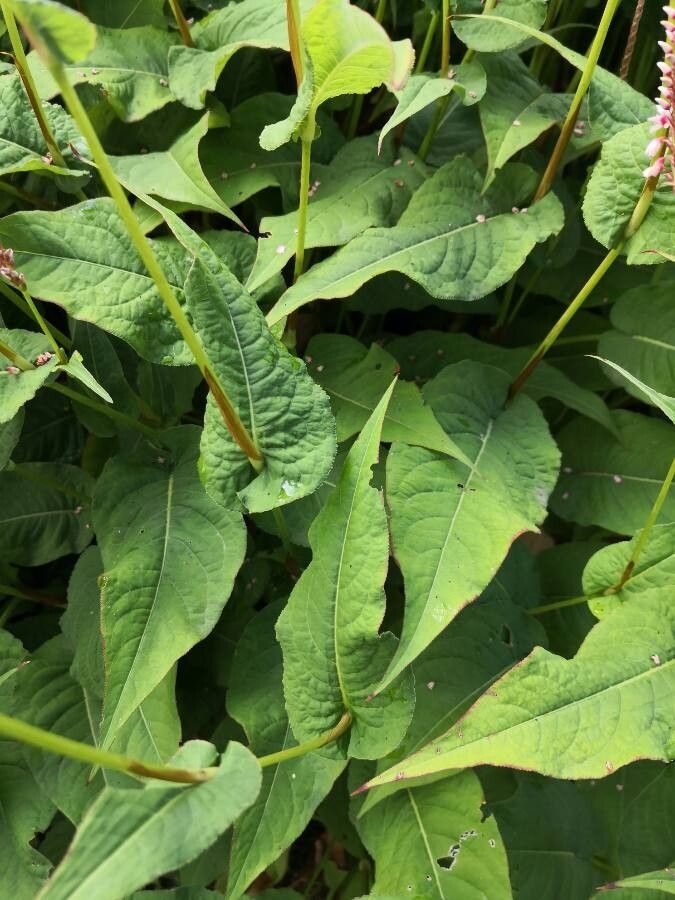
Koenigia polystachya is a species of flowering plant in the knotweed family, known by the common names Himalayan knotweed and cultivated knotweed. It has several regularly used synonyms, including Polygonum polystachyum, Aconogonon polystachyum and Persicaria wallichii.Koenigia polystachya is native to Asia (southwestern China, Indian Subcontinent, Myanmar, Afghanistan) and it is planted many places as an ornamental. It has the capacity to become an invasive species and has established itself in some parts of North America, primarily the Pacific Coast of the United States and Canada. It is an invasive weed in the mountains of Sri Lanka.Koenigia polystachya is a rhizomatous perennial herb producing thick, hollow, erect stems easily exceeding one meter (40 inches) in length. Via its rhizomes it can form dense colonies. It may also spread asexually if sections of the stem containing rooting nodes are separated and moved to a new area; chopping the plant into small pieces does not necessarily keep it from growing. The hairy leaves are up to 20 centimeters (8 inches) long. The branching inflorescence is an array of lacy clusters of many small white flowers.Called thothnay in Sikkim and Darjeeling areas of India, the pleasantly sour-tasting edible shoots and stems are used as vegetable or used to make piquant condiments and accompaniments for meals.
Himalayan knotweed has strong resistance to disease and is generally not prone to illnesses. However, it can be vulnerable to pests and diseases present in its surroundings. These infections are typically not serious. In terms of care, this plant requires moderate maintenance. It needs regular pruning to preserve a neat appearance and support healthy growth. Fertilizing can also help encourage flowering. Himalayan knotweed is suitable for anyone with outdoor space, such as a garden or patio, and does not demand extensive experience in plant care. It may need more attention when grown indoors.
How to keep Persicaria Wallichii.
Light
The himalayan knotweed does best with plenty of sunlight. Mostly sunny conditions encourage vigorous growth, though it can tolerate locations with less light. Still, a proper balance is important because either too much or too little sun can impede its growth and overall health.
Fertilizer
Usually one fertilizer application in spring will suffice for Himalayan knotweed, though repeated feedings can maximize growth. Apply fertilizer about every month to a month and a half. Fertilizing improves leaf appearance and function, helping maintain even color and a healthy texture. It also encourages root growth and better nutrient uptake, supporting the plant's long-term health.
Botanical profile.
- Plant Type
- Herb
- Life Cycle
- Perennial
- Genus
- Persicaria
- Family
- Polygonaceae
- Hardiness Zone
- 5-9
- Mature Height
- 91 cm
- Mature Spread
- 30 cm to 61 cm
- Leaf Color
- Green, Dark Green
- Leaf Type
- Semi-evergreen
- Flower Color
- White, Pink
- Flower Size
- 0.51 cm
- Bloom Time
- Late summer, Early fall
- Planting Time
- Spring, Summer, Autumn
- Harvest Time
- Early fall, Mid fall
- Native Area
- Nepal, Afghanistan, India, Myanmar, Bhutan, Pakistan, China
Other names.