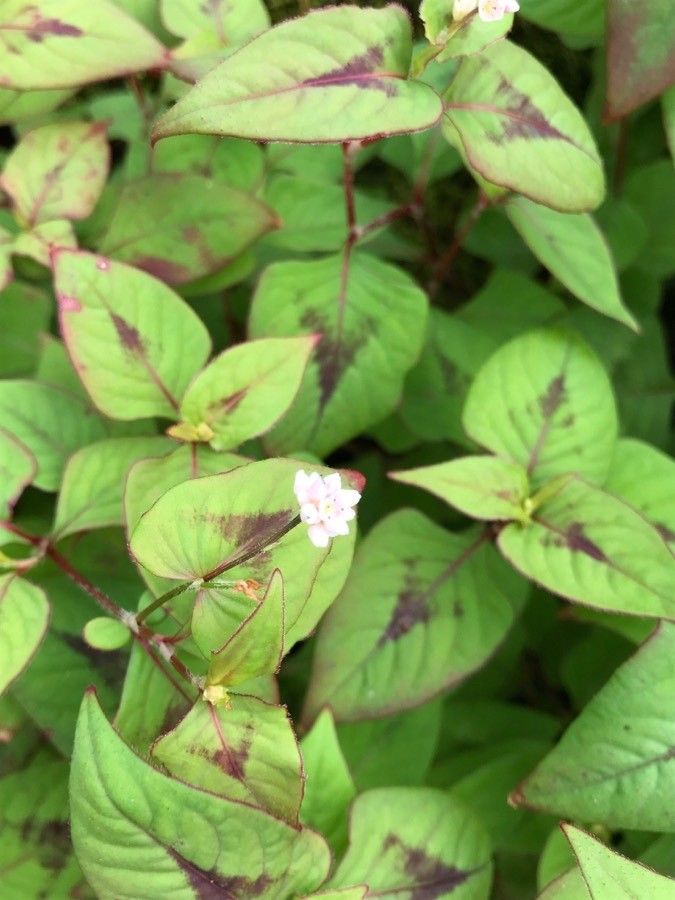
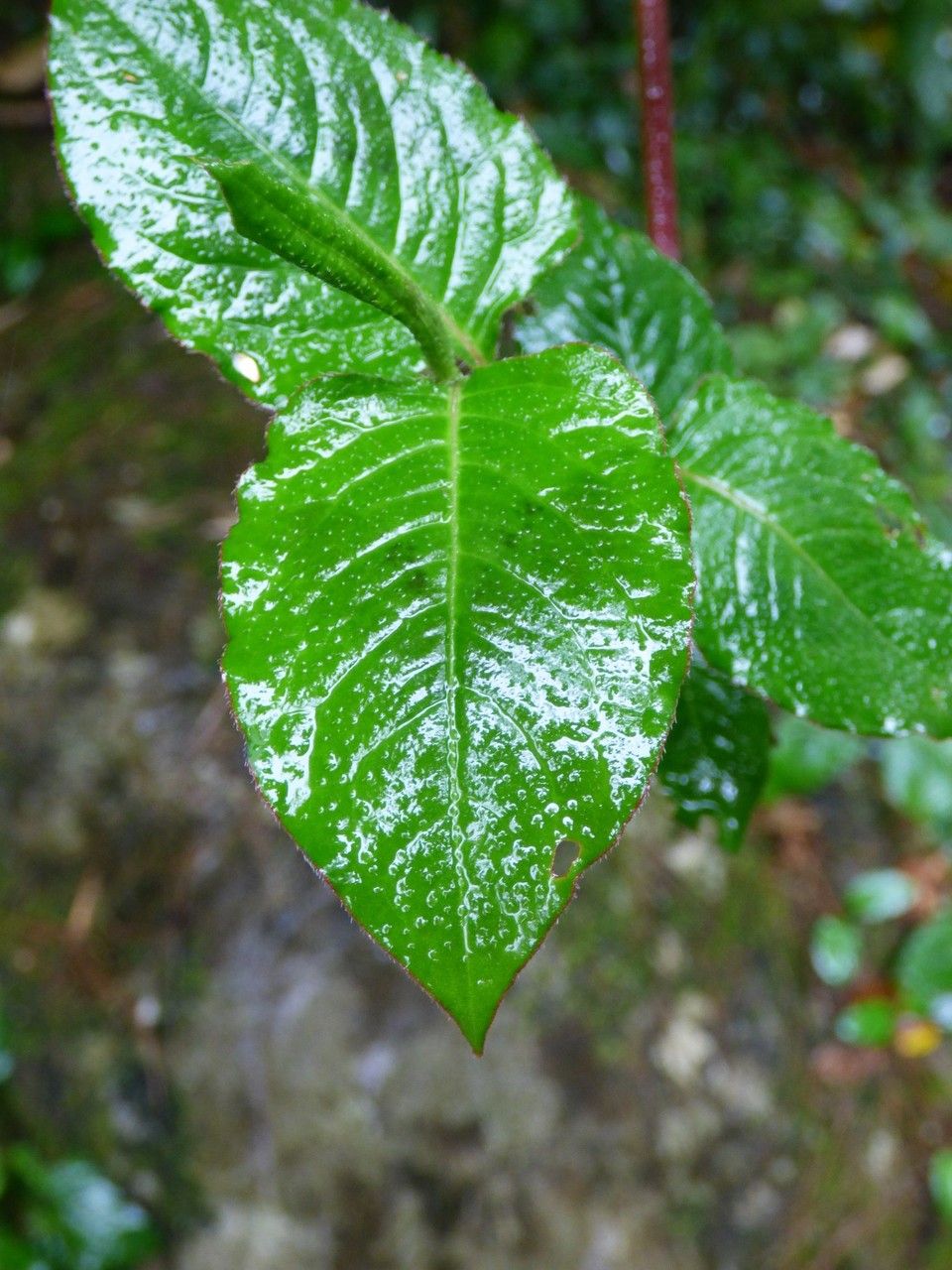
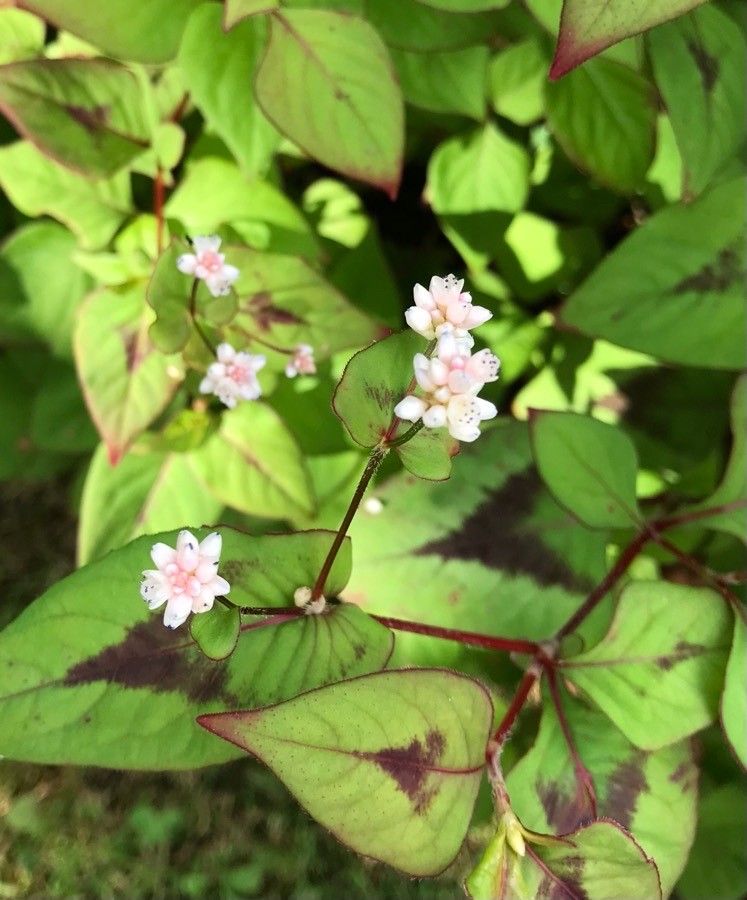
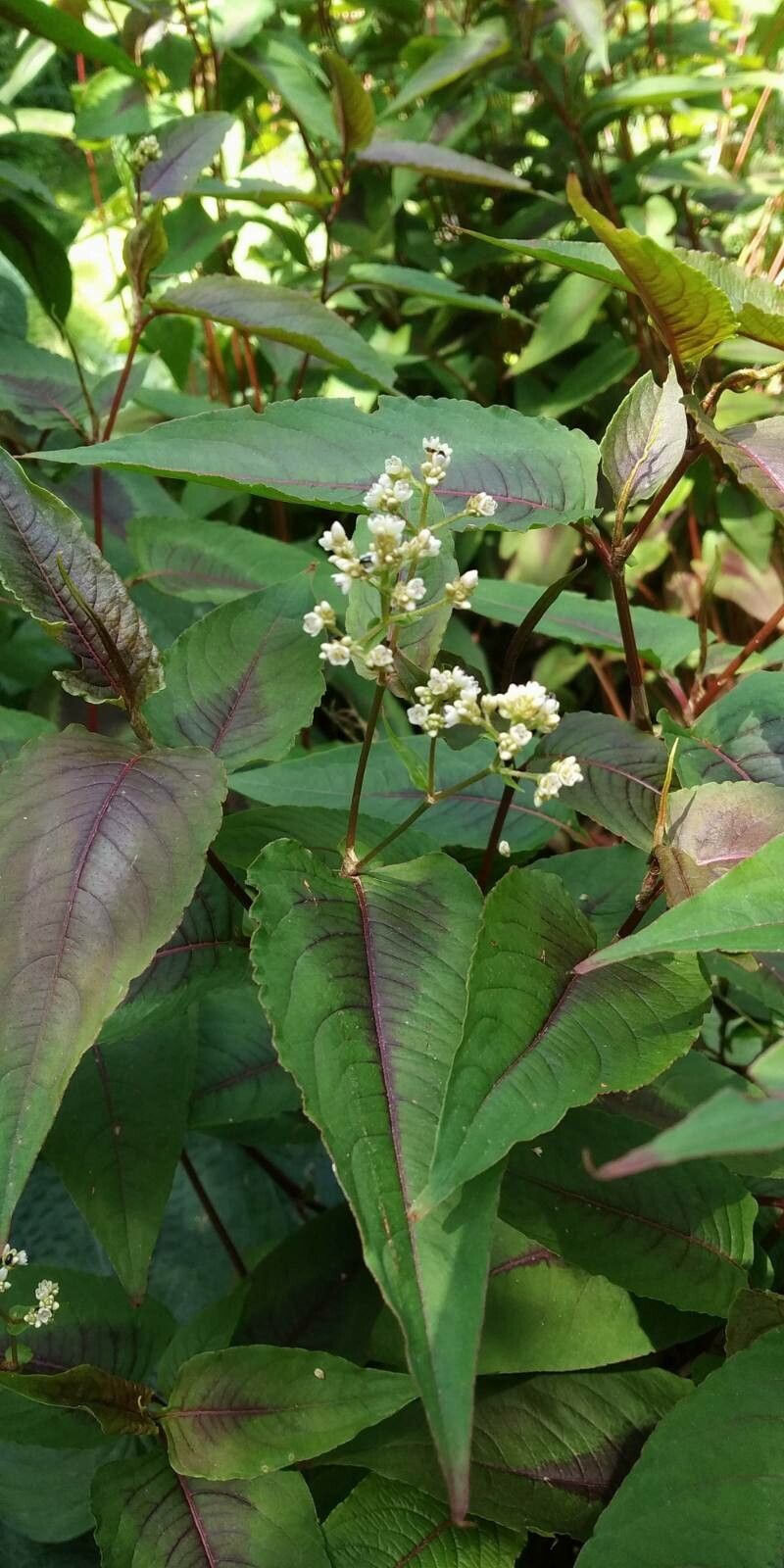
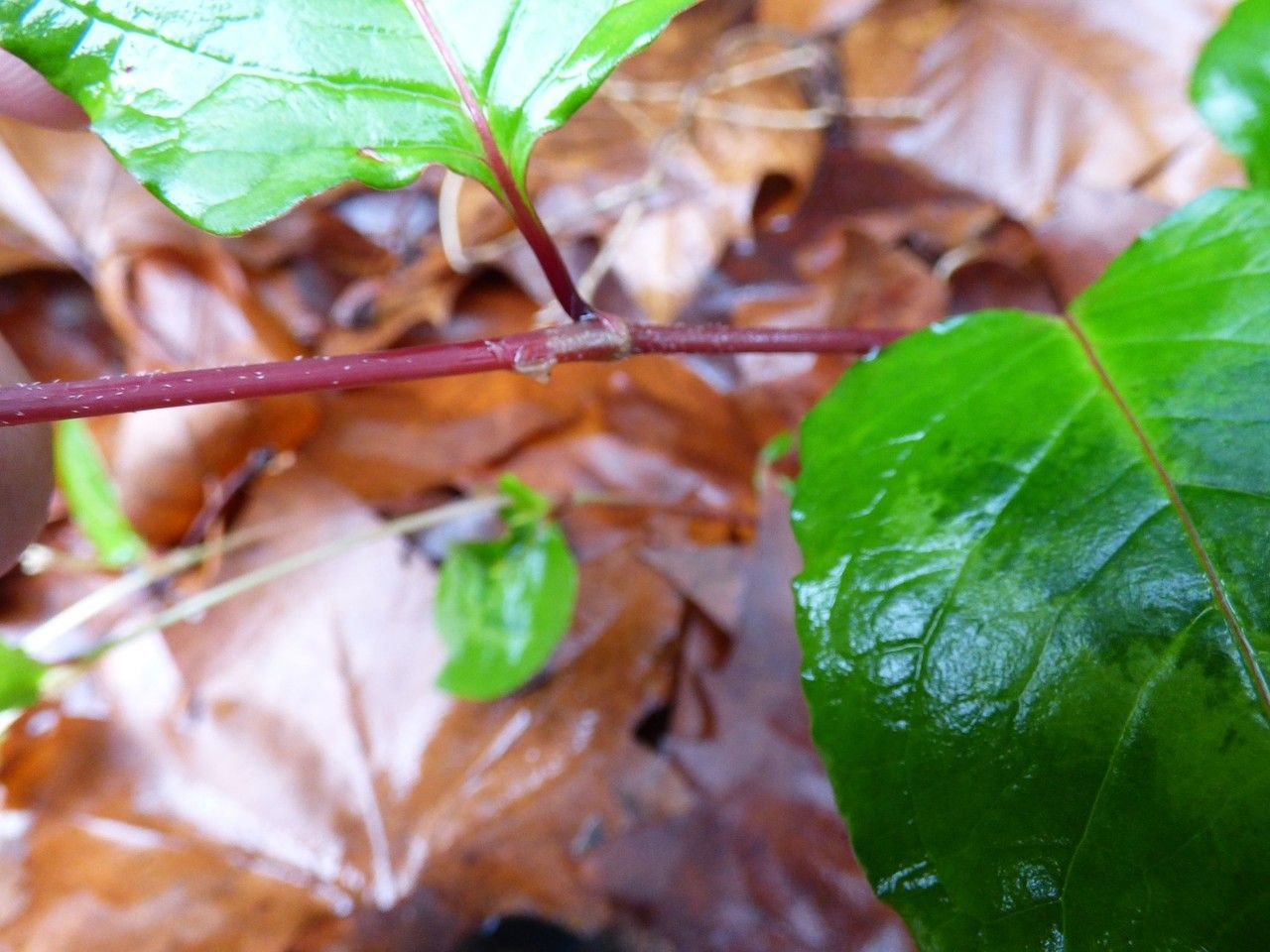
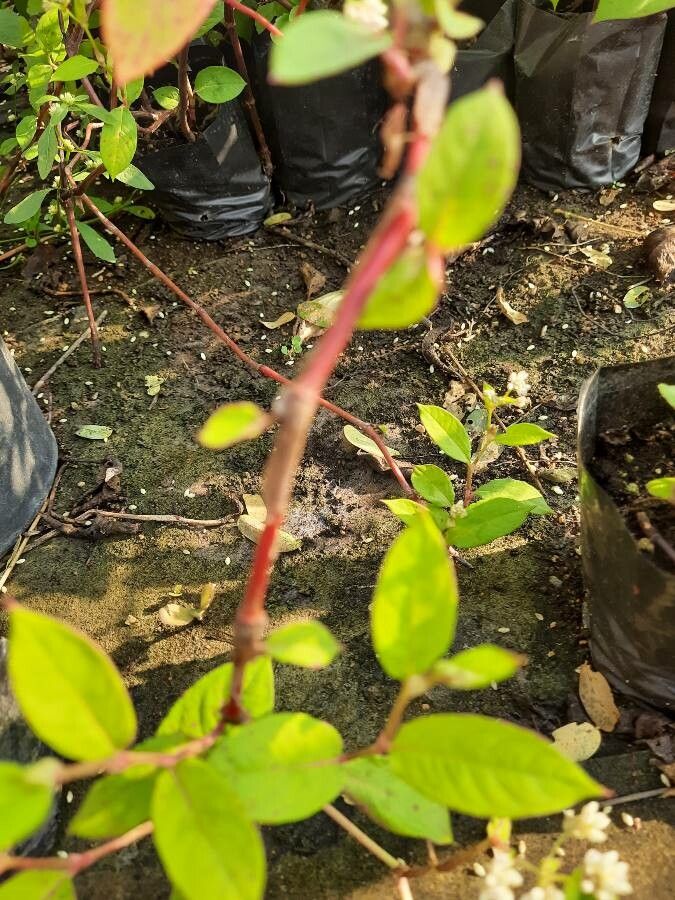
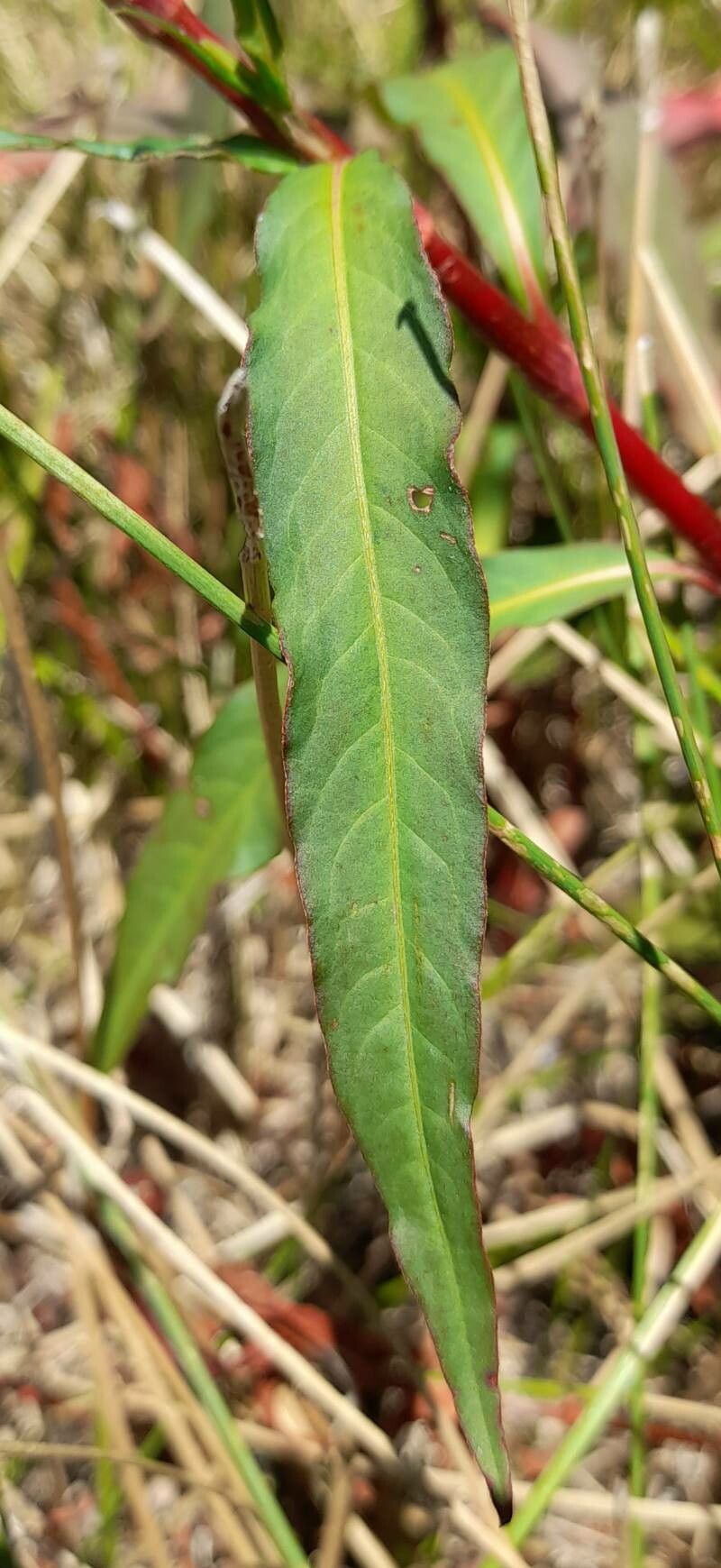
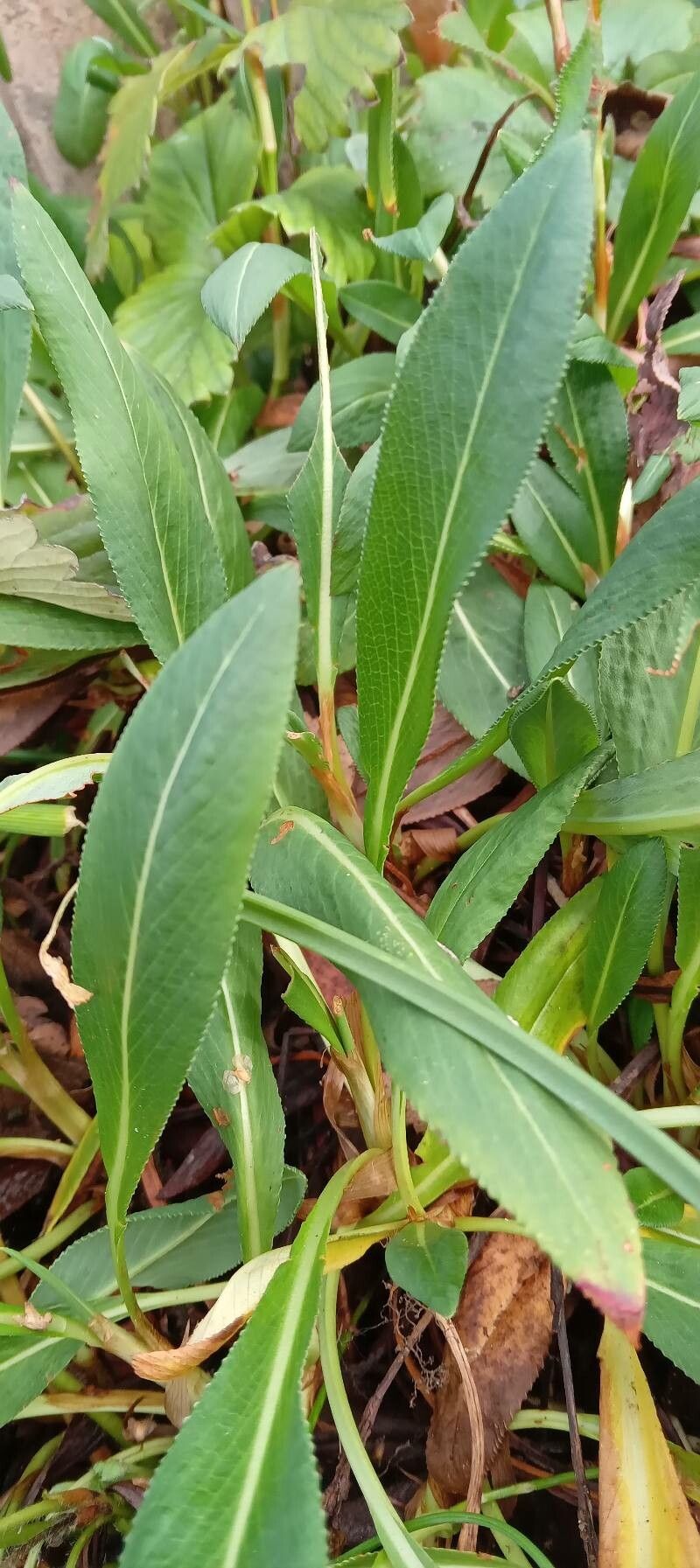
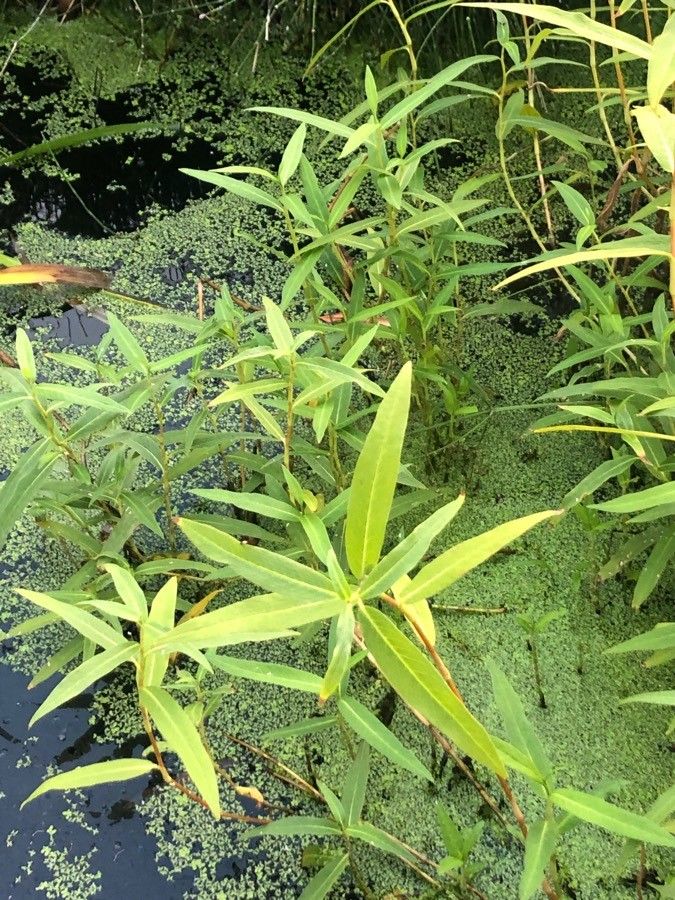
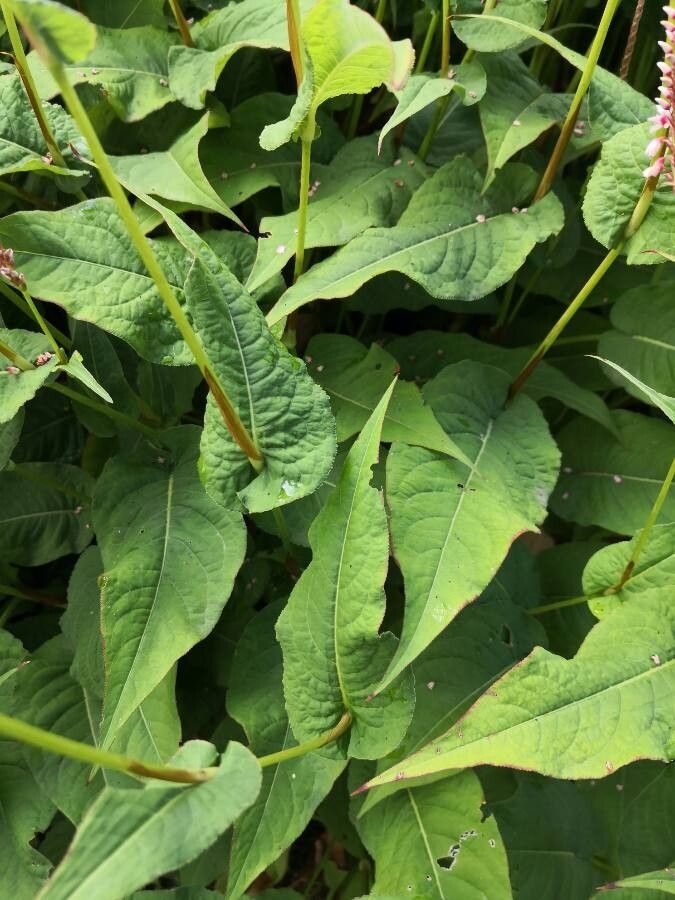
Persicaria chinensis (synonym Polygonum chinense), commonly known as creeping smartweed or Chinese knotweed, is a plant species from the family Polygonaceae. It is widespread across China, Japan, the Indian Subcontinent, Indonesia, Malaysia, and Vietnam. It is a common plant in Malaysia and Vietnam, where it is used in herbal remedies, such as for the treatment of dysentery, enteritis, and sore throat. It is a weed in some coastal areas of New South Wales and Queensland in Australia.Persicaria chinensis is a perennial climber that grows to 2–3 m high. Its stems are glabrous and red-brown, with longitudinal stripes. Its leaves have oval blades, are 4–8 cm long and 3–5 cm wide, with pointed apex and round or nearly cordate base. Its cymes emerge at terminals, and are 5–7 cm long, with small white or pink flowers. Its fruits are berries, globose in shape and enclosed in the enlarged and fleshy calyx at maturity. They are edible and sour tasting. The seeds are small and black.
China knotweed is fairly resistant to disease and typically does not suffer from many illnesses. Nevertheless, it can be vulnerable to pests and pathogens found nearby. Such outbreaks are generally mild. Regarding care, this species needs a moderate level of attention. Regular pruning is necessary to keep it looking neat and to support healthy growth. Applying fertilizer can also encourage better flowering. China knotweed is well suited for anyone with outdoor space, like a garden or patio, and does not demand extensive horticultural experience. If kept indoors, it may need more attentive care.
How to keep Persicaria Chinensis.
Light
China knotweed is a sun-loving, perennial herbaceous plant that originates in open habitats and commonly grows in meadows and grasslands. It prefers full sun but can also tolerate partial sun.
Water
China knotweed thrives in moist environments and needs regular watering without becoming waterlogged. To keep it healthy, water it weekly. Outdoors, it does well and benefits from natural rainfall. For optimal growth and vigor, maintain soil moisture levels similar to those found in its native habitat.
Temperature
China knotweed is native to areas where temperatures range from 50 to 105.8 °F (10 to 41 ℃). It performs best in moderate temperatures. Seasonal changes may necessitate adjustments to maintain a suitable environment.
Fertilizer
One application of fertilizer in spring is typically enough for China knotweed, although additional feedings can enhance growth. Fertilize about once every month to a month and a half. Feeding improves the leaves’ appearance and function, helping them keep an even color and a healthy texture. It also promotes root development and nutrient uptake for the plant’s long-term health.
Pruning
China knotweed is known for its sprawling growth and lance-shaped leaves. Pruning it in early to late spring encourages dense growth, removes dead wood, and enhances its vigor. To maintain manageability and ensure healthier foliage, annual pruning is recommended.
Botanical profile.
- Plant Type
- Herb
- Life Cycle
- Perennial
- Genus
- Persicaria
- Family
- Polygonaceae
- Hardiness Zone
- 6-13
- Mature Height
- 2.13 m to 3.05 m
- Mature Spread
- 30 cm to 49 cm
- Leaf Color
- Green
- Leaf Type
- Semi-evergreen
- Flower Color
- White, Pink
- Flower Size
- 0.25 cm to 0.51 cm
- Bloom Time
- Mid summer, Late summer, Early fall, Mid fall
- Planting Time
- Spring, Summer, Autumn
- Harvest Time
- Fall, Early winter
- Native Area
- Nepal, Sri Lanka, India, Malaysia, Philippines, Bangladesh, Laos, China, Indonesia, Cambodia, Vietnam, Myanmar, Japan, Koppen, Bhutan, South Korea, Thailand
Other names.
Reader questions.
How should I water my China knotweed?
To properly water the China knotweed, it is important to follow a few guidelines. Firstly, use filtered water at room temperature or slightly warmer, as this type of water is ideal for the plant's health. Tap water may contain harmful particles, so it is best to avoid it. Secondly, be mindful of the water temperature, as the China knotweed comes from a warm environment and cold water can be shocking to it. Moreover, it is advisable to refrain from overhead watering, as it can lead to problems with the foliage. Instead, focus on thoroughly soaking the soil with filtered, room temperature water. This watering technique benefits the plant by moisturizing its roots and facilitating nutrient collection.
Why should I put fertilizer on my China knotweed?
The structure of the China knotweed primarily consists of its leaves, and fertilization is vital for ensuring the leaves' appearance and function. Through proper fertilization, the China knotweed can maintain consistent leaf color and a healthy texture. Additionally, fertilization benefits the plant beneath the soil's surface by promoting the growth of new roots and maintaining existing ones. Consequently, fertilization enhances the plant's current health and improves its ability to absorb vital nutrients from the soil in the future.
What are the sunlight requirements for China knotweed?
China knotweed, known botanically as Persicaria chinensis, is a perennial herbaceous plant that loves the sun. It thrives in full sun conditions, which means it requires more than 6 hours of direct sunlight daily. However, it can also grow well under partial sun, with about 3 to 6 hours of sunlight. It's important to observe how sunlight moves through your garden to ensure that you choose locations that provide the right balance of light and shade, ensuring the plants' health and happiness.
What is the native climate for China knotweed?
China knotweed, botanically known as Persicaria chinensis, is native to regions where the temperatures vary between 50°F (10°C) and 105.8°F (41°C). It prefers moderate temperatures for optimal growth. The plant has a strong resistance to cold, typically not requiring special frost protection measures in winter unless temperatures are expected to plummet below -25°C. In preparation for winter, it is advised to water the plant generously before the first freeze of autumn to ensure the soil remains moist and enters a frozen state, which helps prevent the plant from drought and water scarcity during the cold season.
What should I do if I give my China knotweed too much or too little water?
Both overwatering and underwatering can harm the health of your China knotweed, but overwatering is more commonly seen. When this plant receives excessive water, its stems and leaves may wilt and turn yellow. Overwatering for a prolonged period can also result in diseases like root rot, mold, and mildew, which can be fatal to your plant. Underwatering is less common for China knotweed because it can tolerate some drought. Nonetheless, underwatering is still possible, and in such cases, you may notice brittle and brown leaves. It is important to promptly recognize signs of overwatering when caring for your China knotweed because certain diseases like root rot may become irreversible if left unaddressed for too long. If you observe early signs of overwatering, reduce your watering schedule immediately. Additionally, assess the soil quality in which your China knotweed is growing. If the soil does not drain well, replace it with a loose and well-draining potting mix. Conversely, if you observe signs of insufficient water, increase your watering frequency until those signs disappear.
When should I fertilize my China knotweed for the best results?
If you grow China knotweed outdoors, it will start growing new leaves in early spring. This indicates that it's time to fertilize the plant for the year. Usually, one application of fertilizer in spring is enough for the plant to thrive. However, if you want to maximize its growth, you can fertilize it multiple times during spring and early summer. In this case, you can apply fertilizer to the China knotweed every month to a month and a half.
What should I do if my China knotweed is not getting enough sunlight?
If your China knotweed is not getting enough sunlight, symptoms such as smaller leaves, leggy growth, early leaf drop, slowed or halted growth, lighter-colored new leaves, chlorosis, sunscald, leaf curling, wilting, and leaf scorching may occur. To address these issues, indoor plants should be moved gradually to a sunnier location until they receive at least 6 hours of sunlight daily or use artificial lighting like LED grow lights for at least 8 hours daily. Outdoor plants should be moved to the optimal sunlight spot gradually to prevent sunburn. Additionally, for ground-planted China knotweed, reduce sunlight obstructions by pruning nearby trees or transplanting the plant to a sunnier location with good drainage during its dormant period.
How does China knotweed respond to low temperatures?
China knotweed is remarkably tolerant of cold weather, thriving best when temperatures are above 10°C. However, during winter, it is important to ensure that the temperature does not fall below -15°C. If temperatures drop below -25°C, the plant may not exhibit noticeable changes immediately, but there may be a reduction in sprouting or an absence of sprouting during the spring. To mitigate this effect, it's recommended to remove parts of the plant that have failed to sprout as the weather warms in spring.
How often do I need to water my China knotweed?
If your China knotweed is in a pot, you can check if it needs water by sticking your finger into the soil. If the top two to three inches of the soil are dry, it's time to water it. The same method can be used for China knotweed grown outdoors in the ground. Once the top few inches of soil are dry, it's time to water. Usually, this means watering once a week during the spring and early fall. But during very hot weather, you may need to water twice a week or more. However, mature and well-established China knotweed is able to tolerate drought well.
When is the best time to not fertilize my China knotweed?
During the late fall and winter, your China knotweed goes into a dormant phase, stopping the growth of new shoots. It is important to refrain from applying fertilizer during this time. If you decide to fertilize in the spring and summer, you should gradually decrease the amount as summer approaches since the growth rate of the plant also decreases. In general, it is not recommended to fertilize your China knotweed when the weather is excessively hot or the soil is extremely dry. Doing so can cause stress to the plant and potentially lead to its premature death.
How can I use artificial lighting for my China knotweed indoors?
Indoor China knotweed plants can benefit from artificial lighting, especially when natural sunlight is insufficient. For optimal growth under artificial lights, consider the following: LED lights are recommended as they can be customized to provide specific wavelengths needed by plants. Full sun plants require 30-50W/sq ft of light, partial sun plants 20-30W/sq ft, and full shade plants 10-20W/sq ft. The light source should be placed 12-36 inches above the plant to mimic natural sunlight conditions, and most plants will need 8-12 hours of artificial light daily. This approach can support faster, healthier growth during less sunny seasons or in indoor spaces lacking enough natural light.
What should be done if China knotweed experiences high temperatures?
In conditions of high temperatures, particularly above 41°C during the summer, China knotweed can exhibit signs of stress such as leaves becoming lighter in color, prone to curling, susceptibility to sunburn, and in severe cases, wilting and drying out completely. To help the plant cope, trim away any sunburned or dried-up portions of the plant. Relocating the plant to a shaded area or employing shade cloth to protect it from the midday and afternoon sun can be beneficial. Additionally, watering the plant in the morning and evening will help keep the soil moist and aid in cooling the plant.