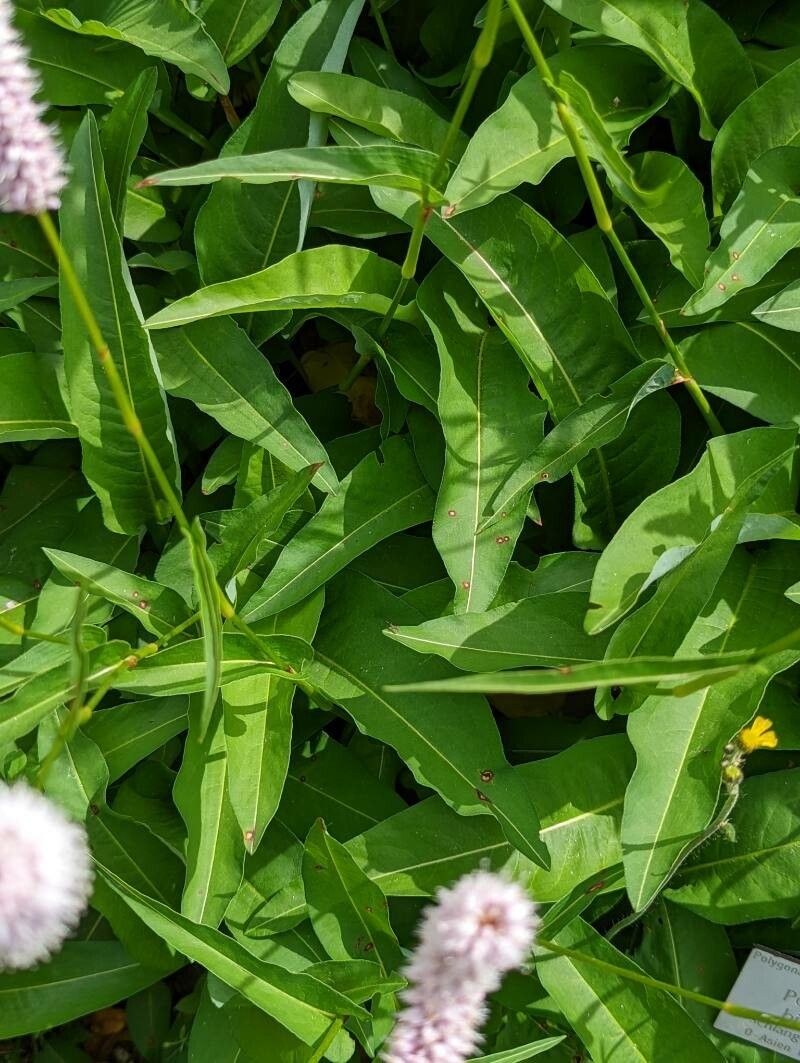
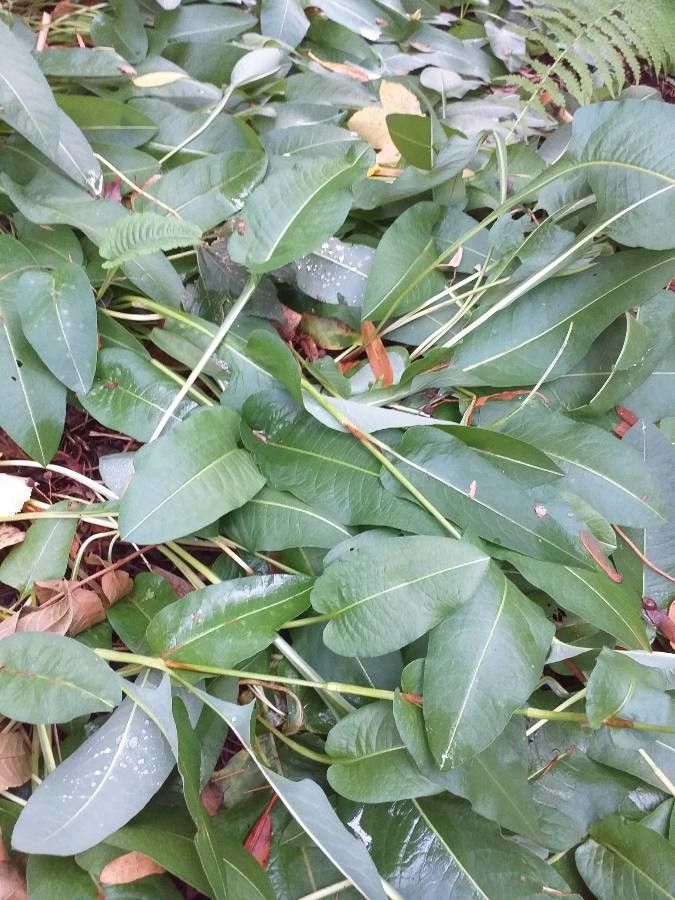
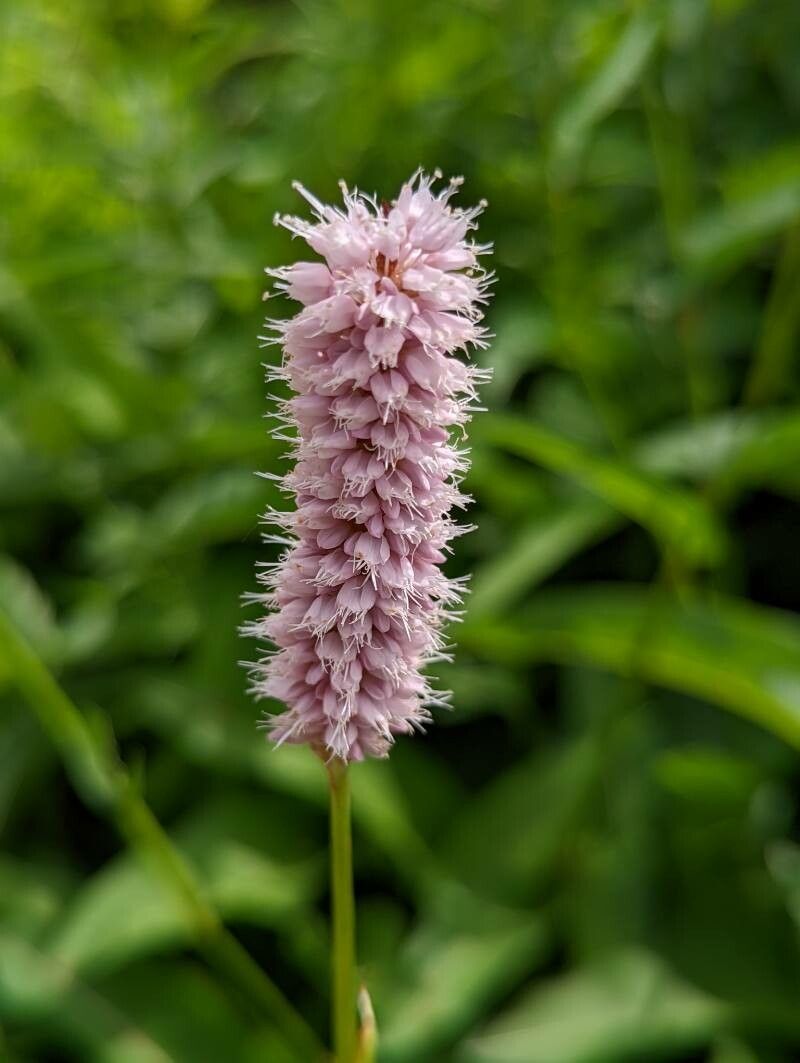
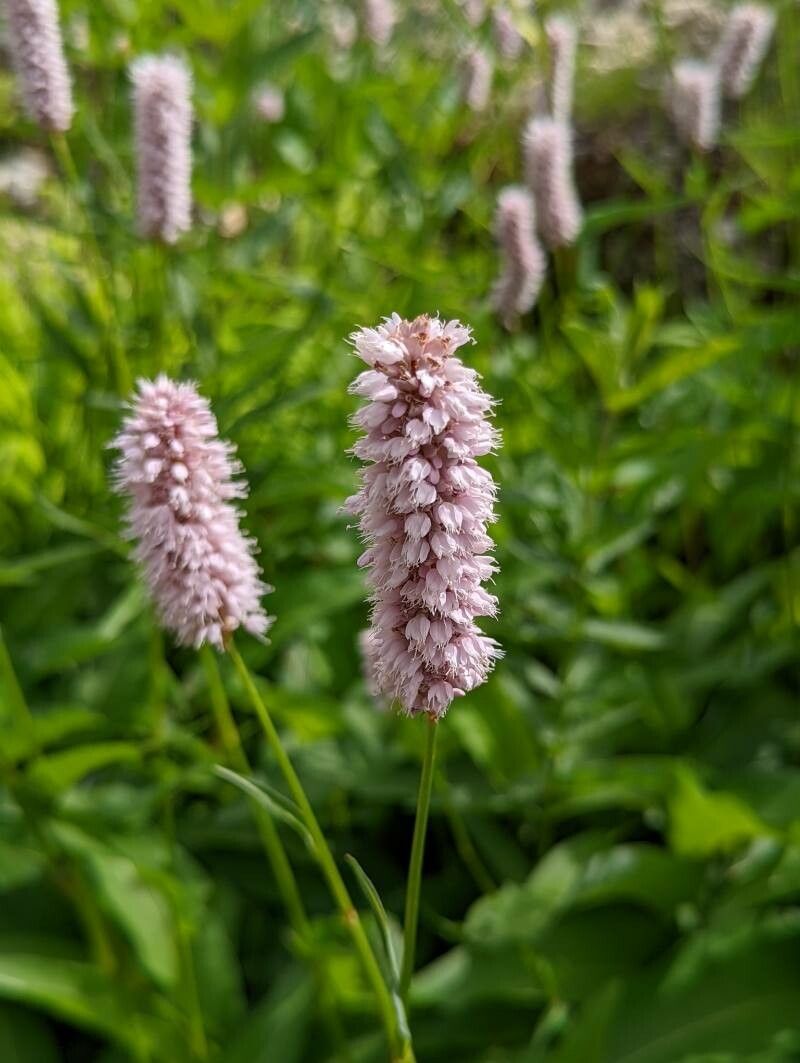
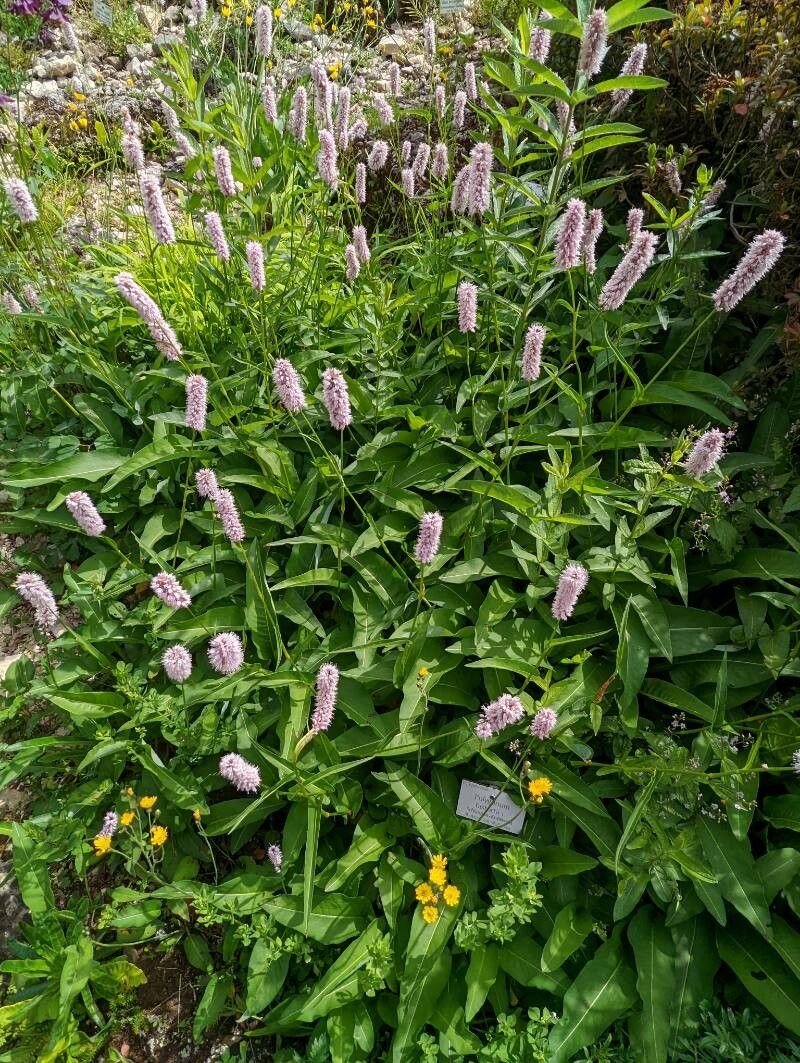
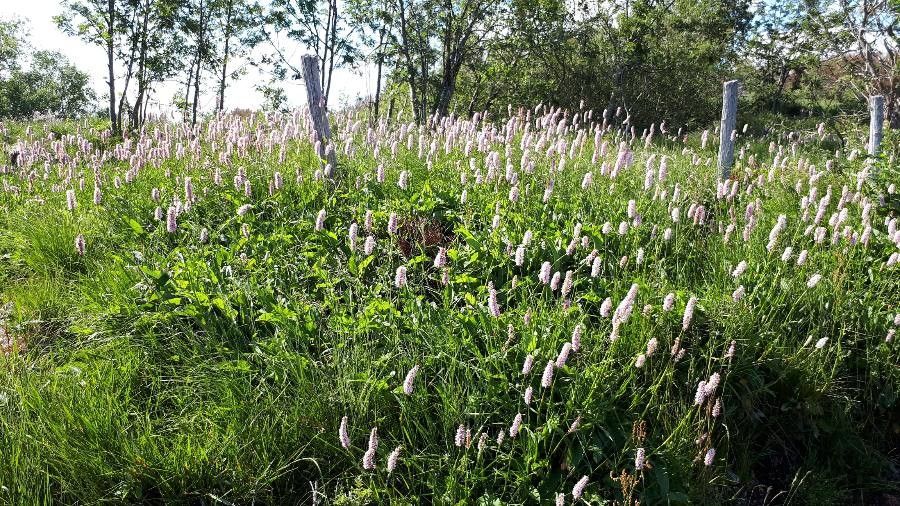
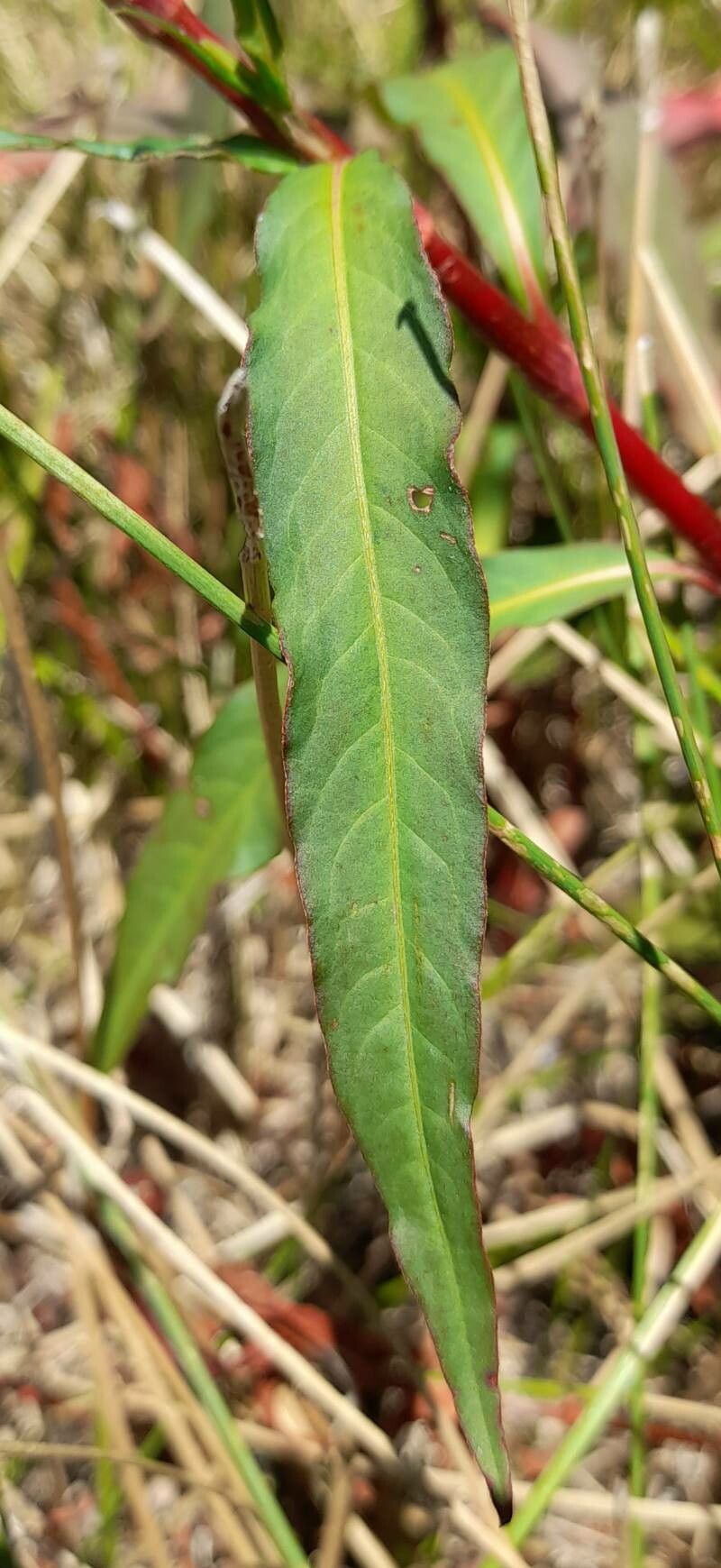
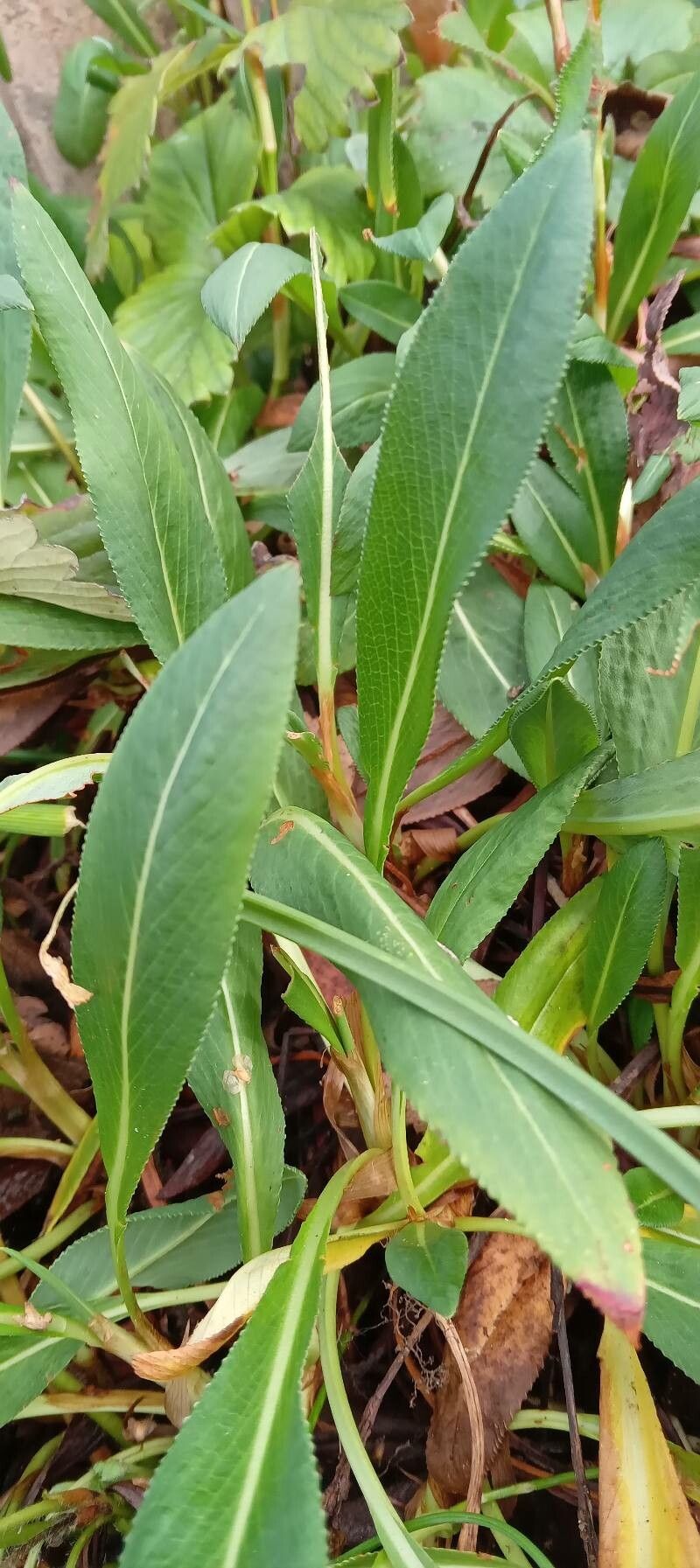
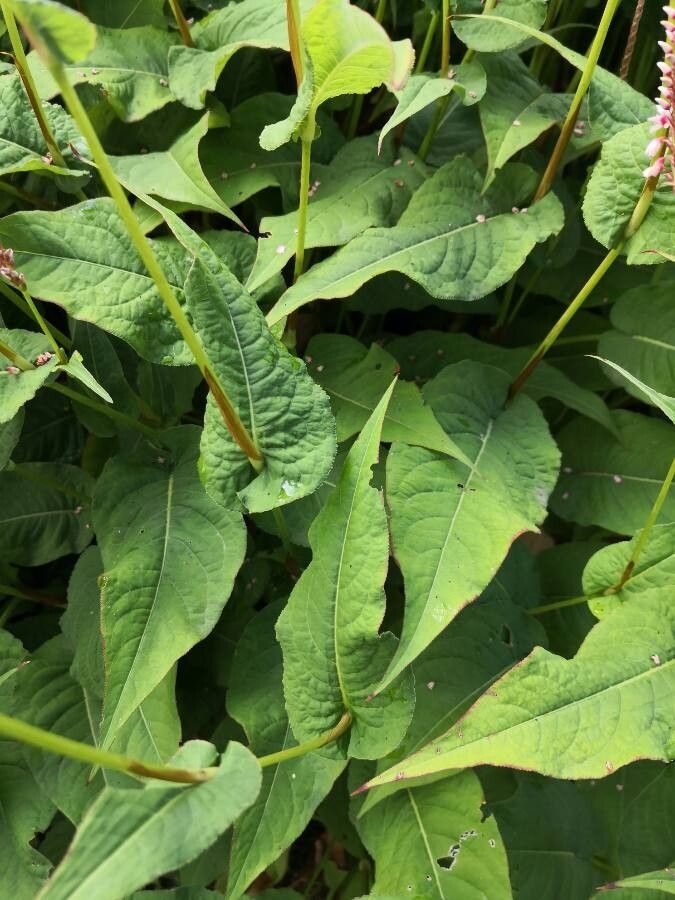
Bistorta officinalis (synonym Persicaria bistorta), known as bistort, common bistort, European bistort or meadow bistort, is a species of flowering plant in the dock family Polygonaceae native to Europe and northern and western Asia. Other common names include snakeroot, snake-root, snakeweed and Easter-ledges.
Bistort shows moderate resistance to disease but can be prone to conditions such as leaf spot. Its vulnerability to insect pests varies by variety, though most tend to be fairly susceptible to pests. For care, Bistort requires regular watering and fertilization, and frequent removal of yellow leaves. It is important to address pests and diseases when they arise and to harvest the plant promptly. Bistort is best suited to people who can devote some time and energy to ongoing care.
How to keep Persicaria Bistorta.
Light
Bistort does best when it gets plenty of sunlight during the day. It will also grow in spots with moderate sun, but its healthiest state comes from substantial sun exposure. Both too much and too little light can impede its growth, resulting in a weak, unhealthy plant.
Temperature
Bistort does best in moderate temperatures, roughly those people normally find comfortable. It prefers conditions that are not too hot or too cold. The primary problem with high heat is sunburn, so offering some shade in summer is recommended to avoid excessive temperatures. When it gets cooler, Bistort becomes dormant; to maintain continuous growth you need to keep winter temperatures higher. Frost can damage the plant and should be avoided.
Fertilizer
To maximize the yield and flavor of Bistort, provide sufficient nitrogen throughout the entire growth cycle, from before planting through to harvest. Plants that are well-watered and fertilized develop plentiful, healthy leaves and exhibit less bitterness. Before planting, amend the soil with organic matter such as compost or manure, preferably 2 to 8 weeks beforehand.
Botanical profile.
- Plant Type
- Herb
- Life Cycle
- Perennial
- Genus
- Persicaria
- Family
- Polygonaceae
- Hardiness Zone
- 3-7
- Mature Height
- 91 cm
- Mature Spread
- 91 cm
- Leaf Color
- Green
- Leaf Type
- Deciduous
- Flower Color
- Pink
- Flower Size
- 2.54 cm
- Bloom Time
- Summer
- Planting Time
- Spring, Autumn
- Harvest Time
- Late summer, Early fall, Mid fall
- Native Area
- Turkey, India, Austria, Slovakia, Montenegro, Pakistan, Slovenia, Morocco, Croatia, Belarus, Russia, Iraq, Germany, Estonia, Romania, Latvia, Belgium, Portugal, Netherlands, France, Czech Republic, Bulgaria, Armenia, Poland, Greece, Ukraine, Serbia, China, Lithuania, Italy, Kazakhstan, Spain, Switzerland, Mongolia, Iran, Albania, United Kingdom, Hungary
Other names.