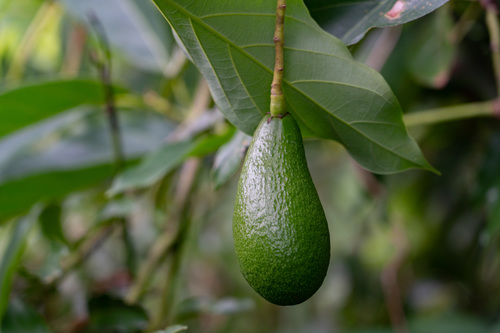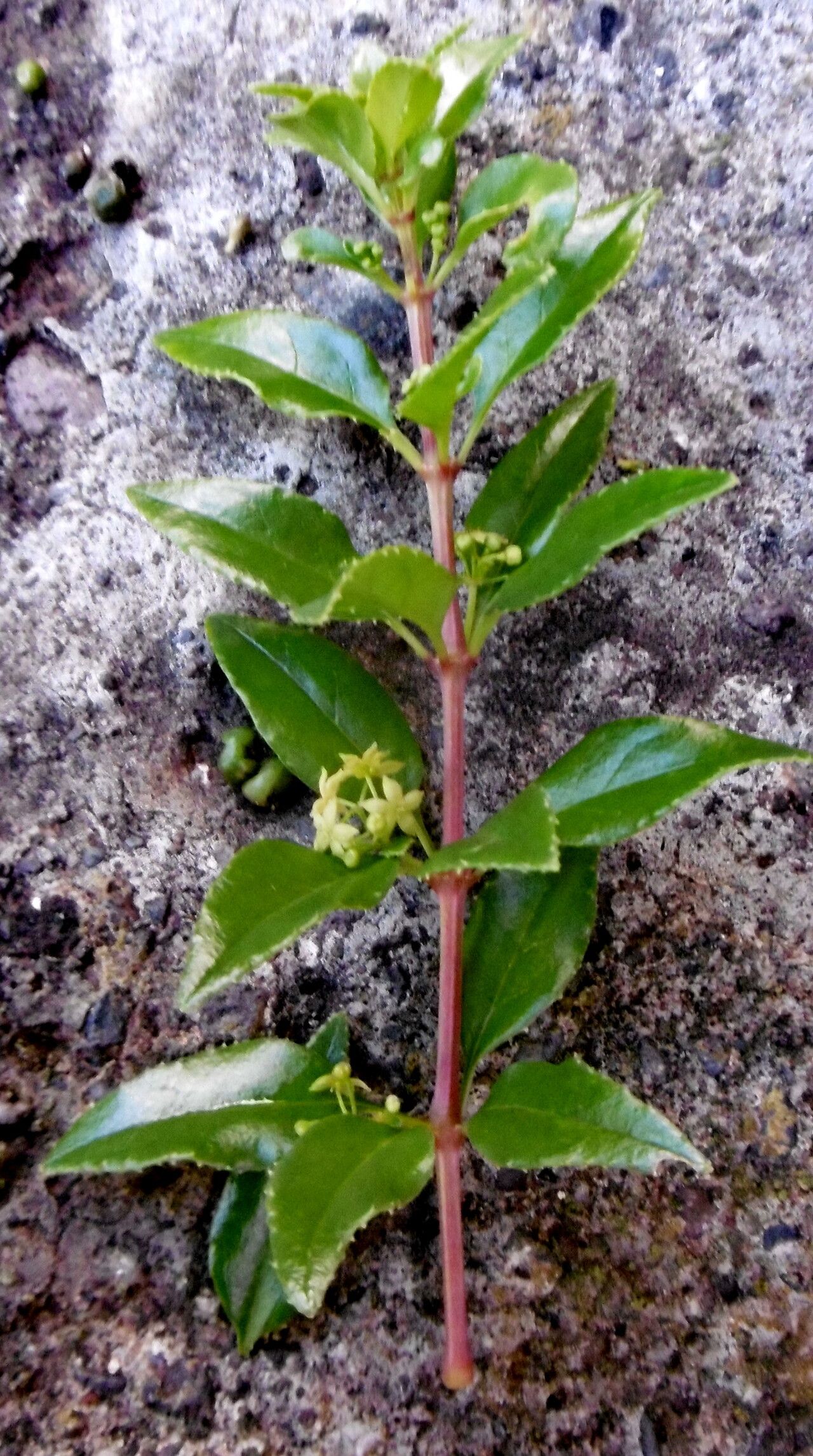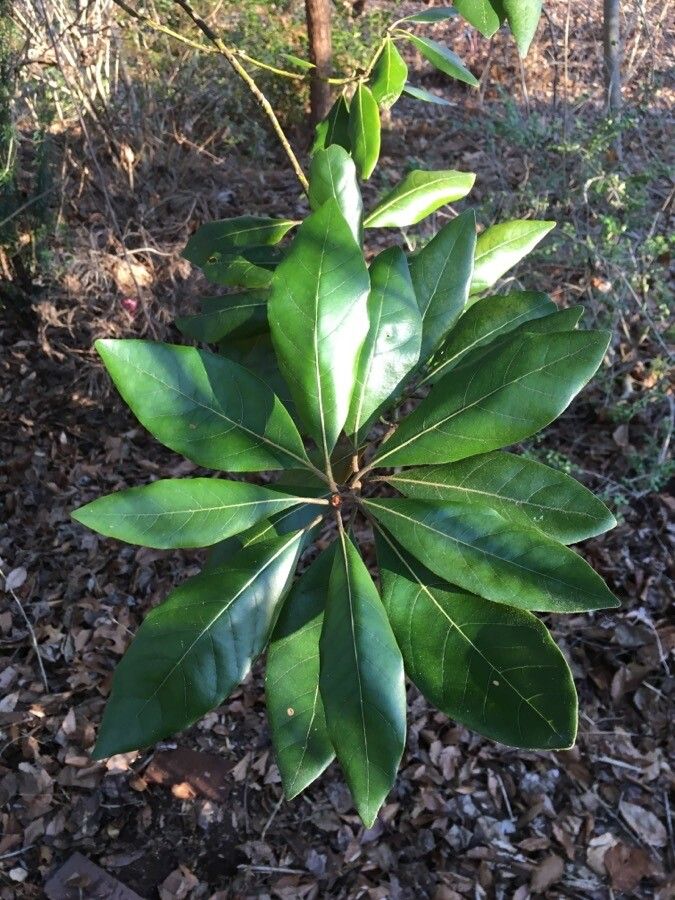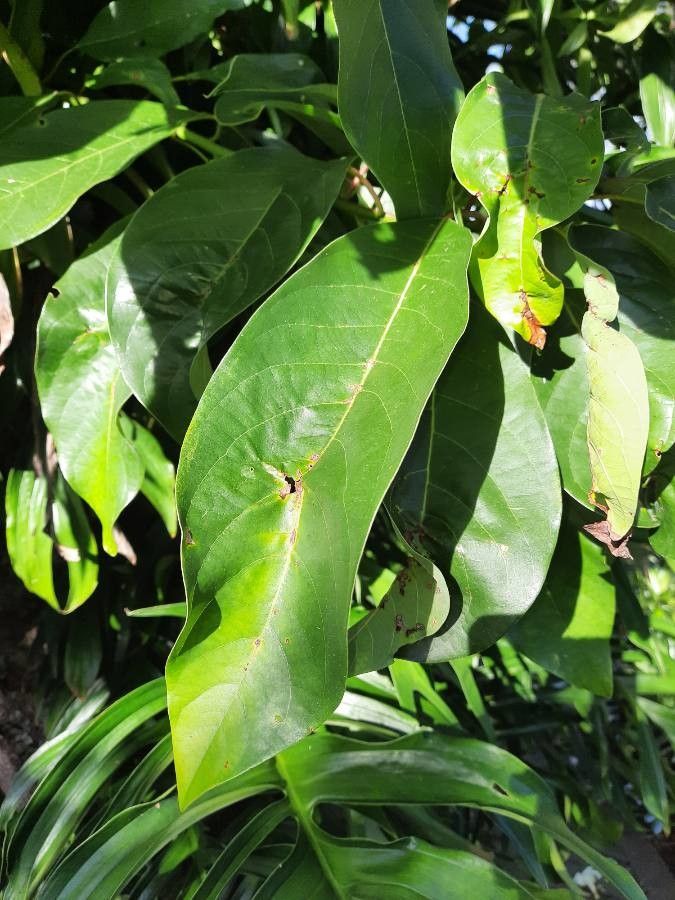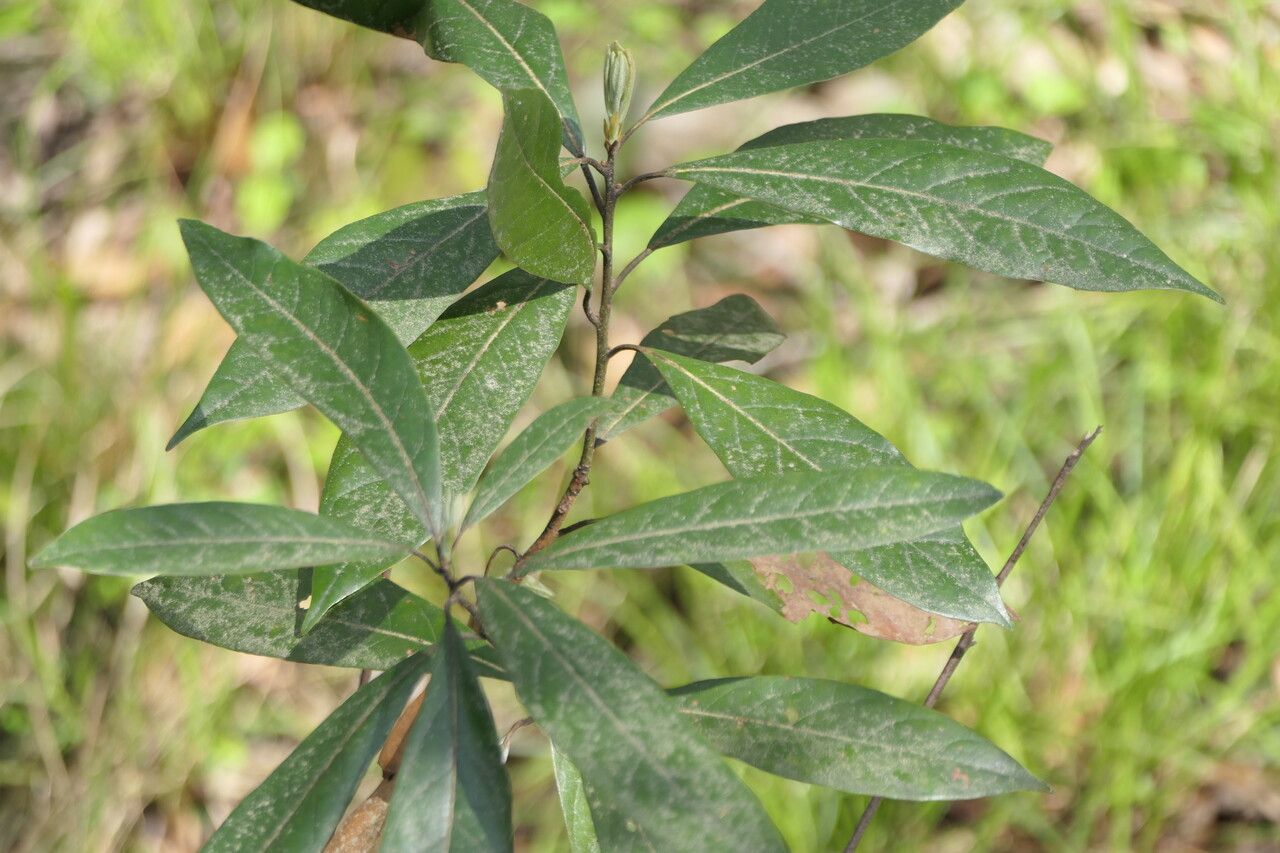
Persea palustris or swampbay is a small, evergreen tree or shrub in the laurel family (Lauraceae), native to the southeastern United States and the Bahamas. It belongs to the genus Persea, a group of evergreen trees that includes the closely-related redbay (Persea borbonia), which occupies a similar range. The tree can be found from Texas eastwards to Florida and then extending north to Delaware, mostly on the Gulf Coastal Plain and Atlantic Coastal Plain but extending into the Piedmont somewhat. Its range also includes the Bahamas. It was previously considered a subspecies of the redbay P. borbonia.
Swamp bay has strong resistance to disease and is generally not susceptible to illnesses. In terms of care, this plant is fairly low-maintenance. When grown outdoors, it needs minimal watering, and larger specimens typically do not require pruning. Smaller plants should be pruned after they have finished blooming. Swamp bayt is suitable for anyone with outdoor space, like a garden or a deck, and does not demand a great deal of care experience.
How to keep Persea Palustris.
Light
Swamp bay is native to habitats like forest understories or rocky terrain, where it gets natural shade. It prefers partial sun but can tolerate full sun or full shade, showing its adaptable and hardy character.
Water
Swamp bay is easy to care for, but there are a few key things to keep in mind. Check the soil weekly to see if it’s dry before watering moderately. Be careful not to overwater, as this can damage the plant's shallow roots. If the swamp bay is in a container, it may need more frequent watering. For indoor plants, mist the leaves every two weeks to help prevent them from drying out.
Temperature
Swamp bay is fairly adaptable to temperature, able to tolerate high heat and wide temperature fluctuations. In hot conditions, attention should be paid to watering and providing suitable shade to prevent sunburn. However, swamp bay is relatively intolerant of low temperatures; while it can endure some cold, overly low temperatures can result in frost damage.
Fertilizer
Fertilize your Swamp bay in early spring to encourage healthy growth. Regular feeding boosts overall health, leading to vigorous growth, increased resilience to harsh conditions, and stronger resistance to pests and diseases. Keep a consistent fertilization schedule for your Swamp bay to achieve vibrant, deep-colored foliage and a lush appearance.
Pruning
Swamp bay is a hardy evergreen plant known for its aromatic leaves and small berries. The best time to prune is in early spring, as this helps remove dead branches and improves air circulation. Pruning at this time also prevents pest infestations and promotes healthy growth. However, be careful not to over-prune, as excessive cutting can stress the plant.
Botanical profile.
- Plant Type
- Tree
- Life Cycle
- Perennial
- Genus
- Persea
- Family
- Lauraceae
- Hardiness Zone
- 7-10
- Mature Height
- 10.06 m to 14.94 m
- Mature Spread
- 4.88 m to 7.92 m
- Leaf Color
- Dark Green
- Leaf Type
- Evergreen
- Flower Size
- 0.51 cm to 0.76 cm
- Bloom Time
- Mid spring, Late spring
- Planting Time
- Spring, Summer
- Harvest Time
- Late summer, Early fall, Mid fall
Other names.
Reader questions.
What are the sunlight requirements for Swamp Bay (Persea palustris)?
Swamp Bay (Persea palustris) requires full sun, which means it needs above 6 hours of sunlight daily. It is important to observe how sunlight moves through your garden to choose locations that offer a perfect balance of light and shade. This ensures your Swamp Bay plants thrive by getting the right amount of sunlight they need.
What is the botanic name of Swamp bay?
The botanic name of Swamp bay is Persea palustris.