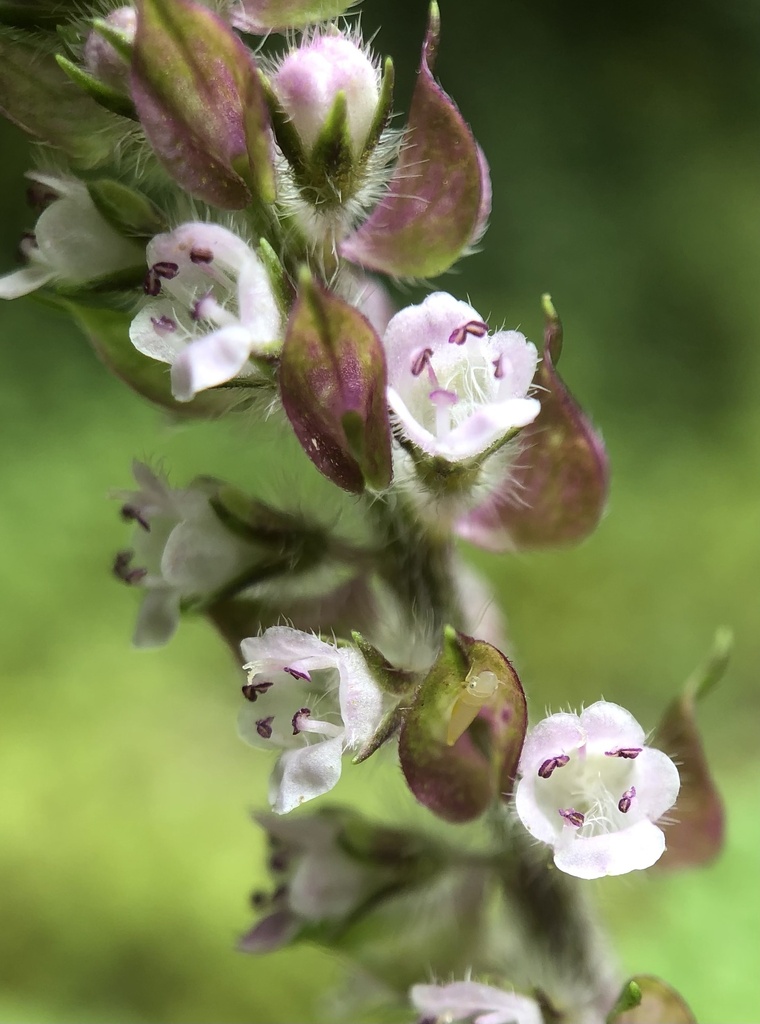
Perilla frutescens, also known as shiso or beefsteak plant, is a herbaceous annual that belongs to the mint family. Native to East Asia, it has been cultivated for centuries for both its culinary and medicinal properties. The plant is noted for its distinctive aroma and flavor, often described as a blend of mint, basil, and anise. Perilla frutescens can grow up to 1 meter tall and features broad leaves that may be green or purple. These leaves are rich in essential oils like perillaldehyde, which give the plant its characteristic scent. The seeds are also edible and useful in cooking. In traditional medicinal practices such as Ayurveda and Chinese medicine, Perilla frutescens has been utilized for its anti-inflammatory properties. It has been used to treat various ailments, including asthma, allergies, coughs, colds, and digestive disorders. The plant is a staple in Korean cuisine, often accompanying rice dishes or being added to soups. In Japanese cuisine, it is frequently served with sushi rolls or tempura dishes. Overall, Perilla frutescens offers a unique flavor profile that enhances any dish, while also providing potential health benefits through traditional medicinal practices.
Beefsteak Plant: The Beefsteak plant gets its name not because it resembles or tastes like steak, but because the darkest variety of this plant is as red as a steak.
Beefsteak plant has moderate resistance to disease but can be prone to problems like leaf spot. Its vulnerability to insect pests depends on the variety, though most varieties are not very resistant to pests. For care, the Beefsteak plant requires regular watering and fertilizing, along with frequent removal of yellow leaves. It is important to manage pests and diseases as they arise and to harvest the plant promptly. The Beefsteak plant is best suited to people who can invest some time and energy in routine care.
How to keep Perilla Frutescens.
Light
Beefsteak plant does best with plentiful sun and will tolerate moderate shade. Excessive shade can limit its growth. Its photosynthesis is most efficient with abundant light, reflecting its origin in open native habitats. Conversely, light beyond its tolerance can also harm the plant.
Water
The beefsteak plant, originally from Asia, thrives in humid conditions. Although it can tolerate moderate drought, it prefers consistent moisture, so it should be watered twice a week. When grown indoors, it benefits from well-draining containers to prevent root waterlogging.
Temperature
Beefsteak plant comes from a naturally warm climate and grows best at temperatures between 68 and 95 °F (20 to 35 ℃). During colder seasons, make sure to adjust room temperatures to imitate its native environment.
Fertilizer
To maximize yield, the Beefsteak plant benefits from regular applications of a balanced fertilizer, particularly one high in nitrogen. Apply fertilizer before planting, at planting, and when seedlings are 2 inches tall. Adding compost or manure also provides a continuous nutrient supply. Insufficient nutrients in the soil lead to underdeveloped leaves and stems, inferior flavors, thin stems, and a potentially bitter taste.
Pruning
The beefsteak plant is an aromatic herb prized for its culinary uses. To encourage bushiness, prune it in the spring by removing the top one-third of the plant and any dead stems. Be sure to clean your tools to prevent infections, and make cuts just above the leaf nodes to promote new growth and enhance the plant's flavor.
Pot & Repot
When repotting a Beefsteak plant, choose a pot that is 1-2 inches (2.5–5.1 cm) larger in diameter and that offers good drainage. Use a well-draining potting mix and consider adding perlite for extra drainage. Repot in spring or early summer, water thoroughly afterward, and place it in a shady location for the very beginning.
Botanical profile.
- Plant Type
- Herb
- Life Cycle
- Annual, Perennial
- Genus
- Perilla
- Family
- Lamiaceae
- Hardiness Zone
- 7-10
- Mature Height
- 61 cm to 91 cm
- Mature Spread
- 30 cm to 34 cm
- Leaf Color
- Green, Red, Purple
- Leaf Type
- Deciduous
- Flower Color
- White, Pink
- Flower Size
- 15.24 cm
- Bloom Time
- Early summer, Mid summer
- Planting Time
- Spring, Summer
- Harvest Time
- Mid summer, Late summer
- Native Area
- Nepal, India, Indonesia, Cambodia, Vietnam, Myanmar, Japan, Bhutan, Laos, Pakistan, China
Other names.
Reader questions.
How should I water my Beefsteak plant to keep it healthy?
The Beefsteak plant not only has specific water preferences, but it also cares about how you water it. If you don't use the right technique, you could harm your tomatoes. The best way to water a Beefsteak plant is to apply water directly to the soil, gently and slowly. Avoid pouring all the water at once or using overhead watering. While watering slowly, make sure to water deeply to ensure the entire soil where your Beefsteak plant grows is adequately moist.
Why should I add fertilizer to my Beefsteak plant?
The beefsteak plant is grown for its edible leaves and shoots, which means it needs enough nutrients for great flavor and a large harvest. If it's grown in soil lacking nutrients, the leaves and stems won't develop properly and the taste won't be as good compared to plants grown in better conditions. Thin stems and a bitter taste are likely outcomes. Fertilization is even more important for container-grown plants because they don't have as much access to organic matter as those in the ground. To supplement your beefsteak plant in a pot, use a balanced liquid fertilizer.
What are the sunlight requirements for a Beefsteak plant?
The Beefsteak plant requires full sun conditions, meaning it thrives in areas that receive above 6 hours of sunlight daily. It can also tolerate partial sun, which is about 3-6 hours of sunlight. Observing how sunlight moves through your garden helps in choosing the perfect spots that provide the right balance of light and shade, ensuring the plant's happiness.
What is the ideal temperature range for the Beefsteak plant?
The Beefsteak plant, or Perilla frutescens, thrives in a naturally warm climate with ideal temperatures ranging between 68 to 95°F (20 to 35°C). To ensure optimal growth, it's important to maintain temperatures above 20°C, especially during winter cultivation. The plant requires protection from cold, with minimum temperatures kept above the freezing point to avoid frost damage. In regions where the outdoor temperature drops below -5°C (25°F) during winter, it's advisable to bring the plant indoors or provide insulation with a temporary greenhouse or wrapping materials such as plastic film or fabric.
What should I do if I give my Beefsteak plant too much or too little water?
If you realize that you have given too much water to your Beefsteak plant and are worried about the risk of disease, take immediate action. The best solution for an overwatered plant is to remove it from its current spot and allow its roots to dry a bit before replanting it in a different location with well-draining soil. If you are growing the plant in a pot, consider moving it to a pot with better drainage. On the other hand, if you have underwatered your plant, simply increase the frequency of watering.
When should I fertilize my Beefsteak plant?
To benefit your Beefsteak plant, there are several points when you should apply fertilizer during the growing season. Initially, when you are preparing the ground for planting, it is recommended to amend the soil with nutrient-rich organic material like compost or manure at least 2 to 8 weeks before planting. At planting time, you should amend the soil again using the same method. Once your seedlings emerge and grow to around 2 inches tall, you can apply the next dose of fertilizer. After that, you can regularly feed your Beefsteak plant with rich organic matter or a commercial fertilizer until it is ready for harvesting. The preferred schedule for fertilizing is every two to three weeks. Additionally, adding a layer of compost or manure around the plant is a good idea as it ensures a continuous supply of nutrients.
How does the Beefsteak plant respond to different lighting conditions?
The Beefsteak plant thrives with an abundance of sun and can endure moderate shade, though too much shade could hinder its growth. It performs optimally in ample light, reflecting its adaptation to native open habitats. Excessive light beyond its endurance threshold could potentially harm the plant. For indoor plants lacking natural sunlight, especially during winter or in less sunny spaces, artificial lighting such as LED lights can provide the needed wavelengths for optimal growth. Full sun plants require 30-50W/sq ft, partial sun plants need 20-30W/sq ft, and full shade plants need 10-20W/sq ft of artificial light, placed 12-36 inches above the plant for 8-12 hours per day.
How does the Beefsteak plant react to low temperatures and how can it be protected?
The Beefsteak plant has a moderate tolerance to low temperatures, performing best when kept between 20°C and 35°C. Exposure to temperatures below 0°C can lead to darkening leaves, and when it goes below -15°C, it may suffer from water-soaked necrosis, wilting, and eventual browning. To protect and recover the plant from frost damage, trim the frost-damaged parts and move it to a warmer indoor space or set up a temporary greenhouse. Placing it near a south-facing window ensures it gets sufficient sunlight, and if light is inadequate, supplemental lighting can be used.
How many times should I water my Beefsteak plant?
Beefsteak plants have high water needs during the growing season. To meet these needs, it is recommended to water them frequently throughout spring and summer. At the beginning of the growing season, water your Beefsteak plant once or twice a week. As the season progresses, increase the frequency of watering. In summer, you may need to water it twice a day or more, depending on the weather. Once the major growth phases are complete, reduce watering to once a week until the end of the growing season.
When is it not a good idea to fertilize my Beefsteak plant?
To ensure the health of the Beefsteak plant, avoid fertilizing it when the soil is dry. This plant needs ample water to effectively absorb nutrients. Additionally, it's important to refrain from using chemical fertilizers on this plant outside of the growing season. Doing so could introduce more fertilizer than the plant can utilize, potentially leading to groundwater contamination and soil contamination. Therefore, it's best to only fertilize the plant during its active growing periods.
What are some common symptoms of inadequate lighting for Beefsteak plants?
When the Beefsteak plant is grown indoors or in conditions of limited light, it may show symptoms such as smaller new leaves, leggy or sparse growth, faster leaf drop, slower or no new growth, and lighter-colored new leaves. These symptoms indicate a deficiency in light, which is crucial for the plant's photosynthesis and overall health. In excessive sunlight, the plant may experience chlorosis, sunscald, leaf curling, wilting, and leaf scorching, pointing to the importance of balancing sunlight exposure.
How should the Beefsteak plant be cared for during high temperatures?
During the summer season, it's crucial to keep the Beefsteak plant's environment below 35°C to avoid inhibiting its growth. Temperatures exceeding 41°C can cause the plant to grow slowly, lighten the color of its leaves, and increase susceptibility to sunburn. To mitigate high temperature stress, trim away sunburned and dried parts of the plant. Relocate the plant to an area that's shaded from the harsh afternoon sun. Additionally, watering the plant in the morning and evening helps keep the soil adequately moist, providing further relief from high temperatures.