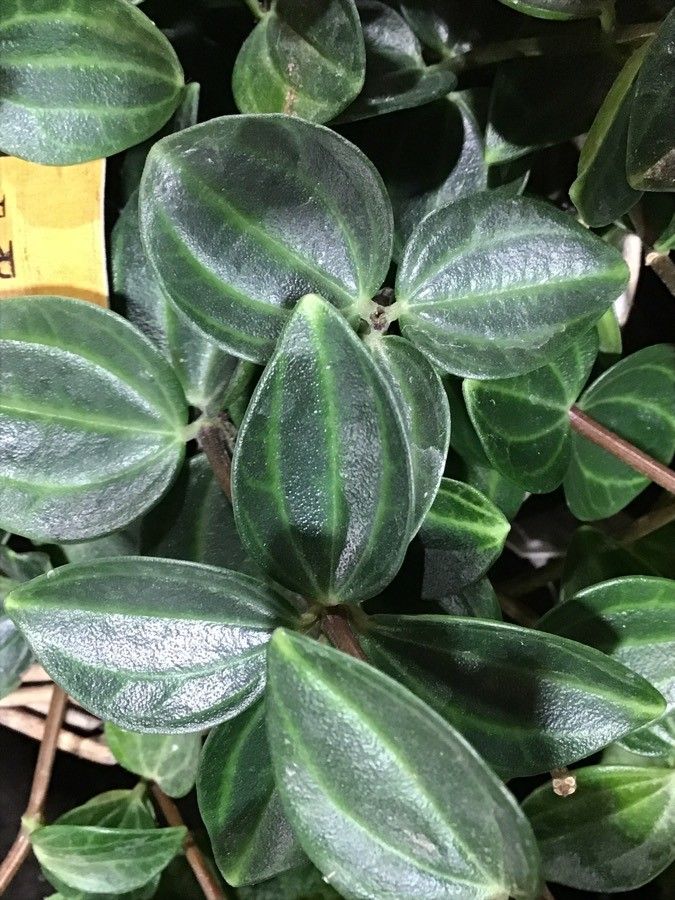
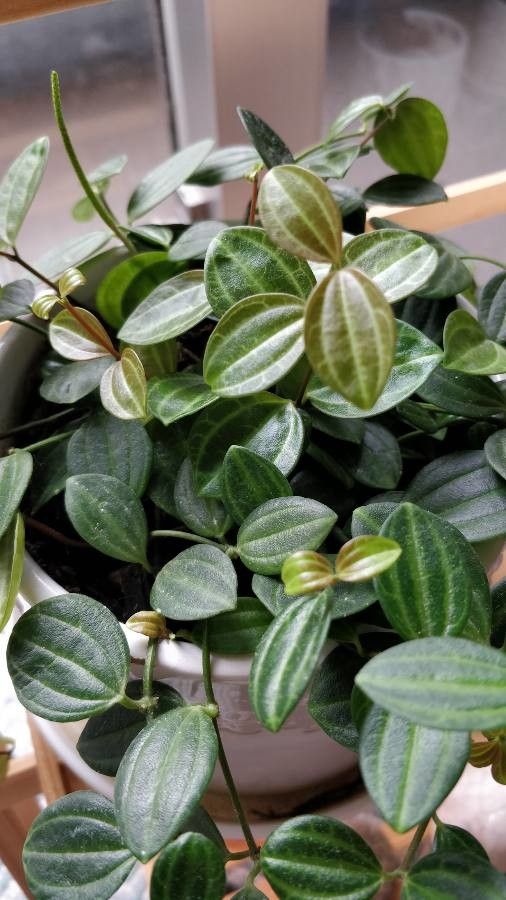
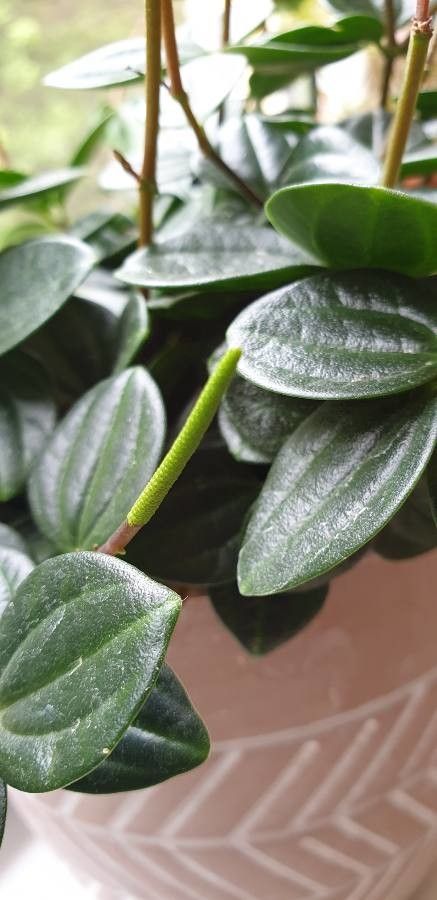
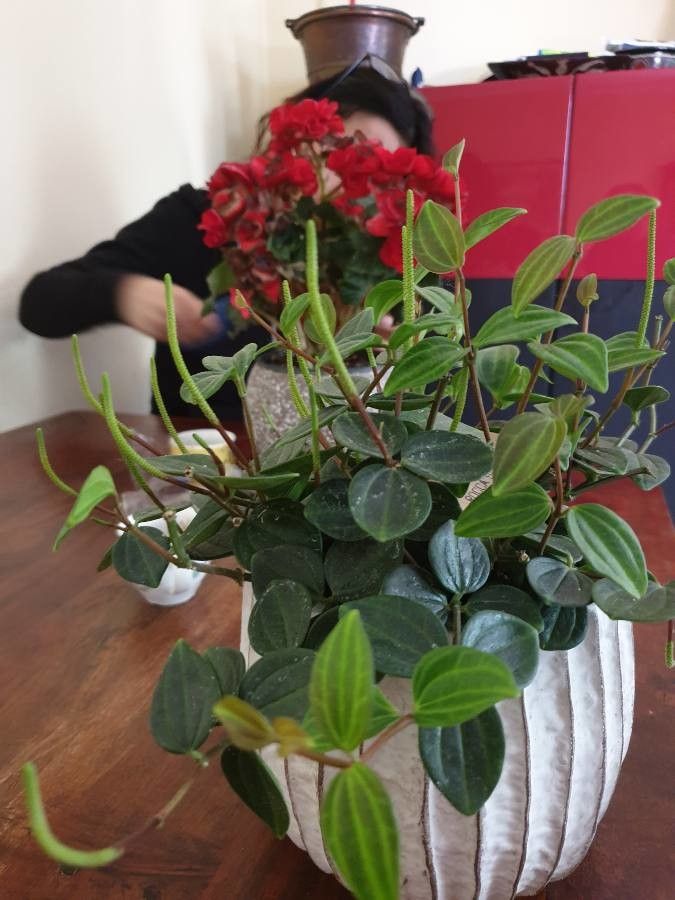
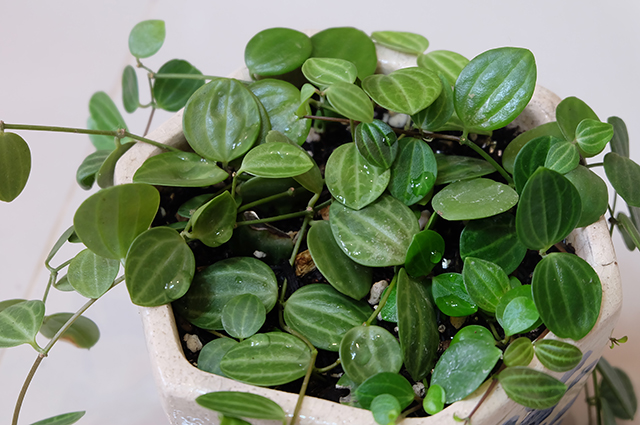
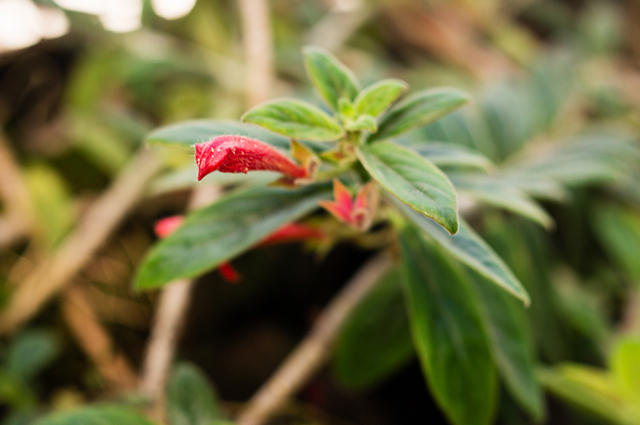
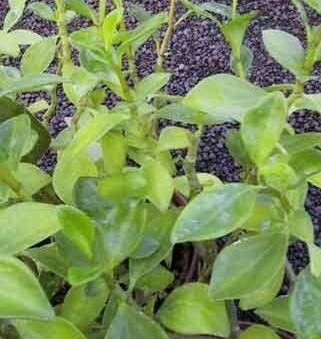
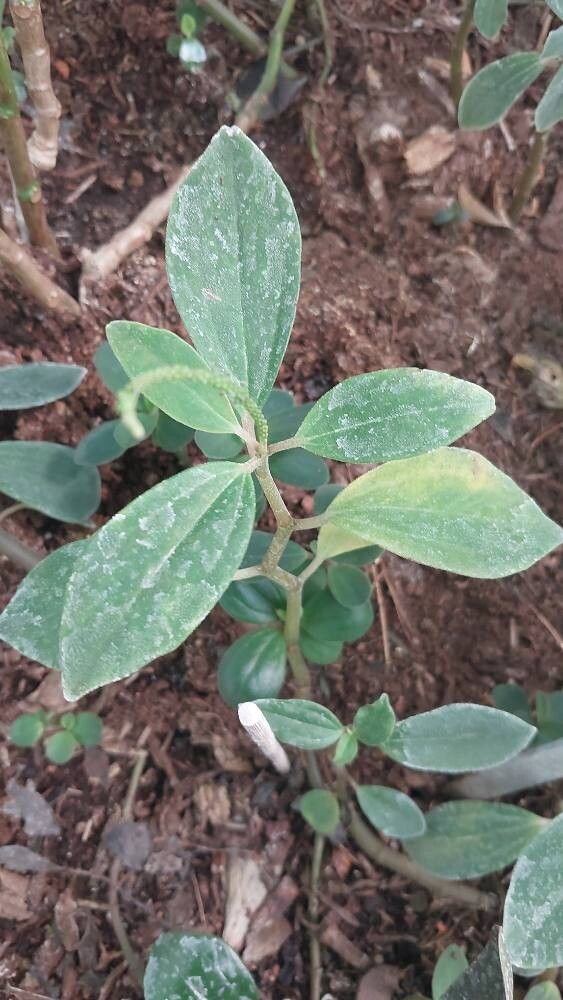
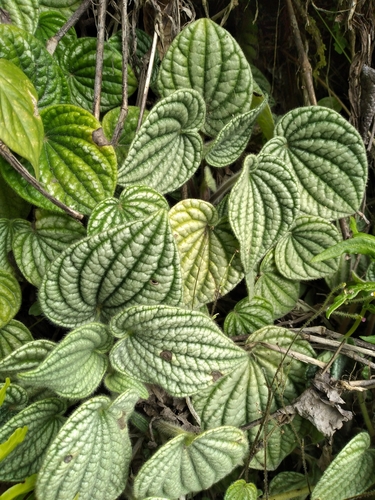
Peperomia quadrangularis is a small, perennial plant belonging to the Piperaceae family. Native to Central and South America, it thrives in tropical rainforests. The plant stands out for its thick, succulent, square-shaped stems with distinct ridges running along their length.
The leaves of Peperomia quadrangularis are small, oval-shaped, and glossy. They grow in pairs along the stem and vary in color from green to shades of red or purple, depending on the plant variety.
This easy-to-care-for houseplant thrives in bright but indirect light. It prefers well-draining soil and regular watering but does not tolerate overwatering or standing water around its roots.
Peperomia quadrangularis has several uses. Its unique appearance makes it an attractive ornamental houseplant, while it is also employed as a medicinal herb for treating ailments such as fever, coughs, colds, and headaches.
Overall, Peperomia quadrangularis is an intriguing addition to any indoor garden. Its distinct appearance and ease of care make it ideal for novice gardeners seeking low-maintenance plants as well as experienced gardeners looking for something new.
The radiator plant has strong resistance to disease and is generally not prone to illnesses. However, it can be vulnerable to leaf spots when light and ventilation are inadequate and watering is excessive. Its care level is considered easy, since it mainly needs regular watering and little else. The radiator plant is appropriate for people who lack the time and energy to devote to regular care.
How to keep Peperomia Quadrangularis.
Light
The radiator plant grows best in moderate light and requires a few hours of exposure each day, though it can tolerate low-light conditions. Seasonal changes may mean moving a potted radiator plant to get better light. Too little light can hinder its growth and health.
Water
The Radiator plant thrives in the humid environments typical of tropical rainforests. While it can tolerate moderate drought, it prefers consistent moisture and requires watering once a week. As an evergreen often kept indoors, it benefits from being in containers that maintain balanced moisture levels.
Temperature
The radiator plant does best in its native environment where temperatures range from 68 to 100°F (20 to 38 ℃). Adjusting conditions to match seasonal temperature changes will promote its healthy growth.
Fertilizer
Correct fertilizing is essential for the Radiator plant's health and appearance. Fertilize the Radiator plant in summer, repeating this monthly throughout summer. Nutrients drive growth and support the plant's parts. Fertilization improves the Radiator plant's floral display, ensuring the best blooms.
Pruning
The radiator plant is known for its succulent stems and fleshy leaves. To keep it healthy, prune any dead or damaged parts from early to late spring. Make sure to use clean tools to prevent the spread of disease. Pruning helps improve air circulation, prevents legginess, and encourages new growth. For a compact shape, be sure to make your cuts just above a leaf node.
Pot & Repot
Repot the Radiator plant in early spring, selecting a pot only slightly larger than the existing one and with adequate drainage. Use a well-draining potting mix and position the root ball at the same level it was before. Gently loosen any root-bound roots. After repotting, water generously and place the plant in a warm, shady location. Regular pruning will help keep its size in check and encourage new growth.
Botanical profile.
- Plant Type
- Vine, Herb
- Life Cycle
- Perennial
- Genus
- Peperomia
- Family
- Piperaceae
- Hardiness Zone
- 11-12
- Mature Height
- 0 cm to 6 cm
- Mature Spread
- 20 cm
- Leaf Color
- Green, White
- Leaf Type
- Evergreen
- Flower Color
- White, Green
- Flower Size
- 0.20 cm to 0.25 cm
- Bloom Time
- All year round
- Planting Time
- Spring, Autumn, Winter
- Harvest Time
- All year round
- Native Area
- Colombia, Cuba, Venezuela, Guyana, Brazil, Costa Rica, Panama
Other names.