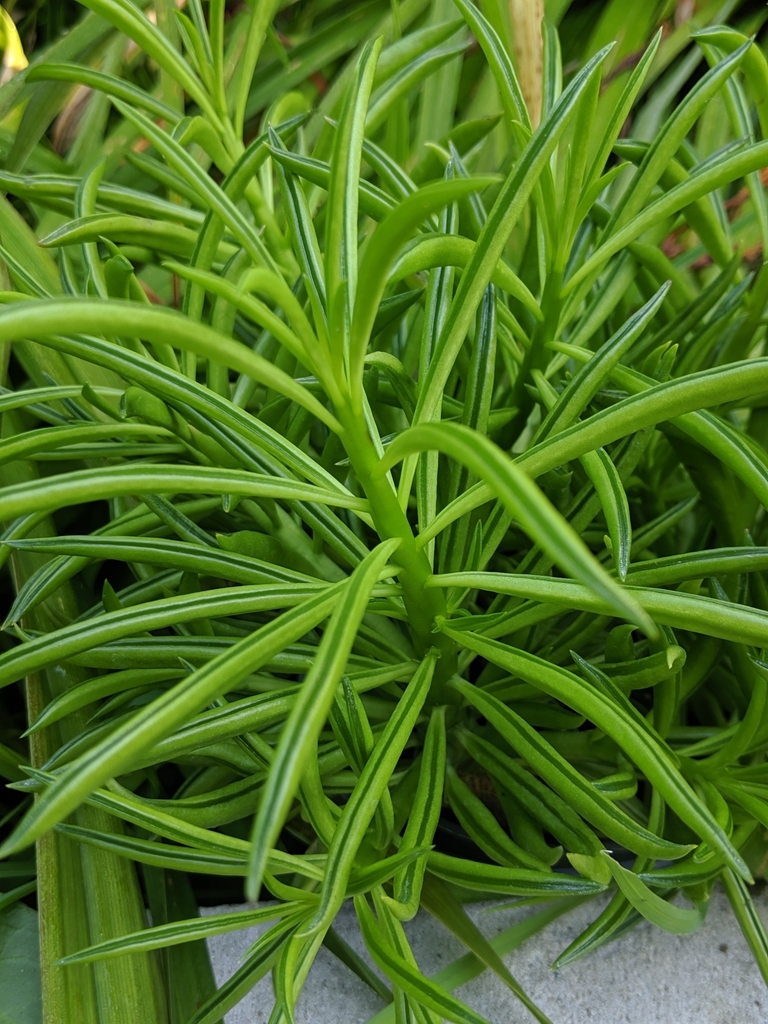
Peperomia ferreyrae, commonly known as "Happy Bean" or "Pincushion Peperomia," is a small succulent native to Peru. This plant features slender, elongated leaves that grow in a rosette pattern. The leaves are green with red tips, fleshy, and have a slightly translucent quality that gives them an almost glass-like appearance.
Peperomia ferreyrae is an easy-to-care-for houseplant that thrives in bright but indirect light and well-draining soil. It prefers moderate temperatures and humidity levels but can also tolerate drought conditions to some extent.
The plant produces small white flowers on long stems that emerge from the center of the rosette. While these flowers are not particularly showy, they do add an interesting element to the overall appearance of the plant.
Although the entire genus is named for its flowers, the clusters of small yellow flowers on Peperomia ferreyrae are not particularly valued. Instead, the plant is treasured for its distinctive foliage. Its small size and non-spreading habit make it perfect for compact spaces and arrangements such as windowsills, dish gardens, desktops, conservatories, and greenhouses. FUN FACT · FROM THE LIBRARY
Peperomia ferreyrae is often used as a decorative accent in terrariums or mixed with other succulents for added texture and visual interest. Its unique shape makes it an excellent choice for modern or minimalist decor styles.
Overall, Peperomia ferreyrae is an attractive and low-maintenance houseplant that adds visual interest to any indoor space with its distinctive shape, coloration, and texture.
Pincushion Peperomia: The genus name "Peperomia" means "pepper-like" in Latin, which refers to the pepper-like shape of this plant's flowers. The common name "pincushion" highlights the plant's distinctive elongated, densely packed, pointy leaves that set it apart from other species in the genus.
Happy bean has moderate disease resistance but is more sensitive to humidity and excess watering. It is also more prone to disease when kept in low light and overwatered. Regarding care, Happy bean is drought-tolerant and can withstand long stretches without water. It needs little fertilizer and only occasional pruning. Because of these traits, it is suitable for people of all experience levels, especially those who prefer to spend less time on plant care and who may occasionally be away from home for extended periods. It is a good option for anyone who does not want to devote much time to plant maintenance yet still wants an easy-to-care-for plant.
How to keep Peperomia Ferreyrae.
Light
Happy bean grows best in moderate light, though it can tolerate intense sun or very low light conditions. Native to environments with shifting illumination, this plant can handle variable light exposure. However, prolonged time in either extreme can impede its healthy growth and harm its leaves.
Water
The pincushion peperomia thrives in dry conditions due to its succulent-like leaves, needing watering only once a week. It does best with a balance of light and moisture and benefits from higher humidity to maintain its lush foliage, similar to the environment of its native habitat.
Humidity
This plant will thrive in moderate humidity, which is probably the level in your home. However, misting it a few times a week can be very beneficial. Make sure the room has good ventilation.
Temperature
In its natural habitat, happy bean is found in warm, dry areas with an average temperature range of 20 to 38 ℃ (68 to 100.4 ℉). Thus, it favors warm conditions and can tolerate a wide span of temperatures within that range. In winter, it is advisable to keep temperatures above 15 ℃ (59 ℉) to prevent leaf damage.
Fertilizer
For Happy bean, apply light doses of fertilizer once or twice a year during the growing season. Do not fertilize in winter or in summer when the plant is dormant. Cut back on fertilizer for repotted plants and wait a couple of months after repotting before you start fertilizing again. Fertilizing helps maintain healthy growth and promotes blooms.
Pruning
Adding to its low-maintenance charm, Happy Bean plants do not require extensive pruning. Simply pinch back overgrown stem tips or prune back specific stems to keep its growth in check. Light pruning will keep your plant vibrant and encourage new growth.
Pot & Repot
When repotting a Happy bean, choose a container slightly larger than the current one that provides good drainage. Use a gritty, well-draining cactus or succulent potting mix. Gently remove the plant from its old pot, brush off excess soil, and set it at the same depth. Wait several days before watering so any root injury can heal. Repot in spring or fall and place it in a brightly lit spot.
Botanical profile.
- Plant Type
- Succulent, Herb
- Life Cycle
- Perennial
- Genus
- Peperomia
- Family
- Piperaceae
- Hardiness Zone
- 10-12
- Mature Height
- 20 cm to 30 cm
- Mature Spread
- 20 cm to 25 cm
- Leaf Color
- Green
- Leaf Type
- Evergreen
- Flower Color
- Green, Yellow
- Flower Size
- 2.54 cm
- Bloom Time
- All year round
- Planting Time
- Spring, Summer, Autumn, Winter
- Harvest Time
- All year round
- Native Area
- Peru
Other names.
Reader questions.
When Should I Water My Pincushion Peperomia?
Pincushion peperomia thrives with proper watering at the right intervals. It's best to water when the top 1-2 inches of soil feel dry to the touch. Observing leaf changes can also guide watering times; leaves turning a deeper green or showing signs of wilting or curling signal the plant needs water. Slow growth during the growing season indicates a need for more water. It's essential to respond to these signs promptly to prevent over or under-watering, which can cause root rot, leaf yellowing, or even kill the plant through either waterlogging or dehydration.
Why should I add fertilizer to my Pincushion peperomia?
Fertilizing Pincushion peperomia helps provide nutrients for healthy growth, even though it already stores water and nutrients. Applying plant food during the growing season can also promote bloom production in mature specimens.
What are the sunlight requirements for Pincushion Peperomia?
Pincushion peperomia requires about 3-6 hours of sunlight daily to thrive, known as partial sun. However, it can also adapt to full sun or full shade conditions, which means more than 6 hours of sunlight daily. It's important to observe how sunlight moves through your garden to find the ideal spots that offer a balance of light and shade, ensuring the plant's well-being.
What is the ideal temperature range for Pincushion peperomia?
Pincushion peperomia, known botanically as Peperomia ferreyrae, thrives in warm and dry regions. It prefers a mean temperature range of 20 to 38°C (68 to 100.4°F). During the winter, it's recommended to keep the plant in temperatures above 15°C (59°F) to prevent leaf damage. The plant loves heat but enters a dormant state in cold winter months and should be protected from temperatures dropping below 5°C by moving it indoors and providing ample sunlight, ideally near a south-facing window. If natural light is insufficient, supplemental lighting can be used. When temperatures fall below 20°C, the plant's growth slows, necessitating a reduction or cessation of watering to avoid root rot.
How Should I Water My Pincushion Peperomia?
Watering pincushion peperomia effectively involves considering its specific needs. Bottom-watering is a recommended method, allowing the plant to absorb water through the roots without excessively wetting the foliage, minimizing disease risk. If using a watering can, opt for one with a narrow spout to target water at the plant's base, preventing over-watering and minimizing foliage wetness.
When should I fertilize my Pincushion peperomia plant?
Pincushion peperomia plants require only a small amount of fertilizer during the growing season. It is recommended to fertilize them only 1-2 times a year. Ideally, you should fertilize your Pincushion peperomia in the spring and autumn, avoiding winter and summer when it is dormant. If you have recently repotted your plant, be cautious with the amount of fertilizer you use. It's best to wait a few months after repotting before starting to apply fertilizer.
How does Pincushion Peperomia adapt to different light conditions?
Originating from environments with fluctuating light conditions, Pincushion Peperomia can adapt to a range of light exposures, from moderate illumination to harsh sunlight or minimal light. However, to maintain its growth and leaf health, avoiding prolonged extremes in light conditions is crucial. Artificial lighting can be a solution in less sunny spaces or during winter, with LED lights recommended for their customizable wavelengths. The artificial lighting needs vary based on the plant's natural sunlight requirements, with full sun plants needing 30-50W/sq ft, partial sun plants 20-30W/sq ft, and full shade plants 10-20W/sq ft of artificial light.
How does low temperature affect Pincushion peperomia and what are the remedies?
Pincushion peperomia is susceptible to damage from low temperatures, thriving best above 20°C. Exposure to temperatures below 5°C can put the plant at risk while falling below 1°C may lead to weakness, wilting, and root rot. If you notice mild frost damage, which may not be immediately apparent but can cause the plant to wither after a week, it's crucial to trim off the frostbitten areas. Check the roots for rot — if found, they should be cut off and the plant can be propagated through cuttings. Moving the plant indoors to a warm environment near a south-facing window, or using supplemental lighting if necessary, can aid recovery.
How Much Water Does Pincushion Peperomia Really Need?
The water requirement for pincushion peperomia varies with pot size, root depth, and plant size. Originating from tropical rain forests, it prefers moderate watering, mirroring its natural habitat. Small pots require less but more frequent watering, while larger pots need more water to ensure it reaches the entire root system. Regularly adjust the watering amount as the plant grows. The right water amount keeps the leaves firm and vibrant, whereas too little or too much water can cause wilting, yellowing, or spongy leaves.
When is the best time to not use fertilizer on my Pincushion peperomia?
Pincushion peperomia, like other plants, goes through a dormancy period. During this time, it is best to avoid applying fertilizer. The plant stops growing in both the summer and winter, so it's important to refrain from fertilizing during these seasons. Additionally, it's advisable to pause fertilization for a few months after repotting in the spring.
What are the symptoms of incorrect light exposure in Pincushion Peperomia?
Incorrect light exposure in Pincushion Peperomia can lead to several symptoms, including leggy or sparse growth, slower or halted new growth, faster leaf drop, chlorosis (yellowing leaves due to chlorophyll breakdown), sunscald (damage from intense sun exposure), leaf curling (a defense mechanism against too much sunlight), wilting (from overexposure to sunlight leading to increased water loss), and leaf scorching (brown, dry, and crispy leaf edges from excessive sunlight). These symptoms indicate the plant's struggle with either too much or too little light.
How should you care for Pincushion peperomia in high temperature conditions?
During the summer, it's important to ensure that Pincushion peperomia does not remain in temperatures above 38°C. Exposure to temperatures exceeding 43°C can halt its growth, cause water loss, wilting, and increase susceptibility to sunburn. If your plant experiences these symptoms, remove any sunburned or rotten parts and protect it from direct afternoon sunlight until it recovers and resumes growth. For plants suffering from root rot due to overwatering in high heat, cease watering until new roots begin to emerge.