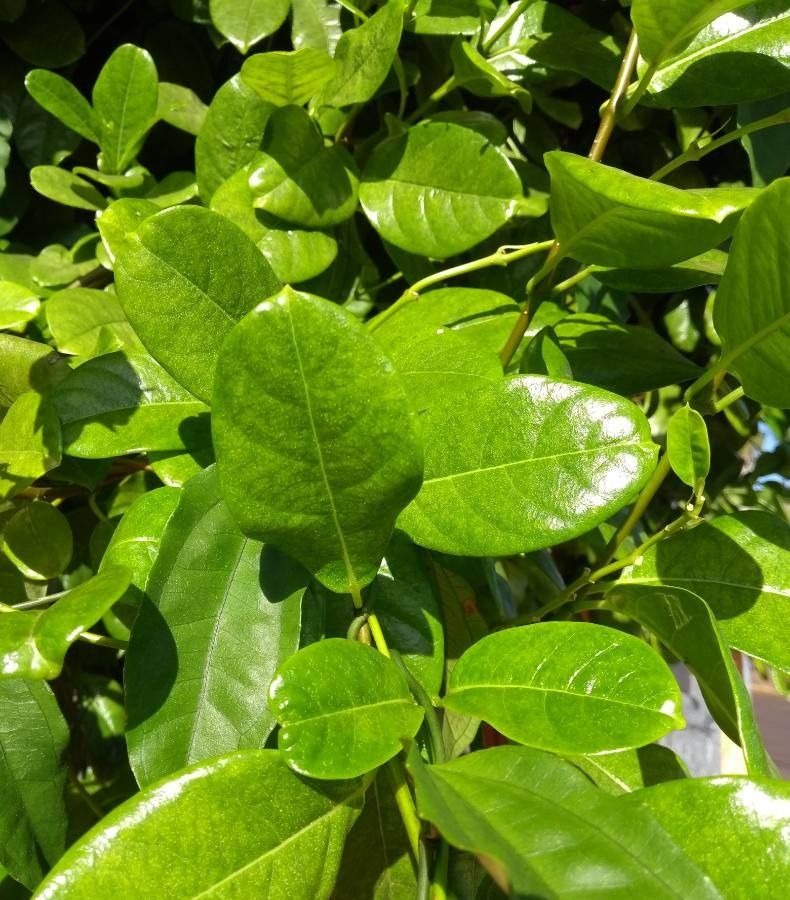
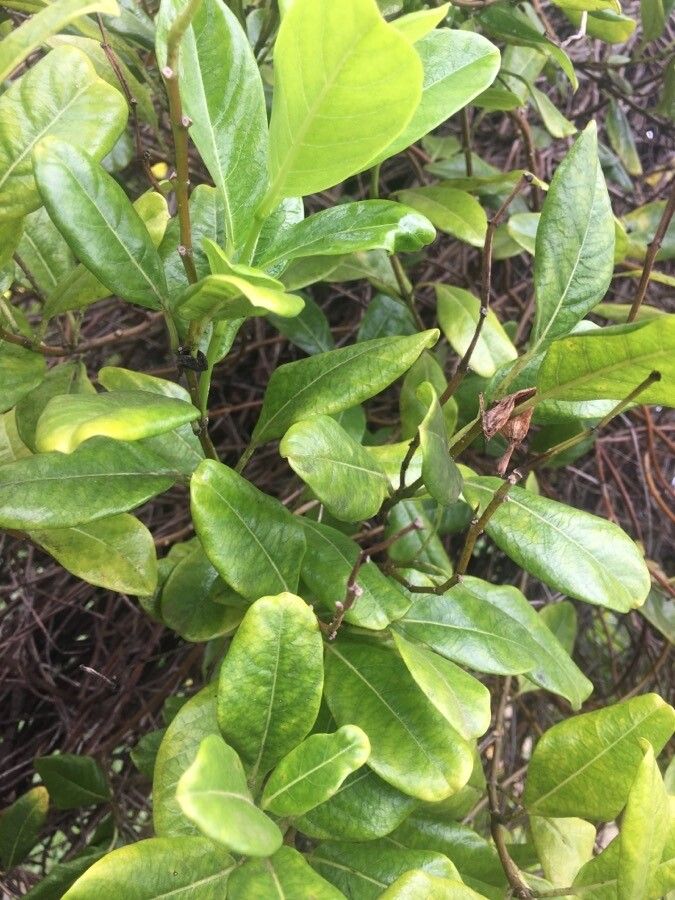
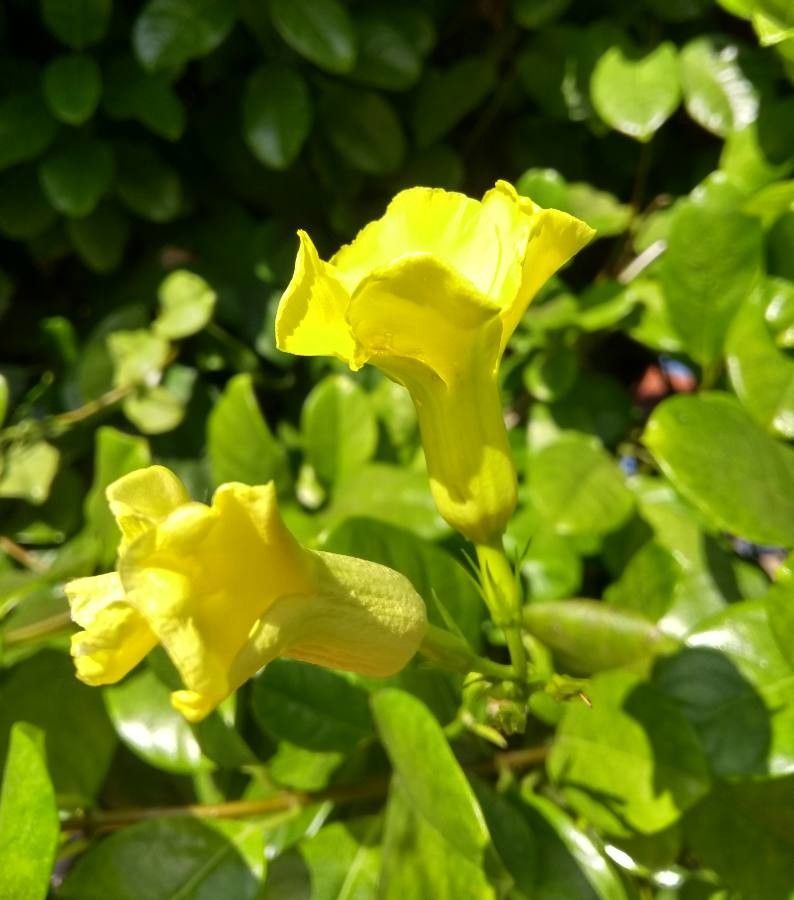
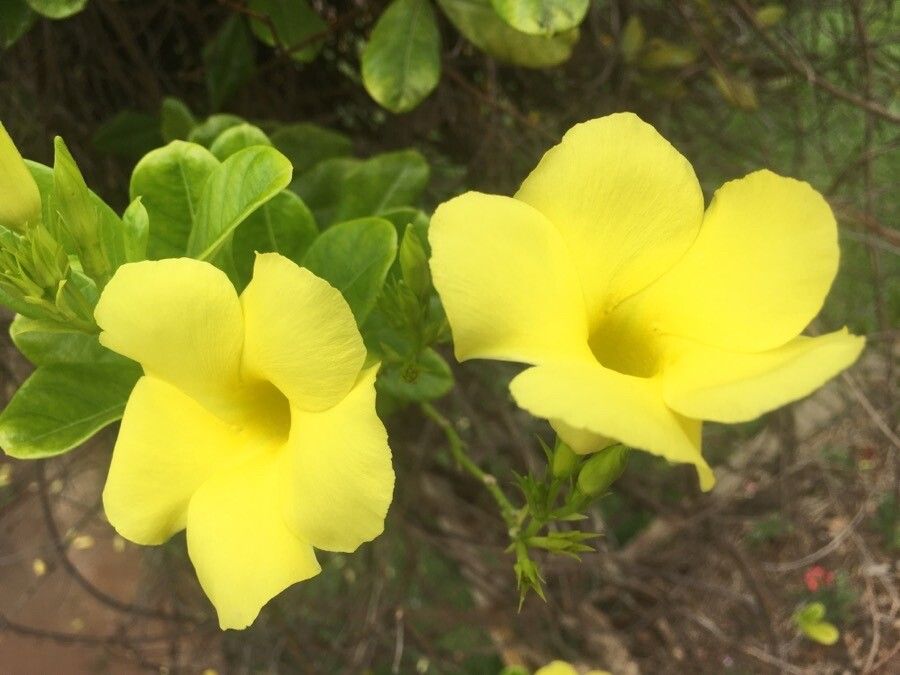
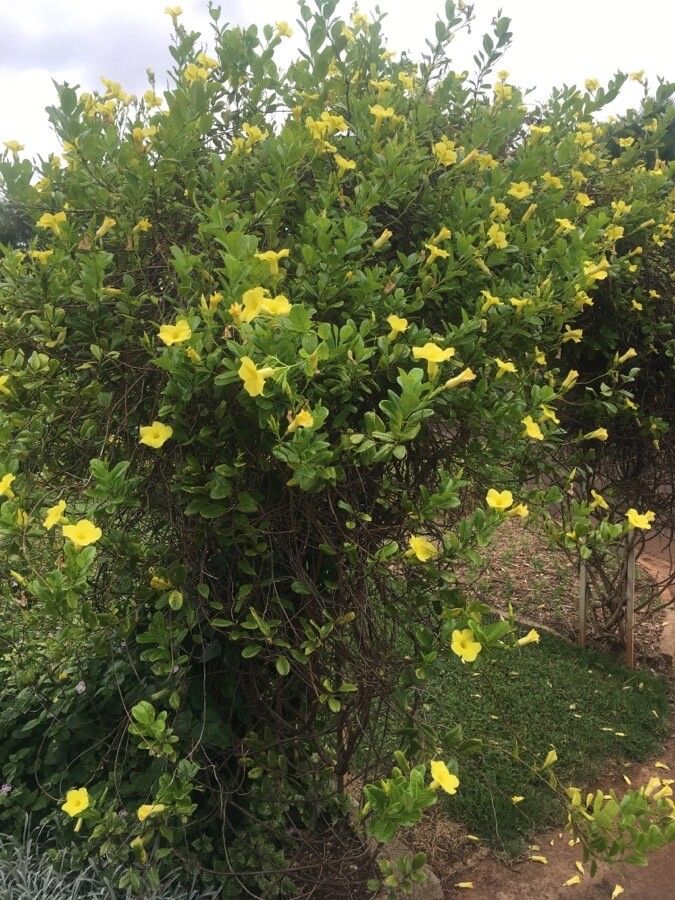
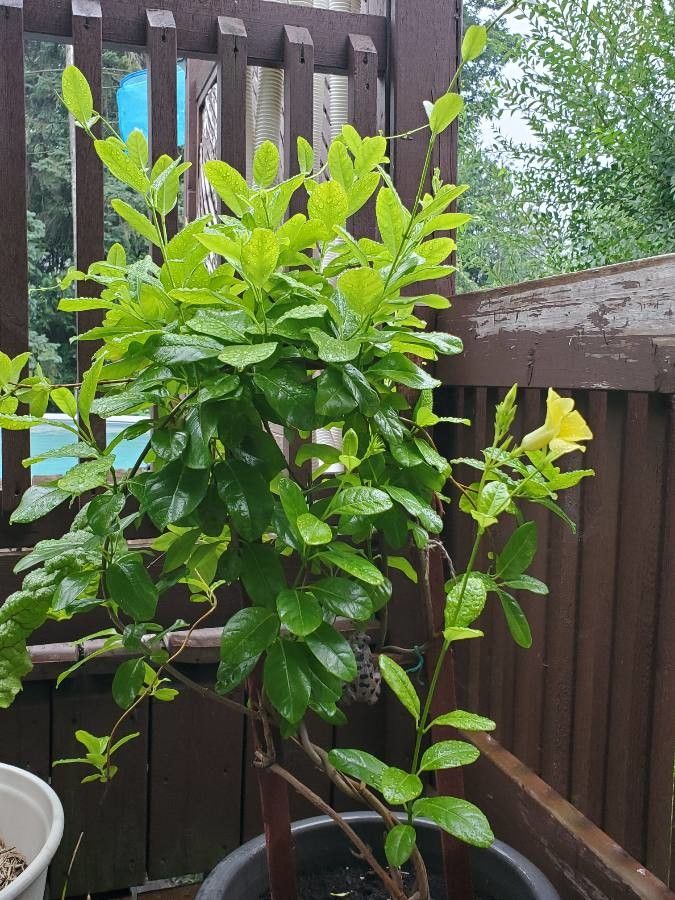
Pentalinon luteum, commonly known as the Yellow Mandevilla or Wild Allamanda, is a flowering plant species belonging to the Apocynaceae family. Native to Central and South America, it thrives in a variety of habitats, including forests, savannas, and disturbed areas.
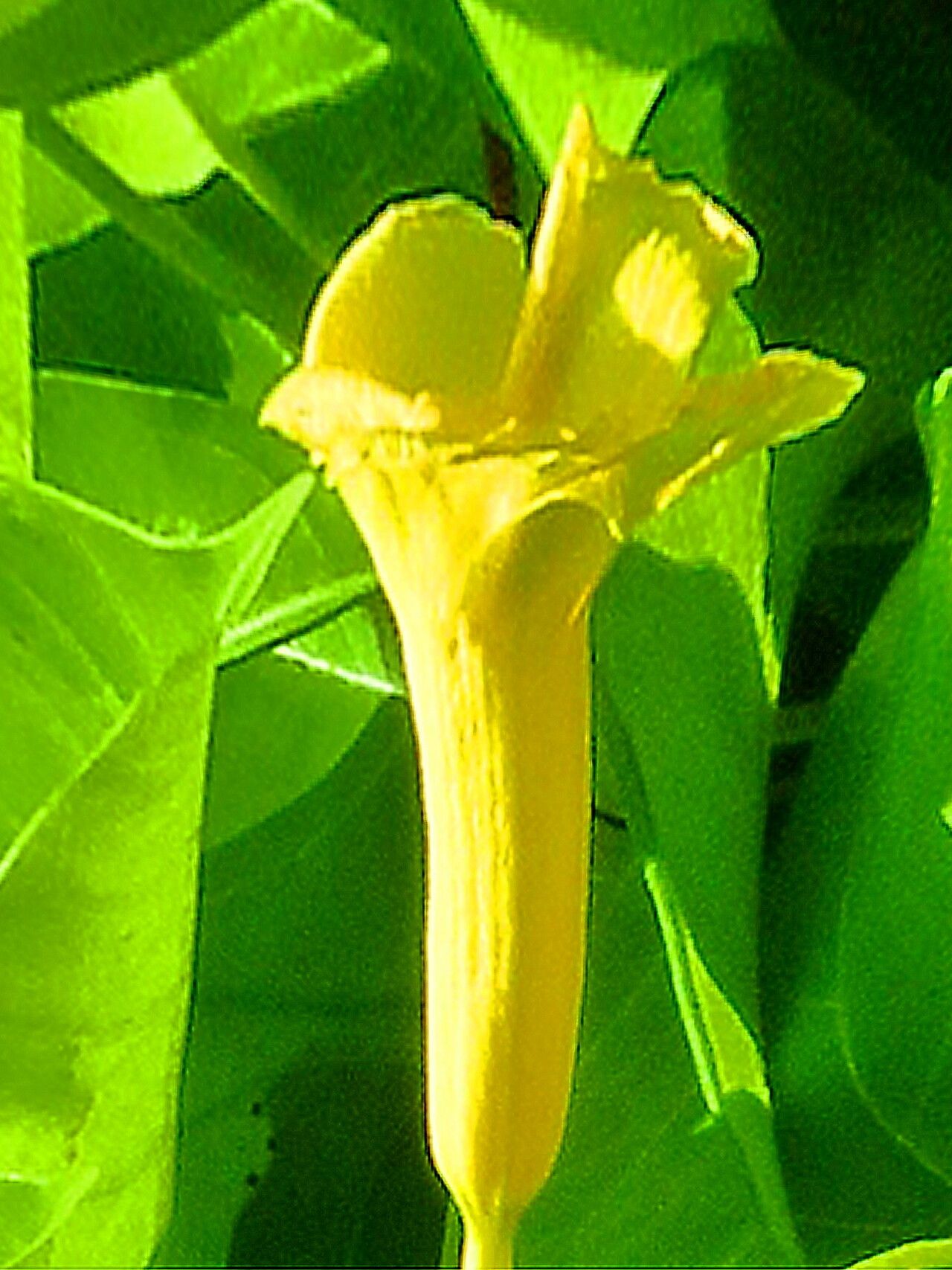
This plant features a woody stem that can grow up to 10 meters in height, adorned with glossy green leaves arranged alternately along the stem. Its trumpet-shaped flowers, bright yellow with five petals, emit a sweet fragrance and bloom from spring through fall.
Pentalinon luteum is popular for ornamental purposes due to its attractive flowers and foliage. For optimal growth, it requires full sun exposure or partial shade and well-drained soil.
In traditional medicine, Pentalinon luteum has been used for its medicinal properties, such as treating fever, reducing inflammation, and relieving pain.
In summary, Pentalinon luteum is notable not only for its ornamental value but also for its medicinal properties, making it an important species from both ecological and economic perspectives.
Hammock viper's-tail shows strong resistance to disease and is usually not susceptible to illnesses. Regarding care, this species is fairly low-maintenance. Outdoors, it needs only light watering, and larger specimens typically do not require pruning. Smaller specimens, however, should be trimmed after they finish flowering. Hammock viper's-tail is appropriate for anyone who has an outdoor area, like a garden or a deck, and it does not demand extensive plant-care experience.
How to keep Pentalinon Luteum.
Light
Hammock viper's-tail requires plentiful light for vigorous development and grows best when fully exposed. Its seeds sprout and reach maturity without any need for shaded periods. Coming from environments with high illumination, it does not tolerate low-light settings. Both too much and too little light have little effect on its condition, demonstrating its strong hardiness.
Water
The hammock viper's-tail, native to subtropical areas, thrives in high humidity and consistent moisture. To maintain its optimal health, it requires weekly watering. As an evergreen plant, it needs a steady water supply throughout the year. When cared for outdoors, watering should be adjusted based on seasonal rainfall.
Temperature
Hammock viper's-tail comes from tropical areas where the climate is generally warm and humid. Because of this, it is suited to high temperatures and humidity. It does not tolerate sudden temperature changes and prefers a consistent temperature, so avoiding temperature swings indoors is important. It usually cannot endure cold and needs warmer conditions to grow. If the ambient temperature falls too low, the plant may stop growing or even die.
Fertilizer
The best time to fertilize a Hammock viper's-tail is in early spring, when it comes out of dormancy. This encourages overall growth and flower development. Fertilizing improves the foliage, stems, and branches, and promotes flowers that are larger, more vibrant, and longer-lasting. It helps move nutrients from the roots to the flowers and enhances the plant's health and resistance to disease.
Pruning
The Hammock Viper's-Tail displays vibrant yellow flowers and thrives with early spring pruning to encourage growth and maintain its shape. To promote both health and aesthetics, use clean shears to remove dead branches and thin out dense areas, enhancing air circulation. For the best results, perform pruning just before the active growing season begins.
Botanical profile.
- Plant Type
- Vine, Shrub
- Life Cycle
- Perennial
- Genus
- Pentalinon
- Family
- Apocynaceae
- Hardiness Zone
- 9-11
- Mature Height
- 2.44 m to 3.66 m
- Mature Spread
- 8 cm to 13 cm
- Leaf Color
- Green
- Leaf Type
- Evergreen
- Flower Color
- Yellow
- Flower Size
- 5.08 cm to 7.62 cm
- Bloom Time
- All year round
- Planting Time
- Spring, Summer, Autumn
- Harvest Time
- All year round
- Native Area
- Bahamas, Cuba, Honduras, Mexico, Jamaica
Other names.
Reader questions.
What are the sunlight requirements for Hammock viper's-tail?
Hammock viper's-tail thrives best when exposed to full sun, needing above 6 hours of sunlight daily for robust growth. It is a plant that originates from habitats with ample luminance and demonstrates resilience in both excessive and insufficient light conditions. Despite its hardiness, it's crucial to monitor the plant's exposure to sunlight carefully, ensuring it receives the proper balance of light and shade. This balance is vital for the plant's happiness and health, as indicated by the gentle reminder to watch how sunlight gracefully moves through your garden to choose the best spots for your plants.
Can Hammock viper's-tail grow under artificial lighting?
Yes, Hammock viper's-tail can grow under artificial lighting, which is an essential solution for indoor plants or during suboptimal natural lighting conditions such as in winter or less sunny spaces. The use of LED lights is recommended as they can be customized to provide specific wavelengths needed by the plant. For plants requiring full sun, 30-50W/sq ft of artificial light is needed, while the light source should be placed 12-36 inches above the plant to mimic natural sunlight. Additionally, simulating natural daylight hours by keeping lights on for 8-12 hours per day is beneficial for the plant's growth.
What are the common symptoms of light deficiency in Hammock viper's-tail?
Common symptoms of light deficiency in Hammock viper's-tail include smaller new leaves, leggy or sparse growth, faster leaf drop, slower or no new growth, lighter-colored new leaves, and leaf scorching. These symptoms indicate that the plant is not receiving adequate sunlight, impacting its ability to perform photosynthesis efficiently, grow robustly, and maintain its health.
What are the symptoms of excessive sunlight exposure in Hammock viper's-tail?
Symptoms of excessive sunlight exposure in Hammock viper's-tail include chlorosis, sunscald, leaf curling, wilting, and leaf scorching. These symptoms are indicative of potential damage from too much direct sunlight, leading to issues such as bleached or necrotic areas on leaves, reduced hydration, and overall reduction in plant health and photosynthetic capacity.
How can I address sunlight-related issues in Hammock viper's-tail?
To address sunlight-related issues in Hammock viper's-tail, ensure the plant receives at least 6 hours of direct sunlight daily, gradually moving it to sunnier locations each week. For indoor plants, use artificial light if necessary, keeping a lamp on for at least 8 hours daily, or consider investing in professional plant grow lights. Outdoors, avoid sudden changes in light intensity to prevent sunburn. Minimizing obstructions such as pruning trees can help increase sunlight exposure. When transplanting smaller plants, do it during their dormant period to a location with ample sunlight and good drainage. It's important to note that while affected parts of the plant may not recover, new growth after increasing light exposure will be healthy.