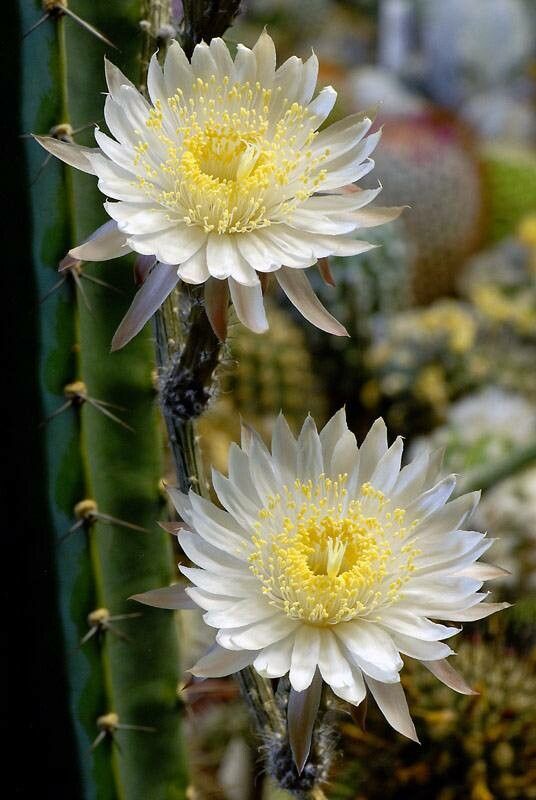
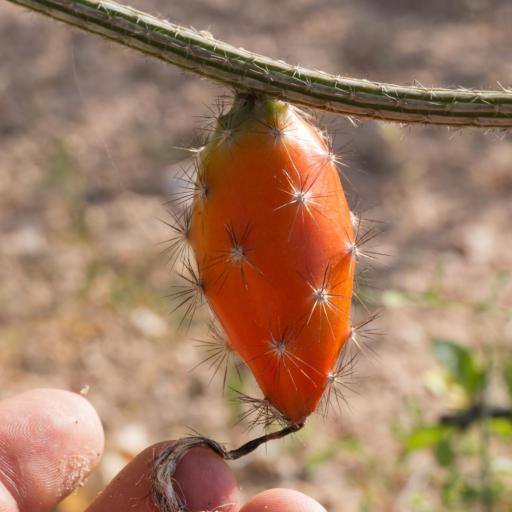
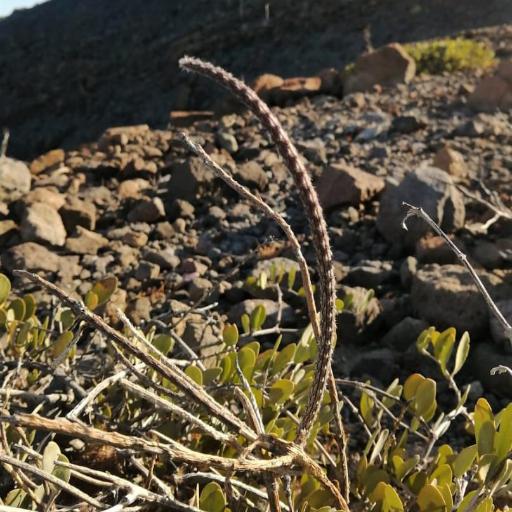
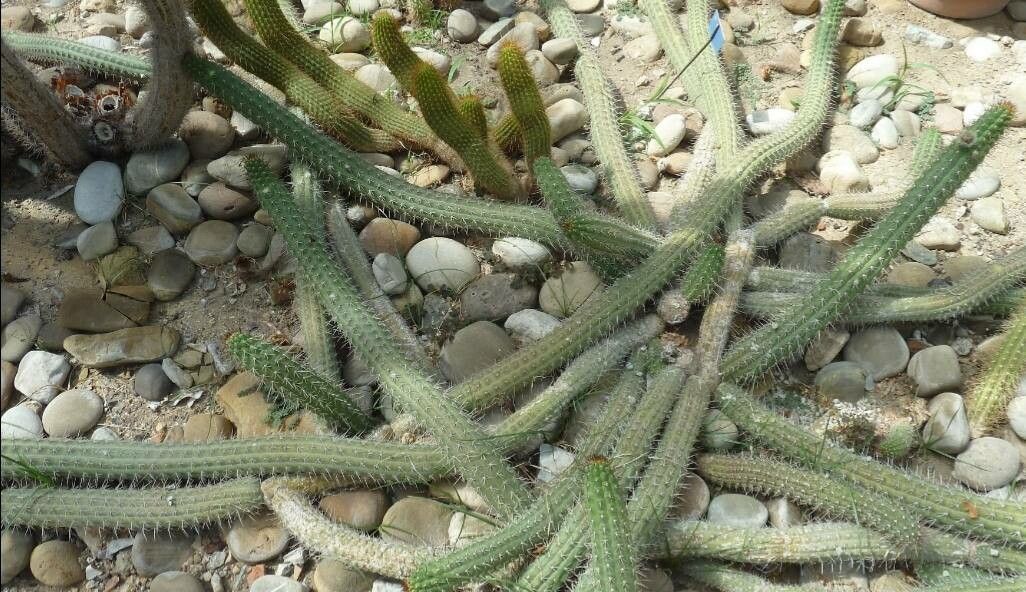
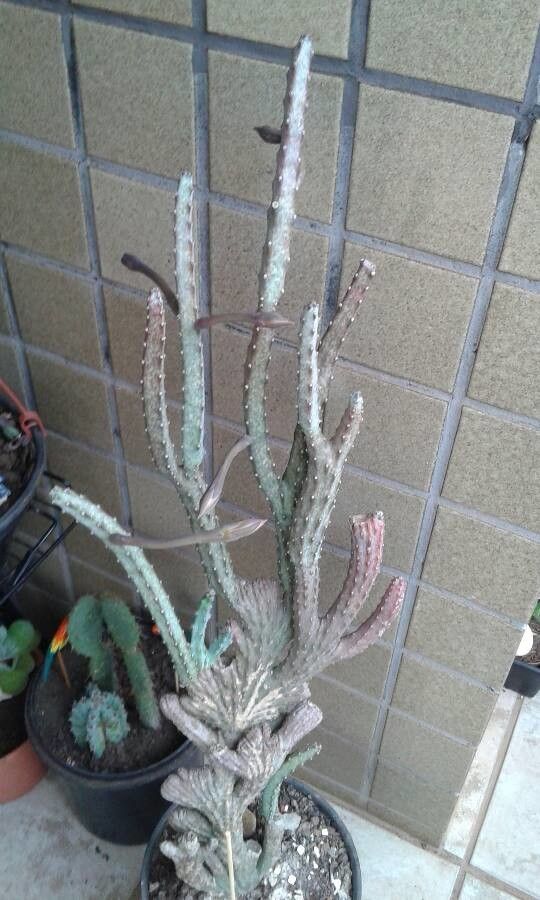
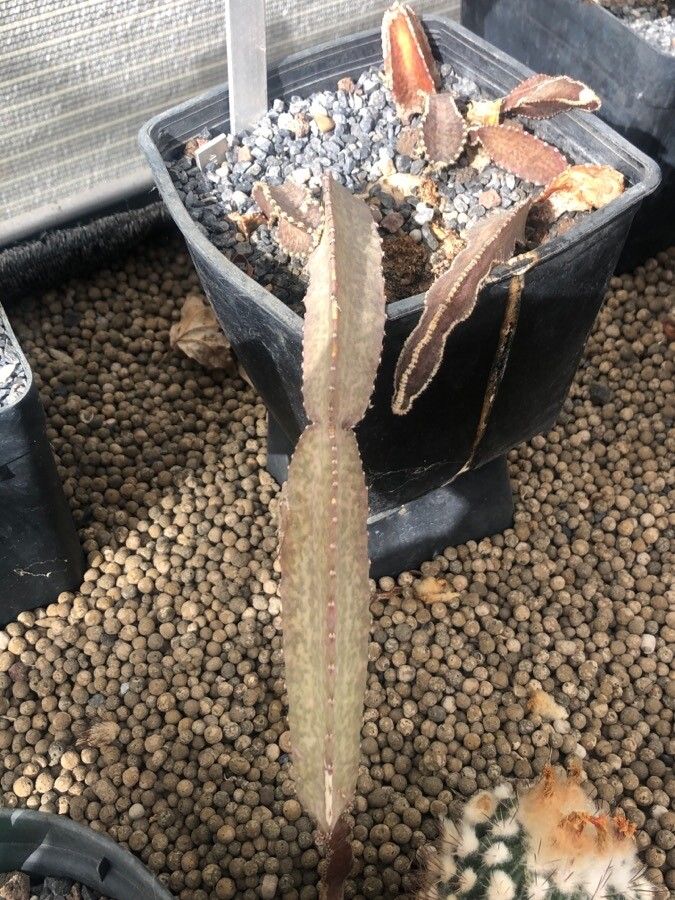
Peniocereus striatus is a species of cactus known by several common names, including gearstem cactus, cardoncillo, jacamatraca, sacamatraca, and dahlia-rooted cactus. It is endemic to the Sonoran Desert, where it occurs in Baja California, Sinaloa, and Sonora in Mexico and Arizona in the United States. This cactus is a shrub with narrow brown or greenish cylindrical branching stems up to a meter long, but known to reach 2 meters at times. When not in flower or fruit the plant is "very inconspicuous", and "commonly looking more like a collection of dead stems" hidden amongst the dry branches of other plants. The stems are covered in clusters of small, weak spines a few millimeters long. They are yellowish white, sometimes with black tips. The roots have tuber-like swellings at their tips that resemble sweet potatoes. The flowers bloom at night. They are up to 10 centimeters wide with white or pinkish inner tepals and reddish or purplish outer tepals. The style is up to 6 centimeters long and the stamens are about one centimeter in length. The bright red, spiny fruit is 4 or 5 centimeters long. Flowering and fruiting usually occur when summer rainfall starts. This cactus grows in sandy desert soils on hills and flats. It usually grows beneath other plants. It is associated with nurse plants, including ironwood (Olneya tesota) and creosote bush (Larrea tridentata). The flowers are pollinated by sphinx moths. The seeds are eaten by birds, which then disperse them; many of the cacti grow beneath the trees where birds roost. Some populations of this cactus are threatened and in decline. In general, the plant is common in its range and is not a threatened species.
Gearstem cactus has good resistance to disease and can handle normal care without becoming ill easily. It can be prone to mealybugs, which may cause some damage but are typically not a serious problem. Regarding care, Gearstem cactus is drought-tolerant and does not require frequent watering. It can endure long stretches without water and needs little fertilizer. However, it is highly vulnerable to root rot if kept in poor light and given too much water. Overall, Gearstem cactus is suitable for people who want to spend less time on plant care, but it is important to know and meet its basic needs. It is especially appropriate for those who are away for extended periods and might forget to water regularly.
How to keep Peniocereus Striatus.
Light
Originating from dry regions, the Gearstem cactus does best in full sun; its natural habitat features intense sunlight and very little shade. It will also tolerate partial sun, providing some adaptability in its growth.
Water
The Gearstem cactus is a drought-tolerant plant that requires thorough watering only when the soil has dried out. During its growing season, from spring to fall, you should water it weekly. In the winter, reduce the watering frequency to once a week. It's best to use rainwater or distilled water to prevent soil compaction. To avoid rot, be careful not to splash water on the cactus's stem.
Temperature
Although Gearstem cactus can tolerate some heat, it mainly thrives and grows in the cooler seasons and becomes dormant in summer. In very hot summer conditions, provide shade to avoid scorching from intense sunlight. Watering should be reduced or stopped during the hottest months to prevent root rot. The cactus shows vigorous growth in winter and spring. As long as temperatures do not fall too low, it will continue to grow steadily.
Fertilizer
For a Gearstem cactus, small amounts of fertilizer once or twice a year during the growing season are adequate. Avoid feeding it in winter and in summer, when it is dormant. Cut back on fertilizer for plants that have been repotted and wait a couple of months after repotting before you fertilize. Fertilizing helps maintain healthy growth and promotes blooming.
Pruning
The Gearstem cactus is a slender plant with ridged stems. To maintain its health, prune sparingly in early spring, removing only the damaged stems. Be sure to sterilize your tools to prevent infections. Regular inspections not only improve the plant's appearance but also contribute to its overall health, encouraging vigorous growth and resilience. This careful attention will help ensure optimal flowering.
Botanical profile.
- Plant Type
- Succulent
- Life Cycle
- Perennial
- Genus
- Peniocereus
- Family
- Cactaceae
- Hardiness Zone
- 9-11
- Mature Height
- 0.91 m to 2.13 m
- Mature Spread
- 30 cm to 61 cm
- Leaf Color
- Light Green, Gray
- Leaf Type
- Deciduous
- Flower Color
- White, Pink
- Flower Size
- 7.62 cm to 10.16 cm
- Bloom Time
- Summer
- Planting Time
- Spring, Summer
- Harvest Time
- Late summer, Early fall, Mid fall
- Native Area
- Mexico
Other names.