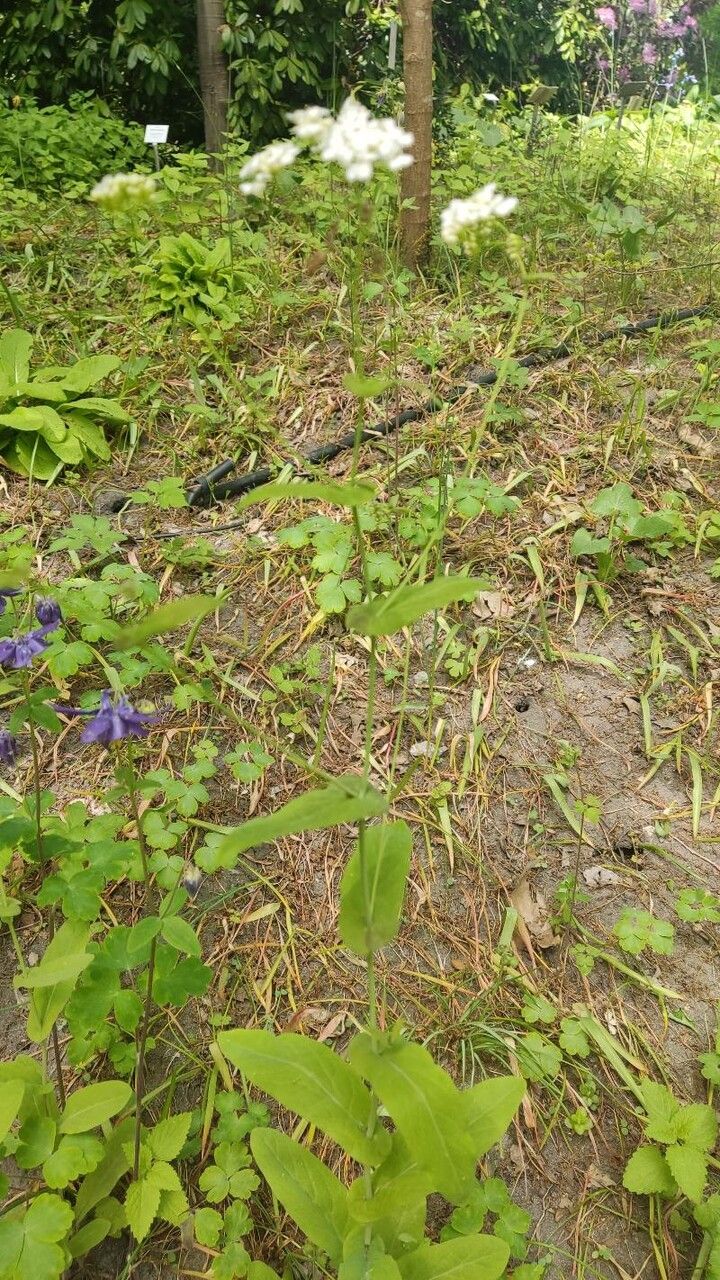
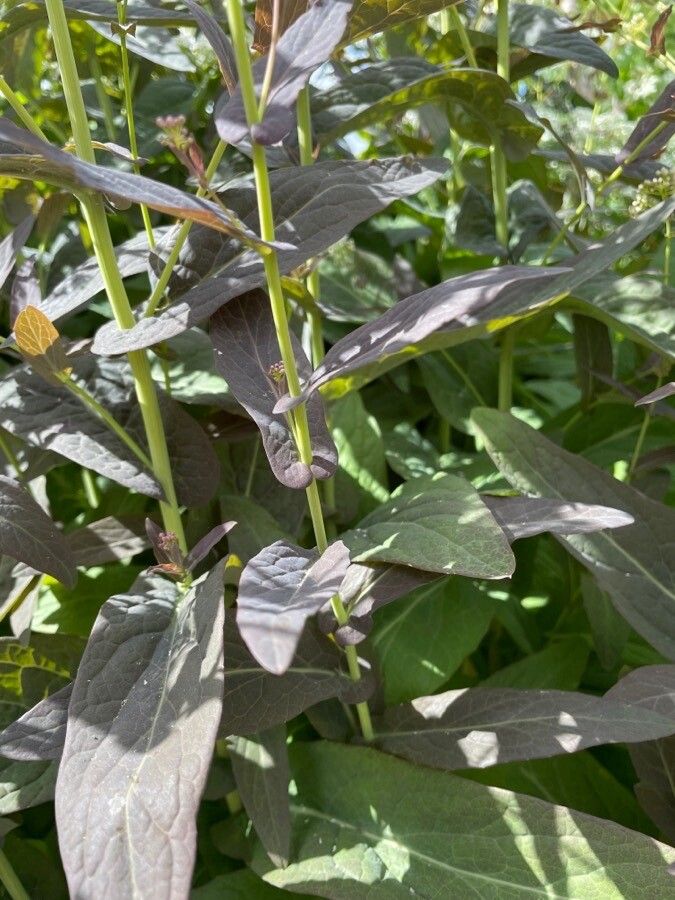
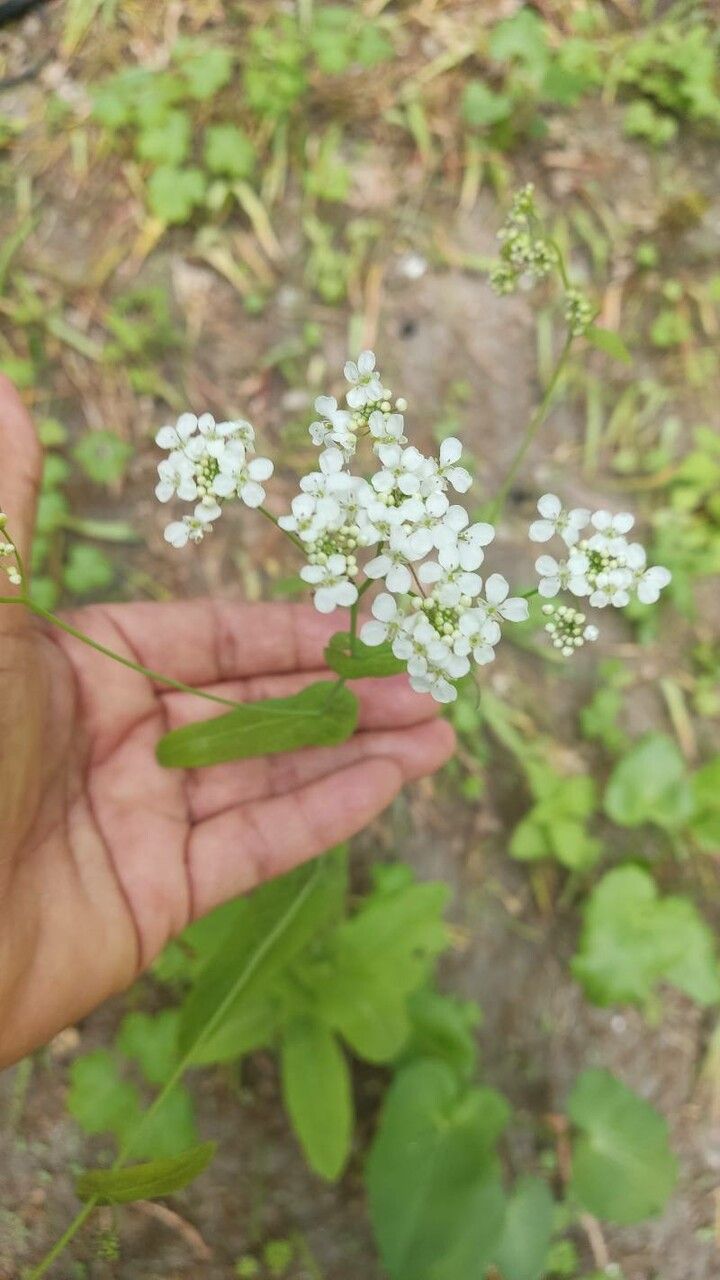
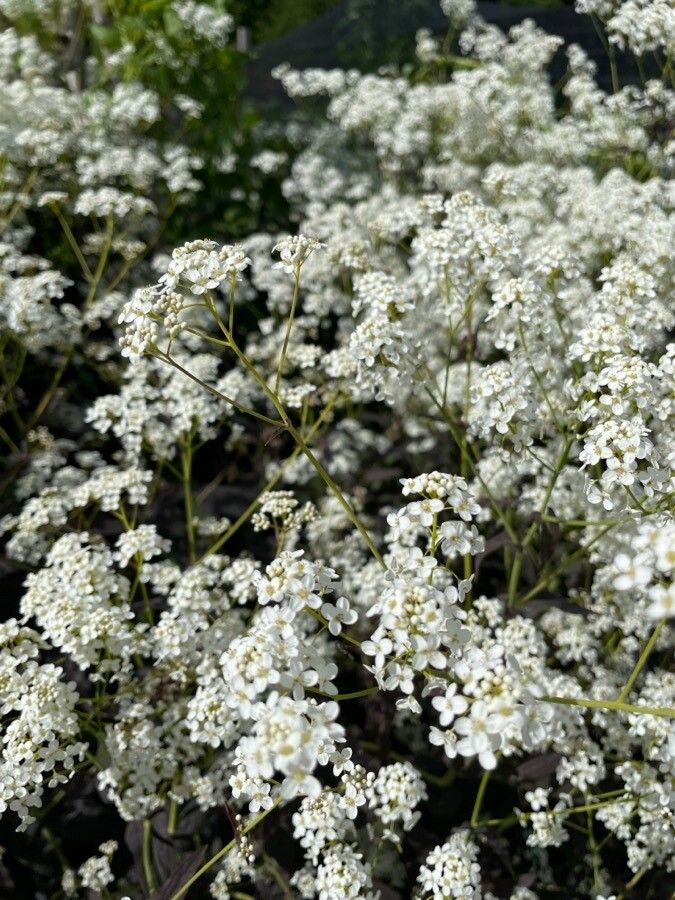
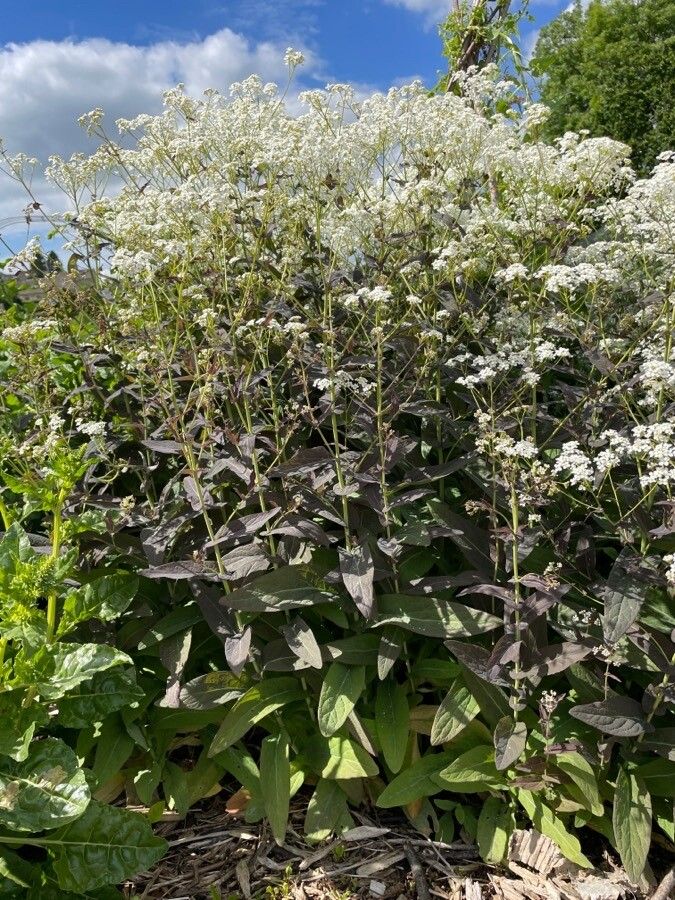
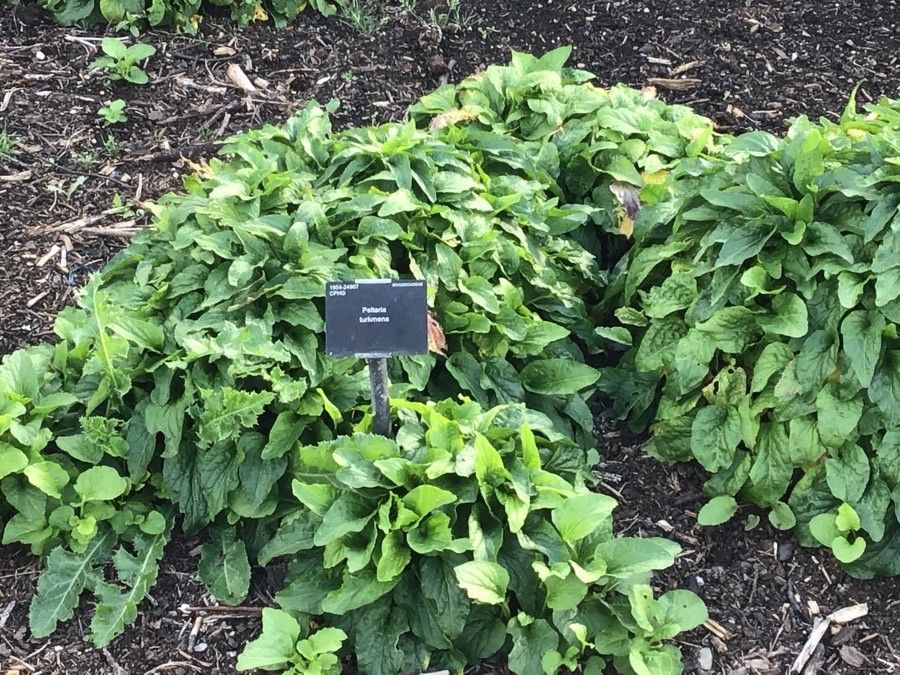
Peltaria alliacea, or garlic cress, is a perennial plant in the family Brassicaceae, endemic to Southeastern Europe. The plant grows up to 60 cm (24 in) and flowers white from May to July. The plant is glabrous (hairless) with simple, entire leaves. The leaves are ovate, sessile and amplexicaule (having lobes that completely surround the stem). When crushed they smell of garlic, hence the common name. The 3–4 mm (0.12–0.16 in) long white petals are shortly clawed. The orbicular, very flat silicula or seed, is pendent and has a size of about 6 by 6 mm (0.24 by 0.24 in). Its chromosome number is 2n=14 (also: 28, 56).It was first published and described by Nikolaus Joseph von Jacquin in 'Enum. Stirp. Vindob.' on page 260 in May 1762.The plant grows in stony areas from Southern Austria (Styria, Lower Austria) to South Romania and Albania. It has become naturalized in the U.K.The plant is also grown as a herb or vegetable. The leaves can be used and add a spiciness to salads. Although, they can become bitter in the summer.
Garlic cress shows moderate resistance to disease but can be prone to issues like leaf spot. Its vulnerability to insect pests varies by variety, although most have relatively low pest resistance. For care, garlic cress requires regular watering and fertilizing, along with frequent removal of yellow leaves. It is important to address pests and diseases as they occur and to harvest the plant promptly. Garlic cress is best suited to people who can afford to spend some time and energy on routine upkeep.
How to keep Peltaria Alliacea.
Light
Garlic cress comes from habitats with abundant sunlight, such as open fields and sunny meadows. It prefers full sun but can also tolerate partial sun.
Water
Garlic cress is a plant that originates from moist woodland soils and thrives in environments with consistent humidity and stable moisture levels. To ensure it remains well-hydrated, it's important to water it twice a week. Although garlic cress is typically grown outdoors, it benefits greatly from mulching and natural rain patterns, which help maintain the optimal soil moisture it needs.
Temperature
Garlic cress performs best in moderate temperatures, about what people typically find comfortable. It grows well in conditions that are neither excessively hot nor too cold. The main problem with high heat is the risk of sunburn, so providing some shade in summer is recommended to avoid excessive warmth. When temperatures fall, garlic cress becomes dormant. If you want it to keep growing, higher temperatures must be maintained through the winter. Frost can damage the plant and should be avoided.
Fertilizer
To maximize the yield and flavor of Garlic cress, provide ample nitrogen throughout the growth cycle, including before planting and at harvest. Well-watered and well-fertilized plants produce abundant, healthy leaves and reduce bitterness. Enrich the soil prior to planting with organic matter such as compost or manure, ideally 2 to 8 weeks beforehand.
Pruning
Garlic cress benefits from pruning throughout the spring, from early to late in the season. To encourage healthy growth, remove any dead branches and thin out crowded areas to improve air circulation. Additionally, trim back overgrown stems to maintain a desirable shape. Regular pruning can enhance blooming and help control the plant's spread. Always use clean, sharp tools to minimize the risk of damage and disease.
Botanical profile.
- Plant Type
- Herb
- Life Cycle
- Annual
- Genus
- Peltaria
- Family
- Brassicaceae
- Hardiness Zone
- 5-9
- Mature Height
- 30 cm to 61 cm
- Mature Spread
- 20 cm to 30 cm
- Leaf Color
- Light Green, Medium Sea Green
- Leaf Type
- Semi-evergreen
- Flower Color
- White
- Flower Size
- 0.51 cm to 0.51 cm
- Bloom Time
- Mid spring, Late spring
- Planting Time
- Spring, Summer
- Harvest Time
- Early summer, Mid summer
- Native Area
- Hungary, Austria, Montenegro, Albania, Romania, Croatia, Slovenia
Other names.