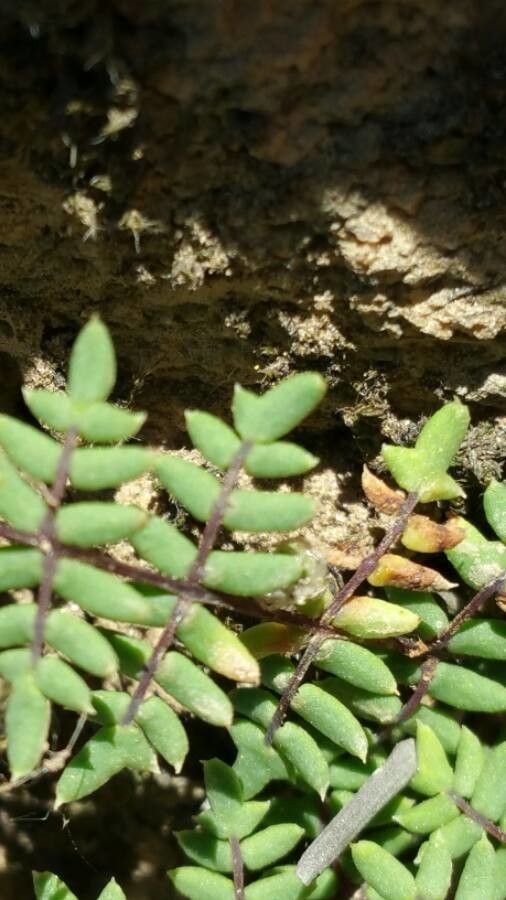
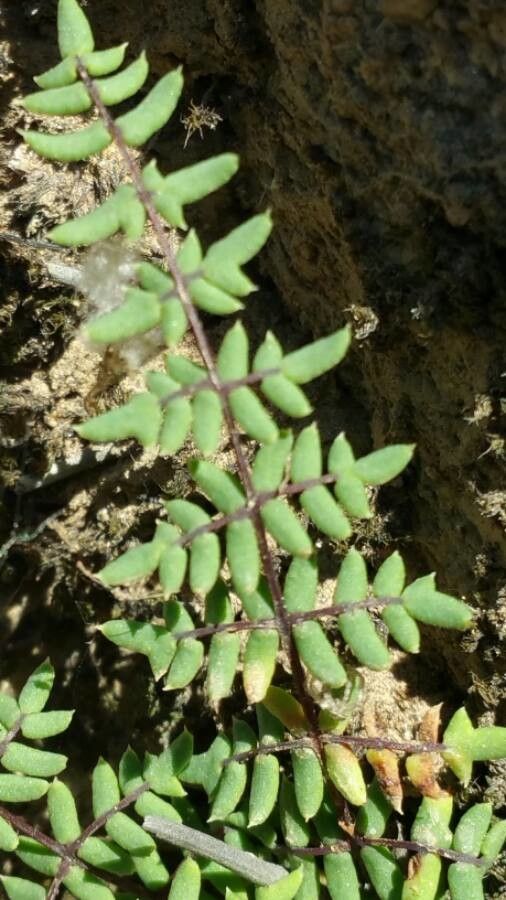
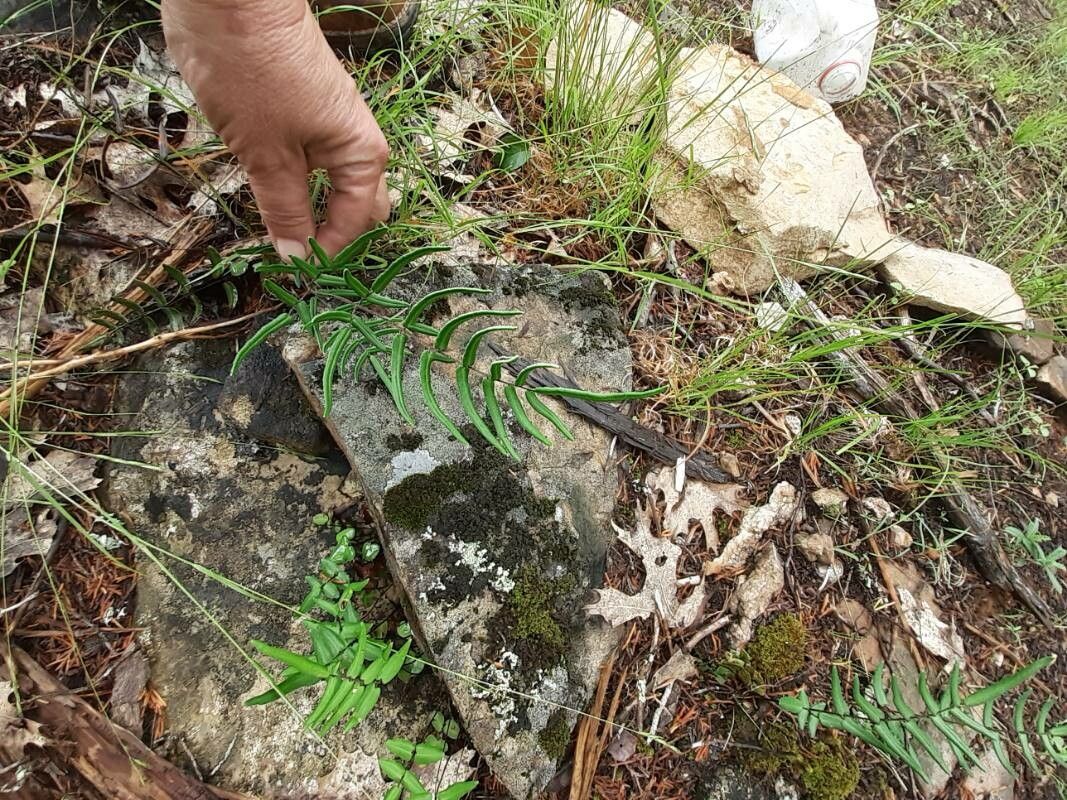
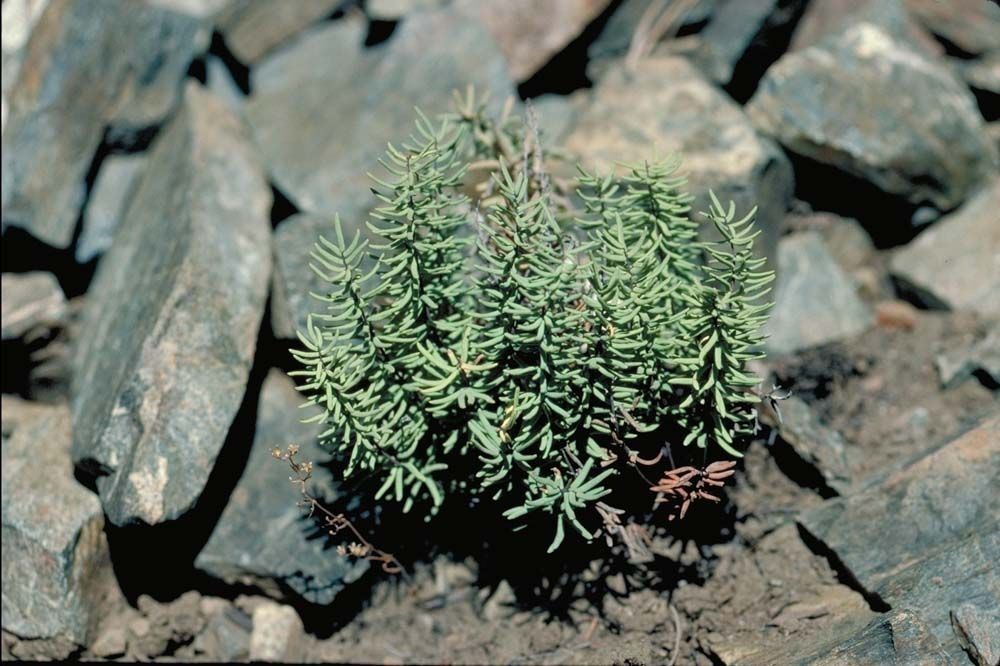
Pellaea glabella is the smooth cliffbrake. For much of pteridological history, it was regarded as a reduced form or variety of Pellaea atropurpurea. P. glabella is known to exist in two cryptic species, one diploid and one tetraploid. The diploid reproduces sexually, while the tetraploid is normally apogamous. It is now known that the tetraploid form of the species is one of the parents of the original hybrid P. × atropurpurea that became the apogamous species. P. glabella is epipetric, normally growing on well-weathered limestone. It favors more exposed sites than P. atropurpurea. This species is distinguished by its sessile or nearly sessile pinnae and smooth, not hairy, stipes. P. glabella has been assigned a total of four subspecies:
Pellaea glabella subsp. glabella Mettenius ex Kuhn Pellaea glabella subsp. missouriensis (G. J. Gastony) Windham Pellaea glabella subsp. occidentalis (E. E. Nelson) Windham Pellaea glabella subsp. simplex (Butters) A. Löve & D. LöveThe subspecies glabella and simplex are the tetraploids, while missouriensis and occidentalis are the diploids. Glabella and missouriensis have hairlike scales near the midrib, while simplex and occidentalis are completely glabrous.
Western dwarf cliffbrake is fairly disease-resistant and typically does not suffer from illnesses. Still, it can be affected by pests and diseases present in its environment. When infections occur, they are generally mild. Regarding care, this plant needs moderate maintenance. Regular pruning is necessary to keep it looking attractive and to support healthy growth. Applying fertilizer can also encourage it to bloom. Western dwarf cliffbrake is well suited for anyone who has outdoor space, like a garden or patio, and does not demand extensive gardening experience. It may need additional attention if cultivated indoors.
How to keep Pellaea Glabella.
Light
The western dwarf cliffbrake flourishes in environments with limited sunlight, reflecting their original habitats that are protected and have less exposure to the sun. Although they are capable of surviving periods without sunlight, adapting to this condition can adversely affect their growth and wellbeing.
Water
The Western dwarf cliffbrake is well-suited to rocky and dry environments with very little water. It is drought-tolerant, but when cultivated, it requires weekly watering. Be sure not to over-water it. As an indoor plant, occasional misting can help maintain humidity, which is beneficial for its evergreen foliage.
Temperature
The Western dwarf cliffbrake thrives naturally in regions that experience temperate weather, generally in the temperature spectrum of 68 to 100 °F (20 to 38 ℃). To foster its best growth, attempt to sustain this temperature range all year round. Its development could suffer in harsh weather circumstances.
Fertilizer
The Western dwarf cliffbrake necessitates the highest amount of fertilizer during its vital growth period, mainly taking place in the spring, summer, and start of autumn. The purpose of fertilization is to supply vital nutrients that the soil might be deficient in, facilitating healthy growth of the roots and stems, as well as pleasing leaves, which are a notable characteristic of this specific plant.
Pruning
The western dwarf cliffbrake thrives in rocky habitats and benefits greatly from careful pruning between early to late spring. To encourage optimal health and air circulation, it's important to remove any dead or damaged fronds. However, be careful not to over-prune, as excessive cutting can stress the plant. By following these practices, you can help your western dwarf cliffbrake grow strong and beautiful.
Botanical profile.
- Plant Type
- Herb
- Life Cycle
- Perennial
- Genus
- Pellaea
- Family
- Pteridaceae
- Hardiness Zone
- 9-11
- Mature Height
- 3 cm to 40 cm
- Mature Spread
- 10 cm to 20 cm
- Leaf Color
- Dark Green
- Leaf Type
- Semi-evergreen
- Planting Time
- Spring, Summer
Other names.
Reader questions.
What are the sunlight requirements for Western dwarf cliffbrake?
Western dwarf cliffbrake requires less than 3 hours of sunlight, thriving in full shade conditions. This aligns with their natural habitats, which are typically sheltered and receive minimal direct sunlight. It's essential to monitor the movement of sunlight through your garden carefully to ensure that these plants are placed in spots that offer an ideal balance of light and shade, contributing to their overall health and happiness.
What is the optimal temperature range for the growth of Western dwarf cliffbrake?
The Western dwarf cliffbrake, botanically known as Pellaea glabella, thrives in temperate climates and prefers temperatures between 68 to 100 °F (20 to 38 °C). To ensure optimal growth, maintaining this temperature range throughout the year is essential. This plant is extremely heat-loving, and exposure to cold temperatures can significantly harm it. It is advisable to bring the Western dwarf cliffbrake indoors during autumn and place it near a bright window, keeping it away from heaters, to maintain beneficial growth temperatures above 20°C, especially during winter. Avoiding temperatures that approach 0°C is crucial for the plant's wellbeing.
How does artificial lighting benefit Western dwarf cliffbrake, and what are the recommendations?
When natural sunlight is insufficient, especially during winter or in areas that don't receive much direct sunlight, artificial lighting serves as a vital source for promoting the growth of indoor Western dwarf cliffbrake plants. Optimal growth is achievable with adequate lighting. LED lights are recommended due to their ability to provide specific wavelengths needed by the plants. Full shade plants require 10-20W/sq ft of artificial light. It's important to position the light source 12-36 inches above the plant and ensure it receives 8-12 hours of light per day to mimic natural daylight conditions.
How does Western dwarf cliffbrake react to low temperatures, and what are the recommended solutions?
Western dwarf cliffbrake is sensitive to low temperatures and performs best when the weather remains above 20°C. It is crucial to keep the plant in temperatures above 0°C during winter. Exposure to temperatures below -5°C may cause the leaves to lighten in color, eventually turning brown or black following frost damage, accompanied by symptoms like wilting and drooping. In response to such conditions, trimming off the frost-damaged parts and relocating the plant indoors to a warm environment is recommended. Placing it near a south-facing window ensures ample sunlight while avoiding proximity to heaters or air conditioning vents helps prevent air from becoming too dry.
What are the signs of light deficiency in Western dwarf cliffbrake?
Signs of light deficiency in Western dwarf cliffbrake include smaller new leaves, leggy or sparse growth, faster leaf drop, halted new growth, paler new leaves, chlorosis (yellowing leaves due to breakdown of chlorophyll), sunscald, leaf curling, wilting, and leaf scorching. Addressing these symptoms early by providing adequate light can ensure the health and vitality of the plant.
What measures should be taken if Western dwarf cliffbrake is exposed to high temperatures?
In the summer, keeping the Western dwarf cliffbrake below 38°C is crucial as exposure to temperatures above 43°C can cause the leaves to lighten, increasing the risk of sunburn. In such cases, removing sunburned and dried-up parts and relocating the plant to a shaded area, especially during the midday and afternoon sun, helps prevent further damage. Additionally, watering the plant in the morning and evening will help keep the soil moist, offering relief from high temperatures.
How can you improve light conditions for Western dwarf cliffbrake?
To improve light conditions for Western dwarf cliffbrake, indoor plants can be moved closer to windows for more filtered light, including direct morning sunlight, ideally 1-2 meters away from a window. For larger or immobile plants, consider using artificial grow lights for at least 8 hours daily. Outdoors, gradually acclimatize plants to sunnier locations by moving them weekly to avoid sunburn. Pruning nearby trees or obstacles that block sunlight can also benefit ground plants. Should transplantation be necessary, it's best done during the plant's dormant period, with careful handling to promote recovery and healthy new growth in more sunlit conditions.