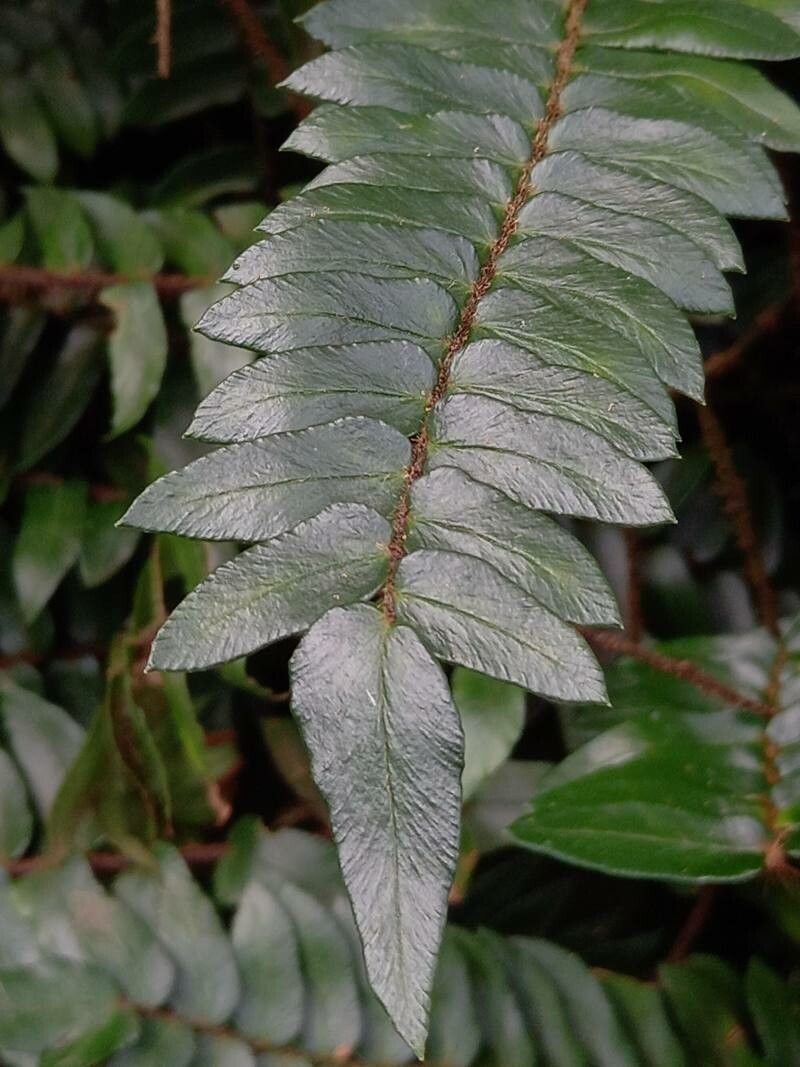
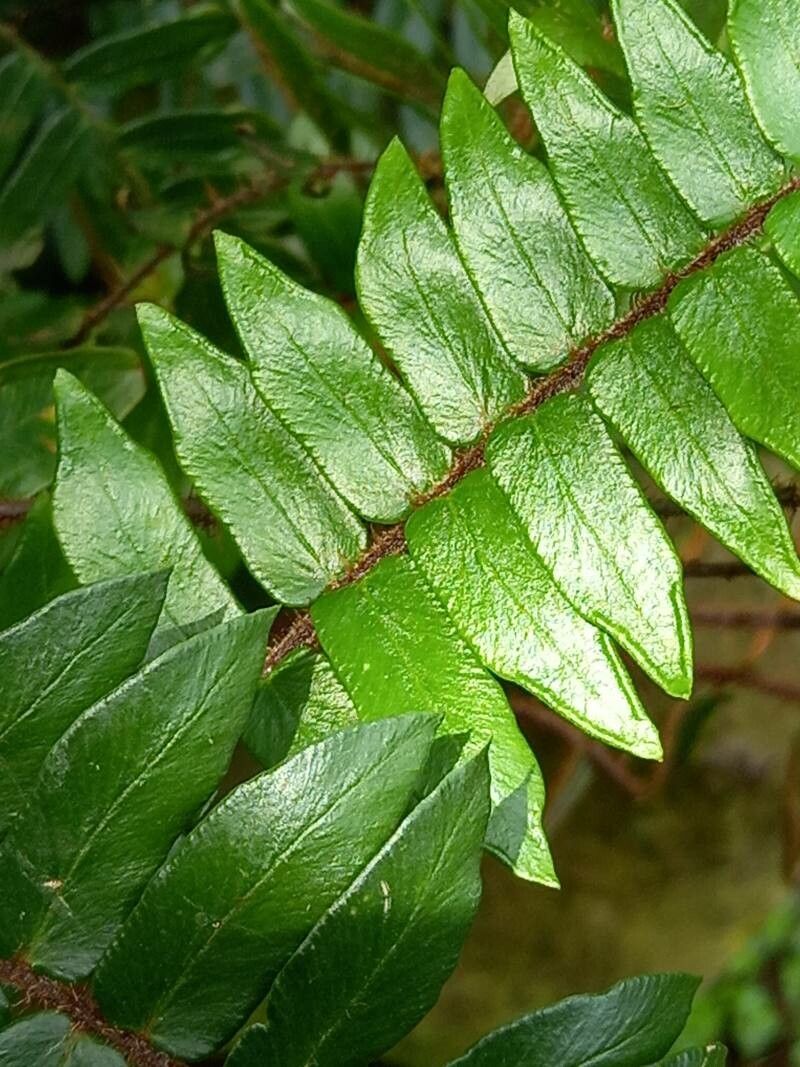
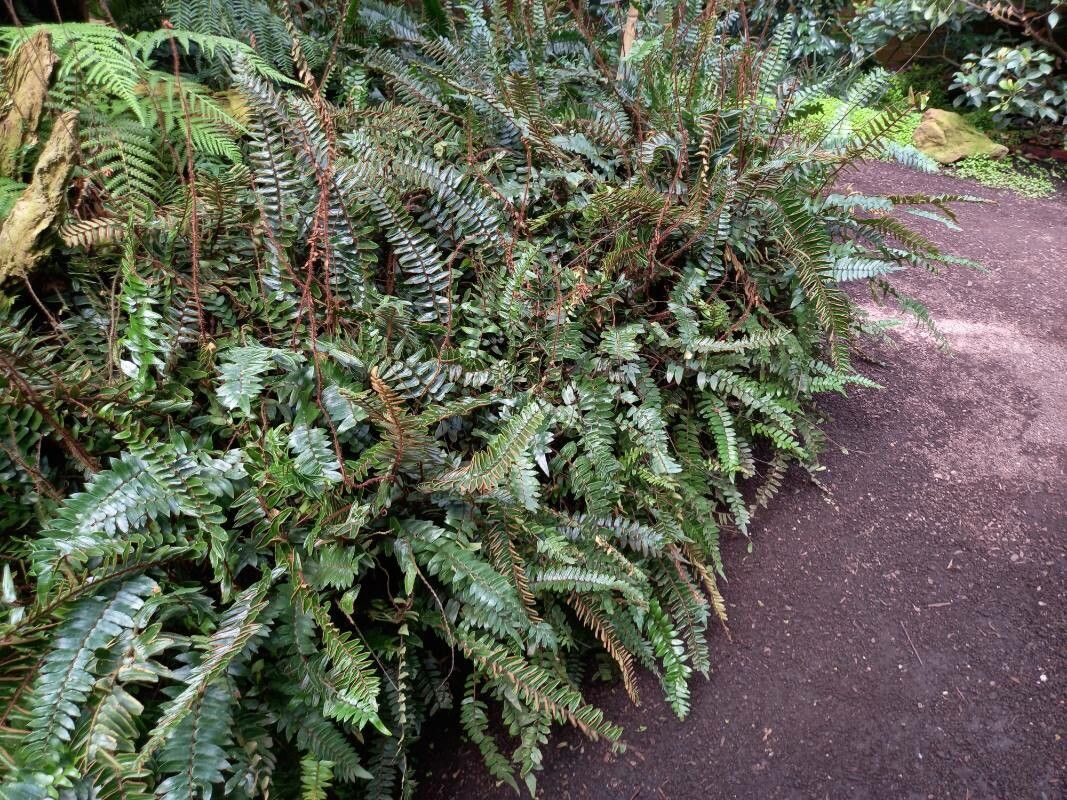
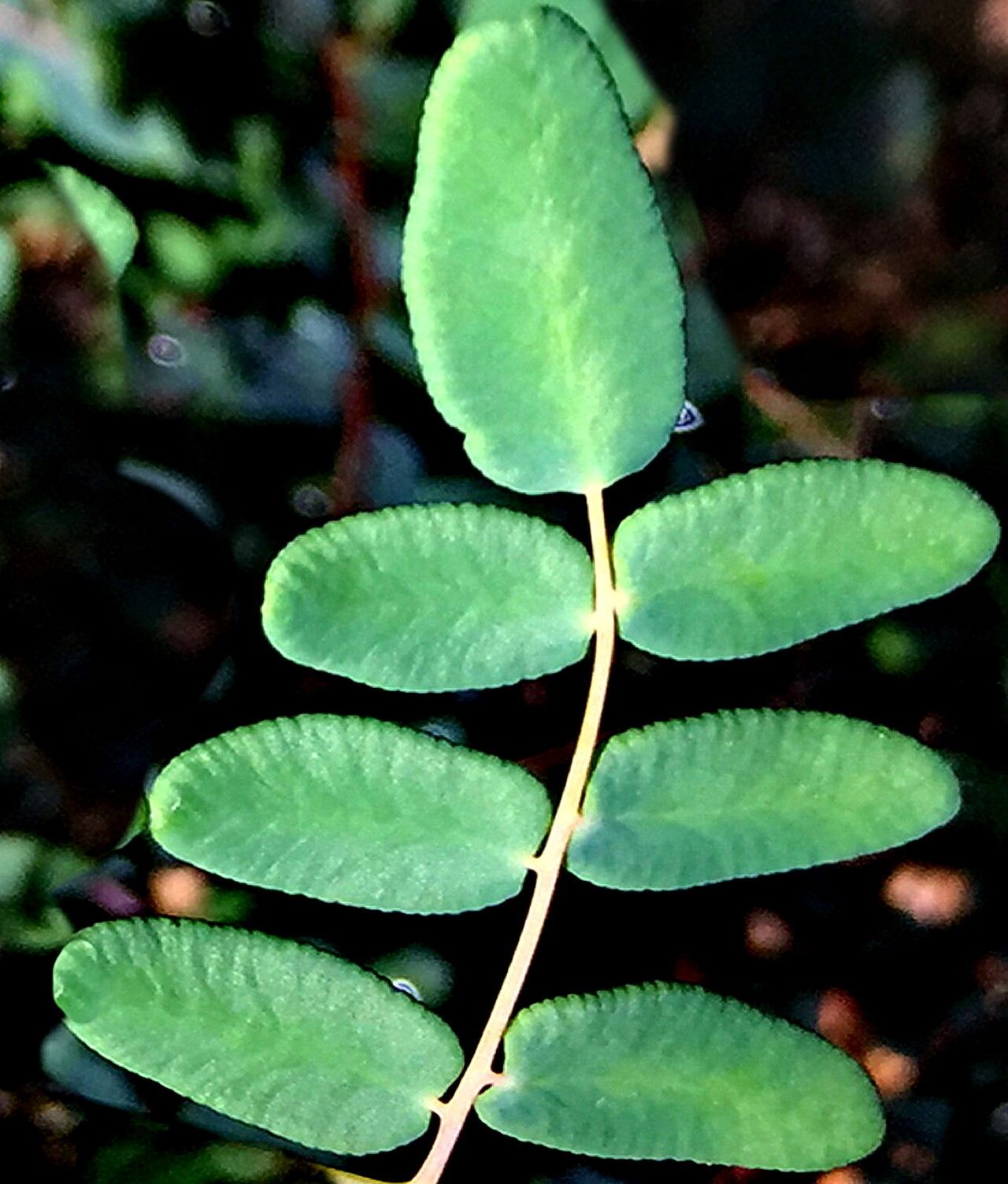
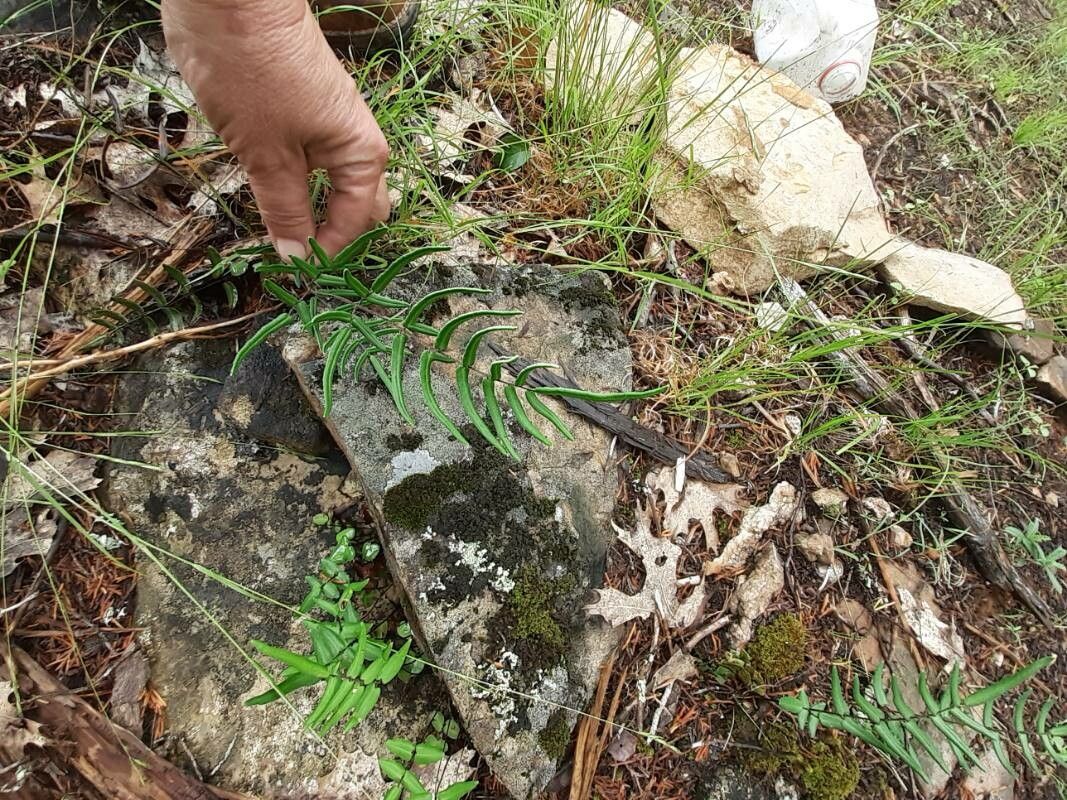
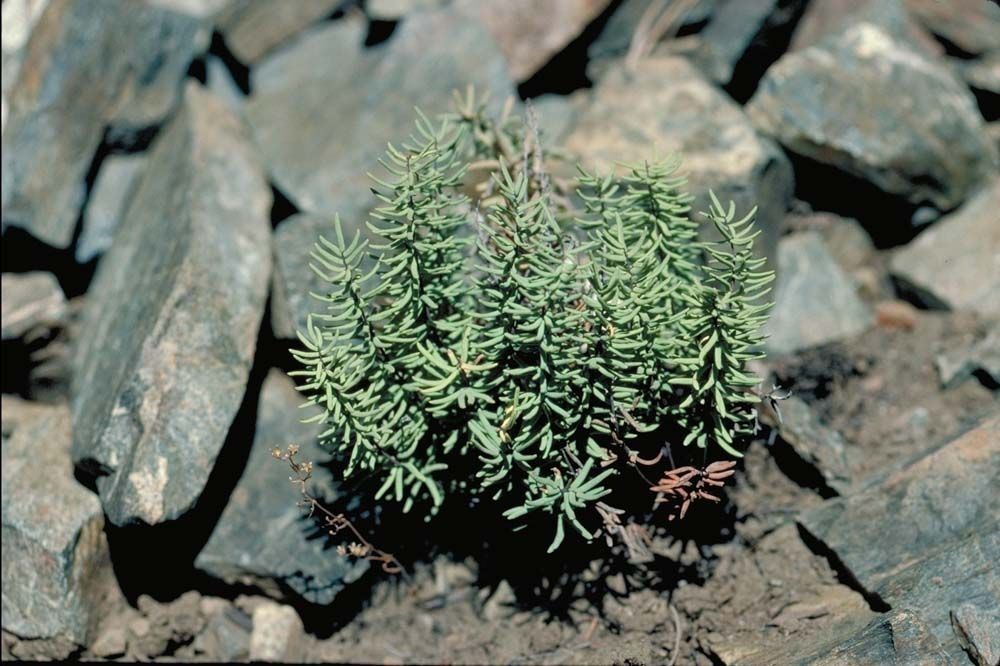
Pellaea falcata, the sickle fern, is a widespread and common plant, growing in eastern Australia. It is often seen in on the coast and ranges in eucalyptus forest and rainforest. It grows in Tasmania, Victoria, New South Wales, Queensland, and Lord Howe Island. The fronds are usually 37 to 105 cm long. Each frond has between 27 and 65 leaflets, sometimes more. These pinnae (fern leaflets) have an absent or short talk, oblong to narrow-oblong in shape. The pinnae are 22 to 56 mm long and 5 to 12 mm wide. The sori form a continuous band along the edges of each pinna. Pellaea falcata is grown as an ornamental plant in gardens. It prefers ample water when grown indoors and can take very bright light but not full sun.
Sickle fern is generally resistant to disease and has relatively few insect pests. Its care is regarded as difficult because it needs a moist environment and frequent watering. However, the roots can rot if the plant is overwatered or the surroundings lack good ventilation. Sickle fern is suitable for people with some growing experience, since most owners can keep it alive for a time. Even so, it may struggle to thrive and its leaves can dry out and decline in health over time.
How to keep Pellaea Falcata.
Light
The Sickle fern is native to areas such as forest understories and rocky regions that provide natural shade. It thrives best in Full Shade sunlight conditions, however, it can also withstand Partial Sun.
Water
The sickle fern flourishes in humid environments and needs consistent moisture to grow well. To maintain its lush appearance, it should be watered twice a week. This evergreen fern is ideally suited for indoor cultivation, as it requires a high level of moisture throughout the year, even during its non-growing seasons. This care mimics the conditions of its natural tropical rainforest habitat.
Temperature
Sickle fern flourishes in dense forest areas. The plant is extremely responsive to variations in temperature and moisture levels, becoming uneasy under extreme heat, arid conditions, and strong sunlight. During the warm summer months, it necessitates adequate shading and a moisture-rich ecosystem. Although Sickle fern usually doesn't need extra care during the colder winter months, a lingering winter drought can still result in its demise.
Pruning
The sickle fern is characterized by its delicate, sickle-shaped fronds and requires only minimal pruning. To promote growth and improve air circulation, trim any damaged fronds at the base in early spring. Avoid heavy pruning, as allowing some decay can be beneficial for the plant. Removing dead leaves helps improve light access and reduces the risk of disease.
Botanical profile.
Reader questions.
What are the sunlight requirements for Sickle Fern (Pellaea falcata)?
Sickle Fern (Pellaea falcata) requires full shade to thrive, meaning it should receive less than 3 hours of sunlight daily. It's important to observe the movement of sunlight through your garden carefully to find spots that offer the ideal balance of light and shade. This attention to placement will ensure your plants remain happy and healthy.
What is the botanical name of Sickle Fern?
The botanical name of Sickle Fern is Pellaea falcata.