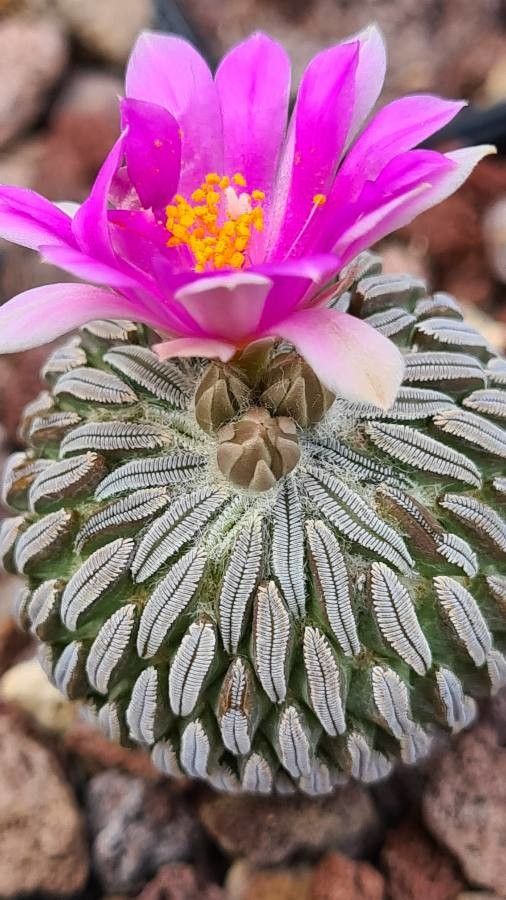
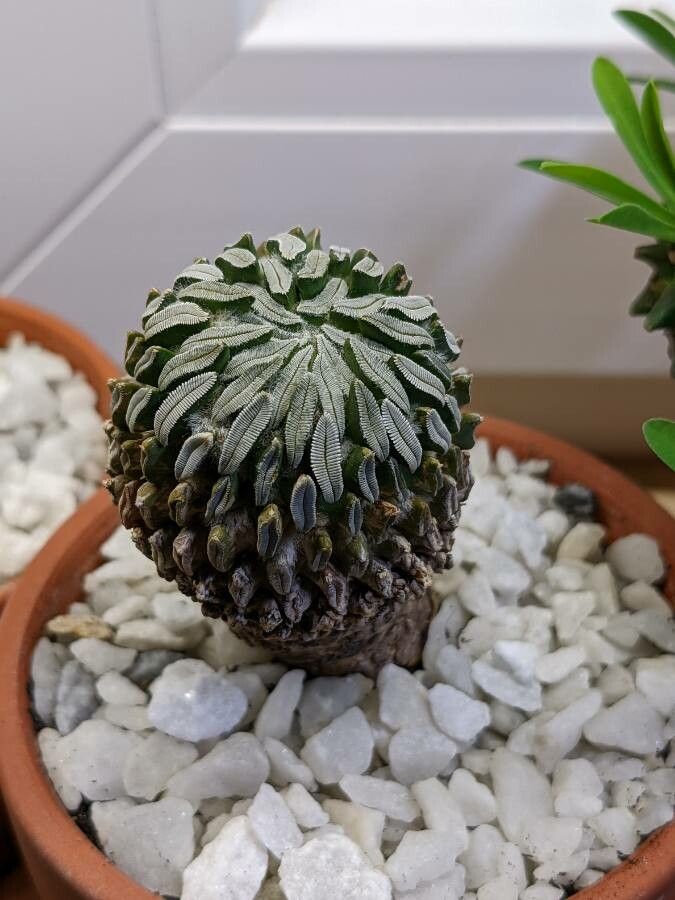
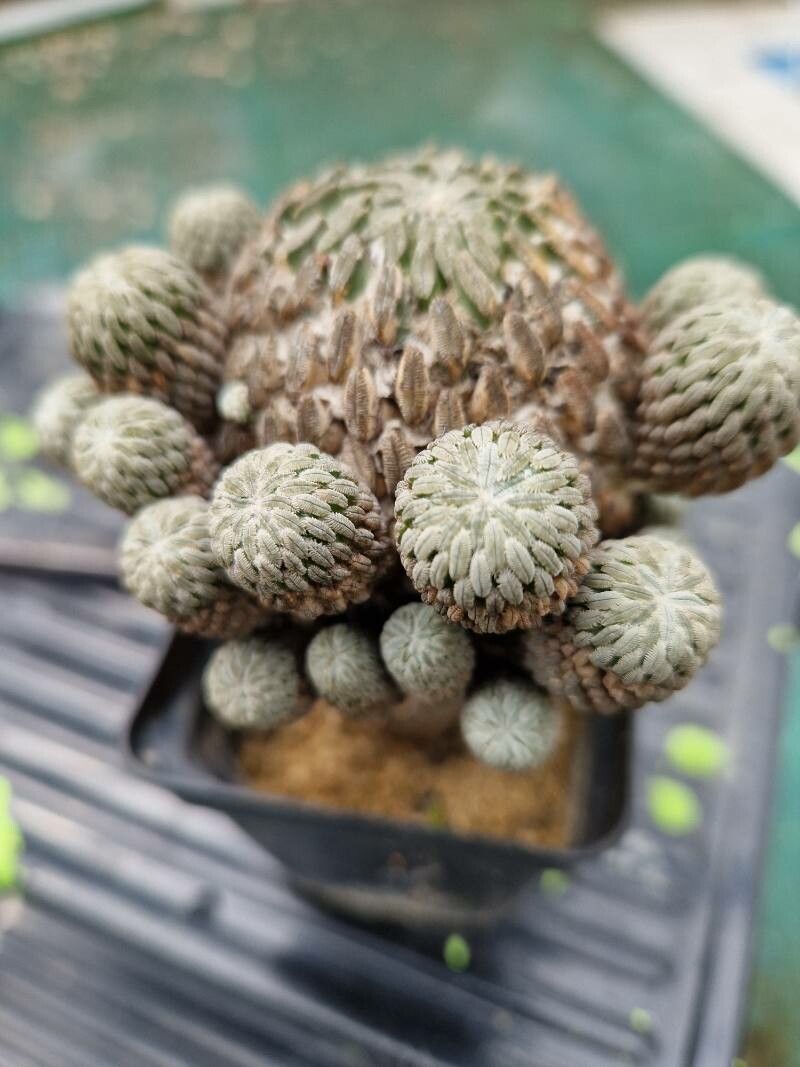
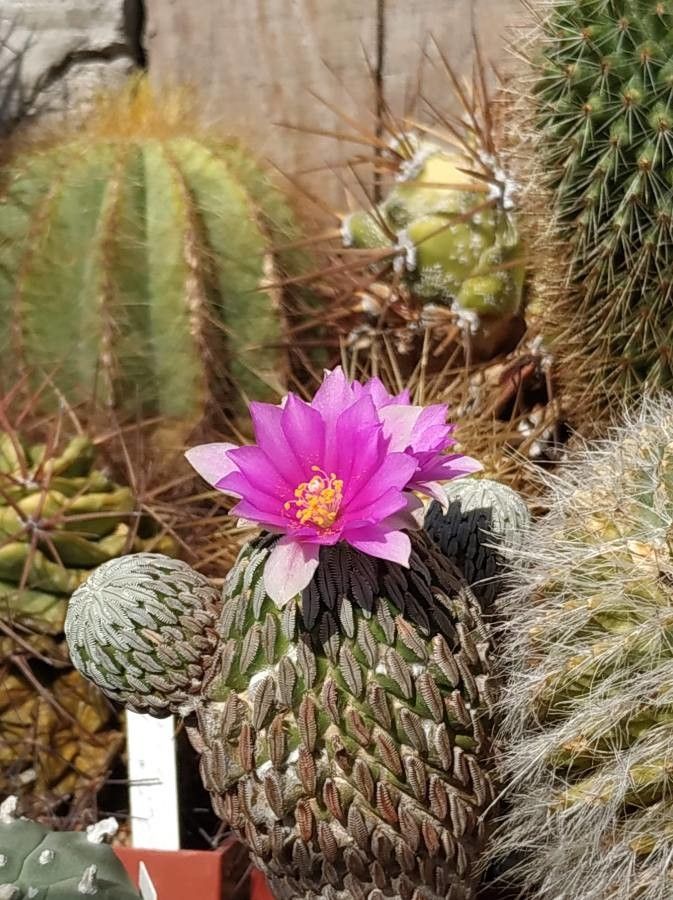
Pelecyphora aselliformis, commonly known as the "Ass's Ear" cactus, is a small and slow-growing cactus species native to Mexico. This solitary plant typically reaches up to 10 cm in height and 5 cm in diameter. It has a globular shape with flattened top and bottom surfaces, adorned with numerous tubercles arranged in spiral rows.
These tubercles are covered with small white spines that can grow up to 1 cm long. These spines not only protect the plant from predators but also help it retain moisture by reducing water loss through transpiration.
During the spring and summer months, the Ass's Ear cactus produces beautiful pink or white flowers. These flowers, measuring about 2-3 cm wide, feature numerous petals arranged around a central tube-like structure.
Pelecyphora aselliformis is an easy-to-grow cactus that thrives in well-draining soil, bright sunlight, and with occasional watering during the growing season. It can be propagated from seeds or by grafting onto other rootstocks.
Due to its unique appearance and low maintenance requirements, Pelecyphora aselliformis has become a favorite among collectors of rare plants worldwide. However, it is listed under CITES Appendix I due to its threatened status in the wild, primarily caused by habitat loss from human activities such as mining for precious metals like silver. As a result, conservation efforts are essential to ensure the survival of this species in its natural habitat.
Woodlouse cactus shows strong resistance to diseases and usually tolerates routine care without becoming ill easily. That said, it can be vulnerable to mealybugs; these pests may inflict some harm but typically do not pose a major danger. Regarding care, the Woodlouse cactus is drought-tolerant and does not need frequent watering. It can endure extended intervals without water and requires little fertilizer. However, it is very prone to root rot when light levels are inadequate and it is given too much water. In general, the Woodlouse cactus is a good choice for people who prefer low-maintenance plants, though it's still necessary to know and provide its basic needs. It is especially appropriate for those who are away for long stretches and might forget to water regularly.
How to keep Pelecyphora Aselliformis.
Light
The woodlouse cactus grows best in full sun, though it tolerates partly sunny conditions. In its native habitat it gets plenty of sunlight, which supports healthy growth. Too much sun can scorch it, while too little light may impede development and cause poor growth.
Water
The woodlouse cactus is a drought-tolerant species specifically adapted to arid environments, where it thrives with very little moisture. It should be watered every three weeks, ensuring that the soil is completely dry in between waterings. Typically, this cactus is grown indoors and requires well-draining soil to prevent root rot, which aligns with its preference for dry conditions.
Temperature
Woodlouse cactus originates from temperate regions and grows best in temperatures between 68 and 100°F (20 to 38°C). It is advisable to adjust its surrounding temperature to match seasonal variations for optimal growth.
Fertilizer
For Woodlouse cactus, light applications of fertilizer once or twice a year during the growing season are enough. Do not fertilize in winter or in summer when the plant is dormant. Use less fertilizer for plants that have been repotted and wait a couple of months after repotting before you begin fertilizing. Fertilizing promotes healthy growth and encourages blooms.
Pruning
To care for a woodlouse cactus, you only need to do minimal pruning. Simply remove any dead flowers and branches. This will help direct the plant's nutrients toward healthy growth.
Pot & Repot
Repot the Woodlouse cactus in spring or summer, choosing a pot slightly larger than the current one with good drainage. Use a well-draining, sandy or gritty cactus mix. Handle it carefully to avoid spikes. Allow the cactus to dry out before repotting to prevent root rot. After repotting, wait a week before watering to let the roots heal.
Botanical profile.
- Plant Type
- Succulent
- Life Cycle
- Perennial
- Genus
- Pelecyphora
- Family
- Cactaceae
- Hardiness Zone
- 9-11
- Mature Height
- 10 cm
- Mature Spread
- 5 cm
- Leaf Color
- Dark Green
- Leaf Type
- Evergreen
- Flower Color
- Pink, White
- Flower Size
- 2.54 cm to 5.08 cm
- Bloom Time
- Late spring, Early summer, Mid summer
- Planting Time
- Spring, Summer
- Harvest Time
- Mid summer, Late summer
- Native Area
- Mexico
Other names.
Reader questions.
What kind of sunlight does Woodlouse cactus require?
Woodlouse cactus thrives in conditions where it can enjoy full exposure to the sun, necessitating above 6 hours of sunlight daily. It can, however, adapt to partially sunny environments, which provide about 3-6 hours of sunlight. This adaptability underlines the plant's natural inclination for environments with abundant sunlight, essential for fostering healthy growth. It's noteworthy that excessive sun exposure might lead to scorching, whereas insufficient light could impede the plant's development, manifesting in poor growth. Observing the sun's movement through your garden and selecting locations that provide an ideal balance of light and shade is crucial for your plants' well-being.
What is the ideal temperature range for growing Woodlouse cactus?
The Woodlouse cactus, also known as Pelecyphora aselliformis, thrives in temperate environments, with an ideal growing temperature range between 68 to 100°F (20 to 38°C). To ensure optimal growth, it's recommended to adjust the surrounding temperature in accordance with seasonal changes. The plant loves heat but enters a dormant state during winter, ceasing its growth. It is significant to move the cactus indoors when the outdoor temperature falls below 0°C to a spot that receives ample sunlight, such as near a south-facing window, or provide supplemental lighting if natural light is insufficient. Additionally, when temperatures drop below 20°C, it's advised to reduce or cease watering to avoid root rot, especially for cacti grown outdoors.
How can artificial lighting be used for Woodlouse cactus indoors?
For indoor Woodlouse cacti, especially during seasons or in spaces with limited natural sunlight, artificial lighting is a beneficial alternative to support optimal growth. The choice of artificial light should ideally mimic natural sunlight conditions. LED lights are recommended as they can be adjusted to provide specific light wavelengths needed by plants. Full sun plants should receive 30-50W/sq ft of artificial light, while partial sun plants require 20-30W/sq ft, and full shade plants need 10-20W/sq ft. Positioning the light source 12-36 inches above the plant helps simulate natural sunlight. Moreover, ensuring that your indoor plants receive 8-12 hours of light per day will promote healthier and faster growth.
How should I care for my Woodlouse cactus during low temperatures?
During cold weather, it's essential to protect your Woodlouse cactus from low temperatures as it thrives in warmth and is not tolerant of the cold, particularly when temperatures are above 20°C. In winter, ensure it stays above 0°C to avoid weakness, wilting, and risk of root rot. If temperatures fall below -5°C, the cactus might suffer frost damage leading to gradual wilting. If this occurs, trim off the frostbitten areas, check for root rot, and if present, remove the affected roots. You may need to propagate the plant through cuttings. To aid recovery, move the cactus indoors to a warm spot near a south-facing window for sunlight, and use supplemental lighting if necessary.
What symptoms indicate poor lighting conditions for Woodlouse cactus?
Woodlouse cactus shows several symptoms when subjected to suboptimal lighting, which can impact its health and growth. Symptoms include smaller new leaves compared to mature ones, leggy or sparse growth indicating inadequate light by longer spaces between leaves or stems, leading to a stretched-out, weakened appearance. Faster leaf drop may occur as the plant sheds older leaves to conserve resources for new growth. Growth may slow down or halt completely, and new leaves might show lighter colors or irregular patterns due to insufficient sunlight, highlighting a lack of chlorophyll and essential nutrients. Excessive sunlight could lead to chlorosis, where leaves turn yellow and lose their green color, sunscald with damaged plant tissue, leaf curling as a protective measure against water loss, wilting from increased transpiration, and leaf scorching characterized by brown, dry patches on leaves.
What should I do if my Woodlouse cactus experiences high temperatures?
The Woodlouse cactus should ideally be kept below 38°C during summer. Exposure to temperatures above 43°C can halt the plant's growth, cause water loss, wilting, and increase the risk of sunburn. If the cactus suffers from sunburn or root rot, it's vital to remove the damaged parts. To help the plant recover, provide protection from the intense afternoon sun until it resumes growth. In case of root rot, cease watering until new roots develop, ensuring the cactus can recover properly and continue to grow healthily.
How can I address lighting issues for Woodlouse cactus?
Addressing lighting issues for Woodlouse cactus involves a combination of strategies tailored to whether the plant is kept indoor, outdoor, or in the ground. For indoor plants, gradually transitioning them to sunnier spots where they can get at least 6 hours of direct sunlight daily is recommended. Utilize south-facing windows and employ artificial lighting, such as desk or professional grow lights, for at least 8 hours a day for plants that cannot be easily moved. Outdoors, moving plants slowly to sunnier locations each week helps prevent sunburn, a consequence of abrupt exposure changes. For plants in the ground, identifying and reducing sunlight obstructions, such as by pruning trees or transplanting to sunnier locations during dormant periods, ensures better sunlight access. However, it's important to accept that parts of the plant affected by previous poor light conditions might not recover, but new growth will be healthy after improving light exposure.