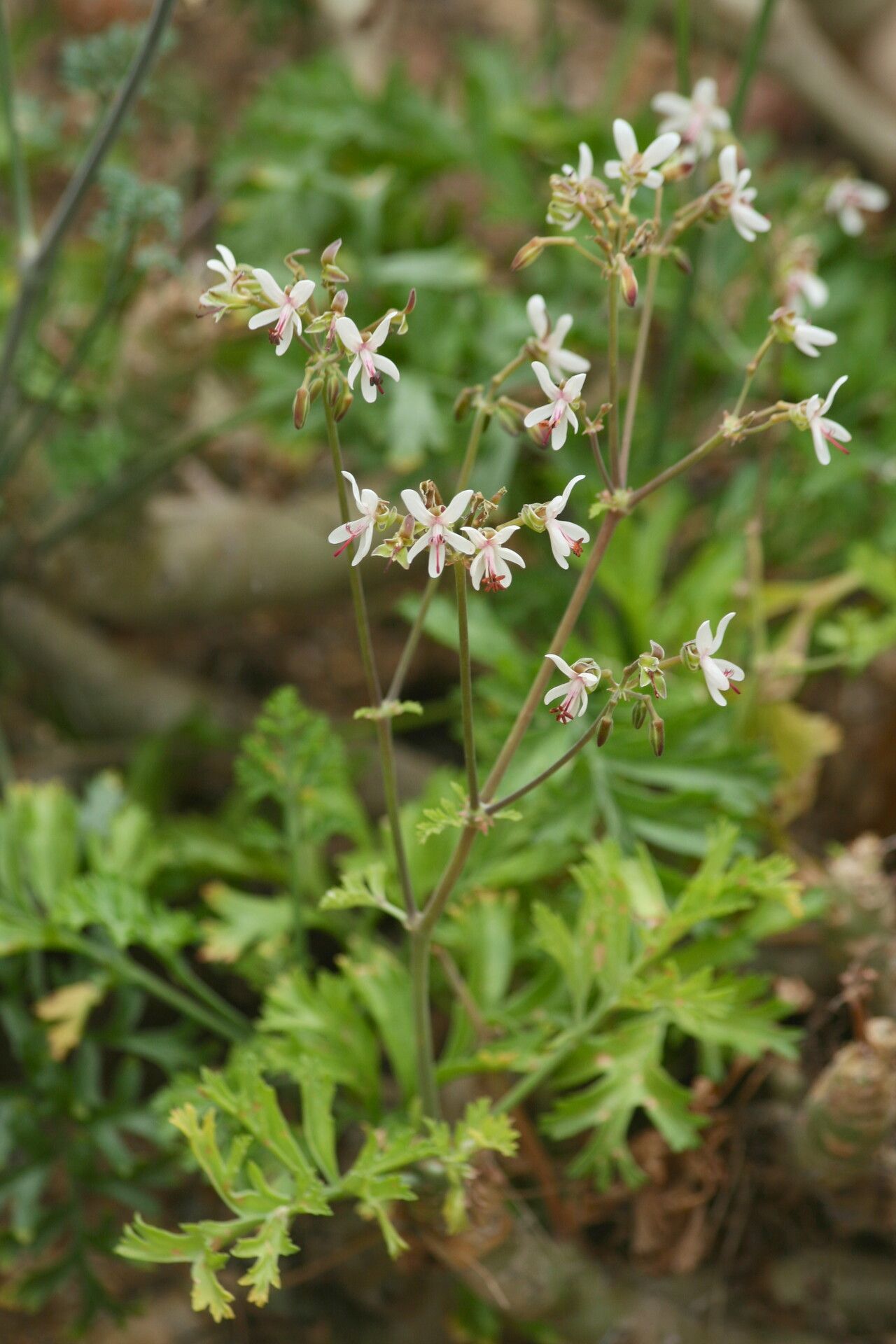
How to keep Pelargonium Dasyphyllum.
Water
To test the soil moisture, insert your finger into the soil. If the soil is dry at a depth of 0.8 inches, it's time to water. During spring and fall, water thoroughly, making sure there's good drainage. In summer and winter, water sparingly. Use slightly acidic or neutral soft water, such as rainwater or stored tap water, when watering Pelargonium dasyphyllum.
Pruning
Pelargonium dasyphyllum is known for its attractive foliage and vibrant flowers. For best results, prune in early spring by cutting just above a node to encourage new growth. Avoid heavy pruning during the blooming period. Regular light pruning helps improve air circulation and increases disease resistance. The best time for light pruning is right when the plant comes out of dormancy, as this promotes healthier growth.
Botanical profile.
- Life Cycle
- Perennial
- Genus
- Pelargonium
- Family
- Geraniaceae
Reader questions.
What are the sunlight requirements for Pelargonium dasyphyllum?
Pelargonium dasyphyllum thrives in a range of sunlight conditions. For plants to be considered in 'full sun,' they need above 6 hours of sunlight each day, while 'partial sun' refers to exposure of about 3-6 hours of sunlight. It's important to observe the patterns of sunlight movement through your garden to ensure you select locations that provide an ideal mix of light and shade, which is crucial for the health and happiness of your plants.
What is Pelargonium dasyphyllum?
Pelargonium dasyphyllum, also known by its botanical name as Pelargonium dasyphyllum, is a plant species. Unfortunately, there is no further information provided on its essentials or symptoms.
What is the botanical name of Pelargonium dasyphyllum?
The botanical name of Pelargonium dasyphyllum is Pelargonium dasyphyllum itself. This name is used by gardeners and horticulturists to accurately identify the plant, as common names can vary across different regions and languages.