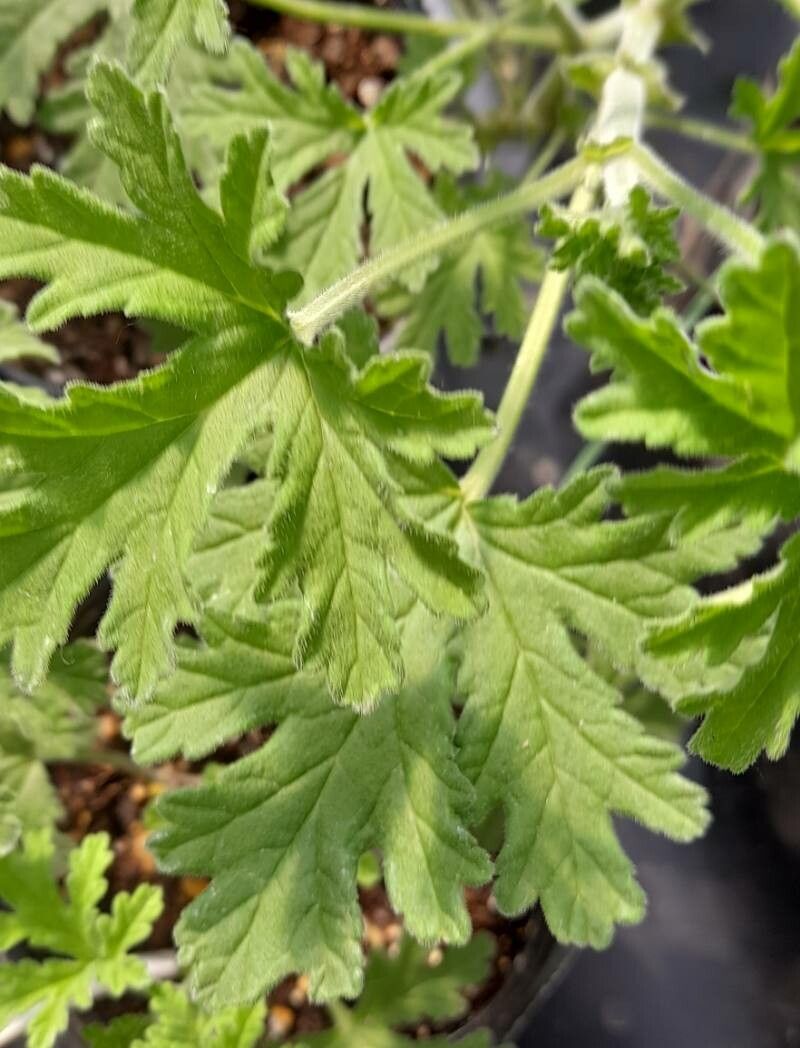
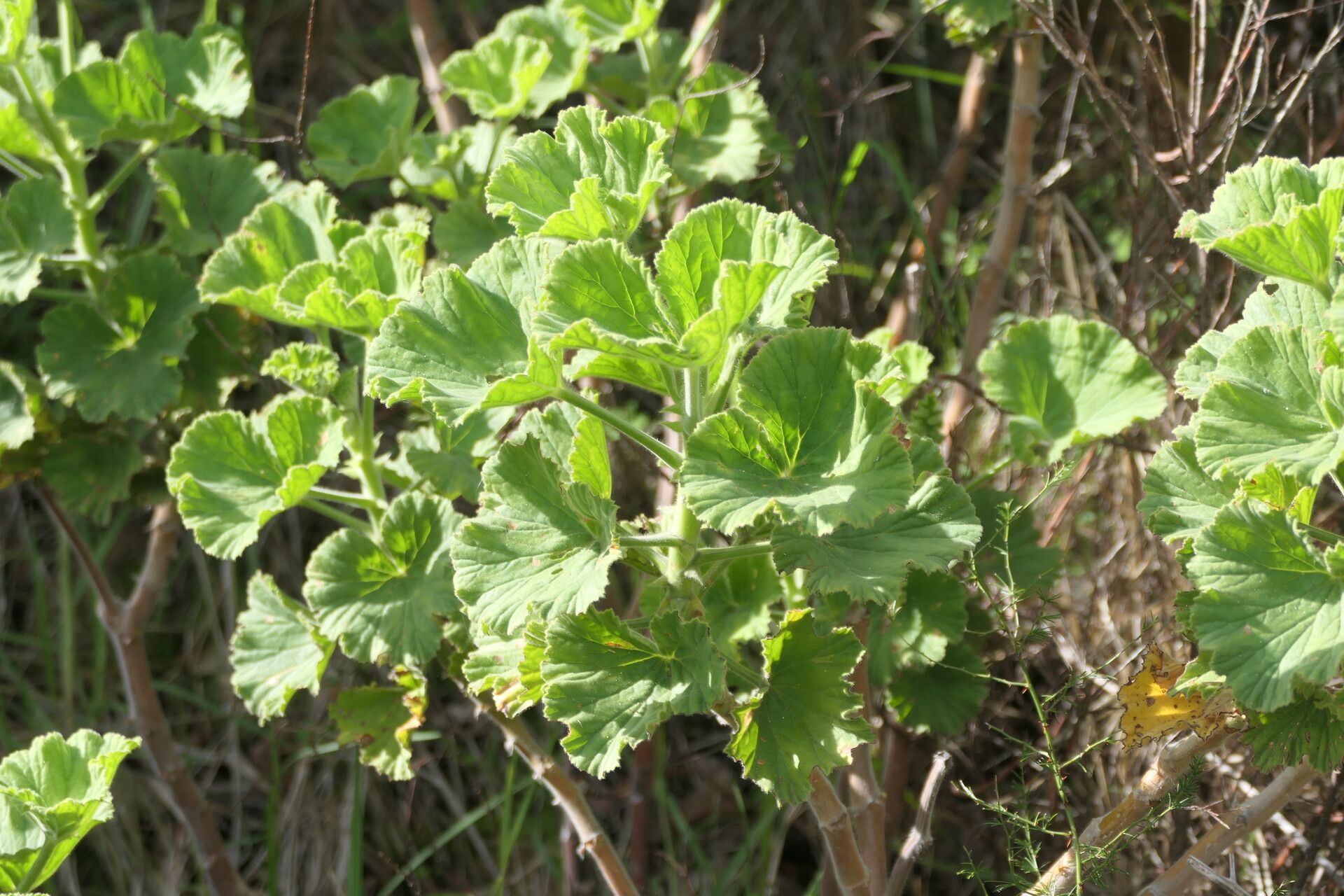
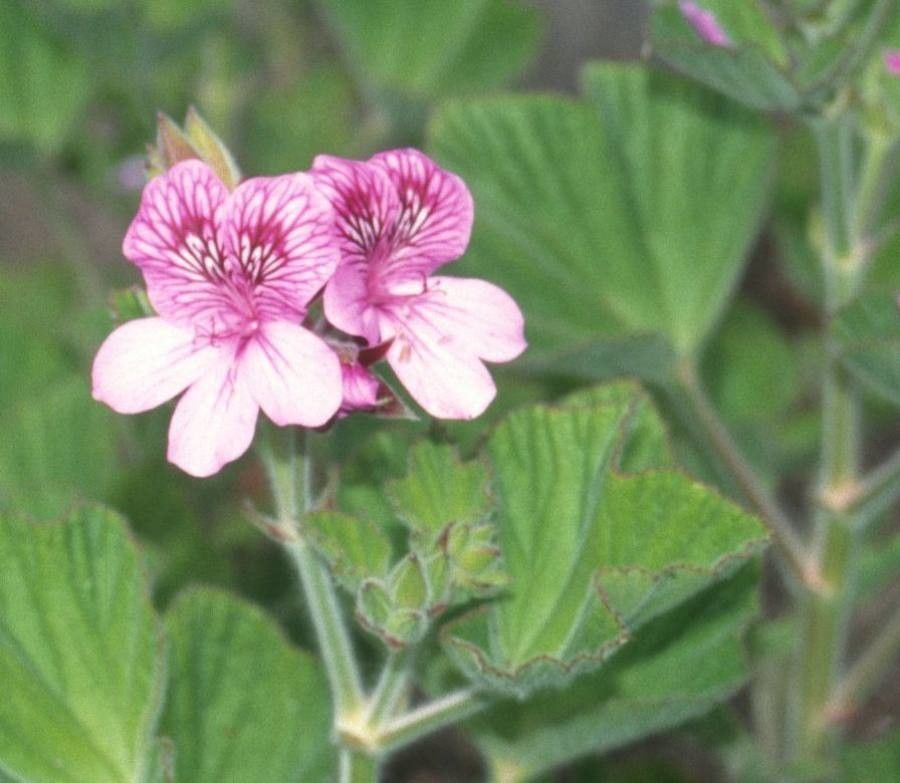
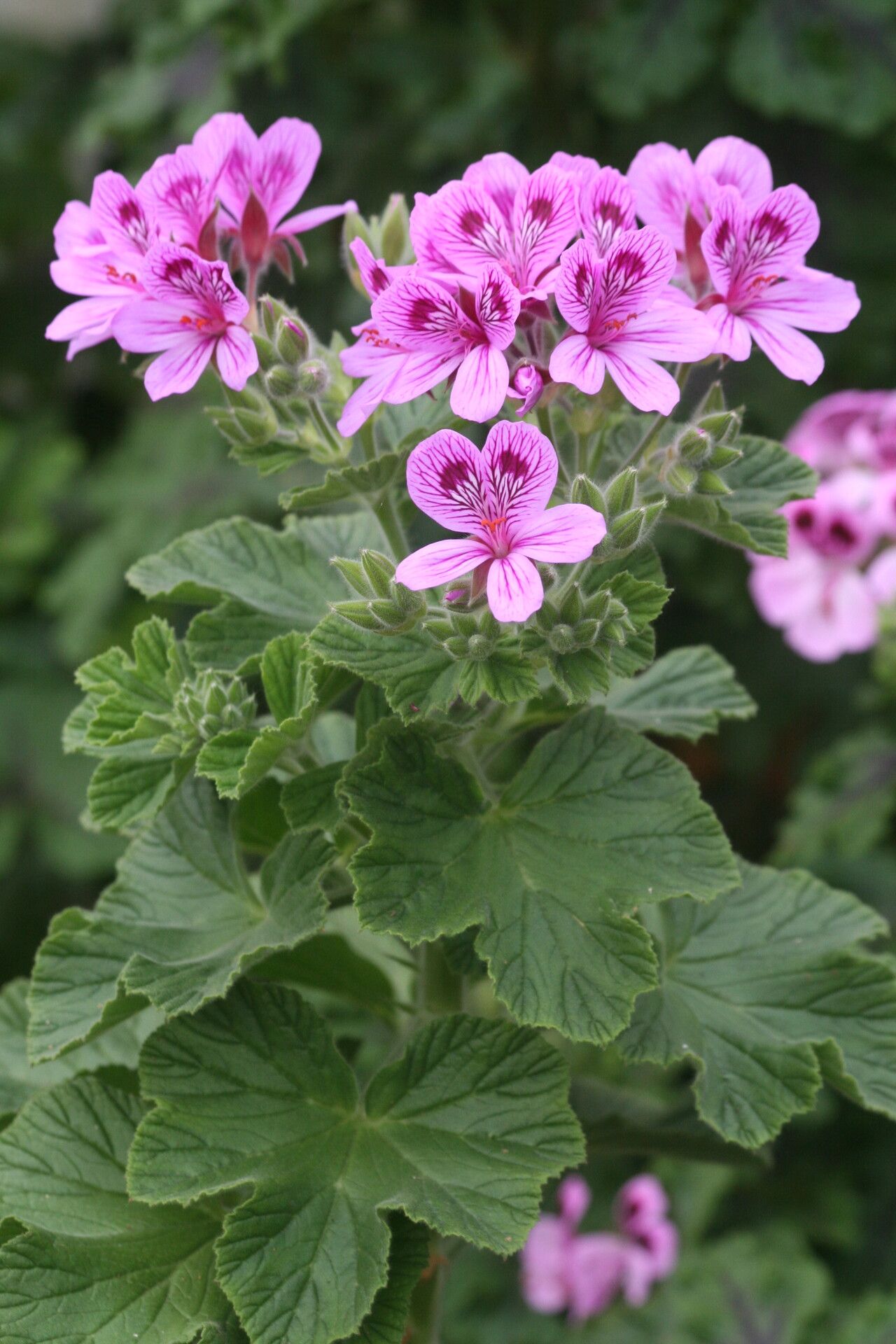
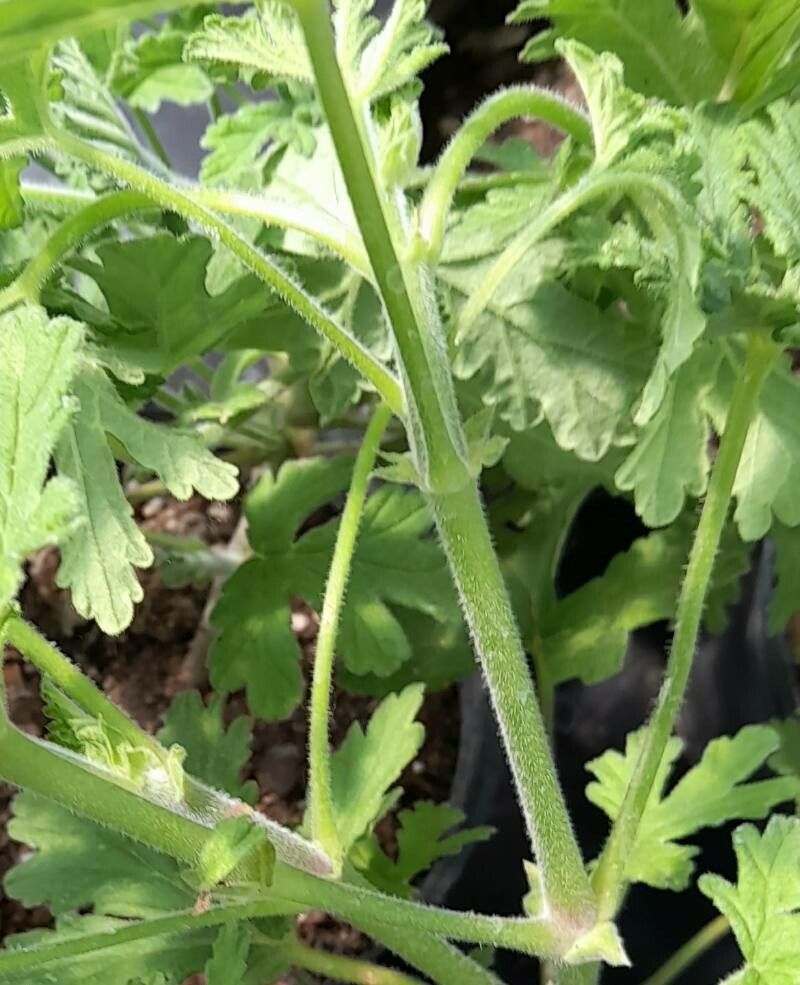
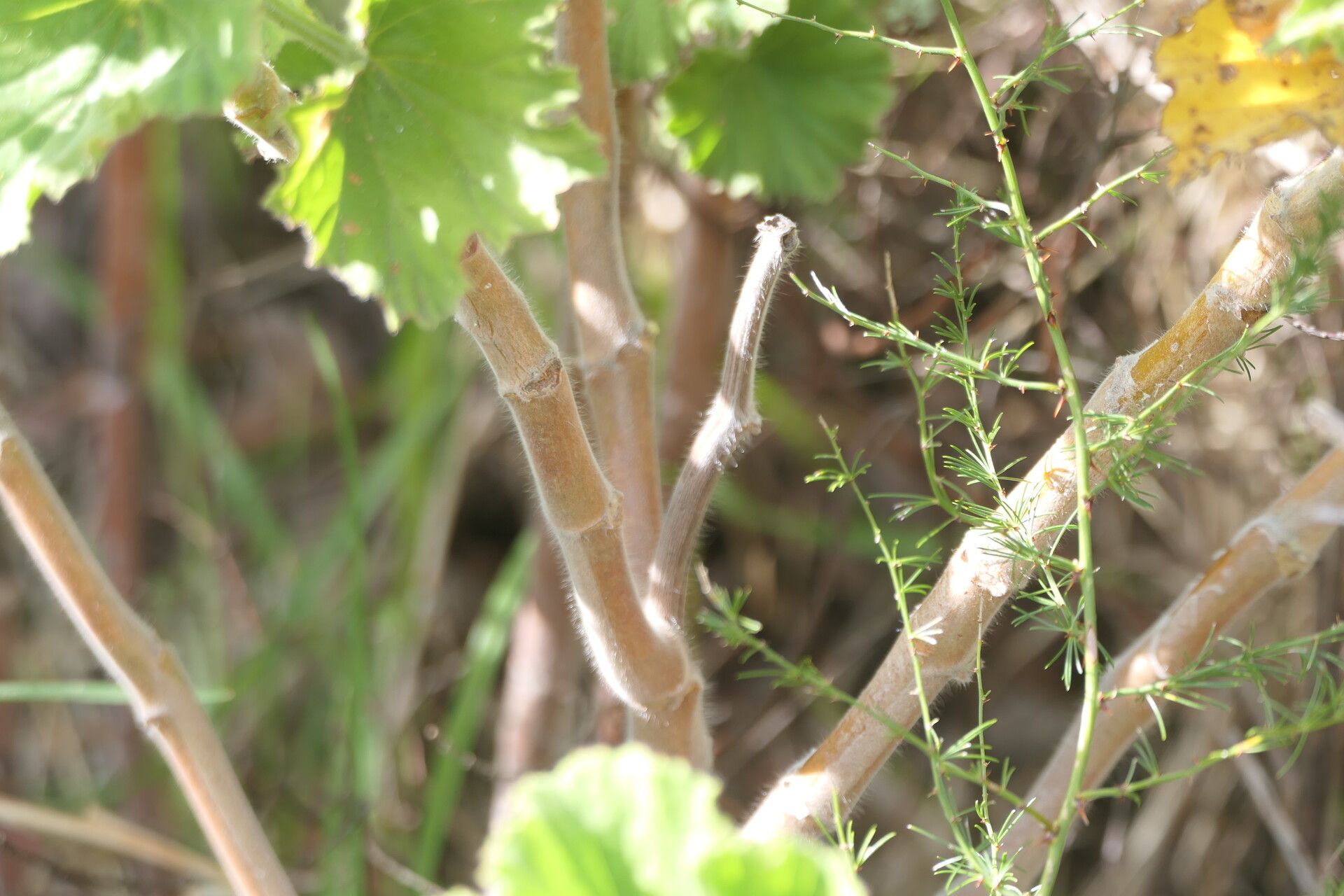
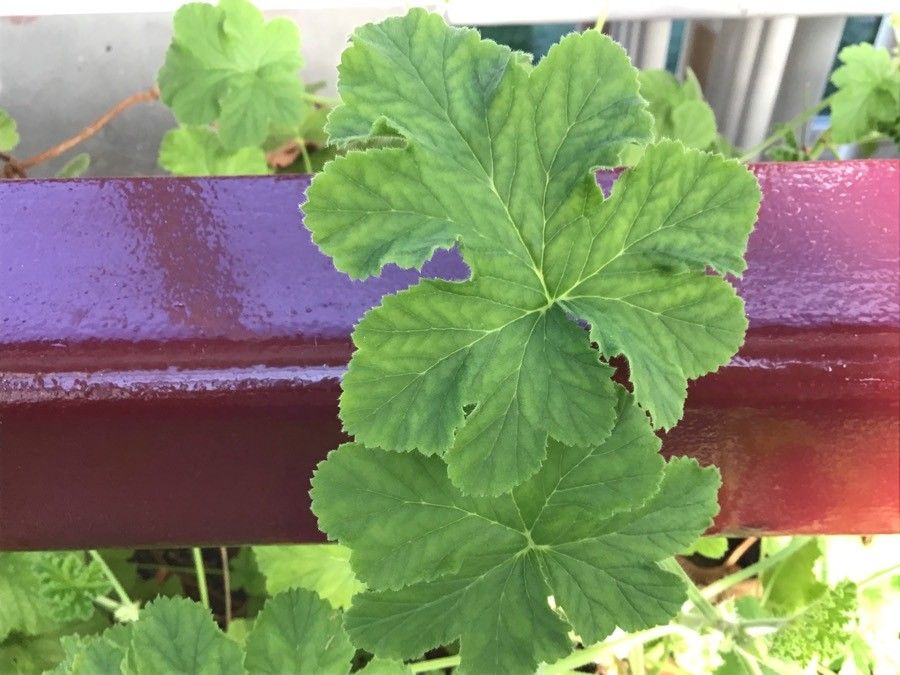
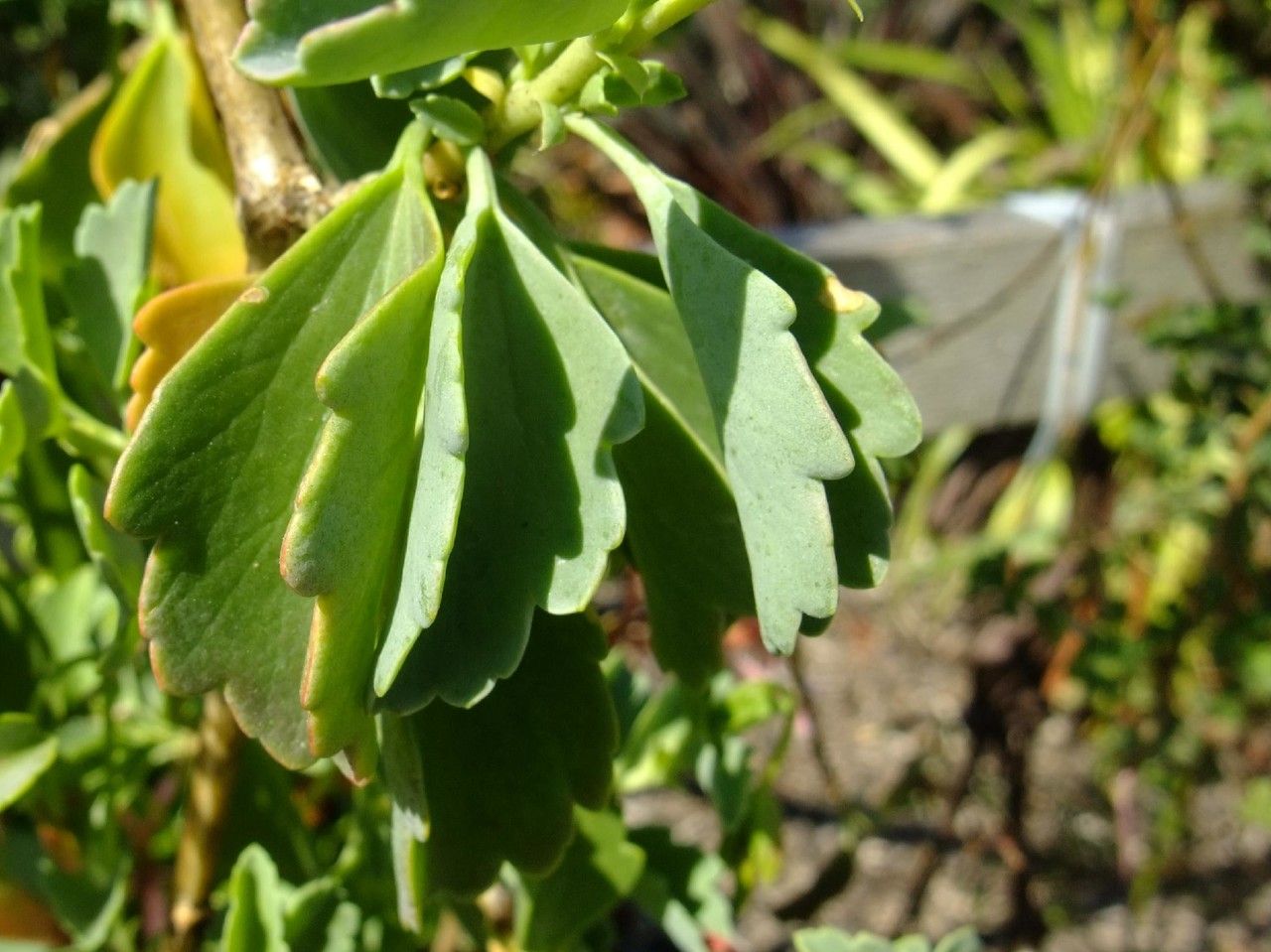
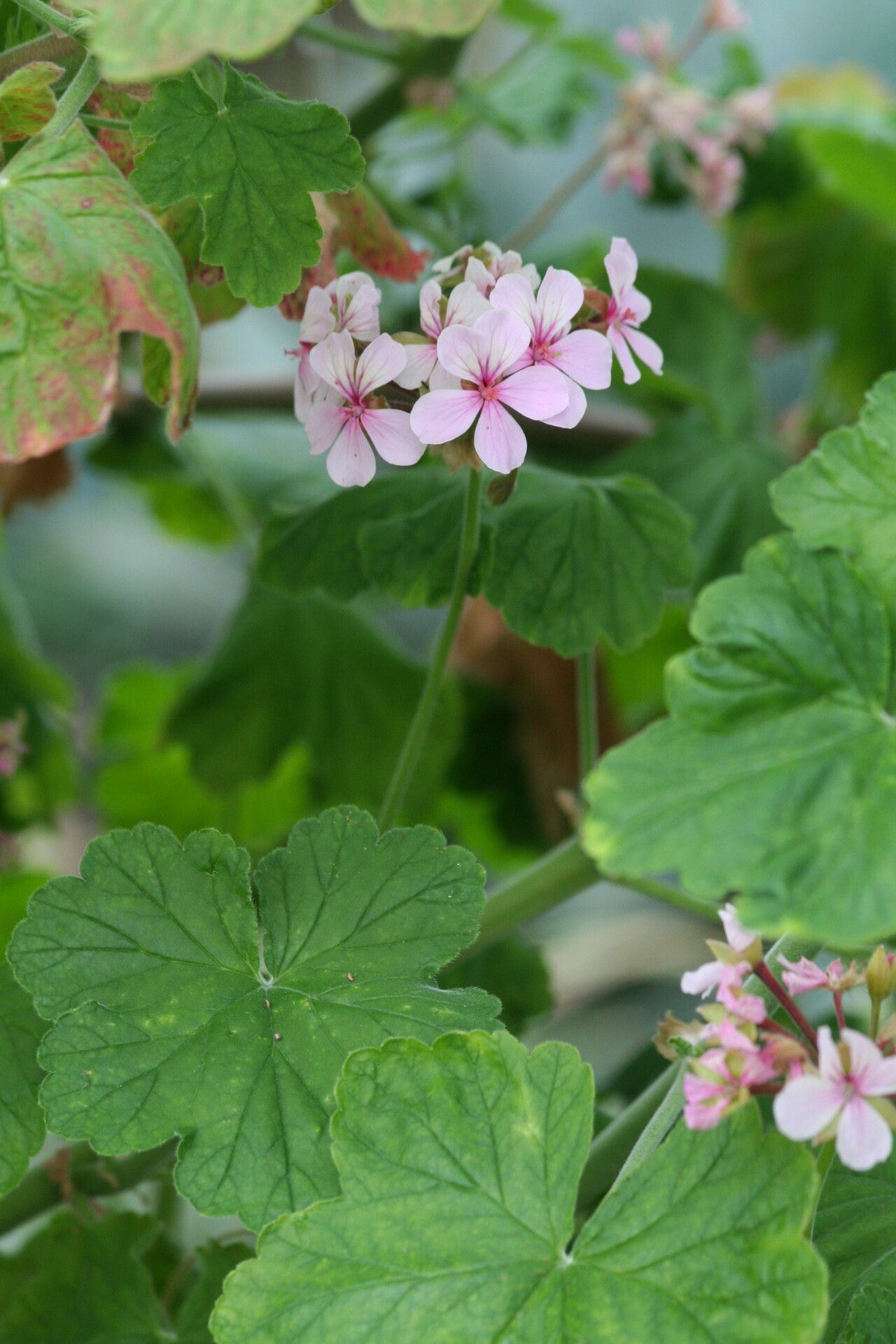
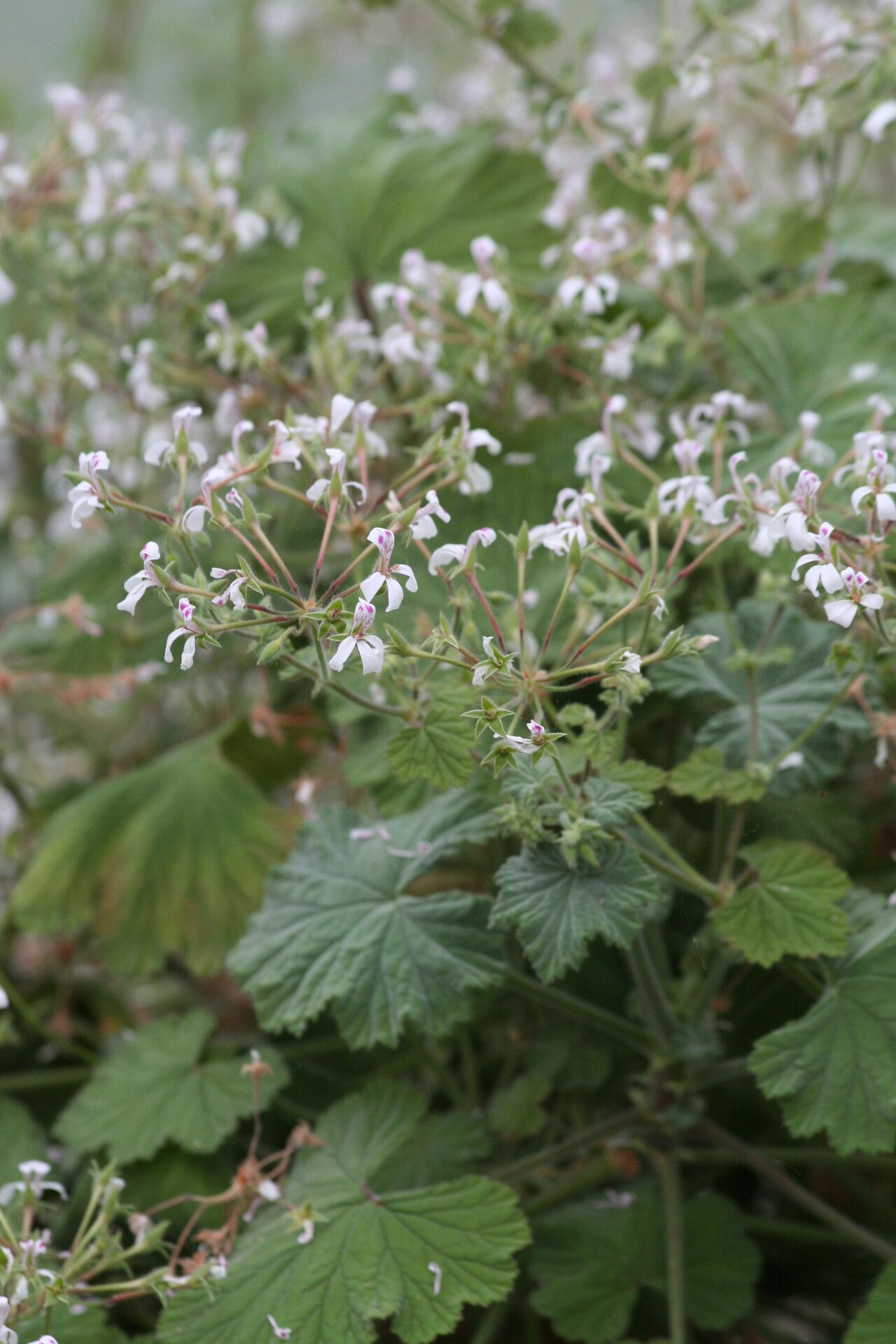
Pelargonium cucullatum is a hairy, upright, branching, perennial shrub, of 1–2 m (3.3–6.6 ft) high, that has been assigned to the cranesbill family. It sprouts new stems from the underground rootstock and becomes woody at its base. It has alternately set, sometimes slightly succulent leaves crowded near the top of the branches, with leaf stalks and flat to hood-shaped leaf blades, with a rounded broad triangular to kidney-shaped outline of about 4–5.5 cm (1+3⁄5–2+1⁄5 in) long and 5–9 cm (2–3+3⁄5 in) wide, often somewhat incised, the margin with irregular teeth. The white to purplish red, 5-merous, somewhat mirror symmetrical flowers grow in umbel-like clusters, and each contain mostly 7 fertile stamens and 3 infertile staminodes (best checked in the bud) of different length. P. cucullatum has been cultivated as a garden ornamental and house plant since the 17th century. It has been used to breed many modern pelargonium hybrids, notably the Regal pelargoniums. It is called hooded-leaf pelargonium or herba althaea in English and wildemalva in Afrikaans.
Botanical profile.
- Genus
- Pelargonium
- Family
- Geraniaceae
Other names.