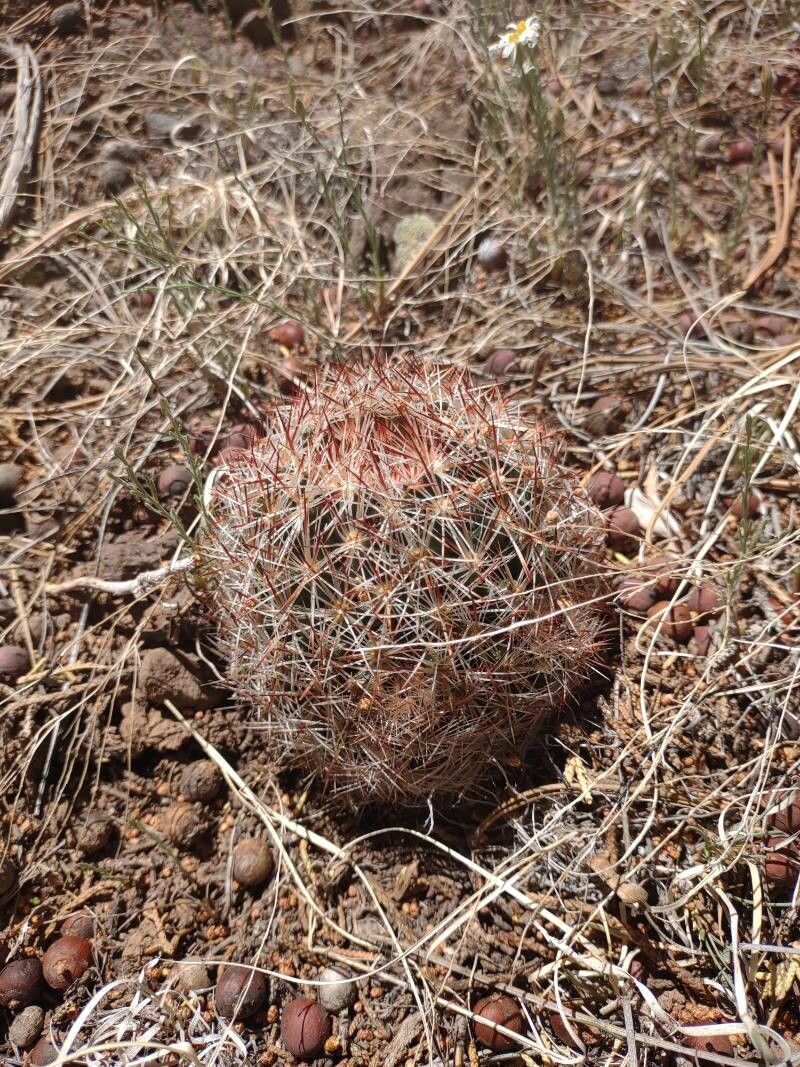
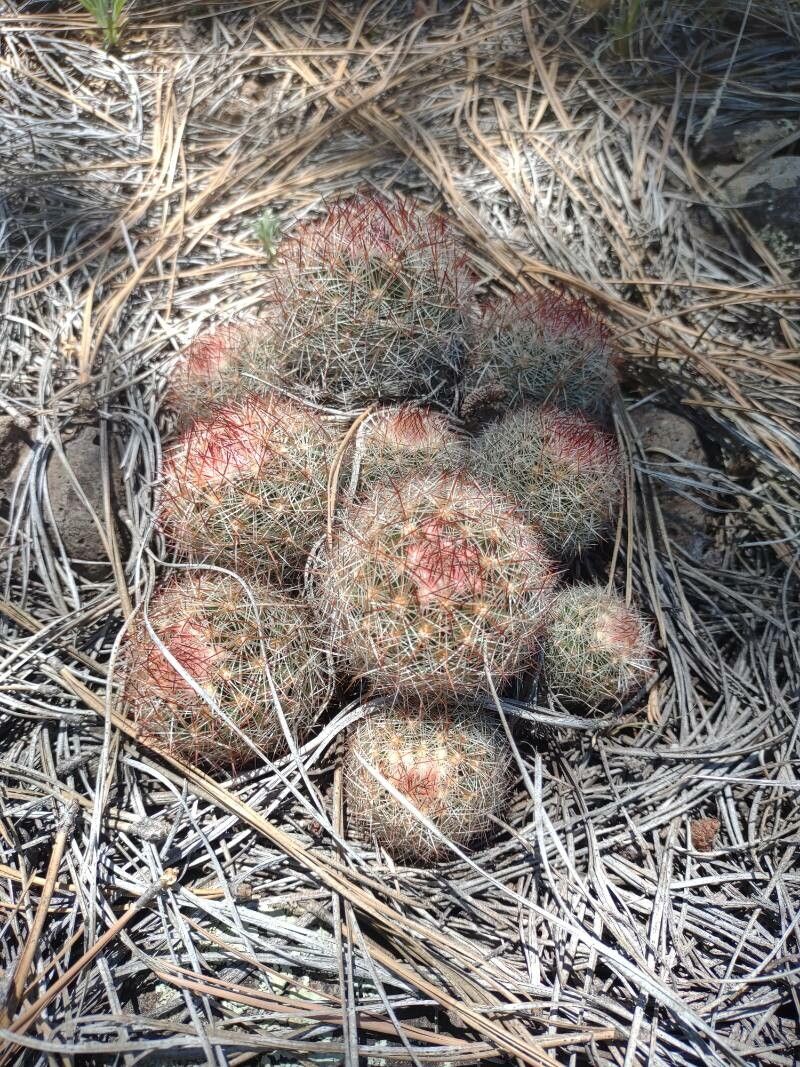
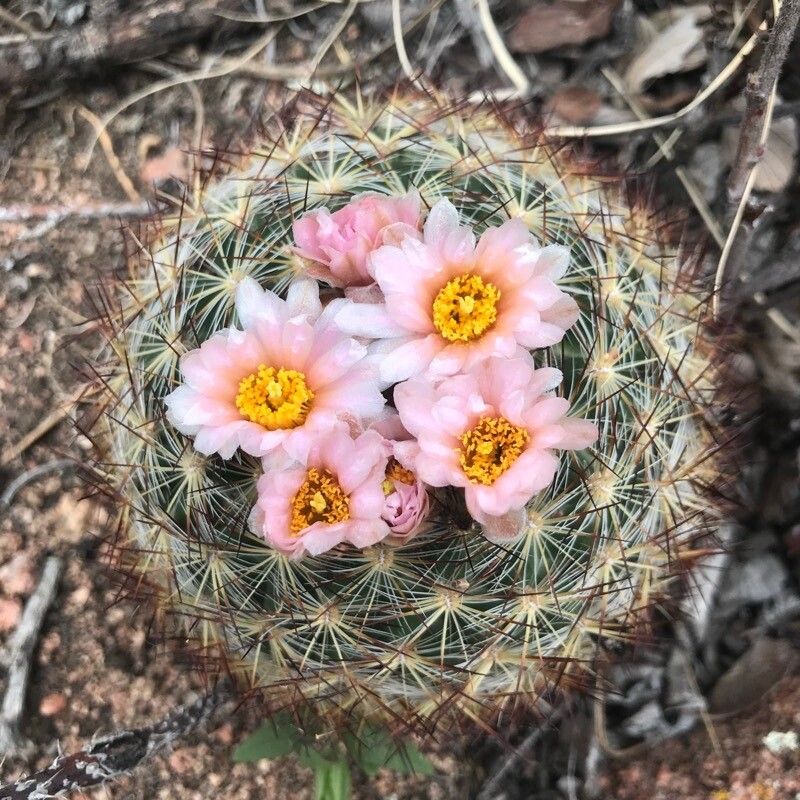
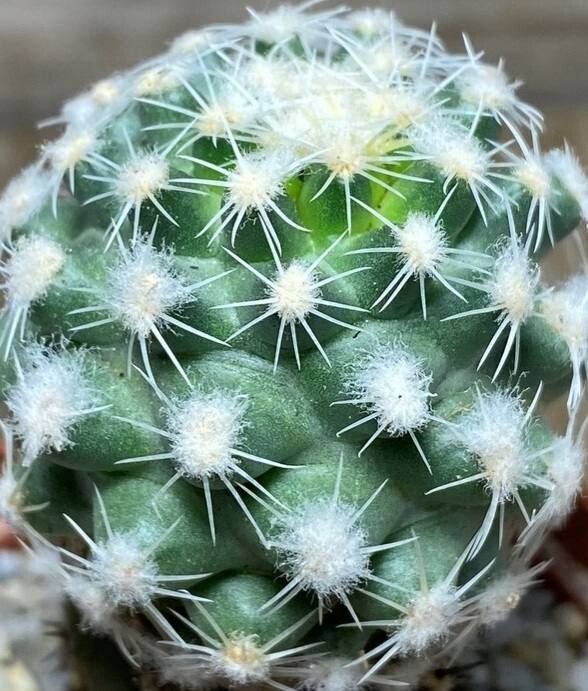
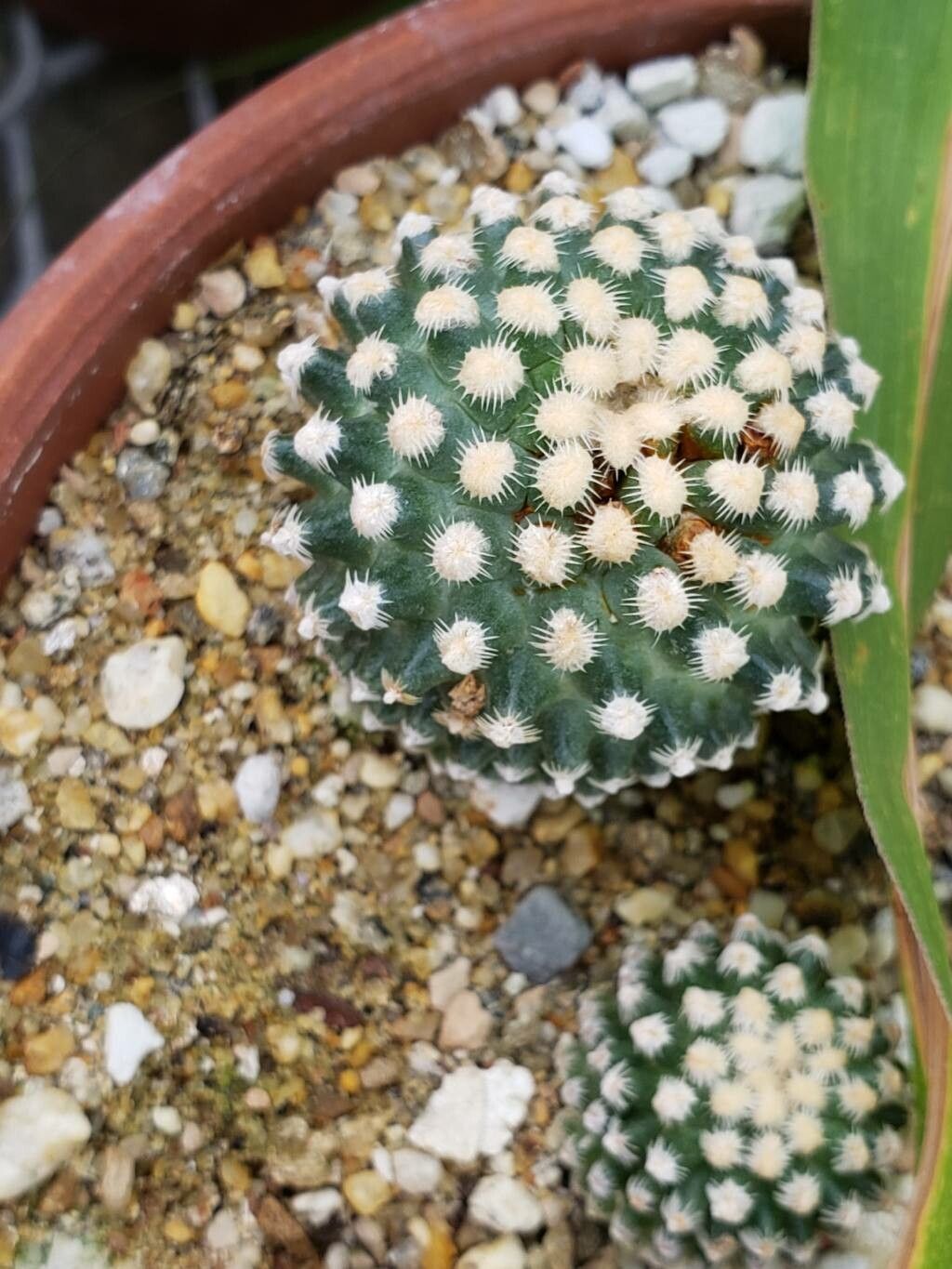
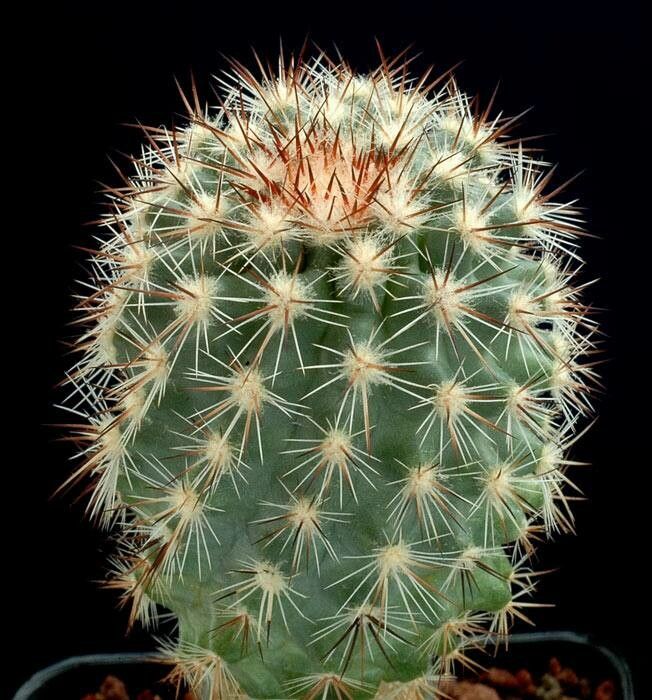
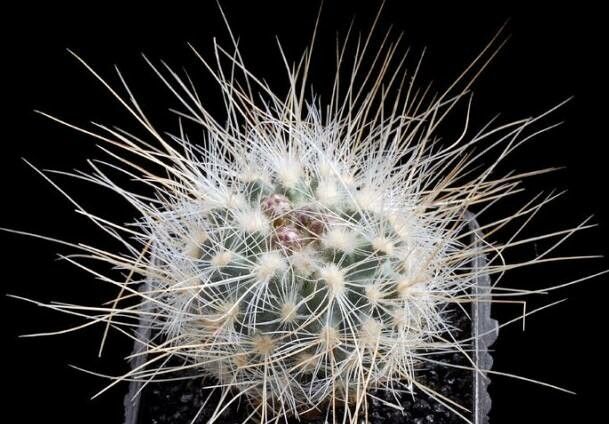
Pediocactus simpsonii, known by the common names mountain cactus, snowball cactus, and mountain ball cactus, is a relatively common cactus that has adapted to survive in cold and dry environments in high elevation areas of the western United States. It can be found at higher elevations than any other cactus in North America. While not a landscape dominating plant, it is a relatively common species and the most common member of the genus Pediocactus. Because of its beauty and adaptation to cold environments it is sometimes grown by gardeners in areas that have few other choices due to the limited number of cactuses with cold adaptations. Like many cactuses its populations are sometimes threatened by this desirability due to the theft or removal of plants from the wild by collectors.
Simpson's pincushion cactus has good disease resistance and tolerates routine care without becoming ill easily. It can, however, be vulnerable to mealybugs; these pests may cause some damage but are generally not a serious threat. In terms of care, the cactus is drought-tolerant and does not need frequent watering. It can endure long intervals without water and requires little fertilizer. That said, it is highly prone to root rot if lighting is poor and it is overwatered. Overall, Simpson's pincushion cactus is well suited to people who prefer to spend less time on plant care, but it is important to understand and meet its basic needs. It is particularly appropriate for those who are often away for extended periods and may forget to water their plants regularly.
How to keep Pediocactus Simpsonii.
Light
Simpson's pincushion cactus does best when exposed to abundant daytime sunlight, especially during its growing periods. Native to habitats with long hours of daylight, it performs optimally under those conditions. Too little or too much light can harm its healthy development, potentially causing slowed growth or burned foliage.
Water
The Simpson's pincushion cactus is exceptionally drought-tolerant and requires minimal watering, about once every three weeks. It thrives in natural light, making it well-suited for outdoor environments. The cactus adapts to seasonal rainfall and enters dormancy during prolonged dry spells.
Temperature
Simpson's pincushion cactus does best in warm conditions and needs higher temperatures during the growing season to support growth and metabolism. It prefers plenty of sunlight, proper moisture, and good ventilation. It can be harmed by very low temperatures and by overwatering. It's also important to maintain balance and avoid excessively high heat or overly dry conditions.
Fertilizer
For Simpson's pincushion cactus, light doses of fertilizer applied once or twice a year during the growing season are sufficient. Do not fertilize in winter or summer when the plant is dormant. Use less fertilizer for repotted plants and wait a couple of months after repotting before fertilizing. Fertilizing promotes healthy growth and encourages blooms.
Pruning
The Simpson's pincushion cactus requires very little pruning. It's best to concentrate on removing wilted flowers and branches to help the plant direct nutrients toward strong, healthy growth.
Pot & Repot
Repot Simpson's pincushion cactus every 2 to 3 years in the spring. Choose a container that is slightly larger than the base of the cactus to prevent waterlogging. Make sure the pot has good drainage to support a healthy root system. After repotting, place the cactus in bright, indirect light. Wait a week before resuming watering to give the roots time to settle.
Botanical profile.
- Plant Type
- Shrub
- Life Cycle
- Perennial
- Genus
- Pediocactus
- Family
- Cactaceae
- Hardiness Zone
- 4-8
- Mature Height
- 8 cm to 20 cm
- Mature Spread
- 18 cm
- Leaf Color
- Green
- Leaf Type
- Deciduous
- Flower Color
- Pink, Yellow
- Flower Size
- 2.03 cm to 3.05 cm
- Bloom Time
- Early spring, Mid spring
- Planting Time
- Spring, Summer
- Harvest Time
- Late spring, Early summer
Other names.
Reader questions.
What are the sunlight requirements for Simpson's pincushion cactus?
Simpson's pincushion cactus requires more than 6 hours of sunlight each day to flourish, especially during its growth periods. Originating from environments with extensive daylight, it performs best under similar conditions. Insufficient or excessive light may negatively affect its growth, leading to stagnation or foliage burns. It's suggested to observe the movement of sunlight through your garden to find an ideal balance of light and shade, ensuring the plants' well-being.
What are the essential care tips for Simpson's pincushion cactus?
Simpson's pincushion cactus (Pediocactus simpsonii) requires specific conditions to thrive. It favors warm environments and needs higher temperatures during its growing season for optimal growth and metabolism. The plant enjoys ample sunlight, appropriate moisture levels, and good ventilation. It's essential to protect it from excessively low temperatures and overwatering, while also avoiding overly high temperatures and dry conditions. During the winter, the cactus enters a dormant state and should be moved indoors if temperatures fall below 5°C, ideally near a south-facing window for maximum sunlight. If natural light is insufficient, supplemental lighting can be considered. Watering should be reduced or stopped when temperatures drop below 20°C to prevent root rot, and outdoor plants require no watering in low temperatures. In very cold conditions, consider insulating the plant with a temporary greenhouse or wrapping materials.
How can I compensate for lack of natural sunlight for indoor plants?
When natural sunlight is insufficient, particularly during winter or in less sunny areas, artificial lighting can be an essential solution for indoor plant growth. LED lights, customizable to provide specific wavelengths needed by plants, are a popular choice, offering faster, healthier growth. For optimal growth, full sun plants require 30-50W/sq ft of artificial light, partial sun plants need 20-30W/sq ft, and full shade plants need 10-20W/sq ft. Ensure the light source is placed 12-36 inches above the plant, mimicking natural sunlight, and keep it on for 8-12 hours per day.
How does low temperature affect Simpson's pincushion cactus and how can it be managed?
Simpson's pincushion cactus prefers high temperatures and does not tolerate low temperatures well, thriving best when the temperature is above 20°C and requiring protection to be kept above 5°C in winter. Exposure to temperatures below 1°C may lead to weakening, wilting, and root rot. In case of mild frost damage—which may not show symptoms initially but causes the plant to gradually wither after a week—the frostbitten areas should be trimmed off. Check for root rot; if present, the affected roots should be cut off, and the plant can be propagated through cuttings. Moving the plant indoors to a warm environment and ensuring it gets ample sunlight, possibly with supplemental lighting, is crucial for its recovery.
What are the signs of insufficient light in Simpson's pincushion cactus and how to address them?
Signs of insufficient light in Simpson's pincushion cactus include smaller new leaves, leggy or sparse growth, early leaf drop, halted growth, and paler new leaves. Excessive sunlight can lead to chlorosis, sunscald, leaf curling, wilting, and leaf scorching. To address light deficiency, gradually increase sunlight exposure to at least 6 hours a day by moving the plant to a sunnier location or using artificial light if the plant is large or not easily movable. For outdoor plants, avoid sudden light changes to prevent sunburn. Indoor solutions include using a south-facing window for natural light or artificial grow lights. To increase sunlight for ground-planted species, reduce obstacles like tree branches or consider transplanting during the plant's dormant period to a location with better sunlight and drainage.
How should high temperatures be managed for Simpson's pincushion cactus?
During the summer, it's crucial to ensure that Simpson's pincushion cactus is not exposed to temperatures above 41°C, as temperatures exceeding 45°C halt its growth, leading to water loss, wilting, and an increased risk of sunburn. In such cases, the sunburned and decayed parts should be removed immediately, and the plant should be protected from direct afternoon sunlight until it recovers and starts growing again. If root rot is present due to overwatering, watering should be ceased until new roots form.