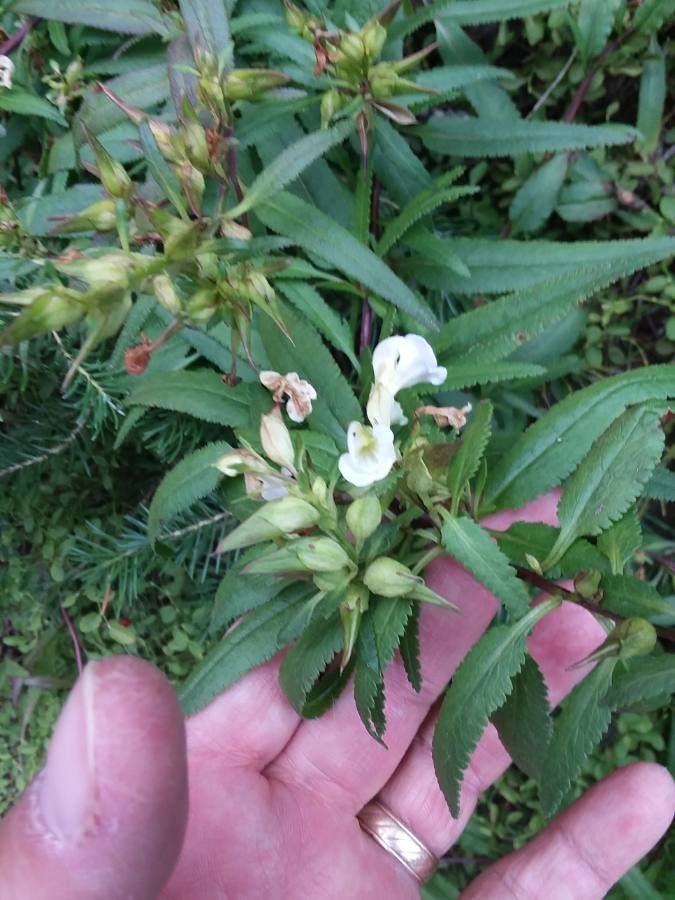
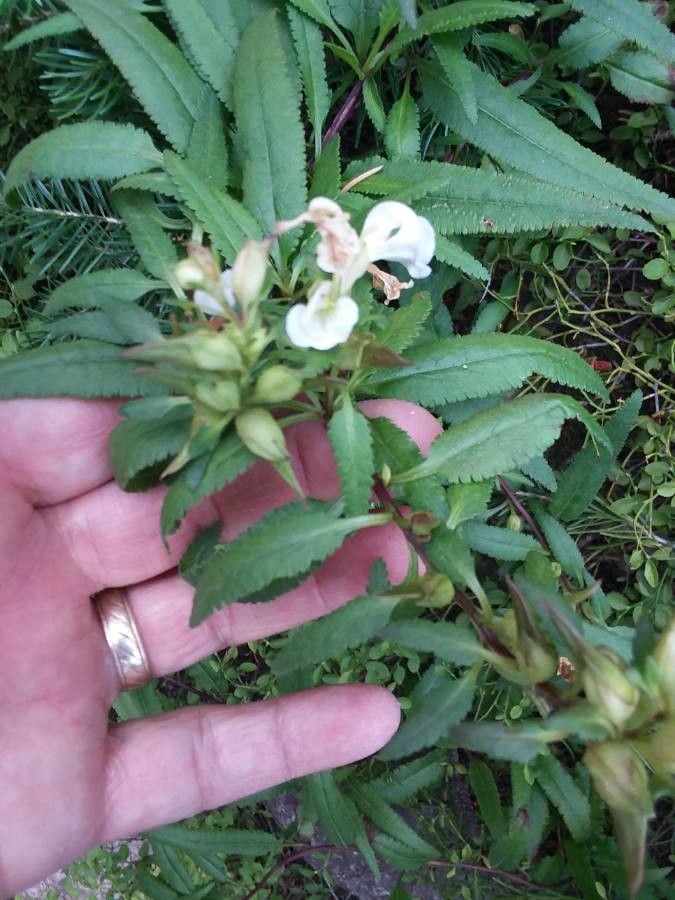
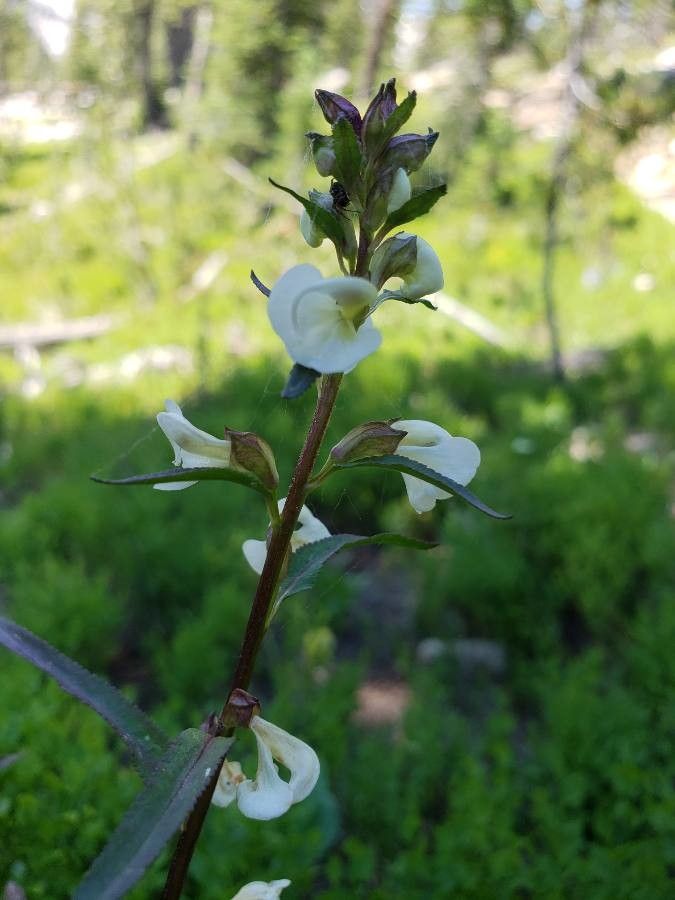
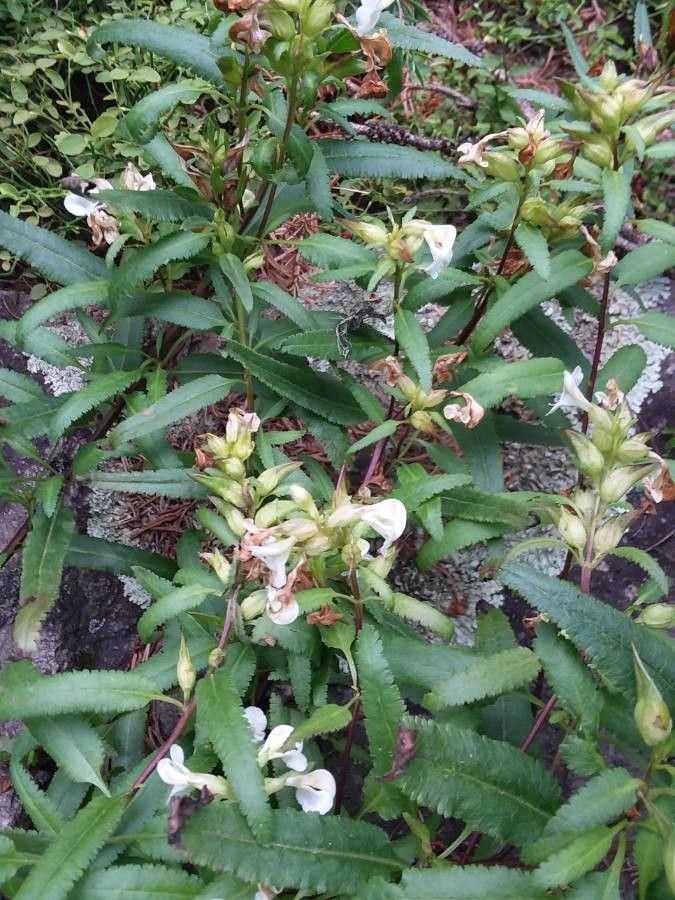
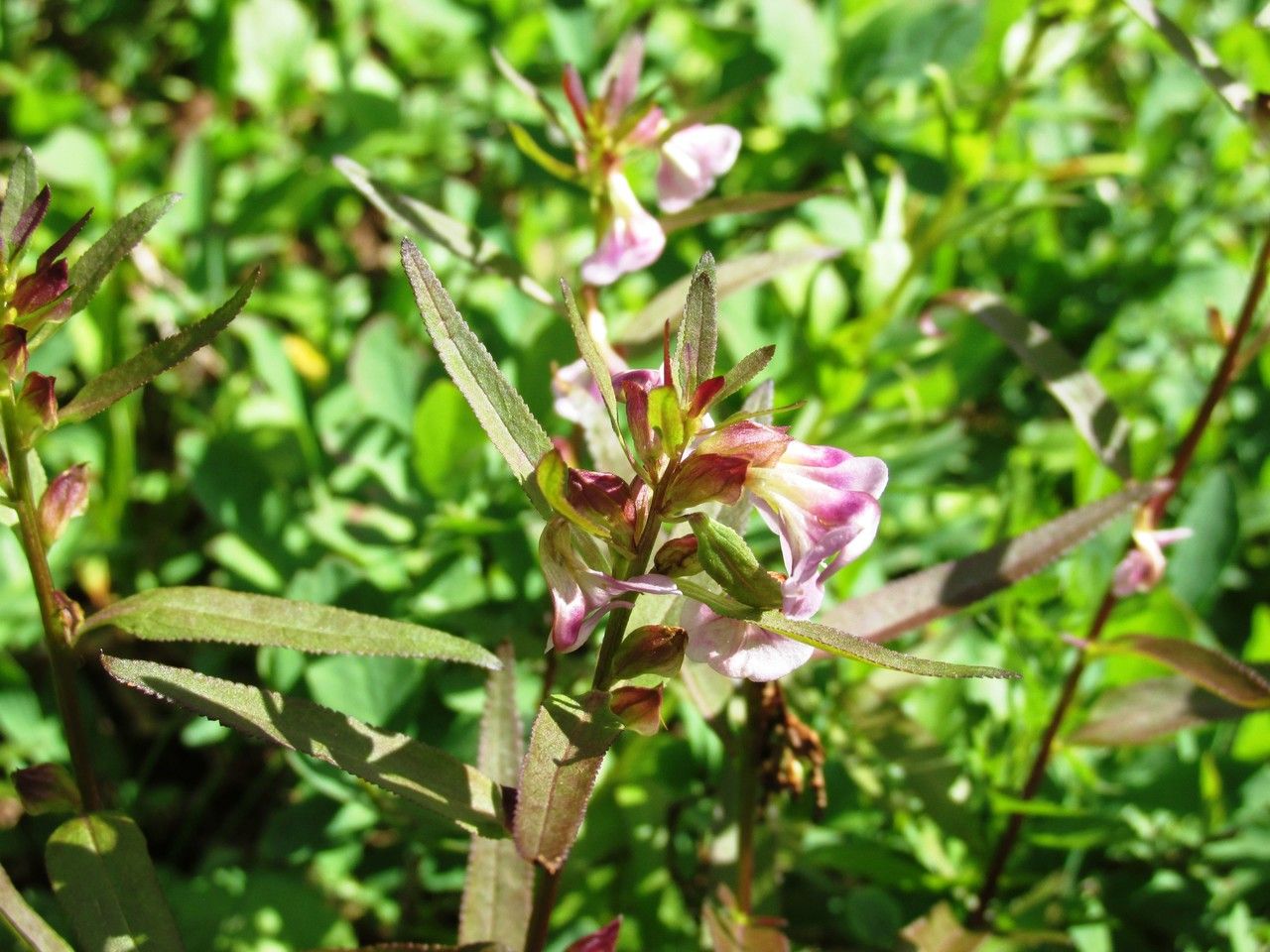
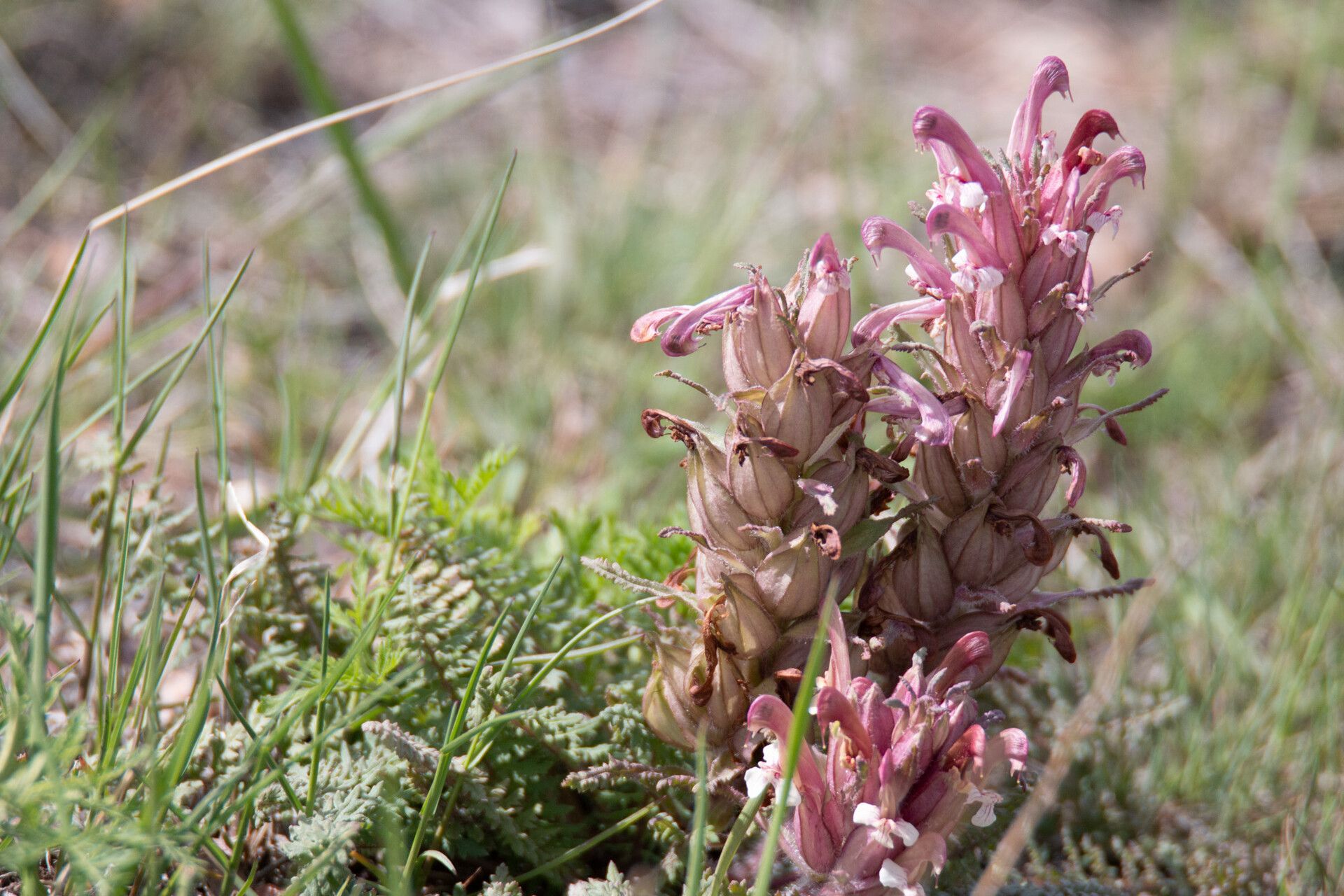
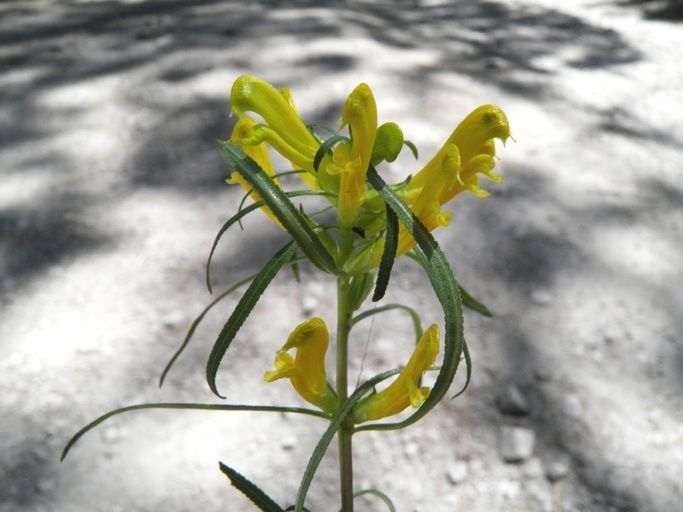
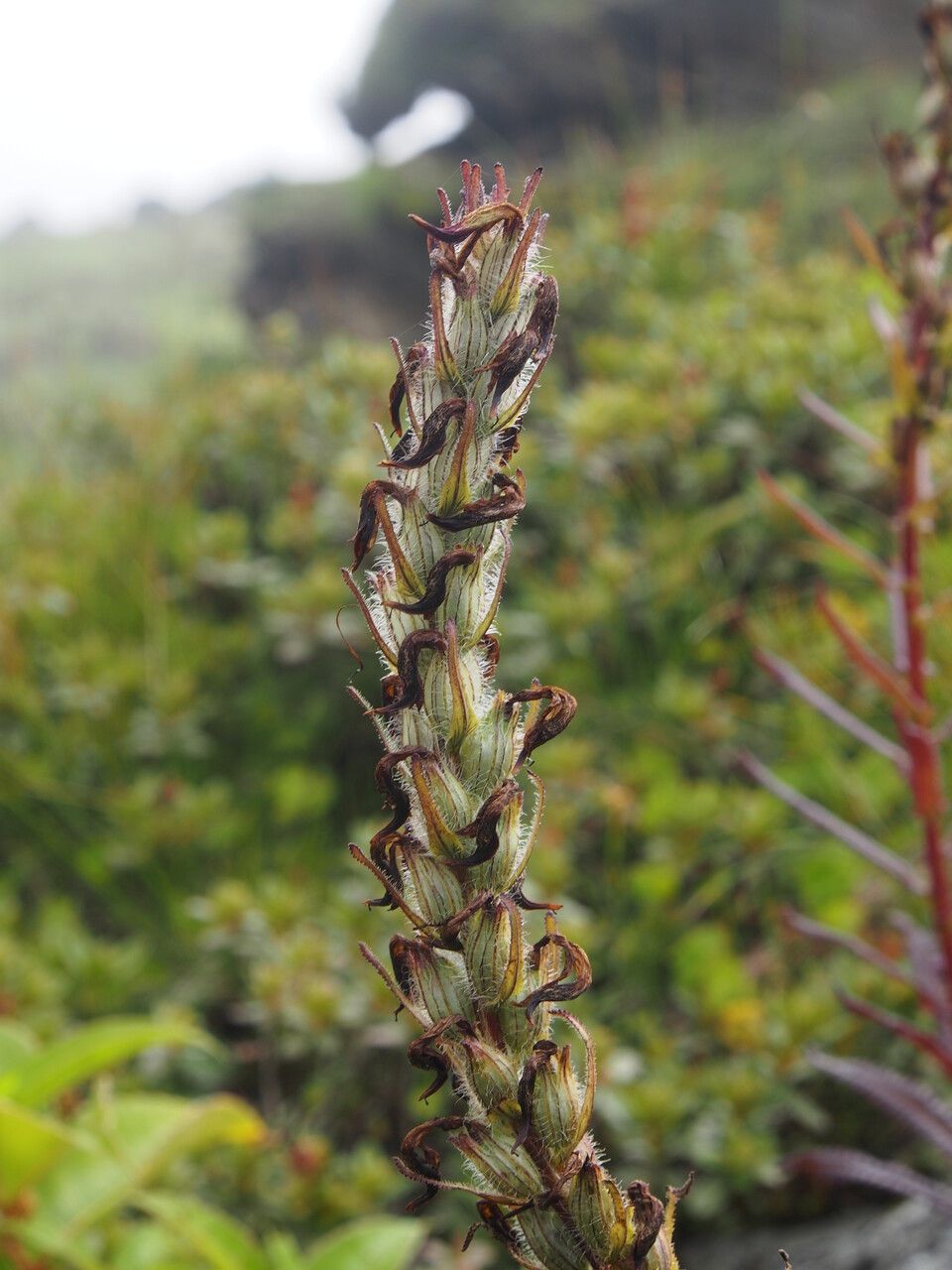
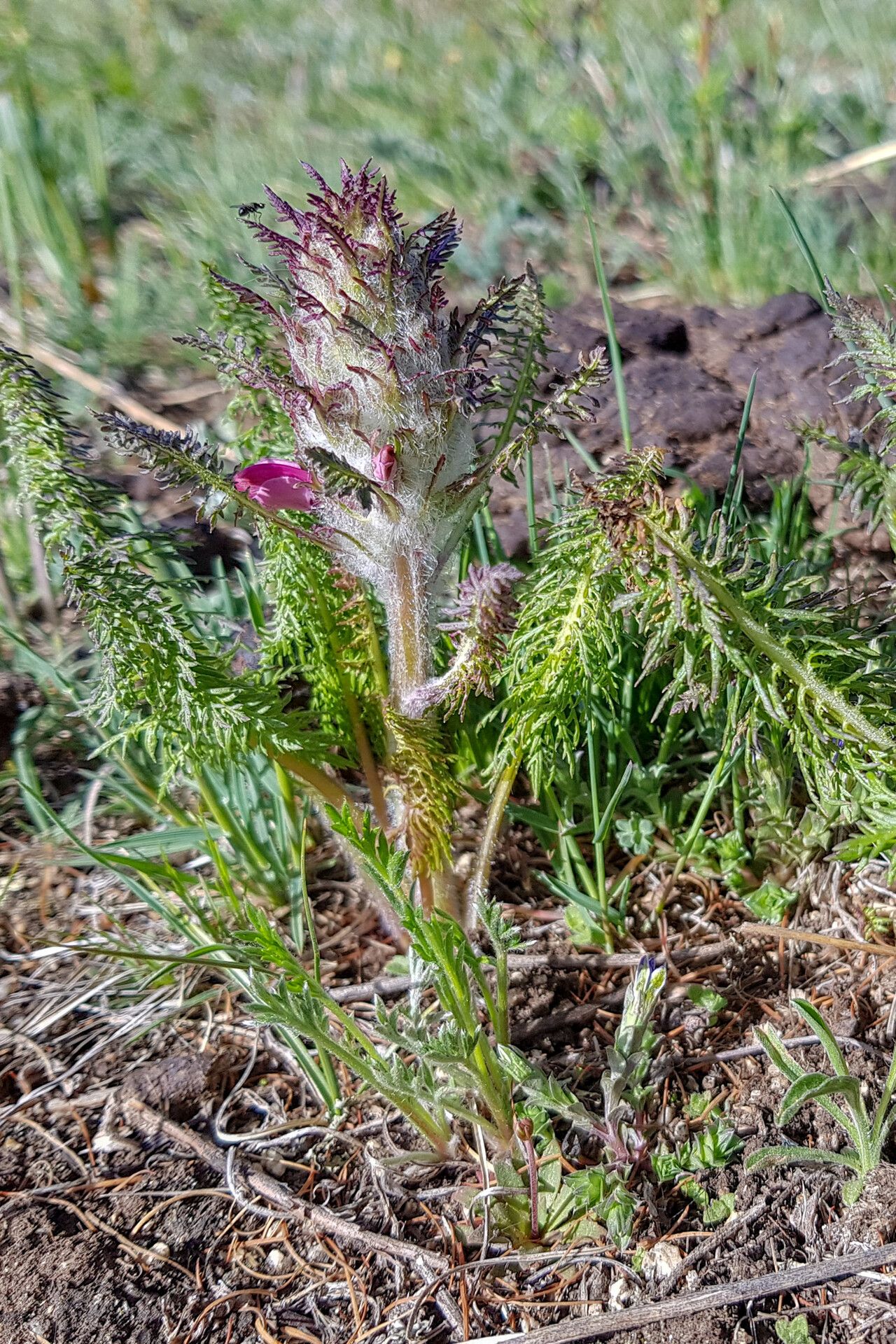
Pedicularis racemosa is a species of flowering plant in the family Orobanchaceae known by the common names sickletop lousewort and leafy lousewort. It is native to western North America, where it grows in coniferous forests. This is a perennial herb producing several stems up to 80 centimetres (31 in) tall, greenish to dark red in color. The leaves are up to 10 centimetres (4 in) long, linear in shape and lined with teeth. The inflorescence is a small raceme of flowers occupying the top of the stem. Each white to light purple or yellow flower is up to 1.6 centimetres (2⁄3 in) long and is divided into a curved or coiled beak-like upper lip and a wide three-lobed lower lip. The fruit is a capsule over a centimeter in length containing smooth seeds.
Sickletop lousewort is fairly disease-resistant and typically not vulnerable to illnesses. Nevertheless, it can be affected by pests and diseases that exist in its environment. Such infections are generally mild. Regarding maintenance, this plant needs a moderate level of care. Regular pruning is necessary to preserve an attractive look and encourage healthy growth. Applying fertilizer can also assist in boosting its flowering. Sickletop lousewort is appropriate for anyone who has outdoor areas like a garden or patio and does not demand extensive gardening experience. It may need extra attention if cultivated indoors.
How to keep Pedicularis Racemosa.
Light
Sickletop lousewort occurs naturally in habitats like forest understories and rocky areas, where it grows in natural shade. It prefers partial sun but can tolerate full sun or full shade, showing its versatile, hardy nature.
Water
Sickletop lousewort flourishes in damp soil, needing consistent moisture without becoming waterlogged. To replicate its natural environment, water the plant weekly. It is best suited for outdoor cultivation, where it can benefit from natural rainfall. Its growth and flowering are closely linked to the amount of water available throughout the seasons.
Temperature
Sickletop lousewort originates from temperate regions and grows best in temperatures between 32 and 90 °F (0 to 32 ℃). In colder months, keep the surroundings from dropping below freezing to promote optimal growth.
Fertilizer
The best time to fertilize a Sickletop lousewort is in early spring, as it emerges from dormancy and starts active growth. Fertilizing supplies essential nutrients for healthy development. While Sickletop lousewort has fairly low fertilizer requirements, an annual application can boost its survival and encourage better, longer-lasting flowers.
Pruning
Sickletop lousewort benefits from pruning in early to late spring. Focus on removing dead or damaged stems to encourage healthy growth and prevent diseases. After the plant flowers, trimming it helps maintain its shape and encourage future blooms. Regular pruning also helps control the plant's height and spread, ensuring a vibrant and robust appearance. Always use clean, sharp tools for the best healing results.
Botanical profile.
- Plant Type
- Herb, Shrub
- Life Cycle
- Perennial
- Genus
- Pedicularis
- Family
- Orobanchaceae
- Hardiness Zone
- 2-7
- Mature Height
- 20 cm to 52 cm
- Mature Spread
- 15 cm to 30 cm
- Leaf Color
- Green, Dark Green
- Leaf Type
- Deciduous
- Flower Color
- White, Pink
- Flower Size
- 1.02 cm to 2.03 cm
- Bloom Time
- Early summer, Mid summer
- Planting Time
- Spring, Summer
- Harvest Time
- Late summer, Early fall
Other names.
Reader questions.
How should I water my Sickletop lousewort to make it healthy again?
To properly water the Sickletop lousewort, it is recommended to use filtered water at room temperature. Tap water may contain harmful particles for this plant, so filtering is important. The water temperature should be either room temperature or slightly warmer to avoid shocking the plant, which naturally grows in warm environments. It is also advised not to water the plant from above to avoid issues with the foliage. Instead, pour the filtered room temperature water directly onto the soil until it is completely soaked. This watering method is beneficial as it helps moisten the roots, allowing them to spread and absorb the necessary nutrients from the soil.
What are the sunlight requirements for Sickletop lousewort?
Sickletop lousewort thrives best in partial sun, receiving about 3-6 hours of sunlight per day, but it can also tolerate full shade environments. It is native to environments like forest understories or rocky areas, which naturally offer shade. When considering planting locations or caring for this plant, observing the movement of sunlight through your garden or space is crucial to find spots that provide a balance of light and shade, ensuring the plant's happiness and health.
What is the native environment of Sickletop lousewort?
Sickletop lousewort, botanically known as Pedicularis racemosa, is native to temperate zones. It thrives in temperatures ranging from 32 to 90°F (0 to 32°C). This plant is highly cold-tolerant and does not require additional frost protection measures during the winter. However, it is crucial to ensure the environment remains above freezing and to water the plant generously before the first freeze in autumn to keep the soil moist and prevent drought and water scarcity during the colder months.
What should I do if I give my Sickletop lousewort too much water or too little water?
Overwatering is a more common issue than underwatering for the health of your Sickletop lousewort. When this plant gets too much water, its stems and leaves may wilt and turn yellow. Prolonged overwatering can also cause diseases like root rot, mold, and mildew, which can be deadly. Underwatering is less common because the Sickletop lousewort can tolerate drought well. However, it's still possible, and if it happens, the leaves may become brittle and brown. It's important to notice signs of overwatering early. Some of the diseases caused by overwatering, like root rot, may not be fixable if you wait too long. If you see early signs, reduce watering right away. Check the quality of the soil where your plant grows. If it drains poorly, replace it with a loose, well-draining potting mix. If you notice signs of underwatering, simply water more regularly until the signs go away.
How does artificial lighting benefit indoor Sickletop lousewort plants?
When natural sunlight is insufficient, especially during winter or in spaces with less exposure to sunlight, artificial lighting becomes essential for the growth of indoor Sickletop lousewort plants. LED lights are recommended because they can be customized to offer specific wavelengths needed for plant growth. For optimal growth, full sun plants need 30-50W/sq ft, partial sun plants need 20-30W/sq ft, and full shade plants require 10-20W/sq ft of artificial light. The light source should be placed 12-36 inches above the plant and provided for 8-12 hours per day to mimic natural daylight conditions.
How does low temperature affect Sickletop lousewort, and what are the solutions?
Sickletop lousewort is extremely tolerant to low temperatures, capable of withstanding conditions above -40°C. However, if temperatures drop below this threshold, the plant may not show immediate changes during winter, but there might be a noticeable decrease in sprouting or a complete lack of sprouting in spring. In response to this, it is recommended to remove any parts of the plant that have failed to sprout in the spring.
How often should I water my Sickletop lousewort plant?
If your Sickletop lousewort is in a pot, you can determine if it needs water by sticking your finger in the soil. If the top two to three inches of soil are dry, then it's time to water it. If your Sickletop lousewort is planted outdoors, you can use the same method to test the soil. Once the top few inches of soil have dried out, it's time to water it. Typically, during spring and early fall, you'll need to water this plant about once a week. In extremely hot weather, you might need to increase watering to two or more times per week. However, mature and well-established Sickletop lousewort can tolerate drought conditions well.
What are the symptoms of light deficiency in Sickletop lousewort?
Sickletop lousewort may exhibit several symptoms when grown in conditions with insufficient light, including smaller new leaves, leggy or sparse growth, faster leaf drop, slower or no new growth, lighter-colored new leaves, and symptoms related to excessive sunlight like chlorosis, sunscald, leaf curling, wilting, and leaf scorching. These symptoms indicate either a lack of adequate light or excessive exposure to sunlight, affecting the plant's ability to perform photosynthesis efficiently and maintain its health.
What effect does high temperature have on Sickletop lousewort, and how can it be mitigated?
Sickletop lousewort does not tolerate high temperatures well. When the temperature exceeds 32°C, the plant's growth will cease, and it becomes more susceptible to rot. To mitigate the effects of high temperatures, you should trim away sunburned and dried-up parts of the plant. Move the plant to a location with shade from the midday and afternoon sun or use a shade cloth. Additionally, watering the plant in the morning and evening helps maintain soil moisture and supports the plant's health during hotter conditions.
How much water does my Sickletop lousewort plant need?
When watering your Sickletop lousewort, don't be afraid to give it a good amount of water. When the top two to three inches of soil are dry, it's time for a thorough watering. Make sure to water the plant until the soil is soaked through. You should add enough water so that it flows out of the drainage holes at the bottom of the pot. If you don't see any excess water draining, then you haven't watered enough. However, be careful not to let the water accumulate in the soil, as this can harm the plant. On the other hand, if the water doesn't drain well from the pot, this could indicate that the soil doesn't drain properly, which is not good for the plant's health. If the plant is outside, it should receive about 1 inch of rain per week, which will be enough.
What are some solutions to address insufficient sunlight for Sickletop lousewort?
To overcome insufficient sunlight for Sickletop lousewort, gradually acclimate the plant to more sunlight by shifting it to sunnier spots each week until it receives sufficient direct sunlight (3-6 hours per day). For indoor plants that are large or difficult to move, consider supplementing with artificial light, such as keeping a desk or ceiling lamp on for at least 8 hours daily or investing in professional plant grow lights. If dealing with outdoor plants, gradually moving them to sunnier locations can help, but it's essential to avoid sudden changes in light intensity to prevent sunburn. Additionally, reducing obstructions like pruning trees or relocating smaller plants to sunnier spots with better drainage during their dormant period can improve their sunlight exposure.
How should I water my Sickletop lousewort during different times of growth?
The water needs of the Sickletop lousewort can vary throughout its growth stages. In the first few years or after transplanting, it requires more water due to the energy it invests in developing new roots. These roots need extra moisture to support future growth. However, after a few seasons, the water requirements decrease. Another stage that requires increased watering is during the bloom period, as flower development utilizes a significant amount of moisture.