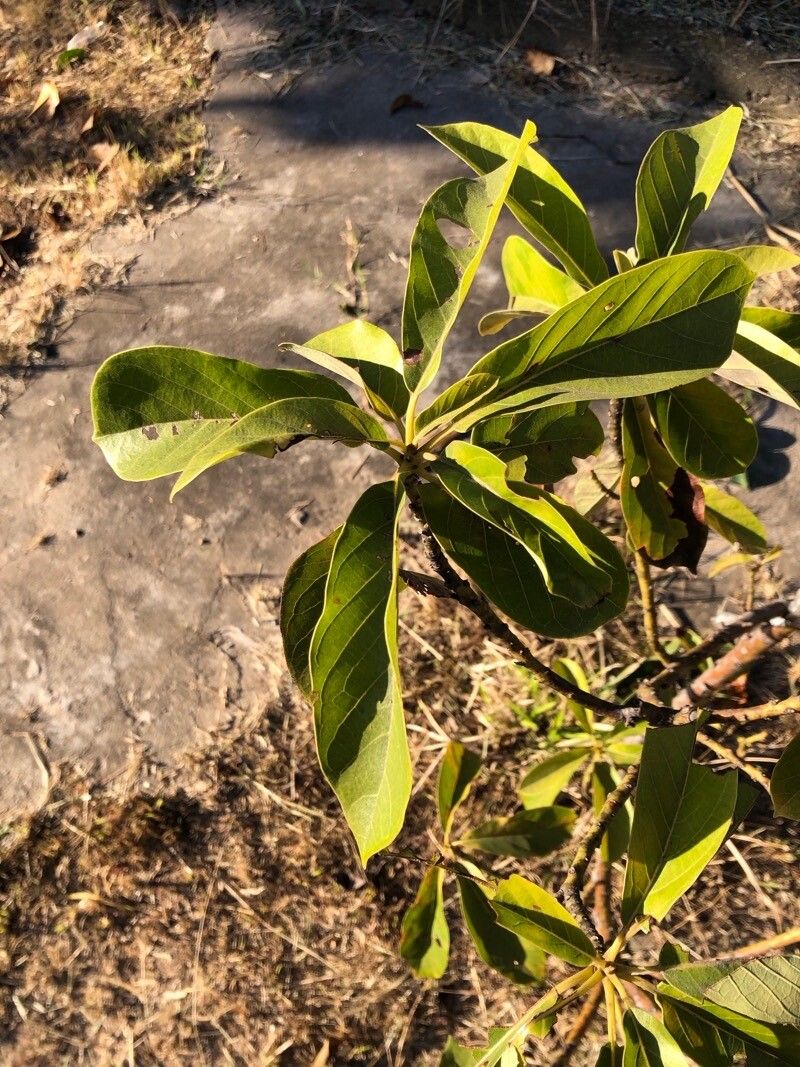
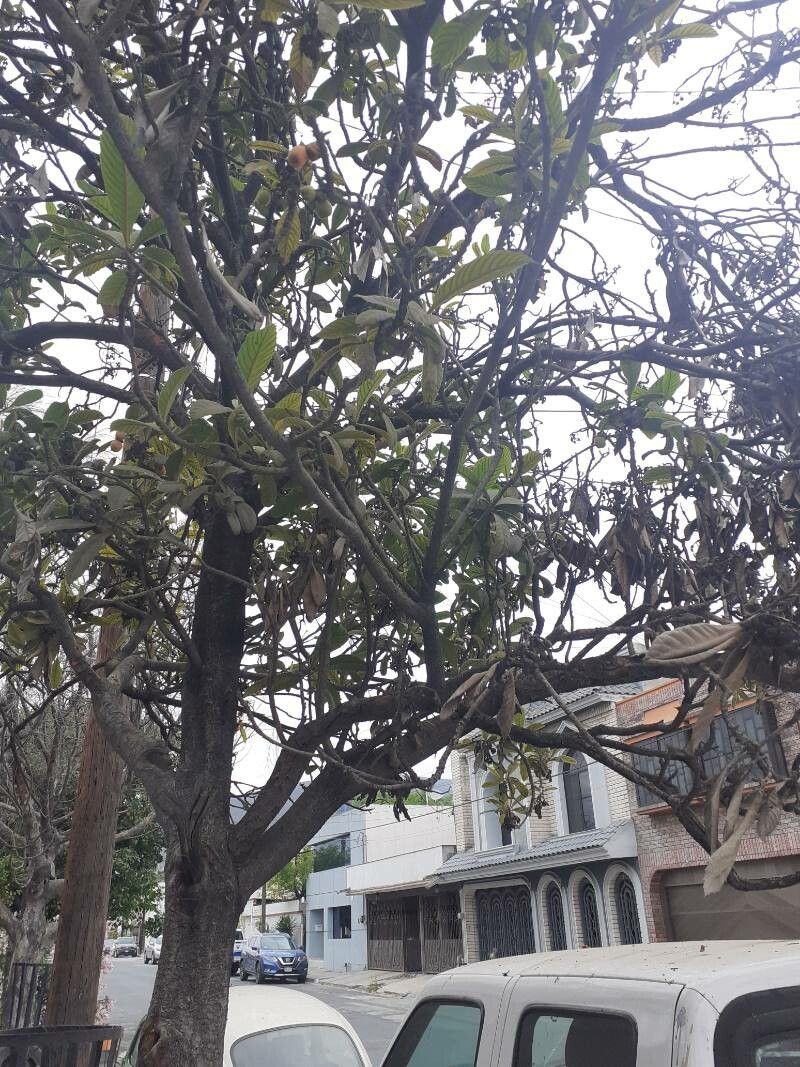
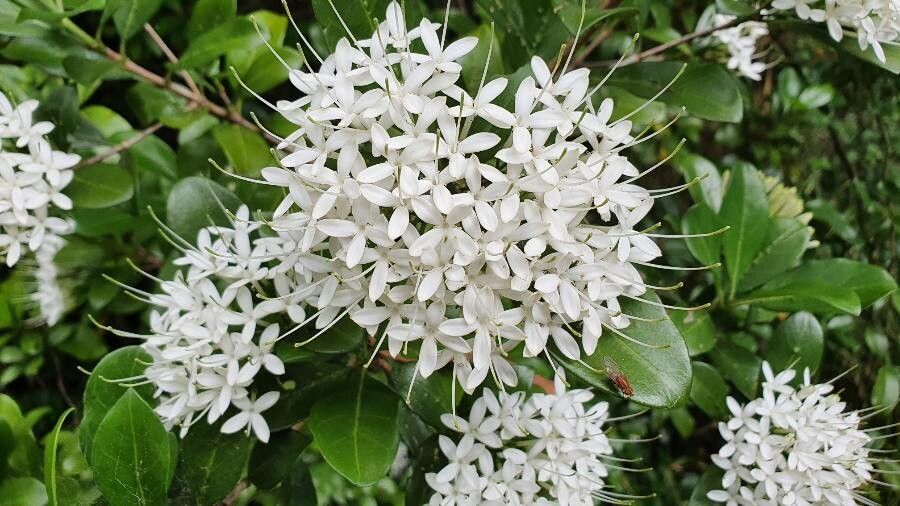
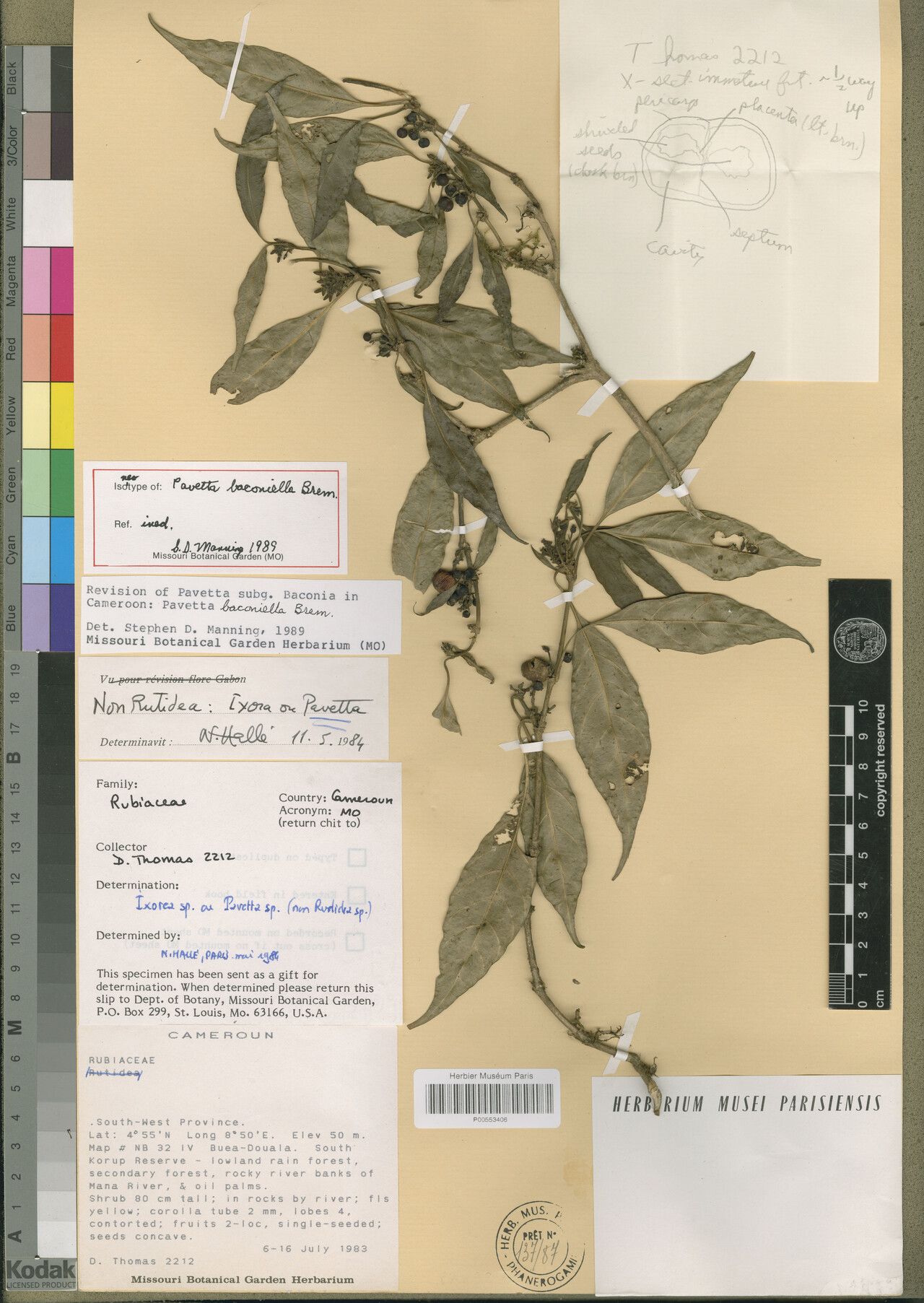
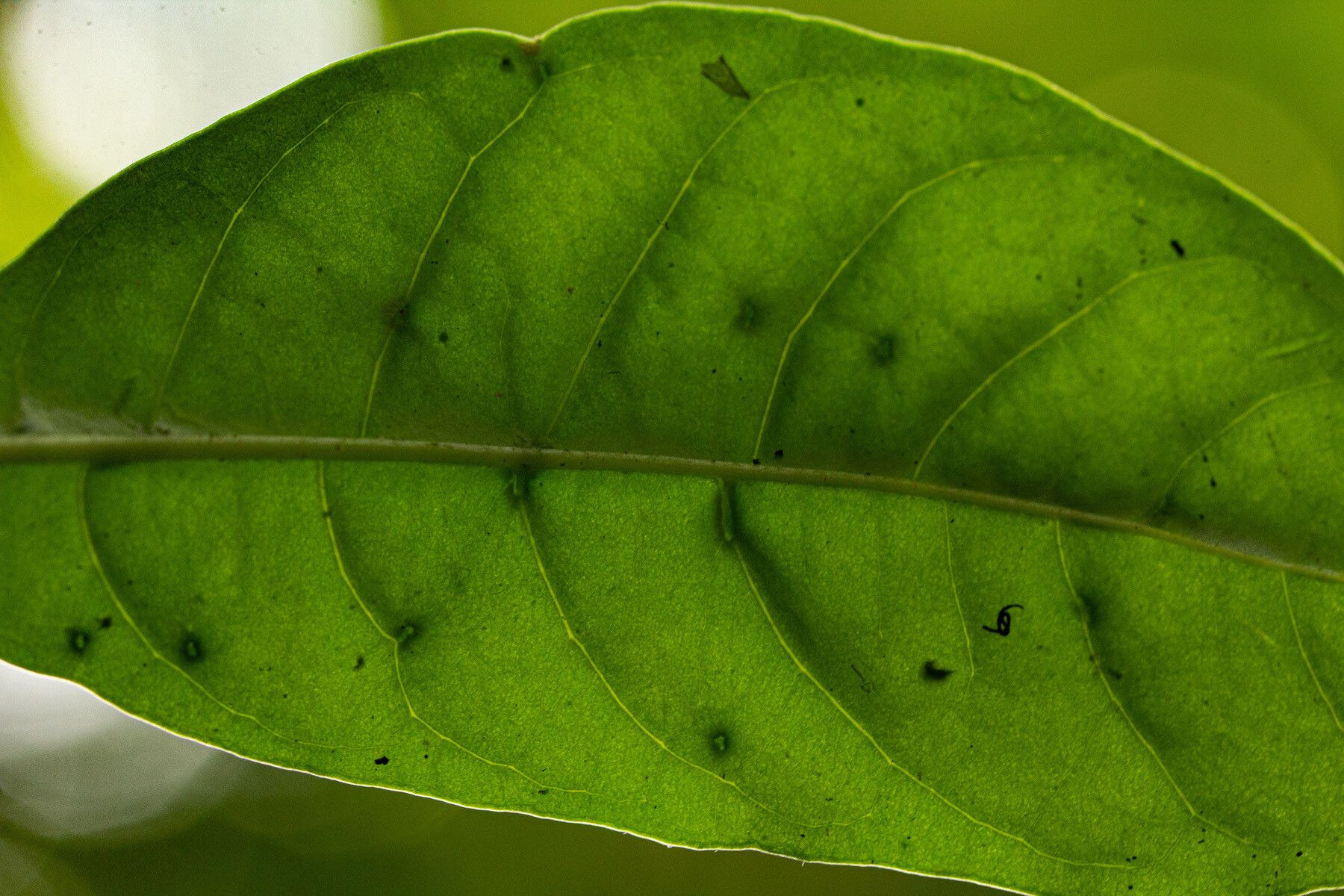
Pavetta schumanniana, a flowering plant species in the Rubiaceae family, is native to tropical Africa. This small to medium-sized shrub can reach up to 2 meters in height. The leaves are opposite, simple, and elliptic, boasting a glossy green color with prominent veins. The small, white flowers have four petals that form a tube-like structure at the base, blooming in clusters at the branch tips from late spring through summer.
You will commonly find Pavetta schumanniana growing at forest edges, along streams or riversides, and on rocky hillsides. It thrives in well-drained soils with moderate moisture levels and can tolerate partial shade.
In African communities, the plant is used medicinally for treating fever, stomach ailments, and for its anti-inflammatory properties.
Overall, Pavetta schumanniana is an attractive ornamental plant that enhances garden beauty while providing medicinal benefits to those who use it in traditional medicine.
Poison bride's bush is well resistant to disease and generally not susceptible to illnesses. In terms of care, this plant is fairly low-maintenance. When grown outdoors it needs little watering, and larger plants usually do not need pruning. Smaller plants, on the other hand, should be pruned after they finish blooming. Poison bride's busht is suitable for anyone with an outdoor area, such as a garden or deck, and does not require extensive care experience.
How to keep Pavetta Schumanniana.
Light
Poison bride's bush comes from open habitats, like sunny meadows and forest edges, that offer abundant light. It thrives in Full Sun but will also tolerate Partial Sun, adapting well to different sunlight conditions.
Temperature
Poison bride's bush comes from tropical areas, which have warm, humid climates. As a result, it is well suited to high temperatures and humidity. It does not tolerate sudden temperature shifts and prefers a steady temperature environment, so indoor temperature fluctuations should be avoided. It generally cannot withstand cold and needs higher temperatures to grow. If the surrounding temperature drops too low, the plant may stop growing or even die.
Fertilizer
The ideal time to fertilize a Poison bride's bush is in early spring, when it emerges from dormancy. This encourages overall growth and flower development. Fertilization improves the foliage, stems, and branches, and promotes flowers that are larger, more vibrant, and longer-lasting. It helps transfer nutrients from the roots to the flowers and enhances the plant's health and resistance to disease.
Botanical profile.
- Plant Type
- Tree
- Life Cycle
- Perennial
- Genus
- Pavetta
- Family
- Rubiaceae
- Hardiness Zone
- 10-12
- Mature Height
- 2.13 m to 3.96 m
- Mature Spread
- 1.52 m to 3.05 m
- Leaf Color
- Dark Green, Forest Green
- Leaf Type
- Evergreen
- Flower Color
- White
- Flower Size
- 1.02 cm to 1.52 cm
- Bloom Time
- Late spring, Early summer, Mid summer
- Planting Time
- Summer, Autumn
- Harvest Time
- Late summer, Early fall, Mid fall
- Native Area
- Malawi, Angola, Cameroon, Burundi, Mozambique, Tanzania, Zimbabwe, South Africa, Zambia, Eswatini, Rwanda, Namibia, Congo (DRC), Botswana, Central African Republic
Other names.