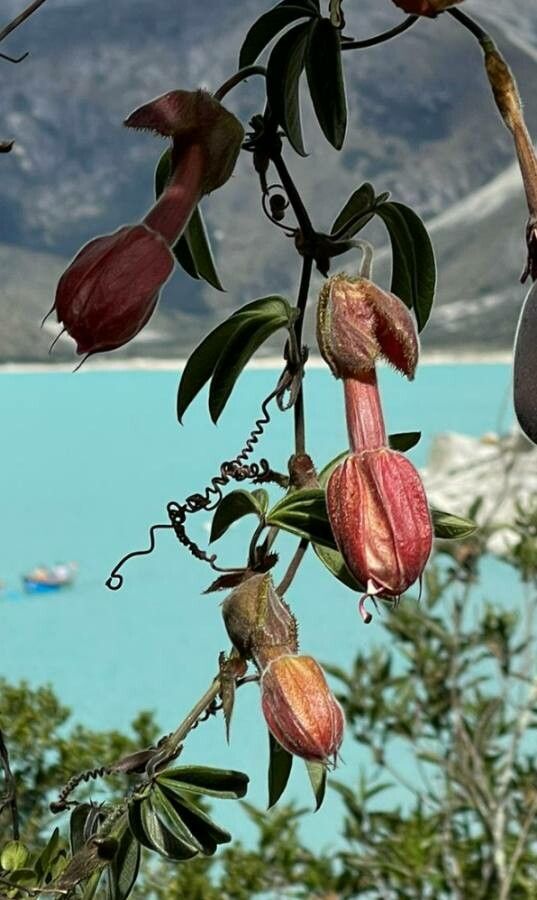
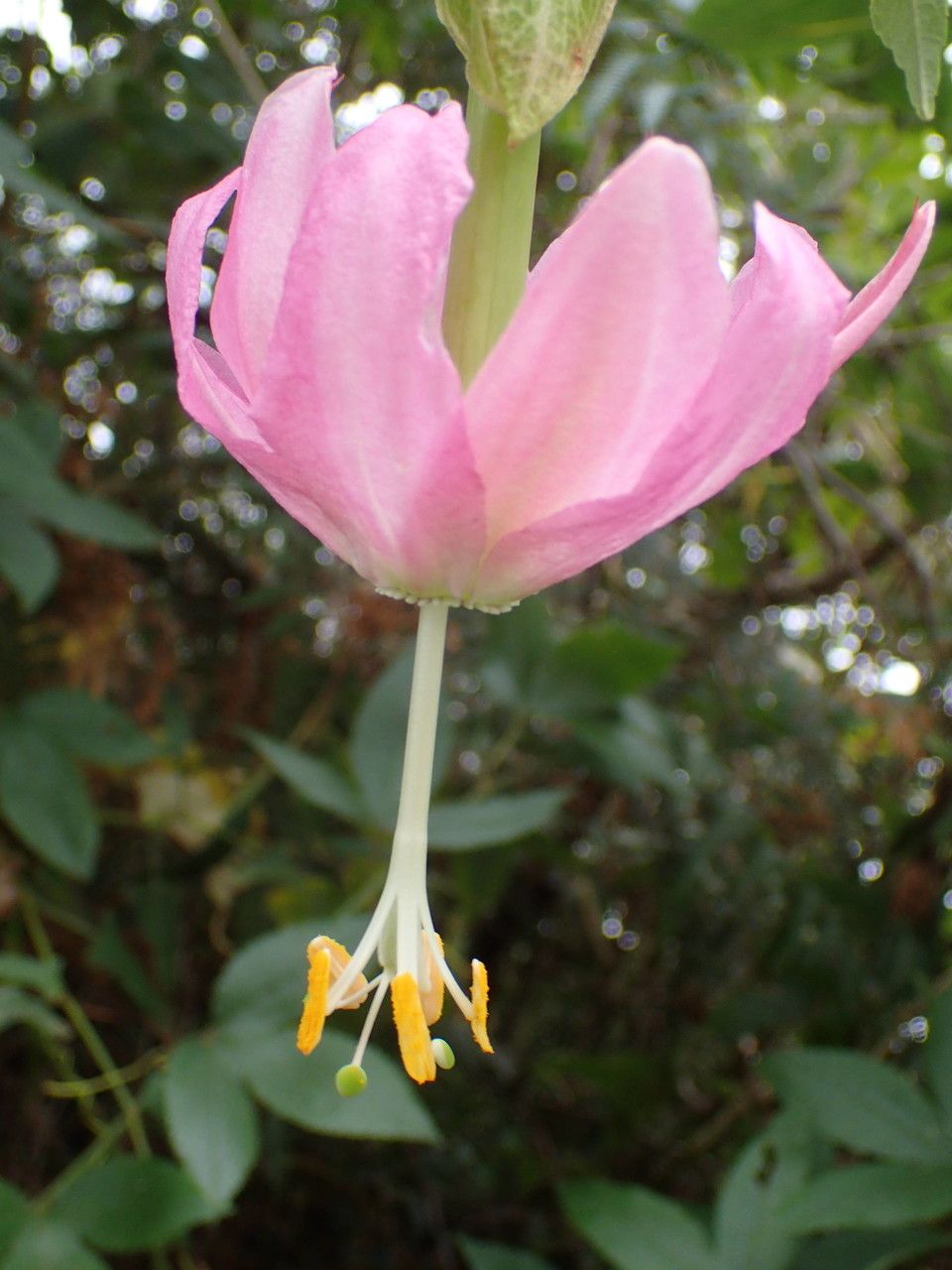
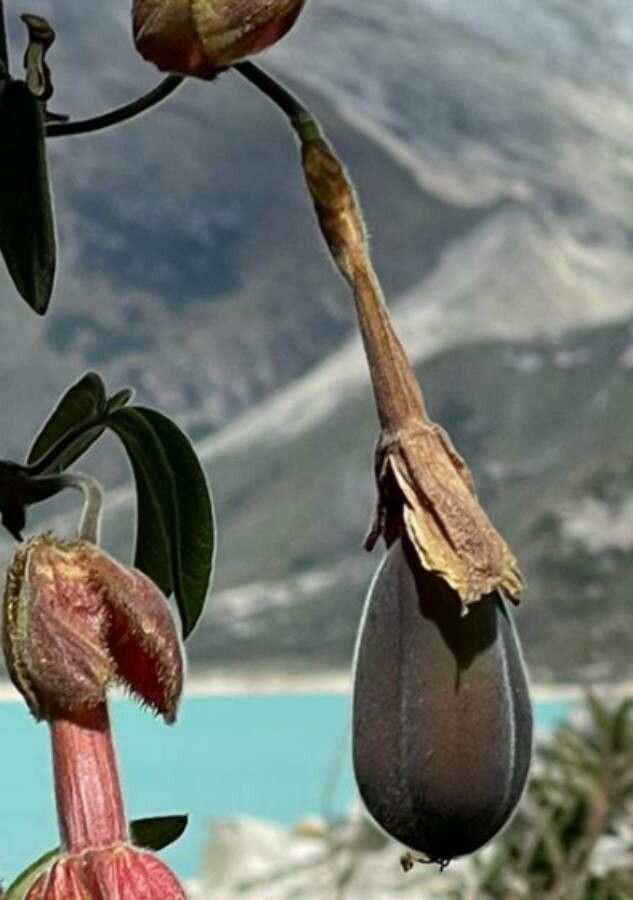
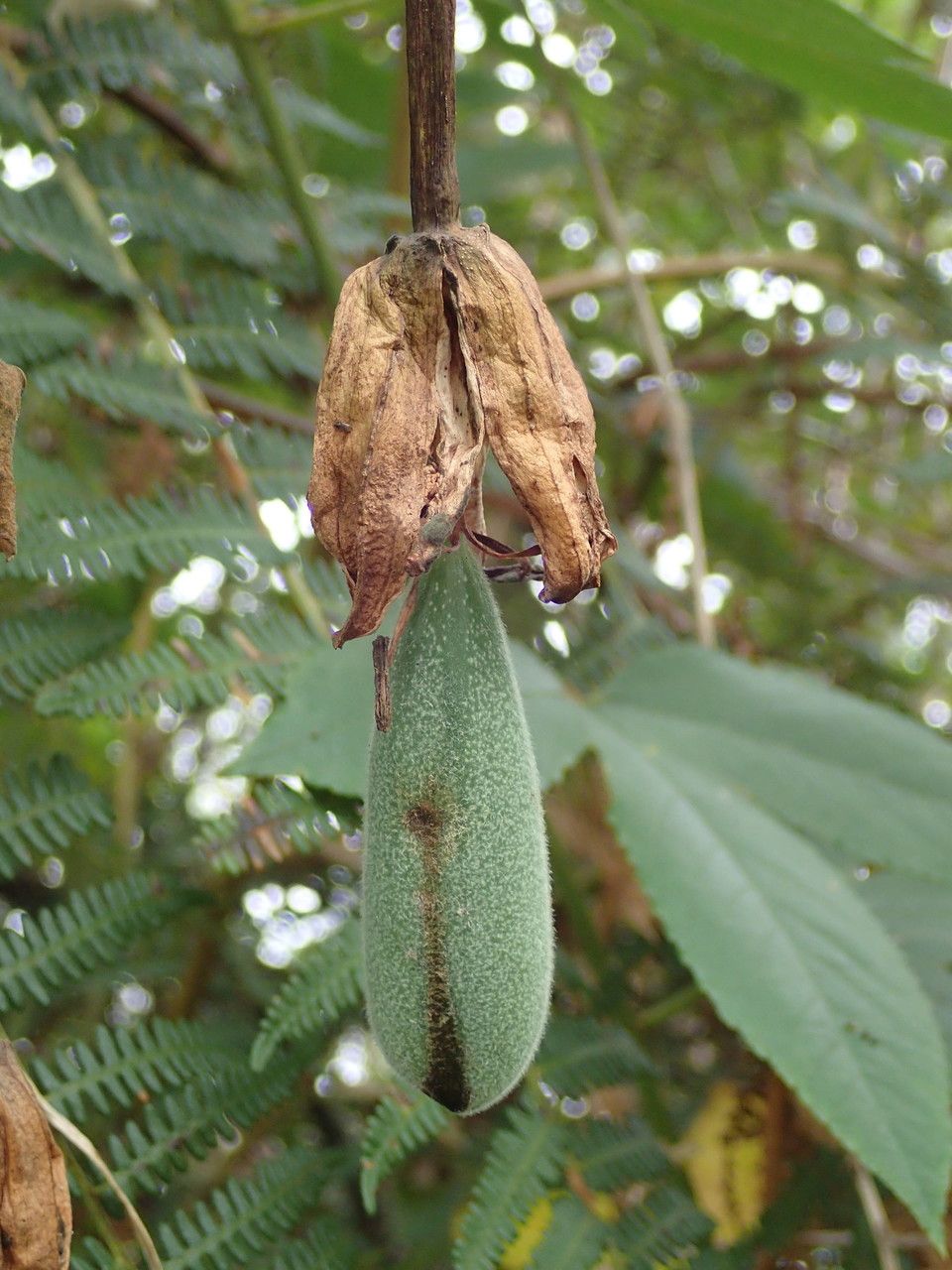
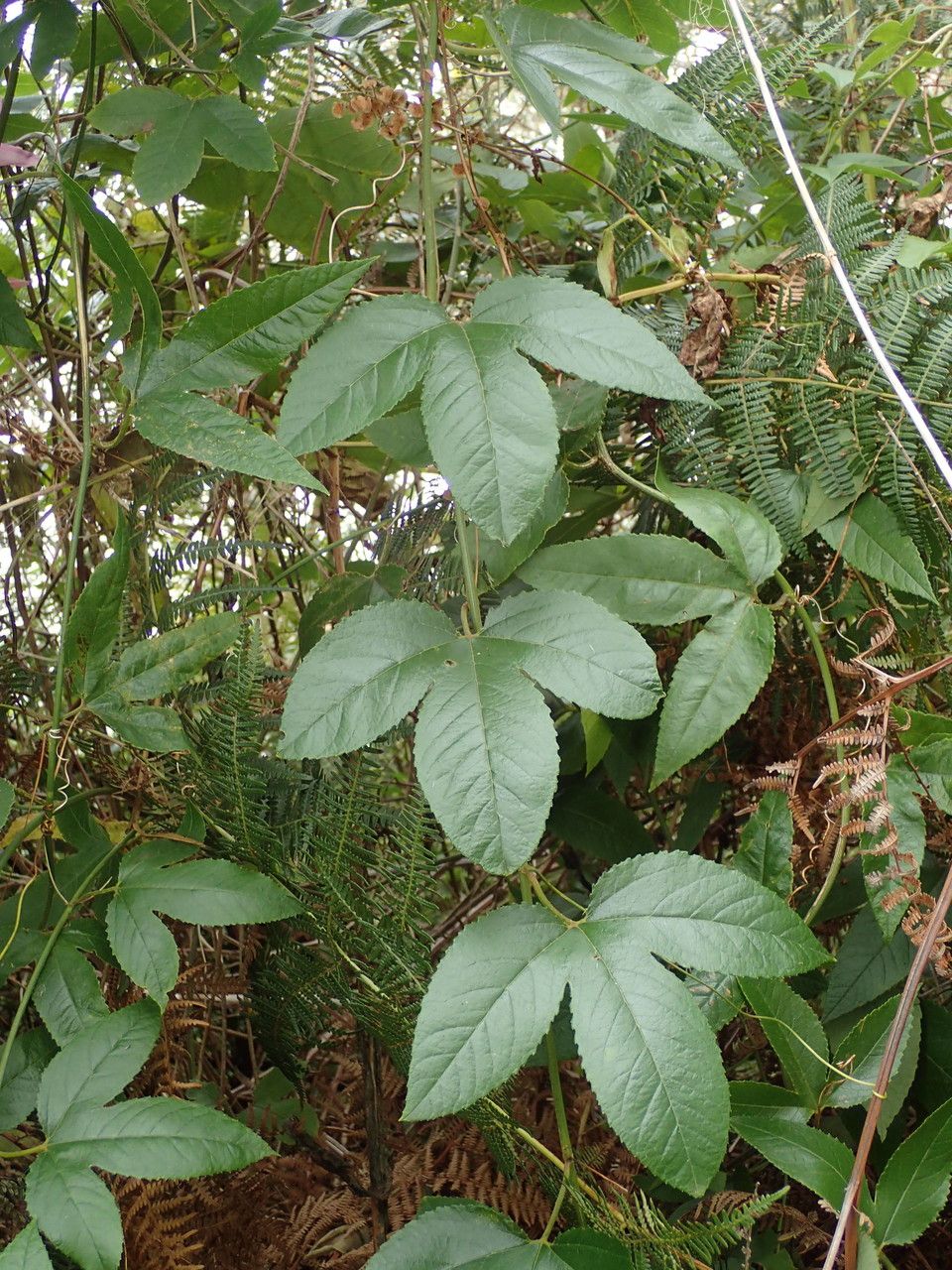
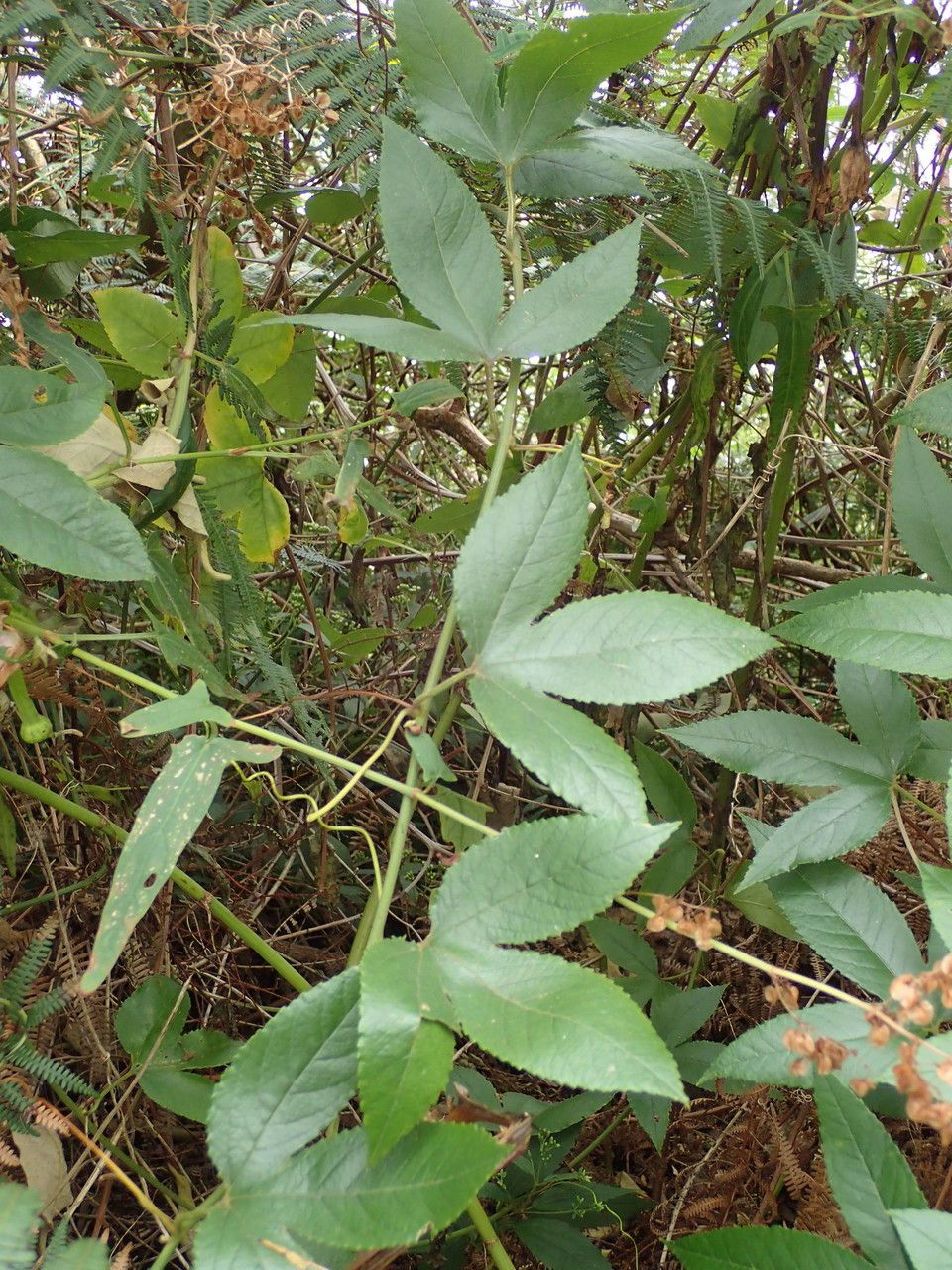
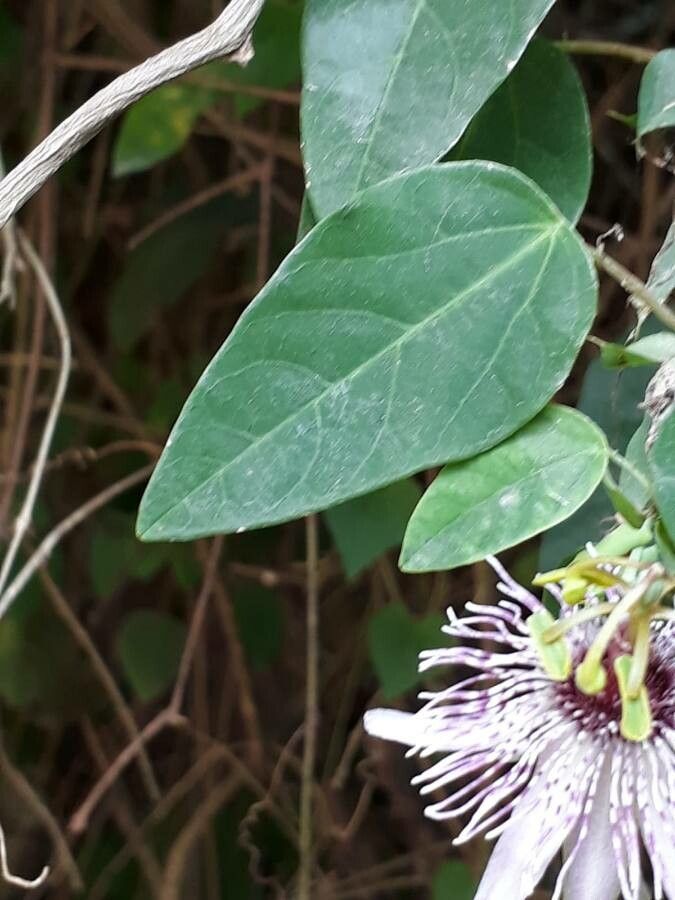
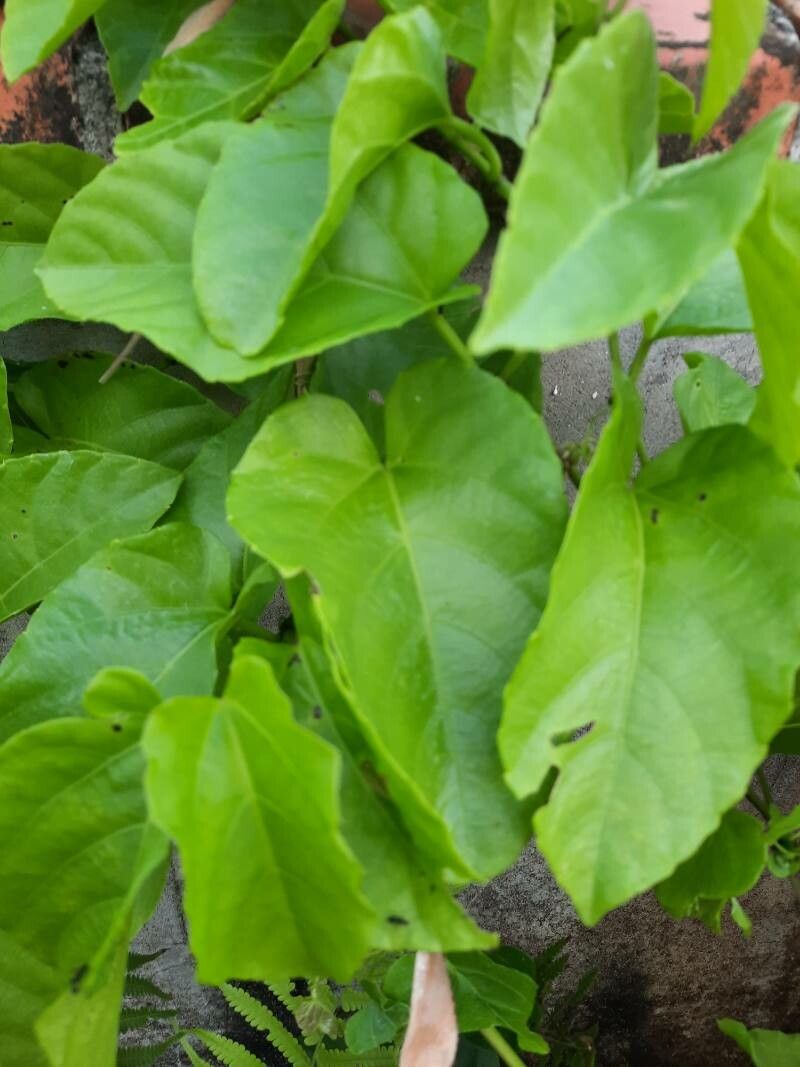
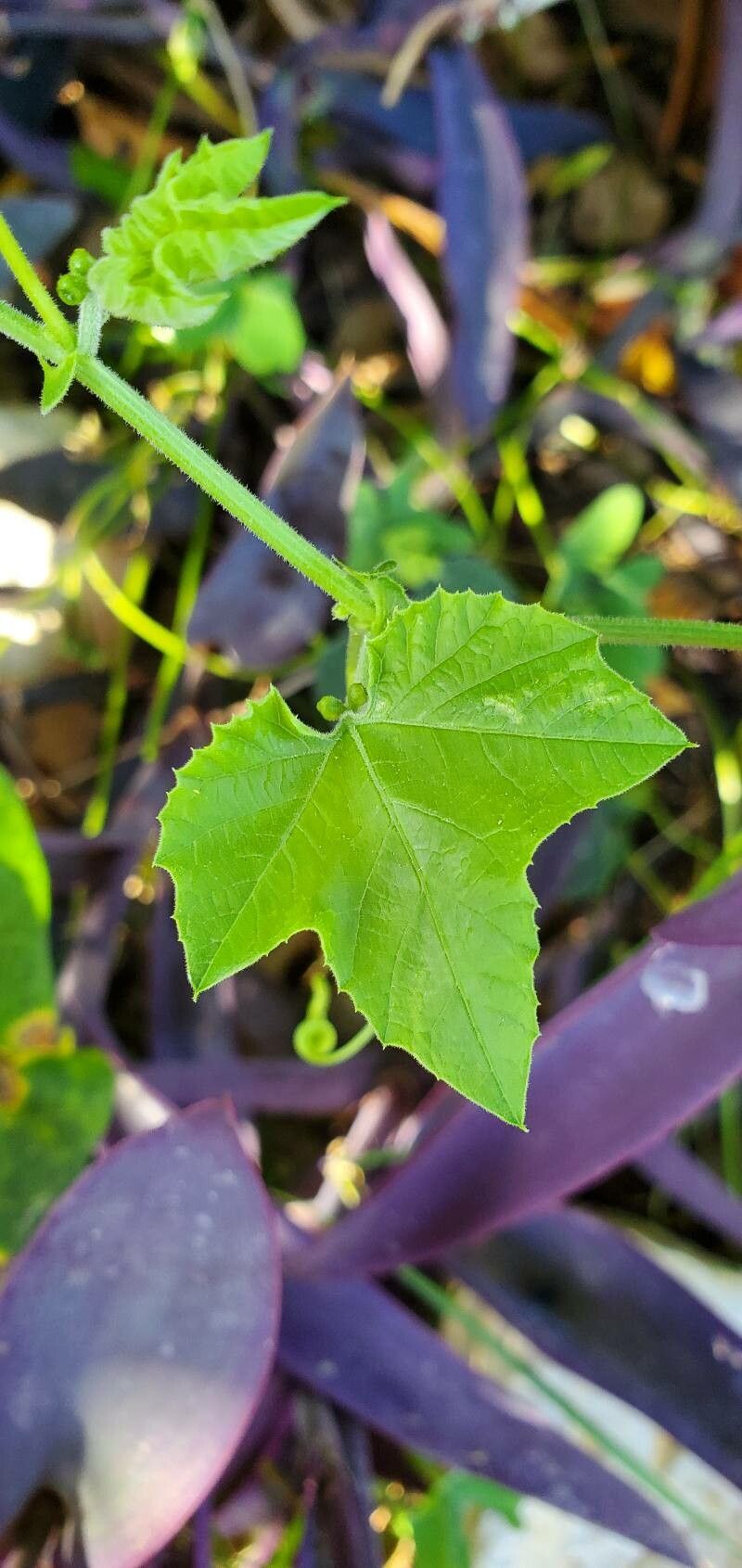
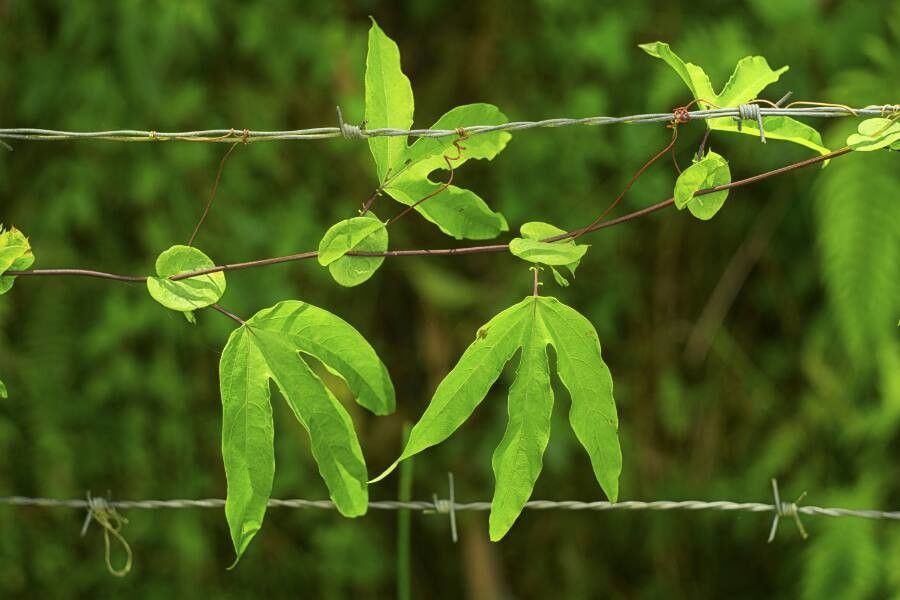
Passiflora tarminiana (or banana passionfruit) is a species of passionfruit. The yellow fruits are edible and their resemblance to small, straight bananas has given it the name banana passionfruit in some countries. It is native to the uplands of tropical South America and is now cultivated in many countries. In Hawaii and New Zealand it is now considered an invasive species. It was given the name banana passionfruit in New Zealand, where passionfruit are also prevalent. In Hawaii, it is called banana poka. In its Latin American homeland, it is known as curuba, curuba de Castilla, or curuba sabanera blanca (Colombia); taxo, tacso, tagso, tauso (Ecuador); parcha, taxo (Venezuela), tumbo or curuba (Bolivia); tacso, tumbo, tumbo del norte, trompos, tintin or purpur (Peru). Passiflora tarminiana belongs to the Tacsonia subgenus of Passiflora. It has been known under a number of different names and was only formally described in 2001.
Banana passionflower displays good resistance to disease and is usually not susceptible to illnesses. In terms of upkeep, this plant is fairly low-maintenance. Planted outdoors, it needs only minimal watering, and larger specimens typically do not require pruning. Smaller plants, however, should be pruned after they have finished blooming. Banana passionflower is appropriate for anyone with outdoor space, such as a garden or deck, and does not demand extensive care experience.
How to keep Passiflora Tarminiana.
Light
Banana passionflower comes from open habitats like sunny meadows and the edges of forests, which supply abundant light. It performs best in Full Sun but can also withstand Partial Sun, adjusting well to different light conditions.
Water
Banana passionflower thrives in high humidity and prefers soil that is consistently moist, but not waterlogged. While it can tolerate moderate drought, it benefits from being watered every two weeks. Commonly grown outdoors, banana passionflower exhibits vigorous growth during the rainy season, making effective use of the natural precipitation.
Temperature
Banana passionflower is native to tropical areas, where conditions are generally warm and humid. Therefore, it is suited to high heat and moisture. It is sensitive to abrupt temperature shifts and favors a consistent temperature, so preventing indoor temperature swings is important. It typically cannot withstand cold and needs warmer conditions to grow; if temperatures fall too low the plant may stop growing or could die.
Fertilizer
Select organic fertilizers (for instance, compost, fish emulsion) instead of synthetic ones for Banana passionflower. Young plants need more nitrogen and phosphorus during the spring season. You should mix compost or fertilizer before or after the planting process. Established plants require a balanced or specific fertilizer addressing deficiencies in springtime. Not receiving enough nutrients can lead to symptoms like undersized leaves, abbreviated branches, yellow or bronze leaves, fruits with high acidity, early fruit drop-off, and splitting of fruits.
Pruning
Prune banana passionflower in early spring by removing dead stems and thinning crowded areas to improve air circulation. Trim any unruly vines to shape the plant and encourage flowering. Timely pruning promotes optimal growth and helps prevent diseases, ensuring the plant remains healthy and beautiful.
Botanical profile.
- Plant Type
- Vine
- Life Cycle
- Perennial
- Genus
- Passiflora
- Family
- Passifloraceae
- Hardiness Zone
- 9-11
- Mature Height
- 4.88 m to 10.06 m
- Mature Spread
- 3.05 m to 4.88 m
- Leaf Color
- Dark Green, Forest Green
- Leaf Type
- Evergreen
- Flower Color
- Pink, White
- Flower Size
- 6.35 cm to 10.16 cm
- Bloom Time
- All year round
- Planting Time
- Spring, Summer, Autumn
- Harvest Time
- All year round
- Native Area
- Colombia, Mexico, Guatemala, Bolivia, Venezuela, Peru, Ecuador, Panama
Other names.
Reader questions.
What are the sunlight requirements for growing Banana passionflower (Passiflora tarminiana)?
The Banana passionflower (Passiflora tarminiana) thrives in various sunlight conditions, requiring full sun or partial sun for optimal growth. For full sun, it calls for more than 6 hours of direct sunlight each day. In the case of partial sun, it should receive about 3-6 hours of sunlight daily. It's important to observe the movement of sunlight through your garden, selecting locations that provide a healthy balance of light and shade to ensure your plants' well-being. This careful consideration helps in guaranteeing the happiness and successful growth of your Banana passionflower.