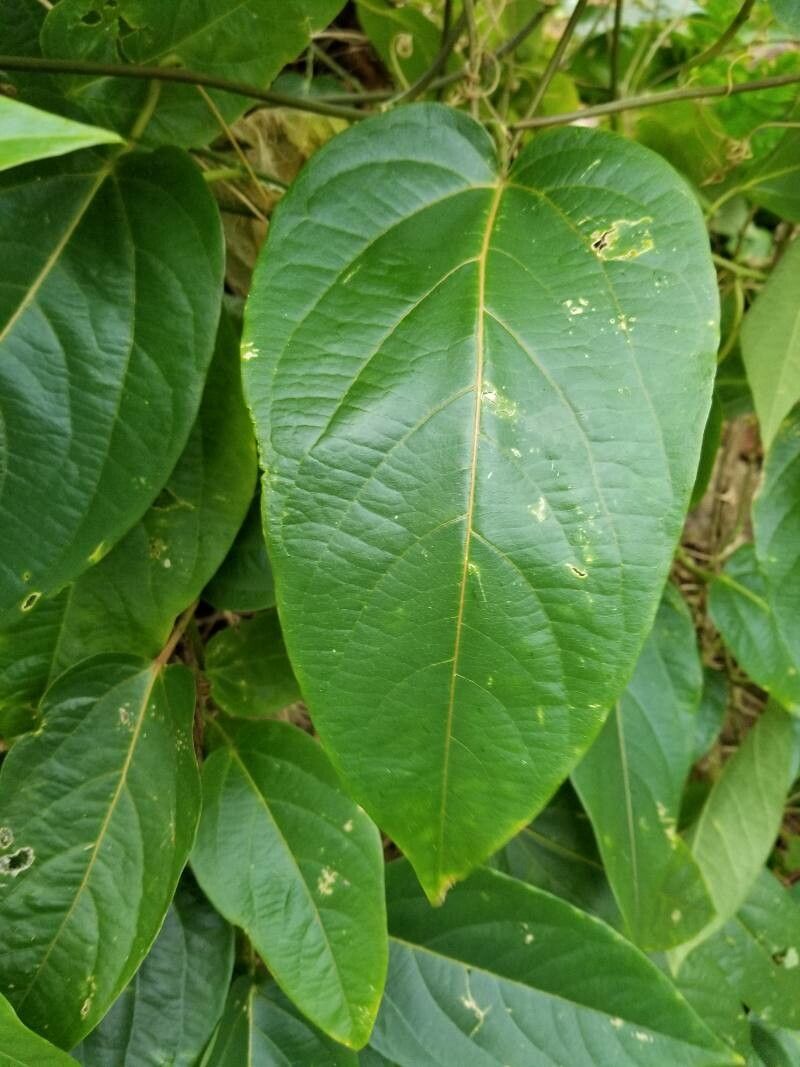
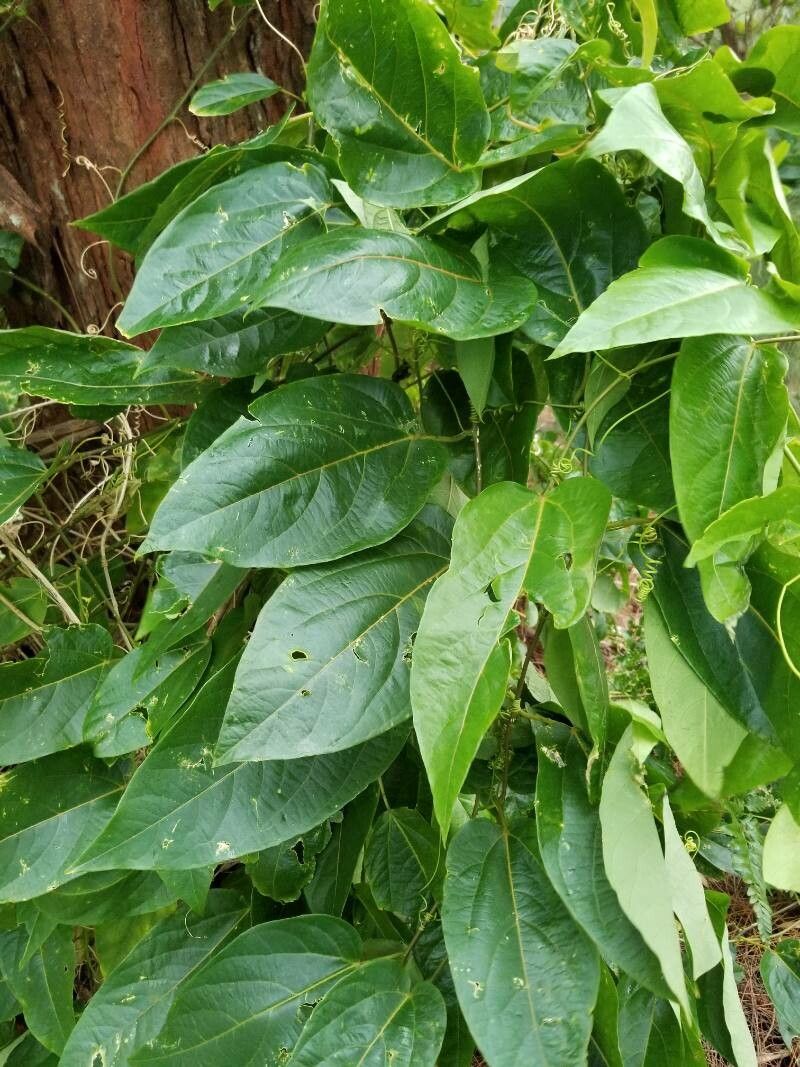
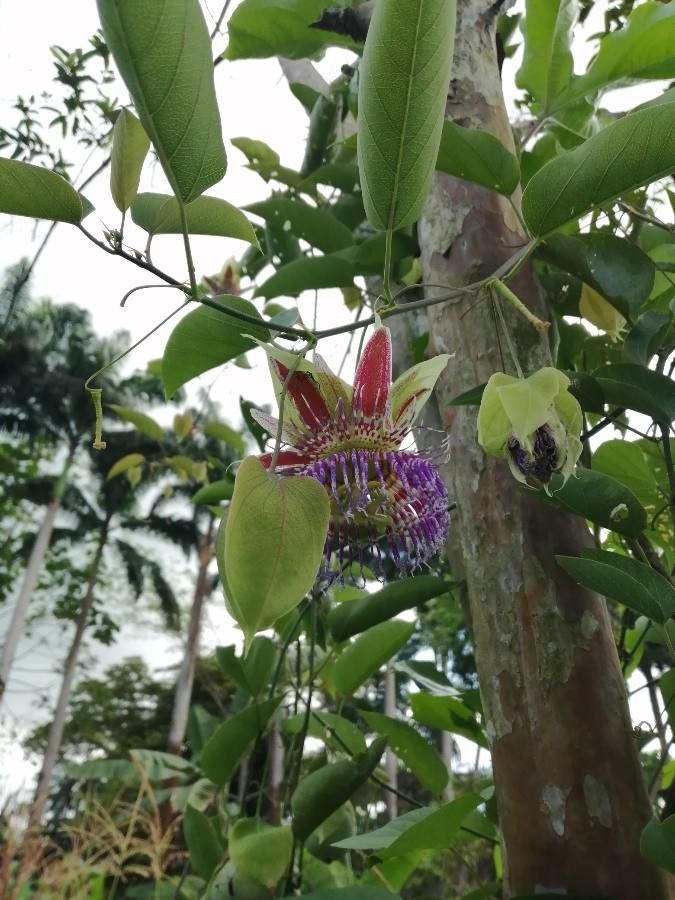
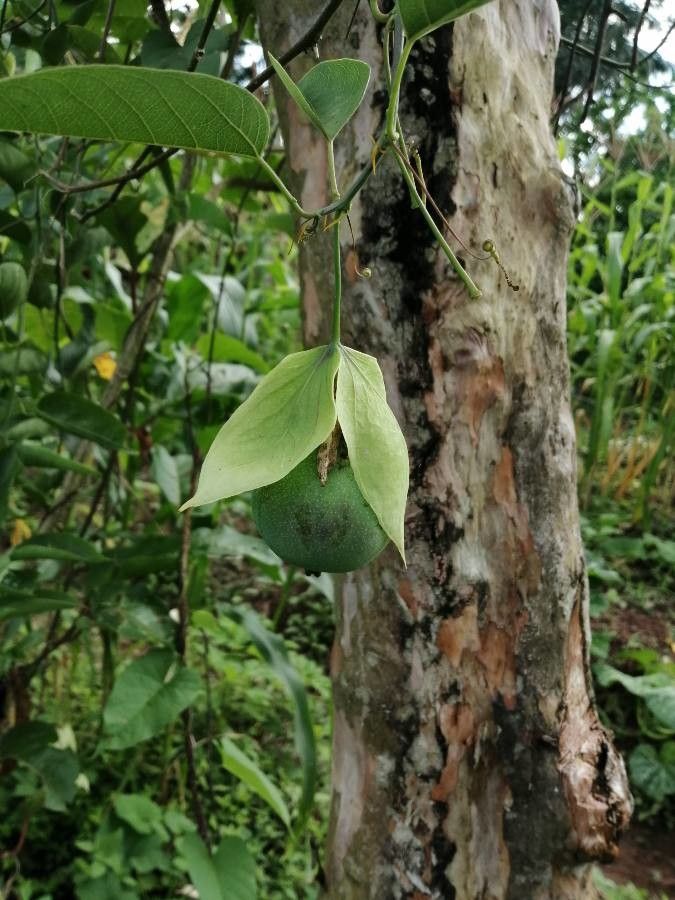
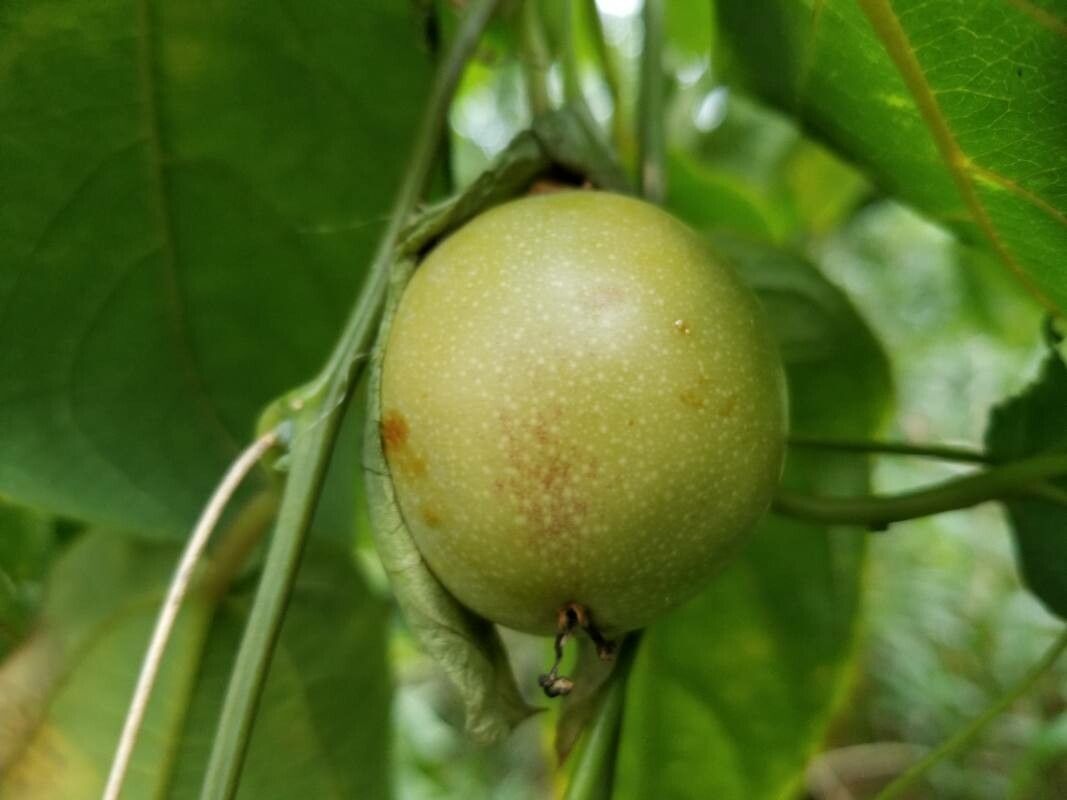
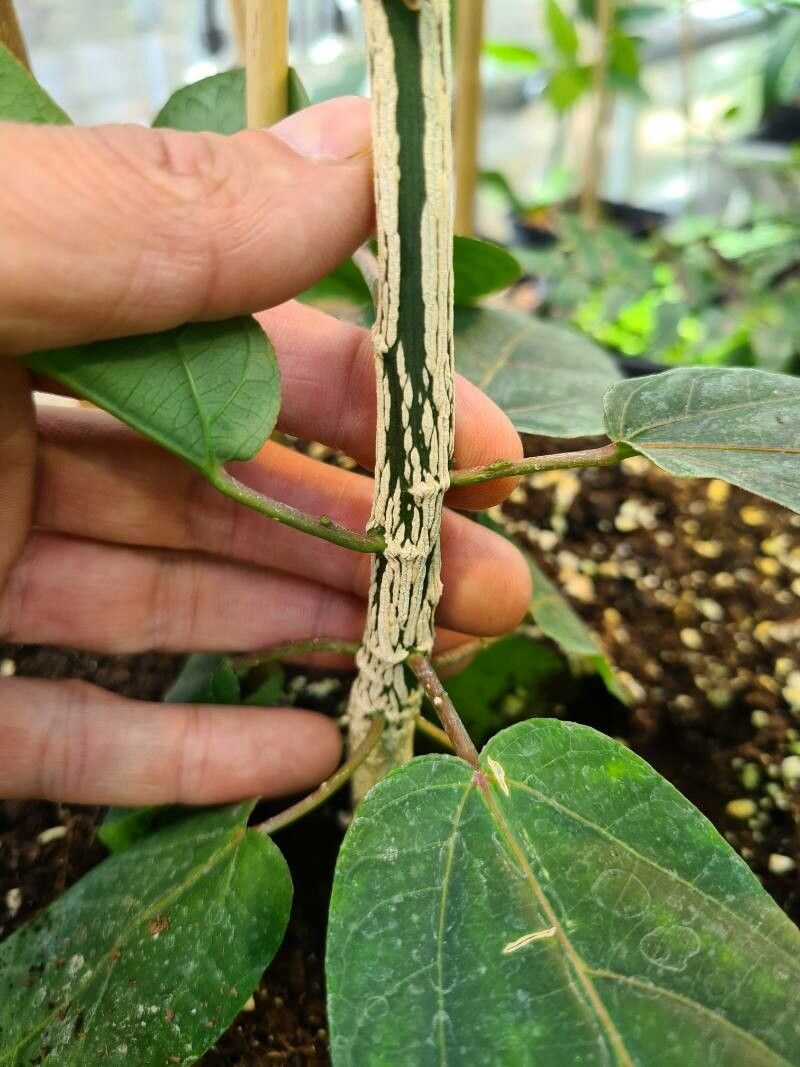
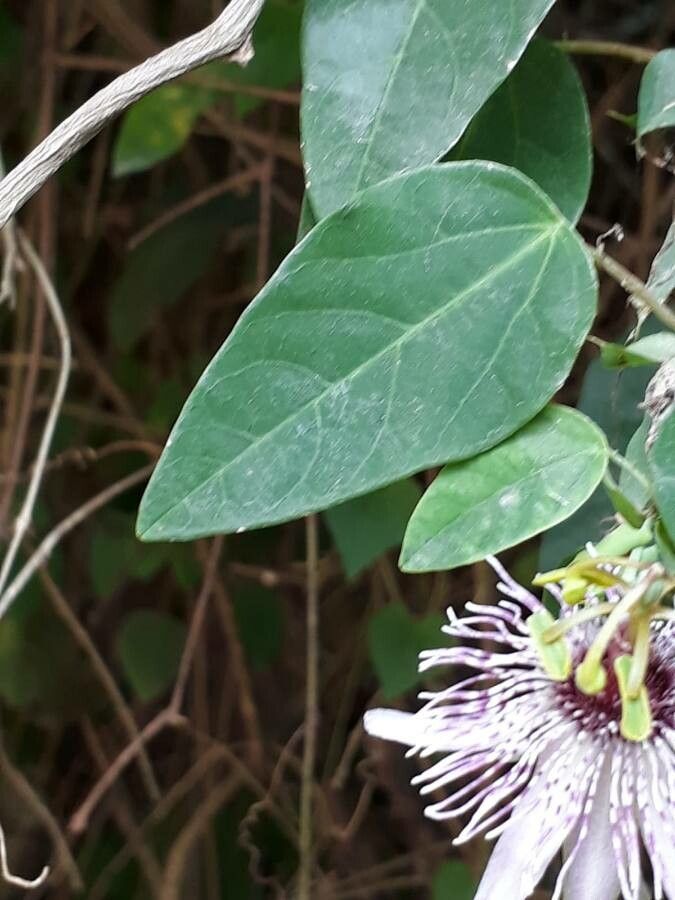
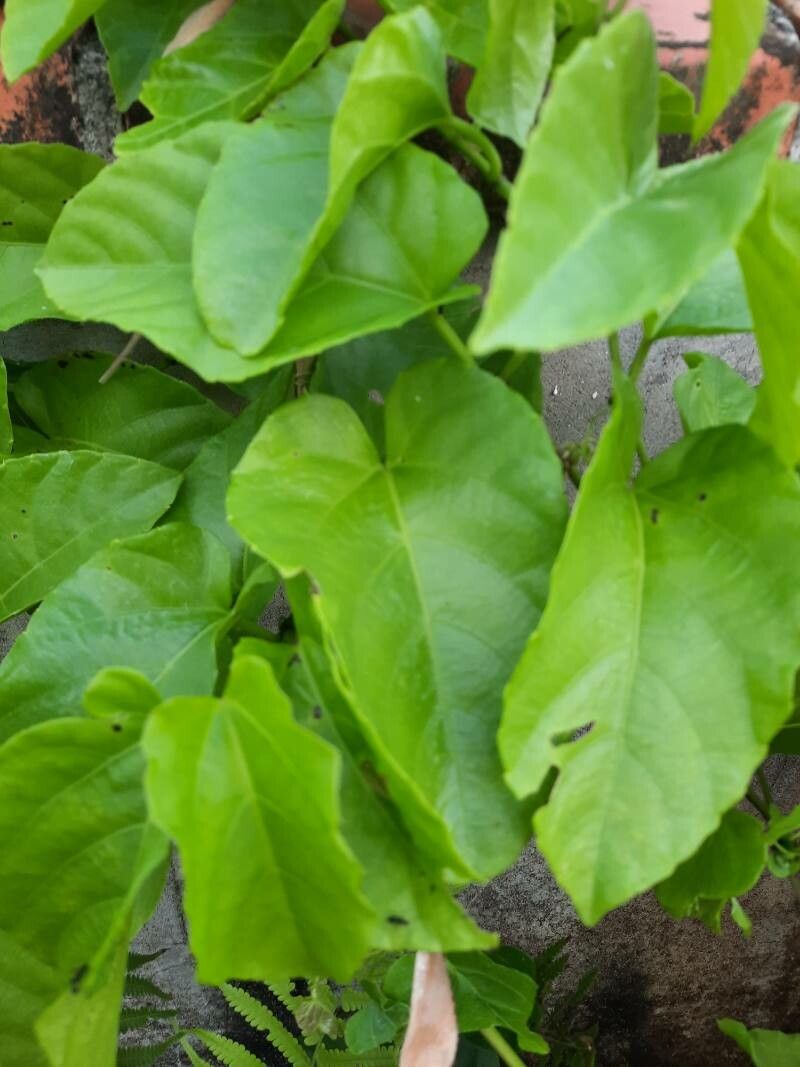
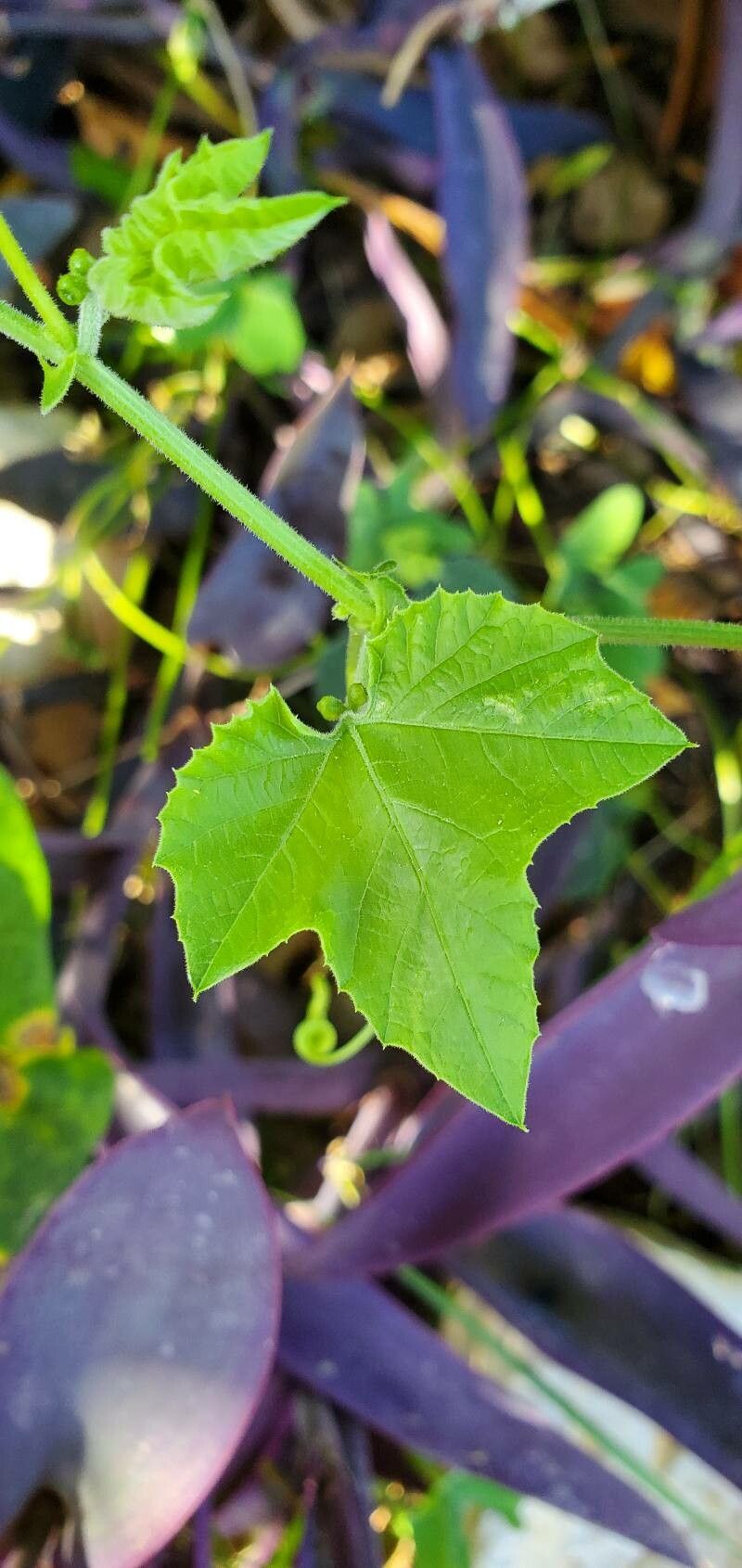
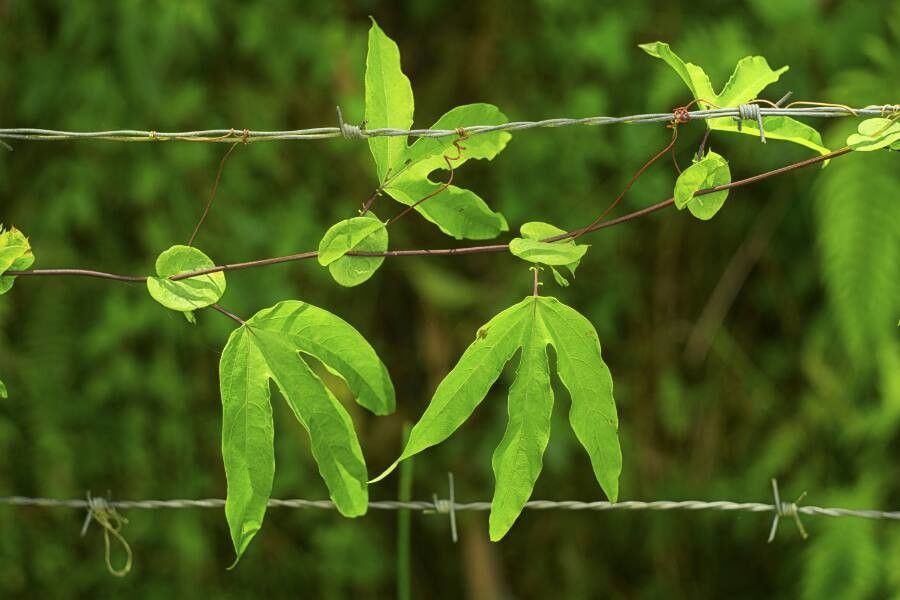
Passiflora maliformis, the sweet calabash, conch apple, wild purple passionfruit, or sweet cup, is a smallish (5cm) passionfruit with purple, yellow or green skin and a greyed-yellow to orange pulp that is aromatically scented and -flavoured. It is a fast-growing vine, growing best in somewhat cooler-than-tropical climates. The rind is particularly hard and tougher than most passionfruits. It is usually eaten fresh or used to flavour drinks. It is a native to the Caribbean, Central America and Northern South America.
Winged-stem passion flower is resistant to disease and generally not susceptible to illnesses. In terms of care, this plant is fairly low-maintenance. When grown outdoors it needs only light watering, and larger specimens typically do not require pruning. Smaller plants, however, should be pruned after they finish flowering. Winged-stem passion flowert is appropriate for anyone with an outdoor area, such as a garden or deck, and does not demand much gardening experience.
How to keep Passiflora Maliformis.
Light
The winged-stem passion flower grows best when it receives unobstructed sunlight for most of the day. Although it can tolerate lower light levels, it performs best with abundant sun. Its native habitat—forest edges—provides comparable light conditions. Both too much and too little sunlight can suppress its growth and vigor.
Temperature
Winged-stem passion flower is native to habitats with temperatures ranging from 68 to 100 °F (20 to 38 ℃). It grows best in these ambient temperatures. For optimal growth and health, adjust the temperature to reflect seasonal changes.
Fertilizer
Use organic fertilizers (for example, fish emulsion or compost) instead of chemical fertilizers for the winged-stem passion flower. Give young plants higher amounts of nitrogen and phosphorus in spring. Work compost or fertilizer into the soil either before or after planting. For established plants, apply a balanced fertilizer or one targeted to specific nutrient deficiencies in spring. Nutrient deficiency results in small leaves, short shoots, yellow or bronze foliage, acidic fruits, premature fruit fall, and splitting.
Botanical profile.
- Plant Type
- Vine
- Life Cycle
- Perennial
- Genus
- Passiflora
- Family
- Passifloraceae
- Hardiness Zone
- 9-11
- Mature Height
- 6.1 m
- Mature Spread
- 3.96 m
- Leaf Color
- Green, Blue
- Leaf Type
- Evergreen
- Flower Color
- Red, Purple, White
- Flower Size
- 10.16 cm to 12.70 cm
- Bloom Time
- Late spring, Summer, Early fall, Mid fall
- Planting Time
- Summer
- Harvest Time
- Fall, Early winter, Mid winter
- Native Area
- Brazil, Ecuador, Peru
Other names.