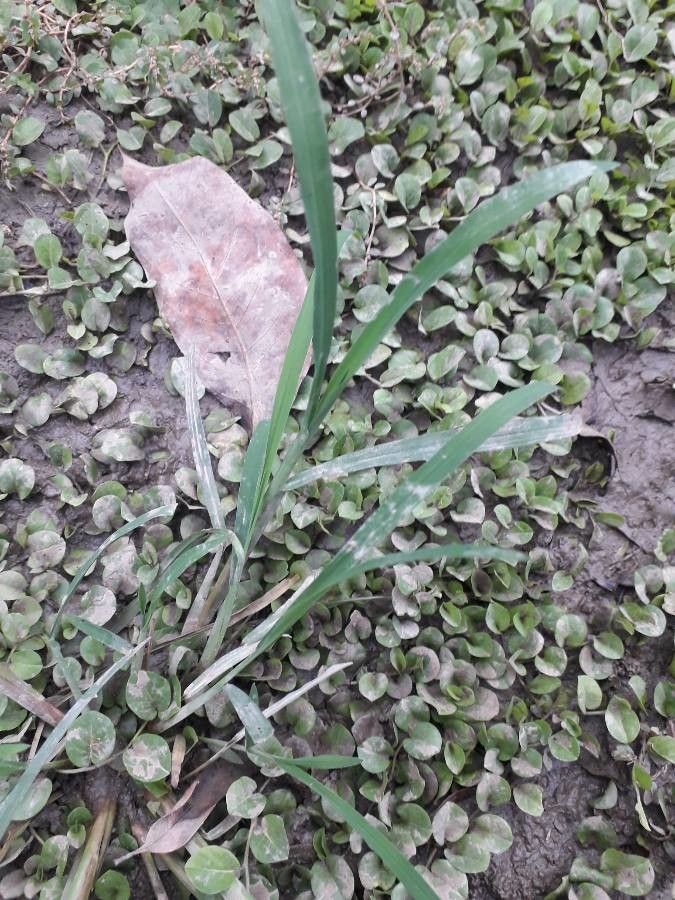
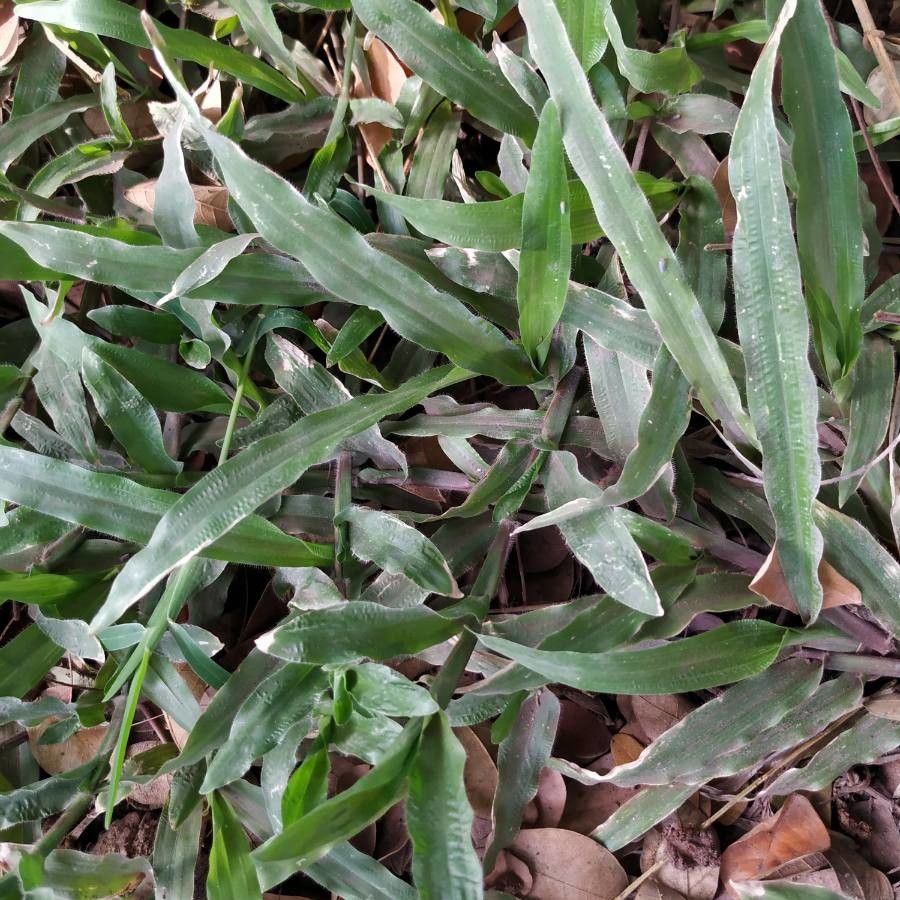
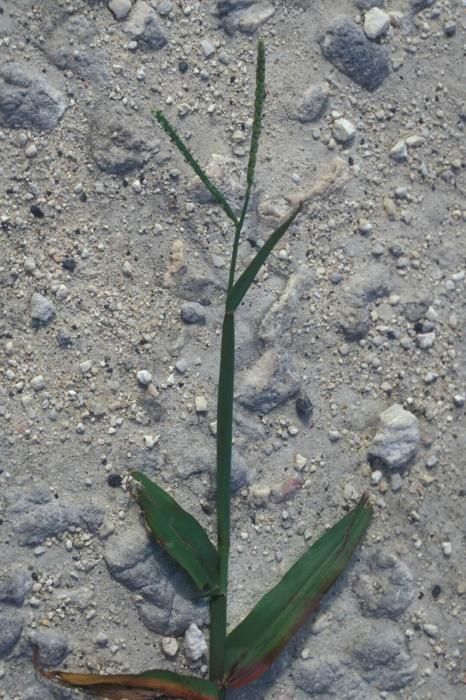
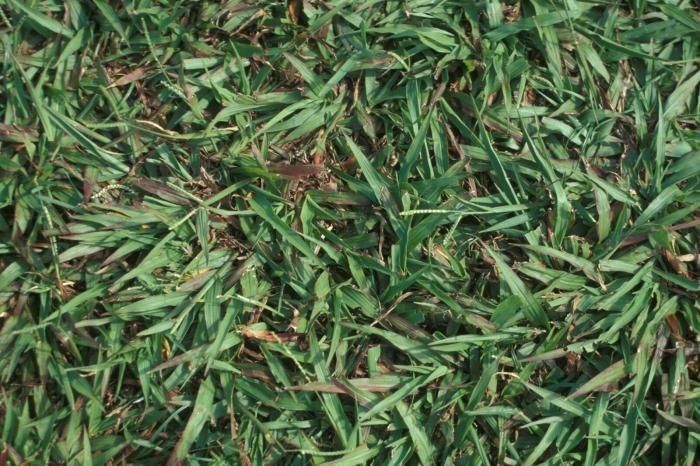
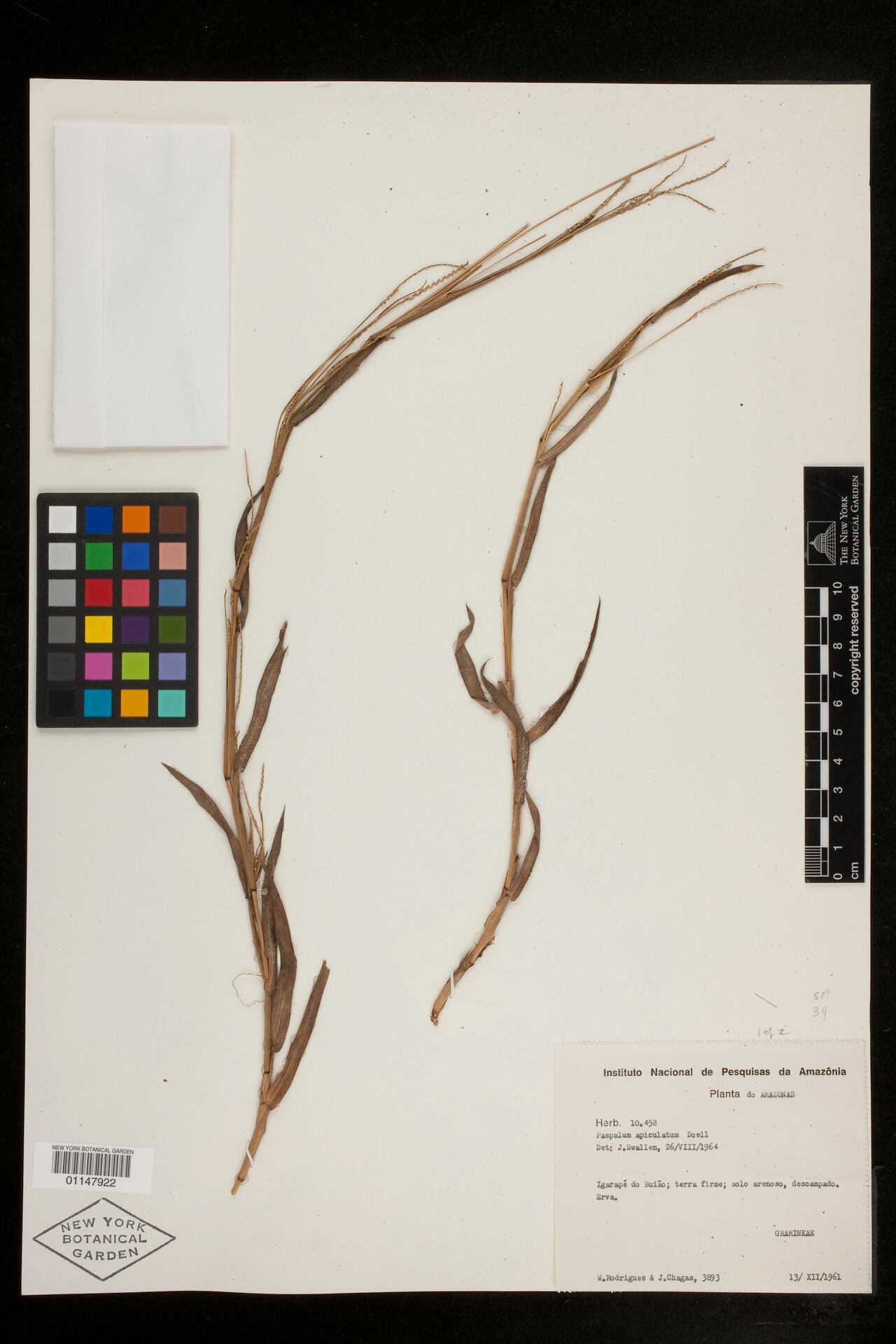
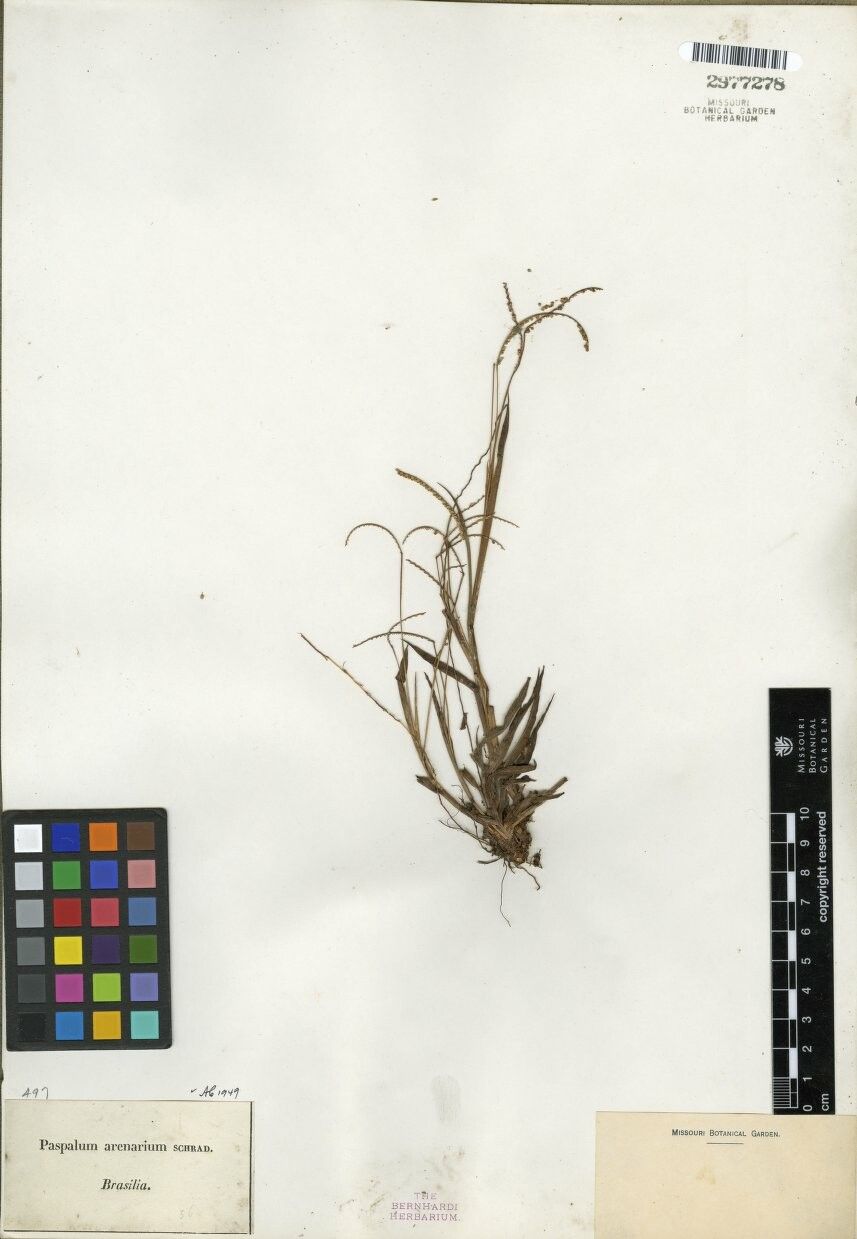
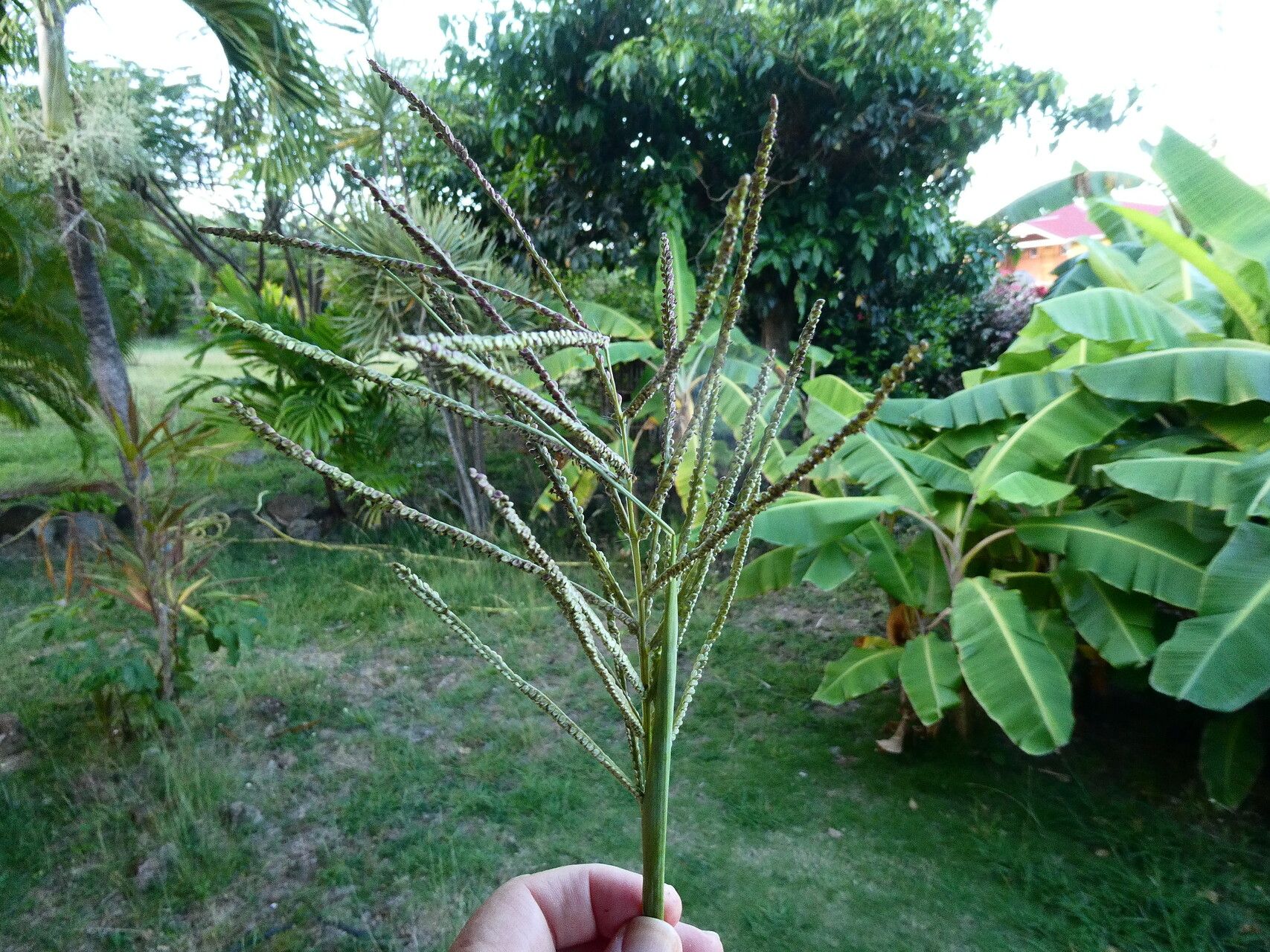
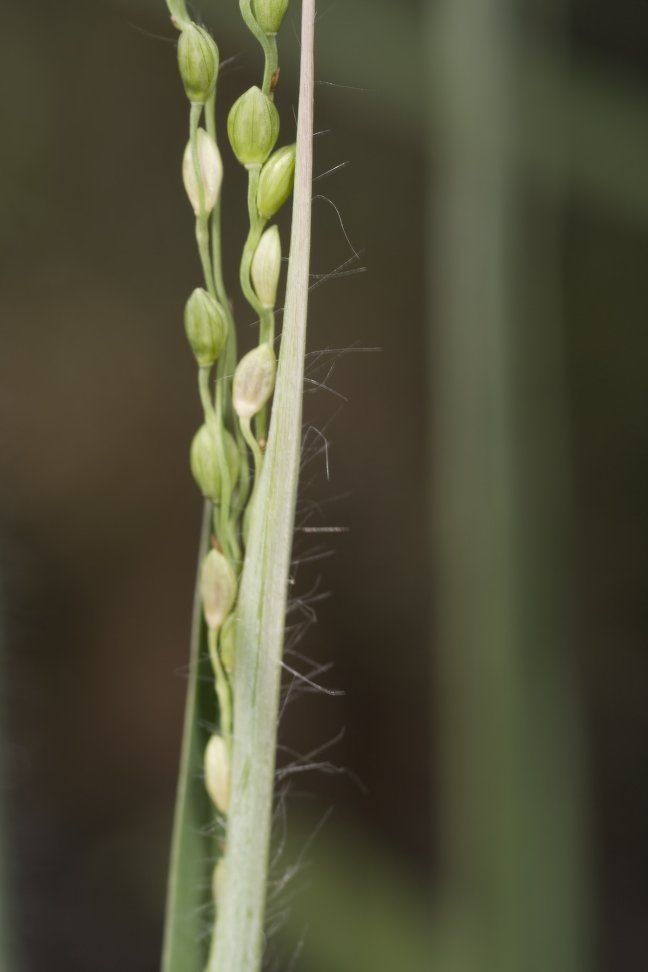
Paspalum setaceum is a species of grass known by several common names, including thin paspalum. It is native to the Americas, where it can be found in the eastern and central United States, Ontario in Canada, Mexico, Central America, and the Caribbean. It can be found in other areas of the world as an introduced, and often invasive, species, including many Pacific Islands. It is a weed of lawns and turf.This grass is a perennial with erect or prostrate stems that can exceed one meter in length. The flat leaf blades are hairless to slightly hairy. They vary in color. The panicle has up to 6 branches up to 17 centimeters long lined with small oval to rounded spikelets. There are several varieties of this species which can be distinguished in part by color. Some authors do not recognize varieties.Varieties include: Paspalum setaceum var. ciliatifolium (fringe-leaf paspalum) - dark green or purplish leaf blades. Widespread. Grows as a weed in the Pacific Islands. Paspalum setaceum var. longepedunculatum (barestem paspalum) - yellow-green leaf blades Paspalum setaceum var. muhlenbergii (hurrahgrass) - North America Paspalum setaceum var. psammophilum (sand paspalum, beadgrass, slender beadgrass, tufted beard-grass) - hairy leaf blades. East Coast of the United States. Paspalum setaceum var. setaceum (thin paspalum) - hairy gray-green leaf blades Paspalum setaceum var. stramineum (yellow sand paspalum) - yellow-green to dark green leaf blades Paspalum setaceum var. villosissimum (hairy paspalum) - gray-green leaf blades
Thin paspalum exhibits strong resistance to disease and is generally unlikely to be affected by illnesses. Regarding maintenance, this plant is fairly low-maintenance. When grown outdoors it needs only modest watering, and larger plants typically do not require pruning. Smaller plants, however, should be pruned after they finish blooming. Thin paspalumt is appropriate for anyone who has an outdoor area, like a garden or deck, and it does not demand extensive care experience.
How to keep Paspalum Setaceum.
Light
Thin paspalum is a sun-loving, herbaceous perennial native to open habitats, frequently flourishing in meadows and grasslands. It prefers full sun but is also able to tolerate partial sun conditions.
Water
Thin paspalum thrives in grasslands and prefers a balanced level of moisture. While it can tolerate short dry spells, it does not handle prolonged drought or excessive wet conditions well. For optimal growth, it's recommended to water it twice a week. Its vigor and lushness are influenced by the amount of water it receives.
Temperature
Thin paspalum can tolerate a wide range of temperatures, but its range may still be constrained by different combinations of moisture and heat. It performs best in warm summer climates with sufficient rainfall or watering. Extended stretches of cloudy, rainy weather, as well as prolonged high temperatures, can make Thin paspalum more likely to die. In winter, adequate protection from cold can enhance the plant’s chances of survival.
Fertilizer
Thin paspalum is a warm-season grass that grows best in summer and becomes dormant in winter. Fertilizing is essential for thick growth, a bright green color, and tolerance to stresses such as heat, drought, and cold. Lawns that are neglected grow weak and thin and become susceptible to unwanted grasses, weeds, insects, and diseases.
Pruning
Thin paspalum can benefit greatly from pruning between early and late spring, as this encourages new growth and helps maintain its shape. Regularly removing dead parts further boosts the plant's health and lowers the risk of disease. Make sure to use clean, sharp tools for the job, and try to avoid heavy pruning during peak growing periods to prevent stressing the plant.
Botanical profile.
- Plant Type
- Grass
- Life Cycle
- Perennial
- Genus
- Paspalum
- Family
- Poaceae
- Hardiness Zone
- 8-11
- Mature Height
- 30 cm to 91 cm
- Mature Spread
- 20 cm to 40 cm
- Leaf Color
- Green, Dark Green
- Leaf Type
- Deciduous
- Flower Size
- 0.20 cm to 0.25 cm
- Bloom Time
- Summer, Early fall, Mid fall
- Planting Time
- Spring, Summer, Autumn
- Harvest Time
- Late summer, Fall, Early winter
- Native Area
- Bahamas, Cuba, Honduras, Mexico, El Salvador, Nicaragua, Ecuador, Costa Rica, Panama, Jamaica
Other names.
Reader questions.
What are the sunlight requirements for Thin Paspalum?
Thin Paspalum, or Paspalum setaceum, thrives in full sun, requiring above 6 hours of sunlight daily, but it can also tolerate partial sun conditions with about 3-6 hours of sunlight. It's essential to watch how sunlight moves through your garden to find spots that provide the right balance of light and shade, ensuring the plants' well-being.
How can indoor plants benefit from artificial lighting?
Indoor Thin Paspalum plants require adequate lighting for optimal growth, especially when natural sunlight is insufficient. Artificial lights, such as LED lights, are effective as they can be customized to provide specific wavelengths of light needed by the plants. For full sun plants, 30-50W/sq ft of artificial light is needed, partial sun plants require 20-30W/sq ft, and full shade plants need 10-20W/sq ft. The light source should be placed 12-36 inches above the plant to mimic natural sunlight, and most plants benefit from 8-12 hours of light per day.
What are the symptoms of light deficiency in Thin Paspalum?
Thin Paspalum shows several symptoms when exposed to inadequate lighting, including smaller new leaves, leggy or sparse growth, accelerated leaf drop, halted growth, paler new leaves, chlorosis, sunscald, leaf curling, wilting, and leaf scorching. These symptoms indicate the plant's struggle with low light conditions and excessive sunlight exposure.
How can you address light deficiencies for Thin Paspalum indoors and outdoors?
For indoor Thin Paspalum, gradually increasing sunlight exposure to at least 6 hours daily or using artificial light for plants large or not easily movable can optimize growth. Outdoor plants should be progressively moved to sunnier spots to adapt without getting sunburned. Reducing obstructions, such as pruning trees or transplanting to sunnier locations, can also help. Note that parts of the plant affected by insufficient sunlight may not recover, but new growth will be healthy with increased light exposure.