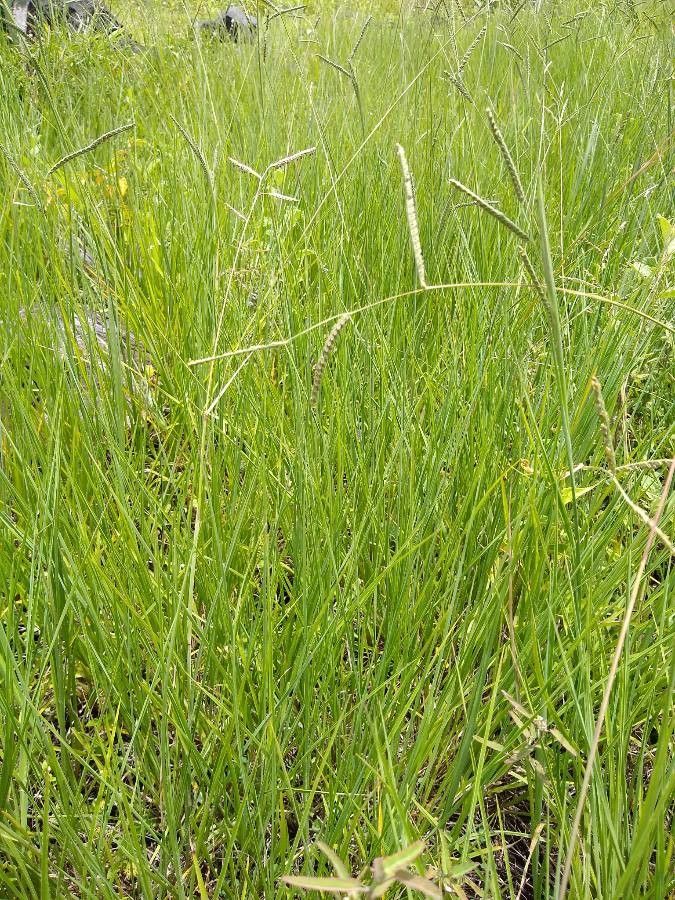
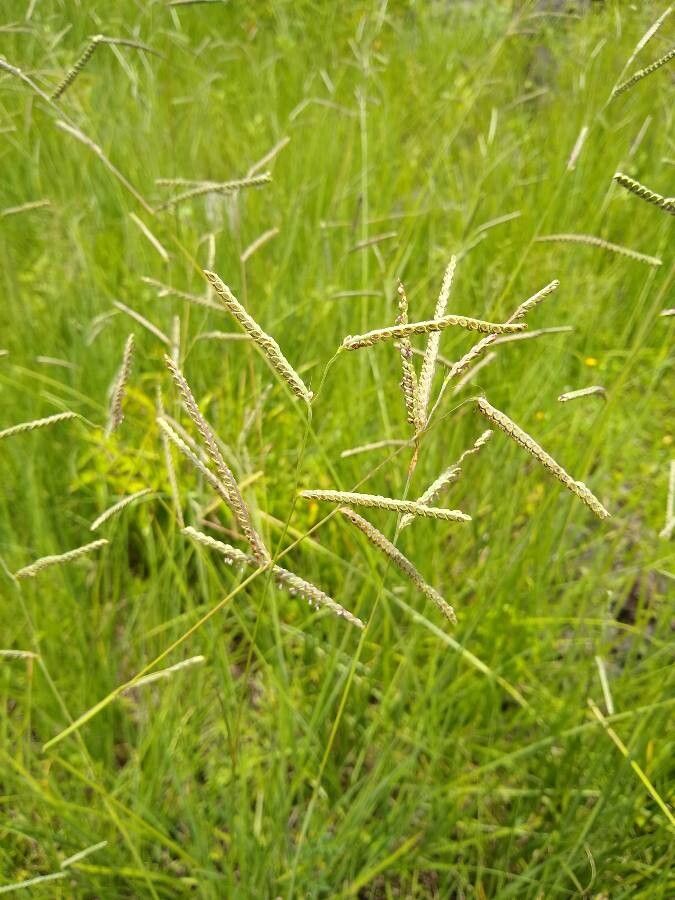
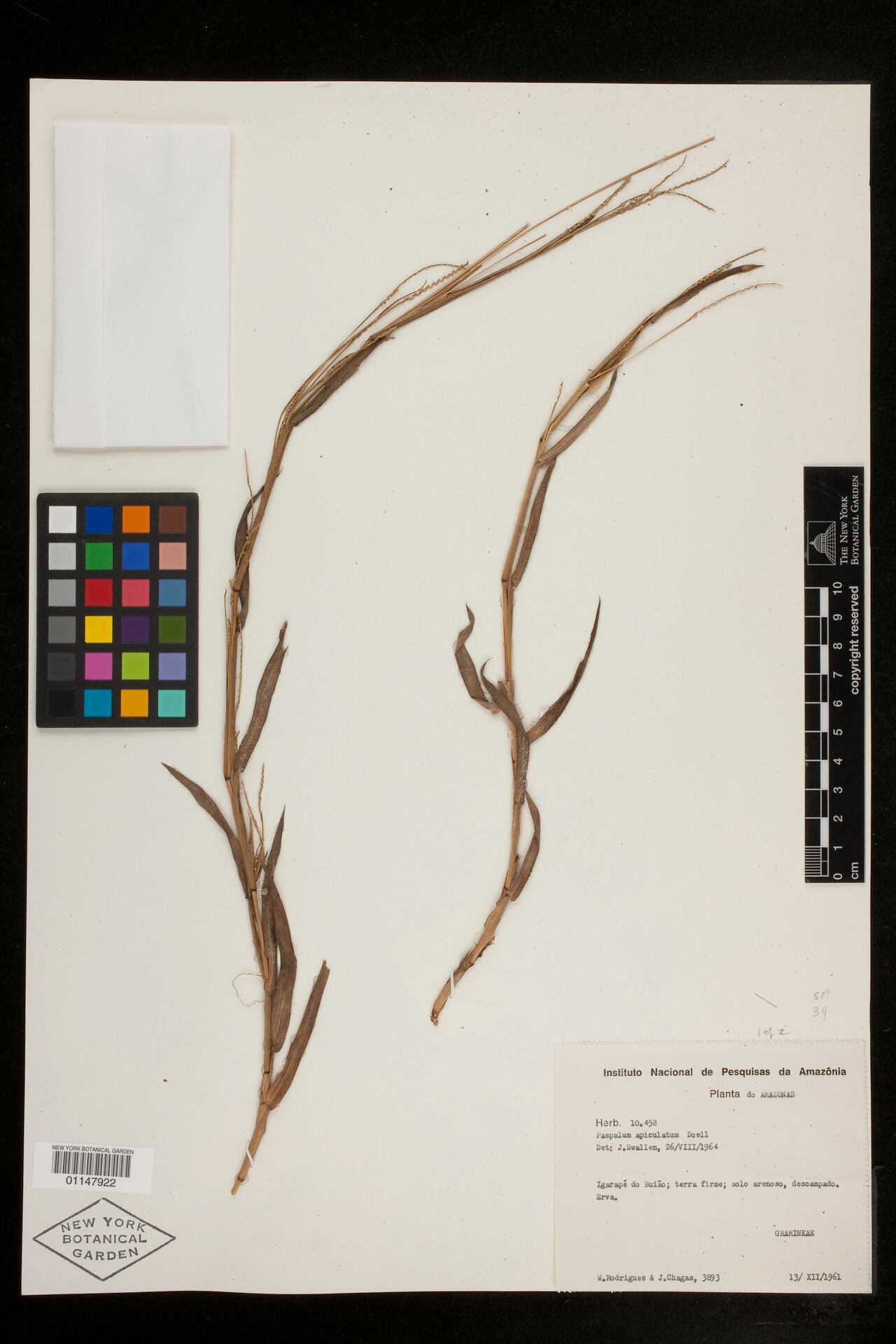
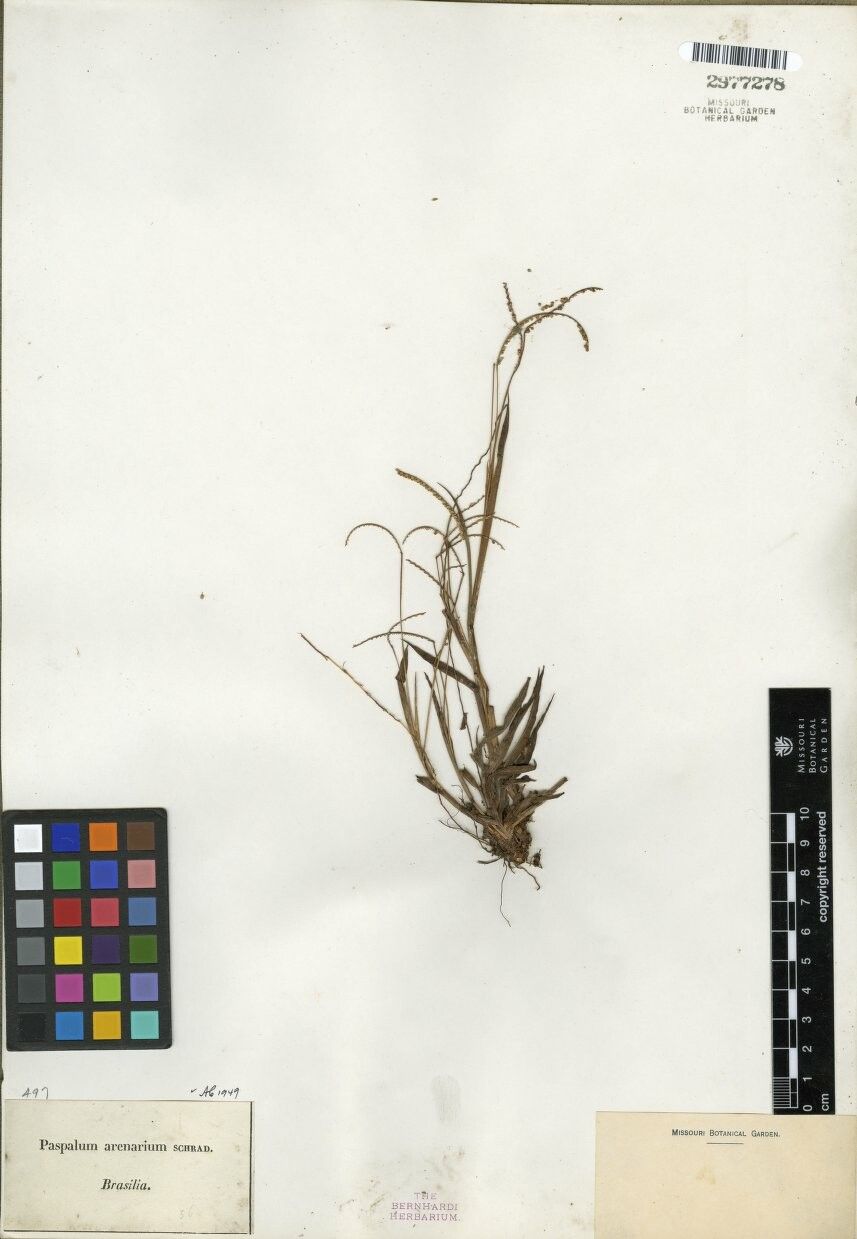
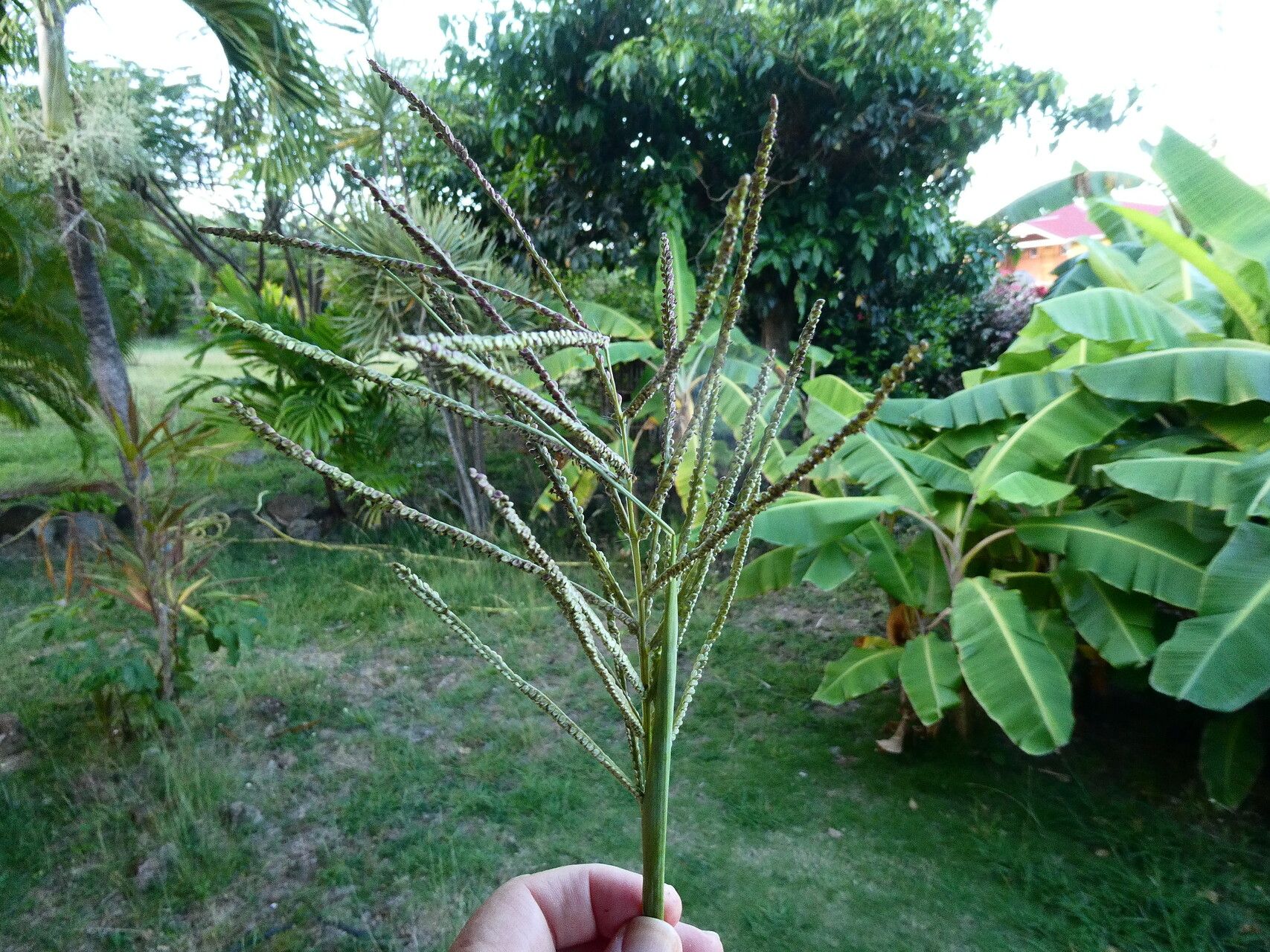
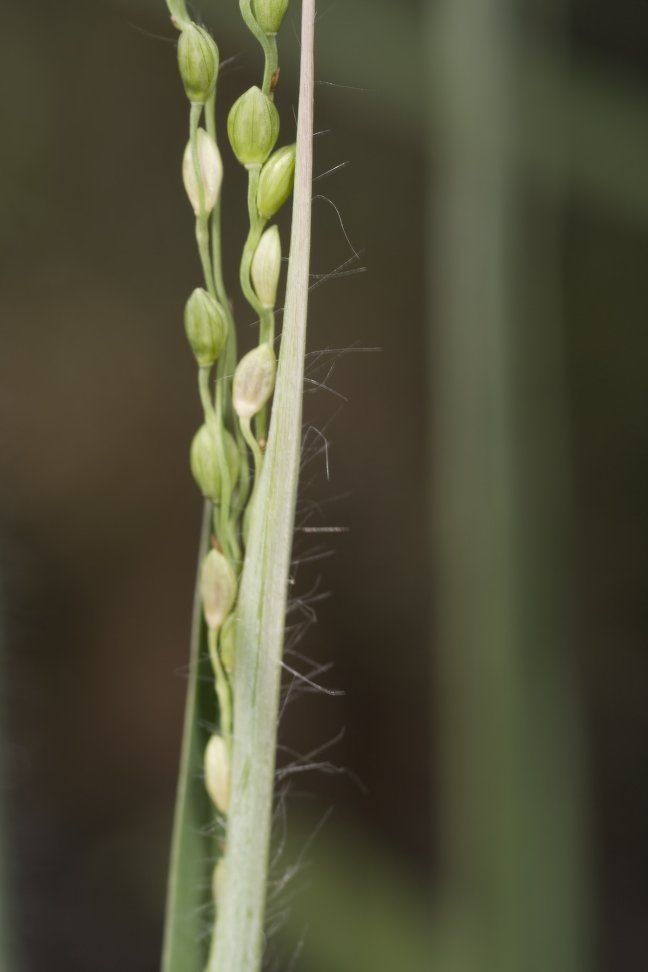
Paspalum plicatulum is a species of grass known by the common name brownseed paspalum. In Brazil its names include capim coquerinho, felpudo and pasto-negro. It is called zong zi que bai in Chinese and herbe à cheval in French. In South America its names include camalote, gamelotillo, and hierba de cepa. It is native to the Americas, where it occurs in the southeastern United States, Mexico, the Caribbean, and parts of South America.This rhizomatous perennial grass has thick stems which can exceed 1 metre (3 ft) in height. The leaf blades are up to 35 centimetres (14 in) long. The inflorescence is a panicle with up to 7 branches. The paired spikelets are generally oval in shape and are brown in color.In its native range this grass grows in disturbed areas as well as prairies and forests. It is planted in many areas of the world to feed livestock.The seeds provide food for birds. It is used as a pasture grass and it can be made into hay. It can be grown on low-fertility soils. Cultivars include 'Bryan', 'Hartley', and 'Rodd's Bay'.
Brownseed paspalum has strong resistance to disease and is generally not prone to illnesses. However, it can be vulnerable to pests and diseases present in its environment. These problems are usually mild. Regarding upkeep, this plant needs moderate care. It should be pruned regularly to preserve its appearance and support healthy growth. Fertilizing can also encourage flowering. Brownseed paspalum is appropriate for anyone with an outdoor area, such as a garden or patio, and does not demand extensive gardening experience. It may need more attention if grown indoors.
How to keep Paspalum Plicatulum.
Light
Brownseed paspalum performs best when exposed to full sunlight for most of the day but can tolerate reduced light for stretches. Seasonal changes may mean you need to move it between outdoors and indoors to keep its light levels adequate. A lack of sufficient light can limit its growth and overall health.
Water
Brownseed paspalum flourishes in grasslands and adapts well to areas with moderate rainfall. It is both drought-resistant and moisture-loving, needing weekly watering to stay healthy. This herbaceous plant prefers moist soil during its active growing season for optimal growth.
Temperature
Brownseed paspalum adapts well to heat, tolerating high temperatures and considerable temperature fluctuations. In hot conditions, attention should be given to irrigation and supplying appropriate shade to prevent sunburn. Conversely, Brownseed paspalum is relatively sensitive to cold; although it can endure some chill, very low temperatures can cause frost damage.
Fertilizer
One fertilizer application in spring is typically enough for Brownseed paspalum, though several applications can boost growth. Apply fertilizer every month to a month and a half. Fertilizing improves the appearance and function of the leaves, helping maintain even color and a healthy texture. It also promotes root development and nutrient uptake for the plant's long-term health.
Pruning
Brownseed paspalum has a tufted growth pattern and arching leaves, requiring minimal pruning. The best time for rejuvenation is early spring—this is when you should remove dead stems and thin out clusters to improve air circulation and light exposure. Routine pruning helps control its spread, preventing invasiveness and promoting vibrant health, as recommended by horticultural experts.
Botanical profile.
- Plant Type
- Herb
- Life Cycle
- Perennial
- Genus
- Paspalum
- Family
- Poaceae
- Hardiness Zone
- 8-11
- Mature Height
- 0.3 m to 1.22 m
- Mature Spread
- 30 cm to 61 cm
- Leaf Color
- Dark Green
- Leaf Type
- Semi-evergreen
- Flower Color
- Yellow, Green, Purple, Brown
- Flower Size
- 0.15 cm to 0.20 cm
- Bloom Time
- Summer, Early fall, Mid fall
- Planting Time
- Spring, Summer
- Harvest Time
- Late summer, Fall, Early winter
- Native Area
- Belize, Honduras, Mexico, Guatemala, Peru, Panama, Jamaica, Colombia, Cuba, Bolivia, Venezuela, Guyana, El Salvador, Nicaragua, Brazil, Costa Rica
Other names.
Reader questions.
What are the sunlight requirements for Brownseed paspalum?
Brownseed paspalum thrives in environments that offer full sun, defined as areas receiving more than 6 hours of direct sunlight daily, but it can also adapt to partial sun conditions, which is about 3-6 hours of sunlight. It's vital to observe the sunlight's journey through your garden to ensure your plants are positioned in areas that provide an optimal balance of light and shade. This consideration is crucial for their health and prosperity.
How can artificial lighting support the growth of indoor Brownseed paspalum plants?
When natural sunlight is insufficient, especially during winter or in less sunny spaces, artificial lighting becomes essential for the growth of indoor Brownseed paspalum plants. LED lights are recommended due to their ability to be customized to emit specific wavelengths needed by your plants. Full sun plants should receive 30-50W/sq ft of artificial light, partial sun plants need 20-30W/sq ft, and full shade plants require 10-20W/sq ft. The light source should be placed 12-36 inches above the plant, mimicking natural sunlight as closely as possible, and plants typically need 8-12 hours of light per day to thrive.
What are the common symptoms of light deficiency in Brownseed paspalum?
Symptoms of light deficiency in Brownseed paspalum include smaller new leaves, leggy or sparse growth, faster leaf drop, slower or no new growth, lighter-colored new leaves, chlorosis (leaves turning yellow), sunscald, leaf curling, wilting, and leaf scorching. These symptoms indicate that the plant is not receiving adequate sunlight, which is crucial for its health and development.
What solutions can be applied to address light deficiency in Brownseed paspalum plants?
To address light deficiency in Brownseed paspalum, consider gradually moving indoor plants to sunnier locations until they receive at least 6 hours of direct sunlight daily. Use a south-facing window and keep curtains open during the day. If a plant is large or not easily movable, use artificial light, keeping a desk or ceiling lamp on for at least 8 hours daily or invest in professional plant grow lights. For outdoor plants, move them gradually to ensure they adapt to sunnier spots without sustaining sunburn. It's also essential to reduce obstructions that block sunlight, like pruning trees, and consider transplanting smaller plants during their dormant period to more sunlit areas with ample drainage.