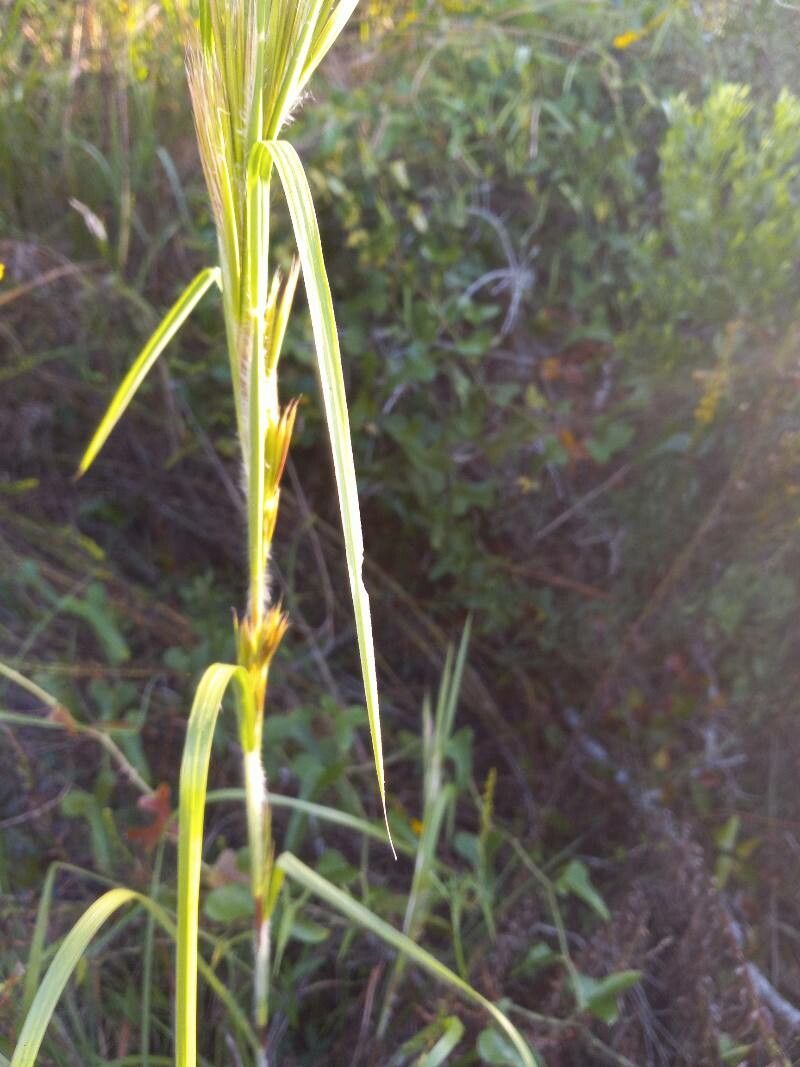
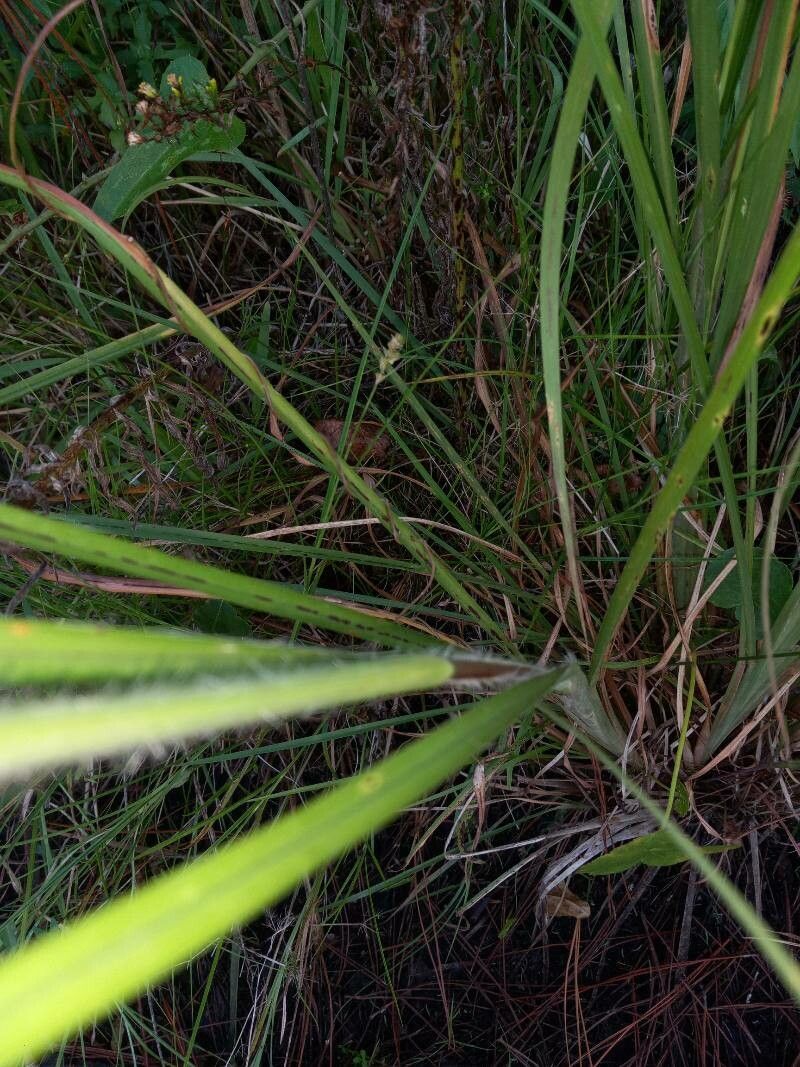
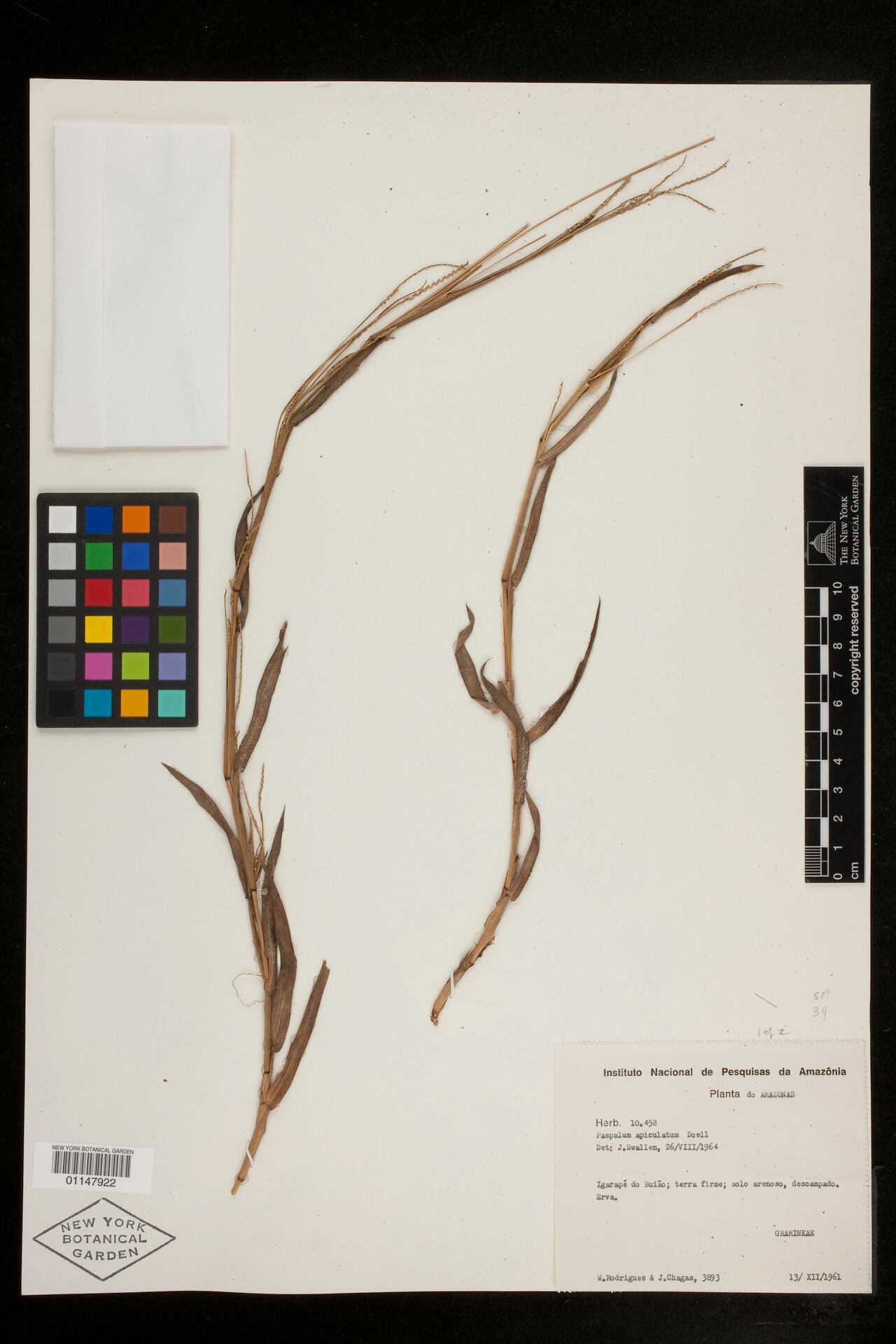
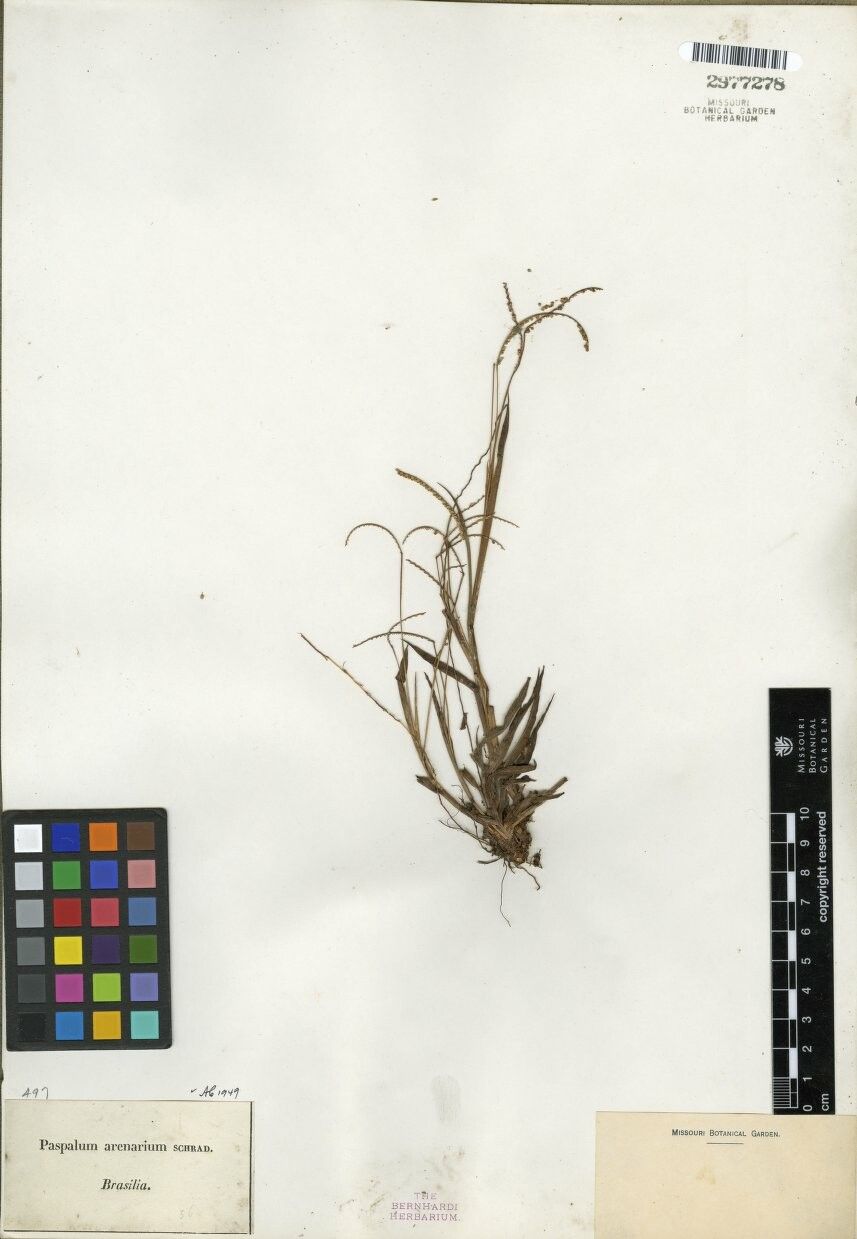
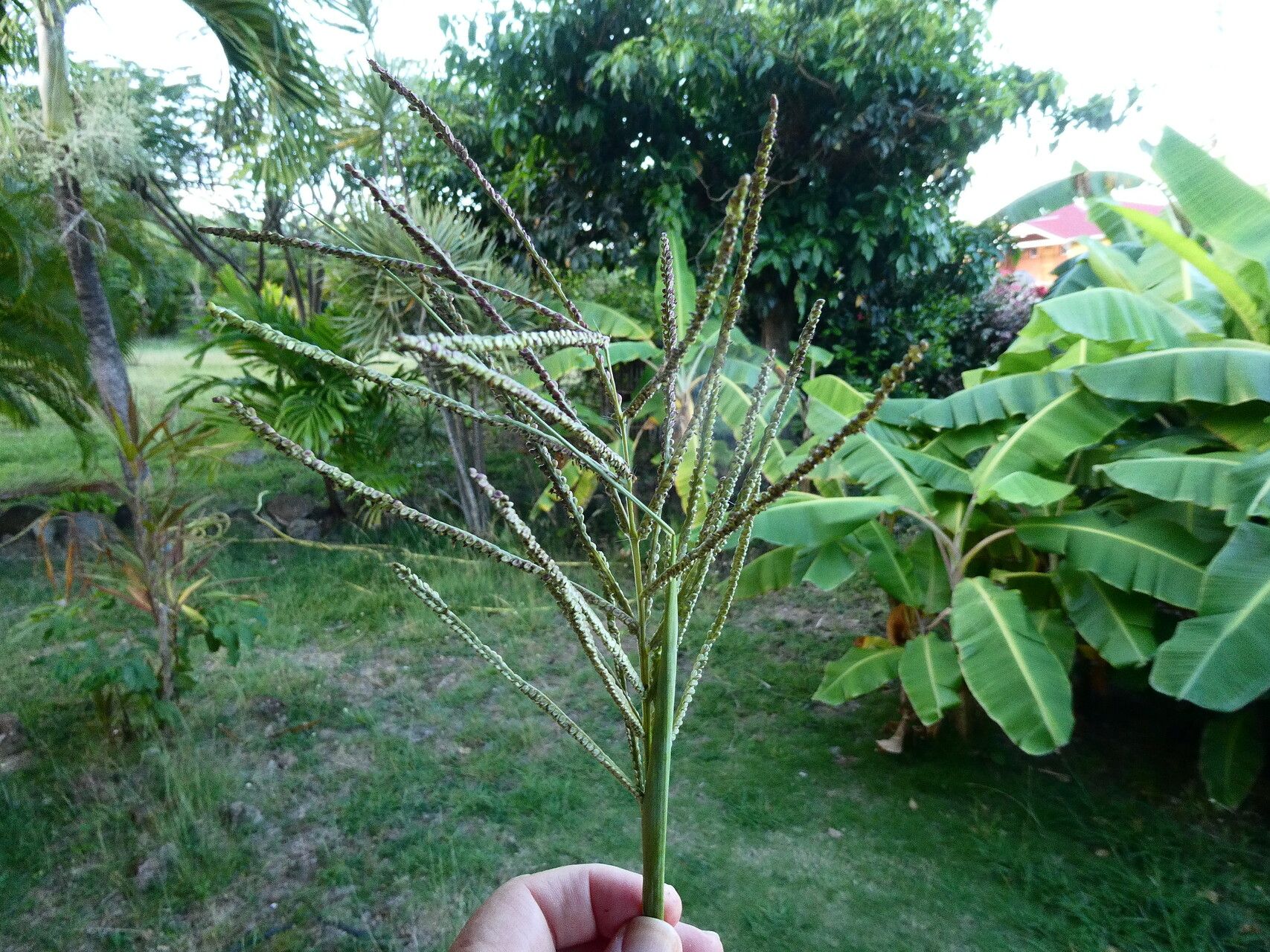
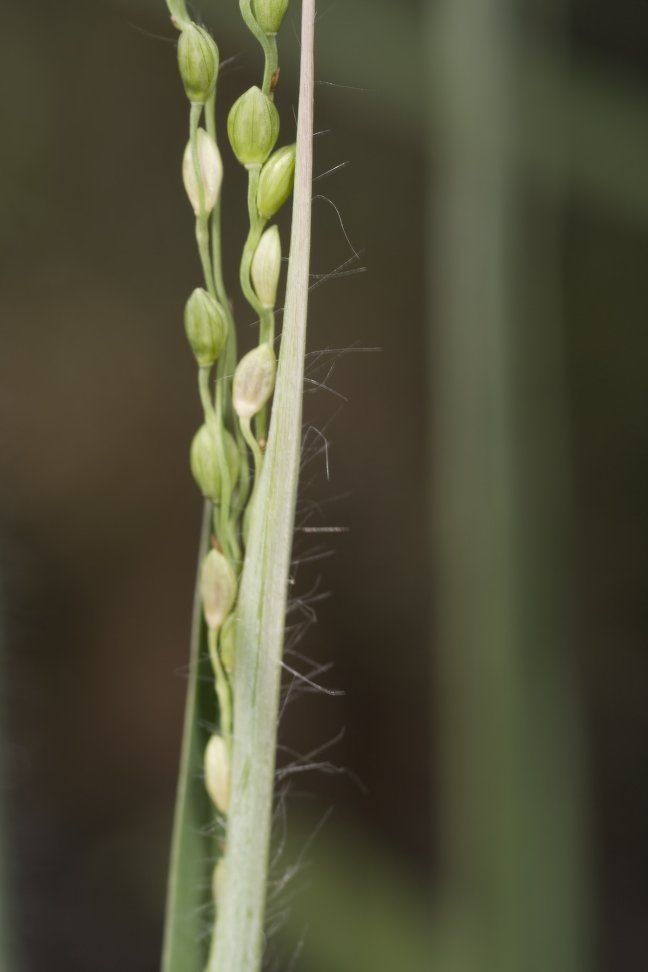
Paspalum floridanum is a species of grass known by the common name Florida paspalum. It is native to the eastern United States.This rhizomatous perennial grass has stems which can exceed two meters in height. The leaf blades are up to 52 centimeters long and may be hairless to hairy, with a dense coating of hairs behind the ligules. The inflorescence is a panicle with up to 6 branches. The paired spikelets are generally oval in shape and measure a few millimeters long.This grass grows in disturbed, wet habitat types such as ditches. It grows in woods and marshy areas.The seeds provide food for birds.
Florida paspalum is resistant to disease and generally not susceptible to illnesses. In terms of care, this plant is fairly low-maintenance. When grown outdoors, it needs only minimal watering, and larger plants typically do not require pruning. Smaller plants, however, should be pruned after they bloom. Florida paspalum is suitable for anyone with an outdoor area, such as a garden or a deck, and does not demand much gardening experience.
How to keep Paspalum Floridanum.
Light
Florida paspalum is a perennial herbaceous plant that prefers sunny conditions and comes from open habitats, commonly growing in meadows and grasslands. It favors full sun but can also tolerate partial sun.
Water
Florida paspalum flourishes in humid environments where there is consistent moisture. To encourage lush growth, it needs watering twice a week. This grass is well-suited to fluctuating water levels and can endure short dry spells. Its growth cycle is heavily dependent on water availability, which influences its vigor and the timing of dormancy.
Temperature
Florida paspalum has good temperature adaptability, able to withstand high heat and considerable temperature fluctuations. During hot weather, attention should be paid to watering and providing proper shade to avoid sunburn. On the other hand, its tolerance to low temperatures is relatively weak; it can endure some cold, but very low temperatures may cause frost damage.
Fertilizer
Florida paspalum needs extra nutrients to encourage healthy new growth. In spring, spreading compost around the plant's base will effectively supply the required nourishment. Fertilizing promotes vigorous growth and improves the plant's ability to withstand diseases and pests.
Pruning
Florida paspalum flourishes in warm climates and grows in a tufted manner. To maintain its health and appearance, prune the plant in early spring before new growth begins. Remove any dead or diseased stems to encourage fresh shoots. This practice enhances air circulation, reduces pest problems, and helps maintain a tidy look. As a result, the plant's growth potential is maximized while stress is minimized.
Botanical profile.
- Plant Type
- Grass
- Life Cycle
- Perennial
- Genus
- Paspalum
- Family
- Poaceae
- Hardiness Zone
- 8-11
- Mature Height
- 0.91 m to 1.83 m
- Mature Spread
- 30 cm to 61 cm
- Leaf Color
- Green
- Leaf Type
- Semi-evergreen
- Flower Size
- 0.20 cm to 0.25 cm
- Bloom Time
- Summer
- Planting Time
- Spring, Summer, Autumn
- Harvest Time
- Late summer, Early fall, Mid fall
Other names.