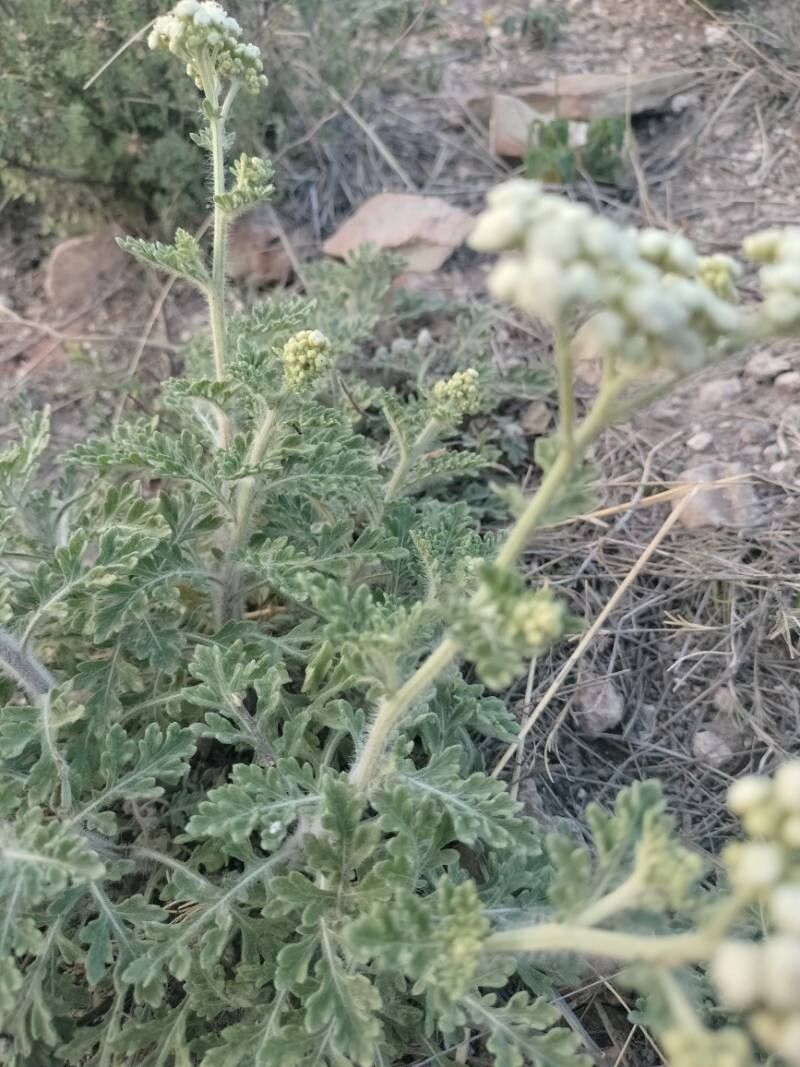
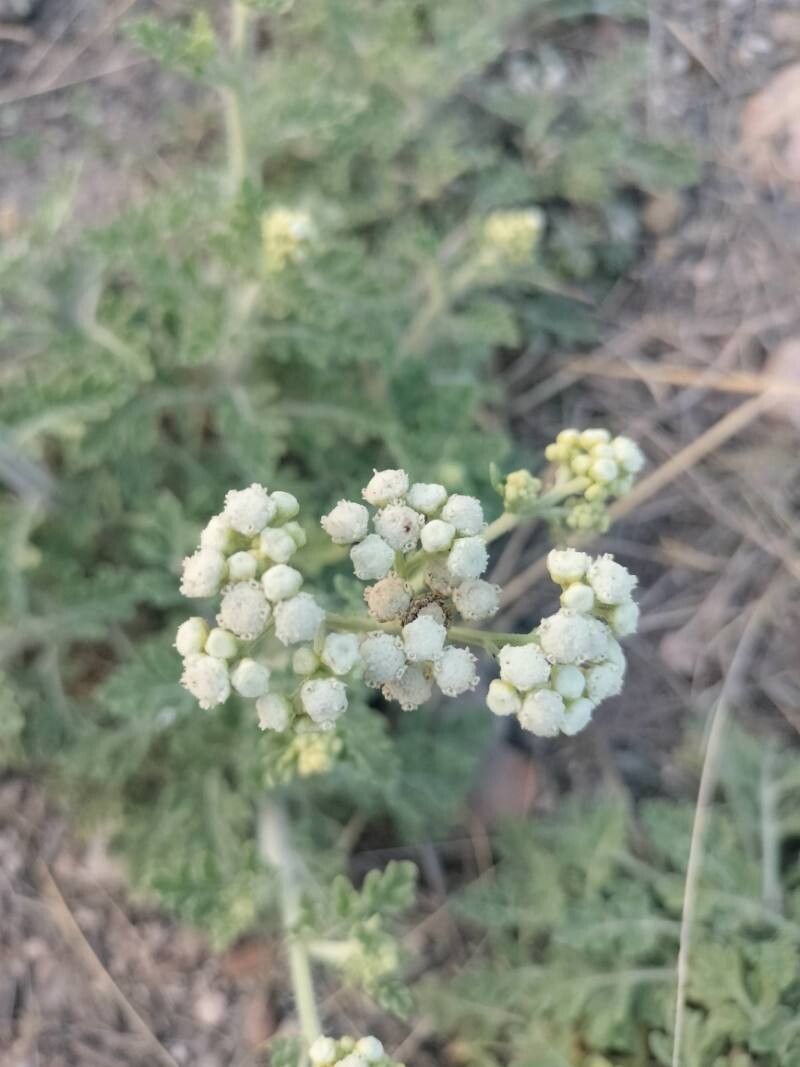
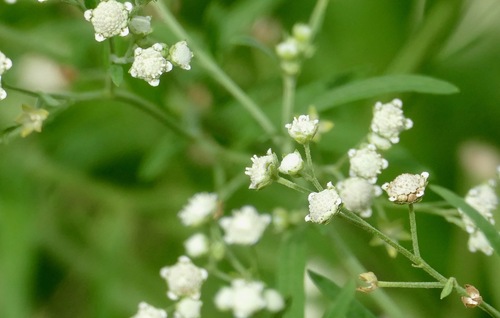
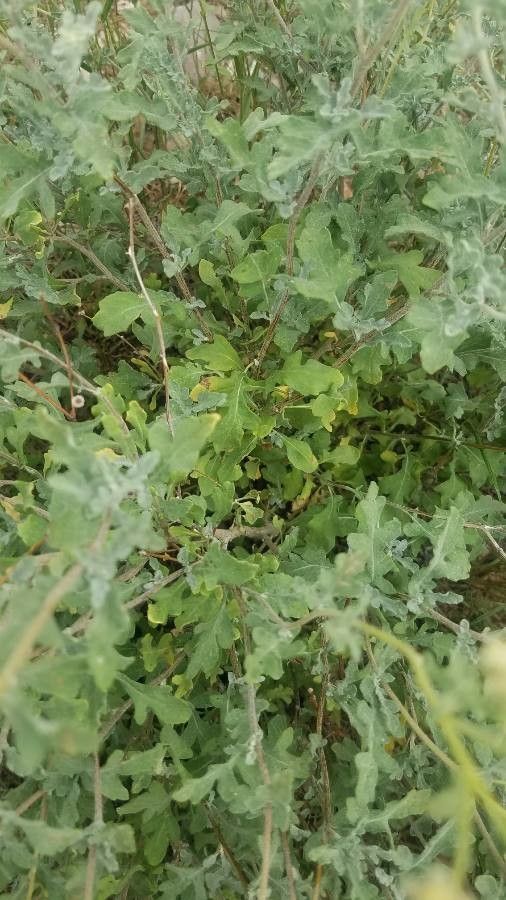
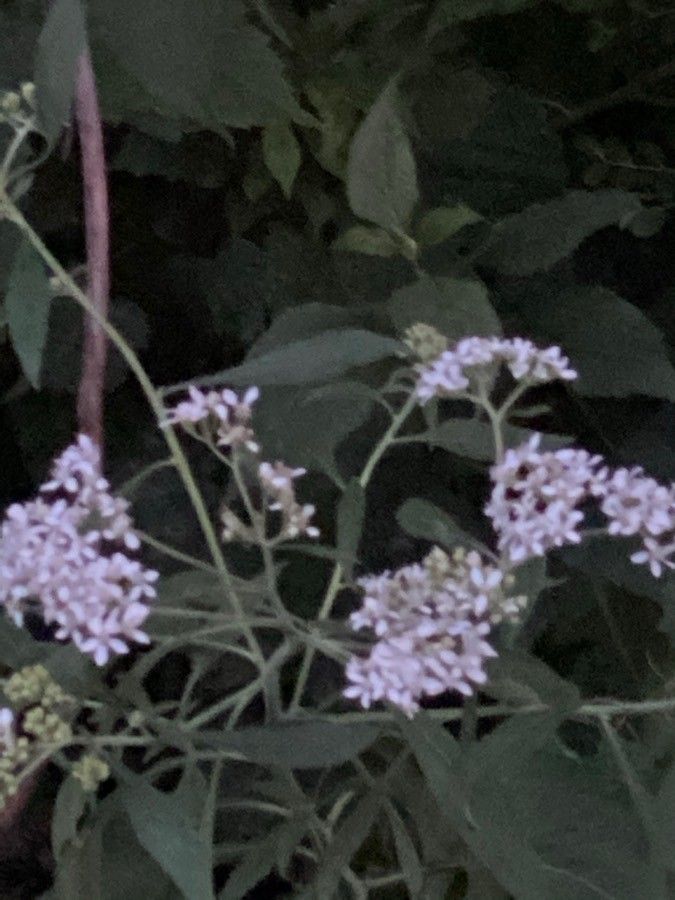
Parthenium confertum, commonly known as the Santa Maria feverfew, is a species of flowering plant in the Asteraceae family. It is native to Mexico and Central America but has been introduced to various parts of the world, including Australia and India.
The plant typically grows up to 1 meter tall and produces small white flowers that bloom in clusters at the top of its stems. The leaves are green, deeply lobed, and have serrated edges.
Parthenium confertum is known for its medicinal properties, as it contains compounds with anti-inflammatory, analgesic, antipyretic, antifungal, and antibacterial effects. Traditionally, it has been used to treat fever, headaches, rheumatism, and skin infections.
However, it can also be considered a weed due to its invasive nature, which can harm other plants by competing with them for resources such as water and nutrients.
In summary, Parthenium confertum is an interesting plant with notable medicinal benefits but also the potential for negative impacts on ecosystems where it grows uncontrollably.
Gray's feverfew shows good resistance to disease and is generally not vulnerable to illnesses. Still, it can be affected by pests and diseases found nearby, though such problems are typically mild. Care-wise, the plant needs a moderate amount of attention. Regular pruning is necessary to preserve its appearance and support healthy growth, and applying fertilizer can encourage flowering. This plant is appropriate for anyone with outdoor space, like a garden or patio, and does not demand extensive gardening experience. When kept indoors, it may need more attentive care.
How to keep Parthenium Confertum.
Light
Gray's feverfew is a sun-loving, perennial herbaceous plant native to open habitats and commonly found in meadows and grasslands. It prefers full sun but can also tolerate partial sun.
Temperature
Gray's feverfew comes from tropical areas, where the climate is generally warm and humid. Because of this, it is well suited to high temperatures and humidity. It does not tolerate sudden temperature shifts and prefers a steady temperature, so avoid fluctuations indoors. It typically cannot withstand cold and needs warmer conditions to grow. If the surrounding temperature falls too low, the plant may stop growing or even die.
Fertilizer
Gray's feverfew needs the most fertilizer during its active growth period, which occurs mainly in spring, summer, and early fall. Fertilizing supplies essential nutrients the soil may lack, supporting healthy root and stem growth and enhancing the attractive foliage, a key characteristic of this plant.
Pruning
Gray's feverfew is a dense herbaceous plant with small white flowers. To encourage healthy growth and improve air circulation, prune it in early spring by removing any old or damaged stems. Be sure to use clean, sharp tools to reduce the risk of damage and disease. This will help the plant become more vigorous and visually appealing.
Botanical profile.
- Plant Type
- Herb
- Life Cycle
- Perennial
- Genus
- Parthenium
- Family
- Asteraceae
- Hardiness Zone
- 7-10
- Mature Height
- 30 cm to 61 cm
- Mature Spread
- 20 cm to 40 cm
- Leaf Color
- Green, Dark Green
- Leaf Type
- Deciduous
- Flower Color
- White
- Flower Size
- 0.25 cm to 0.51 cm
- Bloom Time
- Summer
- Planting Time
- Spring, Summer, Autumn
- Harvest Time
- Late summer, Early fall, Mid fall
- Native Area
- Mexico
Other names.