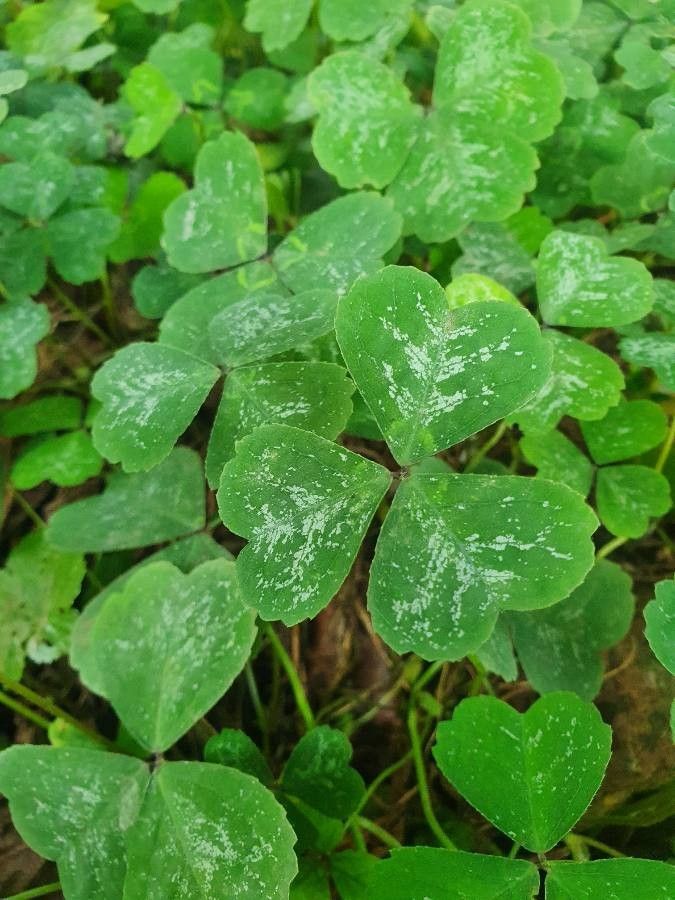
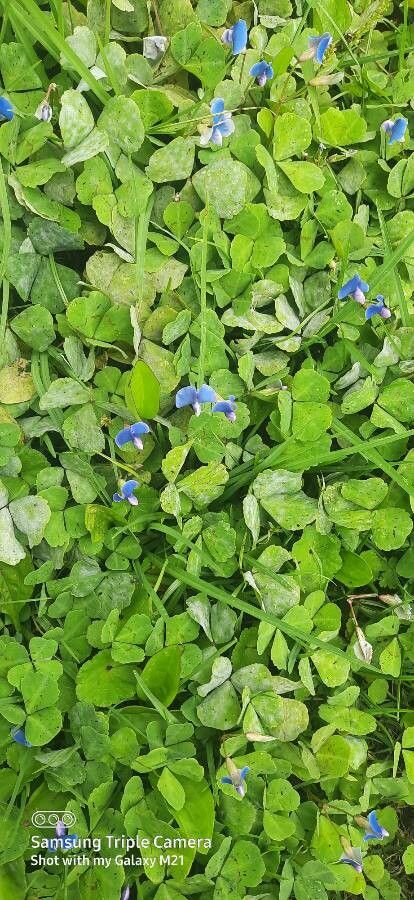
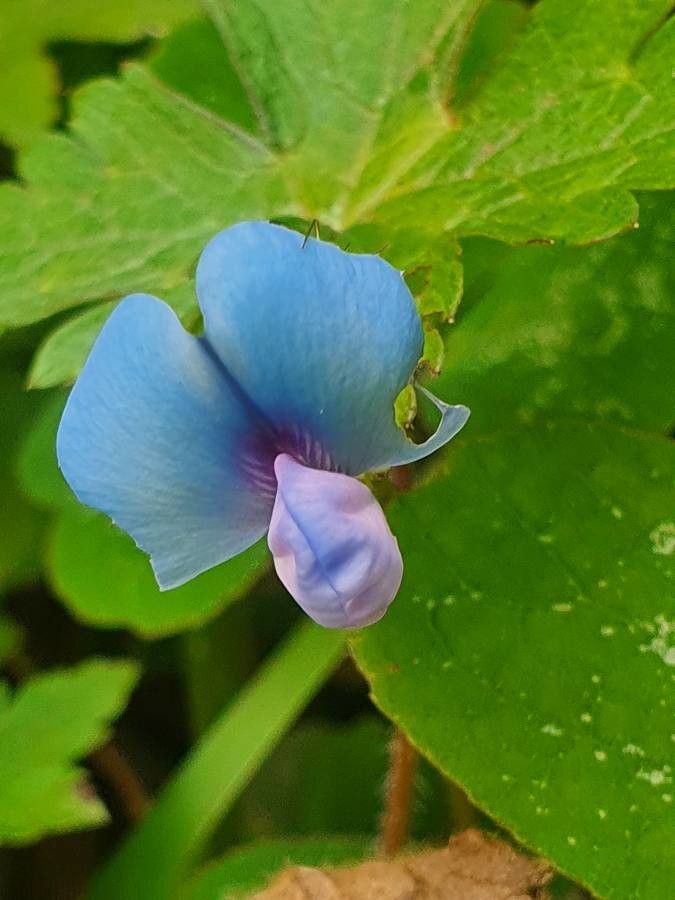
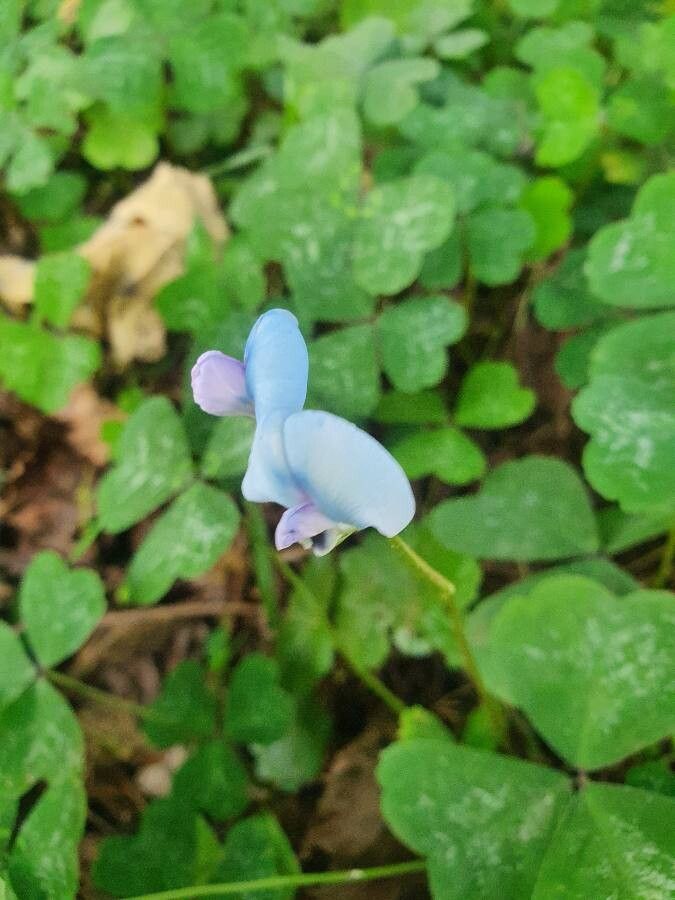
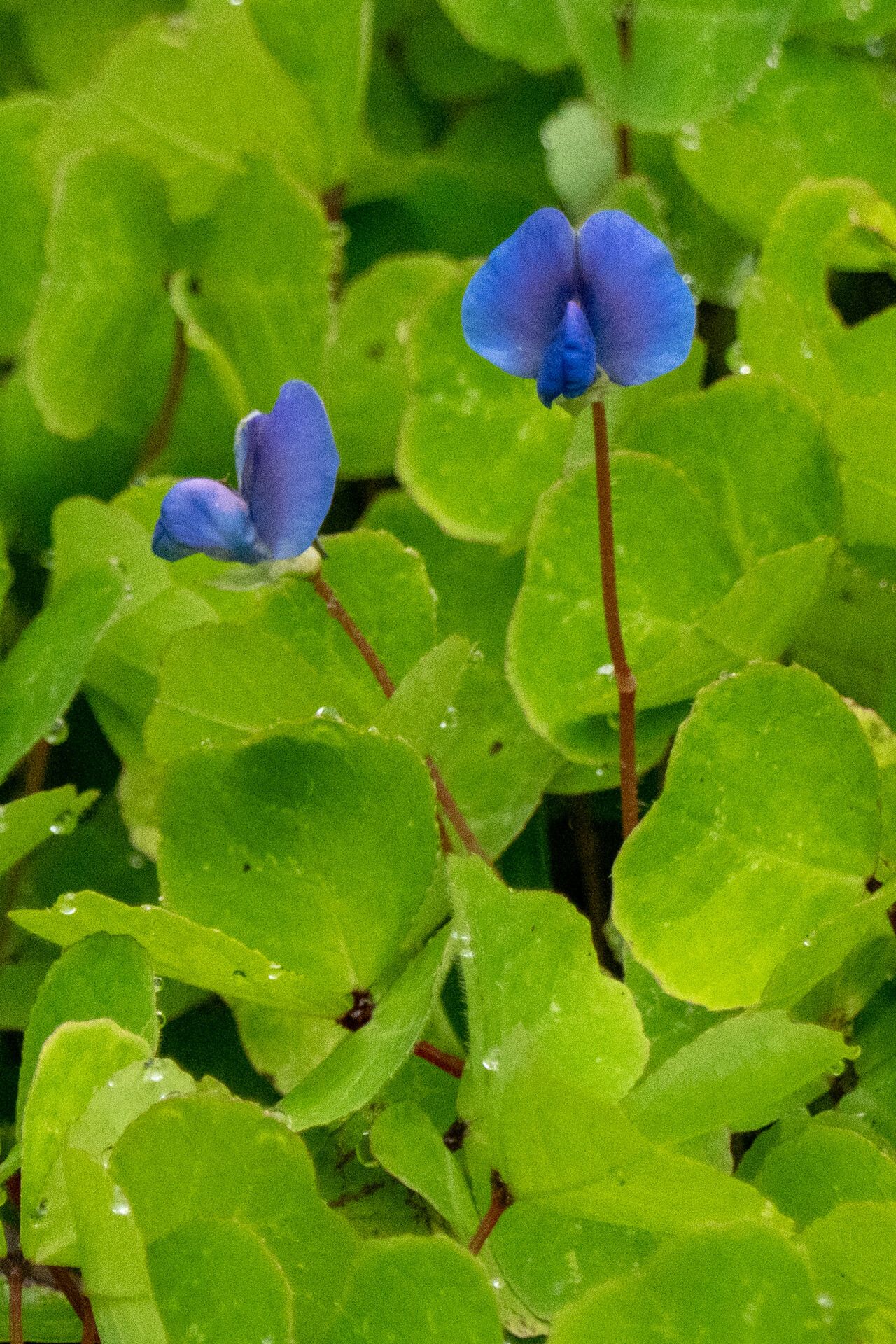
Parochetus communis, commonly known as blue oxalis or wild violet, is a small herbaceous plant in the Fabaceae family. Native to Asia, it can be found in countries such as India, Nepal, Bhutan, and China.
This plant has a prostrate growth habit, featuring stems that can reach up to 30 cm in length. Its leaves are trifoliate, with each oval-shaped leaflet measuring about 1-2 cm. The flowers are small and predominantly blue-purple with a yellow center.
Parochetus communis prefers moist soil conditions but can tolerate dry conditions once established. It is often found growing on rocky slopes or along riverbanks.
The plant is known for its medicinal properties, traditionally used to treat skin diseases, fever, and coughs, among other ailments. Additionally, it has recognized anti-inflammatory properties.
Overall, Parochetus communis is an intriguing plant that not only adds beauty to its surroundings but also offers medicinal benefits when used appropriately.
Blue-oxalis is resistant to diseases and, generally, not susceptible to them. In terms of care, this plant is fairly low-maintenance. When grown outdoors it needs only minimal watering, and larger plants usually do not require pruning. Smaller plants, however, should be pruned after they finish blooming. Blue-oxalist is suitable for anyone with an outdoor area, such as a garden or deck, and does not call for extensive care experience.
How to keep Parochetus Communis.
Light
Blue-oxalis performs best when given ample sunlight. It can, however, tolerate spots with somewhat less light. A generous amount of sun is essential for blue-oxalis to grow healthily. Too much or too little light can damage its health and may stop its usually lush flowering.
Water
Blue oxalis thrives best in moist, shaded environments that mimic its natural habitat, where there is consistent humidity. While it is moderately drought-tolerant, it still needs weekly watering to ensure lush growth. Often used as an ornamental ground cover, blue oxalis benefits from rainwater, which helps maintain its vibrant blue flowers and healthy foliage.
Temperature
Blue-oxalis is native to temperate regions and does best in temperatures of 59 to 100.4 °F (15 to 38 ℃). It is adaptable and can tolerate cooler conditions, but a warm environment is important for its vitality. Seasonal adjustments should be made to mimic its natural habitat for optimal growth.
Fertilizer
Timing is essential for fertilizing Blue-oxalis. Begin fertilizing in early spring and continue every month until early summer. Fertilizer promotes lovely blooms and supplies energy during both dormant and active growth phases.
Pruning
Blue oxalis, with its clover-like leaves and blue flowers, thrives best when pruned in early spring. To promote better shape, air circulation, and flowering, trim away dead foliage and any excess growth. Make sure to use clean, sharp tools to ensure precise cuts and reduce the risk of infection.
Pot & Repot
Repot blue oxalis every 2 to 3 years, ideally in early spring, using a larger but shallow pot. After repotting, keep the soil moist and place the plant in partial shade. Handle the delicate foliage with care to promote healthy growth and maintain its beautiful appearance.
Botanical profile.
- Plant Type
- Vine
- Life Cycle
- Perennial
- Genus
- Parochetus
- Family
- Fabaceae
- Hardiness Zone
- 8-11
- Mature Height
- 15 cm
- Mature Spread
- 49 cm
- Leaf Color
- Green, Dark Green
- Leaf Type
- Evergreen
- Flower Color
- Purple, Blue
- Flower Size
- 2.03 cm
- Bloom Time
- Mid spring, Late spring, Summer
- Planting Time
- Spring, Summer, Autumn
- Harvest Time
- Summer, Early fall, Mid fall
- Native Area
- Nepal, Sri Lanka, India, Malaysia, Indonesia, Vietnam, Myanmar, Bhutan, Thailand, China
Other names.
Reader questions.
What are the sunlight requirements for Blue-oxalis?
Blue-oxalis thrives best in conditions with abundant solar exposure, requiring above 6 hours of sunlight daily for optimal growth, categorized as 'full sun'. However, it can also manage in 'partial sun' conditions, which is about 3-6 hours of sunlight daily. It's essential to watch how sunlight moves through your garden or living space to ensure your Blue-oxalis plants receive the right balance of light and shade, ensuring their health and blooming.
What is the native climate for Blue-oxalis, and how does it tolerate temperature changes?
Blue-oxalis, botanically known as Parochetus communis, is native to temperate climates and thrives best in temperatures ranging from 59 to 100.4 °F (15 to 38 °C). It has some tolerance to cooler weather but maintaining a warm environment is key for its vitality. Seasonal adjustments might be necessary to simulate its natural habitat for optimal growth. It generally does not require additional cold protection measures when the temperature is above -5°C. However, temporary measures such as wrapping the plant with plastic film or fabric should be taken if temperatures are expected to drop below -5°C, with such protections removed once temperatures rise again.
Can Blue-oxalis grow with artificial lighting?
Yes, Blue-oxalis can grow with artificial lighting, which becomes particularly important when natural sunlight is insufficient, like during winter or in less sunny spaces indoors. The preferred choice for artificial lighting is LED lights because they offer customizable wavelengths suitable for plant growth. Full sun plants, such as Blue-oxalis, require 30-50W/sq ft of artificial light. The light source should be placed 12-36 inches above the plant to mimic natural sunlight conditions and turned on for 8-12 hours per day to simulate the length of natural daylight hours.
How does Blue-oxalis react to low temperatures, and what are the recommended solutions?
Blue-oxalis has a moderate tolerance to low temperatures but thrives best when the temperature is above 15°C. During winter, it's important to keep it above -5°C. If temperatures fall below -10°C, the leaves may start to droop, and in severe cases, wilt and fall off. The recommended solution for frost damage includes trimming off the affected parts. To protect it from low temperatures in the future, wrap the plant with non-woven fabric or cloth and construct a wind barrier to shield it from cold winds.
What are the signs of insufficient light in Blue-oxalis?
Symptoms of insufficient light in Blue-oxalis include new leaves growing smaller in size, leggy or sparse growth due to longer spaces between leaves or stems, faster leaf drop as the plant tries to conserve resources, and slower or no new growth as the plant enters survival mode. Leaves may also develop irregular color patterns or appear pale, indicating a lack of chlorophyll and essential nutrients. Moreover, the plant can experience conditions such as chlorosis, where leaves turn yellow due to the breakdown of chlorophyll, and leaf scorching, characterized by brown, dry, and crispy leaf edges.
What happens to Blue-oxalis in high temperatures, and what steps should be taken?
In the summer, it's essential to keep Blue-oxalis below 38°C as temperatures above 43°C can cause the leaves to lighten in color, dry up at the tips, curl, and make the plant more prone to sunburn. To mitigate damage from high temperatures, trim away sunburned and withered parts. Moving the plant to a shaded location or using a shade cloth to protect it from intense midday and afternoon sun is advisable. Additionally, watering the plant in the morning and evening to maintain soil moisture can help protect it from the heat.
How can I address light-related issues in Blue-oxalis?
To address light-related issues in Blue-oxalis, gradually move the plant to a sunnier location, ensuring it receives at least 6 hours of direct sunlight daily. For indoor plants, you can use a south-facing window for maximum sunlight exposure or artificial lights like desk lamps or professional grow lights for at least 8 hours daily. Outdoors, it's crucial to move your plants gradually to avoid sunburn. If sunlight is blocked by trees or buildings, consider pruning or moving the plant to reduce obstructions. Remember, affected parts of the plant may not recover, but new growth will be healthy with improved light exposure.